
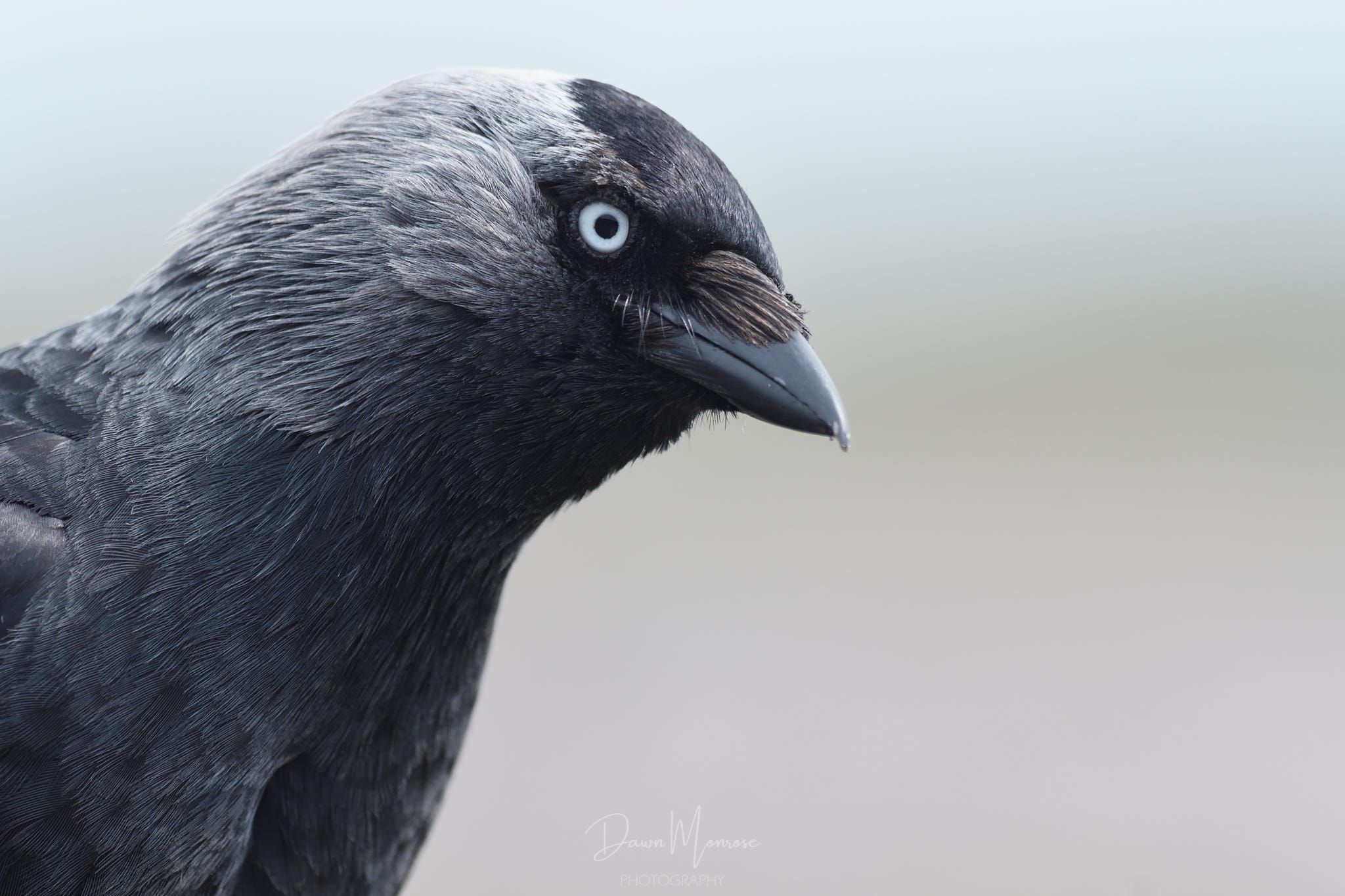
The Turtle dove has had a huge influence on my passion and interest in nature and conservation, but it didn’t start there. I can’t remember a time when I wasn’t interested in nature, in fact, one of my earliest childhood memories is sitting outdoors (I’ve no idea where) on a plastic seat where my little feet didn’t touch the floor, and a Jackdaw came and perched next to me. That beautiful silvery grey head and stunning pastel blue eye, I remember clearly, as well as the fascination with this other being so different from me, but going about his own life, equally important as my own. That was the very beginning of a lifetime of curiosity with the natural world.
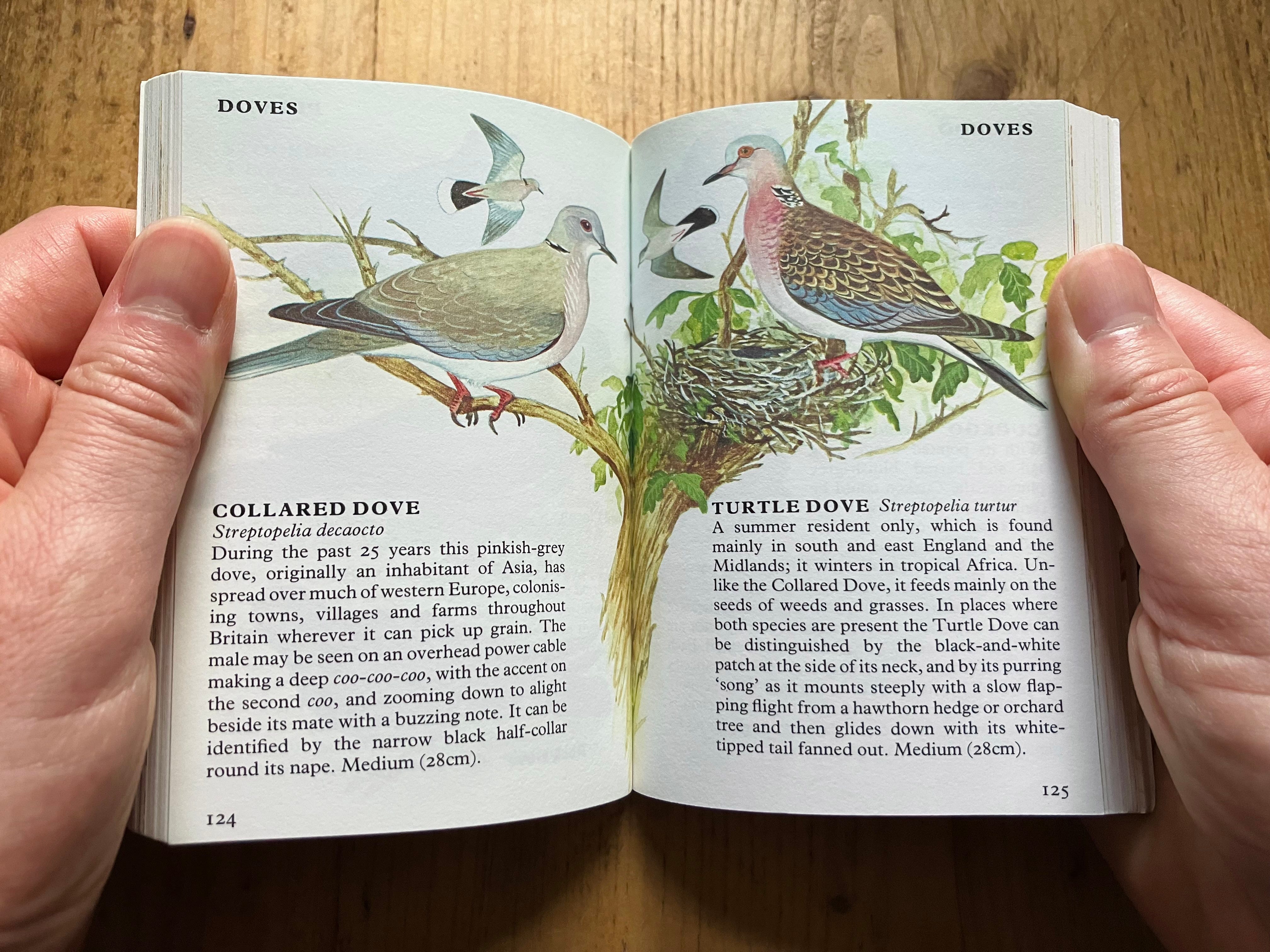
The first time I met a Turtle dove was within the pages of our family bird book. I read and studied every page as a child and there were some birds that seemed almost mythical, and I felt I had no hope of ever seeing them, the Turtle dove, for one, up there with the Hoopoe and Wryneck. (I’ve still not seen either of them.)
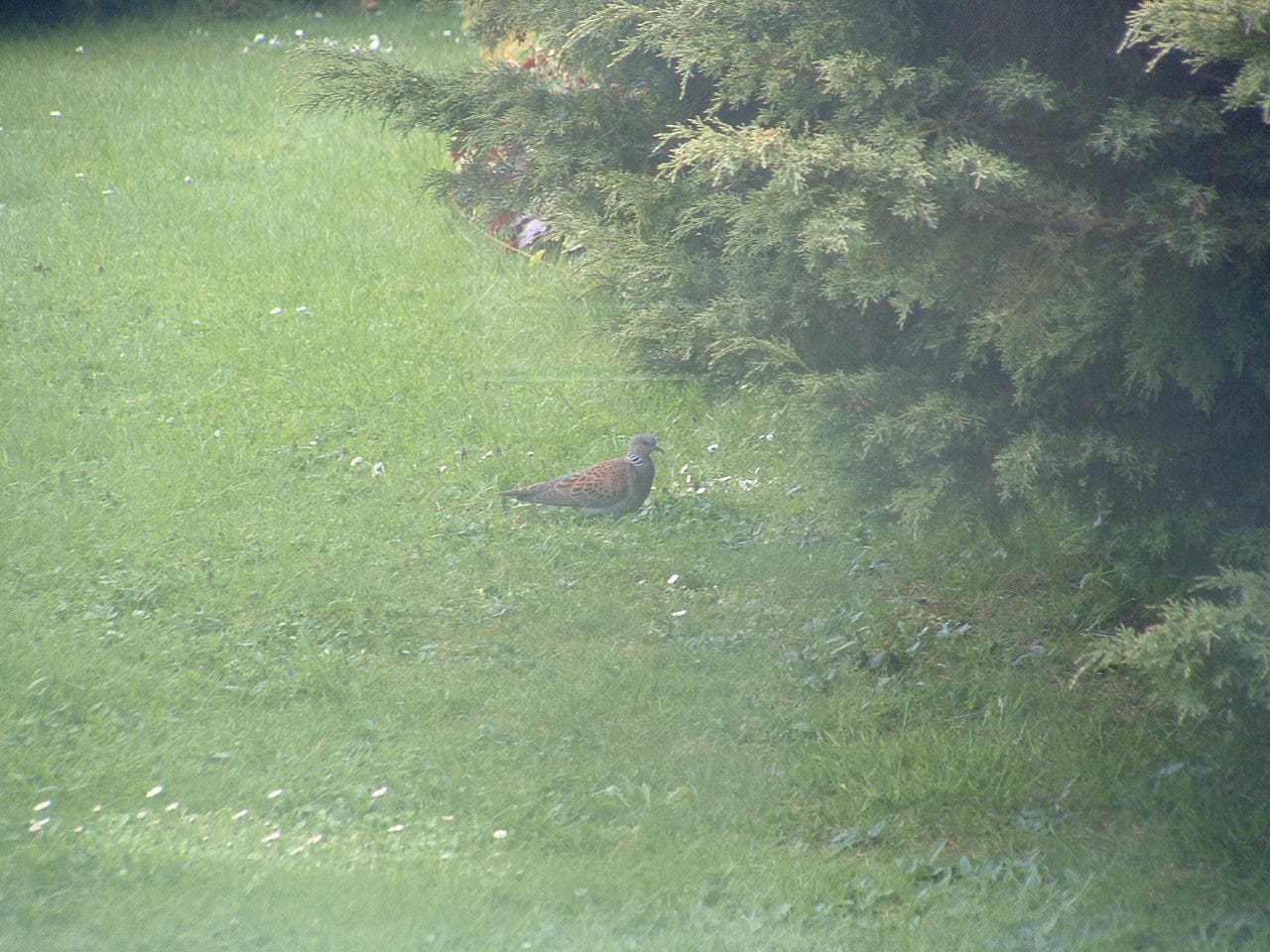
I didn’t meet the bird in real life until my very early 20’s. A completely chance encounter, that helped to set me on this path, that brings me before you today. It started with Goldfinches. We’d always fed the birds in the garden, mostly just peanuts, and fat balls. We had Blue and Great tits, and we all loved the striking and handsome Great spotted woodpecker. We spotted a new visitor, the Goldfinch, such a bright and colourful little bird, indeed charming. So we set up a new feeder, halfway down the garden in case they were shy, with a supply of finch seed. They loved it of course and it was a pleasure to watch them. One day, I spotted a bird on the ground below the feeder, pecking away. Having studied that bird book so intensely, I knew instantly what it was, but couldn’t believe my eyes! A Turtle dove! There turned out to be a pair. Back then I was just starting on my wildlife photography endeavours and certainly didn’t have any big lenses, so I recorded their comings and goings on paper, keeping a diary and notes on behaviour and character with dates and times, as accurately as I could. I found that they can be surprisingly feisty despite their small stature and would even chase larger birds away. They slowly got used to our presence in the garden, and would come to feed even if we were sat quietly on the patio. I also started researching and found out how drastically they had declined, and felt, with all that latent teenager rage, that something must be done. Aside from studying the birds that visited the garden I didn’t find any opportunities to get involved, and Uni took over my life. I haven’t seen Turtle doves in this garden since. The decline happening before my very eyes.
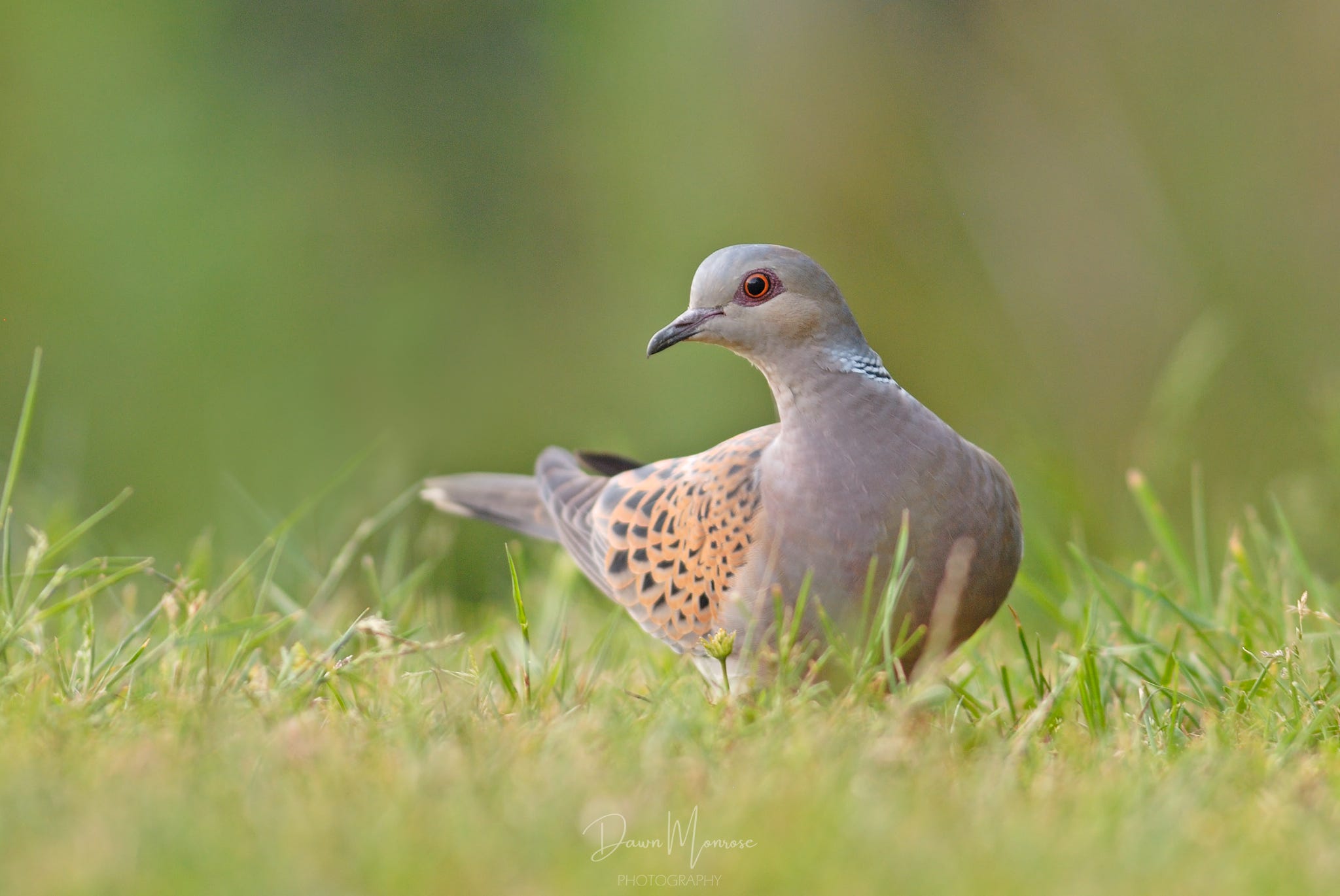
Once back from Uni, and in my own (rented) home, my love for these beautiful birds resurfaced, and once again I found Turtle doves visiting my new garden. This time, I was a better photographer and spent what time I could with them, resulting in one of my most favourite photos that I’ve ever taken.
It was actually heart wrenching to leave this place, I remember the final day, on the final car trip, a Turtle dove sat on the fence as we pulled out of the drive for the last time. I cried. However, what I didn’t realise was my next home would also be visited by this special bird. Another small garden, with a thick hedgerow at the back, which acted like a highway to the heathy common a short distance away. It just goes to show how important it is to connect habitats, for the Turtle doves would venture along the hedge and come to feed in my garden. I realise I’m making them sound common, but I assure you they are not. They have declined by a staggering 99% since the late 1960s here. Again I studied and photographed them, and one year had the privilege of seeing a juvenile bird here. (They look much like the adults but with the colour saturation turned down!) I even got to hear one purring up close, as it sat hidden in the hedge, singing away. It is actually surprisingly loud! This is where their name comes from - their song, a reverberating ‘turr turr turr’, with a ringing, rolling ‘rrr’.
Another house move later brings me to my current home. I haven’t had a Turtle dove in my garden sadly, but I have had the fantastic opportunity to get involved with their conservation, as I spoke about in my last letter. Scroll forward to this summer, and whilst I was setting up the camera trap at a new location, I was very kindly invited by the lovely landowner to come down with the ‘big camera’ to try and get some photos. It is a privilege that I am hugely grateful for, being allowed on private land, and so I desperately wanted to get some photos for the owner.
The first birds to appear were these pretty Stock doves, they have this stunning green iridescent plumage on their necks, and with dark beady eyes and neat blue grey feathers it makes them look rather cute. These are birds of farmland and woodland, nesting in holes in trees, and sometimes taking over Barn owl nest boxes. They managed to recover from severe declines in the 1950s caused by the toxic seed-dressings used at that time. I could hear a Turtle dove purring, that gorgeous melodic ringing song, but didn’t see it, however with the Stock doves around I certainly wasn’t disappointed on my first visit.
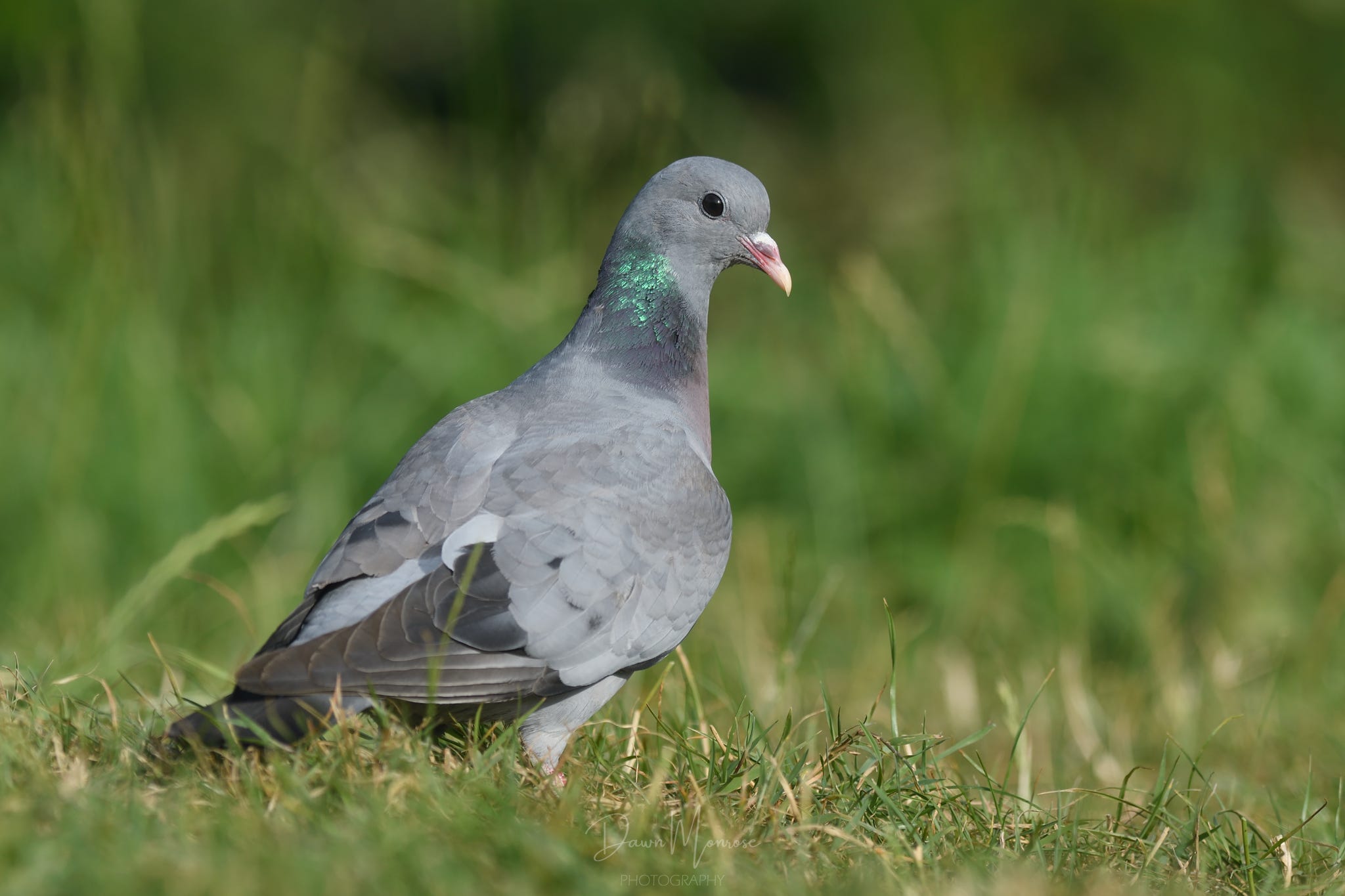
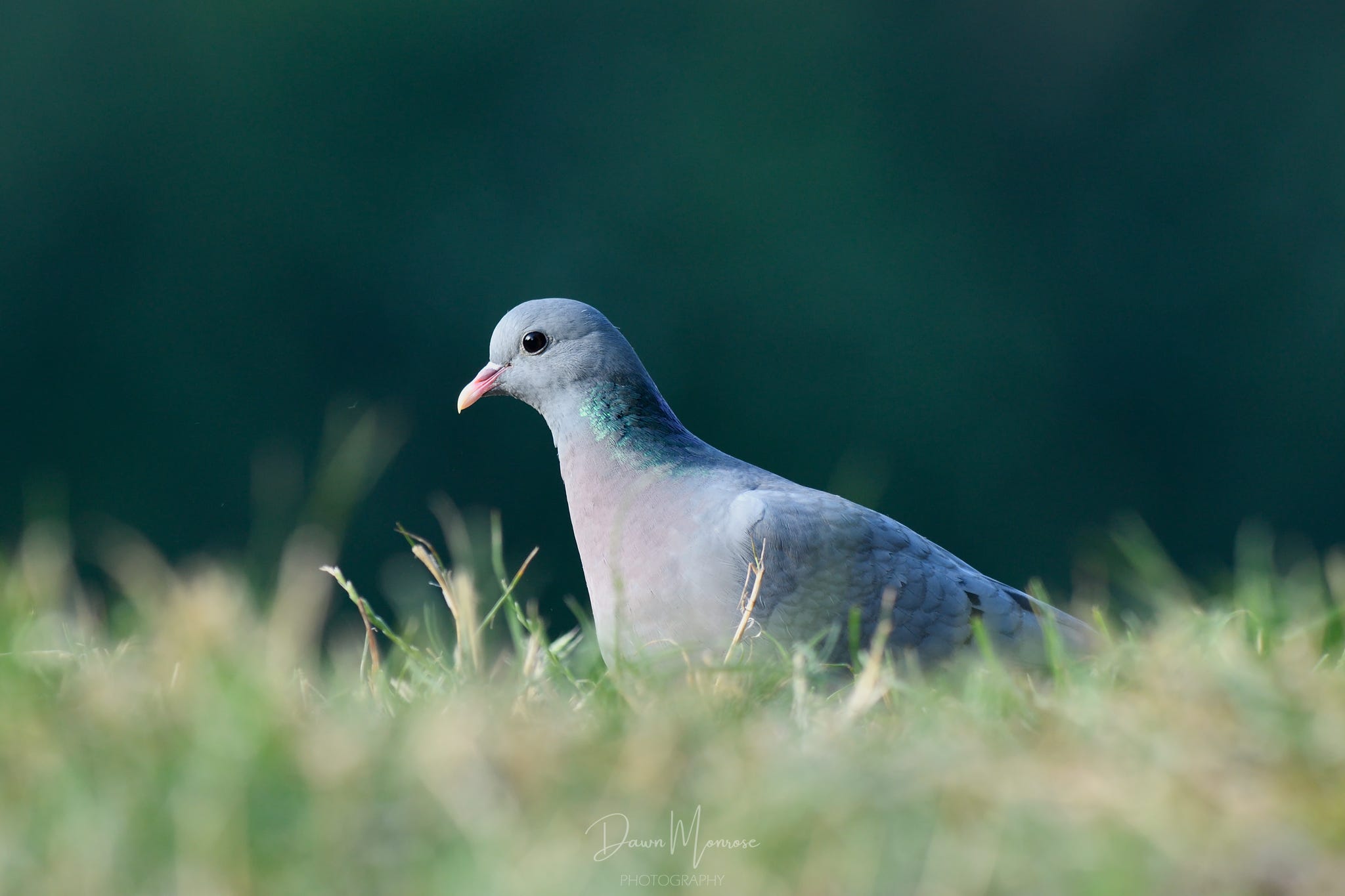
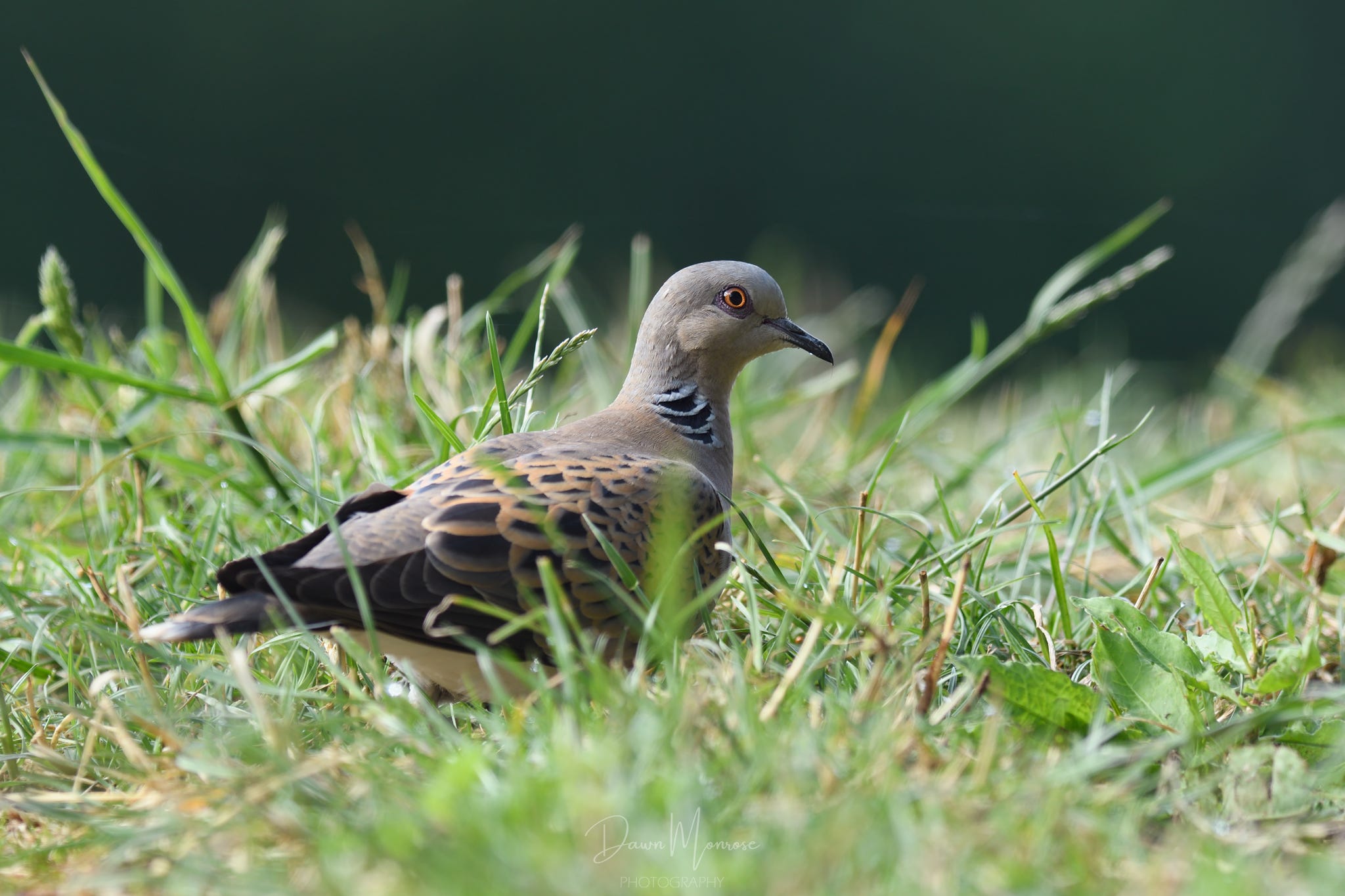
The following visit, the last chance before my Scottish holiday, I settled in under my hide cover and prepared for a long wait. The Stock doves kept me company for a time, and two juvenile Dunnocks foraged around the area, coming so close at times I thought they would perch on me. Then, three hours later, the dainty dove that I’d been waiting for dropped in. It is a strange feeling, so excited and elated to be close to a bird I love so much, yet, completely unable to move, or make a sound. After waiting for her to settle, I quietly began to take photos. They move more quickly than the larger Stock doves, like a little clockwork bird, they appear delicate but are full of confidence. Trying to follow her and keep her in the viewfinder as she looked around for the small seeds that make up their preferred diet, I was struggling to keep up and started to feel a little dizzy. I realised I was still half holding my breath. I locked the tripod and just sat and watched, enjoying being in the Turtle doves presence once again, and feeling quite relieved that despite everything, they are still hanging on, still here, just.
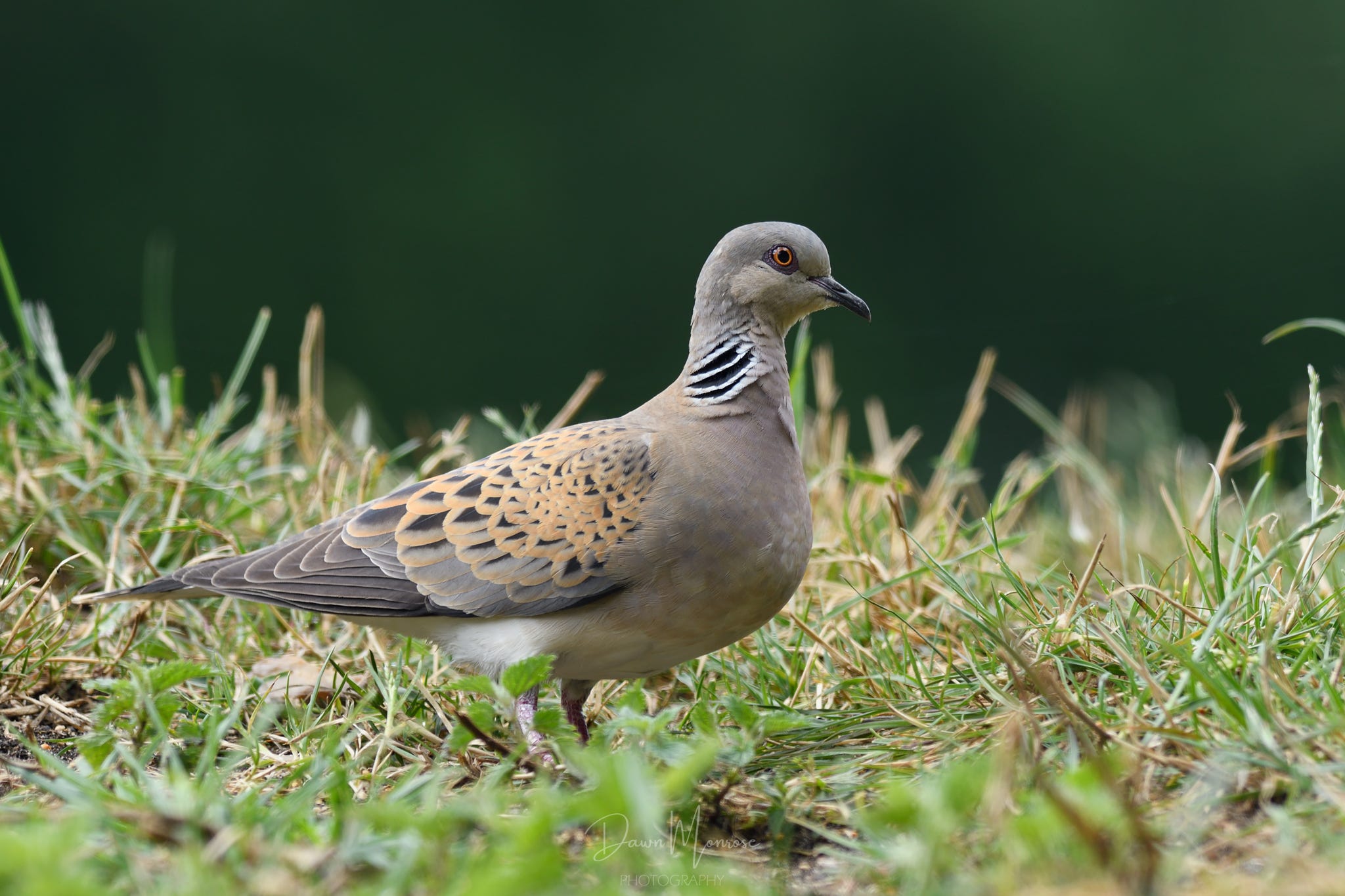
The decline in these wonderful birds has been caused by a number of factors over the years, a sort of perfect storm spelling near disaster for them. Loss of hedgerows post war and beyond meant the loss of their breeding habitat - dense, tall, mature hedges and the scruffy brambly thorny bits which are ideal for hiding a nest. (The Peoples Trust for Endangered Species has a fascinating history of the UK’s hedgerows on their website - link below). Fortunately these days hedges are being recognised as a valuable habitat, not just for Turtle doves, but for a whole host of other species, with grants available for replanting. With their preferred diet of small seeds from annual and perennial plants, they struggle to find enough food in our increasingly efficient and weed free arable landscape. Wildflower rich margins are now becoming more common here in the East, and Operation Turtle Dove is helping landowners and farmers to create ideal feeding habitat. Turtle doves are the only long distance migratory dove found in Europe. They spend their winters in West Africa, but up until very recently they had to face the guns to get there. They were legally shot on their migration route through France, Spain and Portugal in autumn, up to a million birds in just these countries each year. Thankfully this was stopped between 2021 and 2024, after the publication of an International Species Action Plan, which led to an increase of Turtle doves in western Europe. Hopefully, with reduced hunting pressure, increased awareness, and the provision of suitable nesting habitat and feeding sites, we will see this increase spill over to the UK.
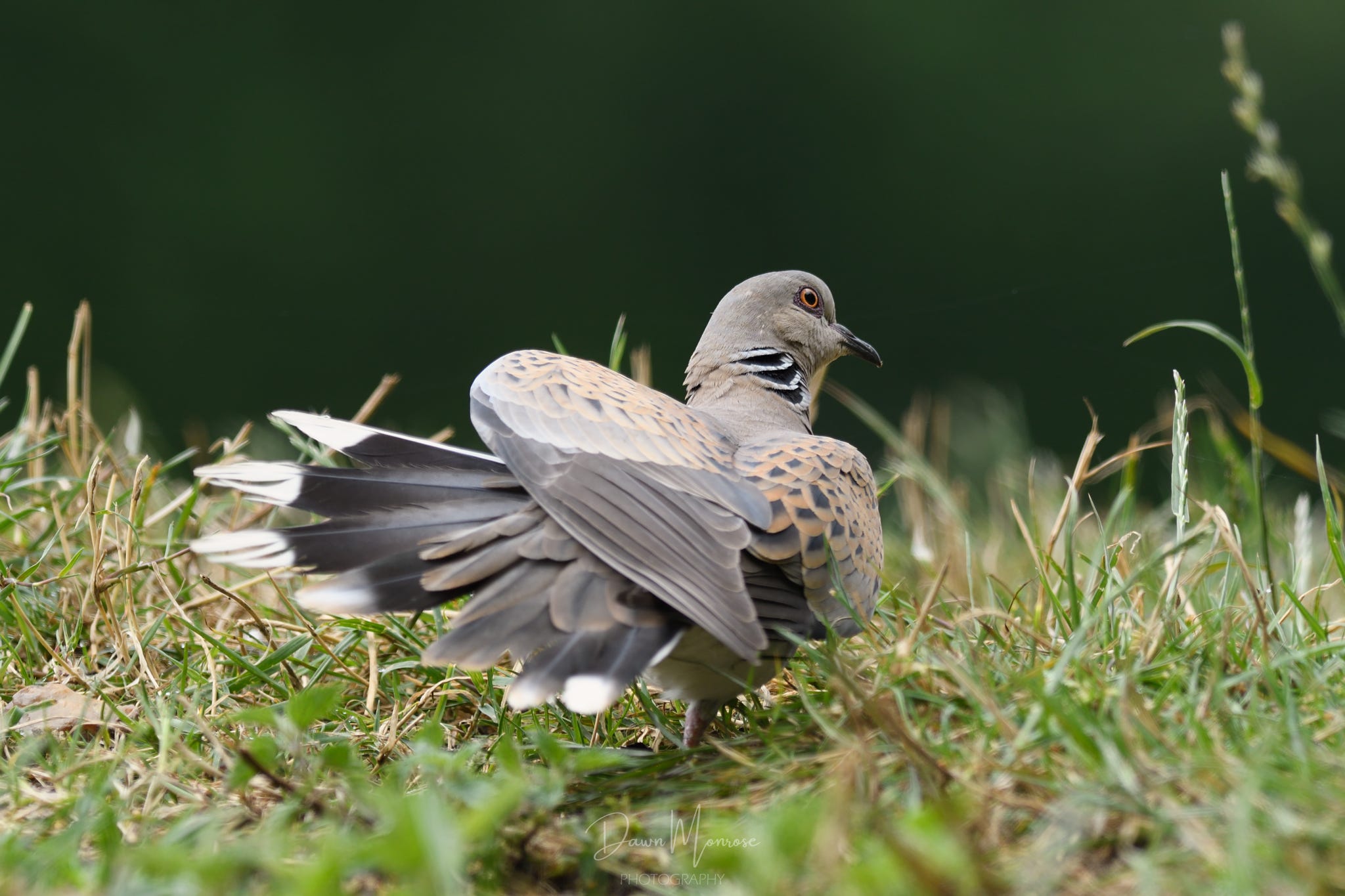
I remember the urgent anxiousness I felt about the loss of this bird, back when I first met them, and the sheer helplessness and despair that I was unable to do anything about it. Yet here we are now, there are hundreds of experts and people all over Europe involved in stopping and reversing the decline, and here I am, watching one in my lens. Turns out, I wasn’t alone. I wish I could tell my younger self that. Conservation efforts weren’t as widely spoken about or publicised back then, and she really did feel powerless. Now, I have the privilege of helping a tiny bit through volunteering, and I am immensely grateful to all the people involved in the conservation of this delightful bird, without whom I might not be watching one now.
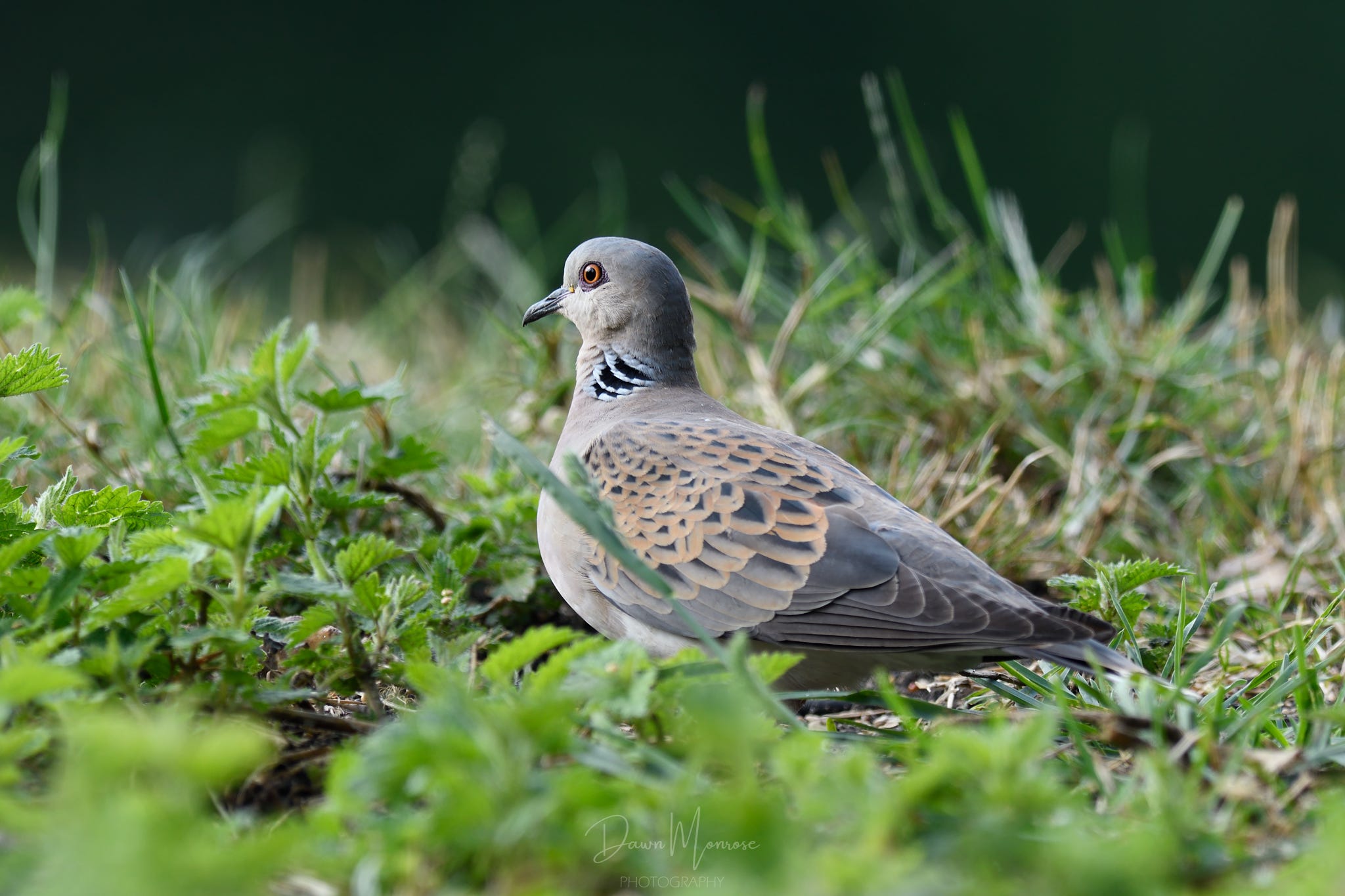
Since these photos were taken in June, I’ve spent time nearly every weekend on site, trying to get more photos and watching them. To my absolute delight I observed a juvenile bird here, it’s so good to know they have had a successful breeding season. They will now be departing for their wintering quarters, but I hope they have a safe journey and fingers crossed I will see them again next Spring. I also hope in the next few years we will start to see numbers increasing, and the sound of summer will start to ring out from the hedgerows once again.
Resources:
Operation Turtle Dove - https://www.operationturtledove.org/
Log your sightings on BirdTrack - https://www.bto.org/get-involved/volunteer/projects/birdtrack
Learn more about the Turtle dove: https://www.bto.org/learn/about-birds/birdfacts/turtle-dove
Learn more about the Stock dove: https://www.bto.org/learn/about-birds/birdfacts/stock-dove
People’s Trust for Endangered Species - A history of hedgerows: https://ptes.org/hedgerow/a-history-of-hedgerows/
Thanks so much for reading, please do leave a comment, I’d love to hear from you!
Until next time,
Dawn.
Enjoyed this? Share it with a friend!
Of The Wild is a free publication, however if you enjoyed this article and would like to express your support, you can now buy me a coffee over on Ko-fi.
Comments
Nothing yet. Say the first thing.
Sign in to join the conversation.