
To locate this essay in its proper place:
Consent is non-negotiable whenever any participant, for any reason, requests a discussion to grant or receive permission, set ground rules, or clarify boundaries or when the leader deems such a discussion necessary. Discomfort is subjective and personal, and one actor must not be held to the comfortability standards of another.
I am not referring to circumstances requiring what we’ll call Major Physicality: nudity, portrayals of sexual intimacy or touching in private or sensitive areas (“sensitive,” again, being subjective), scenes of significant violence or combat, etc. I will address those moments that call for Minor Physicality: a hug, the tender stroking of a cheek or hair, or holding hands.
There is a phenomenon in which consent has become a bridge that actors feel they must cross before depicting even non-physical intimacy: raising the voice, using profane language, or simply expressing an opposing point of view unapologetically. Society has shown us that risking another’s displeasure can now have terrible consequences, and actors’ need to secure consent before hazarding that displeasure, even in fictional circumstances, has become an archenemy of free expression in an art form reliant upon the unrestrained human encounter. Our professional actors have been stricken with an epidemic of waiting for permission that actors qualified to work at the professional level should not need. In our profession, consent about certain acts must be implied.
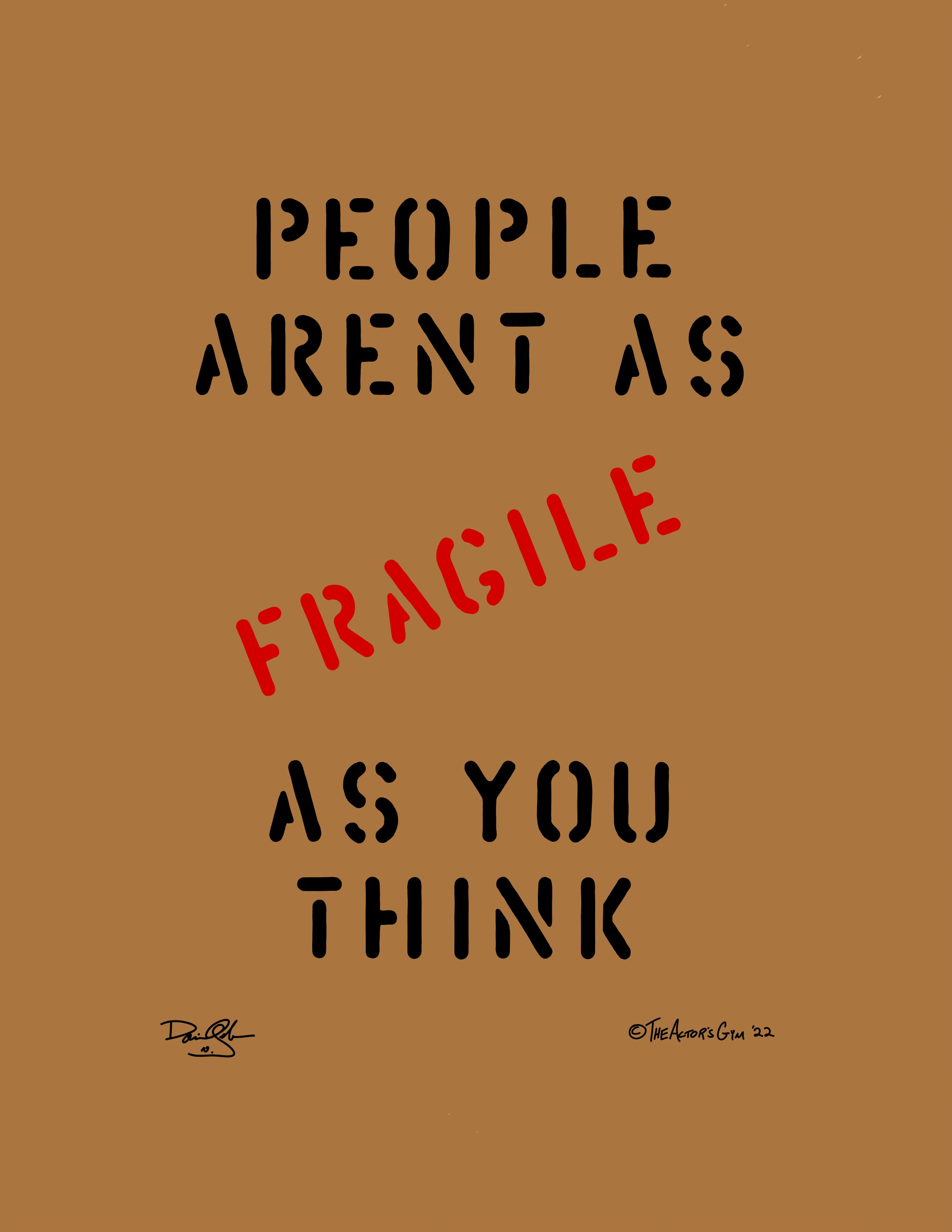
I watch a pair playing husband and wife hold their breath, arms glued to thighs, paralyzed with doubt over the rules of engagement, waiting for the green light to touch a face or kiss a cheek. I ask, “Are both of you alright touching and being touched?” Their shoulders drop in relief, not because they are uncomfortable with being physical but because I have dismissed social danger from the room, so they no longer feel their bodies are loaded guns. There used to be varied and complex models of human encounters for actors to study and depict. But our culture has dispensed with them as problematically stereotypical, and what remains is a well-adjusted, problem-free mask persona: a pale substitute and a grave condition for the artist whose clay is human nature itself.
The role of Intimacy Coordinator has been a godsend for actors needing an extra layer of safety, supervision, and trust. But when one is called in to talk to an actor through an act of minor physicality, they are talking to someone who isn’t ready to be there.
Imagine an NBA game being interrupted to make way for a Step Stool Specialist called in to help a 5’7” player slam-dunk the ball. Sometimes, achieving a 100% inclusion rate requires lowering professional standards. In athletics, if a person does not check specific physical boxes, they don’t make it, period. Those boxes may not always be physical in the arts, but certain emotional, psychological, and spiritual standards must be maintained, mustn’t they? There are no other vocations for which this is not true. A pilot cannot be colorblind; a lawyer cannot fail the BAR. Acting must do better to accommodate performers of all abilities, races, ethnicities, sexualities, and genders because this raises the bar of what theater can do. Making the profession accessible to those uncomfortable with kissing strangers does not.
Can an actor overcome their blocks through determination, repetition, and consistency of study? Of course, I help people do it every day. We’ve just got to know what we’re made of, where we’re at, and how far we need to go, or else we slow everyone down while we figure it out.
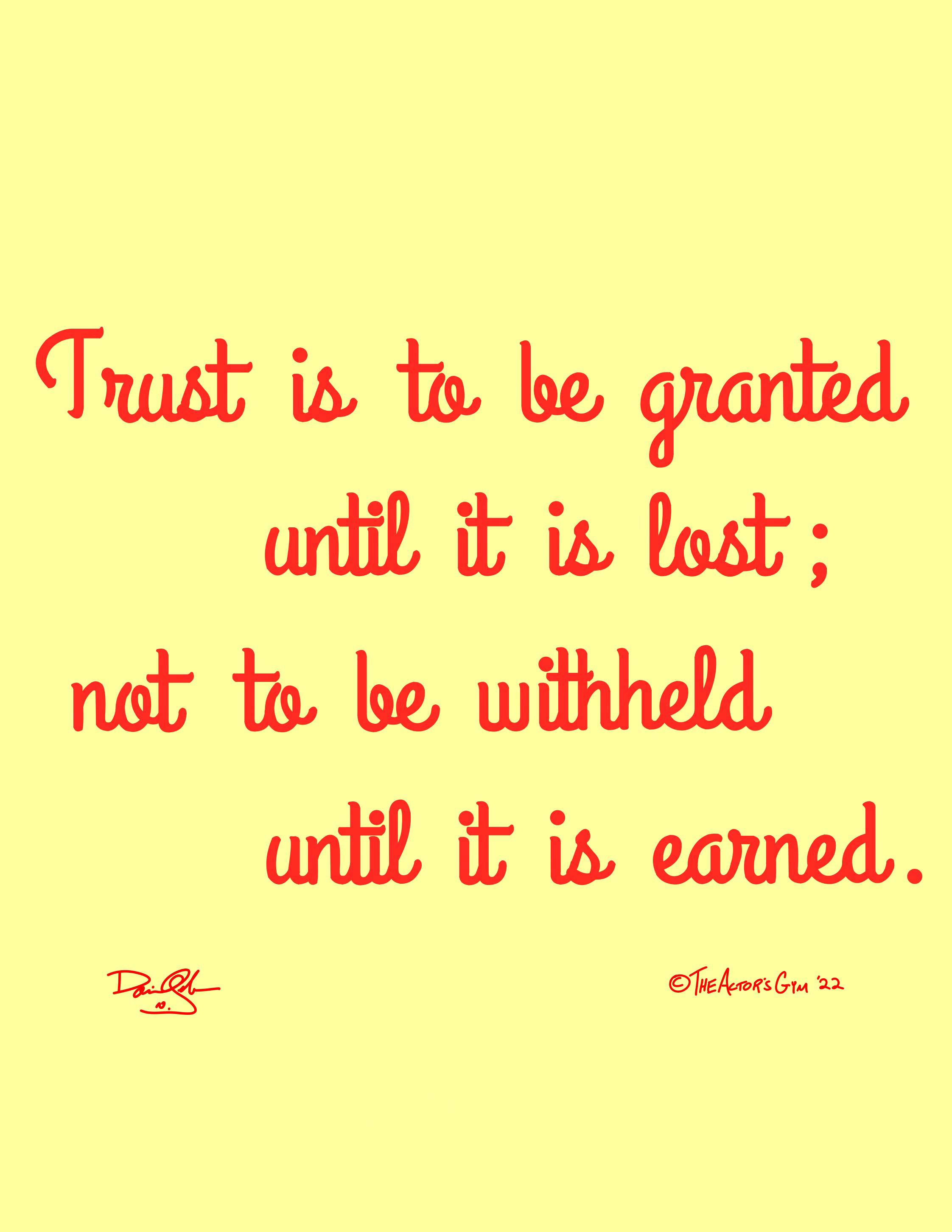
For artists, there is no crime against ourselves that is more capital than, as Abraham Maslow said, “warping, suppressing, or denying our true nature” at the cost of our freedom of expression. We fail to do all we know we can do with our lives, and nothing turns us on ourselves more aggressively and shamefully. It is an especially needless assault when our repression is to conform with a culture that eschews the unabashed, forceful, or demanding personality. Are you waiting for others to “make space” for your “true identity?” “Space” is made so that a person in a wheelchair can access a restaurant… When did accommodating an identity take on the vocabulary of accommodating a disability?
We must protect artists who require consent while recognizing that every profession has prerequisites. Certain aspects of what we do must not be permitted to sit at red-lit intersections, or else playful freedom of expression, trust in one another, and a genuinely safe creative culture will never be possible. Safety isn’t conducting a mini-therapy session at work every time fear crops up in us; it’s allowing ourselves to be seen in our discomfort without needing to explain or talk about it. We have become too trauma-conscious, and it is creating a crisis of emotional resilience.
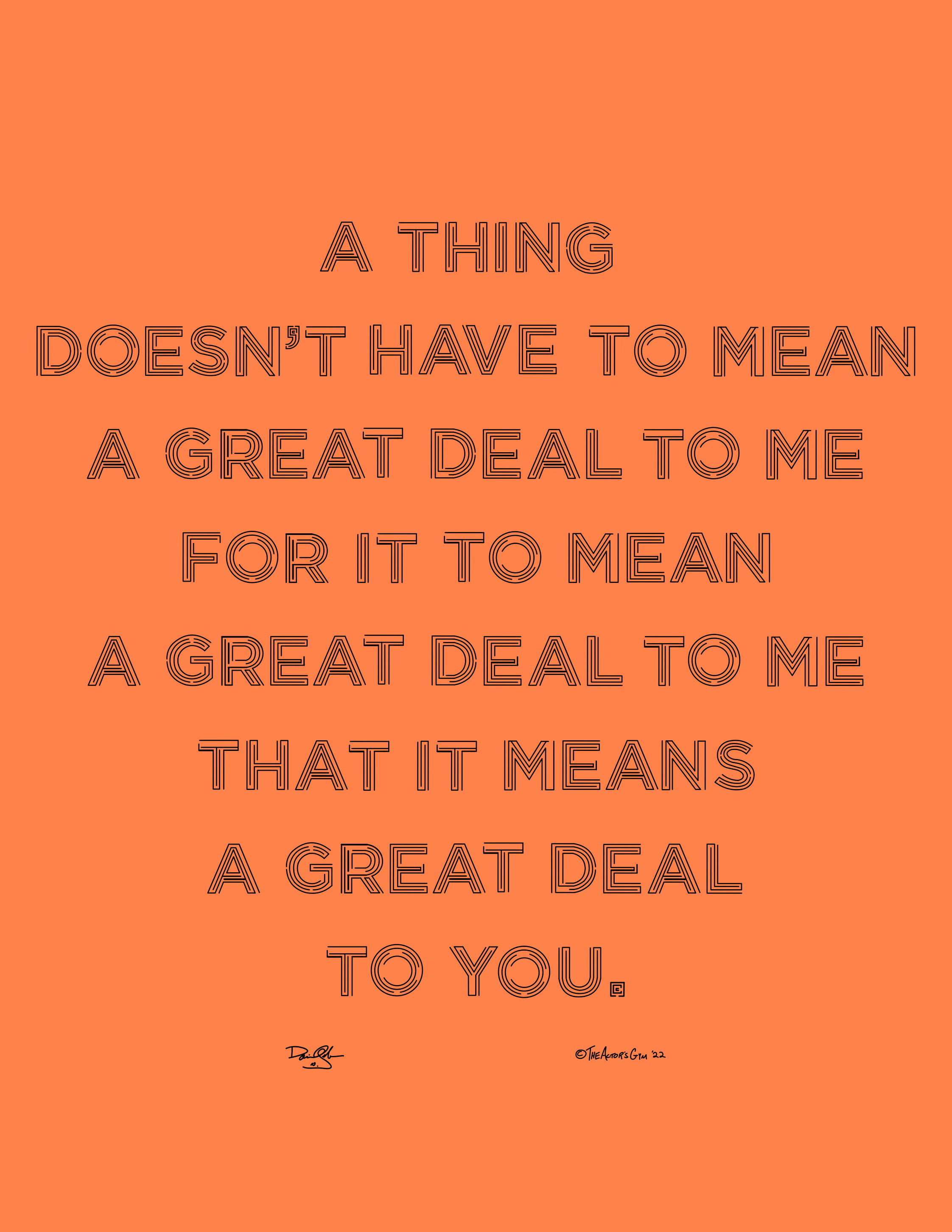
If we need to pause and get something off our chest, we’ve got to know that everyone in the room may not share a personal association with the things that matter to us; that doesn’t mean they can’t understand and support us. I have had actors in my studio who have had very different relationships with gender than I have, and I don’t have to feel ashamed that the issue has meant very little in my own life. What’s important is that my colleagues know that while an issue may not have meant a great deal to me, it means a great deal to me that it has meant a great deal to them. We have other, more meaningful ways of showing love and care for one another than pretending that we all feel the same way about every issue. What we share is the need to feel that we belong.
Do not keep your mouth shut if you are intelligent enough to see the truth. If you are a fighter, there is no nobility in denying your strength and playing the role of a coward. As a father, I tell you that kindness needn’t be flimsy, nor love be gushy and formless. Artists are responsible for offering a cultural counterbalance by modeling unapologetic, confident expression without waiting for consent.
If we’re not doing things that invite challenge and debate, we’re not doing anything at all.
No posts
Comments
Nothing yet. Say the first thing.
Sign in to join the conversation.