
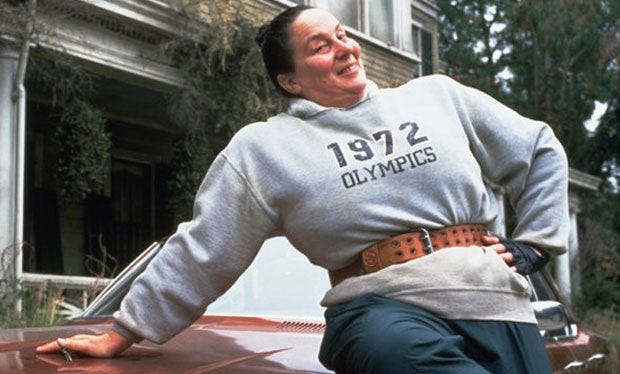
Growing up in the halcyon hypocrisy of the Clinton ’90s, there was always something cringe about the bad guys you’d see on the screen: the camp, the cackling, the sloppy sidekicks. Where was the realism…or whatever?
The culture changed as I came of age, particularly over the last sixteen years. Thanks to the Neptune-in-Pisces boom in therapy, a true crime revival, and Hollywood pumping out prequels like fast food, everyone, including the vilest of the vile, is entitled to a personal history. Bad people don’t crawl out of pits in the earth; they’re made, formed by abuse which must be healed and understood, and here’s their side of things.
This was a necessary corrective to a culture of ruthless individualism, which teaches children that homeless people get what they deserve and that imprisonment is the natural response to, say, possessing a few grams of weed in your car. My parents really believe that if a waiter doesn’t provide good service, a poor tip will teach them a lesson. In a positive development, my generation discovered IFS, parts work, psychedelics and means of forgiveness to move beyond the reductive morality of the atomic age.
And then came 2011, 2016, and 2018, and Brett Kavanaugh crying like a baby, and the shock of the sort of venal, vile villain who wants nothing but power and pussy, who wins the masses by lacking that empathy which had to become performative by the time it became a reality TV tool, a prop of consumerism. With #metoo and its revelations, we all sought to make sense of our violators, on the big and small scale. How could this happen? What makes a person act this way? Trying to make sense of the election catastrophe, we all had to hear that same tired line of “reaching across the aisle” to understand one another.
Some dialogue helped balance the scales for the good. Women who had been publiclly defamed were granted public pardon (as if that matters) for the moralisms of the past. Restorative justice took hold of the monoculture, even inspiring Spider-man to help his villains, rather than just watch them self-destruct, in the multiversal salad Far From Home.
The global meltdown continued, the news became too overstimulating, and we needed soft textures. Disney and Pixar movies no longer featured classic foes, opting instead for bouncing emojies representing feelings, or something (I watched the last Inside Out movie on cocaine and can’t remember much of it). Everyone had a story, a Trauma Plot, and every TV show would have to inflict hours of flashback drudgery to explain its characters’ hard upbringing.
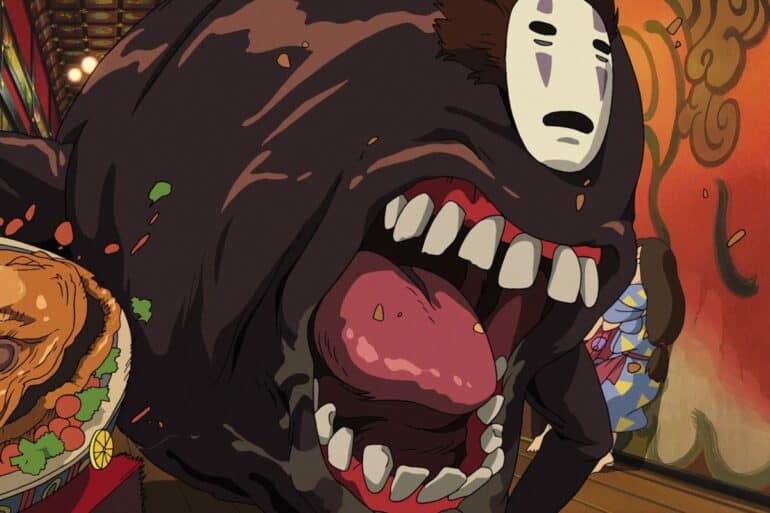
Of course, this fascination with what’s inside would take a pornographic swerve for the worse. So comes the supposedly highbrow serial killer documentaries, no less tawdry than Hard Copy and the work of Gale Weathers. We all want to get inside his mind, to understand what she was thinking when she did it. For three election cycles, the media played into the current president’s hands by reacting to his every word, by trying to make sense of what makes him tick. Like No-Face, the corrupted spirit of gluttony in Spirited Away, the president got bigger with attention—any attention, and his critics couldn’t help but feed him more.
At the end of 2024’s Furiosa, the road hard heroine faces the warlord Dementus in mortal combat, only to pause for a recital of his trite backstory: dead family, hard times, a turn to barbarism. Good and evil, forgiveness, redemption. Hitler wanted to be a painter. Sure.
Meanwhile, the real supervillains took the stage, celebrating irony and trolling against the false earnestness enforced in the wake of 9/11, twee culture and 2010s “love is love” gibberish. The new tech overlords and oligarchs have made their loyalties and priorities clear; there’s not much more to understand about what drives Sara Netanyahu and Mark Zuckerberg. Politicians have always been corrupt, but this class has demonstrated a total disinterest in human empathy, as modeled by a silent Reagan at the boom of the AIDS crisis.
And yet, in the public imagination, the villains couldn’t match reality. 2025’s Superman reintroduced the scheming bald business tyrant Lex Luthor to the world, and, despite Nicholas Hoult’s solid performance, he couldn’t touch the antics of his successor Jeff Bezos. Josh Brolin played a conniving executive running a dystopian TV slaughter arena in The Running Man revival, but he came off as fangless compared to our reigning reality TV plutocrat.
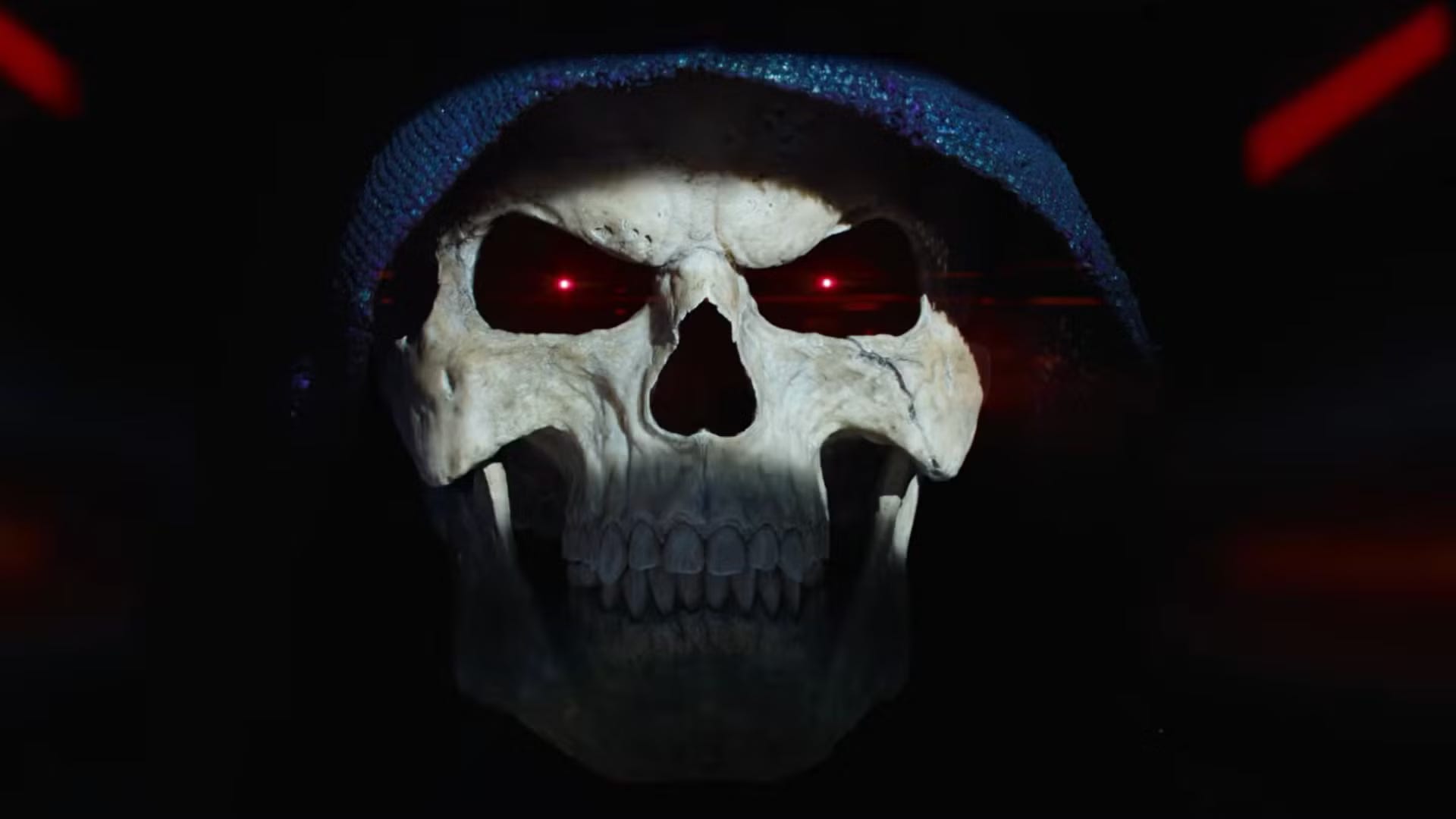
Finally, we got the new Masters of the Universe movie, and a final showdown between our hot-bodied, big hearted He-man and his cackling hag of an archnemesis, Skeletor.
He-Man: Skeletor, I have a proposition for you: why don’t we end this cycle of violence and talk? Just talk. You destroyed my world. You have caused so much pain and suffering. And maybe that’s because you couldn’t be king, maybe it’s because you weren’t loved enough as a child. It doesn’t matter who you are, what matters is what you do. So, do something right.
Skeletor: Oh, you boob! You muscle-bound milquetoast! There’s no nice that will reach down here! There’s no good in me that you might uncover! There is nothing you could say that will change my nature! I am the villain. And mmm, does it feel good!
Finally. I hate to sound cynical, because as a rabbinical student I am actively learning about the value of all life and the contribution that each of us has to offer, one way or another. And yet, in reckoning with a family member who has committed calculated murder; and, more mundanely, in encountering those typical parasites who will always seek to hustle, scam and screw to ascend to the top, there are times when one has to step away and accept the truth: not everyone can be saved. And if you look deep enough, you may find that there’s nothing in there.
We spent three hours studying “the origin of evil” in my Zohar class. There are plenty of takes. Evil is a part of the whole, and comes in some package deal with the good. It’s part of the balance. Looking at the ten spheres of the Kabbalah, my teacher said that evil emerges when any one sphere, any one part of the system, spins out of balance with the others. The sphere of wisdom gives us structure and intellect, but left uncorrected it becomes prescriptive and totalitarian. The sphere of the womb, where we go for love and understanding, can subsume us in incest without proper boundaries.
The balancing, then, is the entire project, micro and macro, in ourselves and for the larger society. And it’s in short supply, apparently, in our current borderline rules of engagement, a mirror hellworld in which each of us (inspired by our digital coaches) banishes away anyone “toxic” for their obvious narcissism, never questioning what they reflect in us. Of course the shadow is my own, and has something it wants to say to me: about what I don’t want to see, and what I could be capable of, be it through the best or worst execution of my power.
In my childhood, the villain was the best part of the movie, and the confrontation was essential to the hero becoming integrated, whole. Something’s off now. We either hold them too close, give them too much of a backstory, or ostracize them, never to be faced. Whatever the new balance is—of discernment and compassion—it will make us into more complex, creative heroines, no longer fools to feeding the devil.
Interested in the spheres, the stars, or your own shadows? Let’s do a reading! Books are now open for August and September. I hope to see you soon.
All my love,
David
Comments
Nothing yet. Say the first thing.
Sign in to join the conversation.