
I first came on my own at twenty-two. My cousin through marriage, David, was my anchor. His father was a doctor, and we slept in his office those early years — out by nine on Monday mornings, before the patients arrived. David equipped me with a guidebook and a sturdy map of the city and its subway.
We ran New York. Carnegie Deli. Central Park. The Met. MoMA. The Village Vanguard. Dates, drinks, shows, late trains. I dragged colorful modern and Impressionist posters home and framed them for my loft in Washington, which looked out over a parking lot.
I came back monthly for ten years while working in real estate development in D.C. Then I moved to San Francisco and went to work building the green building movement.
A few weeks ago I returned at sixty-six, taking the train up from my Baltimore kung fu tournament to spend five days with my daughter.
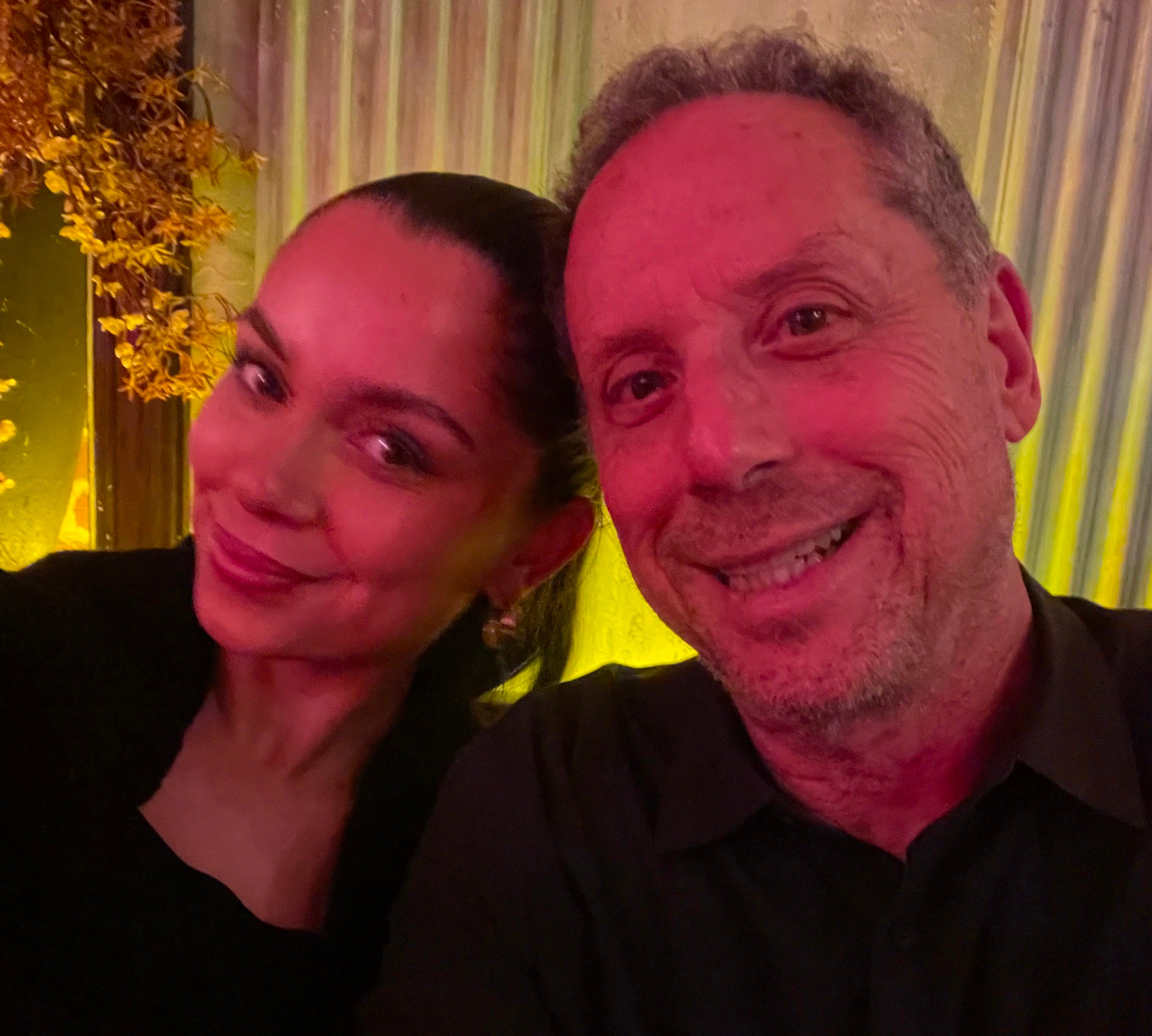
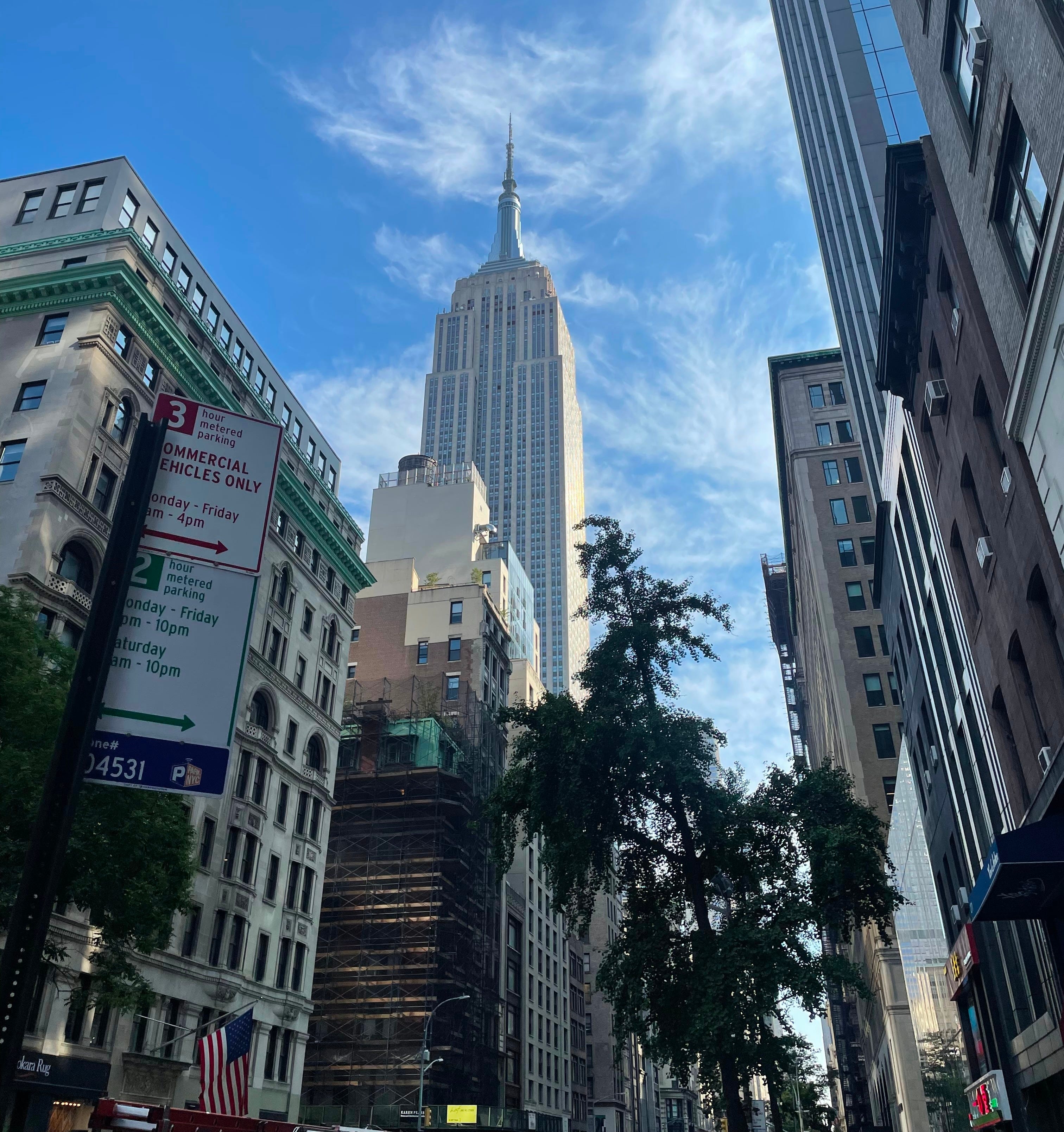
Maya’s summer job was at a law firm on Madison Avenue. Each morning I walked her to work from her NYU dorm, about fifty minutes, then took the 6 train back downtown. High on her agenda was an iced latte with whole milk and honey. Mine was a decaf flat white. Each morning she picked a different place from the endless supply.
We talked about her last week of work, her two weeks at home before senior year at USC, her love for New York, her hope of returning. I pointed out buildings. She pointed out restaurants. We traded dreams and a few regrets.
The first morning I saw a LEED Silver plaque on the glass entry wall of her building. I photographed it, then pointed it out to Maya.
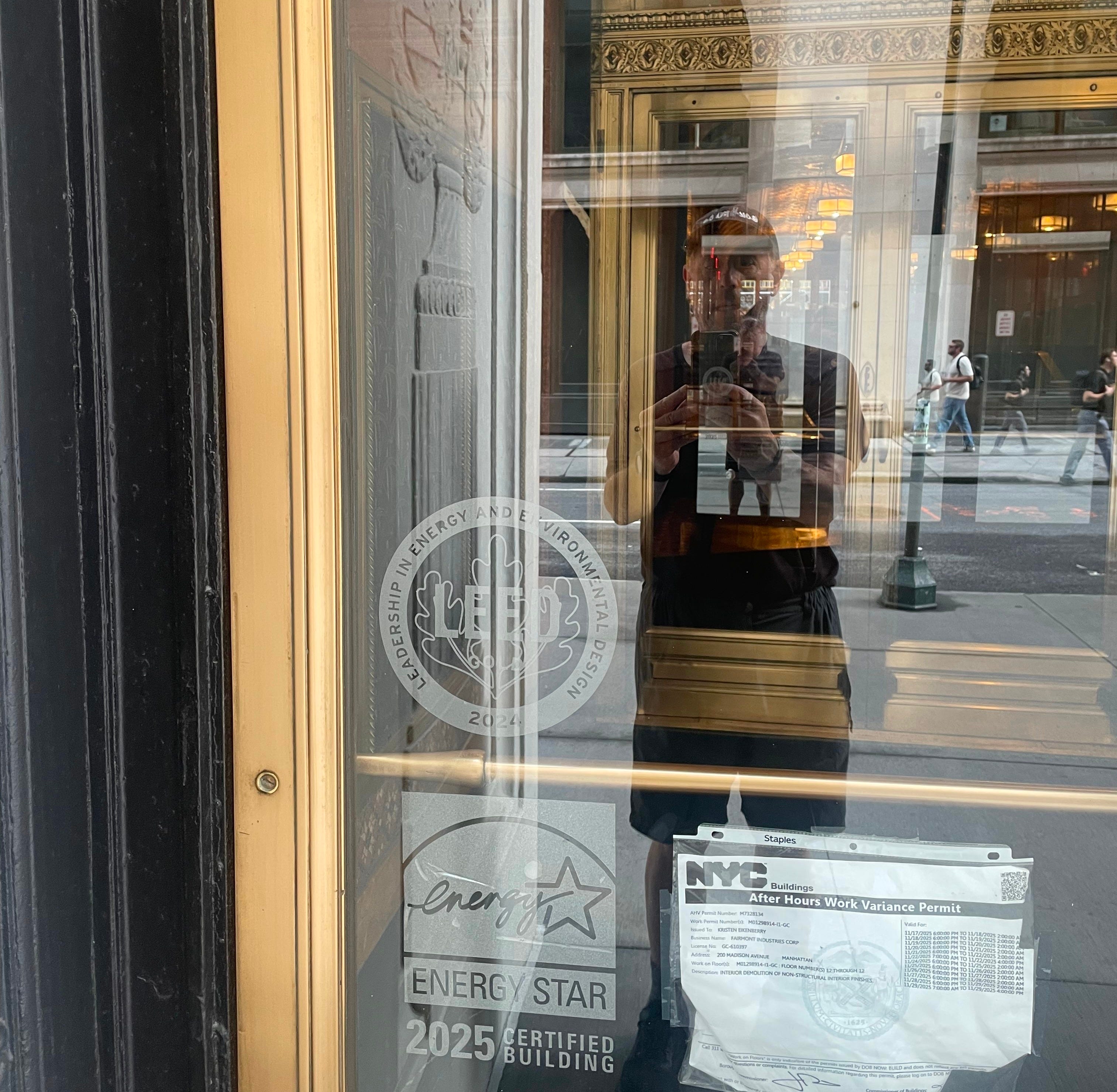
She didn’t say much. It was the lobby she walked through every day.
I spent forty years working for that. When we started, a green building was an argument you had to win in a room full of people who thought you were wasting their money. Now it is etched on a glass wall, and hundreds of people walk through that wall every morning without looking at it.
I sent the photo to a friend who works in that building. We met eighteen years ago at a Jewish preschool, when our daughters were three. He sent back a heart.
LEED and other green building plaques are everywhere now — in lobbies in every city I walk through, on buildings that didn’t exist when I was sleeping in a doctor’s office and taking trains up from Washington.
When I first came to this city on my own, the atmosphere held about 341 parts per million of carbon dioxide. It is now approaching 430. That happened while I was alive. War was on every screen in the Baltimore train terminal.
My parents had brought me here as a boy. Yankee Stadium. Egg creams. Barrels of dill pickles. They grew up in the Bronx, and my father kept the accent, the humor, and the sarcasm his entire life.
At Katz’s I ate pastrami and heard Hebrew at the next table. The sign says The Real Taste of New York Since 1888. It seemed unchanged from my first visits four decades ago.
My grandparents on my mother’s side came through this city from Poland with nothing. Grandma Frieda used to say essen — eat, my child — the moment we walked into her apartment for the holidays. Kugel. Gefilte fish. Fresh challah. She overcooked the brisket so my grandfather Izzy could manage it with his dentures. The bread pudding was made from stale bread, the way she had learned in her shtetl, where they spoke four languages and survived the pogroms.
I hadn’t thought about her cooking in years. A chocolate rugelach from Zabar’s brought it back, as did a glass case stuffed with pickled and smoked fish.
My father, Ira, died seven years ago. My mother is ninety-two, living in assisted care near me in Northern California, spending most of her days in a dark brown recliner.
At sixty-six I can see the whole chain — the ones who arrived, the ones leaving, the ones just starting.
And I know where I stand.
At Stanford I told my father I wanted to leave engineering for creative writing. He said I would be paying my own way. I stayed where I was. I did not write a published page until I was forty-two.
In my early twenties I took a painting class at the Torpedo Factory in Alexandria. The teacher was French, taught oil, and had us painting fruit with shadows. She never liked anything I did. I quit, and I didn’t paint again for almost thirty years. Whenever I thought about starting, I could hear her accented no, no, no.
Then, on my fiftieth birthday, during a family retreat at Point Reyes, I walked into an art store in Petaluma and bought out the place. Easel, color wheel, starter paints, brushes. I became an acrylic painter that afternoon and didn’t waste a minute. I painted the hillside outside the window that same day.
Later I rented a studio in lower Berkeley and painted half-time for five years. The space was big enough for twelve-foot landscapes and Pollock-style paint thrown from a ladder. A few years after that I painted my first water lilies. Fifteen years on, I am still painting them.
At the Met I got as close to a Monet as the rope would allow. I have never been able to solve the brushstrokes on his water lilies.
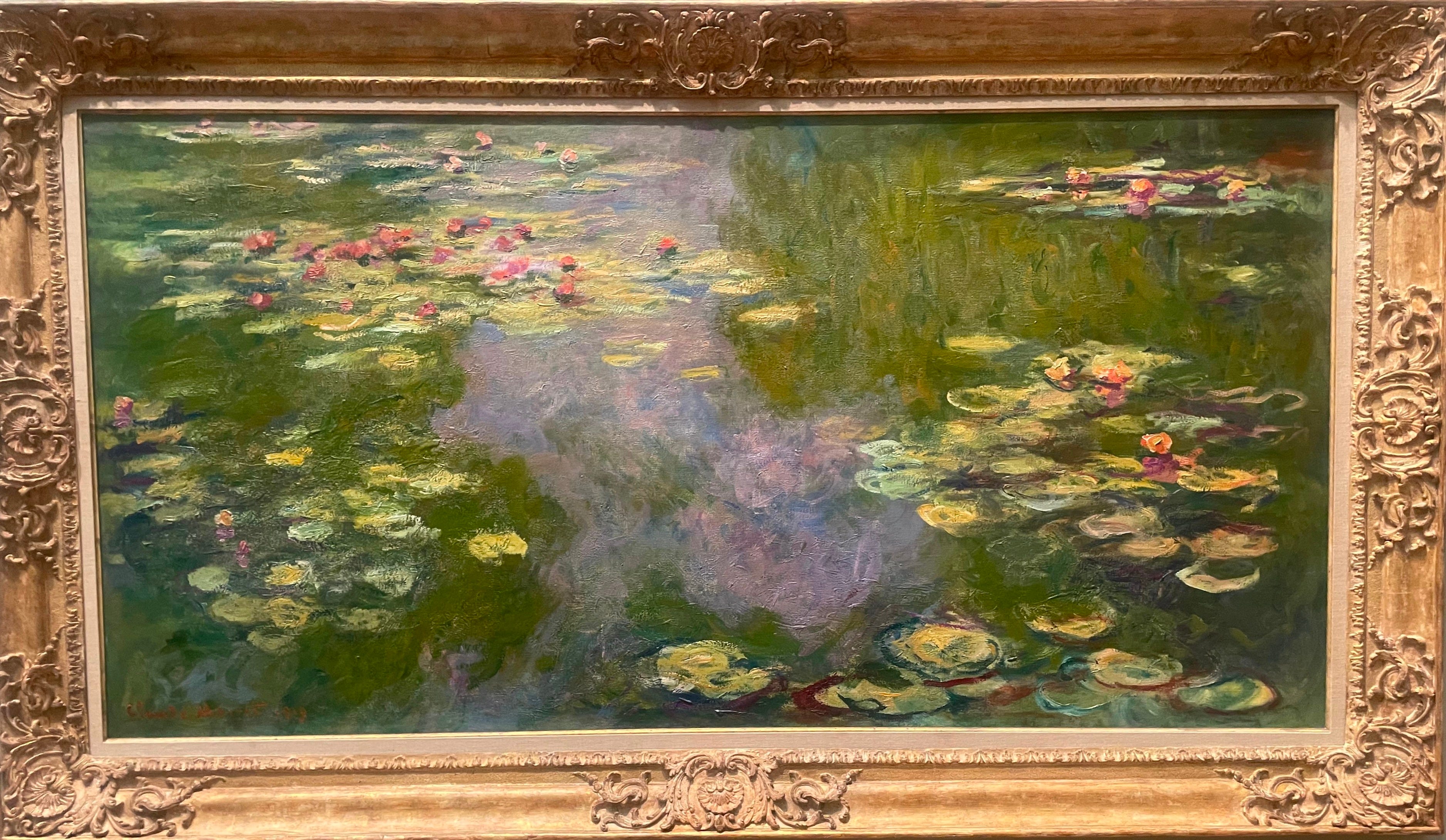
There they were. I leaned in until the guard watched me — the thickness of the paint, the palette, the direction of the strokes. Fifteen years of my own failures and I still couldn’t find my way. I went home excited to try again, with the close-ups on my phone as a map.
Then MoMA and the Whitney. Most of what hung in those three museums did nothing for me. Four painters did: Monet, Van Gogh, Frankenthaler, and Pollock. The four whose work I have tried to understand with my own hands. None of them painted a hard edge.
I first encountered a Frankenthaler in a home in Georgetown, along with a Basquiat. That was how I met both artists — on somebody else’s wall. I took photographs. I forgot to breathe.
Her color had soaked into the canvas like weather. His was scrawled on top, crowned, shouting.
Wildness. Freedom. Oxygen.
I needed to paint, and the urge never left.
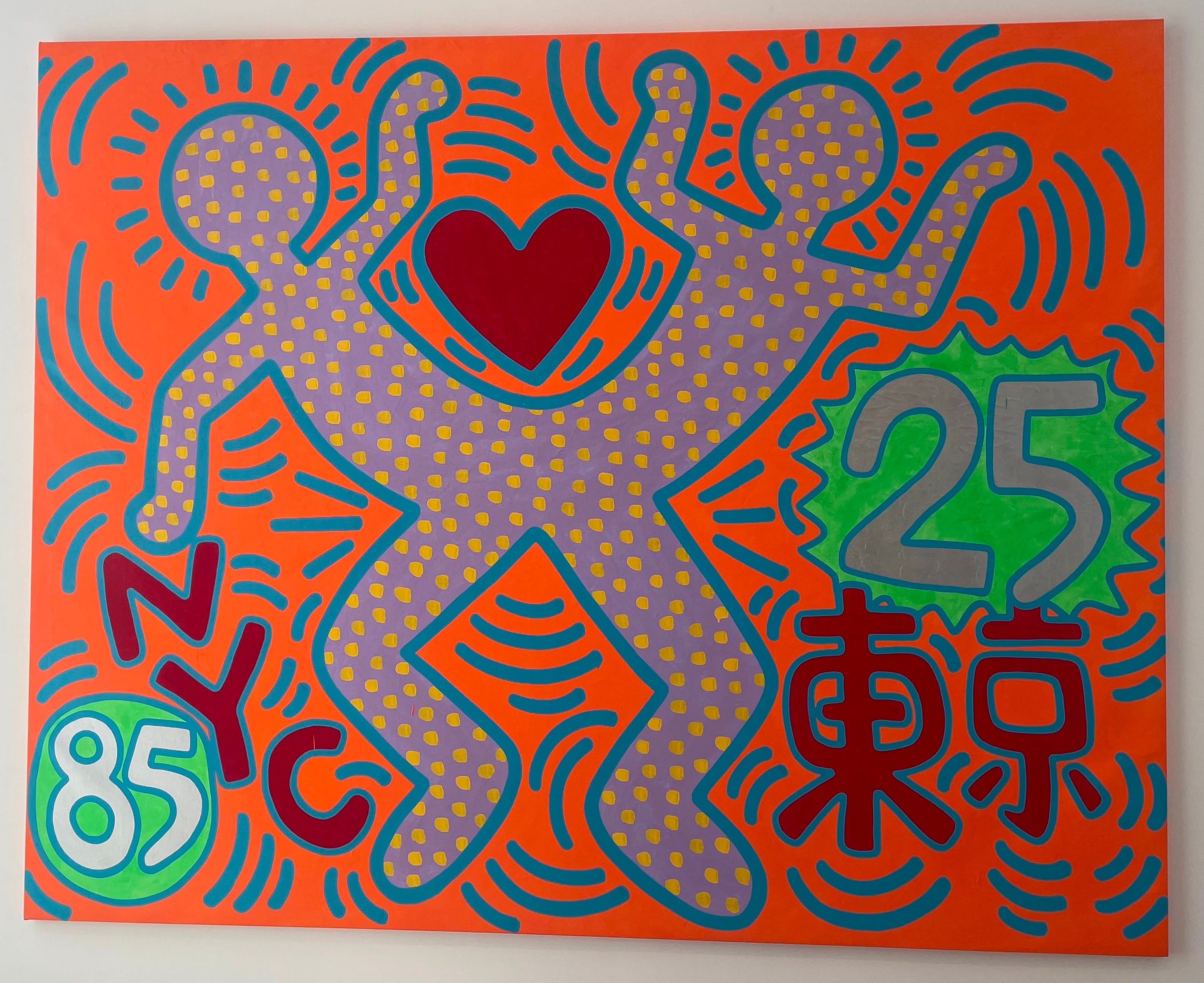
In a gallery near Maya’s dorm, Keith Haring did it again, the same way he had forty years earlier. Brilliant color, light, spark-plug energy.
I had been looking at those blue Citi Bikes for years and had never taken one.
My hip was inflamed from Baltimore, and I didn’t want to walk anymore. The subway was hot. Traffic wasn’t moving. So I rented a bike, started pedaling, and smiled like a kid.
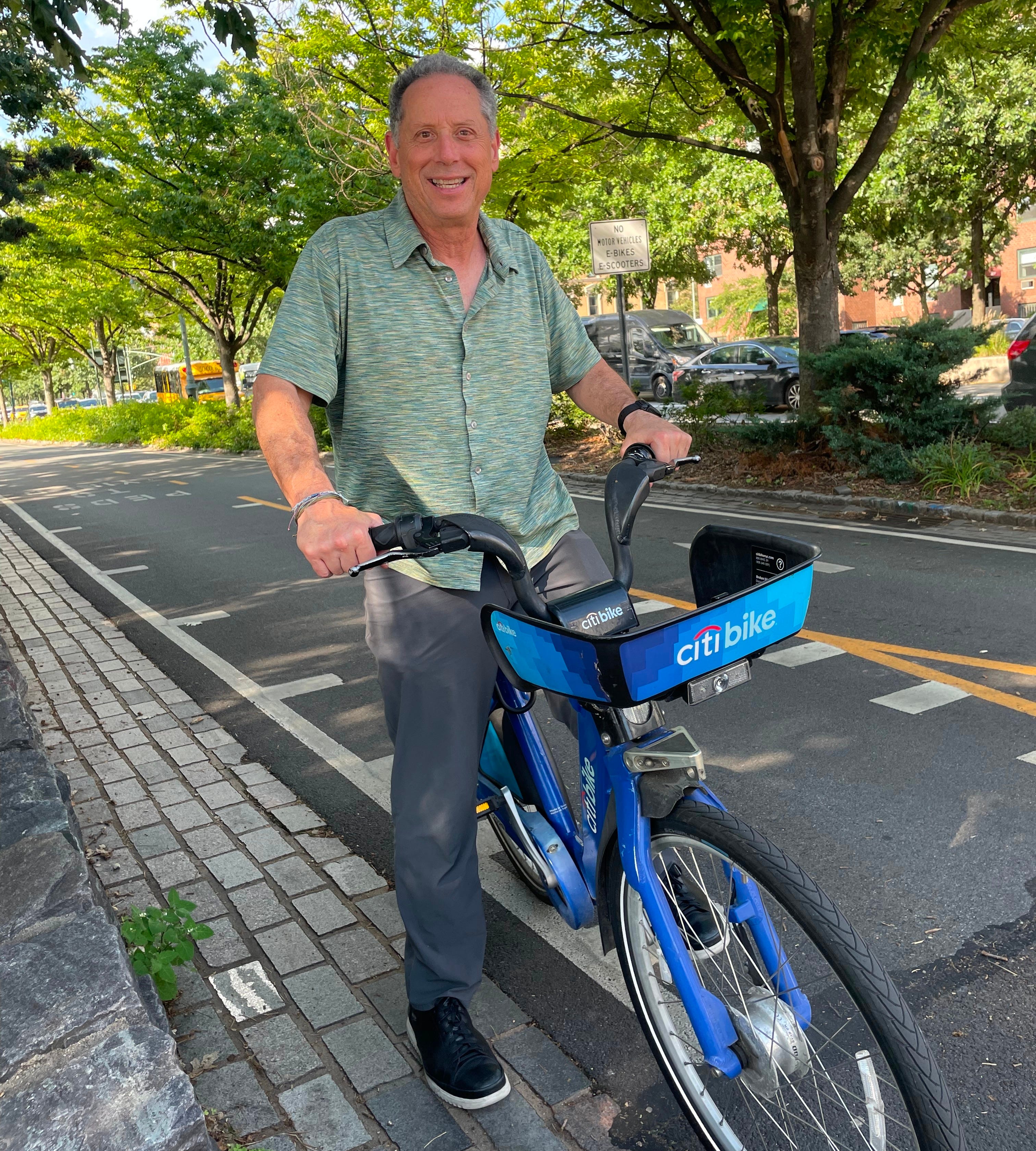
I went straight for the Hudson.
The river was on my right, and my cyclist’s legs remembered — the speed, the sun, the moving current of cyclists and skaters and joggers and lovers holding hands. Boats and ferries crossed the water. Airplanes and helicopters moved overhead. I passed tennis courts and a one-on-one basketball tournament, some guy calling the action through a loudspeaker.
I missed my stop and had to turn around.
Why did that feel like freedom?
I had never stopped moving. Five Death Rides. Kung fu five times a week. Fifteen years of painting. But all of it had become scheduled.
Somewhere in my marriage I made her work primary. I thought it would bring us closer. I called it maturity.
Then the marriage came apart, and I discovered what I had traded for the feeling of holding everything together.
I hadn’t missed a stop in a very long time.
Maya and I had dinner at Shuka. She arrived in her work clothes: black silk skirt, light blue button-down, hair pulled back, black Coach bag with her laptop inside. A young lawyer, except she isn’t one yet. Law school is still ahead of her.
When I asked about her day, she beamed. Then she told me she had won the firm’s moot court competition. I reacted as though she had won an Academy Award and asked her to slow down so I could keep the details for a lifetime.
There are still moments when I feel the pull of what we were, and the grief that we are no longer a family in the shape we once were. I have done my best to build one from what remained.
That night it was the two of us at a table in New York.
And it was enough.
I flew home to a bedroom I have slept in for eighteen months. Maya is in the room next door for two more weeks before school starts. Juneau, our dog, is asleep in her bed on the floor.
Two bronze nudes sit side by side on my dresser. The one on the left is Awakening, cast by my cousin Jack Miller in 1966. It came to me through my mother; she knew I was fond of it and handed it to me when we sold her Los Angeles house after my father died. The one on the right is Becoming. I bought it in New Mexico last year. Butterflies rise from the figure’s body.
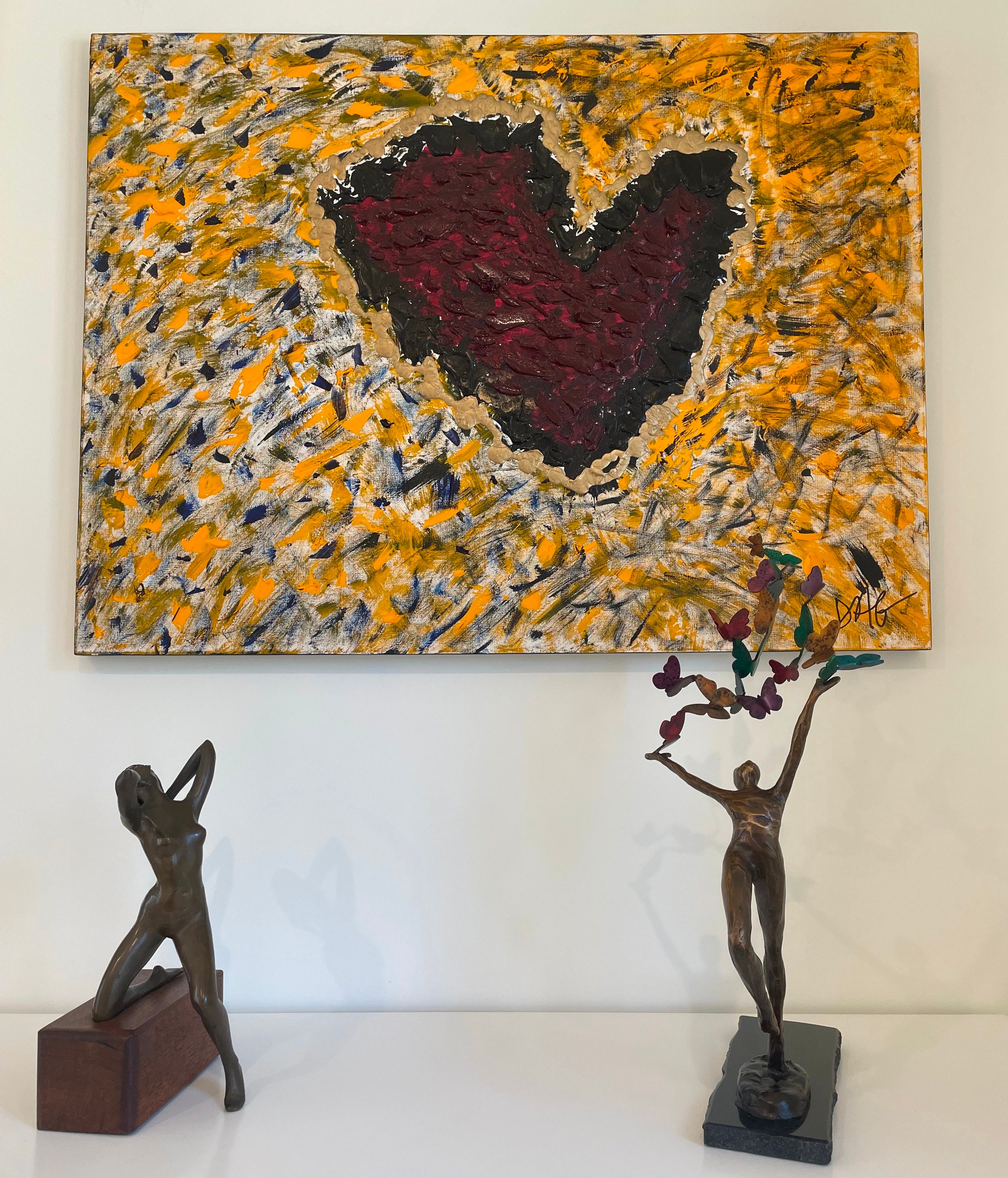
Above them hangs a painting I made for her one Valentine’s Day: a heart laid on thick, blood-dark, ringed in gold and throwing sparks.
I took it with me after we split.
All of it has been there the whole time.
In October I go back to New York carrying a book. I wrote my first published page at forty-two. I finished this one at sixty-six.
No posts
Comments
Nothing yet. Say the first thing.
Sign in to join the conversation.