
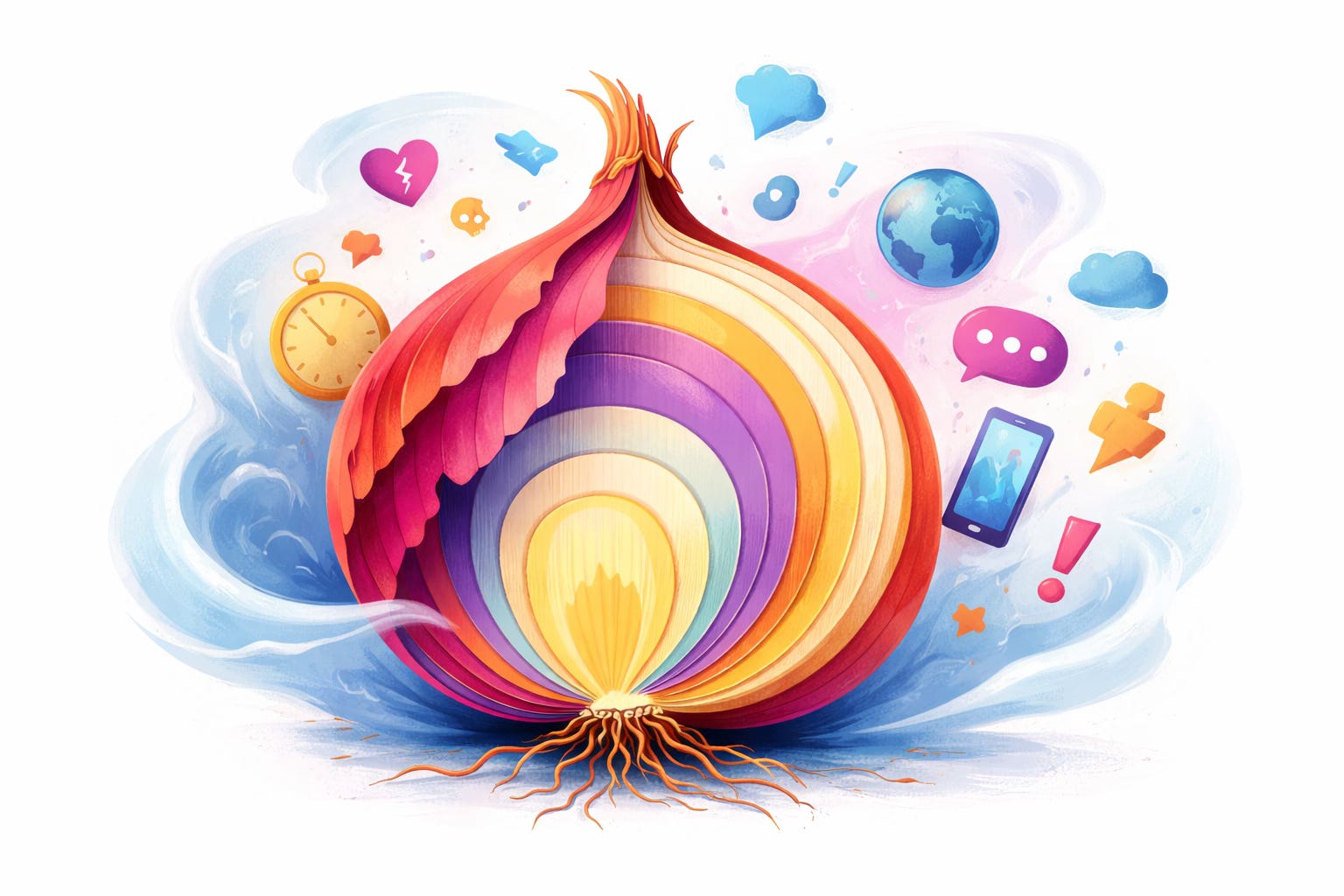
A big question is being asked everywhere right now: why are today’s children the most anxious generation we have ever seen?
After writing Raising Gen Alpha, I realised there was one image I wished I had included. An onion. For Gen Alpha, born between 2010 and 2024, pressure builds in layers.
“Anxiety is like an onion. It comes in layers. And sometimes it makes you cry.”
Anxious behaviour may show up on the surface, but underneath sit multiple pressures shaping how young people experience school, relationships, and the wider world.
In this Substack, I want to help us start peeling back that anxiety onion using the acronym PRESSURE, drawing on research from the Children’s Commissioner for England and the voices of young people themselves.
Meet the Anxiety Onion.
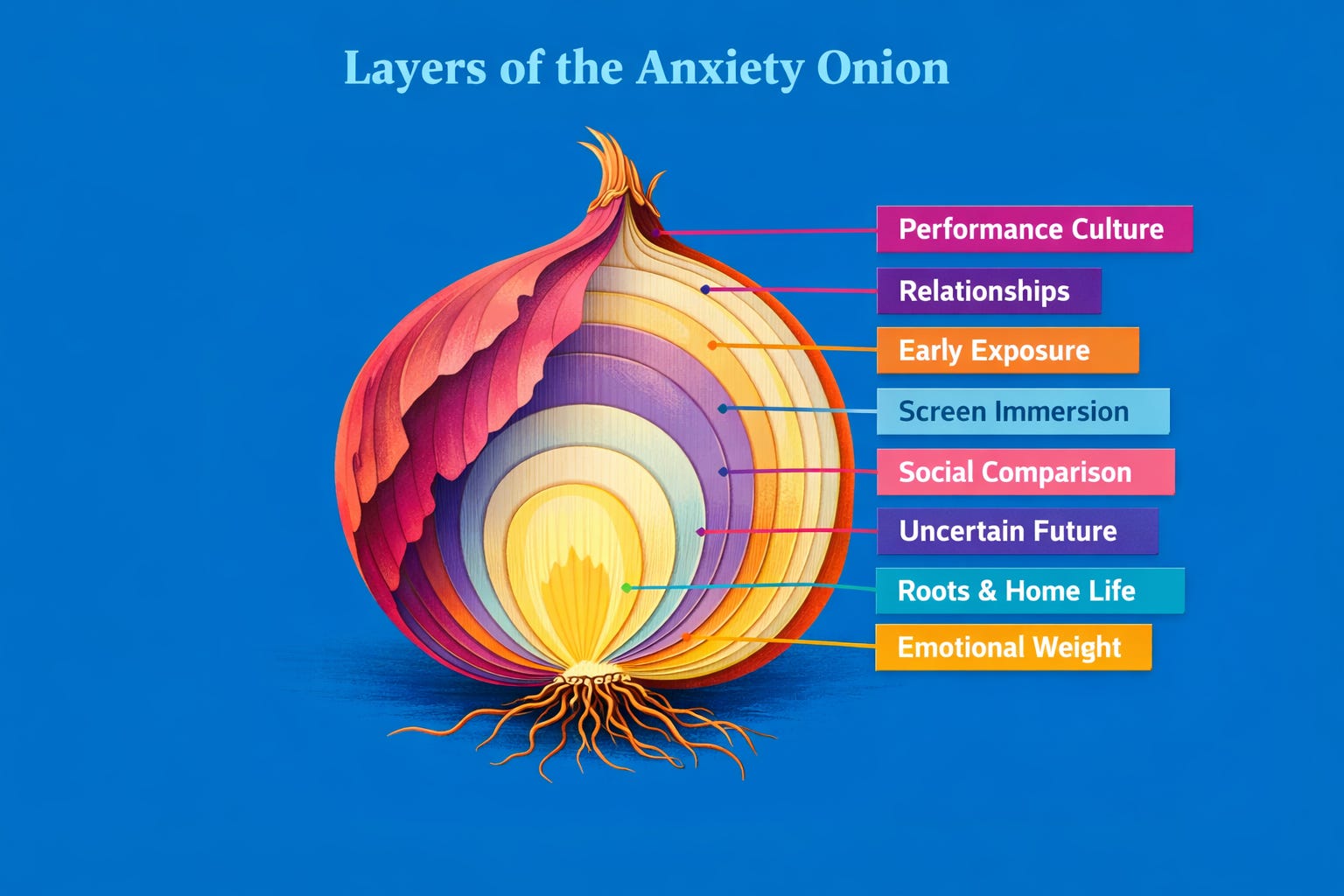
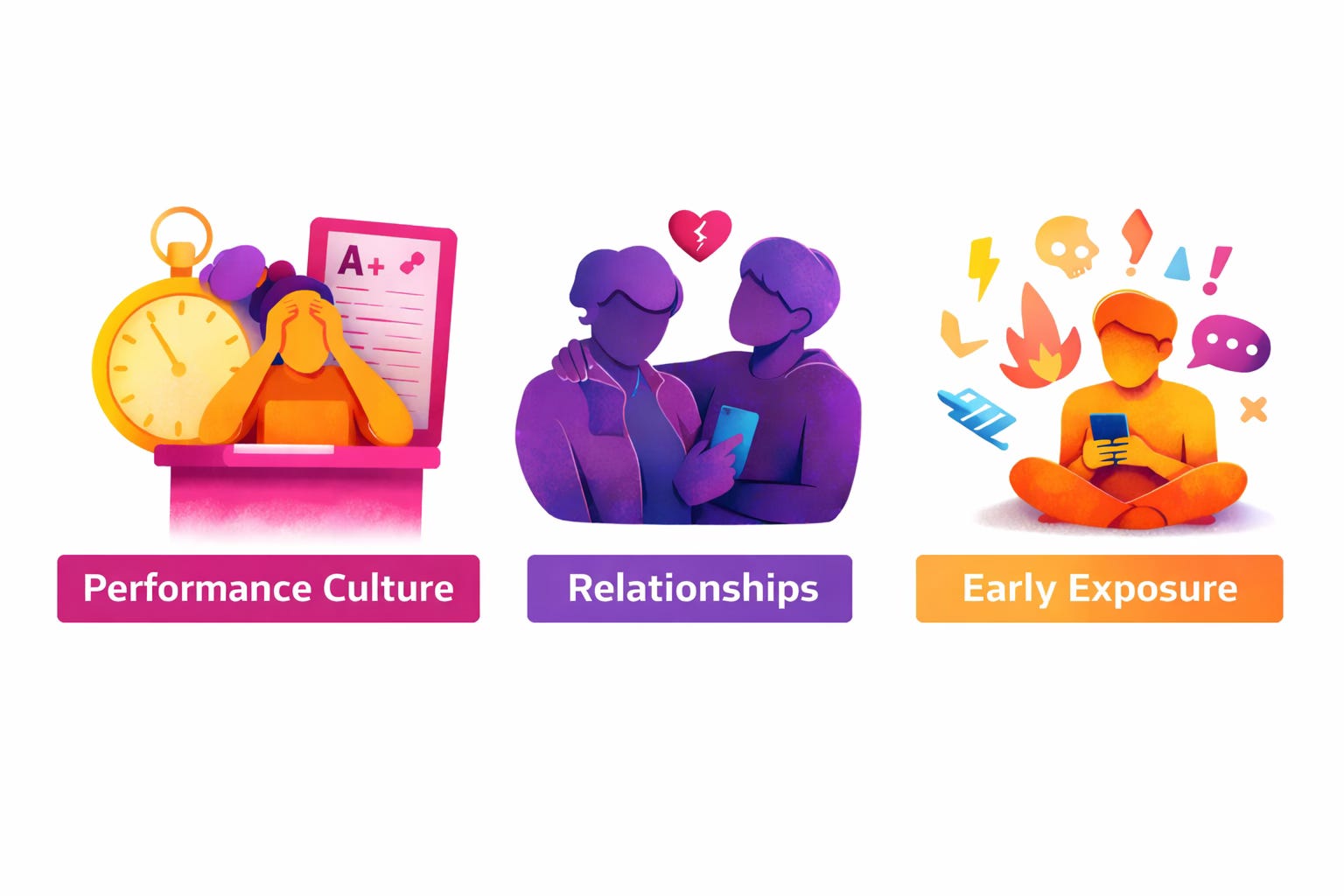
The first layer shows up most clearly in school. In England today, around five children in every classroom have a probable mental health challenge, according to NHS England. For many Gen Alpha children, school feels relentless. The daily demand to keep up, perform well, and not fall behind builds over time, and for many children the classroom is where that strain shows first.
Young people describe this pressure in simple, honest terms. One eleven-year-old put it like this: “My mental health is going down, all the stress of homework I have to revise every day.” School can start to feel less like a place of learning and more like something to get through. When that happens, motivation often dips, followed by attendance and behaviour. The pressure does not end when the bell goes. It follows children home, shaping how they think about success, failure, and their own worth.
The next layer shows up in relationships. Much of their social world now runs online, where tone is easily misread and small issues escalate quickly. Research from the Pew Research Center shows that 39 percent of teenagers say social media leaves them feeling overwhelmed by drama. Friendship no longer ends at the school gate.
Young people describe this strain clearly. In research led by the UK Children’s Commissioner, one Year 7 pupil said, “It is hard to properly understand someone on social media because sometimes things are taken the wrong way.” Another added, “Social media tears friendships apart more than it makes them.”
Disagreements that once faded now stay visible and unresolved.
Many Gen Alpha children want closeness but feel unsure how to handle conflict or repair trust. When belonging feels fragile and always on show, relationships stop feeling safe, and that pressure feeds anxiety.
Another layer shows up in what Gen Alpha are exposed to, often earlier than we realise. According to the Children’s Commissioner, 27 percent of children have seen online pornography by the age of 11, with most saying they came across it accidentally rather than looking for it.
Young people describe how sudden and uncomfortable this can feel. One Year 6 pupil said, “Sometimes things just come up and you can’t stop them. You don’t want to see it but it’s there.” Another Year 7 pupil explained, “People send things as a joke, but it’s not funny. It makes you feel uncomfortable.”
Many Gen Alpha children are also encountering violent imagery, sexualised content, extreme opinions, and distressing news far earlier than previous generations, often when no trusted adult is nearby. Exposure like this shapes how safe the world feels and how relationships are understood, becoming another layer of pressure.
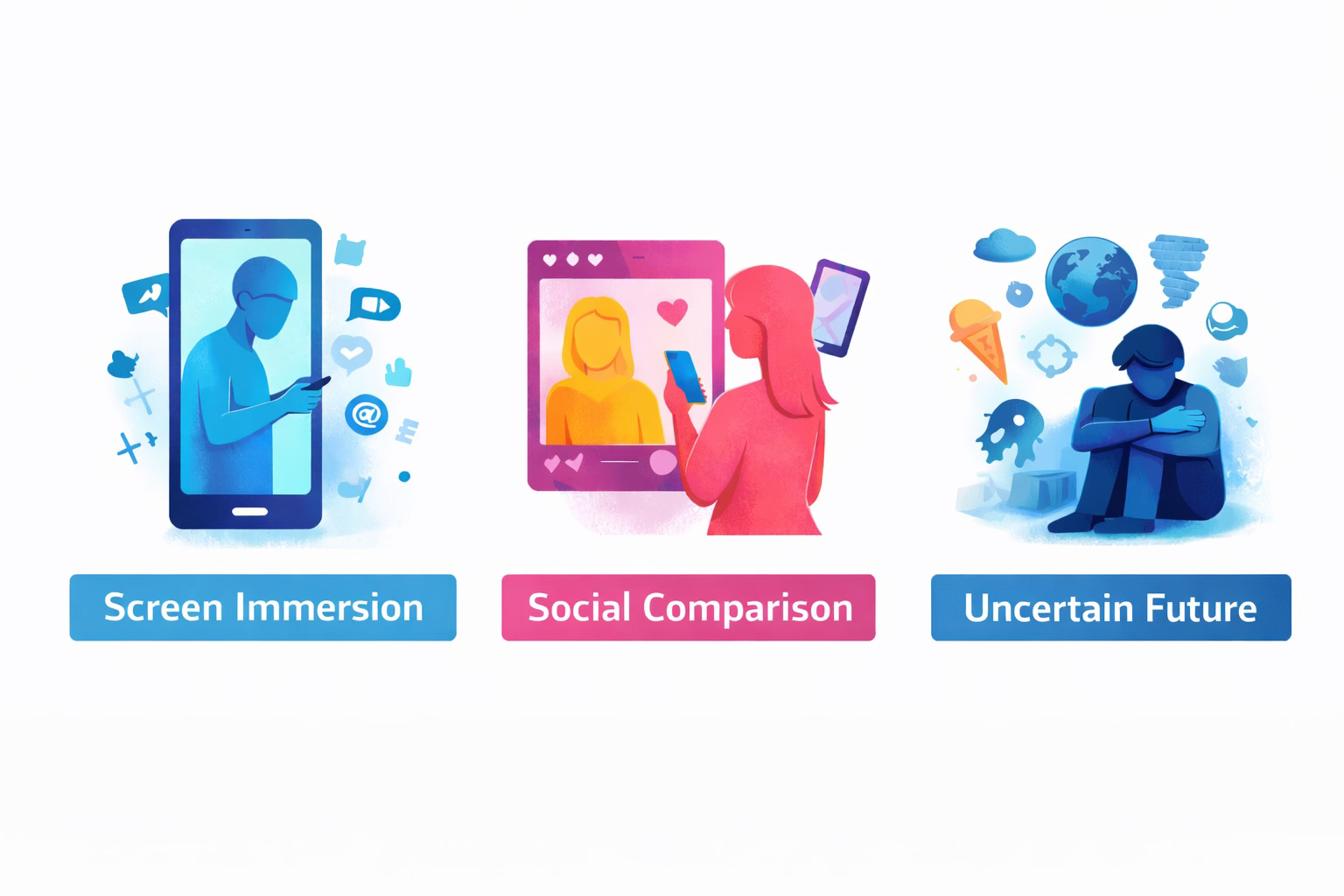
As another layer is peeled back, screens are everywhere. According to the Children’s Commissioner, many children now spend around four hours a day online, with that figure rising sharply as they get older.
Screens have become one of the main ways many children manage their feelings, often without realising that they can also make things harder over time. As expert Jonathan Haidt puts it, technology has not created new anxieties so much as turned up the volume on age-old ones.
Young people talk about screens less as entertainment and more as escape. In the Life in Likes research, one Year 6 pupil said, “If you’re in a bad mood, you just go on your phone and then you feel better.” Another explained, “You can scroll to a funny video and forget about sad stuff.”
When boredom, stress, or anxiety show up, screens become the easiest place to turn. They offer quick relief, but they also shape attention, coping, and how young people learn to deal with difficult feelings. For Gen Alpha, immersion is not simply about time spent online, but about where they have learned to go when life feels hard.
Yet another layer sits underneath screen use itself. Gen Alpha are growing up in a world where comparison is constant. Social media makes everyday life feel as though it is being judged. Research from the Pew Research Center shows that around a third of teenagers feel pressure to post content that will get likes or positive attention, and many say social media leaves them feeling worse about their own lives.
Young people describe this in simple ways. In the Children’s Commissioner Life in Likes research, a Year 5 pupil said, “Sometimes I look at people online and think they look so much better than me.” Another reflected, “You see what everyone else has and it makes you want it too.” What stands out is how young these children are, and how early comparison takes hold.
For Gen Alpha, this layer feeds anxiety by convincing them they are behind, not enough, or missing something others seem to have.
Alongside everything else sits uncertainty about the future. Gen Alpha are growing up surrounded by conversations about climate change, conflict, inequality, and rapid technological change. In The Big Ask, the Children’s Commissioner found that the environment was one of the most common worries named by children aged nine and above.
Young people talk about this with striking clarity. One 12-year-old wrote, “If we don’t fix climate change, we won’t have a future.” Another reflected, “It feels like young people are expected to sort out problems we didn’t create.” These worries are not abstract. They sit in the background of everyday life.
What if we’re expecting children to carry adult-sized pressures while still using child-sized tools?
For many Gen Alpha children, there is a growing sense that the future is fragile and that they should already be doing something about it. Wanting to care, but feeling powerless, adds a layer of anxiety that is hard to switch off.
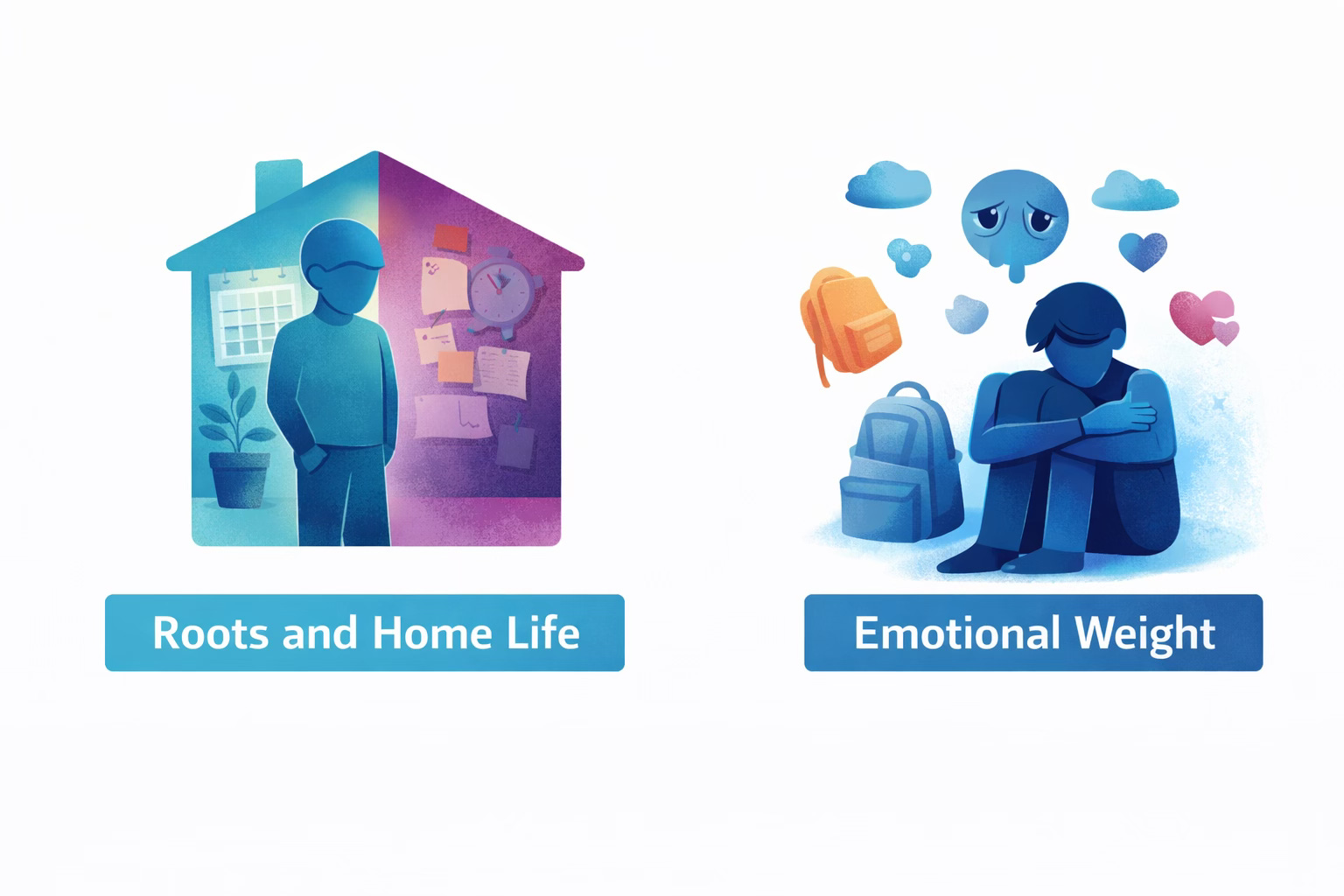
Another layer sits closer to home. For Gen Alpha, home life varies widely, but its influence runs deep. According to the Children’s Commissioner, children experiencing mental health difficulties are more than twice as likely to be living in households under financial or emotional strain.
In The Big Ask survey, an eight-year-old wrote, “I just want my family to be healthy and have enough money.” Another child explained, “When my parents are stressed, I feel stressed too, even if they don’t say anything.” What happens at home does not stay at home.
Some Gen Alpha children have learned to take on responsibility early, worrying about money, health, or family stability while trying to appear fine elsewhere. That sense of responsibility becomes another layer, sitting underneath everything else they are carrying.
At the centre of all these layers sits emotional weight. In England, referrals to NHS children’s mental health services for anxiety have more than doubled since before the pandemic. Many children are not just feeling pressure, they are struggling to carry it.
Young people describe this quietly. In The Big Ask, one eight-year-old said, “If I could change anything, I would change my mental health.” Another explained, “Sometimes I feel sad or angry and I don’t really know why.” Emotional weight often shows up as tiredness, withdrawal, or behaviour that feels hard to manage. What adults see as the problem is often the signal. By the time feelings reach the surface, the layers underneath have been building for some time.
Peel back enough layers, and it becomes clear why anxiety runs so deep for Gen Alpha.
So how can we help Gen Alpha unpeel their anxiety?
My new book offers practical, everyday ways to support anxious children. But a good place to start is closer to home, with you and me. When you look at these layers together, Gen Alpha can begin to look uniquely fragile. Yet the Bible reminds us that pressure is not new, and fear has never had the final word.
“For God has not given us a spirit of fear, but of power and of love and of a sound mind.” 2 Timothy 1:7
That word “but” really matters. Paul is not pretending fear does not exist. He names it, and then refuses to let it be the thing that leads us.
Paul writes these words as an older leader to the next generation. Timothy is under pressure, carrying responsibility in a difficult context. And when you pause and look at his situation, many of the same layers we see pressing in on Gen Alpha were already present for him. There was pressure to perform and not fail publicly. There were relational tensions and conflict. There was deep uncertainty about the future, and a real emotional weight that made shrinking back feel tempting.
Different century, but very familiar layers.
Paul does not tell Timothy to deal with each pressure one by one. He goes to the centre. He reminds him what God has and has not given him. Fear may be present, but it is not the spirit God has placed within him.
This speaks directly into the task of raising Gen Alpha. Paul’s response gives us a way forward. He points Timothy first to love. Much of what sits underneath fear is really a question of belonging. Am I enough? Do I matter? Am I safe? When love feels uncertain, fear quickly fills the gap.
That is why, before Gen Alpha need strategies for anxiety, they need adults who are secure in love.
Fear spreads through insecurity, but love creates safety. When anxious thoughts show up in children, adults often respond to what they can see on the surface. We might minimise it, distract from it, or rush to fix everything. But when the adults themselves are caught by fear or overwhelm, it can end up escalating rather than settling what a child is feeling.
Love, not fear, is what creates space for anxiety to loosen its grip.
Paul also talks about having a sound mind. A brief caveat matters here. Scripture speaks to the inner life, not clinical diagnosis. We are not talking about medical labels, but the everyday fears and anxieties many children face. When anxiety starts to make a child’s world smaller, or becomes overwhelming, it is right for parents and carers to seek help from teachers, church leaders, counsellors, or health professionals. This is not a lack of faith, but a wise and loving response.
A sound mind does not mean never feeling stressed or worried. It means having a mind shaped by truth. Much anxiety comes not from what is actually happening, but from the story our thoughts begin to tell about what might happen. It is not just events that unsettle us, but the meaning we attach to them. A sound mind learns to pause, question that story, and return to what is really true.
When we choose love over fear and truth over worry, we do more than steady ourselves. We model a different way to live under pressure. Gen Alpha are watching how we carry fear, how we speak about the future, and how we respond when things feel uncertain.
This is where the onion image helps us again. We cannot always remove the layers our children are living with, but we can help them get to the centre. The same Spirit that sustained every generation before us has been given to Gen Alpha. Our task is to help them peel back the layers until they discover it
No posts
Comments
Nothing yet. Say the first thing.
Sign in to join the conversation.