
Domenico Fiasella (1586–1669) had twenty minutes of usable northern light before the sun dropped over the Ligurian hills and forced him to choose between burning expensive tallow candles or calling it a day. Four hundred years later, standing under the thick stone arches of a vault in Tzfat, we faced the same problem—except our tallow is a continuous LED jammed into an archway, bounced off a grid to mimic an afternoon sun that faded forty-five minutes ago.
In this video, Miri and I break down the physical mechanics of bringing a rare 17th-century art book into focus. We dissect the precise lighting rig needed to bring out oil-paint texture without blowing out glossy paper, drop into a quick hands-on lesson on archival Brodart wrapping, and explore how a Baroque master manipulated shadow to survive his epoch.
Light hasn’t changed. Only the modifiers have. - DB
[Now for the original AI-fused essay that - excuse the expression - “prompted” all this: An Italian Master Behind the Lens of a Smartphone]
Previously, the first entry in the series is here:
“Dave to Gemini AI - woke up one day with this idea: “Tell me a story about these four shots, as if you’re an artist from 17th century Italy and have never seen photography before - but you know how to critique a future photographer irregardless of the technical toys, with your well-honed experience, talent, and skills.“
Background:To look at Fiasella’s world through a Jewish lens requires looking at the actual stones of Genoa during the 1600s. The relationship between the Republic of Genoa and its Jewish population was one of transactional utility and sharp geographic confinement. For centuries, Jews were alternately expelled and invited back solely based on the maritime republic’s shifting financial fortunes.
By the time Fiasella was establishing his workshop in the early-to-mid 17th century, the walls were literally closing in. In 1660—just a few years before the Maestro’s death—Genoa formally established its official, walled ghetto in the dense, claustrophobic center of the old city, near the Piazza dei Gidoni. Before the confinement, Jewish merchants and physicians lived under a fragile system of temporary residence permits (condotte), wearing distinctive yellow signs on their garments to ensure they were never mistaken for the Christian majority. They were tolerated for their commerce but kept strictly outside the civic and spiritual heart of the Republic.
When Fiasella was painting his massive altarpieces to decorate the churches of Genoa, he was working within a society that actively legally segregated the very people whose ancient texts formed the foundation of his theological imagery. The majestic, soaring light he engineered for his patrons was funded by a state that locked its Jewish residents behind gates at sunset.
Full disclosure: Decades behind a lens, an observant life in Israel, and the discomforting brilliance of an old master’s shadows.
As a journalist, I spent my career putting my personal feelings on a shelf, systematically dissecting the hard mechanics of breaking news. You learn to isolate your gut from your eye.
But as I thumbed through the books on the desk about the artist on a recent Shabbat afternoon, I found myself trapped in a strange internal conflict. As an observant Jew who has lived in Israel for decades, to be entirely honest, I felt put off by Fiasella’s Christological iconography. I can certainly admire the craft, but the theology behind it breeds an undeniable discomfort - amplified by recalling accounts like the above - chronicling the demeaned state of the Jews penned into his city’s ghetto of the time.
”The 16th century would see Tzfat’s Golden Age. As a result of the Spanish Expulsion, a huge influx of pious and well-educated Jews flooded the city. They brought with them brand new technology in textile development, leading Tzfat to become one of the main Mediterranean producers of felt.
A spiritual renaissance accompanied this economic boom. Tzfat was bursting with sages, Kabbalists and visionaries who bounced ideas off one another with razor-sharp clarity and depth. At sunset each Friday, these mystics would descend into the fields surrounding the city, singing Psalms and poems in order to welcome the Sabbath Queen. One of the members of this group, Rabbi Solomon Alkabetz, penned the well-known poem Lecha Dodi. This custom developed into the Kabbalat Shabbat still practiced by every Jewish community around the world today.”
Yet, as a photographer chasing depth, I keep returning to these volumes. I need their secrets. I need to learn how to force two flat dimensions to look like three.
I sat in our living room in Tzfat, surrounded by the boxed-up remnants of the life’s work of art historian Mary Newcome-Schleier (Miri’s mother)—museum-level coffee-table books, monographs, and sketches focusing largely on the restless genius of the Ligurian Baroque.
Suddenly, the room felt crowded. A fictional dialogue began brewing between my pocket lens and Domenico Fiasella the master from Sarzana who was a premier visual weapon for the Roman Counter-Reformation.
He leaned over my shoulder to examine the pixels.
”You marvel at the engineering of your little device, Dave,” Fiasella murmured, his voice carrying the calm weight of a man who spent his life painting for popes and powerful patrons. “Your device calculates the physics of light in a millisecond, but it cannot choose the moment. It is merely a highly complicated paintbrush. Let me show you how my canvas maps onto your data.”
Case Study: The Guardian at the Threshold:
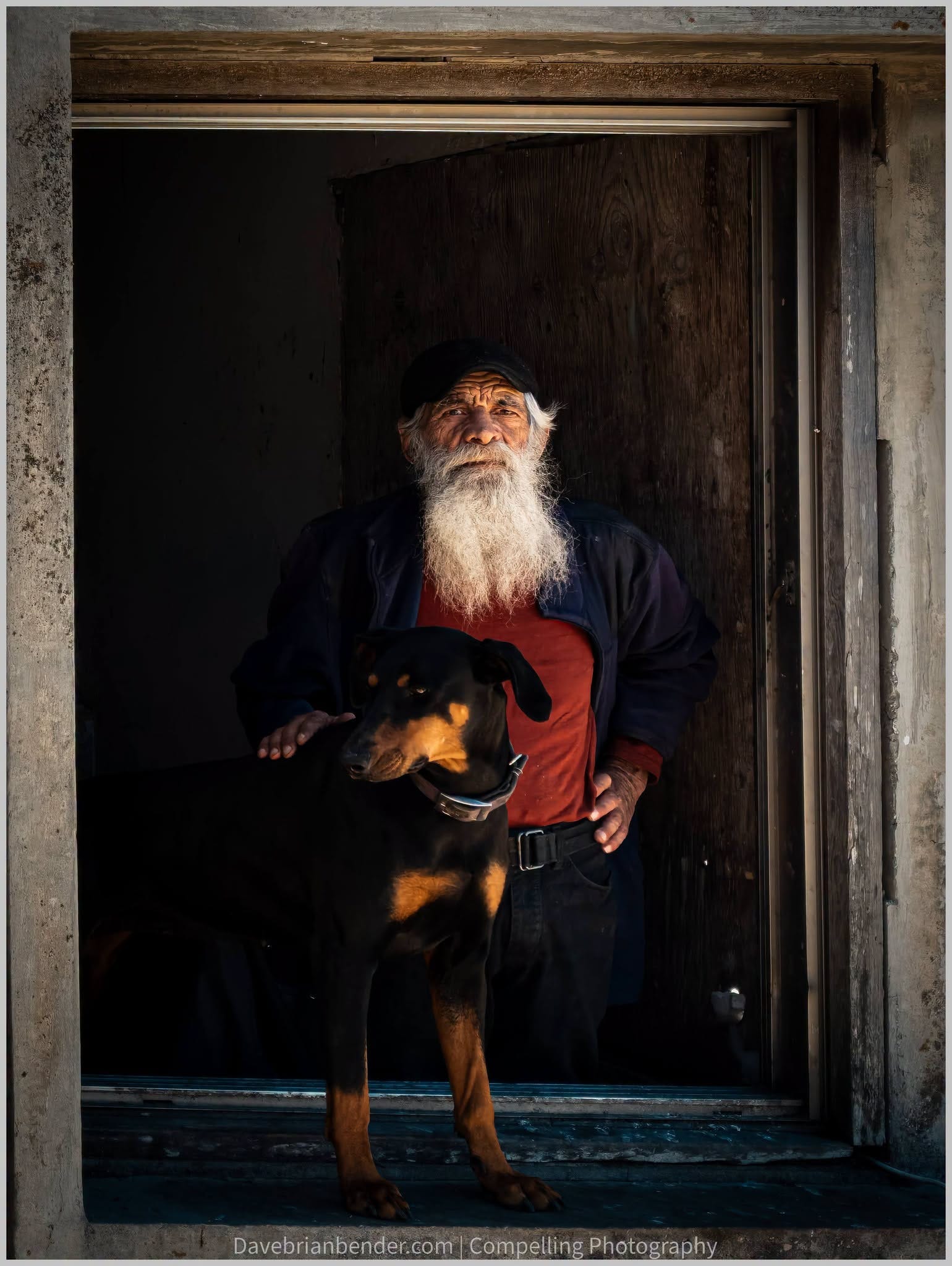
Dave: This is my neighbor, Nissim. I didn’t plan the shot; I was walking by, and he simply happened to be standing in his doorway with his dogs.
Fiasella: “You speak of brief snaps as if you were merely dropping crumbs for birds, yet look at the fortress your eye constructed. When I painted my Saint Lazarus Imploring the Virgin for the City of Sarzana, I spent weeks calculating how the stone walls and city gates would lock the figures into the physical foundation of the landscape. ”Look at what you have done here. You placed this man slightly off-center, aligning his shoulder with the masonry seam. He isn’t standing in the space; he is part of the architecture. And the light? It drops from high above, catching the top of his cap and the silver of his beard, while his eyes are cast down into a heavy shadow. A lesser craftsman would have forced a flash of light to show the iris. You had the restraint to let the darkness speak for his weariness. The dog in the foreground is a sharp blade of shadow, while the second beast fades into the gloom—an echo of threat that multiplies in the dark. You turned a concrete doorstep into an ancient boundary.”
Dave: Now let’s take a look at these two, one at a Jewish study hall in Tzfat (also, no doubt, very similar to scenes from the ghetto in Genoa of your day), and the second, a long exposure of the ancient priestly blessing at my own small neighborhood synagogue.
Case Study: The Geometry of Sacred Debate:
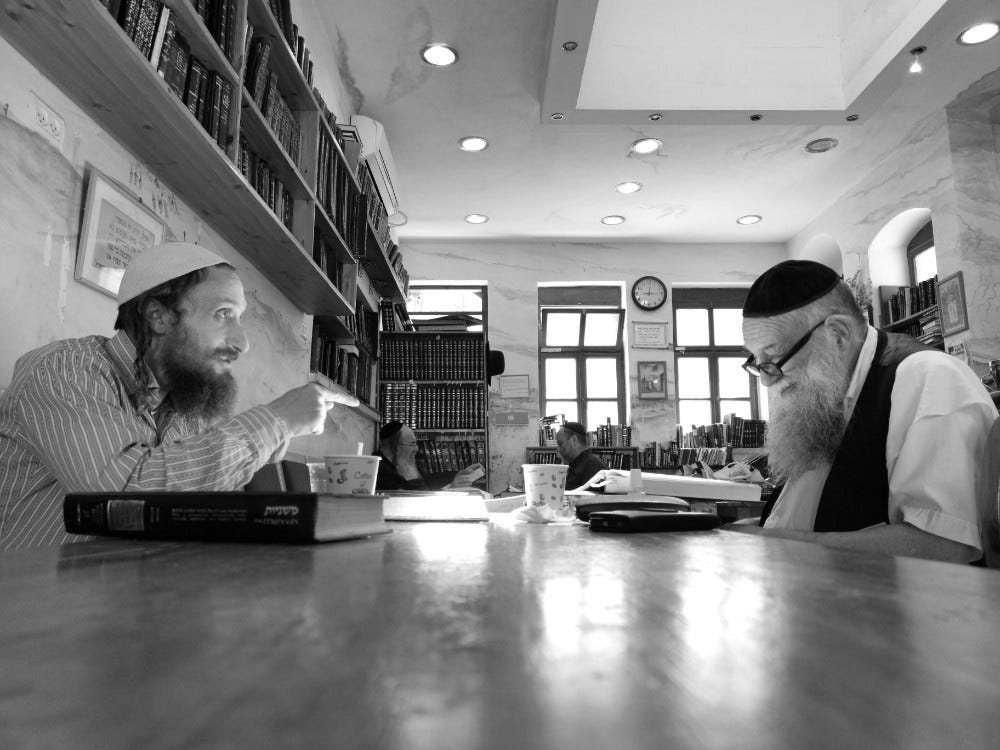
Dave: I caught this in a local Jewish study hall—a beit midrash. I wanted to capture the tension of the argument, but the room was cluttered, tight, and modern.
Fiasella: “Yet look at how the anatomy breaks the space. When I was in Rome painting Christ Raising the Son of the Widow of Nain for the Marchese Giustiniani, I had to arrange a crowd of figures into a tight, dark space, using hard light to slice through the gloom and guide the viewer to the point of emotional friction. ”You used the low angle of the polished table to mirror the light, stretching the volume of a tight room. That extended finger on the left is a spear of pure intent—the contrapposto of debate. On the right sits the elder, a mountain of white beard who lets the youth’s energy break against him like water against stone. The engineering of tension remains identical.”
Fiasella moves his hand across the screen, to the deep blacks and stark whites of the study hall. He leans in, his eyes narrowing as he studies the composition.
Fiasella: “You speak of Genoa’s ghetto, Dave, and my mind instantly populates this frame with the memory of narrow, crowded rooms where men argued over texts until the candles guttered out. The air in those spaces was thick with the smell of tallow and damp wool. Here, you’ve captured that exact same intellectual friction.
“Look at how you have anchored this entire room. You placed your device flat against the wood, using the reflection of the polished table to extend the depth of the frame downwards. It is a classic perspective trick to make a small room feel monumental.”
The Line of the Finger: The young man on the left—his extended finger is the absolute anchor of the drama. It cuts straight through the empty space of the table like a spear of intent. In my day, we used that exact gesture for saints receiving a call or philosophers delivering a decree.
The Counter-Weight: On the right sits the older man, a mountain of white beard and dark velvet. He doesn’t move. He doesn’t look up. He lets the young man’s energy break against him like water against stone. The contrast between the striped shirt of the youth and the dark vestment of the elder creates a perfect psychological polarity.
The Geometry of the Background: Look at the ceiling. Those small, round modern lamps puncture the plaster like hot coins. They drop vertical lines of light straight down, illuminating the books on the shelves while leaving the corners raw. It is messy, real, and completely devoid of sentimentality.”
The Architecture of Motion and Prayer:
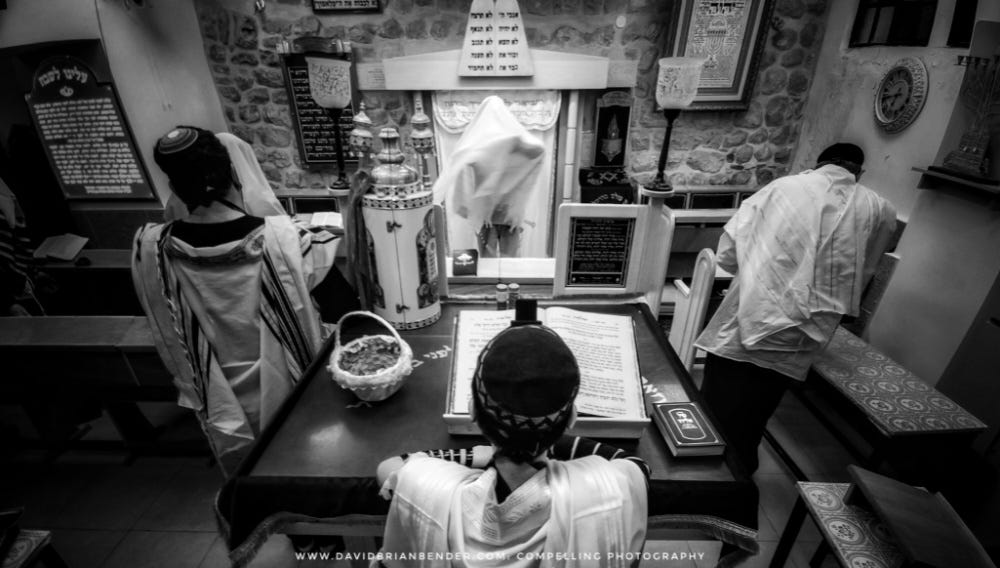
The Etheral Blur:
Fiasella: “When you turn the camera from the intellect to the spirit, here, this high, downward perspective changes the rules entirely. You are no longer a participant at the table; you are a witness looking down from the rafters.
“By lengthening the exposure while the ancient blessing was spoken, the figure at the center before the Ark has lost his skin and bones. He has become a fluid, moving cloud of white linen. The shroud blurs into the stone of the wall, making him appear as though he is emerging directly from the mountain itself.
“The Foreground Anchor: You were smart to keep the boy in the foreground perfectly sharp. His dark cap and the crisp white of his shawl give the eye a place to rest. Because he is solid, the blur of the priest in the background feels intentional, miraculous even, rather than a technical mistake.
“The Friction of Stone: Look at the walls. The rough, irregular masonry of your Tzfat synagogue catches the flash of light with high contrast. Every stone has a shadow beneath it. It keeps the image grounded in reality, preventing the spiritual blur from turning into a cheap, soft-focus illusion.
“In my century, when we wanted to represent the divine or the ethereal, we had to paint literal clouds, or golden rays shooting down from the rafters. It was clumsy engineering, a theatrical trick of the brush to force the viewer to believe in the unseen. But you? You’ve used time as your pigment. You kept the boy in the foreground solid and sharp to anchor our reality, then let the priest dissolve into a fluid blur.
“It reminds me of how my students and I would lay down a soft, thin glaze of transparent white over a dark ground to make a fabric seem as though it were shifting in the wind. Your toy does it by keeping the sensor open for a few seconds; we did it through layers of oil and patience. The engineering changes, Dave, but the strategy is the same: you must create a lie—a blur, a shadow, a trick of perspective—to reveal a deeper truth.”
Case Study: The Posture of Modesty:
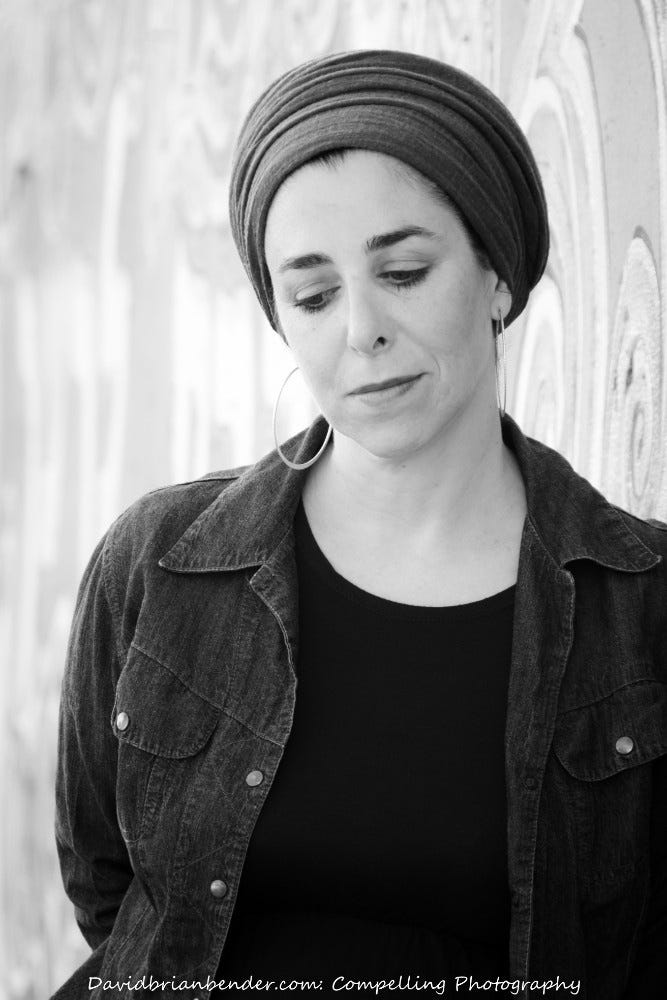
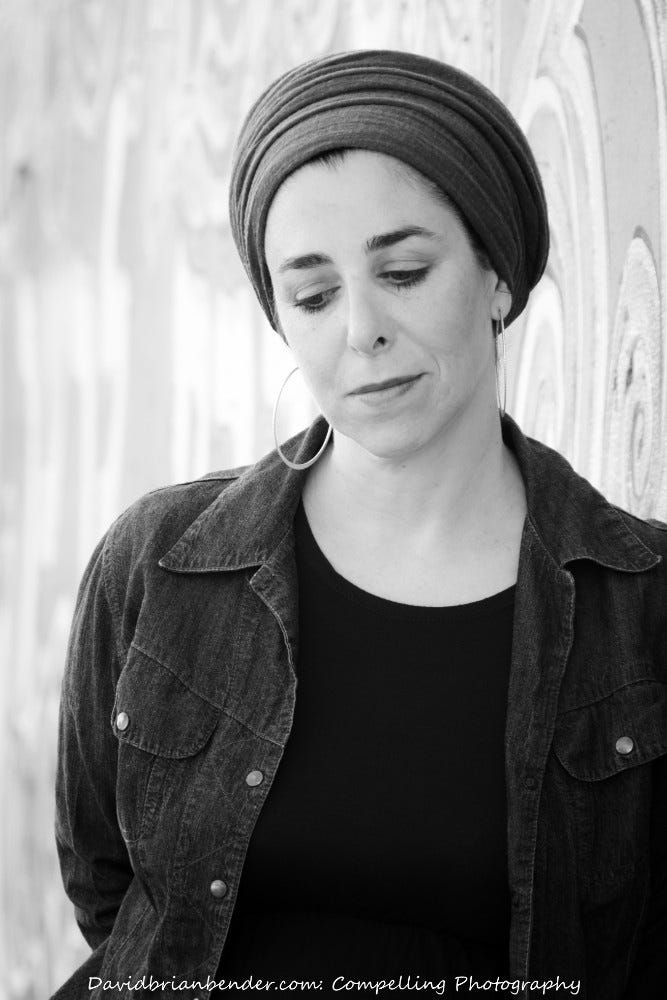
Dave: This is a portrait shot for friend Tziona Achishena’s musical portfolio. I stripped the color to focus entirely on her downcast expression, trying to find an inner essence.
Fiasella: “Ah, the downcast eyes. Today your world calls it a ‘meme,’ but in the Baroque, it was our most sacred shorthand for the interior life of womanhood. If a subject looks directly into your lens, it is a confrontation. But a downward glance? It is an invitation into a sanctuary.
”When I painted my Annunciation, the angle of the eyelids carried the entire psychological depth of the canvas. In your frame, the light from above catches her brow, while her eyelids fall into a soft, smoky sfumato—a gentle melting of form into shadow that protects her privacy from the viewer’s intrusive gaze. Look at her garment. The dense, dark lines of that denim jacket provide a heavy, structural pedestal for her face, exactly like the heavy wools we painted on our Madonnas to give them an unyielding gravity.”
The Journalistic Reconciliation
I closed the tablet and looked back at the boxed stacks of art history books. Fiasella’s world was entirely consumed by a faith that is not mine, built to decorate chapels and reinforce doctrines I don’t subscribe to.
But as an old newsman, I know that truth is found in the friction.By pulling his 17th-century engineering out of the cathedral and dropping it onto the stone streets of Tzfat, the light changes. The tools change. The Annunciation becomes the quiet modesty of a woman on a modern sidewalk; the miracle at Nain becomes the fierce intellectual fire of two scholars over an open text.
The machine provides the data buffer, but the human eye is still the one holding the acid, carving out a soul from the shadows.The TakeawayFiasella leaned back from the screen, letting the digital display reflect in his eyes.
”The machine provides the canvas,” he said, turning back toward the shadows of the room. “But you are still the one holding the brush.”
These articles are part of the Veritas Books & Bees series, exploring art, books, and the stories they carry. If you’d like to follow that side of our work, you’ll find us here: Facebook or LinkedIn
[A note from the field: this post may be updated or amended as events develop. My sincere thanks to those who follow, comment, and share these dispatches. Your support keeps the lights on and the cats fed while I’m out navigating the dynamic range of the Galilee. Because the standard Stripe plumbing doesn’t reach us here in Israel, I’ve set up a direct alternative for those who wish to support this work. If you’re inclined to help keep the lens focused, you can contribute via PayPal. Much appreciated. — DB]
Thanks for reading Lens & Land: Dispatches from Israel! This post is public, so feel free to share it.
Comments
Nothing yet. Say the first thing.
Sign in to join the conversation.