
I’m late to writing this because I spent yesterday researching Irish dance halls in 1950s Kilburn at the Camden Archives. I was helping Tudor Allen, who’s doing a talk about them later this week. Bit niche, but so is this blog. Anyways - last Wednesday I had the pleasure of whisking myself off to Brighton to see the Booth Museum of Natural History - it was pissing it down as I ate a sausage roll and downed a black coffee while walking from the station. The triangular brick building with shiny red doors that greeted me was a warm sight, and as I stepped in I was wrapped in a comforting mothball smell. The best way to describe the inside is barn-esque, with pale blue carpets and Victorian iron grates running down the length covering some kind of pipes. The entrance is home to some of the more impressive bird specimens, towering in glass cubes, as well as the gift shop and information desk. I could quickly tell this was going to be the kind of museum I really, really, like, so I eagerly walked through the archway behind the desk and into the main hall.
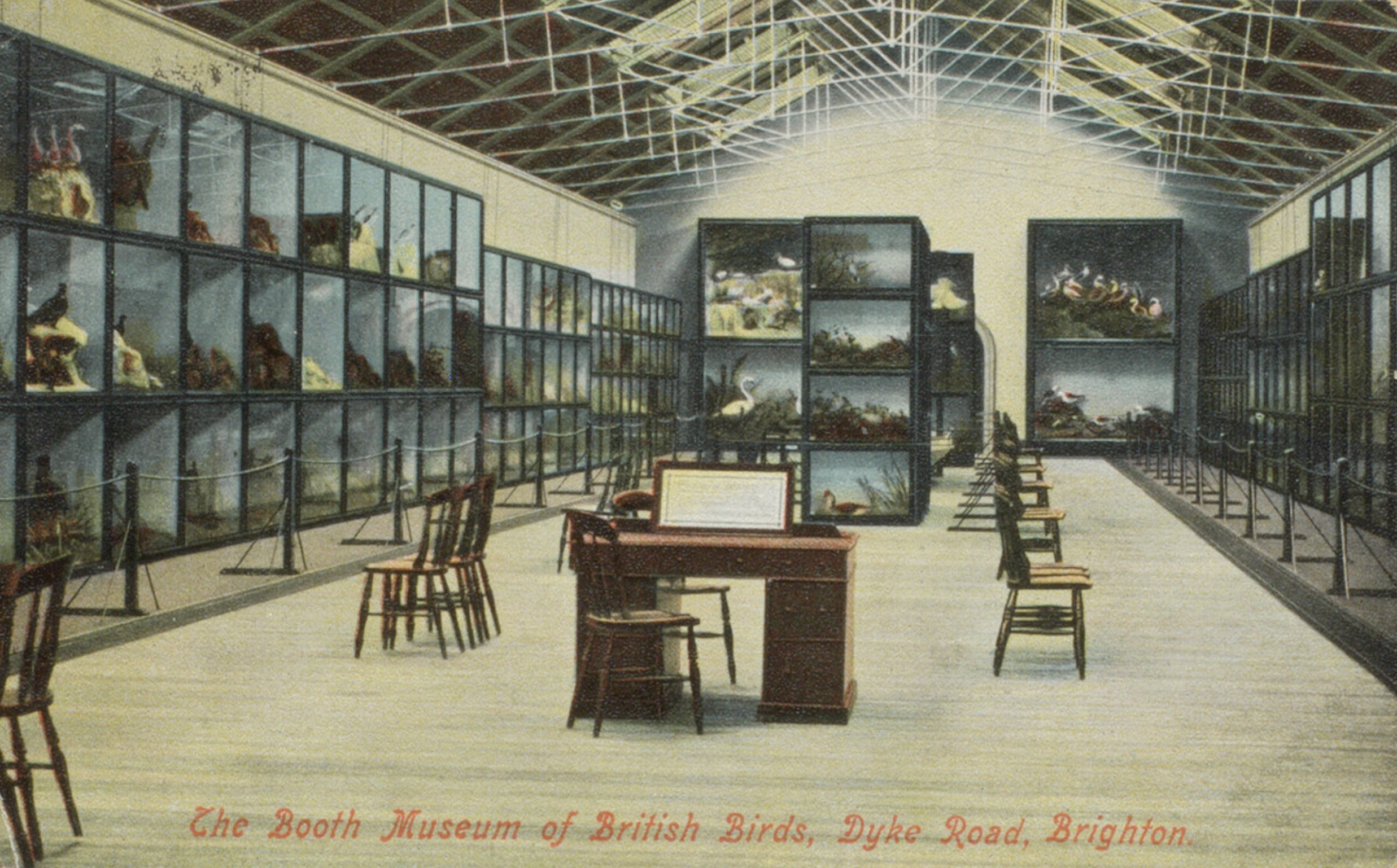
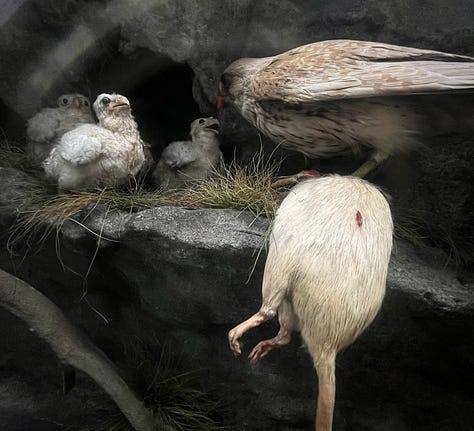
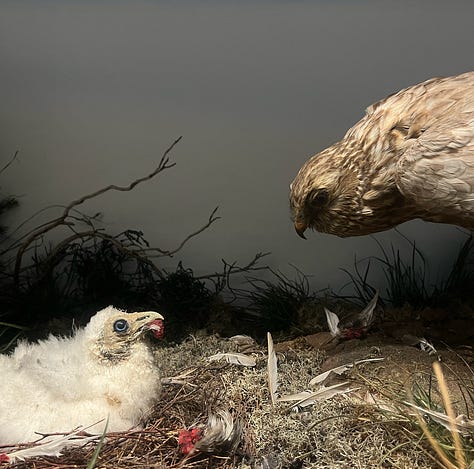
The museum was the passion project of Edward Booth, an eccentric Victorian hunter and the son of a gentleman. He learnt to taxidermy at a young age from a barber in St. Leonards (!?), and after he completed his studies dedicated himself to collecting every species of bird on the British Isles. All this is pretty classic stuff for a guy of his class bracket from that period - what set Booth apart was his dedication to preserving each bird in an accurate diorama of its environment. He collected birds in summer and winter, as well as males and females, eggs, young, and juveniles - and set them permanently into ‘scenes’ which mimicked their activities in the wild. He was one of the first men to do this in Britain, and his display style became widely copied. The museum has put up a poster which identifies the Pratt family as the original diorama makers working alongside Booth. The poster explains that the men prepared the animals whilst the women created the environmental elements, like rocks, water, flowers, and trees. I’ve never seen a natural history museum acknowledge its taxidermists, let alone the scene makers, and I thought this was excellent.
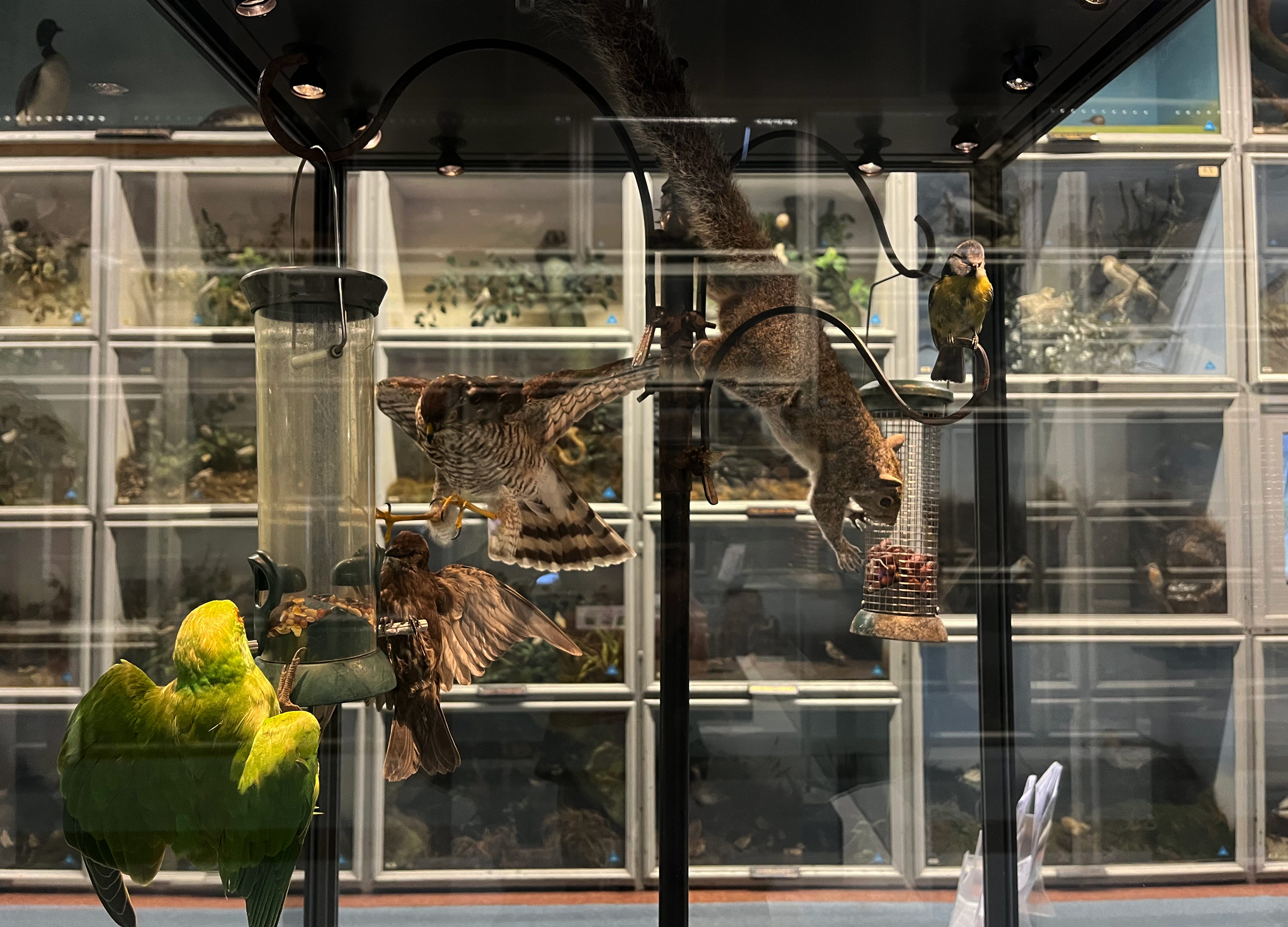
One of the first things I see is a brand new display, the first the museum has commissioned in 92 years. Created by Jazmine Miles-Long, an ethical taxidermist, the display shows garden wildlife, where parakeets and a squirrel fight over a bird feeder above strewn plastic toys and a very lovely hedgehog. It’s beautifully rendered, and nothing was killed to make the diorama. It feels really striking to see such a modern scene ‘historicised’ in the traditional museum way. It makes me realise that some 100 years ago the museum which I’m in many ways enjoying for its dated-ness felt modern, and the environments the birds are displayed in weren’t mythicised, but a real depiction of an abundance of nature that feels nearly impossible today.
I press a button to hear a nightingale’s call and let it cascade over the roof of my head. As I walk further in, there’s a display of exotic birds with some condensation behind the vitrine. I’m not sure how Booth acquired these, as they’re certainly not British. One looks just like a radicchio.
They stand beside the entrance to a recreation of a Victorian study, with period costumes for younger visitors to try on and a display of shells on the desk to have a go at organising. I think it’s a really sweet touch, and can imagine myself playing out elaborate daydream scenarios had I been there as a ten year old. It marks the entrance to the middle section of the museum, a series of ‘interactive’ rooms which are a later addition. I anticipate making my way through them quite quickly, but actually find myself lingering for a while. I think this area is the curators’ attempt to make the museum more accessible by highlighting pieces from the collection which tell the stories Booth’s contemporaries would have been unlikely to mention. A poster mentions the Malaysian naturalist ‘Ali’ Wallace, who collected on the behalf of the much more famous Alfred Russell Wallace. Many Victorian collectors worked with scholars who were native to the country they collected in, but seldom acknowledged the importance of their collaboration, as is the case with ‘Ali’, whose original name has not been recorded. There is also a display which shows a Victorian feathered hat and talks about the problematic nature of the feather trade, and another drawer which shows the damaging nibbles of a beetle on caterpillar specimens. A binder contains photographs of the early years of the museum and letters written by Edward Booth, and is flanked by placards which explain the roles of the museum employees. I think its a really nice touch, and makes me feel like I can send an email asking questions (which I have), and the museum will be open to conversations.
The final bit of the middle corridor is the entomology section, which has beautifully pinned specimens.
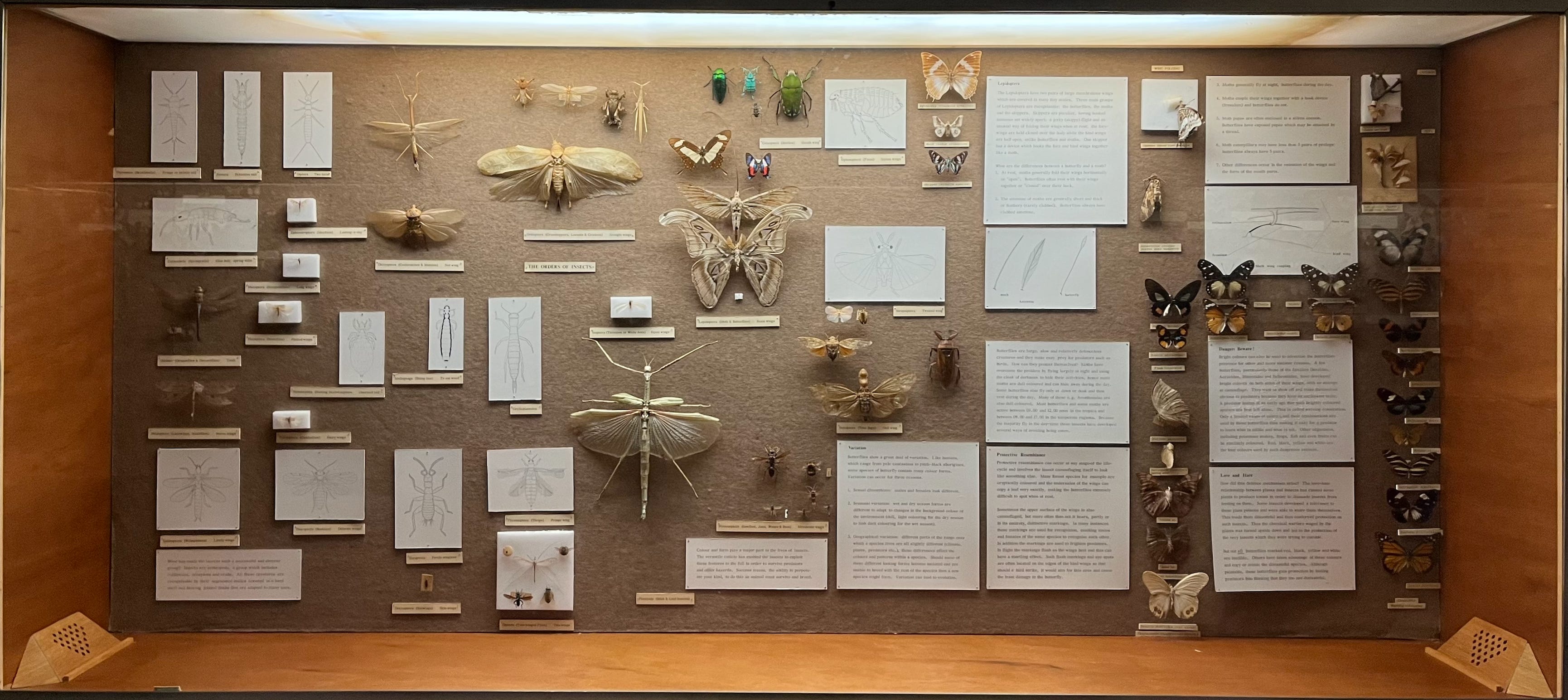
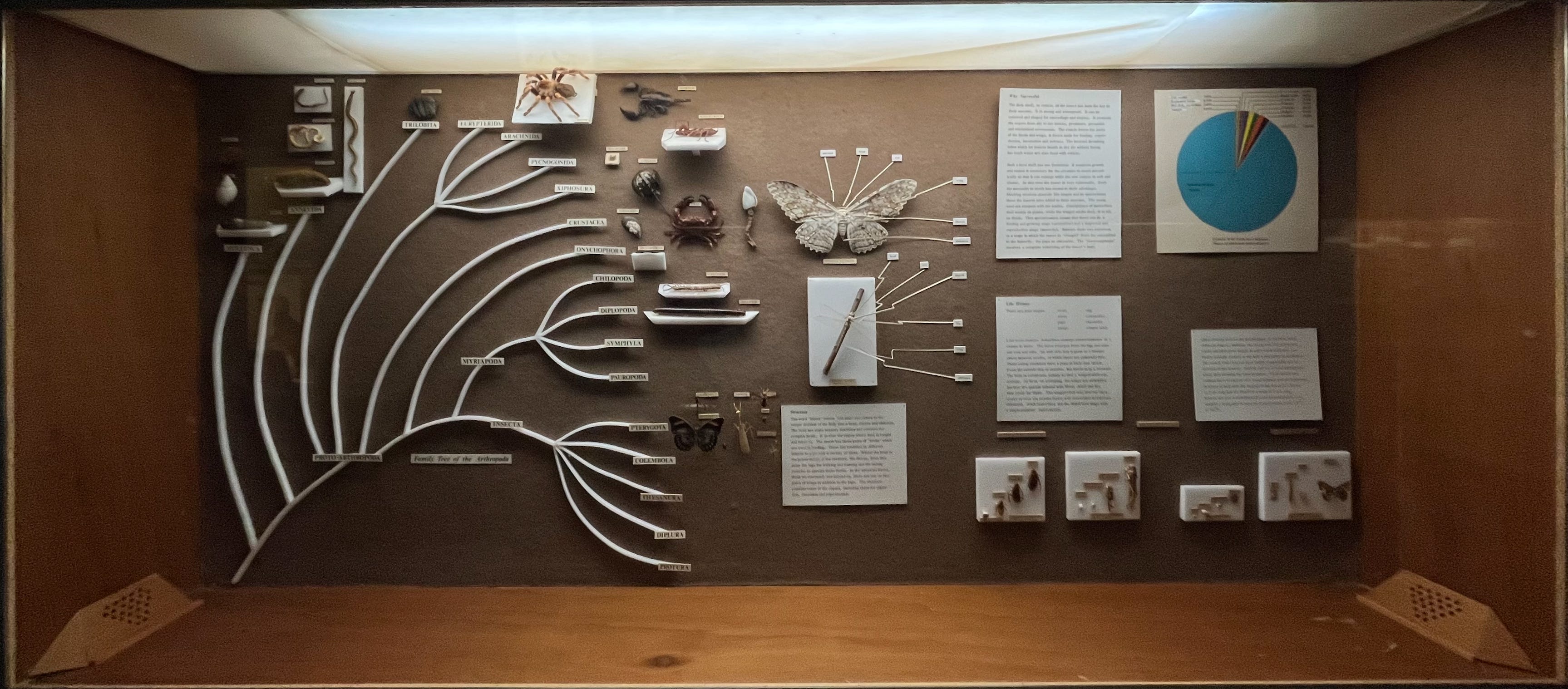
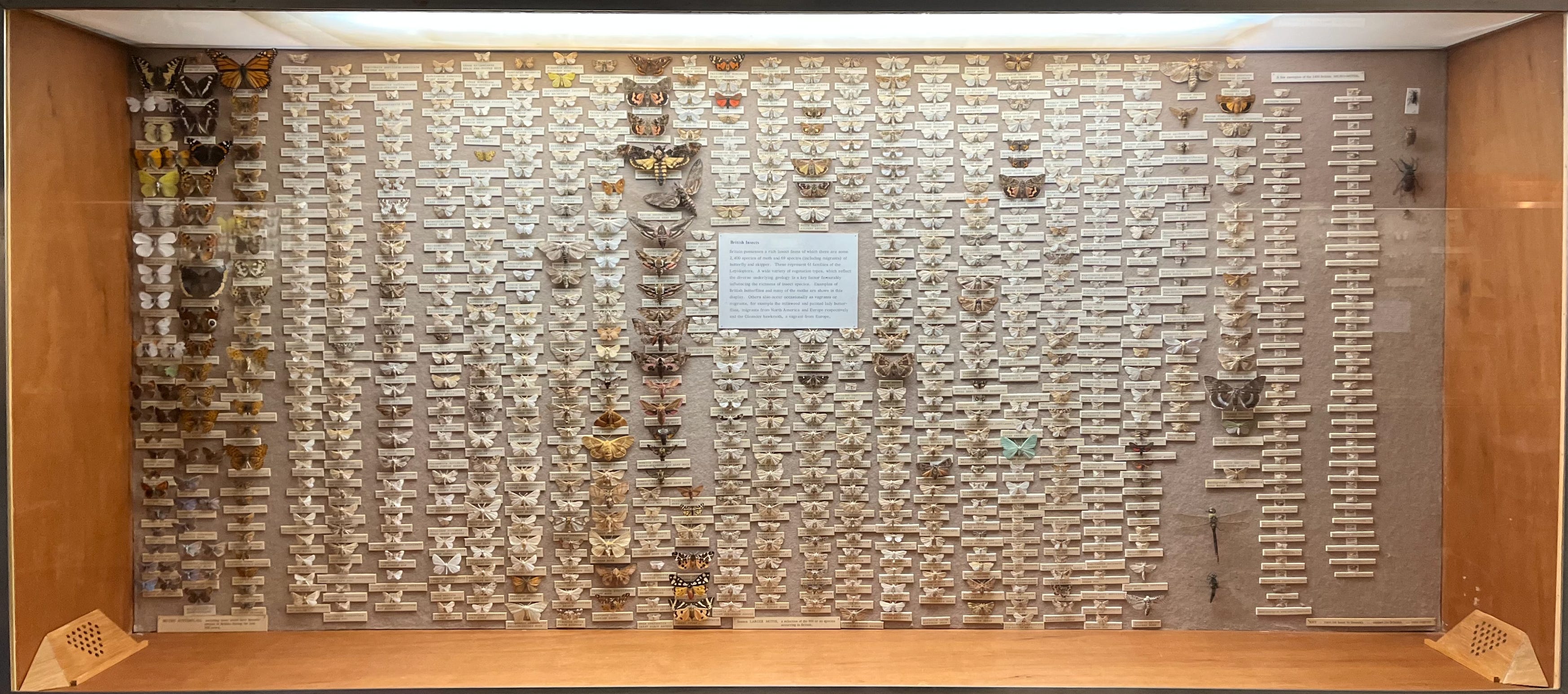
When I get home, I look into the entomology collections and find out they have a further 700,000 specimens in their collections - several hundred of which are type specimens (!). A type specimen, sometimes called a holotype, is the ‘model’ specimen that is used to define and describe an entire species. They are usually marked with a red label, and are extremely important. The holotypes at the Booth are mainly part of the collections of Arthur Hall, who brought back thousands of butterflies from Central and South America in the early 20th Century. Wikipedia tells me that the museum also houses a 54 volume unpublished treatise on the butterflies of South and Central America, which is not on display - I’ll write to the curator to ask if this is true.
It wouldn’t surprise me if it was, as there’s always troves of treasures to be (re)discovered in an archive. In fact, only four years ago, “a fossil that been had languishing in a museum drawer [at the Booth, wrongly labelled as a shark fin skeleton, [was] identified as a completely new species of prehistoric flying reptile.” Roy Smith, a PhD student, identified the fossil during his research. He stumbled on it in the drawer unintentionally.
I was expecting to see a stuffed merman somewhere too, a Victorian ‘joke’ the internet tells me is still on display, but I can’t spot it. Perhaps, as the museum has taken a more serious tone with a focus on conservation, the ‘specimen’ has been removed and now lives in the massive archive.
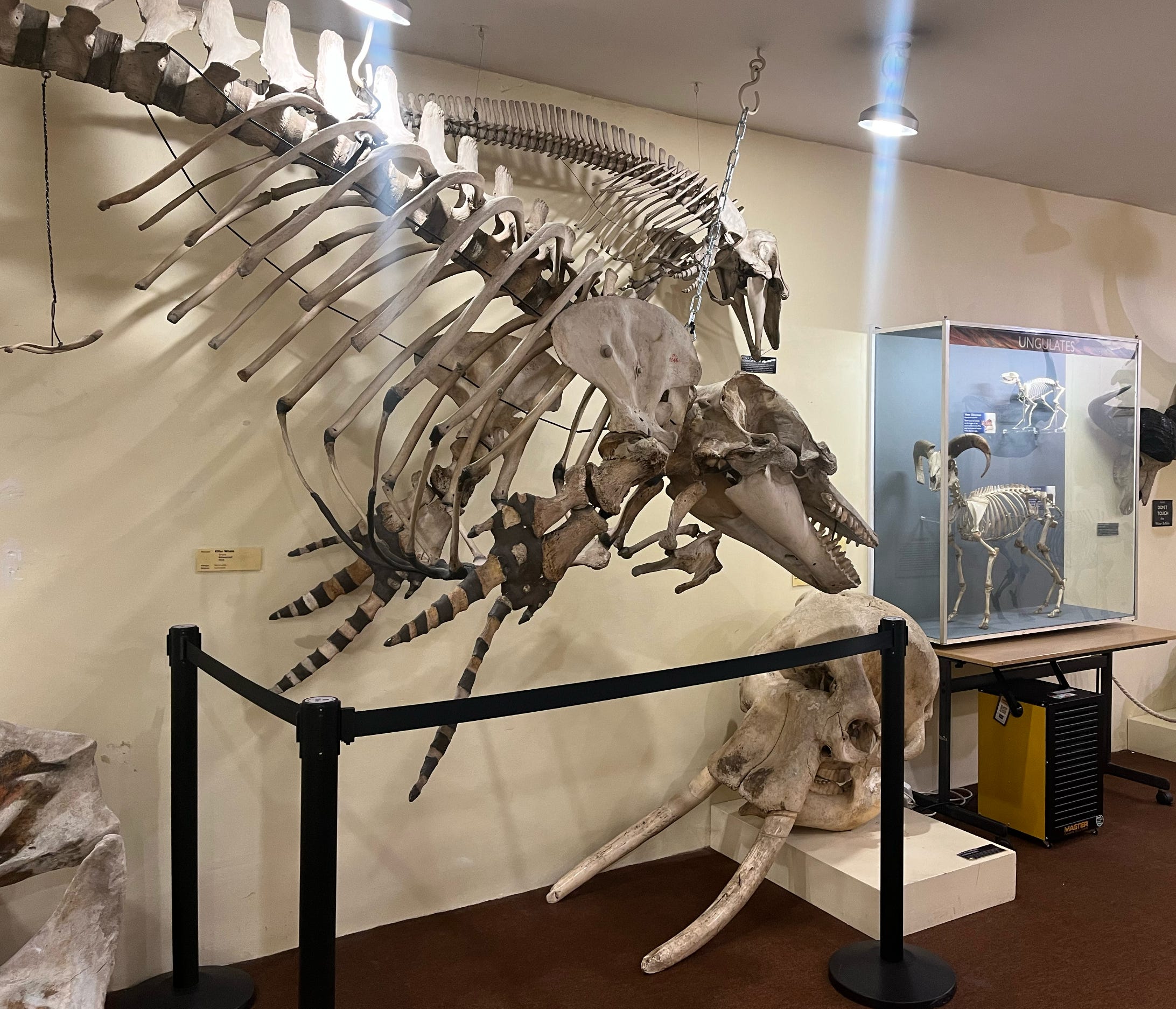
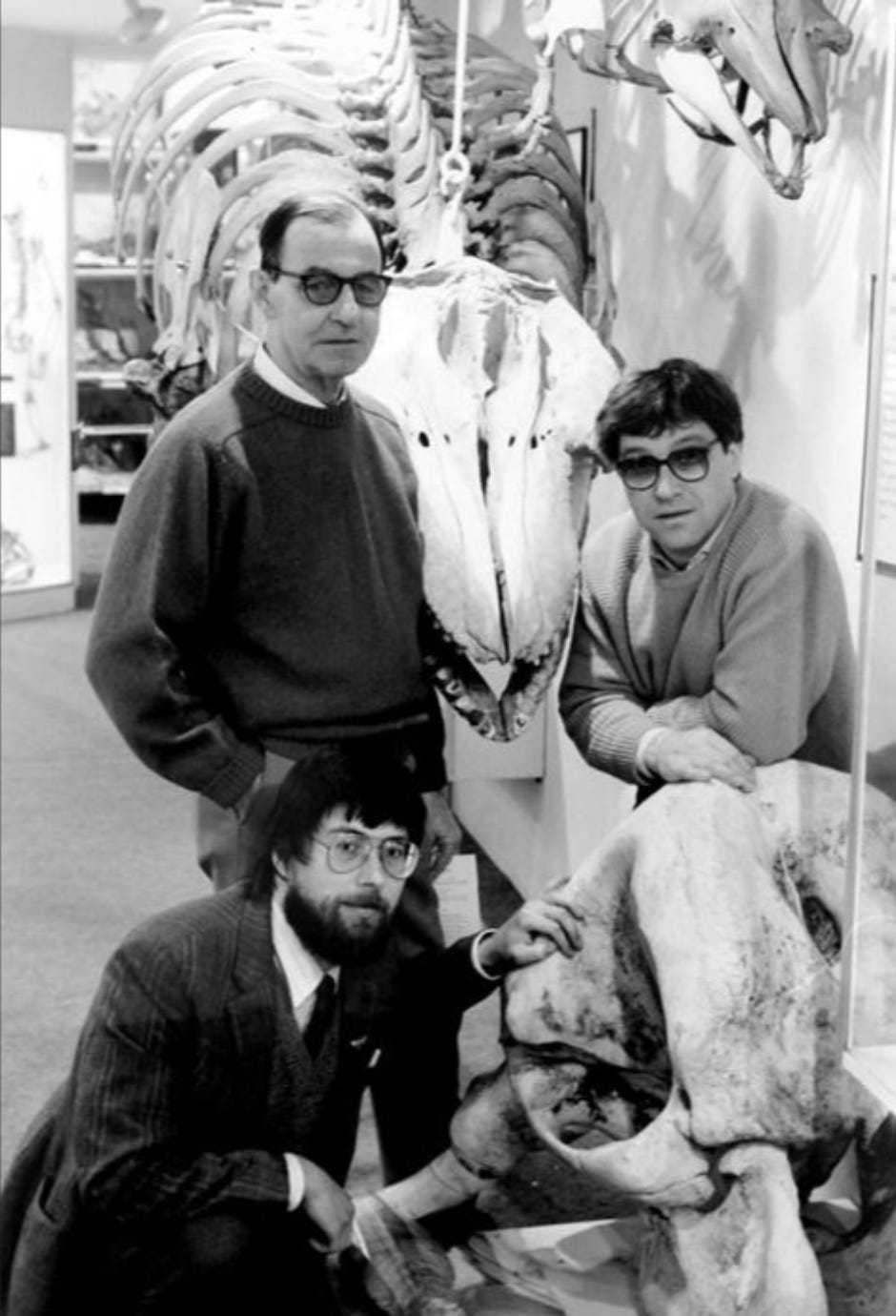
The final room in the museum, hidden at the very back, is the Osteological collection which belonged to Frederick William Lucas. On display are elegantly poised skeletons of hundreds of animals, some of which are extinct now, like the thylacine. There’s something really strange about seeing the skeleton of an Orca hung up in a normal sized room with pale yellow walls and brown carpet. Lucas also collected ‘world artefacts’, but his anthropological collection is not on display at the Booth, although they do have archives of the original displays in his personal collection, which I will attempt to request and update this article with. I understand why his collection has been separated, but like I wrote last week, I think the line between anthropology and natural history is blurrier than might first appear. A website called ‘Digital Benin’ lists three of Lucas’ objects on their website. Another, The Museum of New Zealand, has a profile on him which lists his collection as containing a Toi Moko, the preserved head of a Maori man. If his collection is now housed by the Brighton and Hove Museums, which the Booth falls under, this brings up questions around repatriation - and whether natural specimens, like animal skeletons and native plants, should be included in that conversation. I wrote a bit last week about why natural history ought be considered cultural heritage in the same way as artefacts.
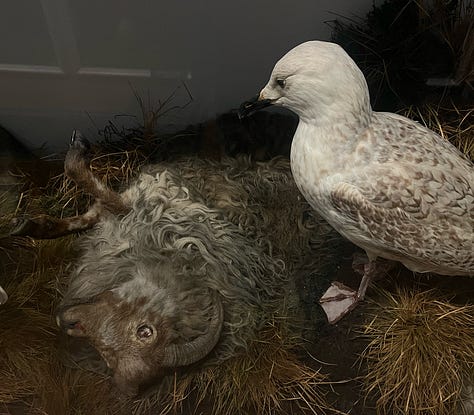
I make my way back to the central hall of birds and visit each glass box in turn, peering in at a captured fragment of time. Labels say where and when a specimen was collected, as well as its conservation status. There’s Great Black Gull, his foot caught in a rusty steel trap, beak open in indignation as he looks down at his dead mate who is missing her eye. Further down the hall, a gang of Pomerine Skuas stare me down like they’re mafiosos. Gannet dives with so much force he pushes his case askew. Next door, Raven has plucked out Hare’s eyeball, and the latter droops limp in the hundred year old snow. Up close, I notice the edges of Arctic Tern’s wings are crimped like ravioli. He is the world’s longest migrator. The Rose Coloured Pastors fly around a sheep forever, acting out their final scene in perpetuity.
Bibliography:
https://brightonmuseums.org.uk/booth-museum-of-natural-history/history/
https://brightonmuseums.org.uk/booth-museum-of-natural-history/what-to-see/birds/
https://brightonmuseums.org.uk/booth-museum-of-natural-history/what-to-see/butterflies-insects/
http://www.natsca.org/article/1300
https://www.bbc.co.uk/news/uk-england-sussex-68129637
https://brightonmuseums.org.uk/discovery/history-stories/frederick-william-lucas-fls-fzs-1842-1932/
https://digitalbenin.org/provenance/623
https://www.theargus.co.uk/news/14380809.could-this-be-the-most-gruesome-creature-in-brighton/
Comments
Nothing yet. Say the first thing.
Sign in to join the conversation.