
Nigeria’s capital importation is rising, but the benefits are unevenly distributed. While headline figures suggest renewed investor confidence, the structure of these inflows indicates mixed outcomes, with gains concentrated within financial systems and government balance sheets, and limited transmission to households and the real economy.
Nigeria’s capital importation, according to the National Bureau of Statistics (NBS), grew notably in 2025. It rose by 7% in Q4 2025 compared with Q3 2025, while year-on-year inflows surged by 88% compared with 2024
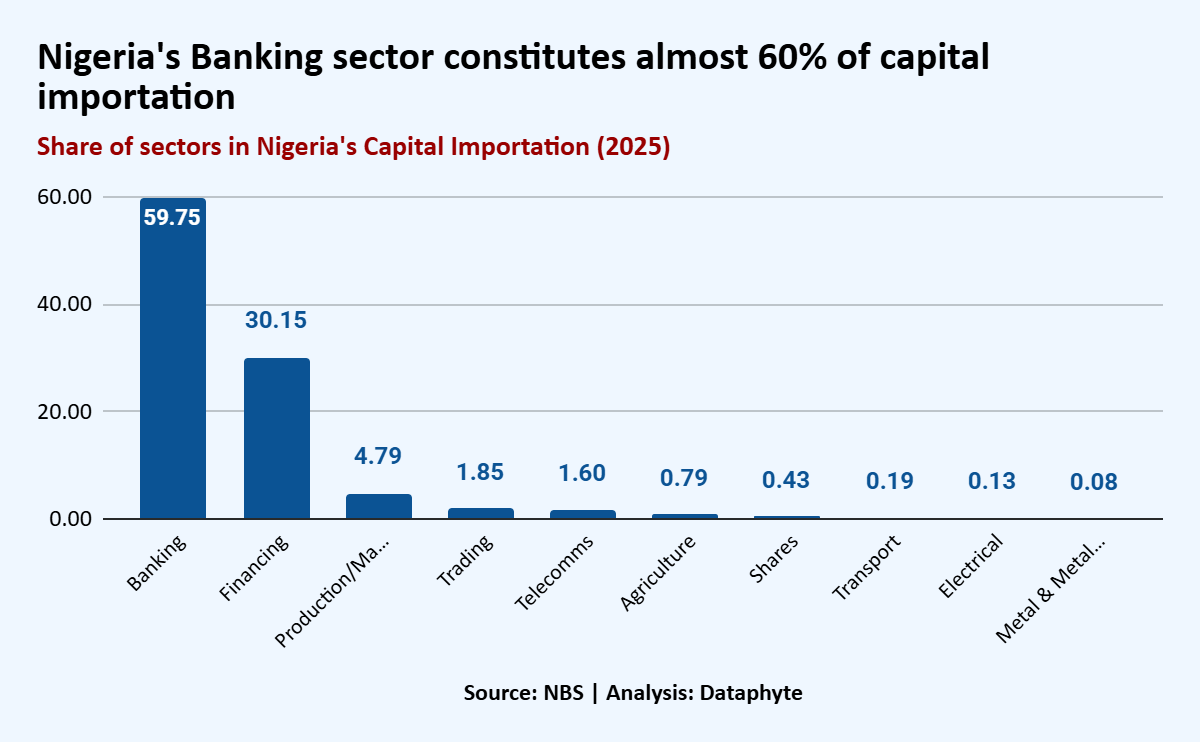
This increase was largely driven by portfolio investment, which recorded the most significant growth. Foreign direct investment (FDI) also increased, though it remained a relatively small share of total inflows.
Portfolio investment accounted for about 85% of total capital importation, followed by other investments such as trade credits, loans, and currency deposits at roughly 10%. FDI accounted for just 5%, underscoring its limited share despite its economic importance.
This means that for every $100 entering Nigeria, only about $5 goes into long-term productive investment, while $85 is channelled into short-term financial assets.
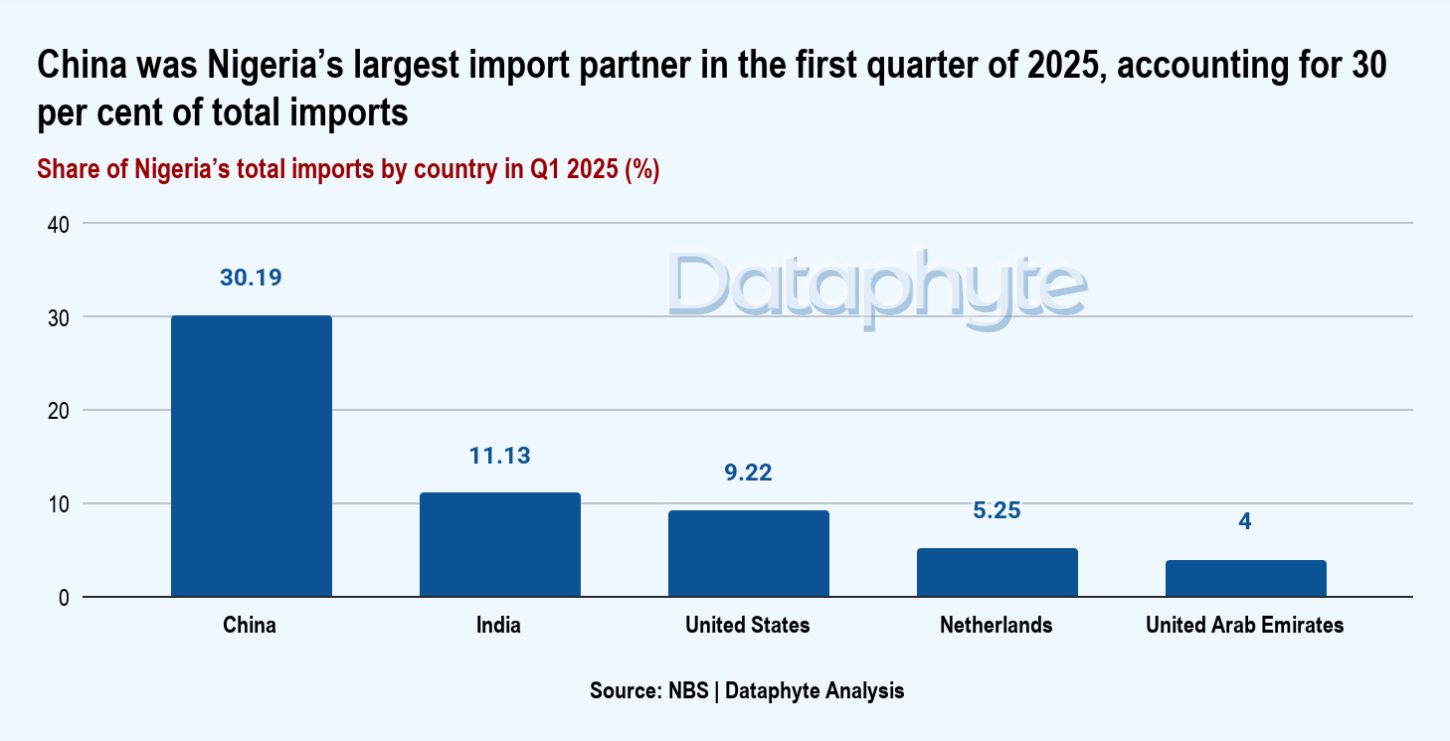
According to the latest foreign trade data from the National Bureau of Statistics (NBS), 30 per cent of goods imported into Nigeria between January and March 2025 originated from China.
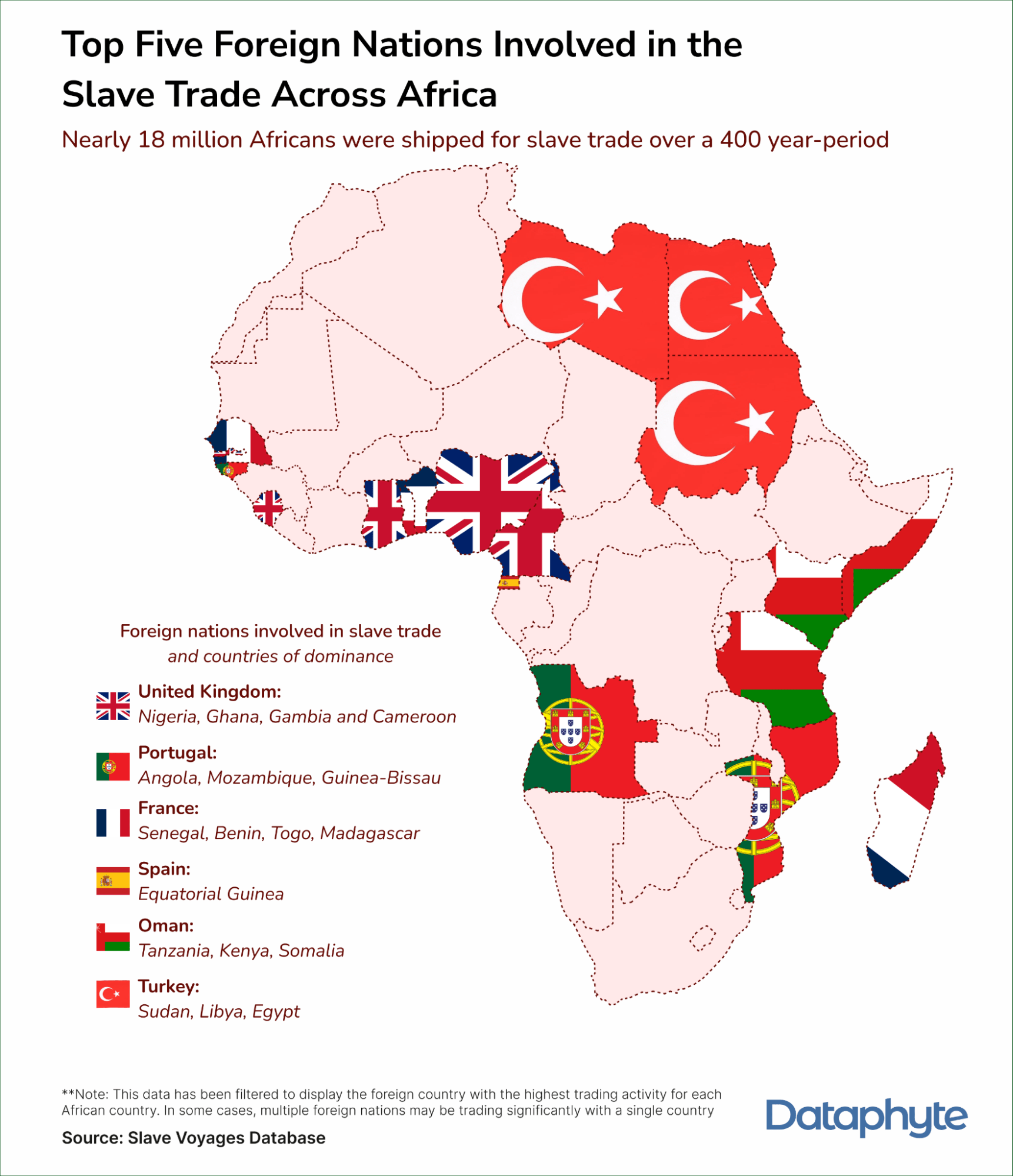
The transatlantic and related slave trades fundamentally reshaped Africa’s demographic, economic, and social trajectory, with effects that are still visible today.
In March 2026, the United Nations General Assembly reinforced this reality by adopting a resolution that recognises the slave trade in Africa as the “gravest crime against humanity,” while also calling for an apology from member states and the establishment of a reparations fund.
At about 7:24 p.m. on March 16, 2026, multiple explosions occurred at three locations in Maiduguri, Borno State. The blasts affected crowded and strategic areas, including the Post Office Flyover, the Maiduguri Monday Market, and the University of Maiduguri Teaching Hospital, locations typically busy with civilian activity. By the end of the night, 23 people had been confirmed dead, while 108 others sustained varying degrees of injuries.
According to the spokesperson of the Borno State Police Command, ASP Nahum Daso, preliminary findings indicate that the attacks may have been carried out by suspected suicide bombers.

Comments
Nothing yet. Say the first thing.
Sign in to join the conversation.