
I sat cross-legged on my bedroom floor, laptop screen glowing in the dark, tabs opened out of curiosity.
What started as a late-night scroll about fashion waste soon felt like the ground shifting beneath me.
It wasn’t just data. It was personal.
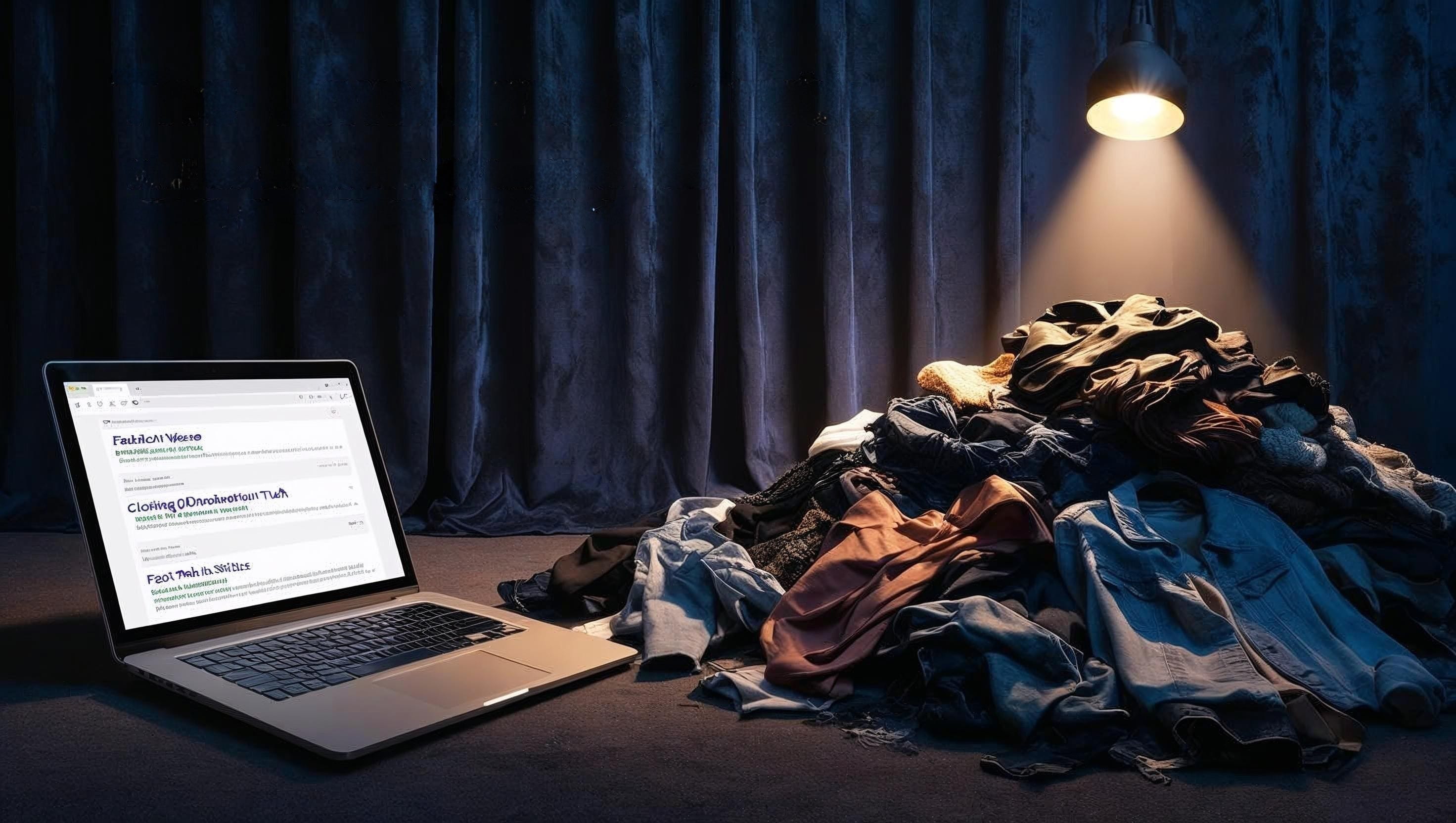
We like to believe that donation gives our clothes second lives.
A kind ending. A good deed. A clean slate.
But only 20% of donated clothes are ever sold.
The rest?
They disappear into a shadow economy.
Some are shipped in massive bales to places like Ghana, flooding local markets, crushing local industries.
Others are dumped across regions in India, discarded into landfills far from where they were bought.
Mountains of barely worn fabric, hidden in plain sight.
Returns aren’t any better.
We tap "Return" on our phones like a reset button.
But unless something is perfectly resellable, it’s often cheaper for companies to discard it than restock it.
There’s no tracking.
No accountability.
Because fashion, for all its power and influence, is one of the most unregulated industries in the world.
And every single year, we throw away 9 million tons of clothing.
In countries that never signed up to be dumping grounds for global excess.
If the entire fashion industry stopped producing today,
we’d still have enough clothing on Earth to dress every human being for the next 3 generations.
Around 3 decades.
Think about that.
We are drowning in abundance and starving for meaning.
I kept digging.
And what I found hurt more than the numbers.
It wasn’t just happening; it was designed to happen.
Where trends once shifted with seasons, they now change every week.
Zara, H&M, Shein, they’ve trained us to feel outdated in real-time.
They taught us to look at last month’s shirt and feel embarrassed.
To chase trends that never stop moving.
And when guilt catches up with us?
We’re sold on the comfort of “donation.”
As if passing it along erases our footprint.
But that night, it wasn’t just about them.
It was about me.
I saw myself in every statistic.
The overflowing closet.
The constant scrolling.
The quiet hope that the next outfit might make me feel more like myself.
And the truth hit harder than I expected:
I wasn’t just a passive consumer.
I was an active participant in a system that was hurting the planet and burying culture under convenience.
I never meant to, or either of us.
But because I didn’t know better.
But now I did.
And once you know, you can’t unknow.
It was about the space between knowing and doing.
And then came doubt.
How would I even help?
I wasn’t a designer.
I didn’t sew. I didn’t sketch.
I didn’t know how to transform clothes into trends.
But I knew one thing, with more certainty than anything I’d felt in years:
I couldn’t keep being part of the problem.
And maybe, just maybe, that was enough to start.
Maybe I can use my strength in software engineering to solve it.
And learn from my mom.
It was a thread connecting the childhood where clothes were remade out of necessity…
to adulthood, where I consumed without pause…
to a future where maybe, just maybe, we could love what we already have.
And in that, there was a new kind of abundance.
Of meaning & purpose.
Thank you for reading. Subscribe to follow the entire Darzy journal, a story-led archive of reinvention, fashion, identity, and memory. We are not just building tech. We are stitching dignity into every design.
Comments
Nothing yet. Say the first thing.
Sign in to join the conversation.