
Disclaimer: This article and every article represents only my own opinion.
Also read: “The Urbanist Case Against Flock Cameras” from earlier this week.
7/28 Edit: A reader and I had a podcast debate over Hopkins bike lanes in reaction to this article. Take a listen!
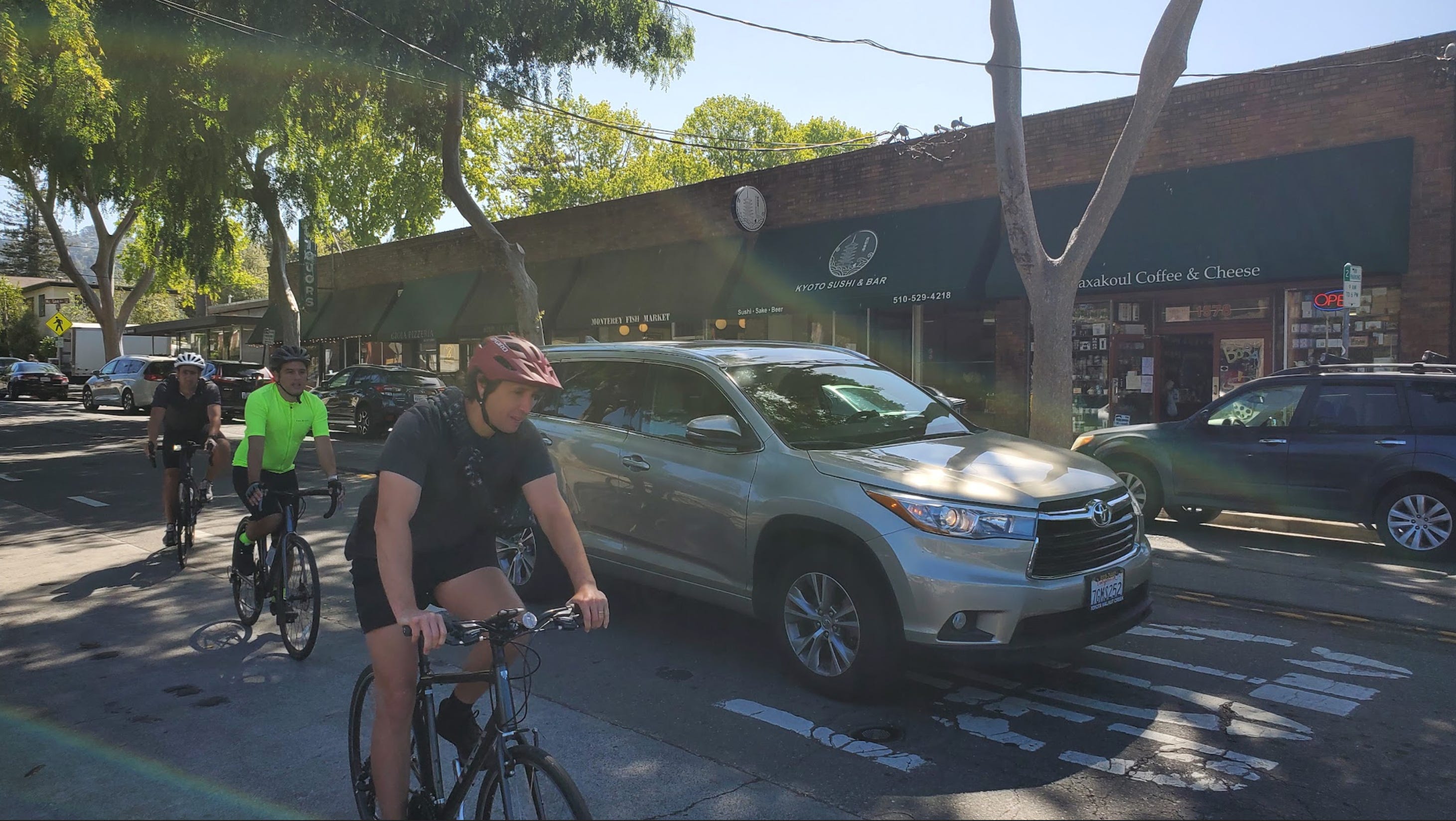
In 2008, city of Berkeley voters approved the city’s climate action plan to reduce dependency on cars—our city’s largest source of carbon emissions—through expanding public transit and bicycle infrastructure. In 2018, the city of Berkeley began working on a concrete-protected bike lane for Hopkins Street, a northern corridor connecting two business districts, an elementary, middle and high school and a library, that had seen numerous collisions caused by motorists upon pedestrians and school children.
It was one of Berkeley’s most bitter and divisive battles that was so upsetting it caused a mass-exodus of traffic planners from city government. Pro-car residents known as Save Hopkins ultimately won by stalling the bike lane in 2023. In 2024, the pro-bike lane neighbors known as Walk Bike Berkeley defeated the pro-car coalition at the ballot box, further funding bike lanes in the city, which was supported by 55% of voters in the Hopkins area. While Hopkins remained unpaved because of the trauma surrounding the 2022 neighborhood battle, numerous vehicle collisions and traffic deaths continued around the Hopkins corridor, including a crash in which a motorist struck a middle school student riding a bicycle at Hopkins Street and Colusa Avenue.
In April, the new Hopkins councilmember Shoshana O’Keefe revived the Hopkins Street paving project in the transportation committee—but explicitly excluded the bike lanes—handing the anti-bike lane faction the victory. Pro-bike factions don’t want the street paved without bike lanes because cars would rapidly speed up on an already dangerous corridor. Councilmember Rashi Kesarwani, representing the west side of Hopkins, along with two others in committee (Mark Humbert, District 8 and Mayor Adena Ishii), countered with a pro-bike lane measure, which won out and now heads for final approval to city council on Tuesday, July 28th.
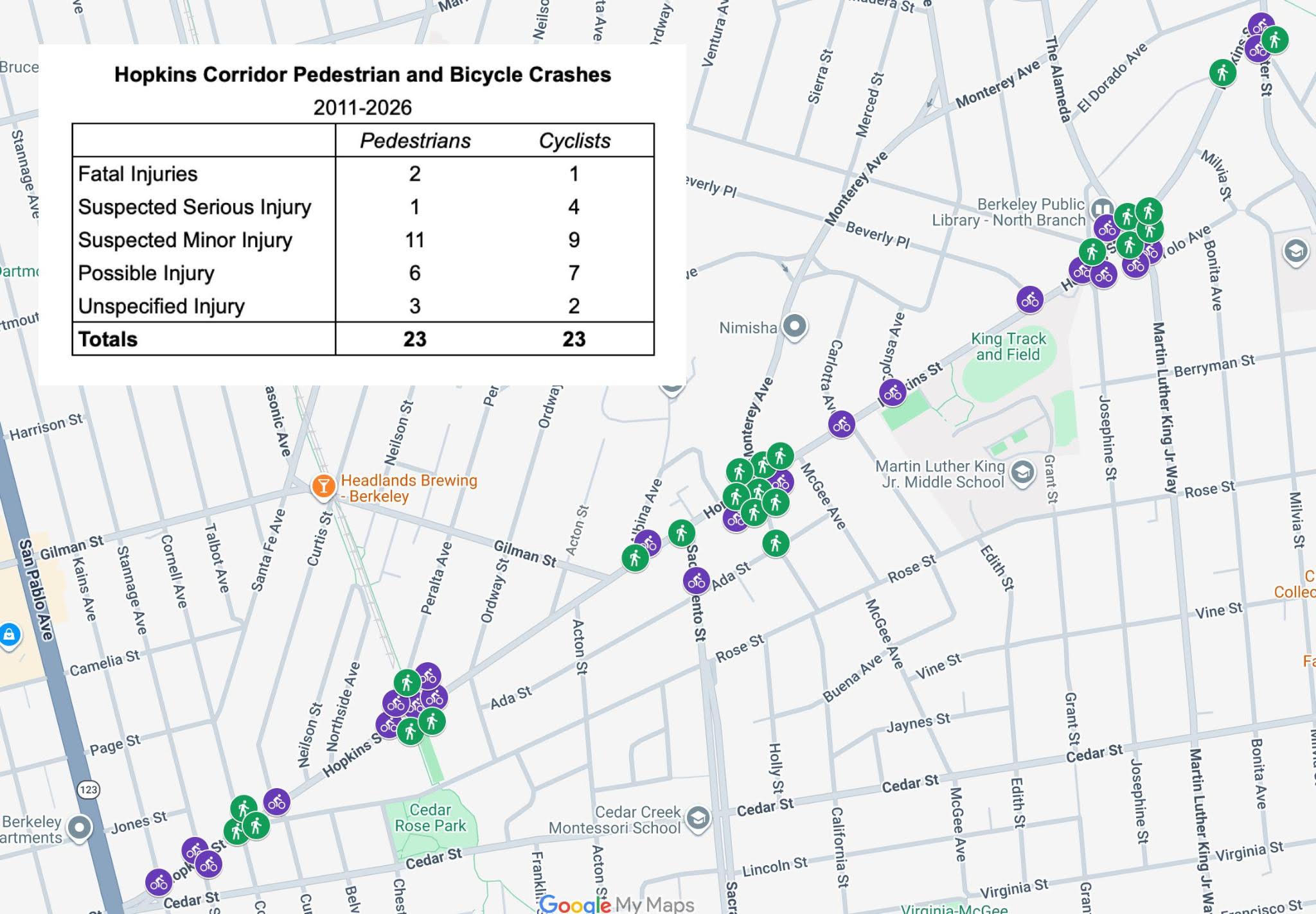
Along with street paving, a protected concrete barrier for non-car motorized and pedal traffic shall be built on both curbs along Hopkins Street from the Ohlone Greenway to the North Berkeley library. This will remove street parking on both sides on Hopkins Street from the Ohlone Greenway to the shopping center at Monterey and California Streets. Eastward of Monterey where the street widens, street parking will resume on the north side of the street until the library, but both curbs will have bike lanes protected by concrete or by the parked cars.
This item is the final showdown in the decade-long culture war not just on Hopkins Street but throughout the city about Berkeley’s commitment to its climate goals of reducing car-dependency and ending traffic deaths in the city.
I have physically not attended a city council meeting in person in 7 years (called in and written many times however), but this meeting is so important that I will attend in support. Not just me, but my neighbors—motorists, seniors, scooter-users and cyclists—as well as climate organizations like the Sierra Club.
And hopefully, you too. You need to show up to Berkeley City Council chambers on Tuesday at 6 PM at 1231 Addison Street. Bring your friends and family and speak in support. If you can’t show up, then call in on Zoom to give comment. If you can do neither, write to city council at council@cityofberkeley.info in support.
We cannot have some compromised, watered down version putting people’s safety and the future of Berkeley’s climate goals at risk in defense of inconsequential parking spaces. The Hopkins bike lane battle is so infamous, transit advocates in New York City talked to me about it. This 8-year toxic battle must end with an unequivocal, pro-climate, pro-safety outcome.
A victory on Hopkins Street is not just a win for cyclists. We call them “bike lanes” but this is an antiquated description. Protected cycle tracks are micro-mobility lanes for everybody. Whether bikes, e-bikes, scooters, e-scooters, electric wheelchairs—they all are future users of the infrastructure being proposed.
Even drivers benefit by segregating cyclists and scooters away from auto lanes so that they don’t hit people, which has happened to children on Hopkins as recently as last year.
If on Tuesday, council approves the bike lanes, we get the following benefits:
1 — A Safer Hopkins for Everyone. Young people en-route to school, commuters en-route to BART and shoppers running errands will be given safe alternatives to automobiles. Parents will never fear their kid’s safety traveling through the traffic bottlenecks at Sacramento Street. The scourge of people being hit by cars or the regular near-misses at confusing intersections shall cease.
Motorists like me will finally be able to quit driving. This is the protective infrastructure necessary for me, my family and area seniors to hang up the keys, hop on an e-bike or scooter and run errands in peace—without fear of death or worries about parking. Drivers are the biggest winners as they will no longer have to worry about hitting cyclists and scooter riders now that those groups are segregated in their own lane.
2 — Aging in place. Everyone knows that the vast majority of patrons seldom use the few parking spaces in front of the block of shops and park on the side streets or in the two large parking lots at the district. The senior population who drive a half-mile from their home to shop and dine on Hopkins may be inclined to continue to do so and will park in the same places they already park. But eventually they will lose their driver’s licenses, and one by one, they will give the bike lanes a try.
With city programs and grants subsidizing residents to buy micro-mobility devices, many seniors whose ability to drive is fading will eventually order an electric tricycle or four-wheeled scooter for $1,000 or less and take it on a test run through the lanes without fear of being hit by a driver. On Hopkins, it will be a common sight to witness seniors going up and down the lanes with groceries on the electric mini-vehicles. No longer will seniors be trapped in their homes as soon as they’ve lost the ability to drive.
3 — A more beautiful Hopkins. Hopkins is a car sewer of honking, near-misses, engine noise, vehicle pollution and heat island blast from four lanes of automobiles. It’ll still have the noise of through auto traffic, but at least 50% of the lanes will be much more beautiful with landscaped greenery in the concrete barriers and locals opting for micro-mobility devices over their cars.
4 — More Shoppers on Hopkins and San Pablo. Small businesses located near the bike lanes will only get busier after the bike lanes are installed. Empirical research is consistently clear that bike lane installations either grow business activity or leave it unchanged.
Of all the bike infrastructure installed around the world, there are no studies that show bike lanes kill businesses or reduce customers by making it harder to park. Everywhere bike lanes have been installed in Berkeley, Oakland and San Francisco, area shopping activity went up, not down. The only exceptions were gas stations and auto businesses.
5 — A victory for all neighborhoods. A "Yes" vote on Tuesday will signal that expanding alternatives to driving—like micromobility and public transit in Berkeley and across the East Bay—is politically inevitable. That our town will join the rest of the advanced world in green transportation and sustainable cities. A "No" vote or even a close “Yes” in votes will suggest that even a town of educated liberals cannot shake its addiction to cars and fossil fuels, inviting efforts to claw back safety infrastructure in neighborhoods across the city and the East Bay.
Parents, this is why you must bring your kids to this meeting. I know it’s hard, but the city council will direct you to go to the head of the line for comment if your kids are with you, and you can leave as soon as you give comment. You’ll remind everyone that this is who this project is for. Our future and our children.
Within a generation, with more protected cycle-tracks for micro-mobility use, more bus lanes to dodge car traffic, wider sidewalks: Berkeley can become Amsterdam or Paris. We won’t need to drive anymore at any age.
But it starts or dies with Hopkins.
Whether you can or can’t make it, you should send an email in support using this tool. It takes but a minute and has attendance information as well.
And now for the opposition. Against us and the plan will be Save Hopkins and other anti-cycletrack groups, who typically will make the following arguments. I’ll repeat the primary opposition arguments in bold text with a rebuttal to each one.
“Bike lanes will make it harder for car-dependent customers to access Hopkins businesses and will cause businesses to suffer or close.”
There is no evidence that bike lanes hurt local business, no matter how many times the claim is repeated. This report is an amalgamation of 23 peer-reviewed studies on the subject. Virtually all studies show that bike lanes at worst have no impact on shopping activity, but typically, they increase shopping activity—except for gas stations and auto businesses, none of which are on Hopkins.
Two studies from Toronto found that North American merchants substantially overstate how many of their customers are drivers—typically doubling or tripling what the actual count is. As a 20 year Hopkins local, the merchants know me well and think I drive even though 90% of the time I walked there. Businesses like the pizzeria and the boba tea shop heavily depend on walkers and cyclists already, not even majority motorists (who will still continue to park on a side street and shop there).
Half of merchants on Telegraph Avenue in North Oakland were against protected lanes, and now the Temescal area post-bike lanes has daytime and night time activity higher than most districts in Berkeley. Telegraph’s sales tax revenue increased 9% alone as soon as the bike lanes were installed. Merchants claimed bike lanes would hurt their businesses on Valencia Street in San Francisco, and then they too were proven wrong with sales tax data.
Also, as I analyzed in May, Berkeley’s best performing commercial district measured by sales tax growth is far and away Southside Telegraph, which has received the most protected bike and bus infrastructure in the city. The small neighborhood commercial districts including Hopkins Street which received no safety improvements is down 45% in sales activity since 2017. Under the status-quo, two Hopkins businesses have already closed: Northbrae Bottle Shop and Lily’s. That would’ve been blamed on the bike lanes had they been built.
The proposed Hopkins bike lane spans 0.9 miles while the commercial district is 0.07 miles in length. That’s 7% of the proposed spaces being cut relevant to parking in front or within quick walking range of the businesses.
My observation is that vast majority of people driving to the Hopkins shopping district do not park directly on Hopkins when going to the shops. Most park at the parking lots or on the side streets, but there’s usually no spaces available directly on the tiny, one-block shopping area. An empty space often requires a difficult parallel park that most people—especially old people—aren’t willing to hold up traffic to attempt.
Also the parking “crunch” at the Hopkins business block only happens between 4-6 PM. After 6 PM many of the shops are closed and before 4 PM most business is coming from middle schoolers and high school kids on foot or bike so parking is easy to snatch.
“Removing parking spaces hurts people with disabilities”
People with disabilities also use bike lanes. People with disabilities are not a monolith. People with disabilities drive less than the able-bodied population. And just because some people with disabilities drive, it doesn’t mean it’s the most accessible option, but often the only option, which is what protected bike lanes intends to solve.
Also, there is a new argument that bike lanes obstruct Paratransit because a cycletrack is between the auto lane and a curb. Federal regulations explicitly avoids direct access to curb mandates and requires only origin-to-destination services. Caltrans and DOT require that bike lanes give extra attention for Paratransit access (Page 49) via raised curbs and breaks in protection, which is what every driveway and intersection on Hopkins will have.
“Why don’t non-drivers just take [insert out-of-the-way] street instead of Hopkins?”
Why do people who are exerting physical activity need to exert even more to take the hardest, steepest, most uncomfortable detours away from the shops and schools, whereas the people sitting on a cushion, pressing a pedal and taking up the most physical space warrant direct access to all services on the easiest roads and cannot be expected to walk more than a few feet?
This argument is popular because some people view biking as something that could never be a valid transportation choice in the U.S. There’s no reason to think that if we canceled the bike lanes on Hopkins and wasted years on Rose St. or Ada St. that the same opposition to losing free street parking wouldn’t resurface.
Hopkins is central to where the schools and shops are located. Hopkins is the widest of all the streets in the area. Hopkins is where the protected lanes need to be.
“Berkeley is in a budget deficit and shouldn’t waste money on bike lanes.”
61% of Berkeley voters in 2024 mandated that the city build bike lanes on high injury and main streets along with street paving with a parcel tax—known as Measure FF.
“Hopkins Street is an evacuation corridor so bike lanes may obstruct evacuation.”
The fire department approved the plan, it’s fine. Also street parking doesn’t help evacuation.
“Bike lanes are unsafe for pedestrians because some cyclists and scooters don’t obey stop signs.”
According to all the traffic crash data by SWITRS of Berkeley, Oakland and Emeryville, there have been over 4,600 crashes between vehicles and pedestrians since 2014. 1.6% of those pedestrian collisions were caused by bike or scooters, while over 90% were by cars.
100% of pedestrians killed by vehicle collisions were by drivers; 0% by scooters, cyclists or micro-mobility devices. I think the actual threat is clear.
A driver should be the most in favor of protected cycle tracks because bikes and scooters are no longer in your traffic lane.
“They want to cut all the Hopkins trees down for bike lanes!”
The city council report written by staff states that the traffic engineer may cut some trees or trim their roots regarding street drainage. It’s not inherent to the bike lane. Root trimming is fine, but I’d oppose cutting any trees.
“E-bikes and electric scooters don’t belong with pedal bikes in bike lanes.”
E-bikes and bikes and micro-mobility devices mingle just fine in bike lanes—not typically exceeding 10-20 MPH. It doesn’t make sense to think that electric and pedal devices mingling together is dangerous, but that it’s okay for kids and seniors on pedal bikes to be squeezed between parked cars and automobiles weighing 7,000 lbs. racing 50 MPH on Hopkins.
“Hopkins residents need street parking! They don’t have off-street parking.”
I’ve walked Hopkins a million times. There are houses particularly in the hills with tiny garages and tiny driveways but Hopkins is not one of them. Almost every house on Hopkins except a few corner lots have long, open-air driveways spanning the length of the lot that fit modern cars. Many homeowners don’t want to park in their driveway because they use it for storage, or they own more than one car and park them in the public right-of-way. No shaming, they’re just accustomed to this practice.
What few mulit-family properties there are on Hopkins have 1 space per unit of off-street parking, including most of the mid-century quadplexes. The occasional multi-family that doesn’t have off-street parking are always located at corners and can just park on the side streets.
We already have bike lanes prohibiting curbside parking on Virginia, Channing, and Milvia Street—in areas much denser than Hopkins and with driveways much smaller, yet residents learned quickly to keep their cars off the street just fine. Why can’t resident park their cars where God intended them—in the driveway?
“But the cars can’t fit!” or “I have multiple cars.”
My Toyota can fit in every driveway on Hopkins Street and fits five people; the average Berkeley household size is 2 people—especially in this part of elderly North Berkeley. If you choose to live in a city known for its walkability, then you have a social responsibility to buy vehicles appropriate for your home, and not have multiple, oversized cars parked in the public right-of-way.
It takes more effort to sort your trash than it does to park your car in the driveway, or on the side street if you’re the rare property that doesn’t have one.
“Car free living / parking your car in your driveway and on side streets is a privileged lifestyle.”
There is some truth in the statement that not depending on cars in the United States is a kind of privilege. But the anti-bike lane people make it a privilege when they force everyone to drive. Although even then, it’s a privilege to die I guess since most non-car owners are low income. Protected cycle tracks democratize the roadway by giving people an alternative to driving instead of forcing everyone into a car by risk of death or injury.
Also, lets get some perspective. North Berkeley is a fairly privileged community in resources. Being asked to park a car in a driveway or walk a few feet so that your fellow citizens can move safely is not hardship or oppression.
“Bike Lanes are ableist against seniors because they can’t ride bikes.”
We have a demographic challenge in Berkeley that we’re not addressing. North Berkeley has an aging population of seniors who cannot safely operate a vehicle and are frequently the cause of crashes in the city, in part, due to its constrained, small environment.
Many senior motorists do not want to give up driving because they rightly fear total social isolation—unable to see their kids, parents and friends or go to the commercial third spaces. They’re wary of traffic safety obstacles because they constantly hit them, indicating that they could not pass a DMV test. In retirement communities, seniors don’t go driving about in big cars because it’s not safe. They typically use micro-mobility devices like golf carts and scooters.
Berkeley’s a perfect town for seniors using micromobility devices because it’s highly walkable and geographically small. My neighbor, a disabled senior and Berkeley native, is now unable to operate a car due to his declining eye-sight, and cannot ride a pedal bike due to physical disability. But he purchased a e-tricycle (which requires no pedaling) for $1,000 and has re-discovered his mobility. He’s able to do all the common errands a motorist can locally, at a fraction of the cost, with better accessibility than a car, and with none of the parking woes. He can even take excursions throughout the East Bay trails without issue.
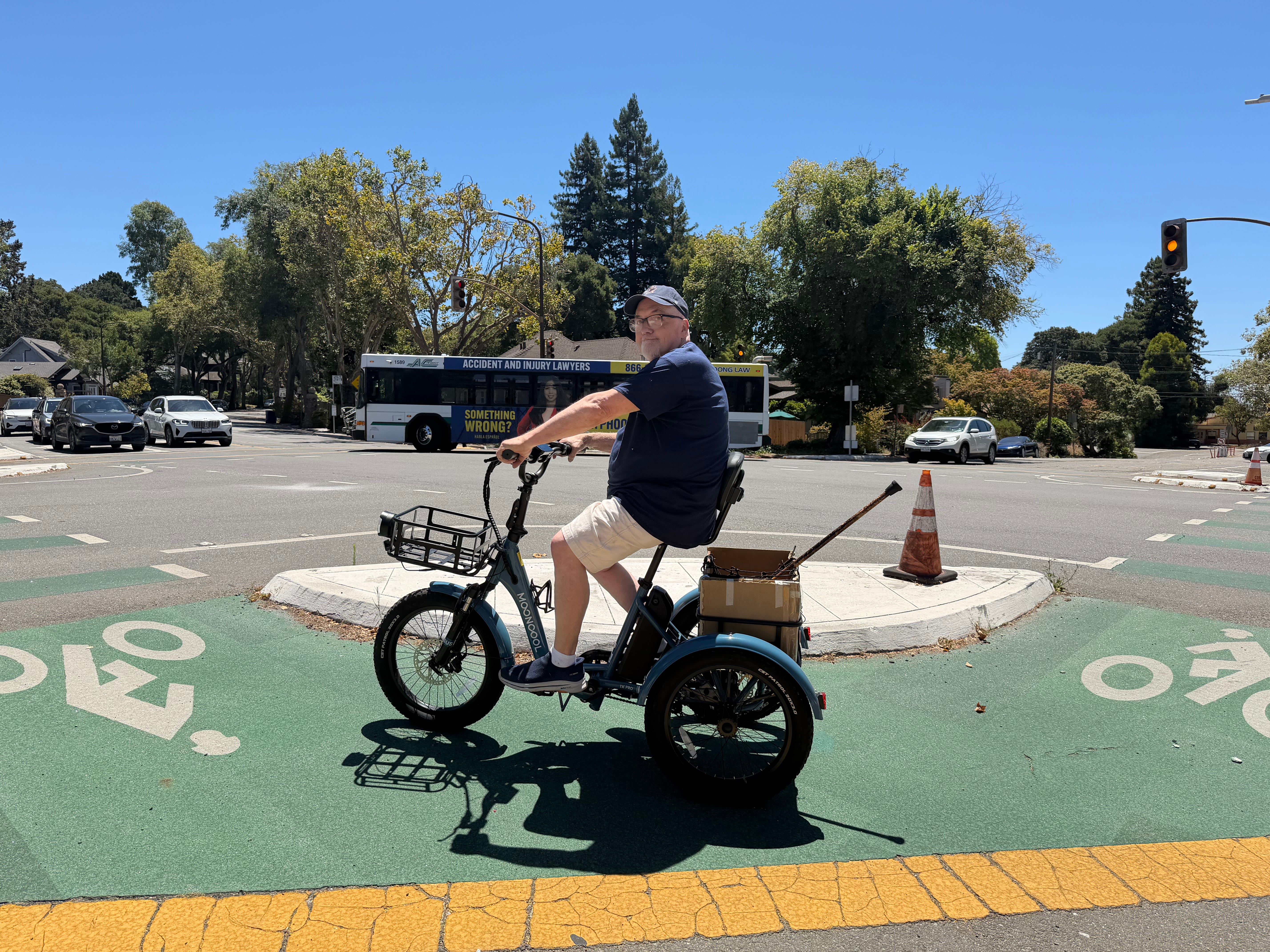
His senior friends are curious to try it but without safe infrastructure they don’t feel safe in the roadway. This is the future of sustainability for seniors in Berkeley, not more parking spaces and car lanes.
“This isn’t Europe or Asia. More people in Berkeley drive than ride bikes to work. Bike lanes are tyranny of the minority.”
Everyone deserves protection in Berkeley. But imagine if we closed BART (which may happen soon), and then cited nobody riding BART as evidence that we don’t need BART. Depriving the neighborhood of safe alternatives to driving, and then citing everyone driving as proof we don’t need alternatives to driving is circular logic.
In 2000, 52% of Berkeleyans commuted by car and by 2019 (before the rise of Work From Home), it dropped to 38%. How? By expanding cycling infrastructure and public transit. Car dependency is not an immutable characteristic of Berkeley, it’s a policy choice caused by not providing safe alternatives.
Hopkins is not a suburban shopping mall with infinite parking lots and many lanes and no obstacles in the freeway to get there. Berkeley’s little shopping areas were built in the early 1900s for neighborhood serving commerce accessible by foot, transit, and small-range mobility vehicles—that’s the whole charm. The oil industry and car manufacturers convinced Berkeley to rip out its trams, widen its streets, demolish its properties and surrender its curb space for cars and made it so that we have no choice but to drive. The Hopkins improvements are predicated on reversing this mid-20th century mistake.
—
Jesus Christ or Jerry Garcia himself could come down and confirm that all the rhetoric about destroying businesses and parking destruction is false, and few people would change their minds. Hopkins bike lanes is really an emotional, generational culture war between the old practices of the 20th century vs. the new climate change environmentalism of the 21st.
There are many pro-bike and pro-alternative to driving seniors who understand car-dependency is not pro-disability and aging—including AARP the largest senior advocacy group in the U.S.—and you will see them on Tuesday defending Hopkins bike lanes.
But it is a generational issue. This same week Berkeley prepares for a fight on Hopkins, the Trump Administration also declared war on bike lanes:
[Cutting bike lane support] is a common-sense approach, despite the Left’s belief that everyone should ride a bike to their shoebox-sized apartment to eat crickets to achieve a phony climate agenda.
In Berkeley the anti-bike lane activism is done by motorists driving a sedan with a KPFA sticker instead of a Ford F-150 with a Punisher logo. But the grievance towards bike projects transcend traditional, partisan politics.
For many older Americans, the automobile has been a defining part of daily life since childhood. So when we argue that this lifestyle is environmentally unsustainable and needs to change—even in minimal ways like Hopkins where no one’s lifestyle shall meaningfully change—the message is far more personal. The criticism is no longer directed at a mode of transportation, as intended, but at a way of life and an American identity built over generations.
That sense of cultural threat breeds resentment, conspiracy, anger and grievance. Whether its housing or zoning, our neighborhoods typically have healthy, sometimes heated democratic debate and political battle, but it’s nothing compared to the toxicity over Hopkins bike lanes that caused city workers to quit their jobs. This comment on NextDoor was posted yesterday describing how destructive the Hopkins bike lane issue became:
[It] has been a gut wrenching few years watching my community get ripped apart by this. I have been called a psychopath, threatened on my bike by a person driving a literal house on wheels, called ableist and agist and been called a shill for developers. I’m just a Berkeley gal, raised by a disabled single mom who never drove a car (or rode a bike for that matter). I have not afforded a car for about a decade of my adult life … As a native Berkeleyan, I have been surprised that my neighbors have such a hard time imagining a movement away from North American car culture and towards a future with healthy, green, enjoyable community-centered ways to get around.
And that’s the saddest part to me. The anti-bike folks think they’re hurting us, but they’re really hurting themselves. The merchants in opposition are hurting themselves by depriving themselves of customers. The seniors in opposition are hurting themselves by isolating themselves from friends and family when they lose their ability to drive. Forgive them, for they know not what they do.
Irrespective of the outcome, once it’s over, the Hopkins community will mend. I believe that when this bike lane is built, some drivers will be mad about it for about a year and then they’ll get over it. Many opponents will eventually take advantage of city and county subsidies and buy an e-tricycle. I’ll watch the same folks who cursed me out over this go zipping up and down Hopkins with their groceries or coffee.
Seconds before sending this article I received a news alert: a 70 year old driver crashed into a building in Downtown Berkeley. We can give people safe alternatives to driving if we try.
Get the job done on Tuesday, and get it over with.
See you there.
No posts
Comments
Nothing yet. Say the first thing.
Sign in to join the conversation.