
This issue starts with a compliance topic that should be on the desk of every retailer and POS software vendor working in or with the Czech Republic. The country is preparing the return of fiscalization through the new EET 2.0 framework. If the expected timeline holds, the system will start in January 2027, which leaves less than six months to understand the legal and technical impact.
This matters because EET 2.0 is not only a local legal update. It touches the POS architecture directly: transaction reporting, certificates, response times, fallback scenarios, fiscal data, payment logic and the way real retail processes are handled across stores, e-commerce and mobile sales.
But this issue is not only about compliance. I also write about offline capability in cloud retail, the future role of the physical store, Community Day 2026, the new season of Retail Talks and the creative power of culture as an invisible storefront.
On my desk, I am also working on something very close to our mission: a simple way to answer one of the first questions every international retailer and POS vendor asks before entering a new country. Is this country fiscal or not? Our team is currently analysing around 200 countries worldwide, and the goal is to make this practical overview freely available to the industry.
I hope this issue gives you useful information, not only something to read. If one part of it helps you prepare better, challenge an assumption or start a discussion inside your company, then it has done its job.
Forward this issue to a colleague responsible for POS, compliance or international rollouts
The Czech Republic is preparing the return of fiscalization. The new model, usually described as EET 2.0, is expected to bring back real-time reporting of sales to the Czech tax authority in a more digital and modern form than the previous EET system.
For retailers, this will be an important compliance topic. For POS software vendors, it is even more important, because the POS will again become the operational point where fiscal data, certificates, transaction timing, payment logic and fallback processes must work together correctly.
The new model is expected to be an online fiscalization system. Transactions will need to be sent to the tax authority in real time, most likely in XML format, and the system will return a confirmation code. POS solutions will therefore need to handle digital certificates, fiscal message creation, communication with the tax authority, response-time logic, offline scenarios and later reporting of transactions that could not be sent immediately.
One of the most important details is the 48-hour fallback rule. If the POS cannot communicate with the tax authority because of internet problems, technical failures or response-time issues, the transaction still has to be reported later. That means vendors cannot treat fiscalization as a simple API call. They need reliable queuing, retry logic, clear status handling and proper auditability.
There are also important business-process implications. Sales, returns, voids, advance payments, vouchers, gift cards and certain contact payments may all need careful treatment. Online sales are especially sensitive, because the fiscal obligation may depend on the payment method and whether the payment is considered a contact payment. This is exactly where many POS and commerce platforms underestimate the complexity.
Another important point is that the current draft does not require POS application certification or special fiscal hardware. At first sight, that may sound simple. In reality, it shifts more responsibility to software architecture, correct implementation and operational monitoring. If the POS sends wrong data, misses transactions, handles certificates incorrectly or fails to report offline transactions within the allowed period, the risk remains with the retailer and indirectly with the vendor supporting that retailer.
The biggest risk for POS vendors is not only missing a legal deadline. The bigger risk is building the Czech fiscalization layer too narrowly, without understanding how real retail processes work across stores, e-commerce, mobile sales, returns, vouchers and multi-country architectures.
Czech EET 2.0 is therefore not just a local compliance update. It is another reminder that modern POS systems must be ready for real-time regulation, country-specific fiscal logic and operational resilience.
I wrote a complete article with a broader overview of the most important requirements and the risks POS vendors should prepare for. Read the full article here: Czech EET 2.0: What POS Software Vendors Need To Prepare For
Where do you see the biggest risk in Czech EET 2.0: certificates, offline fallback, online sales or business-process mapping?]
Turning retailstandard.org into a fiscalization compass
One of the first questions every international retailer and every POS software vendor has before entering a new country is very simple: is this a fiscal country?
But the answer is often not simple at all.
In some countries, fiscalization means certified hardware. In others, it means online reporting, certified POS software, digital signatures, transaction archives, e-invoicing or a combination of several obligations. Before a retailer or a POS vendor can plan a rollout, they first need to understand whether fiscalization exists, which type of fiscalization applies, and how complex the country really is.
This is also one of the first questions we ask internally before we add a country to the roadmap of our Fiscal Portal or our fiscal middleware.
At the moment, I am working on the design of an extension to retailstandard.org. The idea is to turn it into something like a fiscalization compass: a clear and easy-to-use country overview that helps companies quickly understand whether a country is fiscal, what kind of obligation exists, and where they should look next.
Our team of consultants is currently analysing around 200 countries worldwide. It is a big task, but I believe it can become a very useful starting point for retailers, POS vendors and solution providers working internationally.
In the next weeks, I think we will have some interesting results.
For me, this project fits perfectly with our bigger mission: making complex retail compliance easier to understand.
Share this with someone planning international POS rollouts
Useful reads, events and discussions from the last weeks
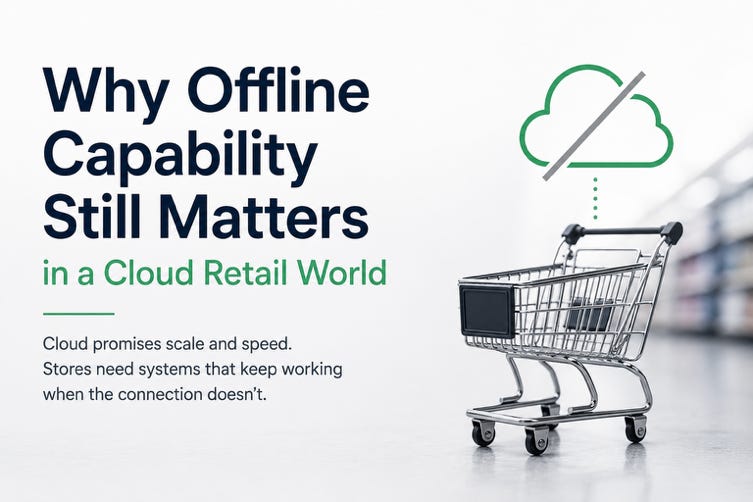
Cloud has become the default language of modern retail technology. It promises scale, speed, easier deployment and lower operational complexity. For many use cases, that promise is real.
But stores are not presentations. Stores are physical places where customers wait, payments must work, receipts must be issued and compliance obligations do not disappear because the internet connection does.
This is why offline capability still matters. Cloud-first retail architecture needs a serious offline strategy, because the best systems are not the ones that work only when everything is perfect. The best systems are the ones that keep the business running when something breaks.
Read the full article here: Why Offline Capability Still Matters in a Cloud Retail World
In my Forbes Technology Council article, I write about a topic that will define the next phase of retail: the future role of the physical store.
The old store model, where products simply wait on shelves, is no longer enough. Stores now have to become places of experience, trust, human connection, brand identity and intelligent technology.
Digital retail changed customer expectations. AI will change them even more. But that does not mean physical retail becomes irrelevant. It means the store must find a stronger role in the customer journey.
Read the full article here: Physical Retail Will Survive - But Only If It Stops Being Just A Store
Do you agree that physical retail needs to become more than a transaction point?]
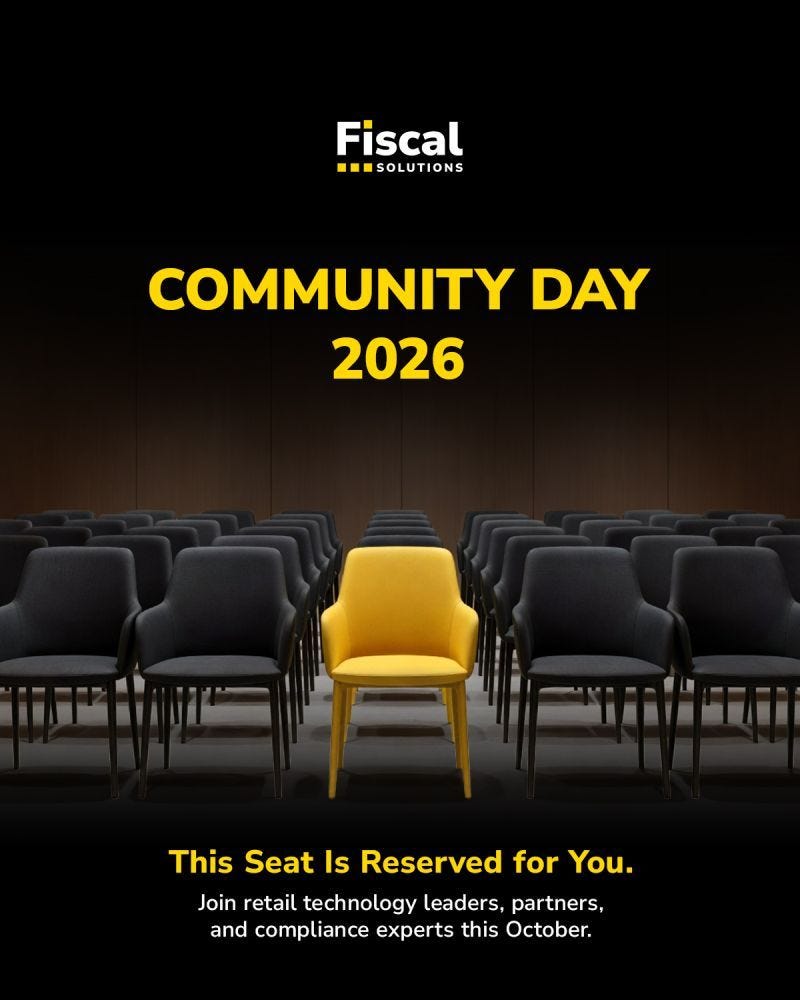
Community Day is my favorite event of the year. By now, we can almost call it a tradition. This year, we are organizing it for the third time.
I started Community Day three years ago because I felt there was a real need for a different kind of industry event. Not another conference built around sponsors, sales presentations and generic talks, but a place where people who deal with fiscalization in real life can exchange knowledge, experience and practical insights.
Everybody in this industry sees a different part of the picture. Retailers understand the operational pressure. POS vendors understand the integration complexity. Solution providers understand the technical and legal details. When we bring all of that knowledge into one room, the picture becomes much clearer for everyone. That is how real communities work.
We already have around 20 confirmations, and we intentionally keep the number of participants limited. We accept around 80 participants, so that together with our team the event remains a focused gathering of about 100 representatives from the global retail and retail technology community.
The value of Community Day is not only in the exchange between participants. We also share the latest information about regulatory developments, and our technical and legal consultants are present during the entire event for individual 1:1 consultations.
No sales agenda. No paid speeches. No sponsor-driven content. Just knowledge, experience and community. That has become rare, and we are very happy to host it again.
Community Day 2026 will take place in Belgrade on 15 October.
If you would like to receive an invitation, please register here and my team will take care of it: Community Day 2026 registration
I am very happy that we have restarted Retail Talks. This is now the second season, and this time I am hosting it together with my colleague Kristina.
The concept behind Retail Talks is what I like to call fast marketing. It is our way of reacting quickly to important topics that are happening in the retail industry. We take current news, comment on them, and try to understand what they really mean for retailers, retail technologies, POS vendors, solution providers and other companies connected to the industry.
The main idea is not only to talk about the news itself. The more important question is what sits behind it. Why is it happening? What does it change? Which risks does it create? Which opportunities does it open? And how could it influence the way retail companies and technology providers need to think about the future?
I strongly believe that building solutions for retail is only possible if you truly understand retail. And to understand retail, you have to keep learning.
Retail Talks helps us do exactly that. We learn by analysing real events, by discussing them openly and by bringing different perspectives from the industry into one conversation.
We stream Retail Talks live on LinkedIn, X and YouTube every Wednesday at 3 PM CET. All recordings are saved permanently and are freely available to everyone.
In this issue, it is my pleasure to share the first episode of the new season with you.
Before people enter a store, they often enter a world.
They may hear a song, watch a film, follow a fashion movement, taste a certain food, admire a city, remember a tradition, or feel connected to a story that is much older than the product in front of them. Culture creates this first invisible contact. It prepares the mind before commerce begins.
That is why culture can become one of the most powerful forces in retail.
K-Beauty is one example. It did not grow only because of good products or smart distribution. It grew because it became part of a larger cultural wave. Music, film, lifestyle, skincare rituals, social media and national creativity all moved in the same direction. The product became easier to discover because the culture around it had already made it desirable.
But this is not only a Korean story. Italian fashion carries the memory of craftsmanship, cities, family names and elegance. Japanese retail often carries ideas of precision, simplicity and respect for detail. French luxury is built not only on products, but on history, taste, language and the promise of refinement. Even a local food market can become powerful when it feels connected to place, memory and tradition.
For me, this is where creativity becomes very important.
Creativity is not only the act of inventing something completely new. Sometimes creativity means understanding what already exists in a culture, giving it a modern form, and making people feel it again.
Retailers often think about stores, channels, campaigns and technology. All of that matters. But behind the visible storefront, there is often another one.
An invisible storefront made of stories, memories, rituals, symbols, traditions and emotions.
The retailers who understand that are not only selling products. They are inviting people into a world.
Which culture-driven retail example should I look at next?
Thank you for spending time with this issue.
Many of the topics I write about here are not loud topics. Fiscalization, offline resilience, country-specific requirements, retail standards and compliance architecture rarely make big headlines. But they are exactly the topics that decide whether retail systems work in real life.
That is why I keep writing about them.
If this issue helped you see one of these topics more clearly, I would be very happy if you shared it with someone who works in retail, POS, compliance or retail technology.
And I hope to see you soon at Retail Talks or at Community Day 2026 in Belgrade.
See you in the next issue.
Comments
Nothing yet. Say the first thing.
Sign in to join the conversation.