
A few weeks ago I wrote about “adults these days” and our maturing problems.
“Elderhood, as I see it, is that stage when you start taking more of the burdens and less of the rewards, accept that you can’t have everything so the kids can have something (and not only your kids), and use whatever power you have to protect and pass on instead of hoarding and delaying.”
We need older people who are able, while they’re still able, to catch the hot potato sometimes. That means we need more elders.
Can you decide to become one and then you do? Do you have to wait until it’s your time, or can you grow into one sooner? This is my latest obsession, and the second part in a four-part series. I know for sure elderhood doesn’t just happen from living longer (look around). But I also know lots of people who are elders (also, look around).
This one deals with death and sacrifice, because accepting both seems like a major hurdle into elderhood.
Sometimes, it almost feels like there’s an assumption we can’t grow into elders. That of course we’ll live only for ourselves, because it’s a dog-eat-dog world. Winning is not only living but also never dying.
Even if we have faith that reminds us of an afterlife, fearing death is normal, and even good. I want my kids to fear something bad happening to themselves or others so they take care and avoid doing reckless things. It’s not only the possibility of pain and suffering that can come with death, but the profound loss that can be worse than any physical pain imaginable. It makes sense why we build lives that allow us to avoid it, the way uncomfortable truths grow into elephants in the room, just never our own.
I still remember when I first realized how death could happen to anyone at any time, even to someone who is your world. My mom nearly died from sepsis caused by mastitis when I was three. Keeping people safe has been my whole helicoptering life. I was a helicopter child long before becoming a helicopter parent. It’s why I wanted to go into journalism and healthcare.
But forever fearing death or imagining you can control or buy your way out of it?
How can you become an elder if you think you’ll never die?
Elderhood may have been more of an inevitability in the past. Regular people didn’t have the resources to bubble themselves as Disneyfied main characters who never die. Maybe that’s why we’re slower to grow into elders, or maybe never do.
Today, almost any one of us might be able to spend years shielded from death. We have more isolated lives and have built whole industries designed to distract us from our own inevitable end. Death itself is disappeared. Lots of people never see it up close until they’re later in life, or maybe even never.
Instead we hear messages that never growing old is both good and possible, especially from people selling us stuff. Some simply believe we can’t handle the truth. The times I’ve been the most depressed were the times when I didn’t think I could either.
Bubbling ourselves from mortality isn’t the only barrier to becoming elders. Bubbling ourselves from sacrifice is too.
It’s really weird how our culture and political system are so uncomfortable with even mentioning the possibility of the smallest sacrifice from people most able to make it. It’s been happening for years but keeps getting worse. I’m growing more worried—and embarrassed (sorry kids).
I wouldn’t try to assume who is “able” or what that means for someone else, but I know not enough has been asked of me. I can share and help more as I go about my day to day.
And then what?
Changing the tone or nudging to help build momentum toward a culture of respect and care seems both common and good. But negativity is everywhere, dividing, impeding, and sucking the care out of conversations, choices, and actions.
When scales of problems are this massive and layered and complex, it’s easy to get pulled in and stuck in a cynicism that makes nothing seem possible.
This is why we need more elders and why I want to become one. Not because elders are so smart and can fix everything. They don’t need to be the main characters, and usually aren’t. And not because they all agree and think alike making hard collective choices easier to make. But because elders help create fertile grounds for good things to grow.
Plenty of people profit from a self-centeredness that doesn’t age well, no matter how much you "longevitize" yourself.
To that I say: I’m getting old. I will die. Now leave me alone and let me use my time here for something good.
“Fake it until you make it” is eighties advice I still follow. If you choose elder examples to follow you can become the elder you want to be.
I’d love to drop millions for a good cause or use my mega platform to elevate one. I’m sure you would too. But it’s easy to discount or downplay small scale differences for the better: how would a fractional drop in the bucket really matter? Sometimes, tiny drops are all you’ve got. And that’s okay. They matter. They really do.
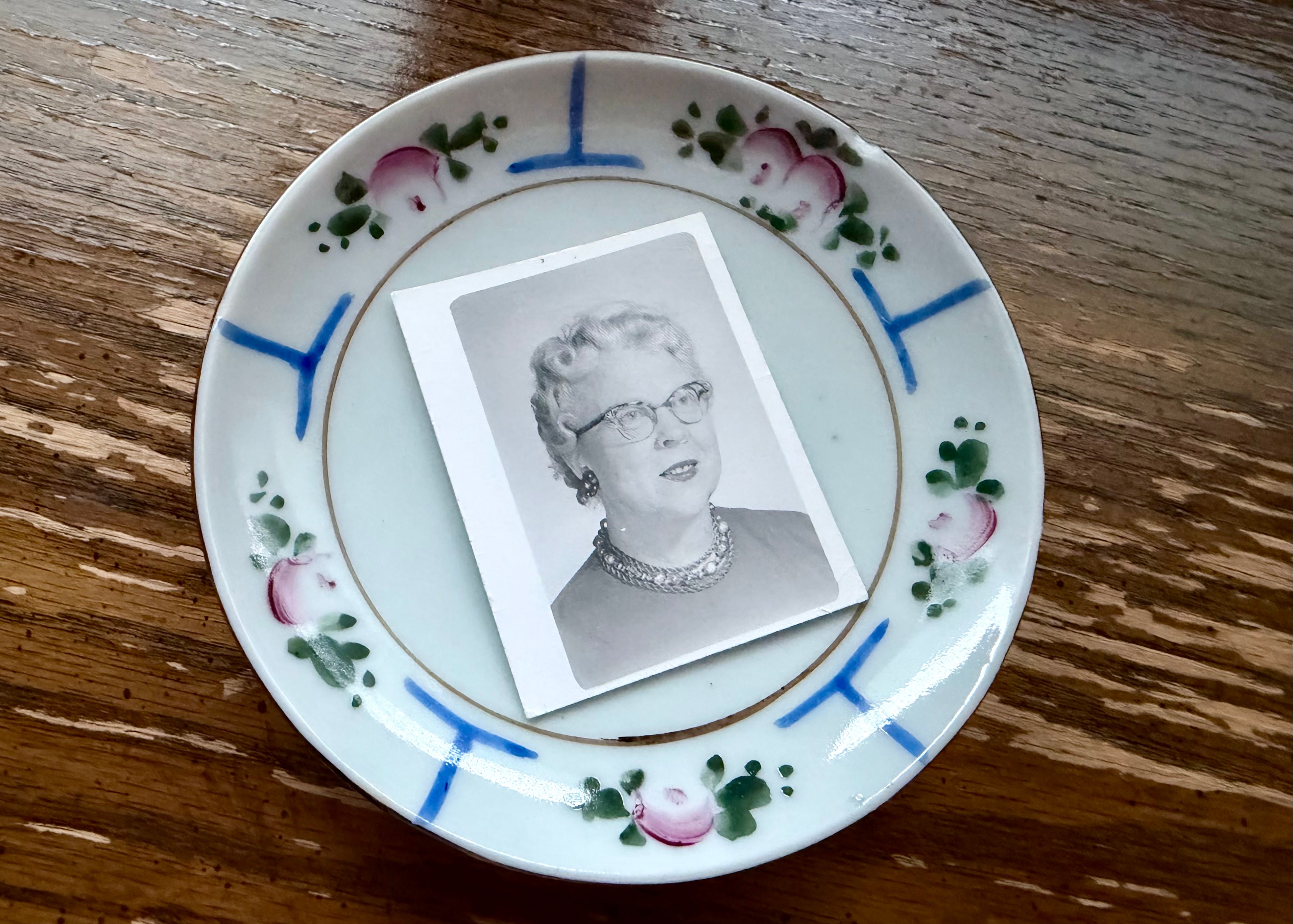
Last fall, I wrote about how my mom keeps this picture of her fourth-grade school teacher on her dresser. It’s one of the few things from her home she wants me to be sure to keep after she dies. Mom’s teacher comforted her during an isolating and traumatic time in her life. “How many people ever have someone they briefly knew from decades ago get their picture treasured as a prized possession because of what they did to help them?” I wrote.
But elders know: it all counts. Maybe not now or in any way you’ll ever know, but it all adds up. Helping one single person, spreading kindness, is huge.
Most people’s efforts are unnoticed. Helping behind the scenes is rarely seen. If you’re looking for elder examples as you go about your day, you may need to be more intentional about looking because elders don’t do what they do to get noticed—that is not the point.
Offline, off the celebrity scroll, and away from the “news” feed (yes there is real news but most news is not news), there are far more meaningful elder examples to follow.
Here’s some of what I notice about elders.
They prioritize collaboration. They understand that perspectives differ, so we need each other to be able to see a more complete picture and find more useful directions that are more likely to make something better and just (or keep it from getting worse).
They prepare to be replaced. They aren’t threatened by younger people. They support and mentor them, passing on what they’ve learned and letting them decide how to use it.
They choose their battles wisely. They are willing to take hard stands and shoulder the costs, but they’re choosy about which lines are worth drawing.
They protect from groupthink. They speak up within their groups, support others who do, and welcome open feedback, questions, and counter-viewpoints.
They protect their energy. They don’t feed ego monsters or energy vampires, and they avoid becoming one themselves.
They’re not perfectionists. They know that “better” is usually better than nothing, and that progress is always relative and needs to be sustained.
They focus on building, not arguing. They spend less time debating what counts as “better” and more time building versions of better we know can actually help, especially for people who need it most.
They separate needs from wants. They find ways to turn “just enough” into enough to share, starting with the young and vulnerable.
They create coalitions. They build and maintain bridges between groups who might not seem “likeminded” but together can create what they couldn’t alone with benefits that extend outward and ahead.
They stay grounded. Centered by purpose and humbled by faith, they embrace the rhythm of ordinary life, puttering, lingering, tending, which gives breathing space for joy and sustenance.
They do not forget that one person is one person and that everyone matters.
I never want to be on a pedestal or look up at someone who is. But I can look around and find elders doing kind and generous things every day. They are everywhere, mostly unnoticed. They’re grateful to have made it to their age and want to help others along while they still can. They’ll take a hit to soften the blow to someone more vulnerable. I want to follow their example.
What’s next? I’m following this theme into two pieces I’ll be sharing soon: Who Owns the Future? and Passing Problems Instead of Torches. I’m also working on My Two Dads, The Woman Left Standing, My Other Half, and The City of Destiny. And my book, barely, but it’s a start.
Working offline on a simple laptop is helpful to shift into that zone. I have no nostalgia for typewriters and handwriting other than the aesthetics of them. For kids, though, pencil and paper is still best to learn. A blank piece of paper and writing device can take kids to magical places. All four of my kids (10, 15, 20, 26) are prolific drawers, having drawing parties and carrying sketchpads on the go. They got that from their dad and I feel outside of that club, but as an admirer. I love seeing them bonded this way across their ages.
Creating something new brings such joy. AI doesn’t change that. “Look ma what I made?” doesn’t work the same for something AI whipped up. Same goes for a story. My youngest has plans to write a book this summer too. We all need writing buddies.
What’s keeping me going: outside time
I’m the picture-taker in the family so there are fewer pictures of me. And nearly every picture of me is because I asked someone to take a picture of me with someone else, usually on an outing or special day. Below is a picture my husband took of me on an outing with the kids, trailing off steps behind like usual, though usually not captured.
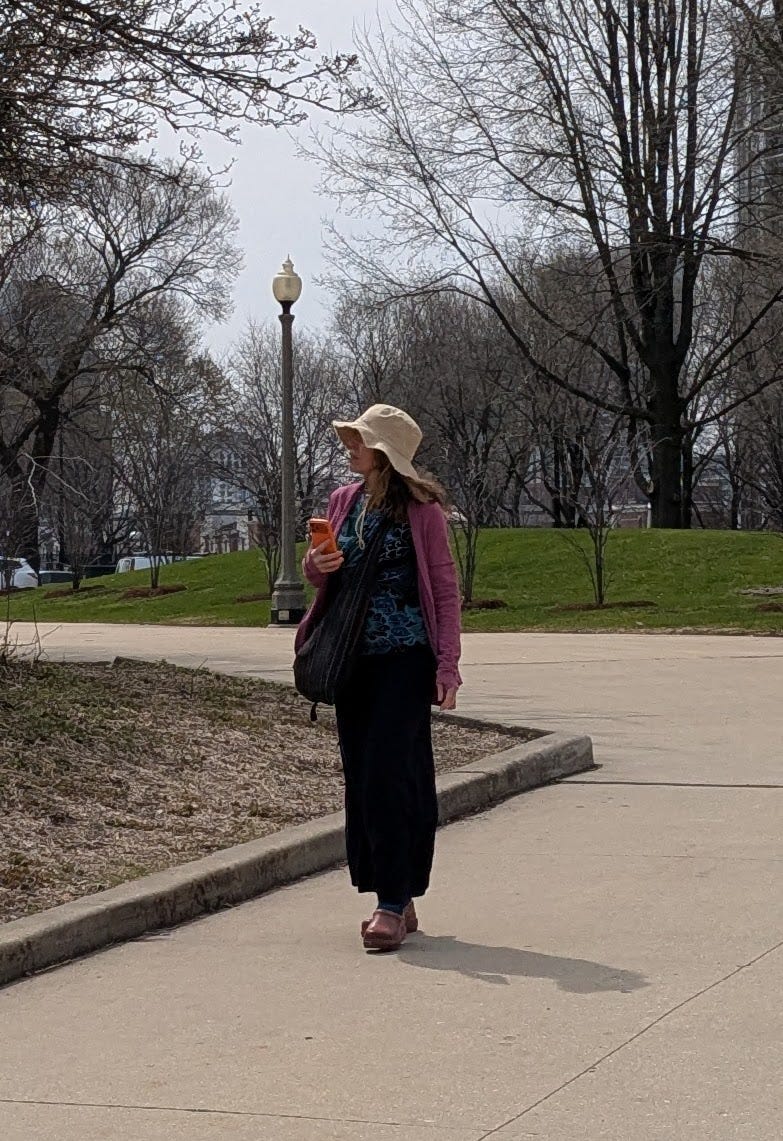
I’ve always had to slow what sensory stuff I take in to process even part of it, especially during transitions, and the shift into elderhood is a big one. I can’t be totally aligned anymore, matching the pace and moods of others around me.
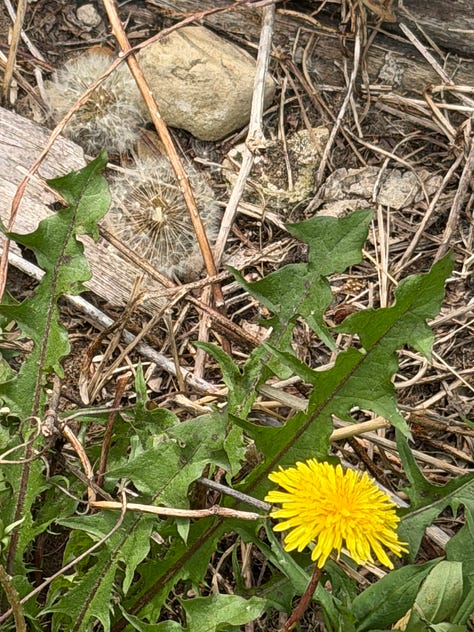
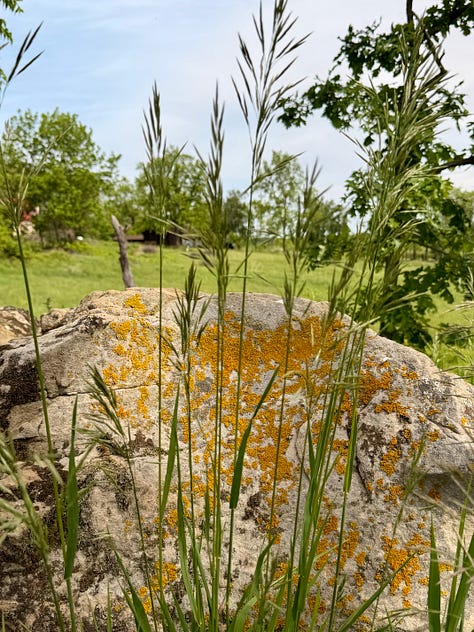
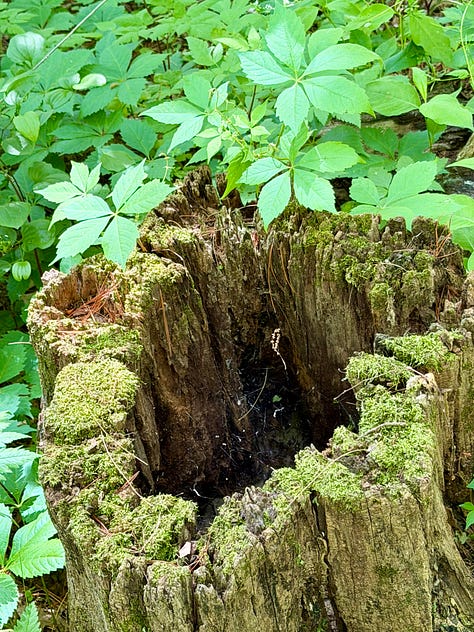
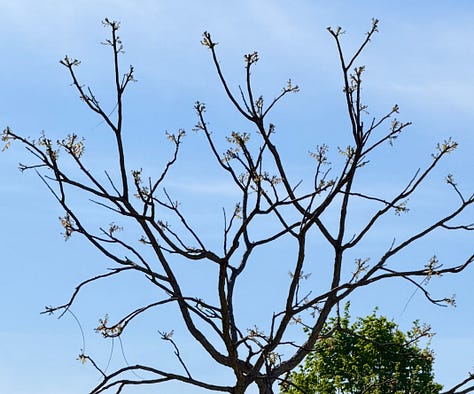
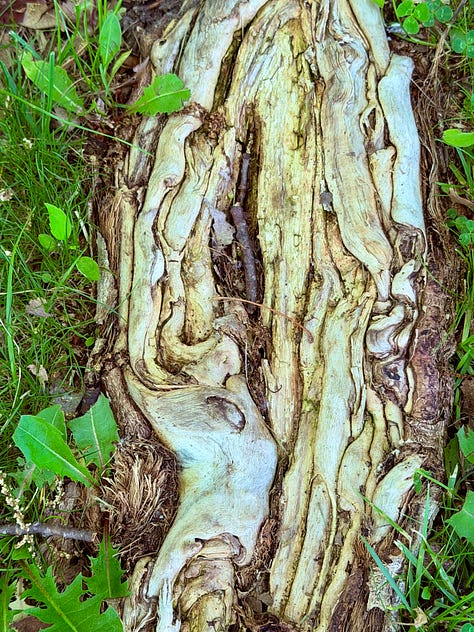
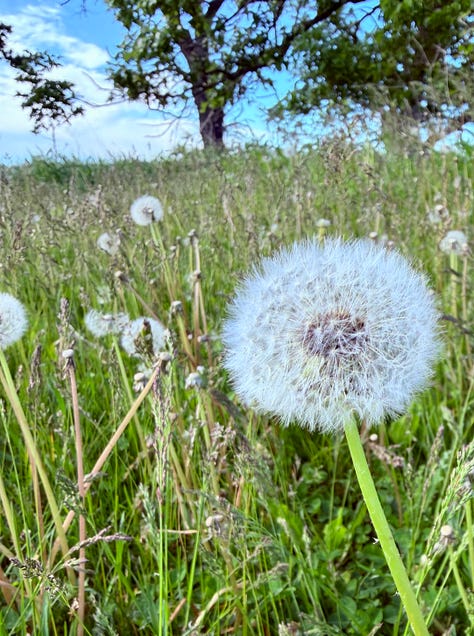
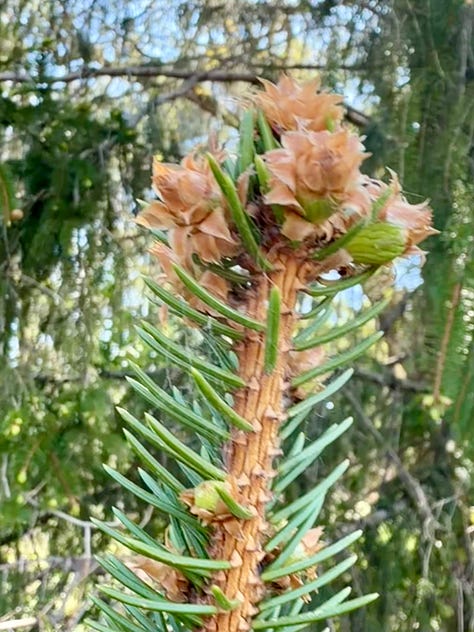
I need some space in figuring out how to fit into my own older self before knowing how to align with others. I need that space to be honest with myself. And I need to be outside, a little bit every day. Even if it’s just sitting on a stoop looking up. This past spring’s been fun watching what’s growing all around.


Comments
Nothing yet. Say the first thing.
Sign in to join the conversation.