
For more of Dante King’s writing, courses, and educational work, visit www.danteking.com. You can also follow Dante on Instagram @dantedkingofficial and TikTok @dantekingauthorofficial. Consider becoming a paid subscriber to support this work.
Paid subscribers make it possible to continue producing in-depth analysis, public scholarship, and educational content that challenges dominant narratives and advances a deeper understanding of our collective history.
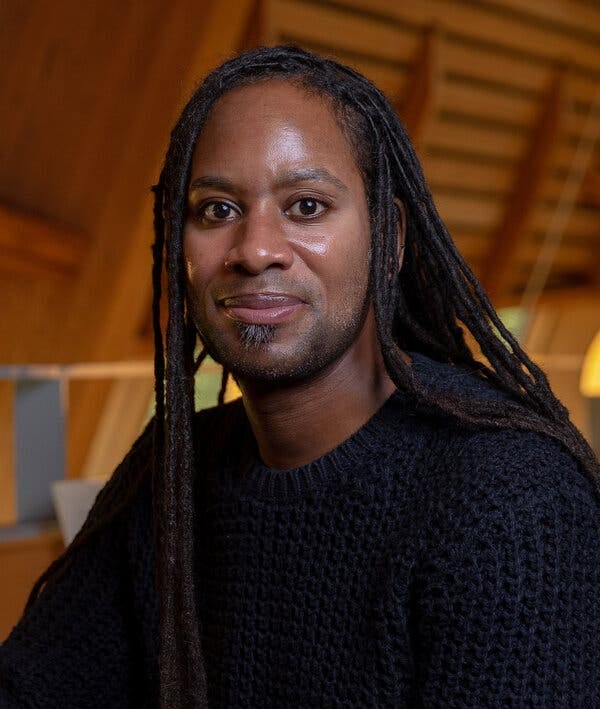
I have been thinking about Jason Arday.
But if I am completely transparent, I have also been thinking about myself.
I have been thinking about what it means to spend a lifetime constructing yourself in a world that teaches Black people—explicitly and implicitly—that simply being will never be enough.
You must achieve.
You must excel.
You must acquire the degrees.
Write the books.
Win the awards.
Build the career.
Become indispensable.
Be articulate.
Be accomplished.
Be respectable.
Be exceptional.
And even then, somewhere in the recesses of your consciousness, you understand something terrifying:
None of it guarantees your safety.
One accusation.
One controversy.
One mistake.
One person determined to investigate every corner of your life.
One institution suddenly frightened by its association with you.
One media cycle.
And the same society that yesterday introduced you as brilliant can tomorrow begin discussing you as though your entire existence were fraudulent.
That is what I have been thinking about since learning of the death of Professor Jason Arday.
And it frightens me because I understand far too much of it.
I want to establish something at the beginning.
There were serious allegations concerning portions of Jason Arday’s academic work. Those allegations deserve to be evaluated fairly.
Academic integrity matters.
Accountability matters.
Evidence matters.
But accountability and annihilation are not synonymous.
Investigation and dehumanization are not synonymous.
Scrutiny and public bloodletting are not synonymous.
And this is precisely where my scholarship on anti-Blackness becomes relevant.
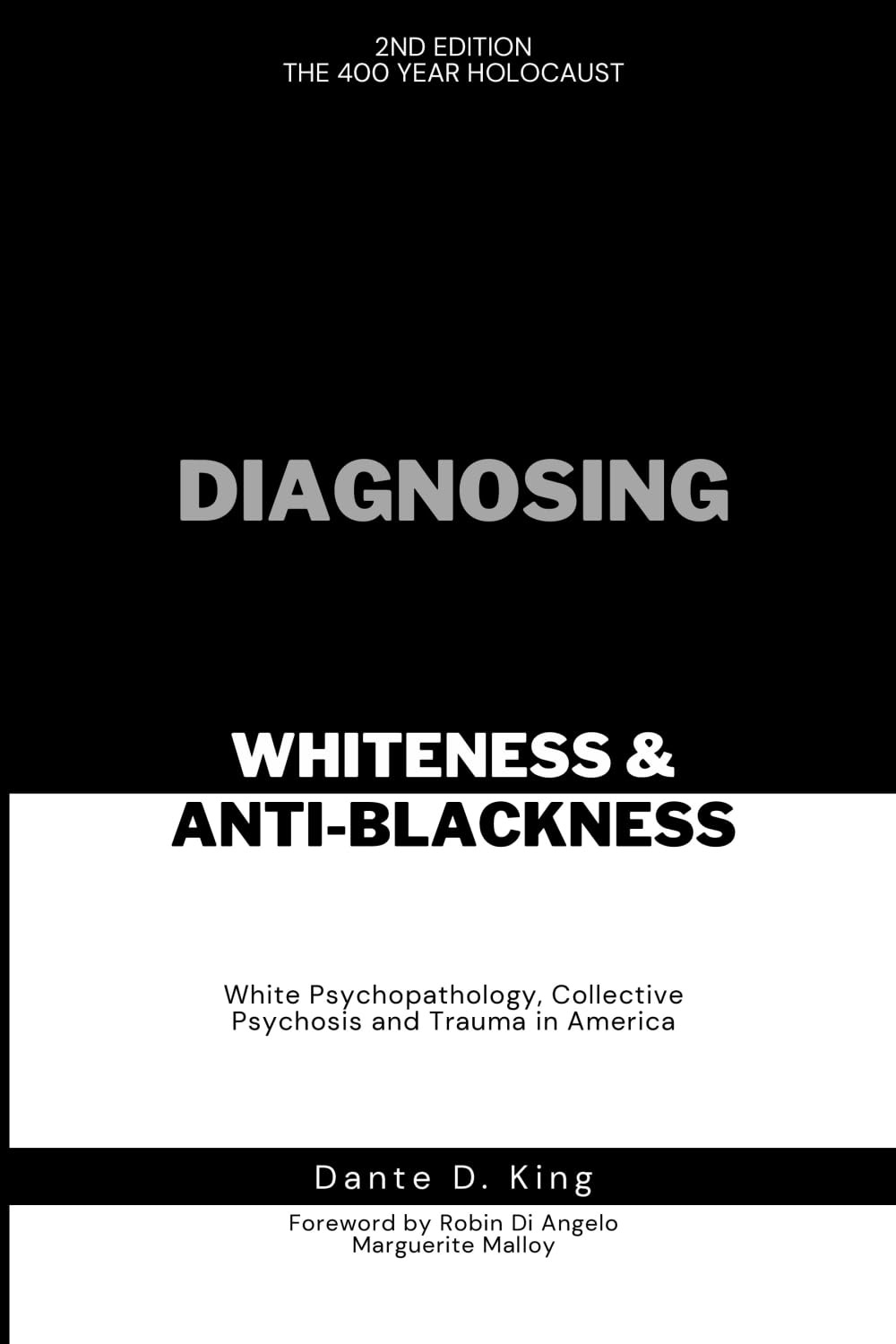
In Diagnosing Whiteness & Anti-Blackness, I argue that Black people frequently experience something beyond ordinary scrutiny.
We experience hyper-scrutiny.
There is often a need to locate the defect.
Find the inconsistency.
Discover the deficiency.
Identify the thing that proves the Black person was never as intelligent, talented, ethical, accomplished, deserving, or extraordinary as everyone had been led to believe.
There is almost a bloodthirst to it.
And once the hunt begins, the original question can become secondary.
The person becomes the investigation.
Their biography becomes evidence.
Their personality becomes evidence.
Their accomplishments become suspicious.
Their relationships become suspicious.
Their mistakes become character.
Their entire life becomes discoverable.
The objective gradually moves from:
Did this person do something wrong?
to:
Was this person ever who we thought they were?
Those are profoundly different questions.
Black children learn very early that achievement can function as protection.
Our parents tell us we have to work twice as hard.
Our communities celebrate educational accomplishment because generations before us were legally prohibited from accessing many of the institutions we now enter.
So we run.
And run.
And run.
Degree.
Promotion.
Award.
Book.
Title.
Appointment.
Recognition.
Another accomplishment.
Another credential.
Another demonstration that we belong.
I know this race intimately.
I know what it feels like to build an identity around achievement.
I know what it means to have people celebrate your scholarship, invite you into institutions, praise your analysis, purchase your books, seek your expertise, place you on stages—and simultaneously understand how conditional institutional admiration can be.
That is why Arday’s story touches something extraordinarily personal in me.
Because when achievement becomes one of the mechanisms through which marginalized people establish safety, an attack upon achievement can begin to feel like an attack upon existence itself.
If the degrees are questioned...
If the scholarship is questioned...
If the reputation is questioned...
If the accomplishments are questioned...
If the institution that once celebrated you begins investigating you...
What remains?
Who are you when the scaffolding through which society taught you to establish your value begins collapsing?
That is not merely a professional crisis.
It can become an existential one.
The transformation is what I find so psychologically disturbing.
When Arday was appointed Professor of Sociology of Education at Cambridge in 2023, he was celebrated internationally.
He had reportedly been nonverbal until age eleven.
He had learned to read and write relatively late.
He was autistic.
He became the youngest Black professor in Cambridge’s history.
His story became inspirational.
The establishment loved the story.
Until suddenly, parts of the establishment did not.
Then the very exceptionalism that had made him fascinating became part of what required interrogation.
How did he accomplish all of this?
Were all these claims accurate?
Was the scholarship really his?
Was the biography what everyone had been told?
Some of those may be legitimate questions.
But we must also ask another:
At what point does accountability become spectacle?
And who receives the privilege of remaining human while being investigated?
White mediocrity can be remarkably durable.
White men can have failed businesses, commit sexual assault, be convicted of felonies, and become presidents.
They can preside over disastrous institutions and receive severance packages.
They can publish flawed scholarship and remain scholars.
They can be accused of misconduct and receive second, third, fourth, and fifth acts.
Their failures are frequently individualized.
He made a mistake.
He exercised poor judgment.
He deserves another opportunity.
We have to consider the totality of his career.
Black failure operates differently.
Our mistakes can become racial evidence.
Evidence against affirmative action.
Evidence against diversity.
Evidence against inclusion.
Evidence against Black intellectual capacity itself.
We are not simply permitted to have failed. Our failure is recruited into the prosecution of Black people.
Whiteness affords the privilege of individual imperfection. Blackness is repeatedly burdened with representative perfection.
A Black professor accused of misconduct is therefore rarely allowed simply to be a professor accused of misconduct.
Suddenly, he becomes evidence that “DEI” lowered standards.
Evidence that Cambridge sacrificed merit.
Evidence that Black advancement was fraudulent.
Evidence that the establishment was foolish for believing in him.
The individual Black body becomes a referendum on Black legitimacy.
That is anti-Blackness.
There is another dimension I cannot ignore.
The intersection of Blackness and queerness carries its own peculiar psychological burden.
I know this personally.
To be Black is already to navigate a society that has historically constructed Blackness as dangerous, deficient, unintelligent, criminal, pathological, and undeserving.
To also exist outside heterosexual expectations introduces another terrain of judgment.
You learn to read rooms.
You learn when difference is tolerated and when it is punished.
You learn that acceptance can be conditional.
You learn that professional excellence does not necessarily protect you from contempt.
You learn to anticipate rejection before it arrives.
And eventually vigilance can become so habitual that you forget how exhausting vigilance actually is.
That is why intersectionality cannot merely be an academic word.
Bodies experience intersections.
Nervous systems experience intersections.
Human beings carry them.
This is the question I cannot escape.
What happens when achievement becomes one of the things keeping us alive?
Not biologically.
Psychologically.
When accomplishment becomes proof that the suffering meant something.
That the childhood struggle meant something.
That the racism meant something.
That the homophobia meant something.
That the loneliness meant something.
That all those nights working while everyone else slept meant something.
That surviving hostile institutions meant something.
That proving people wrong meant something.
And then imagine watching the architecture of that meaning collapse publicly.
I understand why that can become psychologically catastrophic.
Perhaps more than I would like to admit.
I need to say this plainly.
I can relate to suicide.
I can relate to reaching moments when the psychological architecture holding a life together becomes overwhelmed.
And I know I am not alone.
Cheslie Kryst.
Stephen “tWitch” Boss.
Don Cornelius.
Chris Lighty.
Ian Alexander Jr.
Different people.
Different lives.
Different circumstances.
Different suffering.
Their deaths should never be collapsed into a single explanation.
But their lives force us to confront something we too often avoid:
Achievement does not immunize Black people from despair.
Fame does not.
Money does not.
Education does not.
Beauty does not.
Professional accomplishment does not.
Sometimes those very accomplishments create another prison because everyone assumes the successful person must be okay.
And the more extraordinary the public identity becomes, the more terrifying its collapse may feel.
This may ultimately be the question Jason Arday’s death raises for me.
What if Black people did not have to be extraordinary to deserve protection?
What if we could fail without becoming failures?
What if we could make mistakes without our entire biographies being placed on trial?
What if accountability could occur without annihilation?
What if brilliance did not require perfection?
What if institutions that celebrated Black excellence were equally committed to protecting Black humanity when that excellence became complicated?
What if a Black person could fall from a pedestal and simply land on the ground—
rather than being buried underneath it?
Because perhaps the pedestal itself is part of the problem.
The pedestal tells us:
Be exceptional and we will love you.
Be extraordinary and we will celebrate you.
Be inspirational and we will tell your story.
But never disappoint us.
Never contradict the mythology we created around you.
Never reveal complexity.
Never become inconvenient.
Never become human.
Because the same machinery that manufactures Black exceptionalism can become extraordinarily efficient at manufacturing Black disgrace.
Before Cambridge.
Before professor.
Before youngest.
Before Black.
Before plagiarism.
Before controversy.
Before resignation.
Before newspaper investigations.
Jason Arday was a human being.
A son.
A friend.
A colleague.
A person with a nervous system.
A person capable of fear.
A person capable of shame.
A person capable of being overwhelmed.
A person whose humanity should never have depended upon whether every sentence he ever wrote, every claim he ever made, or every accomplishment attributed to him survived scrutiny.
Accountability can investigate conduct.
Justice can establish facts.
Institutions can enforce standards.
But none of those things require us to destroy a human being.
That distinction matters to me.
Because I understand what it means to be Black and accomplished in institutions that can celebrate you today and scrutinize you tomorrow.
I understand the relentless demand to achieve.
I understand the desire to prove yourself.
I understand hyper-scrutiny.
I understand what it feels like when people begin pulling at the threads of something you have spent your entire life constructing.
And I understand something else that I wish more people understood:
Sometimes when you attack everything a person has built to explain why their life matters, you may be attacking the very structure that has helped that person remain alive.
That does not eliminate accountability.
It demands humanity.
Jason Arday’s death should force us to ask whether we still know the difference.
And perhaps the most important question is not whether Jason Arday was everything the world once imagined him to be.
Perhaps it is this:
Why did we ever require him to be extraordinary before we decided his life was worthy of care?
To learn more about Dante King’s books, educational resources, online video courses, and upcoming events, please visit:
www.danteking.com
You can also follow Dante’s work and commentary on social media:
Instagram: @dantedkingofficial
TikTok: @dantekingauthorofficial
If this article resonated with you, please consider becoming a paid subscriber. Your support helps sustain the research, writing, and educational work dedicated to examining the historical and psychological foundations of anti-Blackness, racism, and white supremacy in American culture and institutions.
Paid subscribers make it possible to continue producing in-depth analysis, public scholarship, and educational content that challenges dominant narratives and advances a deeper understanding of our collective history.
Thank you for reading, engaging, and supporting this work.
Thanks for reading! This post is public so feel free to share it.
No posts
Comments
Nothing yet. Say the first thing.
Sign in to join the conversation.