
This is the second installment of a four-part short story set in twentieth- and early twenty-first-century Cairo. It is inspired by the works of Naguib Mahfouz, specifically his Cairo Trilogy and standalone novels, Midaq Alley and Khan al-Khalili.
Part 1 | Part 2 | Part 3 | Part 4
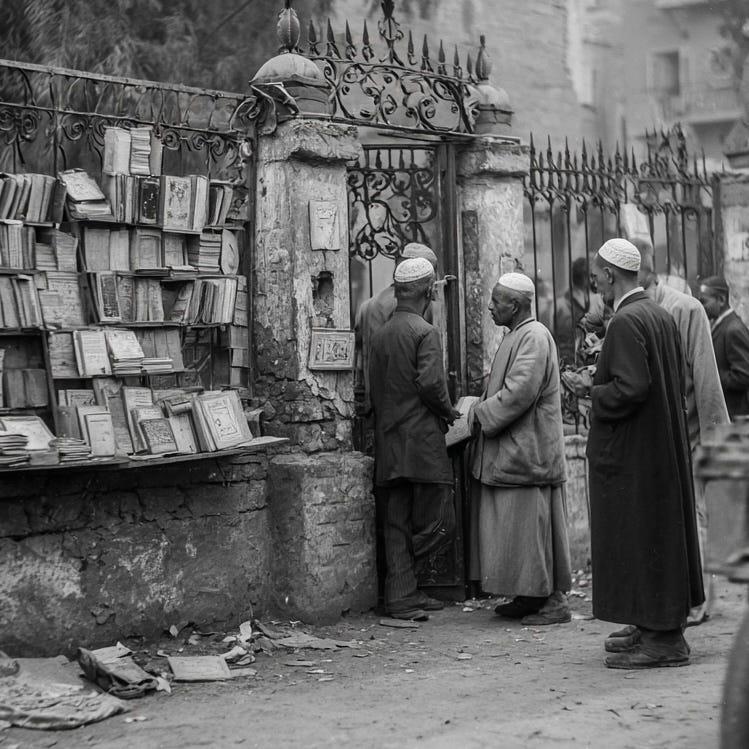
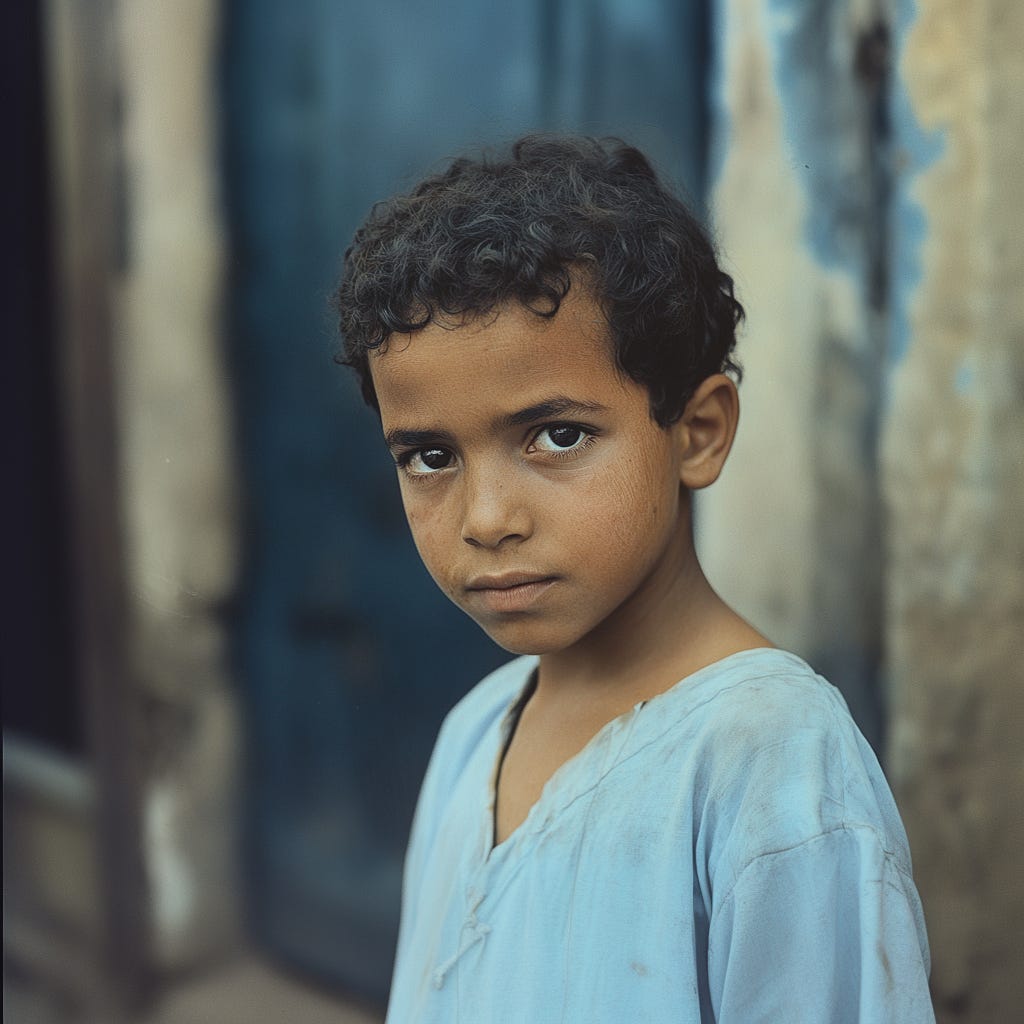
Qasim’s right ear cicatrized and healed, but the flesh would itch off and on for the remainder of his life. When he recovered sufficiently from the wound, he began to learn the book trade. Each morning after dawn prayers—except on Fridays and other Muslim holy days—four porters arrived at Sheikh Mukhtar’s vault in Khan al-Khalili. They brought pushcarts to transport a selection of the books to Soor al-Azbakeya. It took half an hour to reach Ataba by foot. Qasim and Ahmed led the way, crying “’an idhnak!” (by your leave) to part the crowd.
The boys spread sackcloth on the sidewalk to protect the books from the roughness of the dusty cobbles. A few of the books stood upright on the fence’s low base, spines facing the sidewalk. It was not uncommon for the more colorful paperbacks to be wedged at odd angles or butterflied between the bars to showcase their garishness, as a peacock spreads its tail. The was not logically categorized, since neither of the boys could not read.
When the porters left, Ahmed went to the corner to buy their breakfast, which consisted of flatbread stuffed with baked beans or a cup of boiled chickpeas. They washed everything down with a demitasse of tea; and when the tea things had been returned to the vendor, the orphans waited for the customers to come. Some days not a single person stopped by.
In the late afternoon the porters returned. The unsold books were hauled back to the vault and the men were paid their wages. Ahmed gave Sheikh Mukhtar whatever he and Qasim managed to earn that day. Between what they sold and the money the old storyteller garnered from the auditors he entertained during his daily perambulations through the old quarters of city, there was always enough for them to eat and the old man ensured the boys’ needs were taken care of.
At the end of each month, Sheikh Mukhtar treated them to a feast of chicken skewers and koftas wrapped in grape leaves. After the greasy repast, the three of them resorted to the ancient hammam on al-Mu’izz Street, where the sheikh paid for his wards to bathe and recreate themselves in the subterranean Roman pools, while he lingered in the vestibule, sleeping or telling stories to the staff. It was during one such visit that Qasim witnessed something that made him suspect the old man’s resources were greater than he let on.
Qasim and Ahmed mounted the hammam’s ashlar steps, galabeyas still clinging to their damp skin. Sheikh Mukhtar was in the vestibule lounging on a plush divan, recounting an episode from the romance of Abla and Antara to the man folding towels and a second man, the makwagee, who was ironing them. From behind a beaded curtain appeared the aged Armenian proprietress.
She doused the orphans with an attar of sandalwood, complimenting Sheikh Mukhtar for his charges’ manners and comeliness. She remarked that the fragrance she was so liberally aspersing them with was compounded from a time-honored formula the sages of Erevan had kept a guarded secret since the time of Christ.
Her tone became conspiratorial as she cast hesitating glances behind her, intimating that a second vial lay locked away in the backroom—a vial she might be persuaded to part with it “assuming the price. . .” She let the insinuation permeate the air as thickly as the perfume she was endeavoring so desperately to flog.
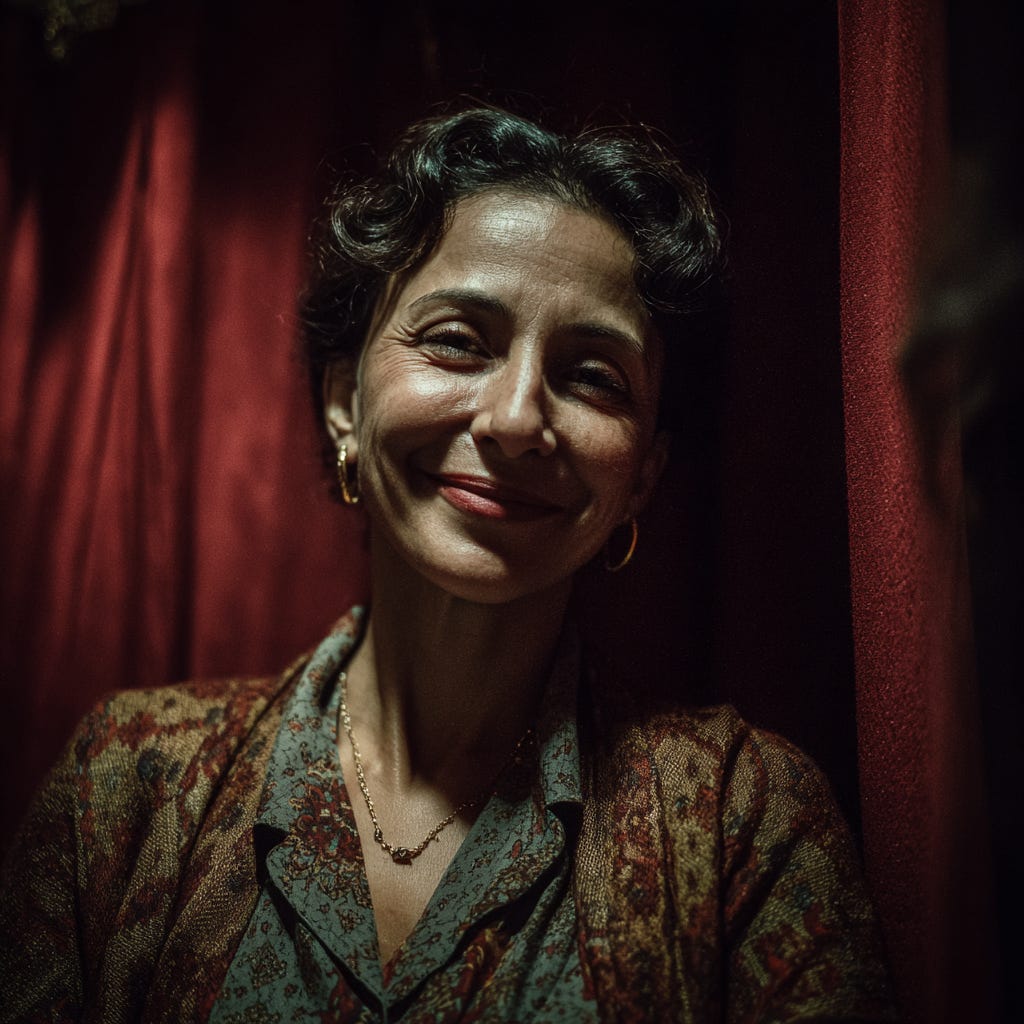
With the chivalry of Saladin, Sheikh Mukhtar declined her offer. He addressed her as “sister” and revealed that he had been on intimate terms with her father, who had run the hammam for half a century before his untimely death in ’22. Sheikh Mukhtar had met her before, “when you were no older than these boys.” He was certain her father would be proud of how she had revived the hammam which had fallen into desuetude in the years since her father’s passing.
The woman placed the vial on her desk and pressed her palms together in a gesture of gratitude, overcome with emotion. “It has been a labor of love.”
“Before the Great War,” the sheikh continued, “your father needed money to renovate the substructure. I was able to assist with a contribution that I had earmarked for the local waqf. But I believed back then, as I still do, that a contribution to the hammam was a contribution to the entire quarter. I expected nothing in return. But your father’s pride would not suffer him to accept the gift without bestowing on me a pawn he vowed one day to redeem. But I’m afraid your father was called to God before that could happen.”
The storyteller removed from his robes a slender volume bound in vermillion damask, with a gorgeous clasp of pure silver. “I somehow misplaced this book among the thousands in my vault. By the grace of God, it materialized this year on the first day of Ramadan. I have brought it with me each time I have come here with the boys, waiting for the moment when I could restore it to its rightful owner.”
He handed her the book. She held it to her heart. “I have not seen this since I was a girl. It is The Book of Lamentations by Saint Grigor Narekatsi.” She pointed to the clasp. “My great-great grandfather was a silversmith. This clasp is his work.” Solemnly, she kissed the volume. “Thank you so very much.”
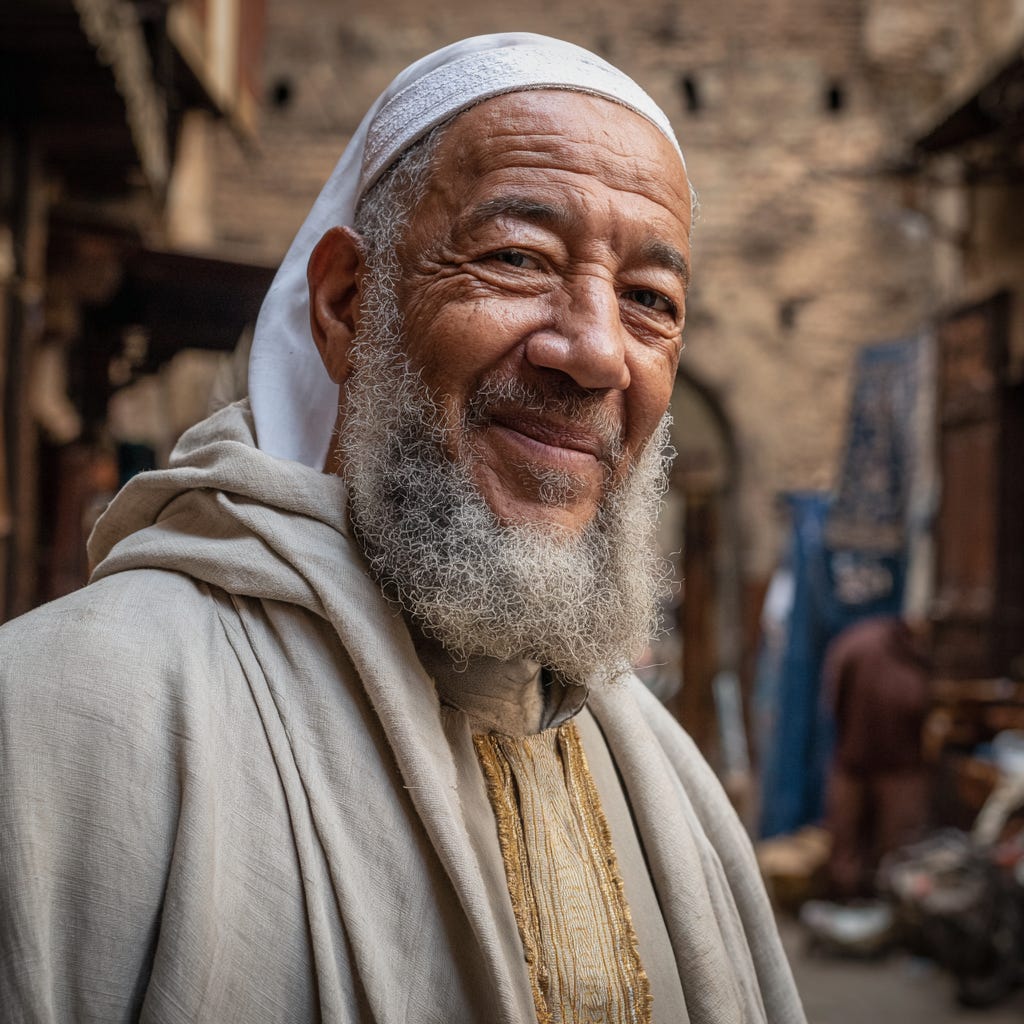
The booksellers who plied their trade at the Azbakeya Fence spoke of Sheikh Mukhtar as if he were a sorcerer from the pages of the Arabian Nights, which in many ways he was.
Some said it was he who first hit upon the idea of selling books near the entrance of the khedivial garden. But others claimed the tradition could be traced to a dervish from Luxor, who appeared in Cairo shortly after the fence was completed, or possibly at the same time as the arrival of the controversial Mason and Muslim scholar, Jamal al-Din al-Afghani. The dervish became a fixture at the fence, surrounded by his meager possessions, which included a plank of wood torn from a mummy’s coffin that he used to write upon.
Despite the man’s alleged poverty, critics noted that the nibs he employed were newly fashioned and finely cut; and his inkwells were from London. The fragments of papyrus that the man wrote upon were said to have been disinterred from the sands of Dendera and scraped of their profane hieroglyphics. In a homicidal scrawl, the dervish penned ambiguous premonitions and scandalous prayers, rolling these into scrolls that he fastened with twine to the bars.
When the scrolls danced in the wind, so too did he, whirling and gamboling before the astonished crowd. Sometimes a wealthy “seeker” placed in the man’s grubby palm a gold sovereign, prompting mad sage’s liquid eyes to slew in the direction of a scroll that he murmured contained contained an answer to a problem the querent’s primordial spirit had been mulling since the beginning of time. The dervish laughed at those who called him a fraud and wept for the folly of those who took him seriously.
The tale of the mystic at the Azbakeya Fence was a fabrication elaborated upon by the vendors during those idle hours when the customers were infrequent and an oppressive boredom overwhelmed them. One bookseller jokingly proposed that, in order to deflect attention from his accomplishment in being the first merchant to sell books at the fence, Sheikh Mukhtar had invented the dervish and retro-projected his magical history into the previous century, which a storyteller could easily do.
Whatever the case, Sheikh Mukhtar was accorded pride of place at the book market in front of the broken wrought-iron acanthus leaf. And because Qasim and Ahmed were recognized his trusted agents and beloved wards, the boys were treated with a degree of respect and esteem rarely granted to children of their age. Whenever it rained, the other booksellers rushed to their aid, covering the sheikh’s books with tarps until the sun reappeared. If the boys needed to step away to answer a call of nature or for any other reason, the men at the stalls on either side watched over their books, or sold them on their behalf, pocketing only a piaster for this service.
Sometimes Sheikh Mukhtar surprised everyone by appearing unannounced to ask in a comically loud voice whether his business was flourishing. Everyone laughed, because it never was.
During the tourist season, maps and postcards were in high demand. Sheikh Mukhtar cut deals with the city’s printers to acquire boxes of these items on wholesale. In the lead-up to Coptic holidays, the old man directed the orphans to take with them the leather-bound volumes from a bookcase in the vault that perpetually reeked of incense, because its contents had once belonged to an archimandrite from the Nitrian Desert, who stipulated in his will that God had directed him in a dream to bequeath his books “to the storyteller of Khan al-Khalili whose name in Arabic means ‘The Chosen One’ (al-mukhtar).”
No matter how many books Qasim and Ahmed sold, a steady stream of new ones came in each week from publishers, universities and government institutions that were desperate to offload their own vast holdings, but wary of destroying or sending the refuse heaps on Muqattam Hill any written materials that might contain the name of God or a verse from the Holy Qur’an.
Although Sheikh Mukhtar’s vision was failing and his movements were growing more feeble, his memory remained unaffected; and he instilled in his charges many practical lessons. He advised them to use his books as sharpening stones against which to hone their own commercial acuity, “so that when I’m gone, you will have the skills to set up your own businesses.” He subjected them to many lectures on the art of selling books.
“Pay attention to your customers’ characteristics. Men in steel-rimmed glasses are often scholars and prefer books with maps and photographic inserts of archaeological digs. Thin men with thin mustaches like thin books of poetry. European poems are bunched together on the pages and form squares or rhomboids. But Arabic poems are more organized, each line being interrupted with a misra‘ (or hinge) running vertically down the page—as seen here.
“Fat men in fat glasses like fat books. They are often doctors, or engineers, or scientists. They will have more money than the poor poets and scholars. They like books full of numbers, mathematical symbols, and cutaway images of turbines, geological formations, human bodies, and other complicated things that it is an abomination to pretend one can understand as well as God.”
Qasim noticed that Sheikh Mukhtar said nothing of the books that women liked to read. “What kind of books do girls like?”
It was Ahmed who answered. “They like magazines and books with pictures of animals and movie stars on the cover.”
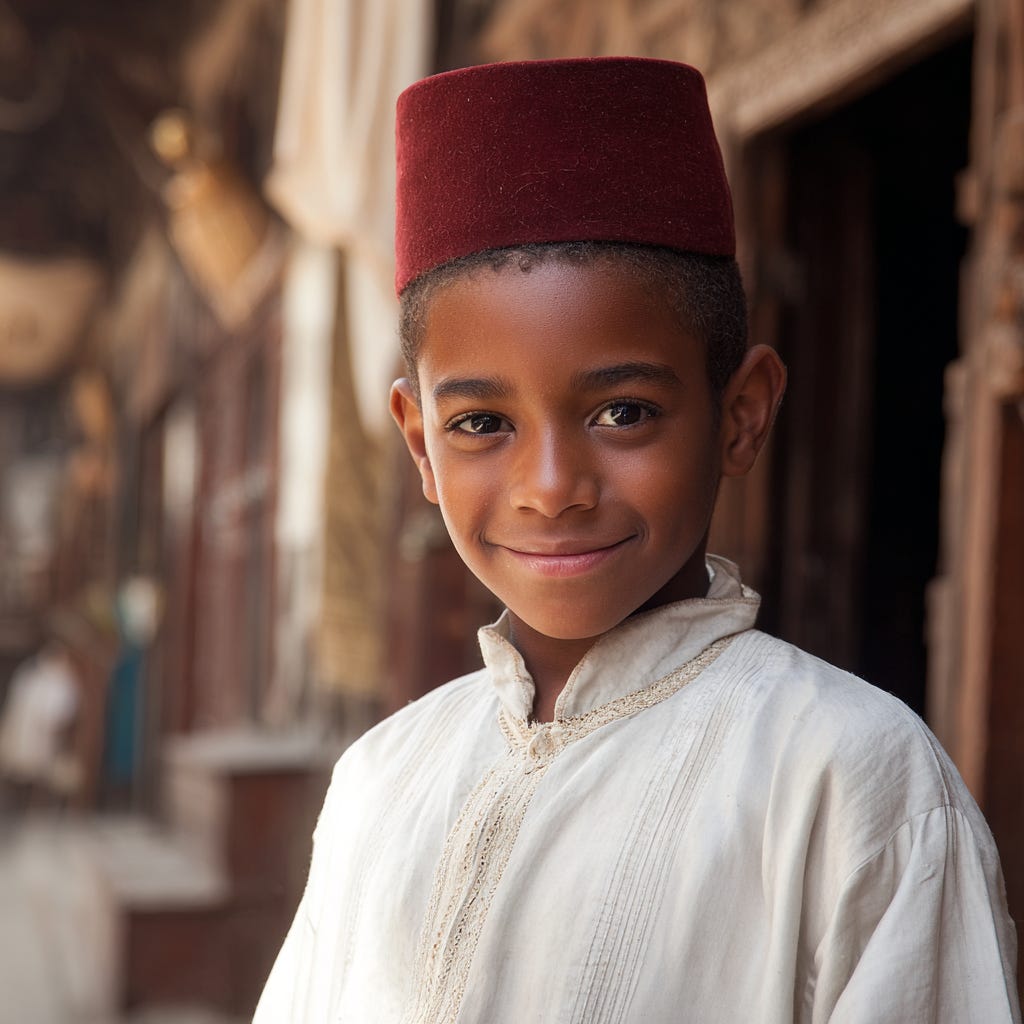
On the subject of haggling Sheikh Mukhtar raised his index finger pedagogically.
“When the customer asks how much a book is, propose an outrageous price. But make it clear you’re willing to negotiate. The first sale is the most important one of the day. It is a blessing from God, which means it is ungrateful to dwell on how little or much you made from it. Once a price is agreed upon, try to look glum and depressed so the buyer thinks he has outwitted you. If you look happy, he will think that you have cheated him. And if he ever comes back, he will demand rock-bottom prices.”
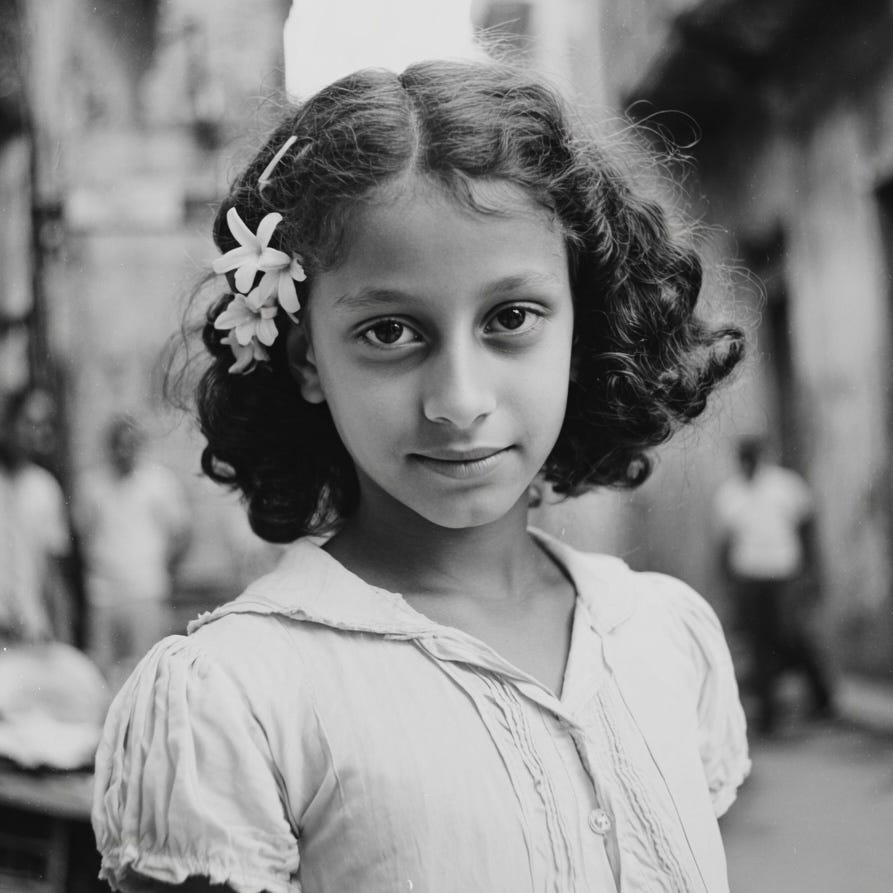
On a spring morning in 1946, Qasim sat alone at the Azbakeya Fence. Ahmed was sick with influenza and had stayed home for the day. Out of nowhere, a girl in a white dress with some jasmines in her hair stopped by to look at the books. Qasim suspected she was about his age, but she was much taller. She was also very pretty. So he cupped his right hand over his missing ear because he feared she would run away in fright when she saw his scar.
“What kind of books do you sell?”
“All kinds. . .” He reached behind his shoulder and grabbed a sky-blue paperback wedged between the bars. He handed it to her. The cover was adorned with an illustration of a dog with a red ball in its mouth and a pretty woman in a cloche hat. “Here’s a book full of sweet stories.”
“What kind of stories?”
He remembered Ahmed’s words. “It has a story in it about animals and movie stars.”
She flipped through the pages and furrowed her brow. This was not an anthology, but an Arabic translation of Agatha Christie’s Dumb Witness. It was obvious the boy was illiterate. But he was kind. And she liked the bashful way he pouted. “How much is it?” she asked.
“Keep it.”
“I can’t.”
When she tried to give it back, he waggled his head and waved both hands in the air. When he did this, she saw the scar. He turned away, embarrassed.
“Were you hiding that because you think it’s ugly?”
Qasim shrugged.
“Well, I don’t think it is.”
A voice cried out. “Buthayna!”
Qasim recognized the man in the black suit who had called out to her. He wore a red tarboosh and black suit. His face was all over the newspapers and political placards. He was a member of the Wafd Party. Qasim deduced that he was also the girl’s father.
Buthaynah smiled. “Now that you know my name, will you tell me yours?”
“Qasim,” he said in a sullen whisper. He wondered if the Pasha would take offense if he were to see a street urchin talking to his daughter. But the man seemed unperturbed, smoothing his waxed mustachios in indolent abstraction.
Buthaynah accepted the book and walked away, glancing twice over her shoulder as she went. She took her father’s hand and the two of them wandered off into the crowd.
Qasim assumed that was the end of the matter. But two days later, the girl reappeared. This time there were no flowers in her hair. Again she stopped in front of Qasim and smiled. “I wasn’t sure if you’d still be here.”
“I’m always here.” He pointed to the broken acanthus leaf, as if this proved his point.
“My father said I must give the book back, because I didn’t pay for it.” She gave it to him. “But I read it through, cover to cover.”
“In two days?”
“Yes. I’m considered very smart.”
He sighed. If she read the book, then that meant she knew he had been lying to her about what it was about. His eyes searched for Buthaynah’s father, who was sitting in a horse-drawn carriage on the opposite side of the street, reading a newspaper.
“There was one story in it,” she said, “which was, as you say, very sweet.”
“What was it about?”
“It’s about a man who gives a book to the only girl he will ever love. She likes him too. But they’re from different worlds. And she knows that they can never be together. Years later, when the man is old, he finds the book that he gave her—here, at the Azbakeya Fence.”
“How does he know it’s the same book?”
“Because he finds a message in it that she left for him long ago.”
“What’s the message say?”
“If I told you, it would ruin the ending. . . Goodbye, Qasim!”
Buthaynah ran across the street. The groom lifted her up and placed her in the carriage next to her father.
Qasim opened the book; but shut it again rapidly. Ahmed was approaching with a cup of tea in each hand; and his sly grin made it clear that he had seen what had just happened.
“Why did that girl give you a book?” he asked.
“Because I gave it to her two days ago when you were sick. She was returning it.”
“I think you liked her. So you gave her the book, because you thought she liked you. But she didn’t, so she gave it back.”
They finished their tea and Ahmed took the empty cups back to the shop. When he was gone, Qasim opened the book and removed the white jasmine pressed between the pages.
Continue to Part 3
No posts
Comments
Nothing yet. Say the first thing.
Sign in to join the conversation.