
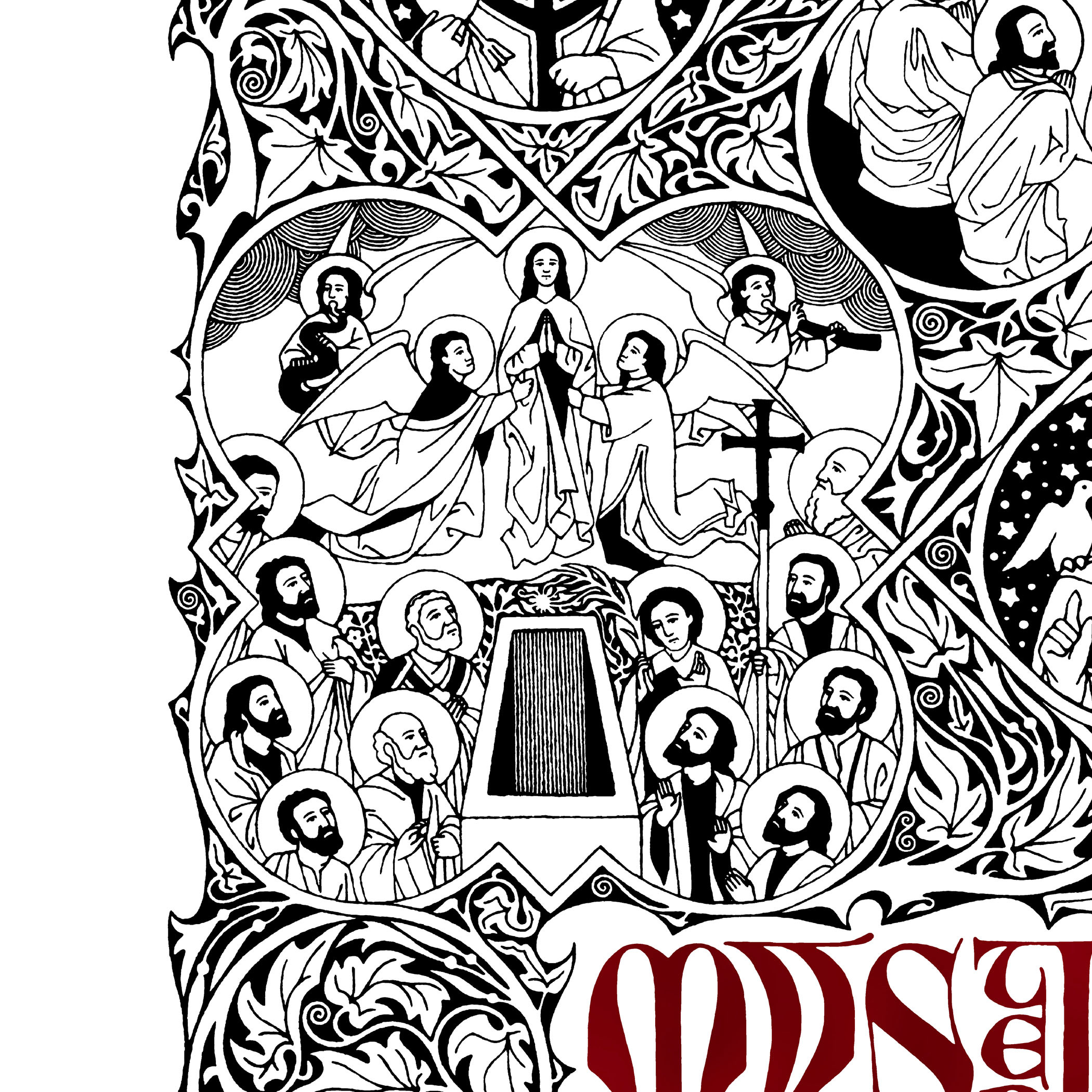
A detail of the Assumption of Mary, from this drawing of the Glorious Mysteries of the Rosary.
You may have heard that the region of Northwest Indiana where I live suffered a devastating storm on Tuesday. This was actually the third major windstorm this year; the first toppled a very large cottonwood tree in my backyard, and the second formed a tornado that stuck a Catholic high school the next town over, very close to the church I attend. This most recent one, caused by far the most extensive damage; so many trees and utility poles were toppled that about ninety percent of the county lost power. As I type this on Thursday, 79% is still reportedly without.
We were one of the few households who did not lose power during or after the storm — and the only tree of ours that fell, fell away from the house. We are extraordinarily blessed to have remained safe and comfortable and dry this week. More storms are in the forecast the next three days, so we hope that our good fortune continues.
The tree that fell happens to be a paper birch, which means that once I get around to breaking down the wood, I will have an abundant supply of birchbark. This is an historic artistic medium, having been used for manuscripts in India since ancient times. There are traditions of birchbark art among Slavic peoples, and among Native Americans (one of which involves biting patterns into it).
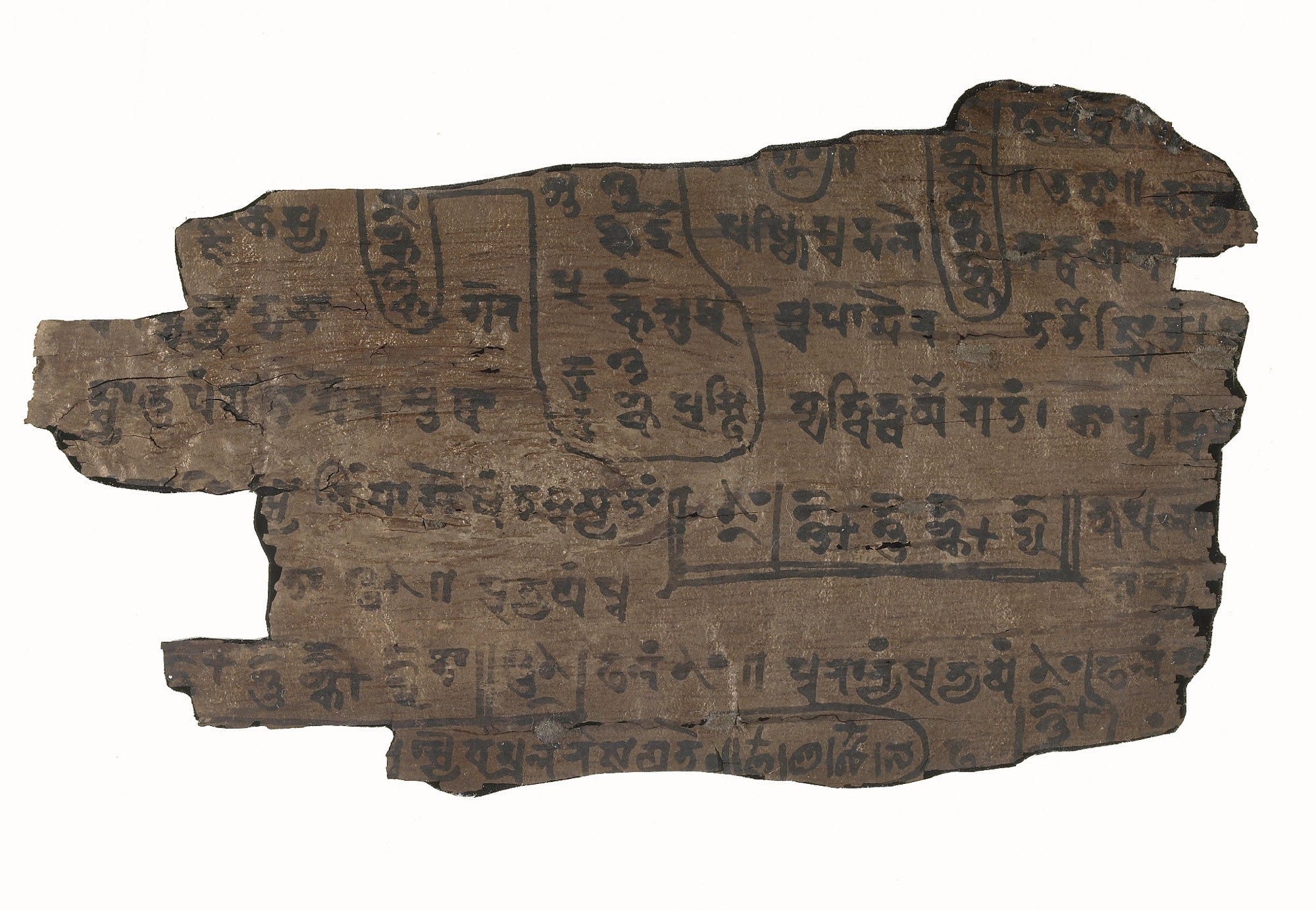
A birchbark leaf from the Bakhshali Manuscript, a mathematical treatise in Sanskrit
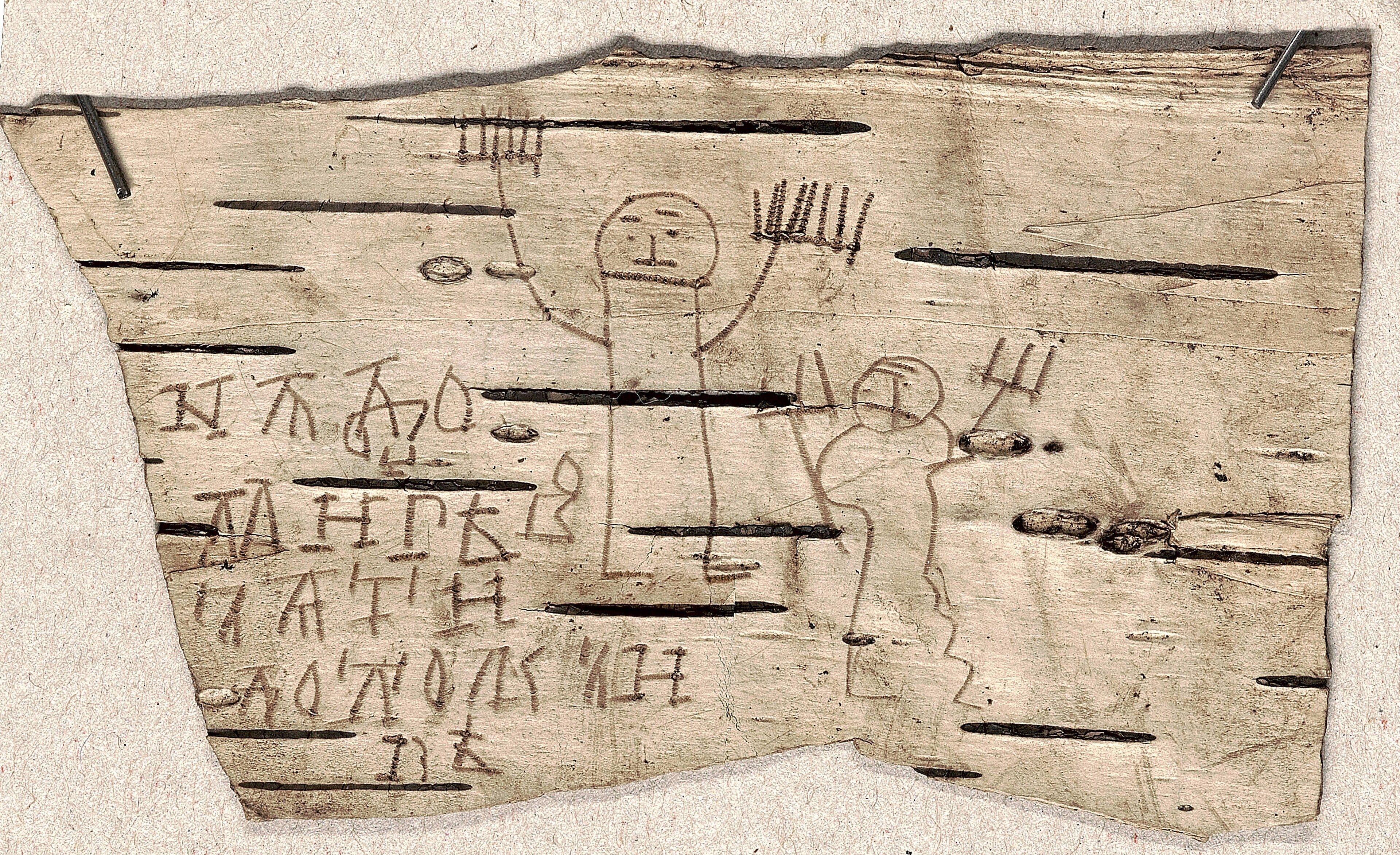
Doodles on birchbark by a 13th century schoolboy named Ofnim, from Novgorod
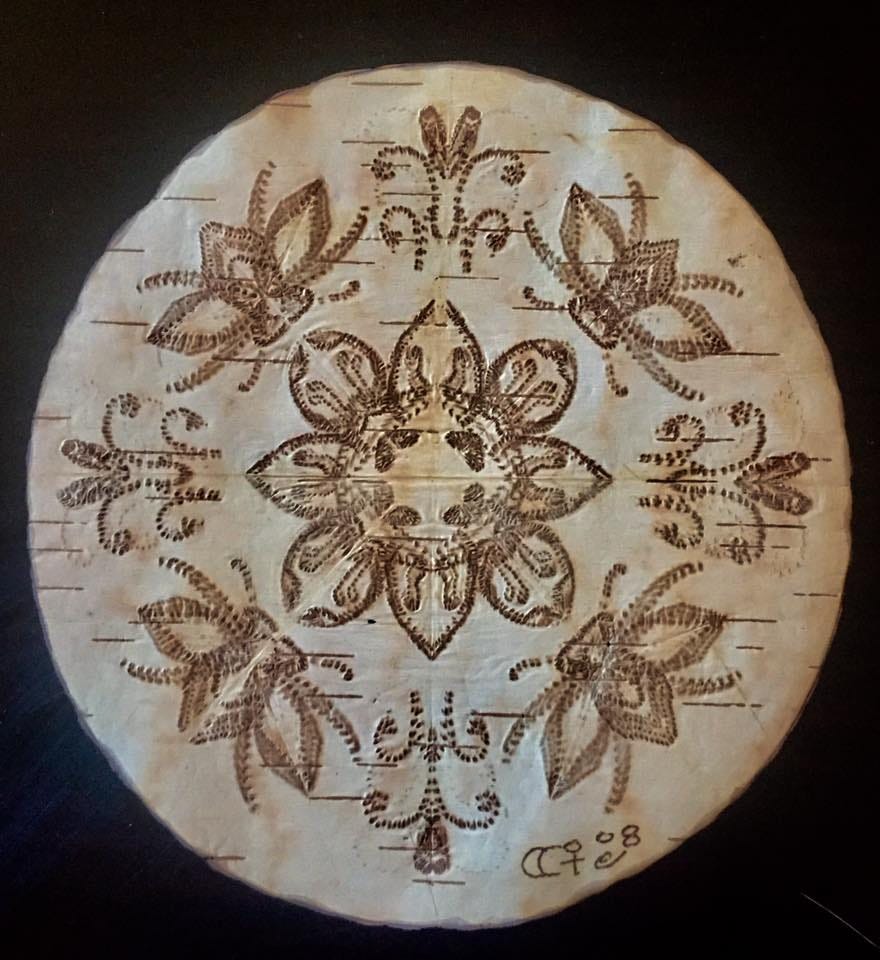
A birchbark biting by artist Pat Bruderer
I have no intention of trying anything that adventurous with birchbark, but I am considering making some drawings on it, once I figure out the best way to do so. Birch wood tends to decay faster than its bark, which sometimes endures as hollow, rigid tubes once the wood is gone. These are a couple that I collected after pruning rotten branches on a birch tree a few years ago. The artistic possibilities of drawing on a cylindrical, rather than a flat, surface are interesting.
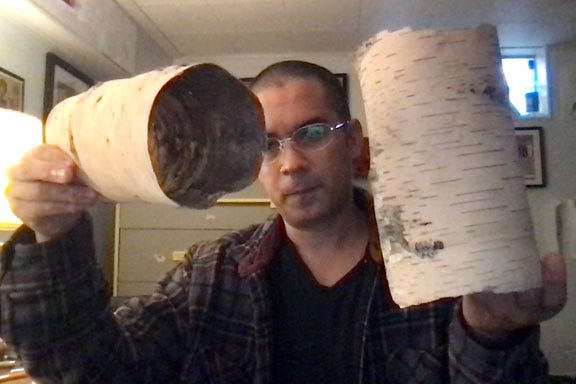
And as I mentioned, I also have a giant cottonwood log in my yard. I would like to use its bark for carving projects. I teach my homechooled children a sculpture class, and cottonwood bark seems like a perfect soft material for beginners. In a couple of years, when the bark loosens from the trunk, I will probably start making use of it.
August 15th is the feast of the Dormition and Assumption of the Blessed Virgin Mary. Here is a carol I wrote for the occasion, from my second poetry collection, The Gustable God:
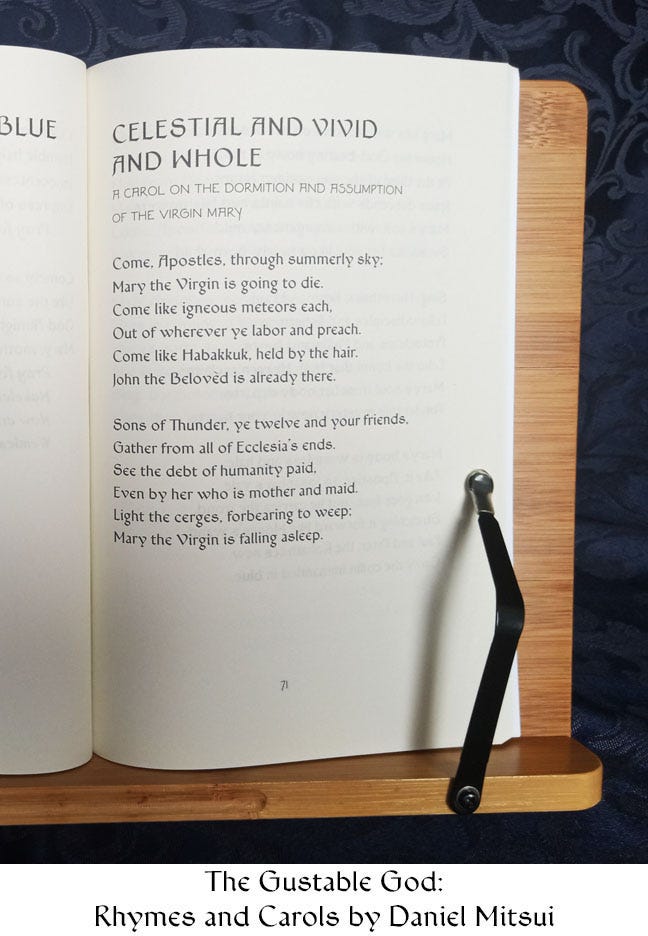
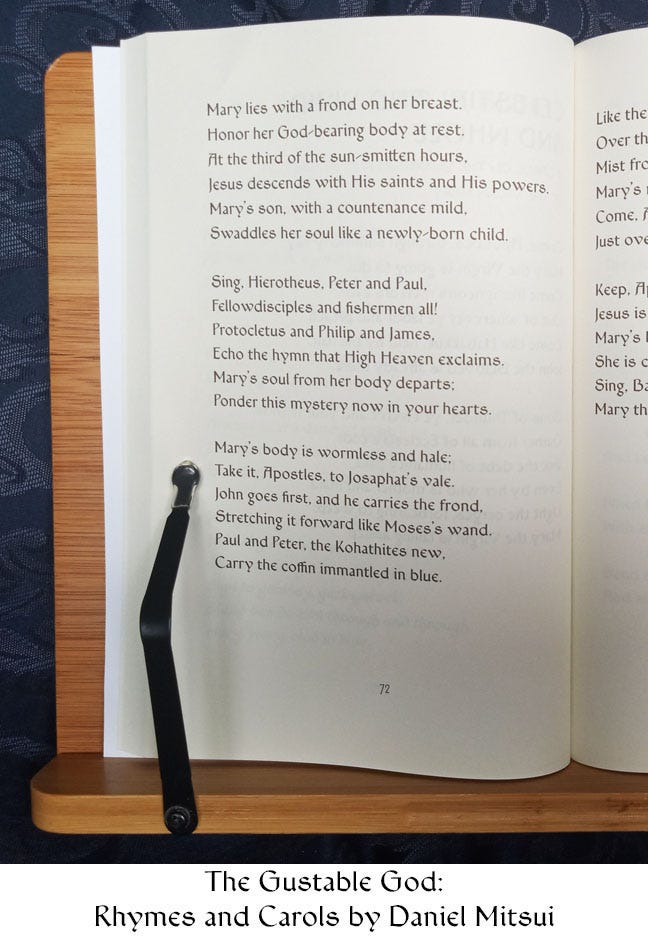
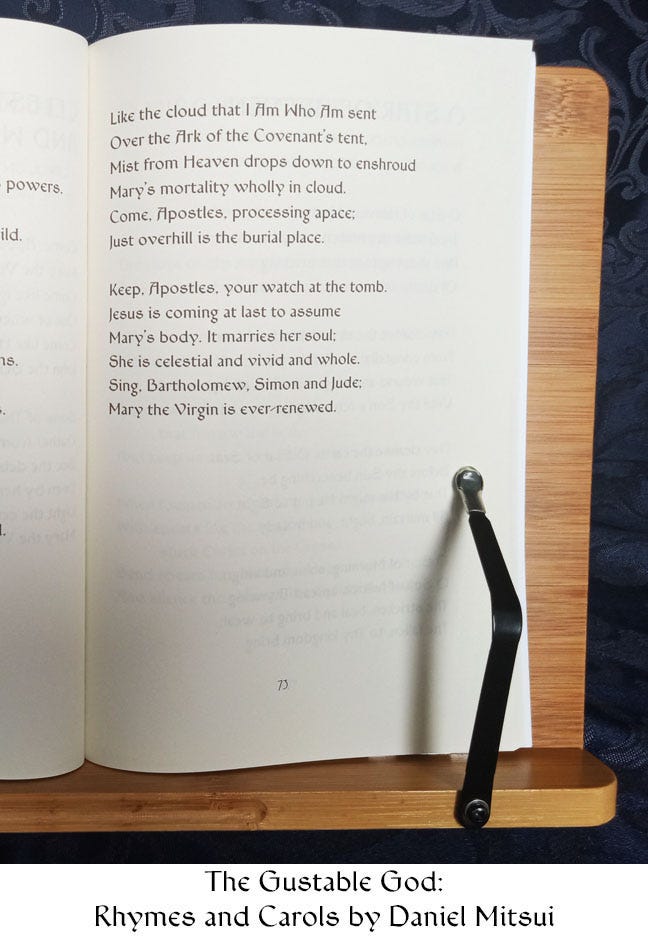
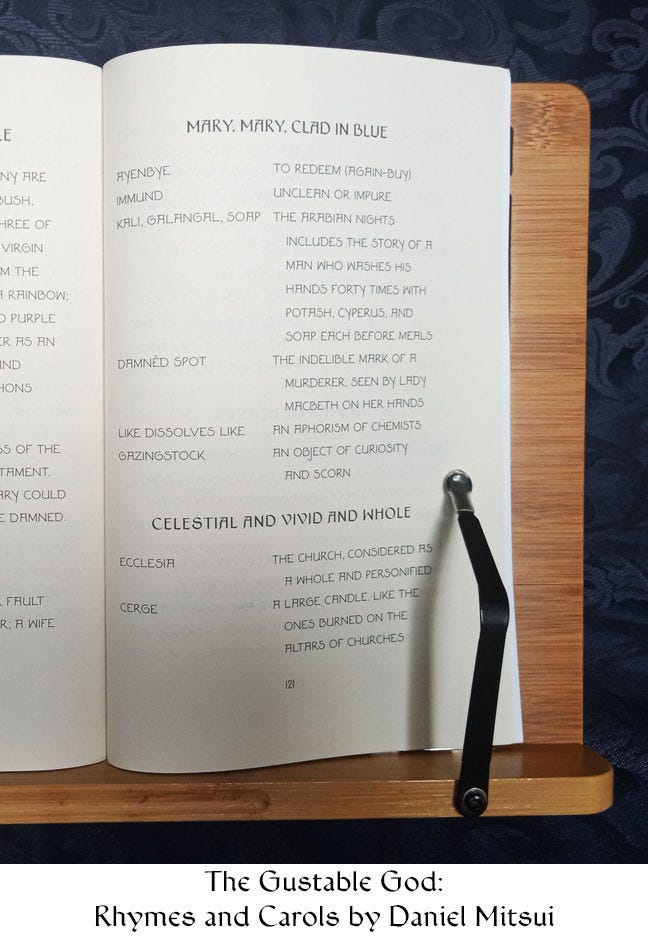
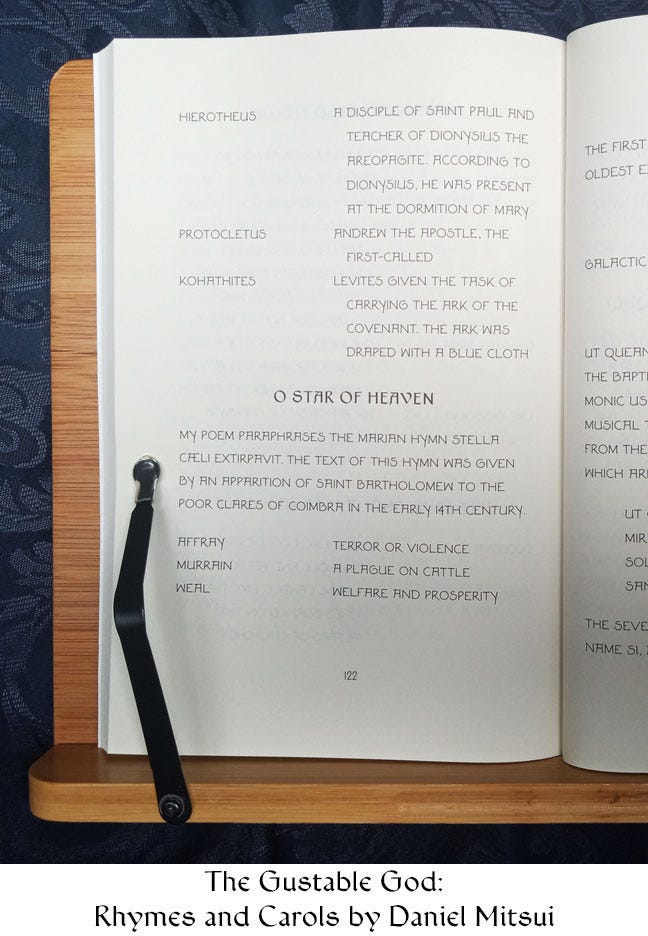
Here are its explanatory notes:
Comments
Nothing yet. Say the first thing.
Sign in to join the conversation.