

The yield on the 30-year US Treasury bond recently touched its highest level since 2007. On the surface, that could be a story for investors and bankers. However, in my analysis, it is among the most consequential developments for the luxury industry this year. The reason sits at the core: who buys luxury, and why.
Let me unpack this from the ground up, and then take it to your strategy table.
A government bond is a promise, and its yield is fundamentally the price of trust over time. When investors demand more than five percent to lend money to the United States for thirty years, they are repricing that trust. And this is happening everywhere at once, not just in the US. For example, Japanese government bond yields have reached levels not seen in three decades. German and French long-term yields arrived at their highest point since 2011 and 2008 respectively. A synchronized global move signals a change of fundamentals.
Three forces are driving it. Inflation, fueled by elevated energy prices amid disruption in key shipping corridors, erodes the value of every future bond payment. Supply overwhelms demand, as governments borrow at a historic pace while corporations issue enormous volumes of debt to fund artificial intelligence infrastructure, all of it competing for the same buyers. And the traditional buyers are stepping back: foreign holdings of US Treasuries have declined in recent periods, led by Japan, and some market observers describe it as a buyers’ strike at the long end of the curve.
The response is where the story turns. The US Treasury recently announced it would at least double the size of its bond buyback operations, concentrating on the longest-dated securities. In plain language, the government is stepping in as a larger buyer of its own debt to support the market that funds it. Yields eased on the announcement. The relief lasted a single trading session before the market resumed selling, and that detail matters more than the intervention itself. Every episode of financial repression in modern history began the same way, with a first intervention that proved too small, because failure compels escalation. The direction of travel is now visible to anyone willing to look.
What matters for the luxury industry is the transformation this reveals. When governments manage the price of their own long-term debt while inflation runs above target, economists call it financial repression: an environment in which safe financial assets deliver returns below inflation, and cash loses purchasing power by design or by necessity. We have lived through versions of this before, in the 1970s and in the decade after 2008. Capital behaved the same way each time. It migrated out of paper promises and into things that cannot be printed, diluted, or bought back.
Hold that thought. It is the key to everything that follows.
Luxury demand at the top is largely correlated to net worth. The wealthiest clients spend from the development and income of portfolios, businesses, and properties rather than from paychecks, which is why the industry can boom in mediocre economic situations and stall in decent ones. The engine is the wealth effect, and rising long-term yields attack it from two directions. They pressure equity valuations, because future profits are worth less when discounted at higher rates. And they raise the return on doing nothing: when a Treasury bond pays above five percent, every other use of capital must clear that bar, including the emotional purchase.
That is the headwind. But the same development that creates headwinds creates one of the strongest tailwinds hard luxury has seen in a long time, and this is the part almost everyone misses.
If yields are managed downward while inflation persists, real returns on financial assets compress. Wealthy clients and their advisers see this clearly, and they respond the way capital always responds under repression. They rotate into “stores of value.” In past cycles that often meant gold, land, and art, and the rotation is no longer theoretical: gold has been trading at record levels above $4,500 an ounce. In this cycle, the conversation extends naturally to the highest tier of luxury: high jewelry held across generations, timepieces produced in a few dozen examples, exceptional gemstones, rare and collectible automobiles. Objects that have the ability to carry meaning and value simultaneously.
What does this mean competitively? A luxury house in this environment is no longer competing only against other houses for a share of discretionary spending. It is competing against bonds and bullion for a place in the preservation portfolio. And luxury holds an argument neither a bond nor a gold bar can make. A bond pays interest. Gold sits in a vault. A masterpiece of craftsmanship confers identity, beauty, and belonging while it preserves value. Luxury is among the very few asset classes that pay a significant emotional dividend.
You will hear this shift on the boutique floor before you see it in any report. In our studies across key luxury markets, my team and I found that top clients rarely name investment as a purchase motive, yet their behavior changes visibly when money feels unstable: longer decision cycles, more questions about provenance and rarity, a preference for pieces with documented history, and looking for timeless items beyond fashion cycles. The question behind the purchase quietly expands from "do I love it" to "do I love it, and will it hold value." Client advisers who are trained to hear that second question, and to answer it with substance rather than sales language, will define the difference between brands that benefit from this new situation and those that merely witness it.
My guidance for brands operating at the true top is to treat this shift as portfolio logic rather than marketing poetry. Anchor communication in permanence, scarcity, and transferability across generations, because the client’s wealth adviser is about to start making the same argument, and the houses that align with that conversation early will own it.
In our client work at Équité, my team and I consistently find that the strongest pricing power belongs to brands whose clients can articulate why the object will matter in twenty years. That articulation is precisely what a financial repression regime rewards. Provenance, documented rarity, craftsmanship that cannot be scaled, archives that certify authenticity across decades: these stop being brand romance and become the asset’s prospectus. The houses that invest in them now, in certification infrastructure, in archive access for clients, in transparent production ceilings, are building the luxury equivalent of a credit rating.
One caution belongs here. The preservation argument only works for brands that have protected true scarcity. A store of value that ships in volume is a contradiction the client’s adviser will spot immediately. Which brings us to the middle.
For the aspirational customer, the client who needs to save for an entry-level handbag or a jewelry piece, this situation becomes punishing. Mortgage rates follow long-term yields, and those yields sit near multi-decade highs. Recent data indicates an affordability crisis in the US and in many other places in the world. And with no portfolio to feel wealthy, there is only a paycheck to finance purchasing. And, increasingly, paychecks are losing the race against the cost of living. The signal has now moved into earnings: Walmart recently reported its slowest US same-store sales growth since 2020, and when even the trade-down destination slows, the message is that the middle is not trading down anymore, it is buying less. Comparing that against gold at record highs in the same period, the shape of this market becomes fully visible.
The result is a market that is bifurcating: strengthening at the true top and declining in the middle. And here is the uncomfortable strategic truth: During the last years, many brands have been doing exactly the wrong thing for this moment. Trying to grow volume at all cost and implementing price increases that had no merit in perceived value. Many brands are still deploying strategies of an era of cheap money and confident middle-class consumers. Both conditions have changed.
In this environment there is essentially one reliable growth engine: pricing power backed by demonstrated desirability. Hence, it’s all about creating extreme value. The question I would put to any leadership team is simple: Are you dependent on volume growth or is your brand creating so much value and desirability that the top clients are in love with your brand? If your growth over the past five years came primarily from volume, what happens to your model when the aspirational clients are somewhat absent for the next years? Brands that traded desirability for reach face the hardest conversation.
The regional implications may be the most actionable part of this story, because the same macro forces are dimming one bright spot and brightening another.
Japan has been recently among the most remarkable luxury markets in the world, driven by currency arbitrage. A structurally weak yen turned Tokyo and Osaka into a global shopping opportunity, drawing tourists from China, the United States, and across Asia to buy luxury at an effective discount to home markets. Many brands have seen Japan become one of their strongest markets. I personally was asked by several boards over the last 2-3 years why Japan suddenly was so strong, which underlines currency as a driver and not internal demand.
That engine now has an expiration date. Yields at three-decade highs and a central bank moving away from ultra-loose policy point toward a structurally stronger yen over time. Currency normalization does more than slow the tourist boom. It unwinds the arbitrage that created it, migrating purchases back to home markets as the discount narrows. My guidance is practical: stress-test next year’s Japanese comparisons now, and separate the domestic client from the tourist in your own reporting. Domestic Japanese clients, who are among the most sophisticated and loyal in the world, are durable assets. The tourist flow has been a currency phenomenon wearing a retail costume. Plan the long term for the asset.
Now the Gulf, where the logic inverts. Elevated energy prices, driven by the same disruptions feeding global inflation, are accumulating petrodollar surpluses across the region at a remarkable pace. This is the paradox of the moment: the tensions creating risk in the region are simultaneously enriching its sovereign funds, family offices, and private clients. Gulf capital today ranks among the most liquid luxury clientele anywhere, and among the most active strategic investors in the industry itself. While some competitors hesitate because of headlines, the brands deepening their Gulf clienteling capacity now, through deep cultural fluency, dedicated advisers, and year-round presence rather than seasonal gestures, are positioning at the center of one of the few pools of spending power this regime is expanding. Clients remember who showed up during uncertainty.
Don’t confuse price with luxury. Now is the time to build brand equity systematically and fast. Now is the most dangerous time for brands that are what I call “luxury in ambition only.” I won’t name them, you know when you work for one.
The shift in the bond market is structural and global, hence the effects will not disappear in a quarter or two. And in a structurally changing bifurcated market, desirability is the only signal of brand health. Importantly, it is the precondition to be able to price significantly above the category average.
Hence, now you should run a non-nonsense brand audit, ideally an external unbiased one that identifies gaps and vulnerabilities. Then based on the audit results, optimize your brand story and execution, so that you transform your brand from one of many to one of one. While this is not done overnight, it’s the only way to significantly strengthen the client-facing proposition while avoiding cosmetic modifications that will lead to zero market impact and weaken the brand long-term. I have seen countless examples of brands that decided to wait out transformational times and then never recovered.
The strategic plan also should include rebalancing the map deliberately. Reduce dependence on currency-driven tourist flows, above all in Japan, and reinvest in the domestic clients who remain when arbitrage fades. Simultaneously, continue building Gulf exposure with the seriousness the capital deserves.
Finally, watch the bond market the way you watch luxury trends. Long yields are now a leading indicator for luxury demand at both ends of the pyramid, and the executives who read them will consistently move a season ahead of those who do not.
The deeper shift is this. Luxury has always sold desire. In a world where money itself is losing its ability to store trust, luxury is also being asked to store value, but this will only happen for brands and items that signal high desirability.
That is the standard this era sets. The brands that meet it will find clients who buy with more conviction than at any point in recent memory, because the purchase now answers two needs at once. The brands that cannot will discover that in a bifurcated market, the middle ground is a departure lounge.
Thanks for reading! This post is public so feel free to share it.
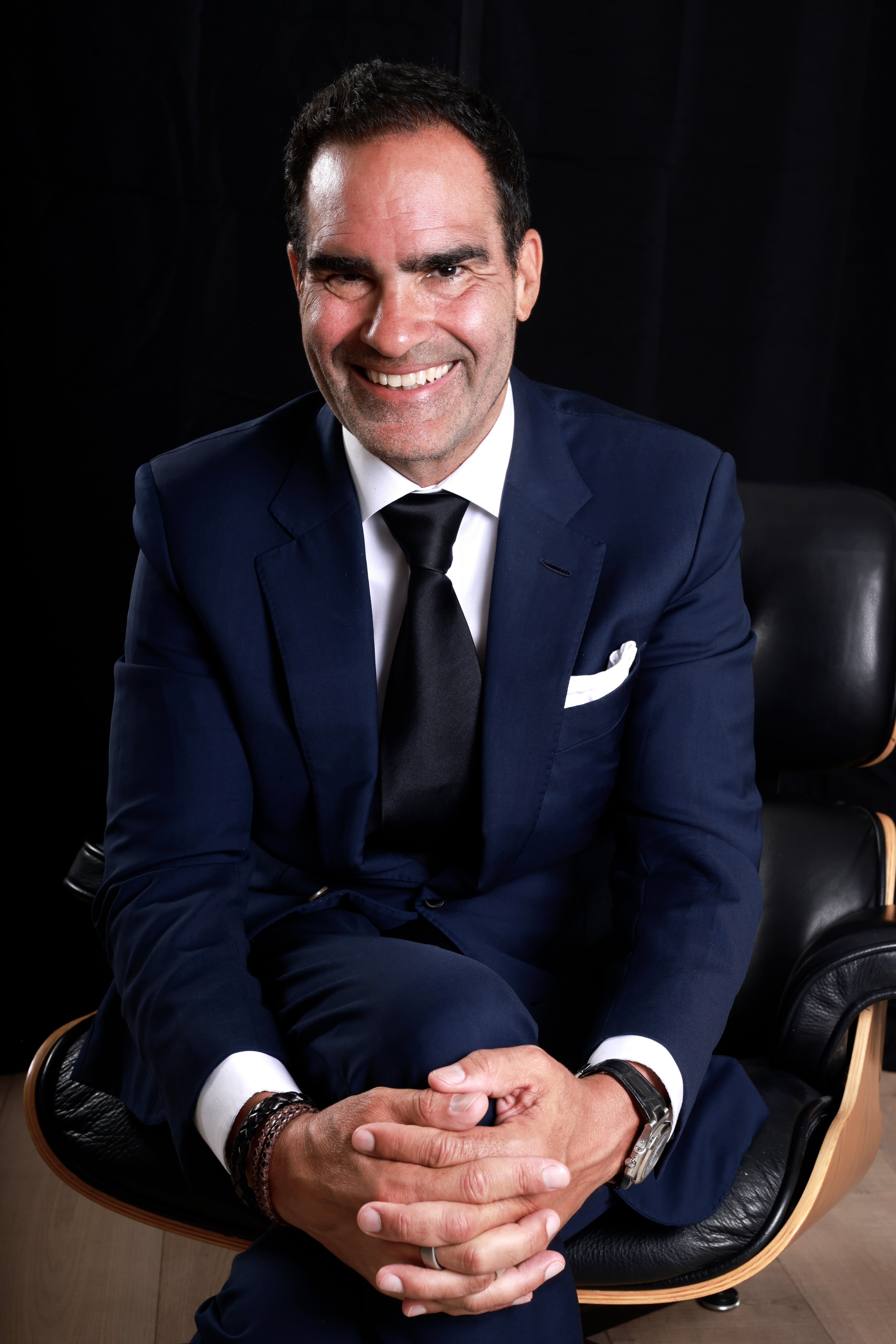
Langer on Luxury is a weekly in-depth analysis by Dr. Daniel Langer, published every Thursday. He is the CEO of Équité, a global luxury brand strategy firm advising the world’s leading luxury brands across jewelry, watches, fashion, automotive, aviation, hospitality, and luxury experiences, and serves as the executive professor of luxury strategy and pricing at Pepperdine University in Malibu and as a professor of luxury at New York University, New York. A best-selling author of luxury management books in English and Chinese, he is recognized as a global top-five luxury key opinion leader, named an authority in luxury by the Economist, and awarded Top Keynote Speaker in Luxury by the WLCC for two consecutive years. He is featured as a luxury expert in The Wall Street Journal, Financial Times, The New York Times, Forbes, Vogue, and Robb Report, and is the author of the Équité Luxury Report 2026-2030, “The Cost of Waiting,” a five-year outlook for the industry. Follow him on LinkedIn and Instagram, listen to his podcast, The Future of Luxury, and explore Équité Intelligence, the on-demand digital platform for luxury learning.
About Équité
Équité is a global luxury brand strategy and consulting firm, recognized as one of the leading luxury consultancies worldwide. We advise CEOs and boards across all luxury sectors, including fashion, high jewelry, watches, automotive, private aviation, hospitality, beauty, and lifestyle, on the discipline luxury depends on most: creating desire. Our work rests on decades of proprietary research on UHNW clients and the psychology of luxury, and on a conviction our results keep confirming: desire is created, and most brands leave most of it unbuilt.
Équité’s services include luxury strategy, brand positioning and storytelling optimization, brand audits, pricing architecture, client experience optimization, creative activation, and luxury masterclasses. Clients include some of the most iconic luxury houses in the world. Los Angeles, Phoenix, Singapore, London.
No posts
Comments
Nothing yet. Say the first thing.
Sign in to join the conversation.