
I have been working at Uber for 6 months, but Japan has been delivering food for more than 400 years.
That sentence says a lot about what I want to explore in this article.
I lived in Asakusa for five years. It’s one of Tokyo’s oldest neighborhoods, narrow streets, wooden shopfronts, the kind of place that makes you feel like you accidentally walked into the wrong century and then decided to stay.
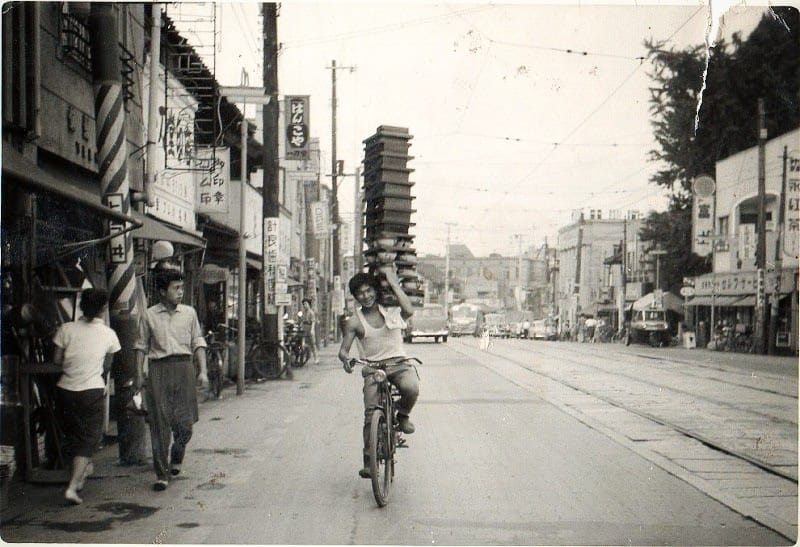
Every morning, before the city fully woke up, I’d see them. Riders from local soba and ramen restaurants navigating the streets on bicycles and three-wheeled motorbikes, balancing trays of hot food without spilling a drop. No app, no GPS, no branded backpack. Just a person who knew every corner of the neighborhood, delivering food from a restaurant that knew its customers by name.
I watched this for five years and never stopped finding it remarkable.
But what stopped me the first time wasn’t someone balancing noodles on a bicycle. It was the bike itself.
Those delivery bikes in Japan are specially equipped with shock absorbers and stabilizers, specifically designed so the soup doesn’t spill, so the presentation arrives intact, so the customer receives not just food but the full experience the restaurant intended.
Think about that for a second. Someone, somewhere, looked at a delivery bike and thought: the suspension isn’t good enough for what we’re trying to do here. And then fixed it.
That is omotenashi made physical. A philosophy built into the engineering of a vehicle, not a value on a poster, not a training program. A shock absorber on a bicycle.
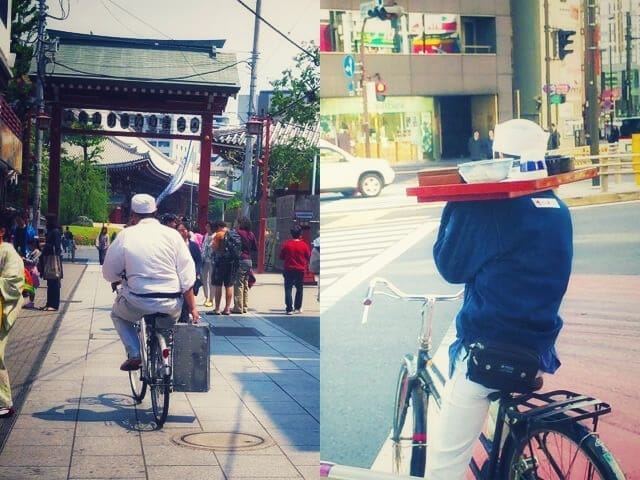
Demae (出前) literally means “going out front.” It began during the Edo period, over 400 years ago, when local restaurants started delivering meals, soba, sushi, tempura, unagi, directly to homes and businesses across Japan.
But Demae was never just logistics.
Food was delivered on the restaurant’s own dishes. Real plates, real bowls, not disposable containers. The rider would return later to collect them. The whole system ran on trust, between the restaurant and the neighborhood it served, between the rider and the customer who opened the door.
Demae was never just logistics. It was a relationship between a restaurant and the neighborhood it served.
That trust wasn’t built through a rating system or a satisfaction survey. It was built over years of showing up, getting it right, and caring enough about the details that the customer never had to think about it.
To understand why Demae worked the way it did, you have to understand what Japanese customers expect from food, and where those expectations come from.
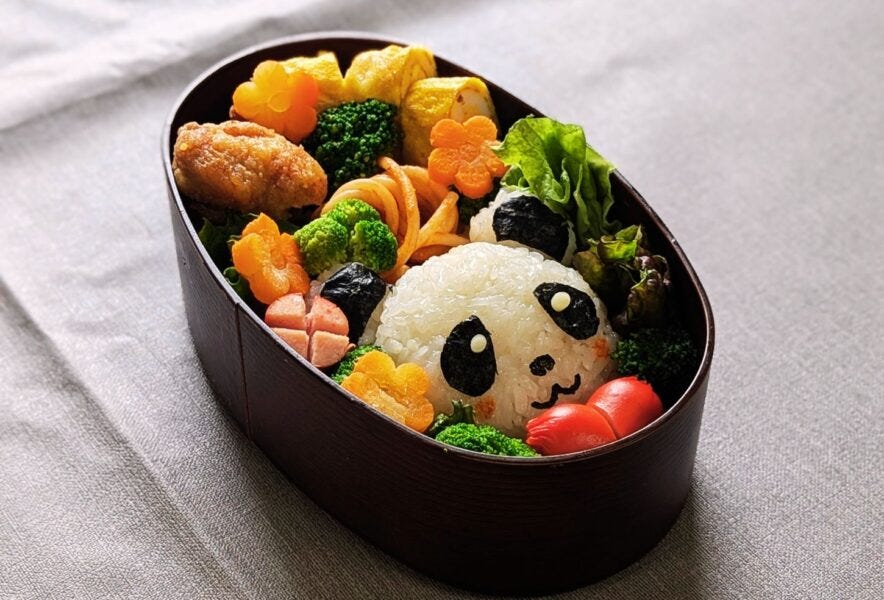
It starts young. Japanese children grow up with bento boxes prepared with extraordinary care. Not just nutritious but beautiful, carefully arranged, color balanced, thoughtfully presented. The message absorbed early is that food is not just fuel. It is an expression of care for the person receiving it.
Walk past any restaurant in Japan and you’ll see glass display cases outside the entrance showing exact replicas of every dish on the menu, perfectly crafted and precisely presented. Before you even walk through the door, the restaurant has already made you a promise.
By the time food delivery existed in Japan, the customer already knew what good looked like. The standard was set long before the service began. That’s the part most people miss.
Most industries think about delivery as the last step of a transaction. You order, they bring it, done.
Japan never saw it that way.
In the Demae tradition, delivery was an extension of the restaurant’s hospitality. The rider represented the kitchen. The presentation of the food at the door was as important as the cooking itself. The relationship between the restaurant and its customer didn’t end when the order was placed, it continued through every step until the meal was finished and the dishes were collected.
This is what omotenashi means in practice. Not a concept, not a mission statement. A practice built into the shock absorbers of a delivery bike, the arrangement of a bento box, the glass case outside a restaurant door.
The details are the message.
I’m not saying the old way is always better and I am not saying Japan got it 100% right. The modern food delivery industry has brought extraordinary convenience to millions of people and created entirely new ways for restaurants to reach customers they never could before. That is genuinely valuable.
But there is something in the Demae tradition worth carrying forward. The question Japan has always asked, implicitly, culturally, without needing to write it in a strategy document, is not “how fast can we deliver?” It is “how does the customer feel when the food arrives?”
Japan never asked “how fast can we deliver?” It asked “how does the customer feel when the food arrives?” That is a different question. And it leads to different decisions.
That is a different question. And it leads to different decisions. It leads to shock absorbers on bicycles, to real dishes instead of disposable containers, to riders who know the neighborhood well enough to navigate it without GPS.
Japan didn’t invent food delivery. It invented food delivery done with care.
400 years later, that’s still the hardest part to get right.
End.
CX Japan explores what Japanese service philosophy can teach the world about building experiences that technology can enhance but never replace.
Written by Daniel Orenes Ferrandez, CX leader at Uber Japan with 12 years inside Japan’s most demanding companies.
If you’re not subscribed yet, join below, one article a week.
Daniel Orenes Ferrandez
I lead Customer Experience at Uber Japan. Before that I spent four years building conversational AI at Rakuten. I also speak at international conferences, including The Economist Corporate Network and the European Chatbot Conference. I have been living in Tokyo for 12 years.
→ Find me on LinkedIn
→ More at danielorenes.com
Comments
Nothing yet. Say the first thing.
Sign in to join the conversation.