
Second in our mini-series on the intersection of architecture and freedom, Chris Hall explains how differences in building styles aid in the development of tolerant, democratic societies. It’s a fascinating perspective. - Daniel Clarke-Serret (editor)
ARTICLE 1 (Eric McIntyre):
ARTICLE 2 (Chris Hall):
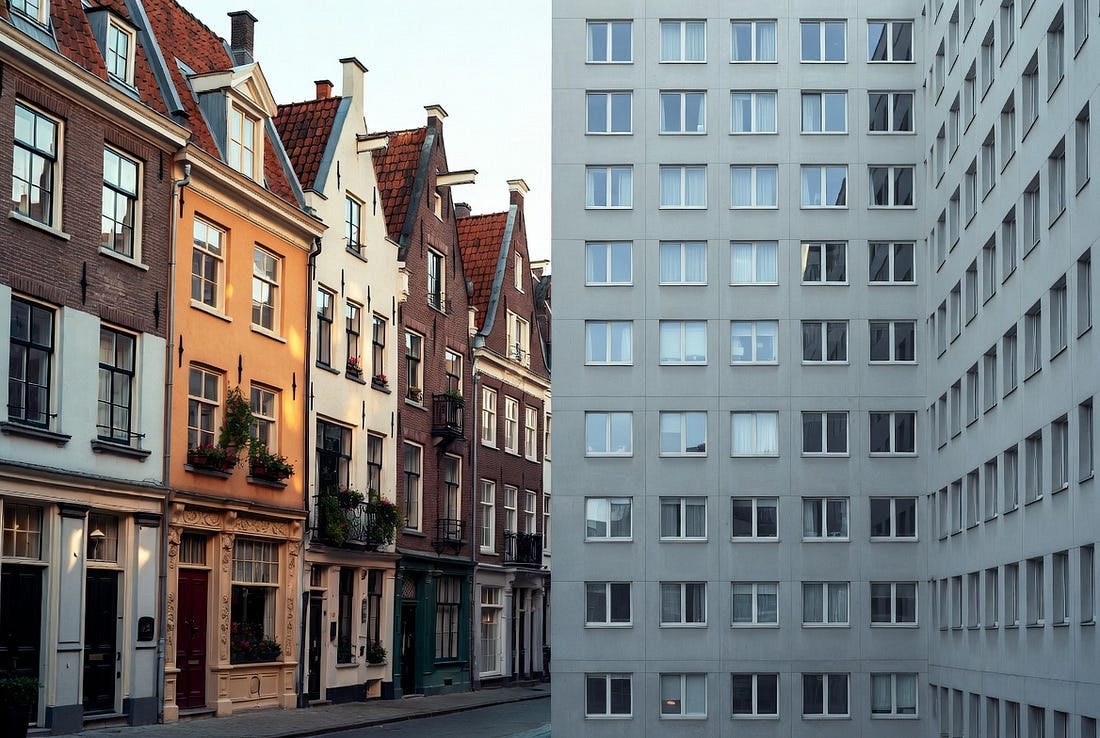
If there’s one thing that tends to emphasize the modern mind it’s been homogenization of building patterns. Increasingly a number of public buildings in major cities increasingly look like they could be anywhere. The amount of differentiation between different cultures has been something mitigated.
Architecture has historically held a position of translating collective identities. Various spiritual beliefs, social values, unique building materials or style brought together to create something of an emblem of what the local population is.
If one looked at cities like Prague, or Venice, or Amsterdam during the early modern era there were noticeable differences that were expressions of the location where they were.
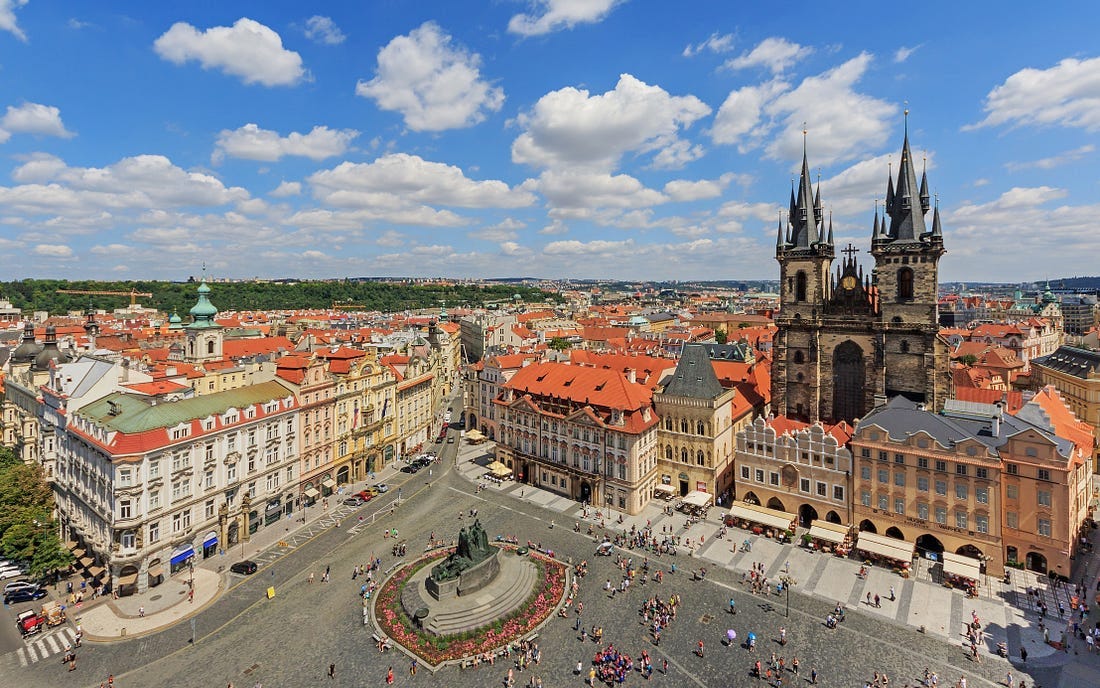
Prague with a layered historicism. Amsterdam’s canal house rhythm. Venice’s hybrid facades. All of them had a unique civic texture without demanding uniform belief.
It wasn’t simply public buildings either. Anyone of some means typically put their own style into their home or place of commerce.
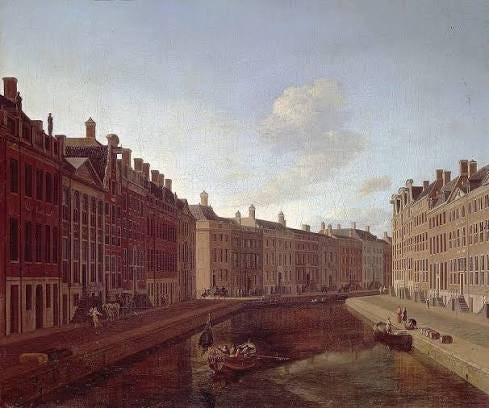
It was a unique form of self-expression. What exactly the message that was trying to be expressed was could say something about one’s personality.
A society can permit people to express different aesthetically in ways that make ideological conformity less necessary.
By contrast, compare this with an entire street where everything is intentionally gray and square. No expression with minimal levels of creativity.
Much like the argument I made a couple weeks ago over individuals conversing over things that appeared unimportant allowing for societal cohesion to develop, architecture had a similar style to it. Even though two people might have different ways of expressing who they were, the conversation between them could be important.
Much like someone tending different styles of gardens, or particular types of ornamentation they might use, architecture was a way for people with different value orientations to engage in a conversation and agree to disagree peacefully. You could present your own viewpoint.
Something curious was always that this was an area where those who were conservative and those who were more artsy on the left should actually have more commonality. They might not necessarily express the same ideas, but the idea of self-expression carried importance for them.
Something they all shared was in opposition to standardization. The ability to maintain one’s own values through public display. This allowed a form of soft interaction. You could disagree without it being particularly hostile.
In a way the various forms of artistic expression became something of a social dialogue. It was a way for different views to be expressed in a very docile fashion.
At least part of this was something that seeped into communities having a common thread.
Architecture was one of the most visible means of historical continuity. Local populations have physical connections to things that had happened before. Those moments that have brought them together as a people.
Even for those that might disagree with each other there was a sense of common purpose here.
Granted some of it might have been produced to impose a particular first impression. This was certainly the case with entry halls meant to impress or potentially impose one’s importance.
The one who might question the importance would likely bring up that it also invited a form of tribalism. However its removal has only invoked a different form of tribalism.
If there was a point underneath all of this, like many artistic expressions, it made it virtually impossible to impose a common mode of thinking throughout a society. Softer forms of expression other than philosophical/ ideological orientations allowed people to be different without it becoming too extreme.
Tribalism might have existed in some forms, the person who decorates their garage or basement with hunting trophies, finds others of the same subgroup. But it wasn’t as though it was intended to be overtly hostile to the person with the large garden because they’re a vegetarian.
There probably is something to be said about our increasing emphasis on cookie cutter designs and what it does to how people think about the places that they congregate to. Is there an argument to be had that at least part of the reason society has lost some of its independent thought is because we’ve sanitized so many of our communities.
The problem with increasing homogenization is it’s open to different questions. One of the less obvious consequences of homogenization is that it removed one of the ways societies historically allowed people to express difference without turning difference into political conflict.
There was a much more naturally organic way for the interaction to take place and disagreement to simply pass by.
Architecture ended up being an intersection between a form of soft pluralism, where they were visible differences with an underlying social agreement. And yet at the same time producing something of a collective identity.
Comments
Nothing yet. Say the first thing.
Sign in to join the conversation.