
"This is China" would be the easiest and most common explanation I would give for this. It’s an explanation that provides all the answers while simultaneously explaining nothing at all. “This is China” is a common reply among seasoned “China people”, but I realize it might not be enough for those on the outside…
This article is taken from a Twitter thread I wrote. Please consider following me there, as it is the platform where I’m more active with insights, news and whatever whatevers…
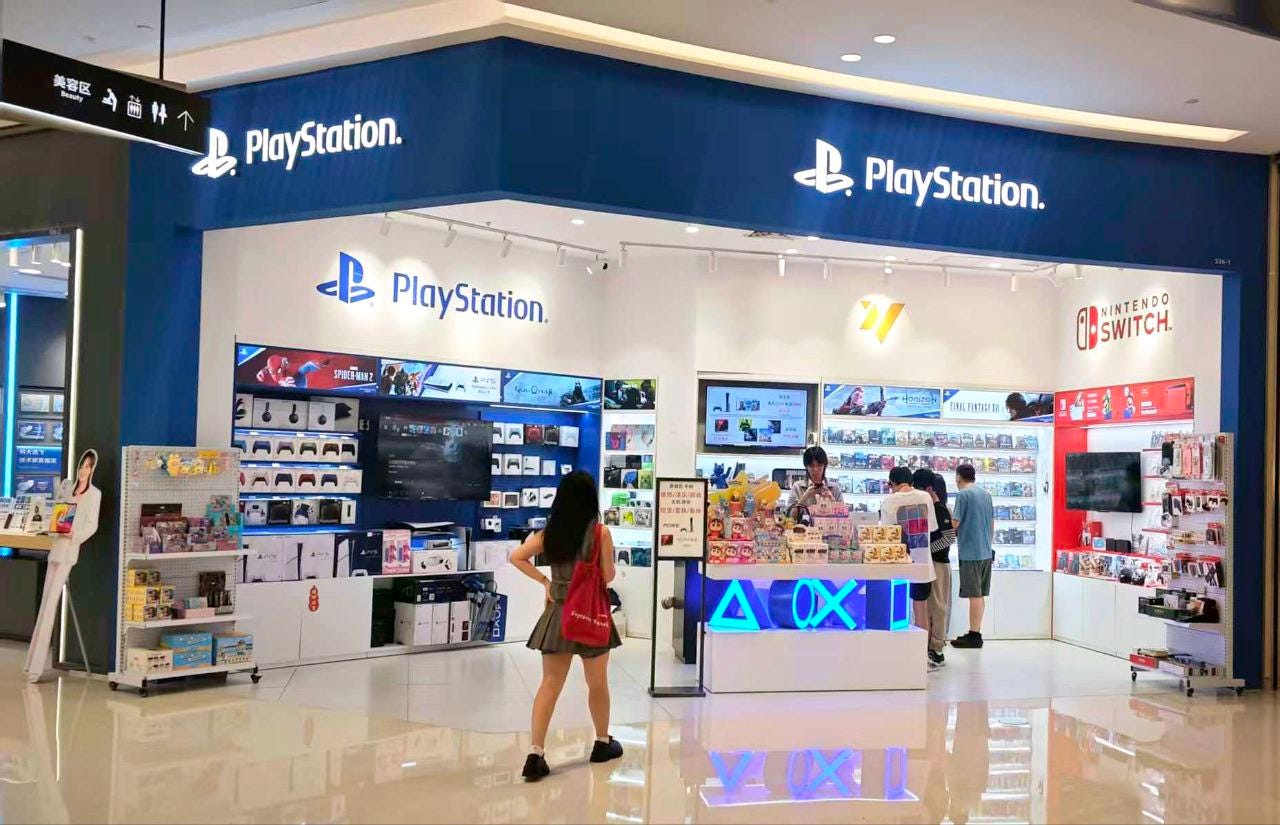
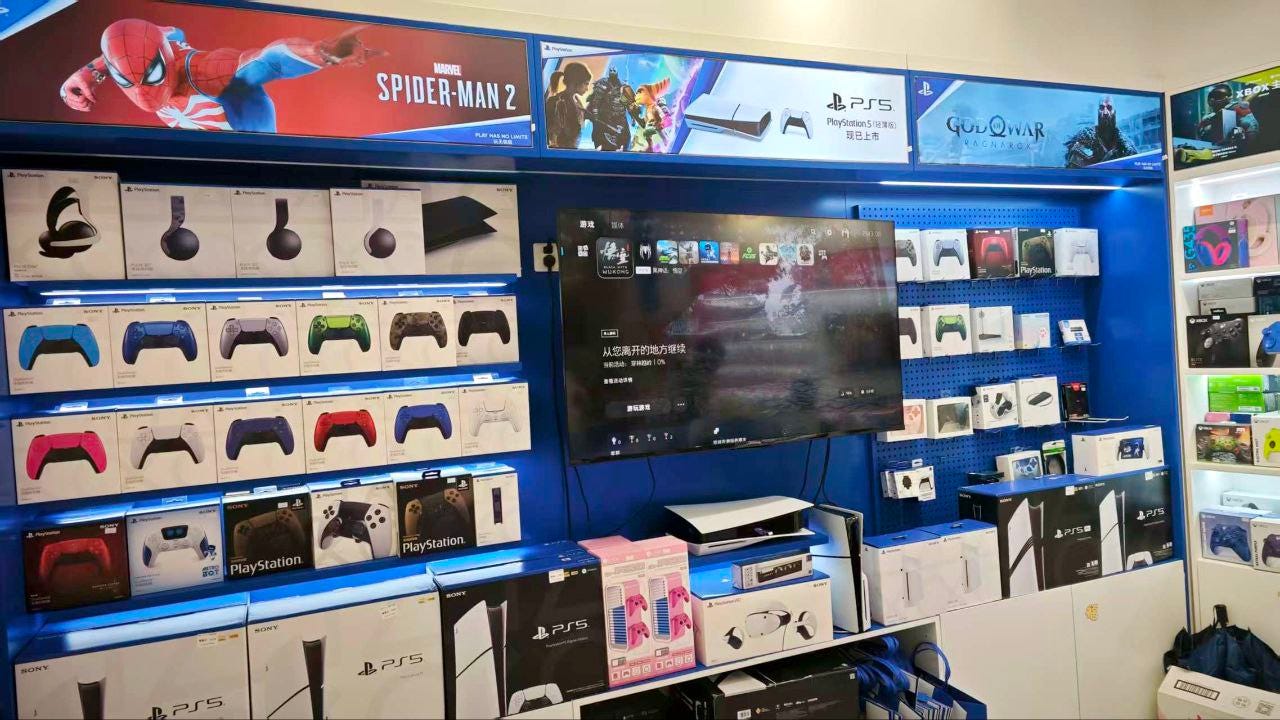
The picture above is from a legit store in a big fancy mall in Shenzhen, China. However, most of the games and consoles sold in this store are unlicensed imports.
I've been writing about gaming market dynamics in China for over a decade. There’s a lot of context to this particular kind of stores and the products sold in them. If you want the full picture, please check some of my previous articles here on Substack, and at GamesIndustry.biz where some of my older (but still pertinent) pieces were published.
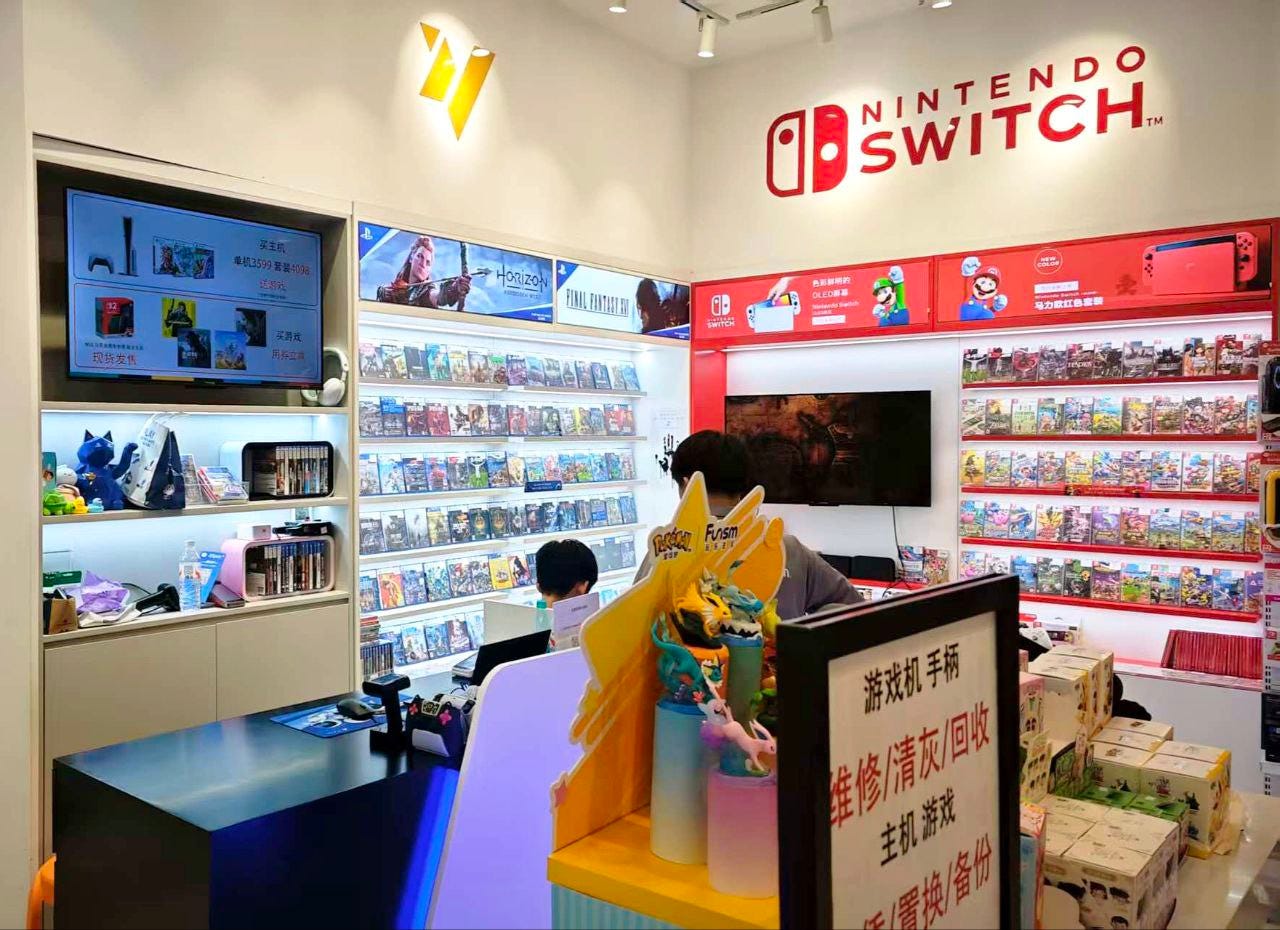
I'm not going to pretend like I know all the details about the store operators and how it formally relates to PlayStation China or not, exactly. It is indeed a fully legal physical store in a regulated commercial space however.
Meaning, nothing shady about it. Or is there?...
It's important to understand that retail physical gaming stores in China are extremely rare, compared to the overall sales volume of games in the country. The vast majority of game sales happen online, both for digital and physical games.
For physical games in particular, I would say 99% of game sales are made through e-commerce platforms (Taobao, JD and so on), while digital sales mostly happen in their respective digital storefronts (PSN, Microsoft/Xbox Store, eShop, Steam…).
This PlayStation store is therefore a sort of boutique. A rarity that really serves no one in particular besides the spontaneous foot trafic at its front that decides to have a look and hopefully buy something. Needless to say, in the “numbers game” of China, there’s always a good chance enough people might notice your business to make it worthwhile.
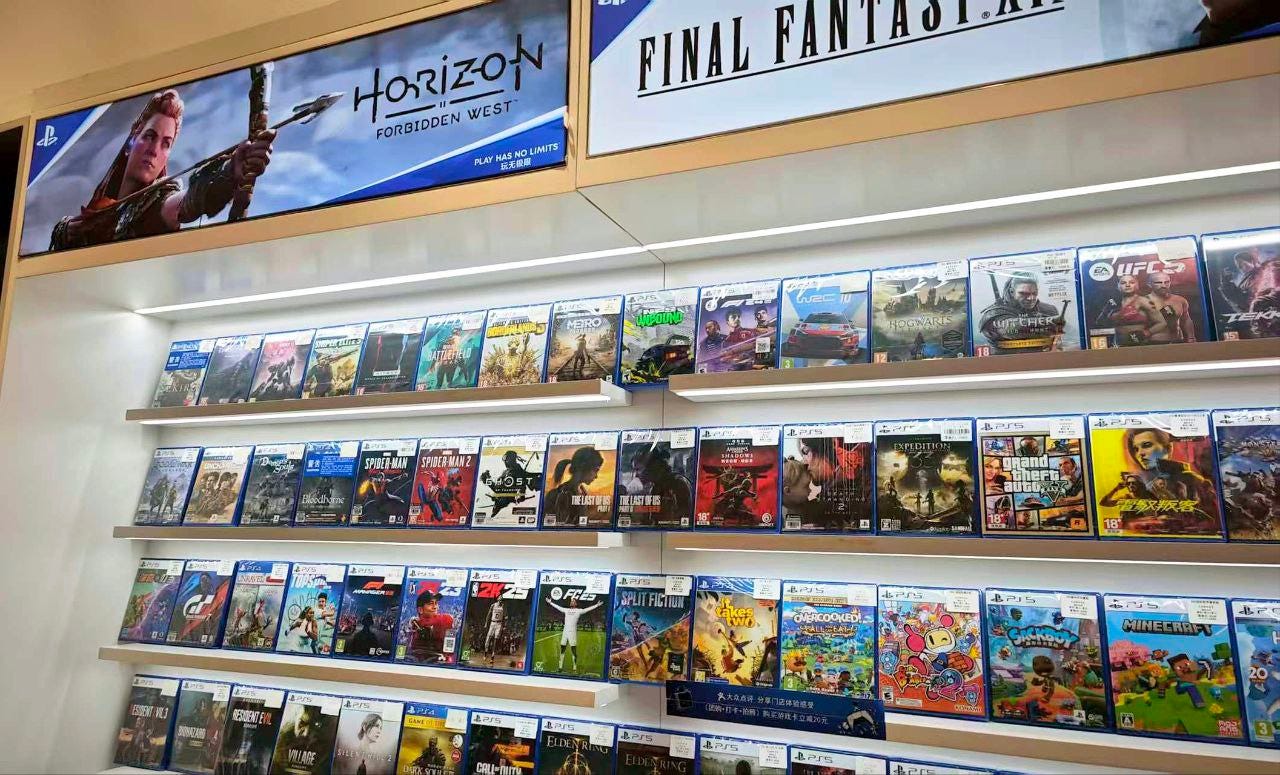
It's easy to see that almost every game sold in this store is either from Japan, Hong-Kong, Taiwan, or the US. They are imports, and not originally meant to be sold in Mainland China.
Most of these games do not have a required publishing license for distribution in this market, and therefore are not officially available - legally speaking, every videogame sold and/or available to consumers in China is required to be scrutinized by appropriate authorities, and given a Publishing License (ISBN) if cleared. Strict control and censorship in media and entertainment in China is a very well-known factor that does not require much introduction to anyone reading this…I assume.
But, as I mention in most of my writing, not being legally licensed for distribution is not an actual practical impediment for the games to be widely and easily available in the country, both physically, and online on digital storefronts. What the law and regulations say and what actually happens in practice often do not align, at all.
For PC and console games in China, that is THE market!
I also talked about this subject very extensively during the Ready.Aim.Win podcast, if you want to better understand how it all works, broadly:
Watch the full episode of the RAW Podcast here.
There's no satisfying answer: This is China.
Now you understand it better. I hope.
The market is too big and multi-layered, and the sale of these products is not socially disruptive. Therefore, it's allowed/tolerated?
It’s all based on the grand “social contract” between the People in China and its government - for authorities to crack down on seemingly harmless areas (such as imported games) would raise too many questions among those who consume them, and would reverberate across other areas of the Chinese gaming industry and market, which is nowadays very…VERY big. This is all to say that sometimes, it’s better to just let it be. At least as long as it’s not causing much trouble…
I'm not an expert on commerce and retail regulations in China, so I lack a lot of knowledge that could provide more insights about a physical store like this one in particular. Thankfully, someone who works in the gaming industry in China did provide some valuable information on my aforementioned Twitter thread:
”The offline supervision of physical games is very complex. Sellers usually claim that these products are purchasing agent items, collectibles or game peripherals to circumvent the existing rules. This mainly depends on the enforcement of regulations.”
Meaning, loopholes and the ambiguity of regulations are exploited by sellers, generally speaking.
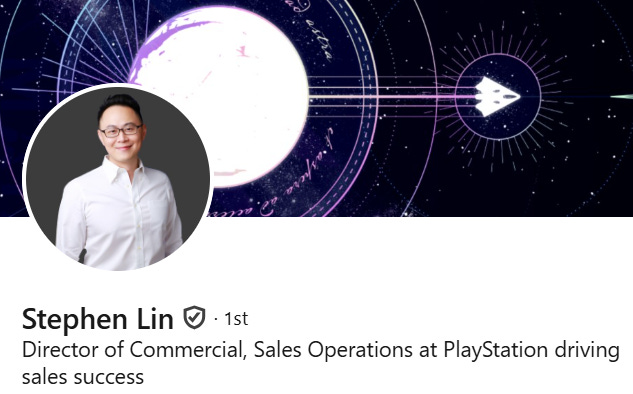
Besides that, after publishing this article I had the opportunity to exchange some ideas with Stephen Li, who is the Director of Commercial and Sales Operations at PlayStation China.
Stephen explained to me that while stores like these are not directly operated by Sony/PlayStation, "Sony and others will support on fixtures and furniture."
The stores themselves are "all managed by either distributors or retailers, so there's no way to limit them to a single brand.". Li went on to clarify that the stores are "owned by the retailers themselves." - as is fairly standard practice in retail worldwide, regardless of products/industry.
This represents a symbiotic partnership between retailers and console makers (Sony in this case, and Nintendo presumably) that end up acting as brand ambassadors and distributors, but not on an exclusive base. This on top of all the regulatory loopholes and general "indifference" from authorities that allow for the sale of unlicensed games.
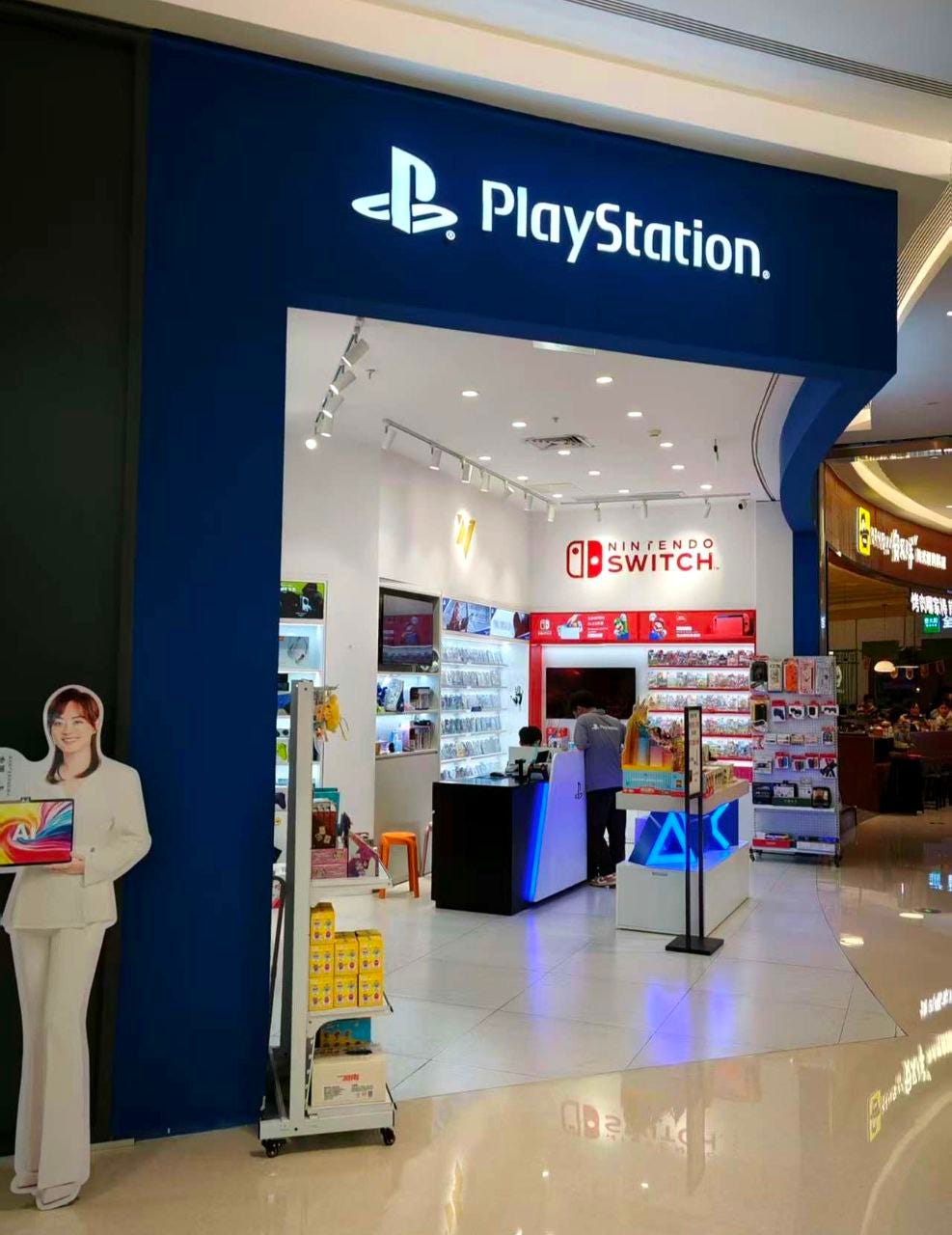
Because these are the two most popular consoles in China. That’s the simple answer. While the PlayStation 5 has substantially been growing its market share in China, the PlayStation 4 and especially the Switch paved the way before.
I estimate the Switch to still be the most popular console in China in total number of console users. The Switch 2 has been proving to have strong demand as well. PlayStation 5 sales in China have boomed, in particular since the launch of Black Myth: Wukong. Most of these sales however are still from imported consoles, which are stocked and sold on an industrial scale in the country, countering the officially licensed national models - read more about that here, and the articles I’ve mentioned before.
Simply put, this store sells both PlayStation and Switch games because this is what sells the most. This is China…
没有为什么
No posts
Comments
Nothing yet. Say the first thing.
Sign in to join the conversation.