
The content in this article is based on a LinkedIn post of mine. Please follow me there as well for more regular updates.
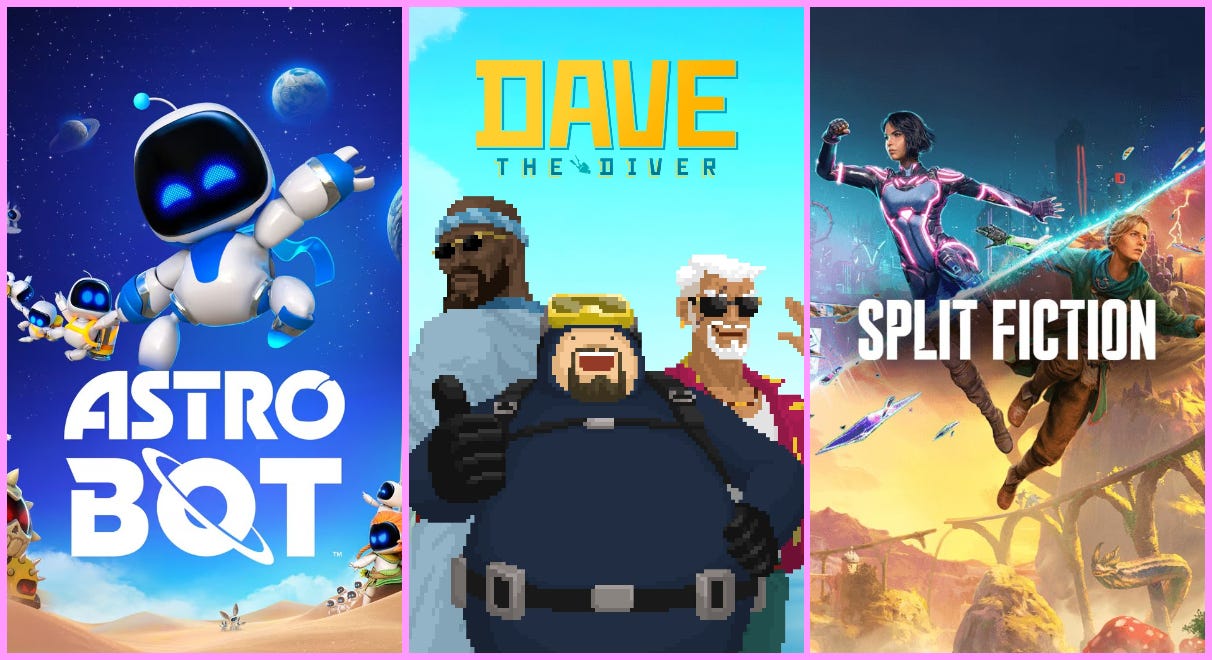
3 major international titles got their Chinese publishing license today from the NPPA (National Press and Publication Administration).
Several imported and national games did, but I want to highlight these 3 in particular:
Split Fiction
Astro Bot
Dave the Diver
-Dave the Diver has been very popular in China since its global release back in 2023. Chinese memes about the game have been popular online and the game was widely discussed by people online when it launched and following months.
-Split Fiction had roughly 50% of its user-base on Steam originating in China at launch, back in March 2025 (It Takes Two was huge success in China - 10M+ copies).
-Astro Bot, while not that successful in China, is a known IP for core gamers. The game had, allegedly, sold about 2.3 million copies worldwide 6 months after its launch. Very decent numbers for the first paid game in the IP, but far from being a big global hit.
Well, it doesn’t hurt.
If you ask a publisher in China or agency that assists international games to launch in in the country, they will unquestionably tell you this is fantastic!! Of course, that is their business after all.
But really, in practice this has little impact, overall.
These 3 titles in particular are console and PC games, so the vast majority of Chinese gamers will buy these from international digital storefronts (Steam, PSN, and eShop mostly, in these cases), and have been doing so since their worldwide release date.
Even if they now become available on regulated Chinese platforms, PS5 users in China will mostly continue to use a Hong Kong account (even on a Chinese console model), and Switch users overwhelmingly have imported consoles anyway with access to all games.
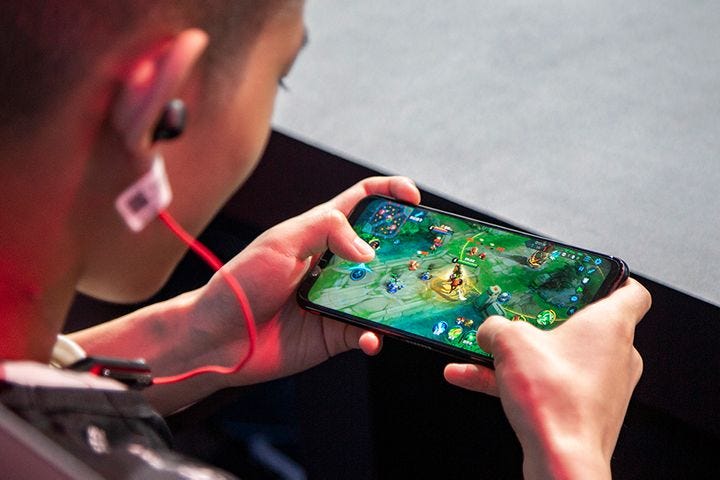
None of these games are available on mobile (iOS/Android) which is really where a Chinese Publishing License becomes crucial for a game’s success in the country.
Mostly because mobile games tend to be F2P and depend on revenue from microtransactions and/or ads. These require a formal and regulated integration with Chinese payment and ads networks, plus servers for multiplayer and online support.
None of these games (Astro Bot, Split Fiction and Dave the Diver) depend or even support microtransactions or ads. As for online servers, Chinese gamers have it covered already with plenty of access to international ones where needed.
I don’t mean to suggest developers shouldn’t try to acquire a publishing License for their games in China!
As I said earlier, it doesn’t hurt. It helps, no doubt. It’s another way of creating revenue from the game, even if residual (depending on the situation/game).
What I always tell developers, however, is, to carefully and strategically consider your resources and what is best for your specific title in this particular market.
Some people might assume that only licensed games are allowed to be publicly promoted in China (online and irl), but that’s not the case, at all.
Almost any game you can think of can be seen being streamed to millions of people on popular streaming platforms, sold and openly promoted on major e-commerce ones, and being featured in major e-sports events, conventions and expos throughout the country. I wrote about this in several articles before, and even provided the specific example of PlayStation China marketing efforts promoting unlicensed games.
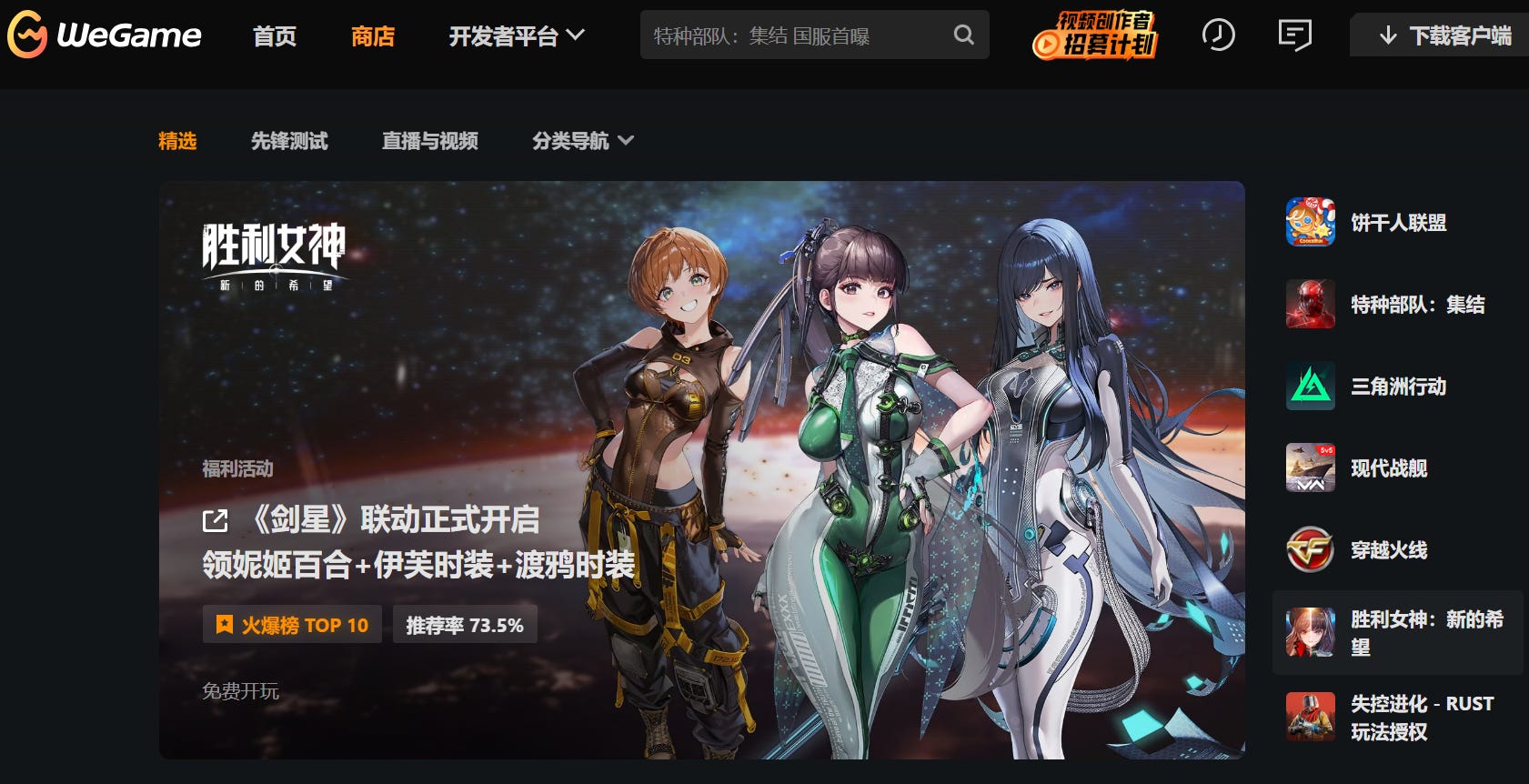
Having a publishing license will allow these games to be included in the portfolio of games available on local networks and platforms where they can be distributed. Namely, the Chinese PSN for those using Chinese models of the PS5 (many Chinese consumers still prefer to buy HK and Japanese imports which are widely and easily available), the Chinese-regulated Steam and other Chinese PC digital stores such as Tencent’s WeGame (pictured below). However, these formally regulated Chinese platforms have only a fraction of the traffic we see in the international Steam most Chinese gamers use, or on other regional accounts that console gamers will register to instead of the Chinese ones. For most consumers, there simply is not good reason to use the Chinese platforms, and since international ones are easily accessible, the situation is unlikely to change any time soon (unless the government decides to drastically and severely intervene).
With a publishing license, local Chinese publishers and distributors can also work on producing local physical editions for their respective games. As a gaming collector, I think this aspect is really cool. Some of these Chinese editions are really nice and will often include a lot of extra content. Gamepoch in particular is a Chinese publisher with a long record of releasing these cool editions.
Thing is, most people dont buy physical games anymore. Even more so in China. These physical editions are a niche within a niche and, while I love them as a collector, I like to own them mostly because I recognize how rare they will eventually become due to their limited printing.
Having a publishing license is mostly advantageous for the local Chinese publishers and distributors international devs need to partner up with to acquire one. By having the license, associated operators in China will have a bigger cut of the profits with those specific licensed editions. For the international devs however, if they can manage to sell in China without a publishing license (as most do), that becomes the cleanest and most profitable route, generally.
No posts
Comments
Nothing yet. Say the first thing.
Sign in to join the conversation.