
One of my favorite phrases in politics is “Царь хороший, бояре плохие” — translated from Russian, that’s “good tsar, bad boyars.” This phrase apparently originated during the days of the Russian Empire, when positive developments in the kingdom were attributed to the tsar and negative developments were attributed to the tsar’s advisors (“boyars”).
“Good tsar, bad boyars” served to insulate the tsar from criticism while providing the masses various targets for their occasional ire. Moreover, the phenomenon did not end during the days of the tsars. As recently as 2023, for example, Russian mercenary leader (and brief coup instigator) Yevgeny Prigozhin complained that Vladimir Putin had been misled by oligarchs and military officials in the country’s flailing invasion of Ukraine.
To be clear, I am no expert on Russian history or politics. However, I’m intuitively drawn to “good tsar, bad boyars” as a fascinating explanation for a lot about the current American political environment. People—especially partisans—find it more cognitively comfortable to adopt “good tsar, bad boyars” when confronted with the shortcomings or failings of their preferred political leader. Put simply, it’s easier to blame others for your leader’s mistakes than to hold that leader accountable for their actions.
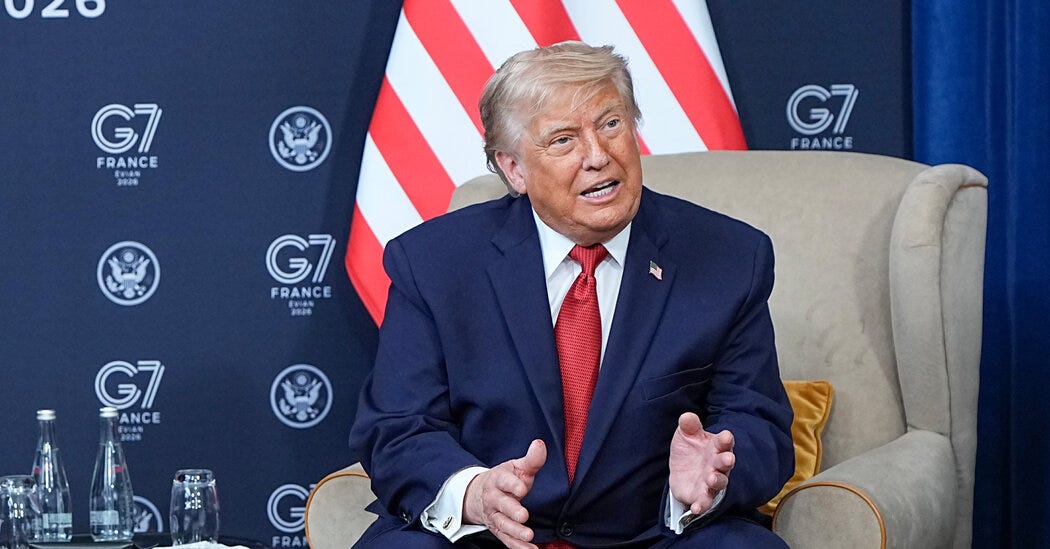
Take, for example, the recent announcement of a peace agreement—technically, a memorandum of understanding (MOU)—between the United States and Iran. President Trump has touted the MOU as a victory for international security and the global economy, while critics have argued the agreement is a giveaway to Iran without achieving the monthslong war’s principal goals.
Unsurprisingly, Democrats are lambasting the MOU; for example, Senator Chuck Schumer declared, “This is not the art of the deal. This is the art of surrender.” At the same time, some notable Republicans have also expressed skepticism. However, rather than directly taking aim at President Trump, this skepticism is textbook “good tsar, bad boyars.”
Consider Senator Ted Cruz’s reaction following the release of the agreement’s details:
History demonstrates that giving billions of dollars to theocratic lunatics who want to murder us is an exceptionally bad idea, and I think unfortunately the president is receiving some really bad advice on this deal.
Or Senator Roger Wicker’s response:
President Trump has pursued peace through strength. I hope the intermediaries working on this deal are not undermining that objective.
Or conspiracist talk show host (and Trump ally) Laura Loomer’s question:
Who is giving the President tainted, pro-Islamic intel?
You get the point.
Why is “good tsar, bad boyars” an attractive device in today’s political environment? Two major reasons come to mind. First, it provides a hedge against the cognitive dissonance that may come when acknowledging missteps from political actors we have heretofore supported. After all, if it’s not that our guy is wrong but rather that he’s getting bad advice, then we weren’t wrong to support him in the first place. Our hands can remain clean, despite the clear presence of dirt and grime.
Second, it preserves the political dynamic constructed through rising negative partisanship. Seeing the political world through a “I win, you lose,” zero-sum framework, Americans increasingly want our perceived political enemies to lose more than wanting our friends to win. As a result, we look for any explanations we can to avoid critiquing “our guy” and handing ammunition to our enemies. By deflecting blame from “our guy” whenever we can, we can keep our sights trained on the true threats to the country — namely, those with whom we disagree.
None of this is good for a healthy and accountable political environment. When the missteps of our leaders are rationalized or waived away for the aforementioned reasons, these leaders do not face the political consequences for said missteps. Elections are supposed to be both the carrot and the stick to keep our leaders in line. When we fail to do that, we reward bad behavior and discourage reforms from political elites.
Just as importantly, though, when we apply “good tsar, bad boyars” reasoning to objectively bad things from our leaders, we risk not being honest with ourselves. We may think we are acting with integrity and consistency, but upon further scrutiny the motivations behind our thinking may reveal an uncomfortable truth — specifically, that we are acting to preserve our political prior assumptions.
Are there instances when “good tsar, bad boyars” actually does apply? Certainly. Presidents are not entirely unitary actors; they act with the input of myriad advisors and voices in their orbit, each with a specific set of objectives and goals, striving for influence in their own way.
Nevertheless, this does not alleviate presidents from responsibility for their decisions. Harry Truman famously displayed a sign in the Oval Office reading, “The Buck Stops Here!” George W. Bush referred to himself as “the decider” in personnel and policy decisions in the White House. Both men were right. And because presidents have the final say, they must be responsible (and accountable) for that — from Congress, from the press, and eventually from the voters.
It can be tempting to adopt a “good tsar, bad boyars” argument to deflect or distract from the shortcomings of leaders we generally support. But the health of our political system—not to mention our own integrity and commitment to honest and reflective political engagement—demands better.
No posts
Comments
Nothing yet. Say the first thing.
Sign in to join the conversation.