
Happy Thursday, all. Tonight is the first night of the 2026 NFL Draft, meaning we’re just a few hours away from once again asking ourselves, “Wait, the Cleveland Browns did what?”
I should have an essay on the wisdom of religious nonestablishment running in The Dispatch this weekend, for its Sunday newsletter, “Dispatch Faith.” You can subscribe here.
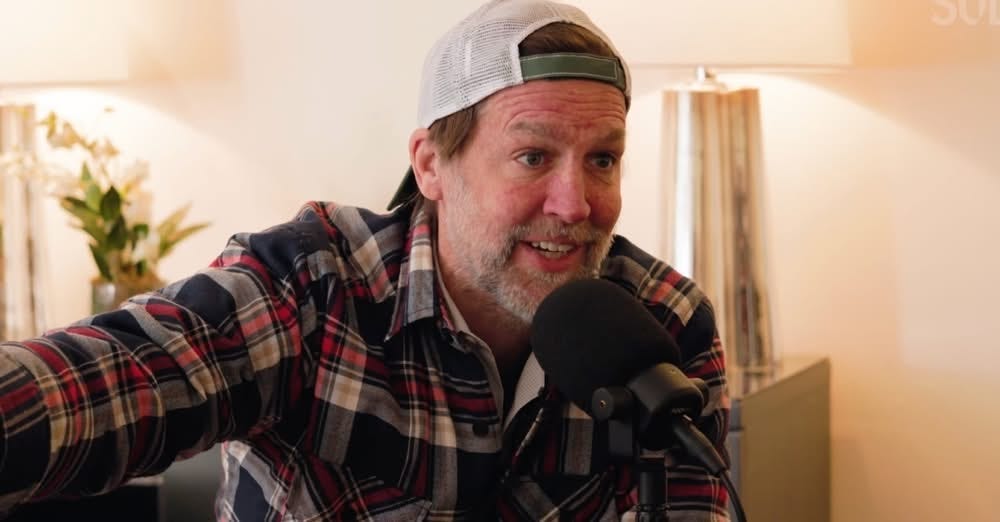
Last December, Ben Sasse—formerly a US senator from Nebraska and occasional university president—announced he had been diagnosed with stage-four pancreatic cancer and was, to put it bluntly, “gonna die.”
The news hit me like a ton of bricks. I’ve been following Sasse’s career for years, thinking his presence in the Senate—while not perfect—was a breath of fresh air from what we’d grown accustomed to from our elected representatives. I thought he would have been a compelling candidate for the presidency someday. Instead, he’ll be gone far too soon.
Instead of retreating to the shadows, Sasse—a Christian in the same Presbyterian denomination as I am—has offered a model for how to die well. In his original announcement, he reminded readers that we all, by virtue of being humans, have a death sentence. Death is a reality we all must face, sooner or later.
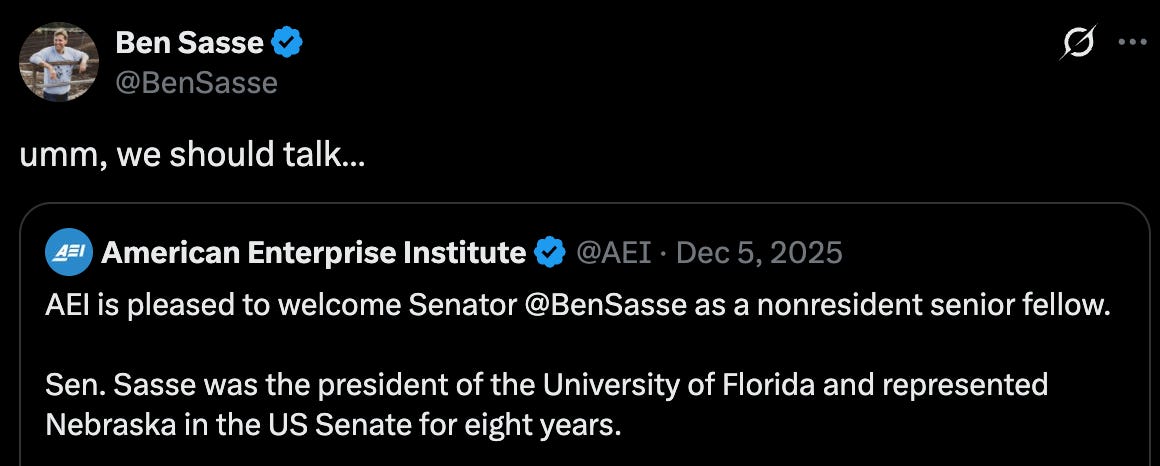
Some of his recent comments have made light of his grim situation. Consider this, responding to the American Enterprise Institute’s pre-diagnosis announcement that Sasse would be serving as a fellow with the think tank:
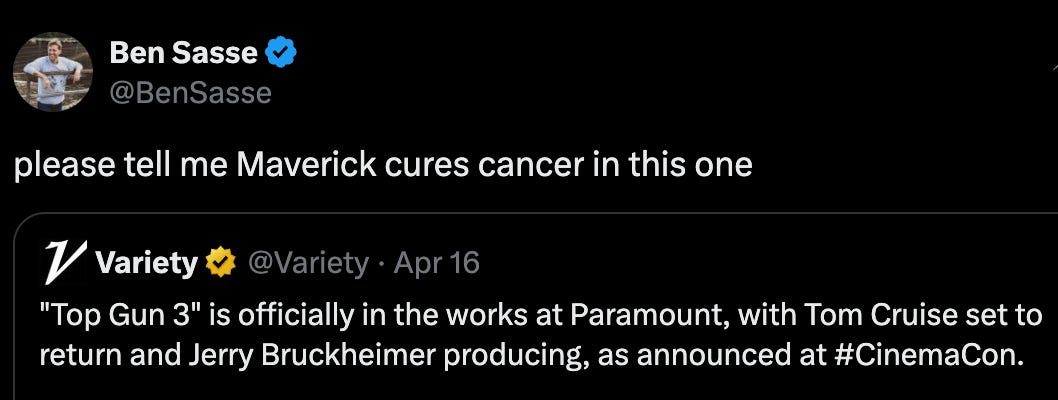
Or this, reacting to the news that Tom Cruise is set to star in “Top Gun 3”:
In addition to starting a podcast—the humorously titled “Not Dead Yet”—Sasse also appeared on Ross Douthat’s “Interesting Times” podcast, talking about his diagnosis, his thoughts on what plagues our political and cultural environment, and whether he’s angry with God about his impending death. Here’s a snippet of his answer to that last question:
No. I wouldn’t want a sovereign God to defer to all of my prayers with a yes. I’m not omniscient. I don’t know what the weaving together of the tapestry of full redemption should look like, but I know going through the period of suffering that I’m going through is a benefit because it is a winnowing.
I’m filled with dross. This suffering is not salvific, but it’s sanctifying, and I’m grateful for it.
The whole conversation is worth a listen. Check it out here.
Last week, the New York Times reported on the usually secret inner workings of the U.S. Supreme Court. Specifically, the reporting centered on what observers have called the “shadow” or “emergency” docket — decisions by the Court that bypass the normal process for reviewing cases and controversies.
Focusing on a February 2016 exchange between the justices via private memos and communications, the article sets up as follows:
The emergency docket has swelled into a major part of the court’s business, as the justices have short-circuited the deliberations of lower courts. The decisions are technically temporary, but are often hugely consequential.
Rulings with no explanation or reasoning, like the sparse paragraph from that February night, have become routine. The emergency docket is now a central legacy of the court led by Chief Justice Roberts.
Read a decade later, the memos suggest that none of the justices fully appreciated what they were doing: embarking on a questionable new way of operating.
Implicit in the reporting is the suggestion that this process has been driven by conservative justices wanting to run roughshod over their liberal colleagues. Writing for SCOTUSBlog, however, Georgetown law professor Stephanie Barclay argues the shadow docket came to prominence earlier than the Times describes, independent of an ideological motivation.
Barclay continues by suggesting the shadow docket is less about the Court shirking established processes and more about responding to increasingly time-sensitive regulations from the executive branch, which Barclay describes as follows:
regulatory programs and enforcement actions designed, through their fine structures or compliance timelines, to impose the costs of capitulation before any court could reach the merits.
What this means is that some executive actions are designed to encourage capitulation from actors prior to the normal process of legal review. Viewed in this sense, the shadow docket does not diminish the democratic process; it safeguards it from executive overreach.
Barclay continues her response with concern over leaks coming from the Supreme Court — namely, such leaks posing a problem for the very design of the Court relative to other branches:
The current commentary cycle is focused on the deliberations the leaks exposed. But how these materials are reaching print, and what that pattern will mean for the court’s capacity to function as a deliberative institution, has attracted far less attention. When any tentative vote or draft passage can be weaponized the moment it displeases someone with access, justices and their clerks cannot deliberate candidly.
“A democracy,” Barclay adds, “that depends on their candor is the weaker for it.”
No posts
Comments
Nothing yet. Say the first thing.
Sign in to join the conversation.