
A few years ago, my husband and I were looking into getting a financial advisor, and we hopped on a call with a wealth advisory company to see if we wanted to sign up to one of their packages.
The investment was multiple five figures and I remember before the call we were 50/50 on whether we even needed this service…
and after the call we were like: SIGN US UP!
What changed?
I don’t remember too much of the call but I remember the ONE line he used that 100% locked me in…the exact moment I was like yep, we gotta do this.
It’s been a few years, but I’ve never forgotten it and I’ve used it multiple times myself to close deals since.
So I want to share it with you and show you how to adapt it to your offer to close more sales yourself.

So let me walk you through the sales process so you know how this all went.
The sales process was typical of a high ticket offer, and it went a little like this: Application —> 15 min call—> strategy call (aka sales call) —> contract sign
(Some people get annoyed at these drawn out processes but not me - I love it lol. I LOVE to buy. And I LOVE being sold to. So yes please, put me through a sales process anytime.)
[Just know that if you do, I will be analysing the sales techniques (and probably sharing them online)]
So after the application and the 15 min call we got on this strategy call.
The sales call is going as any call …but I’m not feeling 100% “OMG SOLD”… until we get to just before the pitch.
At this point they already have some of our numbers and figures on hand, and as we’re going through them, the sales guy says something like this to us…
Him: “So I ran some of your numbers just quickly before we hopped on, and just based on those numbers, it looks like by doing nothing, by just letting that cash sit in your bank account instead of investing it or putting it in other money earning places, you will be worse off by about $8,000 a week…which is about $416,000 a year.“
Me: “So in other words we’re losing $8,000 for every week we sit on this?”
Him: “Yes. Here’s the calculations if you want to run this yourself”
Me: *in my head* Where do I sign up?
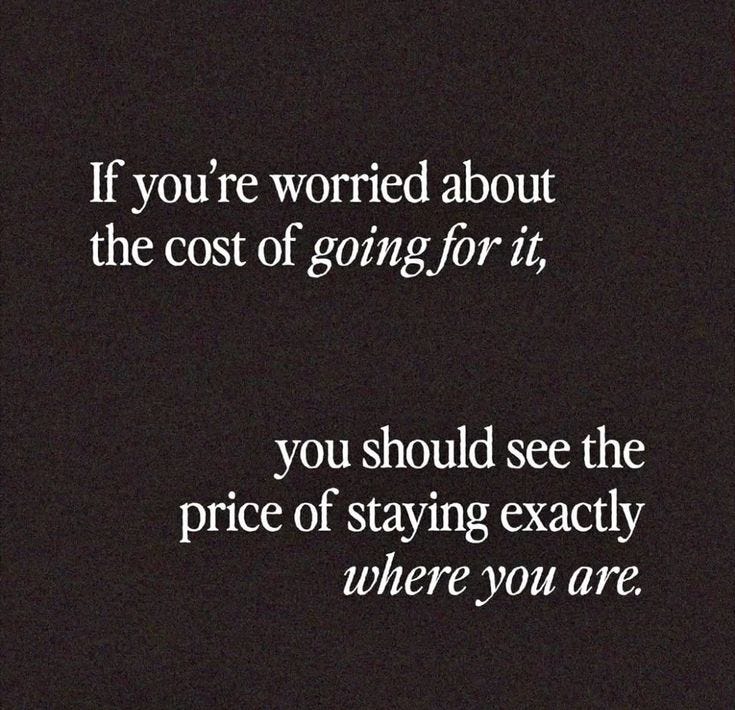
This quote is always enough to move me into action.
Why did this one line almost instantly push me over the edge?
If you’re a sales nerd like me, and need to understand…it’s loss aversion. Kahneman and Tversky proved why this works back in 1979. We feel losses about 2X harder than wins in our brain.
We are wired against wanting to lose.
So the moment he told me about the $8k per week “loss”, my brain lit up.
Even though this loss was not actually a present loss, it was a loss of future potential. My brain didn’t care and simply registered “Loss”.
It was calculating the COST OF INACTION and blaring red signals at me to “do something about it!!”
Cost of Inaction - or “COI” - is a real cost to your future potential…but it’s also kinda invisible. In the sense that most people don’t calculate it.
But now that you know it, you understand that it’s a very high leverage item you have to get almost anyone, to say yes to anything you have to sell, and I’m going to teach you how to use it properly.
(Because this would have gone south very fast if the way he delivered this to us was off, or the timing was off, or the tonality was off…or a small number of other things were off. So you have to be careful with how you use it. More on this below).
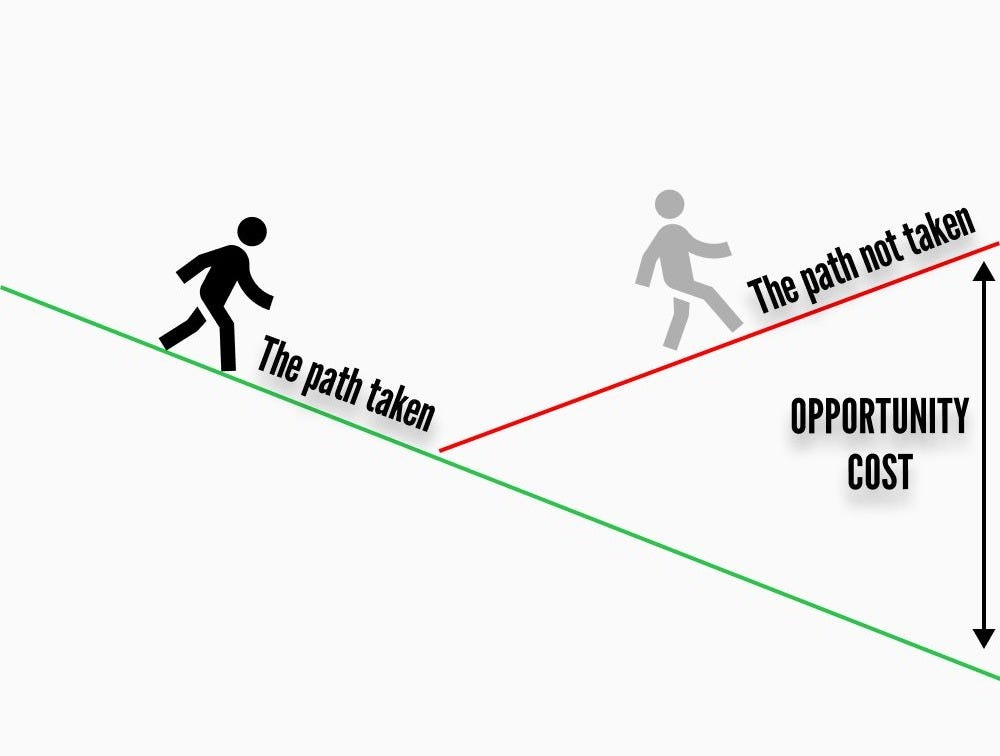
Most founders don’t ever bring up COI.
They sell the upside and stop there. Here’s what you get. Here’s the transformation. Here’s what’s included. (THE DESIRE).
So the equation most buyers run is:
Desire v Price = Decision
They weigh how much they want it against what it costs.
And most buyers are cost averse, so the desire generally won’t outweigh the price.
Most of the time, they’ll feel like doing nothing is safer and price will reign above all else.
Except they’re missing a part of the equation - the price of doing nothing. In their head doing nothing gets entered as zero.
Which is why you can’t leave it to them to “figure it out”. Because they need the whole equation in front of them.
The equation is more like:
Price vs (Desire + Cost of Inaction) = Decision
When you enter COI into the equation, the decision parameters shift.
Which is why you must put the full equation in front of your buyer and not just leave it to their own devices to hopefully figure it out (because they won’t).
(I certainly would not have thought to run those numbers or even been able to run those numbers around our finances unless the salesperson had pointed them out to me.)
If you want to use this effectively, and not sound like a sleazy sales bro that’s like, “you’re going to lose this amount of money and your life will suck if you don’t do this” - read on.
There is a way to do it naturally and simply.
And I’ll show you how to do this even if you don’t sell something with a tangible financial value that you can put a monetary figure on.
Below I’ve set out:
A copy and paste prompt that calculates the tangible cost of inaction for your offer
A second prompt for when you sell something you can’t put a dollar figure on (intangible offers like fitness)
How to ask the right questions to pull this out
An example: Exactly how I use the COI line to close deals for my AI company
The one way I never use this (because it’s creepy and I don’t like it)
Comments
Nothing yet. Say the first thing.
Sign in to join the conversation.