
Hallo dear reader.
This past weekend has been full-on for me. At my house we had a maintenance ‘work weekend’, where we help each other do one home maintenance task after another. It’s like doing a series of puzzles and mini-challenges, both social and technical. I've learnt how to use a hammer drill for the first time.
Today I’ve made the newsletter simpler, mainly sharing my thoughts on articles I’ve read. A little more letter like perhaps. Hope you enjoy.
I.
Engaging life in any circumstance
—
A few snippets from Douglas Toft, in this enlightening introduction to acceptance and commitment therapy (ACT):
"According to ACT, there’s nothing wrong with waves of sadness, anger, or fear. And the true test of any practice is not whether it immediately makes those feelings go away."
"Our nature is not bliss but constant emotional change. And unpleasant emotions are part of the cycle.”
"We use the conceptualized self to explain the world to ourselves — to create a personal narrative that makes sense of ourselves, other people, and events."
—
I found the article very clear and practical.
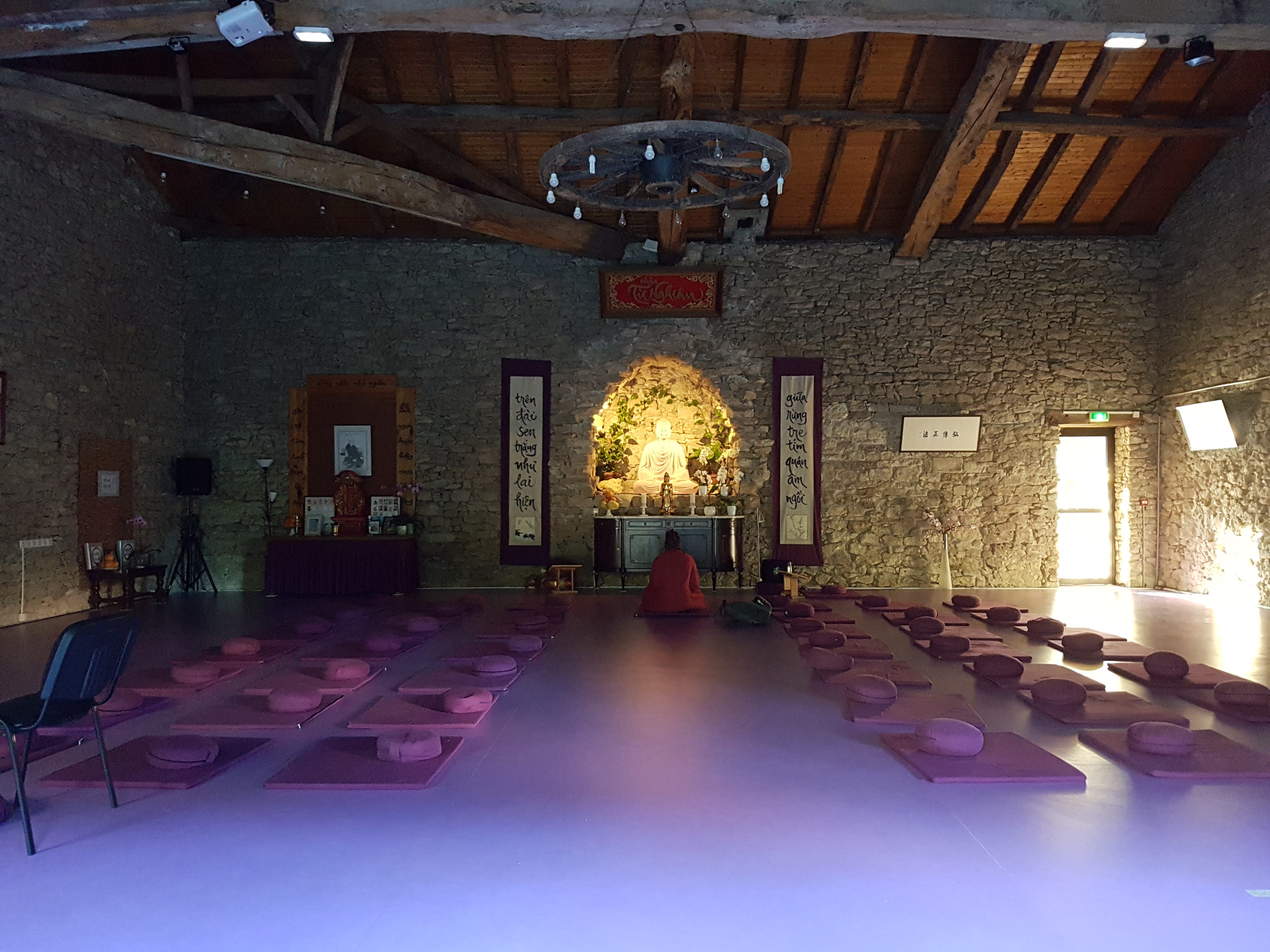
As the article explains, ACT is a framework based on practicing mindfulness and committed action. Things I like about ACT:
It breaks down 'secular' mindfulness into micro-skills. It sees mindfulness not as one practice but a cluster of related skills.
I like how the ‘observing self’ and ‘conceptual self’ is explained clearly. It’s reminiscent of writings from the likes of Eckhart Tolle, Mooji.
It recognises mindfulness by itself is not necessary helpful, that committed action is important too.
Committed action is shaped by values that you define, which means this part of ACT is tailorable to each individual - if you want you could choose values in accordance with a faith (e.g. buddhism, christianity), or philosophy (stoicism, marxism).
I’m also loving how the framework offers a way of measurably assessing my progress in developing my practice of mindfulness and committed action. I highly recommend trying this 'ACT advisor' questionnaire after reading the article.
My scores from the questionnaire showed me knowing my values + taking action are areas for development for me, whilst my self as observer and defusion skills are relative strengths at the moment. Isn’t that super cool? I can now see which micro-skills of my mindfulness practice to pay more attention to.
I’d like to slowly go through resources on ACT. There seems to be plenty out there. I’ll let you know what things I’ve found resonant in time.
II.
The polarising of political opinion
—
Tynan, in his article on Thinking About Politics:
"Most people agree that division is one of our biggest problems in society. But how many of us can admit that both Trump and Obama did some positive things as well as some negative things? That's such an obvious and basic true statement, but almost everyone will bristle at it. If you cannot concede that a candidate you didn't vote for has done some positive things, and that someone you did vote for has done something negative, you are part of the problem."
—
I’ve found myself drawn towards this topic again and again. And why not? Disagreement is a drama that’s constantly being depicted across popular media. This party said this, the orange-haired man said this, can you believe it, it’s horrid, we need this party instead. And the exact same process is happening on the other side. This party said this, this white-haired man said this, can you believe it, it’s horrid, that’s exactly why we need to stay in power.
At the same time, there’s a part of my mind that does not want to engage with it, because it sounds like a headache. Political polarisation - there. Even the word looks like a headache.
I haven’t looked it up, but I think Harrari talks about in Sapiens about how as society has become more dependent on the state and less dependent on their families, people have moved around more, and tend to cluster in communities with similar views. It’s an interesting theory that illustrates how political polarisation could be related to other larger trends.
On a local level there can be strong disagreement among groups I know of and within groups I’m part of. Is this different to the larger national us-vs-them trend going on? Probably in some aspects. However when groups or individuals villain-ise each other due to strong disagreement, I’m reminded of the underlying dynamic I perceive in the larger us-vs-them trend.
Intuitively I see the ability to genuinely stay with and work to understand a person who disagrees with your views is an amazing skill, and one that I have the impression is rare.
Non-violent communication (NVC) is an example of how conflict can be resolved and understanding cultivated between opposing parties. In general, I think cultivating this kind of understanding could be one response to addressing political polarisation. I note I haven’t much direct experience of doing this myself, but I get the impression from TED talks like this how it could be fulfilling for both parties.
This sort of response is more on the individual scale. I wonder what would addressing political polarisation look like on a larger scale. There’s also questions about effectiveness, and what are even the steps before getting to a point where a person would be willing to try practice mutual understanding. It’s quite bottom up. On a personal level though, even if something takes a long time and is difficult to realise, if it’s worth realising above all other paths, then why not work towards it?
III.
Covid = super slow travel?
A friend was theorising how it would be possible to visit their relatives as safely as they could do so, and be able to hug them when they are there. It occurred to me that in our new normal, two weeks could be the minimum time to travel between any two households (unless the households consciously having decided to be a social pod). The two weeks are for isolating.
This is all just theory. Of course, there’d still many risks despite the isolating measure - the other household may have asymptomatic residents, or be in contact with other asymptomatic people. Despite isolating, you could be still be a carrier - the **median** for recovery from mild cases is two weeks.
What’s one thing you were excited to learn in the past few days?
Reply to this email, or comment below, I’d love to hear :)
Thank you for reading.
If you enjoyed this, feel free to share it.
Till next time,
Abigail
No posts
Comments
Nothing yet. Say the first thing.
Sign in to join the conversation.