
Hey there friend,
The last few days of August are upon us. It’s chilly enough that I am wearing a jumper as I write this!
Wherever you are, I hope you're feeling comfortably warm inside and out.
A win I celebrate today is for the past week I have stuck to a habit of sitting in the morning for at least three breaths. Yay. Joining an accountability group at Sea Change helped me with this. It’s been a curious and lovely experience.
Today’s edition is slightly wordy. Feel free to not read the whole thing.
I.
Digitally hung over
After a typical session of surfing the internet impulsively, I tend to have thoughts of pessimism. It’s as if the waves I had been riding left a metallic taste in my mouth.
Tech journalist Taylor Lorenz alludes to this in a recent interview:
I would say that I am in worse shape a lot of the time than other people who probably spend less time online. The internet is overwhelmingly toxic in a very different way now than it was even a few years ago. That's undeniably true.
I can’t pinpoint exact events to why I end up feeling this way. On twitter I often see posts calling out people for harmful actions and sometimes I am slightly shocked that the behaviour being called out has happened at all. Sometimes I feel down after getting a pervasive sense of sarcasm and apathy from a comments section.
Sometimes it’s seeing content that indicates to me other people or “the world” very much dismiss topics I wish were not as dismissed e.g. feminism, buddhism, compassion. Even posts celebrating things, like a launch or an achievement at work, can lead to a sense of feeling left out or missing out on something exciting: “That looks so cool. I could be doing that. Why am I not doing that right now?”.
It’s a two-sided dance, between the content itself and the mind that reacts to it. The posts I talk about above could be seen with different attitudes. For example, when people are called out, rather than default to fear or shock, I could give more attention to the bravery and caring concern of the person who chose to write that post.
This reminds me of David Foster-Wallace’s speech This is Water:
But if you really learn how to pay attention, then you will know there are other options. It will actually be within your power to experience a crowded, hot, slow, consumer-hell type situation as not only meaningful, but sacred, on fire with the same force that made the stars: love, fellowship, the mystical oneness of all things deep down.
Not that that mystical stuff is necessarily true. The only thing that’s capital-T True is that you get to decide how you’re gonna try to see it.
This, I submit, is the freedom of a real education, of learning how to be well-adjusted. You get to consciously decide what has meaning and what doesn’t. You get to decide what to worship.
To address my problem, I could choose to experience the content I see with a constructive attitude. The apathy I see in the comments section doesn’t have to be experienced with dread. If my default mindset was more in the habit of compassion, I could see the apathetic comments and recognise each one could be a call to feel seen and heard, albeit expressed with unhappiness.
How could my mind be in the habit of compassion in the first place? This is where I think the “mind” side of the dance meets the “content” side. In a sense, what you pay attention to programs your mind. Or to follow the german proverb, man is what he eats.
II.
Coming back to earth
When I found Thich Nhat Hanh’s Five Mindfulness Trainings, I was delighted by the fullness the words conveyed. If you’re not familiar with them, they are an expanded version of Buddhism’s five precepts, which are a list of five suggested ethical guidelines to avoid hurting yourself and others. TNH builds on the original five by detailing guidelines to not only avoid harm, but actively support awakening.
The fifth mindfulness training is about mindful consumption. It speaks to me the most right now, particularly these parts:
I will practice coming back to the present moment to be in touch with the refreshing, healing and nourishing elements in me and around me, not letting regrets and sorrow drag me back into the past nor letting anxieties, fear, or craving pull me out of the present moment.
I am determined not to try to cover up loneliness, anxiety, or other suffering by losing myself in consumption. I will contemplate interbeing and consume in a way that preserves peace, joy, and well-being in my body and consciousness, and in the collective body and consciousness of my family, my society and the Earth.
This training is about looking deeply into how we consume the four nutriments, or the four types of "food" we consume that are relevant to our wellbeing. These four foods are edible food, impressions on our senses, motivational energy (aka volition), and consciousness. The second type of food - sense impressions - is what we eat through our eyes, nose, ears, and body. What we feed our mind. All the content from my internet surfing fall into this category.
In the discourse on the four nutriments, the Buddha uses an image of a cow that has lost skin so it’s easy for insects to painfully suck its blood no matter where the cow goes. Thich Nhat Hanh explains just as a cow needs healthy skin to protect it, we need to guard and be mindful of what we let in. In addition, I think the cow symbolises no matter what sense impression food we take in, we need to recognise none of it by itself will bring the peace we seek, closer to what Nyanaponika talks about:
Though man is amply aware of the host of impressions that cause painful sensations in him, yet he is quite willing to pay that price for his pleasurable experiences, nay, for almost any sort of "experiencing" which he prefers to no sensation at all, unless the pain it causes comes too close to tolerance level. What is at the psychological root of this situation is man's hunger for ever new experiences. If that hunger is not temporarily but regularly satisfied, it leaves him empty, starved and helpless. From that comes man's wish for change and novelty, and his longing for a close contact with life that for its own sake becomes a habituation and makes solitude unbearable for most men.
The nutriment sense-impression feeds the "World as Enjoyment" or the "World as Enjoyment of Experience." It feeds the craving for existence (bhava-ta.nhaa). This habitual craving can be broken only if one ceases to identify oneself with the stream of impressions and learns to stand back as an observer wherever one can dispense with active response. Then feeling that is nourished by sense-impression will cease to turn into craving, and the Dependent Origination of suffering has been severed at this point.
Ok Abi, you’re taking us down a rabbit hole now. How does this relate to the habit of compassion, and content?
The sense impressions we eat - they feed into the third and fourth types of consumption, i.e. our motivational energy and consciousness. To cultivate the habit of compassion, I need to:
(1) be deliberate about the content I consume, such that it influences my motivational energy and consciousness to grow in the direction of compassion and understanding.
I also need to (2) limit the content I take in and actually act on the content. I can’t just keep seeking new content over and over and over again. That’s just feeding a consciousness of obsessive craving and attachment, even if the content being consumed itself can be considered wholesome.
When it comes to step two, I’m reminded of an article by James Stuber about facing boredom:
Learning, being excited about new things, all great. Wonderful. I sincerely encourage it.
But not all information is tailored for your context. The overwhelming majority of information available is not for you. A beginner home cook doesn’t need to know the difference between a santoku knife and a chef knife. They need to practice chopping onions.
But we want to see patterns, we want that little hack, that easier solution.
Most of all, we don’t want to be bored. The information we need is boring.The advanced stuff is sexy.
So we latch on to details and make convoluted plans, thinking we’re getting ahead, being smart.
Actually, we’re wasting our time.
The best systems, the newest tricks, the latest research, whatever Tim Ferris is eating for breakfast this month, none of it matters without the fundamentals. If your fundamentals aren’t solid you’re wasting your time learning advanced tactics and strategy.
This theme of "action over new information" pops up in other writing I’ve resonated with. Leo Babauta’s Beginner’s Habit program and BJ Fogg’s Tiny Habits program for example, are both focused on slowly building a foundation of consistency, or building fundemantals as James puts it. Talks by Bhikkhu Thanissaro often tend towards this theme as well.
To address the issue, the content side of the dance is that it needs to be selective, and limited in amount.
When I say selective, I don’t mean to completely avoid all media that is difficult or negative. One of the reasons we got here was so I could see how to cultivate a mind that could handle that content without consistently falling into pessimism. I imagine to be selective means to curate for myself content that would encourage a healthy mind, rather than simply eat up whatever the algorithm feels like throwing my way without any regard for my long term welfare.
III.
Second Brain x Digital Minimalism
One of the online communities I am currently participating in is Tiago’s eleventh cohort for Building a Second Brain. The forum is somewhat buzzing with anticipation, as the bootcamp is due to start tomorrow. I’m excited. A Youtuber I follow, Ali Abdaal, is one of the cohort mentors. If you asked my partner he’d say I’ve been quietly fangirl-ing about this. I’m also hoping to use the structure of the course to support me in writing a piece or two.
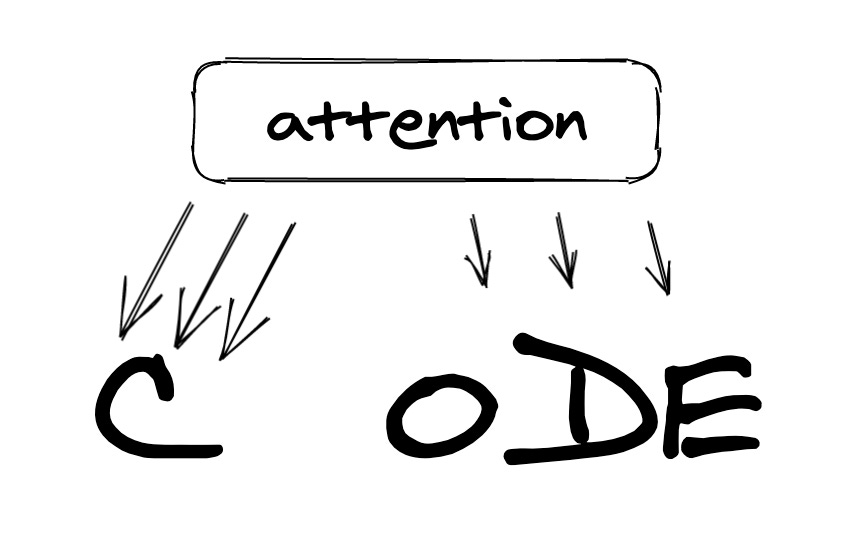
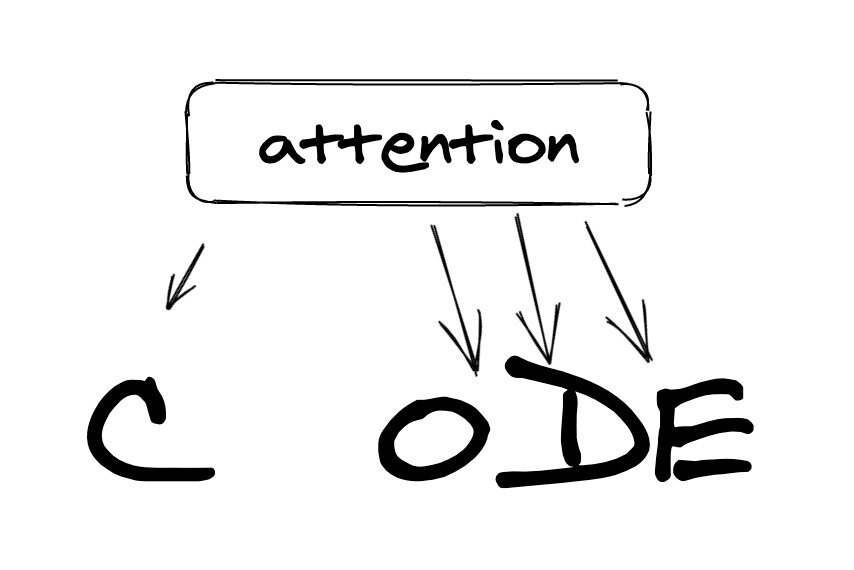
Some returning students have said they have struggled with the "Distill” and “Express” steps of Second Brain (the four step process is CODE: Capture, Organise, Distill, Express). I’ve had this issue too. I think digital minimalism could help.
In the book Digital Minimalism, Cal Newport highlights how times of not taking in new content (i.e. solitude) were key to allowing Abraham Lincoln and Martin Luther King to have space to ponder significant decisions that would go on to change the world.
Not taking in new content could be exactly the space I need to focus more on organising and distilling for expression. This diverts my limited resources of attention from “capture" to the other stages of the creative process I’ve been bottle-necked.
Going from this…
To this.
At the moment I am on the first step of Cal’s digital detox, defining my technology rules. The idea is to have a temporary 30-day blanket ban on optional technologies (e.g. Twitter), so you start from a blank slate when you choose what to bring back again. For optional tech I crucially rely on for work and personal life e.g. email, I have to figure out the boundaries I will put on it so as to limit the tech as much as I can while still being able to do work and attend the course.
One thing I’ve noticed is that the Second Brain practice assumes habits of casual info consumption and capture (i.e. doing lightweight lifts throughout the week rather than heavyweight work all in one day, as Tiago puts it). A 30-day blanket ban very much reduces certain sources of capture for my second brain during the period.
Writing the detox rules for myself is getting me to really face how my mind is attached to the dopamine hits I get from checking social media. Yet I know this constant addiction is an obstacle what i want. To read and process things on a deeper level. To live with more mindfulness. This is why I’m willing to try the detox challenge.
I.
Michaela Coel, when asked whether she thinks TV is failing Black audiences:
"I don't think it's failing. I think that that mentality is one of despair and that isn't helpful. I think we need to acknowledge how far we've come - when I think about many other writers and actors who couldn't even last five minutes and they were a lot more talented than me, they had to go to America or nothing happened at all. So we have to go okay that's great, and so what is happening right now is awesome. How can we make sure we keep being awesome, and we make the awesomeness grow that's an even faster rate?"
Source: Channel 4 Interview, at 18:33
II.
Isaac Morehouse, on the anxiety of obsessing with options:
"Grumpiness can result when you do specific things but obsess about keeping your options open. You’ll always think you’re too good for whatever you’re doing and never fully throw yourself behind it. This will, paradoxically, further limit your options as those around you will tire of your attitude of superiority and belief that, if you wanted to, you could be doing something better. It keeps you from entering into the moment and doing your best work.”
Source: Obsession with options blinds you to opportunities
Have you ever been digitally hung over?
Thank you for reading.
If you’d like, reply to let me know your thoughts. I write back to all.
Till next time,
Abi
No posts
Comments
Nothing yet. Say the first thing.
Sign in to join the conversation.