
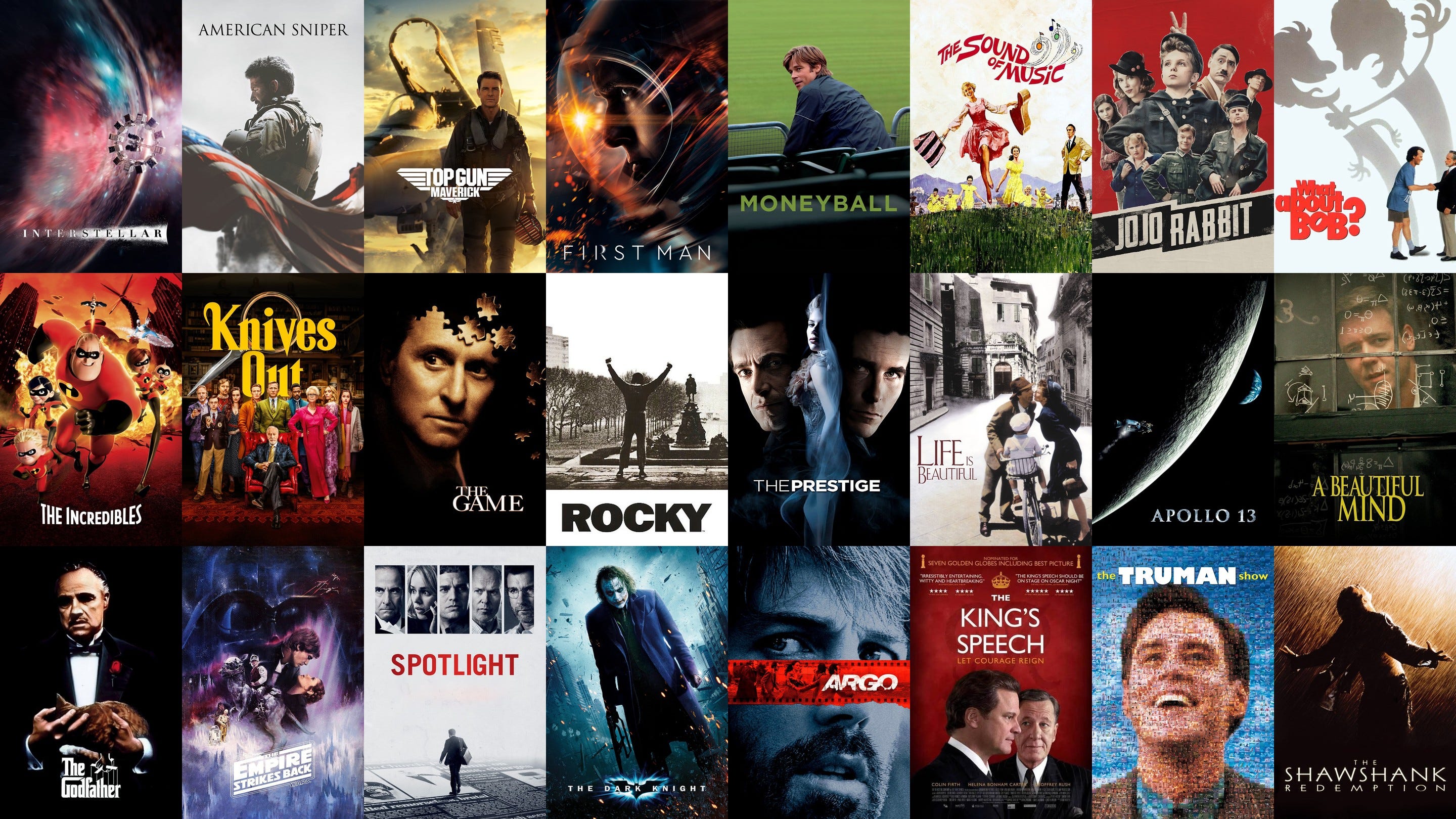
A couple of posts ago, I told you where we were headed. Exploring story and how we are storied beings. A run of posts on the art, the films, the songs, and the places that keep speaking even when no one points them to Scripture.
So let’s start with the movies. But before we get to a specific one, I want to ask the question underneath. Not which films move us. Why any of them can move us.
I pastored for years. Then we lost our son Josiah to cancer, and I stepped away and spent about ten years in film and television before returning to what I believe is my calling and vocation.
That time wasn’t wasted, though. It taught me the craft of story from the inside. I produced movies, a couple I’m still proud of and a few that are, to use a technical industry term, awful. I’ve produced more than fifty music videos, and most of them are tiny three-minute stories: a beginning, a middle, and a turn you might see coming and still not brace for.1
Which means I know how it’s done. And I’m still moved in a dark theater like everybody else.
If it were only manipulation, the guy who was inside the machine would be immune to it. I’m not.
What a good story touches was already in me, long before I ever made one. You can’t manufacture a longing you don’t already have.
We’re storytelling creatures. Not that we merely like stories, though we do. It’s that we don’t think without them.
We remember our own lives as stories. We explain a hard year to a friend as a plot: here’s what happened, here’s what it cost, here’s what I know now that I didn’t know then. Ask people who they are, and if they trust you, they won’t hand you a list of traits. They’ll tell you a story.
That instinct runs deeper than mere habit.
Ecclesiastes says God “has planted eternity in the human heart,” and then names the ache that comes with it: “even so, people cannot see the whole scope of God’s work from beginning to end.”2
That’s us in the theater seat. Wired for the whole scope, stuck in the middle of it, unable to see how our own story resolves. A film hands us, for two hours, the thing life almost never gives: a beginning, a middle, and an ending we get to see from the outside. No wonder we lean in.
Tim Keller put it plainly: the gospel isn’t just the greatest story ever told. It’s the greatest story that could be told.3 Which means every other story that moves us, every rescue, every sacrifice, every undeserved love, every last stand by someone with nothing to gain, is a glimpse of that one true story leaking through.
We don’t love those moments by accident. We love them because we’re wired for the original, and the echo makes us long for it.
Tolkien had a word for the moment a great story turns. Eucatastrophe. Not the catastrophe you brace for, but the good kind: the sudden joyous turn that arrives after all hope is gone, when the characters have no right to expect it. The eagles come.4 The message gets through. The one you thought was lost walks back through the door.
Tolkien argued that the Gospels hold the greatest eucatastrophe ever told, with one quality no other story can claim. This one actually happened.5
His friend C. S. Lewis came at it from the other side, and I’ve stood in the place where he worked it out. The tree-lined path along the water at Magdalen College in Oxford, and out to the Kilns, the house where Lewis lived.6 Addison’s Walk is where it happened.






For most of his life, Lewis loved myths and counted them beautiful lies. Then, one night in 1931, he paced that path with Tolkien and Hugo Dyson until nearly dawn, arguing, and something turned.
What if one myth were also a fact? A dying and rising God whose story actually happened, once, in a real place, under a named governor. Not a beautiful lie. The truth beneath every beautiful lie finally keeps its promise.
So the ache a good movie leaves in you isn’t sentiment. It’s homesickness. You’re recognizing something.
This is worth saying plainly, because a lot of us were handed the Bible as something else. A manual. A rulebook. A collection of moral lessons with those lessons pointedly highlighted.
It’s none of those first.
After all, if you’re drowning, you don’t need someone to throw you a swim manual. You need a rescuer.
The Bible is the story of that rescuer. One sweeping story, moving from a garden to a city, from creation through rupture and rescue toward a restoration that’s still coming. And inside that one great story sit a thousand smaller ones, each a scene in the larger drama rather than a standalone fable.7
Which is the whole reason this works. If the Bible is one true story, and we really are built for it, then a well-made film isn’t a distraction from it. It’s an echo, whether the filmmaker meant it or not. Reading the signs just means learning to hear the echo.
Not by hunting for a Jesus figure in every frame and forcing an allegory the movie never intended. That kind of watching flattens a good film into a tract, and everybody can feel it.
Watch instead for the shape. Here are four questions I bring with me when I watch. Don’t worry, none of them will ruin the popcorn.
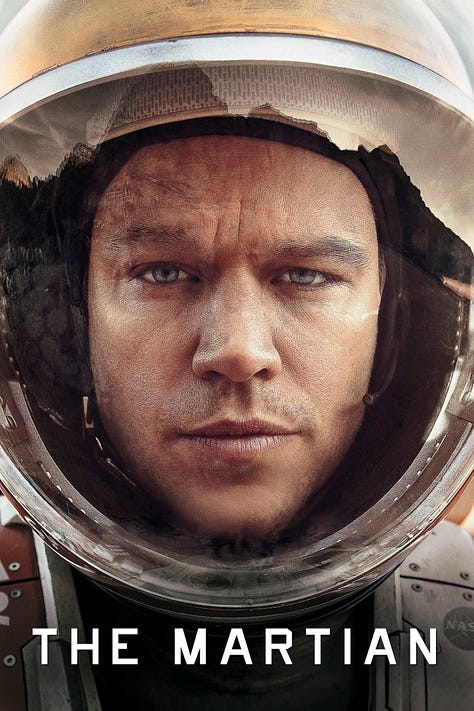

What does this story treat as salvation? Every story that grips us is aching for some kind of rescue. Name the deliverance it longs for, and you’ve usually found its theology. In The Martian, an entire planet reorganizes itself to bring one stranded man home, and we cheer as if his life were worth that much. Because we suspect it is.
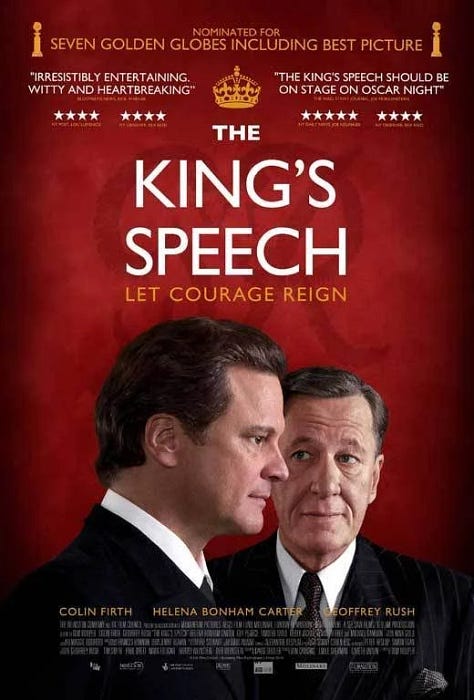
Who pays? The moments that undo us almost always cost someone something. Watch for the sacrifice, and watch who carries it. In The King’s Speech, a king finds his voice only when a commoner refuses to treat him like a king and instead treats him as a friend. The healing comes through relationship, and that relationship isn’t free.
Where’s the turn you didn’t earn? This is Tolkien’s eucatastrophe. Watch for the moment when the story hands the characters more than they deserved, grace arriving as a gift rather than a wage. Little Miss Sunshine spends the whole film on a family of beautiful failures, then gives them a final dance that no one earned and everyone needed.
What ache does it leave, and what is the ache for? When the credits roll, and you’re not ready to move, don’t rush past it. That’s the homesickness again. The question isn’t whether the film satisfied you. It’s what it made you long for, and where that longing points.
That’s the lens. Next week I want to take one film all the way to the bottom, and I’d rather it be one you want to sit in.
So you pick. I’ll drop a poll below with a few of my own favorites in the running, the true stories and the invented ones alike. Vote for the one you want me to read theologically, or drop one in the comments. We’ll look closely at the winner next Tuesday.
Until then, watch something this week and watch it a little differently. And if something catches in your throat, don’t wave it off. It’s pointing somewhere.
Some projects did pretty well. A few picked up Video of the Year Awards from the ACM, CMA, and CMT as well as a handful of Dove Awards. I bring it up for one reason. I can see every trick coming, and the good stuff still gets me.
Eccl 3:11 (NLT). The verse holds both halves of the human condition at once: the planted longing for the eternal, and the built-in limit that keeps us from seeing the whole. A story is the closest we come to seeing the whole scope from the outside, which may be exactly why we crave them.
My paraphrase of a claim Keller returns to in several places, itself indebted to Tolkien’s notion of the gospel as the “true myth,” the story all the great stories have been reaching toward.
A nod to Tolkien. In both The Hobbit and The Lord of the Rings, the Great Eagles sweep in at the last possible moment: to Gandalf, to Bilbo and the dwarves at the Battle of Five Armies, to Frodo and Sam on the slopes of Mount Doom. “The Eagles are coming!” has become shorthand for rescue arriving from outside, exactly when the characters can no longer save themselves. Which is the whole idea of eucatastrophe.
J. R. R. Tolkien, “On Fairy-Stories,” first delivered as the Andrew Lang Lecture at the University of St Andrews on 8 March 1939 and later collected in Tree and Leaf (1964). Tolkien coins eucatastrophe for “the good catastrophe, the sudden joyous ‘turn,’” and in the epilogue argues that the Resurrection is “the eucatastrophe of the story of the Incarnation,” and the Birth of Christ “the eucatastrophe of Man’s history,” with the claim that this story “has entered History and the primary world.”
Lewis dated his move from belief in God to belief in Christ to the days just after. Lewis puts the idea in print in “Myth Became Fact,” in God in the Dock: the story of Christ is “a myth working on us in the same way as the others, but with this tremendous difference that it really happened.”
The reading of Scripture as one unfolding drama rather than a manual is developed in Craig Bartholomew and Michael Goheen, The Drama of Scripture: Finding Our Place in the Biblical Story, which lays it out in six acts, and in Christopher J. H. Wright, The Mission of God: Unlocking the Bible’s Grand Narrative.
No posts
Comments
Nothing yet. Say the first thing.
Sign in to join the conversation.