
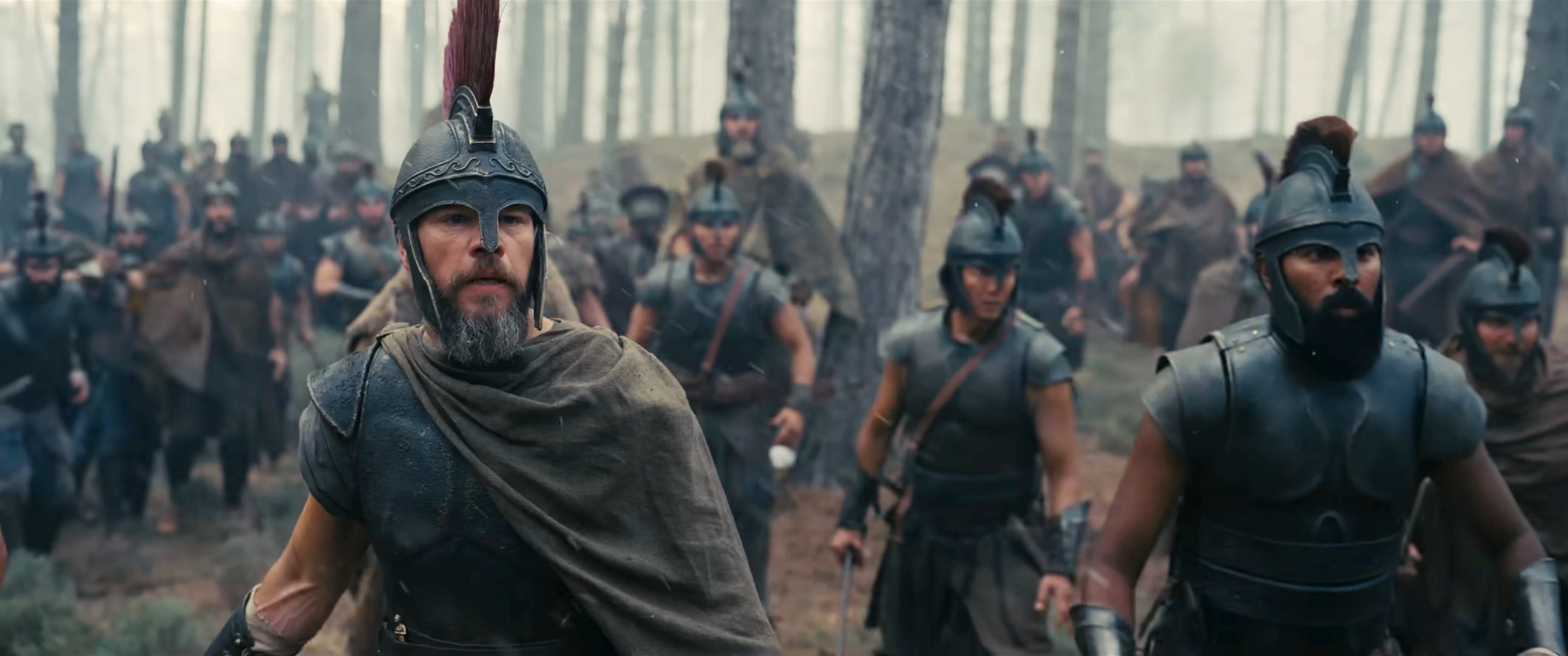
Full disclosure. I was homeschooled, and my mom never assigned me The Odyssey. I suspect Connie didn’t want me corrupted by the pantheon of Greek gods. So I walked into Nolan’s film knowing the highlights and not much else, which turned out to be a gift. Half the internet spent a year arguing about the armor and the accents and what he cut. I didn’t have a dog in that fight.
Last Tuesday we went to Mars. This week we’re going about three thousand years the other direction.
Here’s the thing I didn’t plan. Matt Damon is in both.
Last week the whole argument was that Mark Watney never actually sciences his way home. He does everything right, and it still isn’t enough. In the end, an entire planet turns around and comes to get him. He’s rescued, and he’s received.
Odysseus gets neither. He’s the craftiest man in the ancient world. He built the horse that ended a ten-year war. But nobody comes for him. When he finally drags himself onto his own beach, nobody knows who he is.
I’m going to spoil all of it. So, if you want to come at me for that, I’d say the statute of limitations on a three-thousand-year-old story ran out somewhere around the fall of Rome.
Ask most people what The Odyssey is, and you get a list of monsters. The one-eyed giant, the witch who turns men into pigs, the singing on the rocks, the whirlpool.
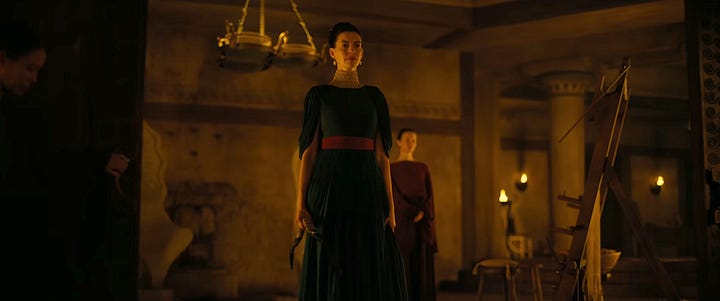
Nolan is very good at those. He shot Cyclops in an actual cave in Greece with a sixty-foot puppet, and it plays like a monster movie in the best sense. And Samantha Morton’s Circe character is the best thing in the film. She doesn’t cast a spell on the men. She kneels down and shapes them into pigs with her bare hands, on camera, no cutaway, all of it built practically.1 It’s genuinely disturbing, and she should win every supporting award there is.
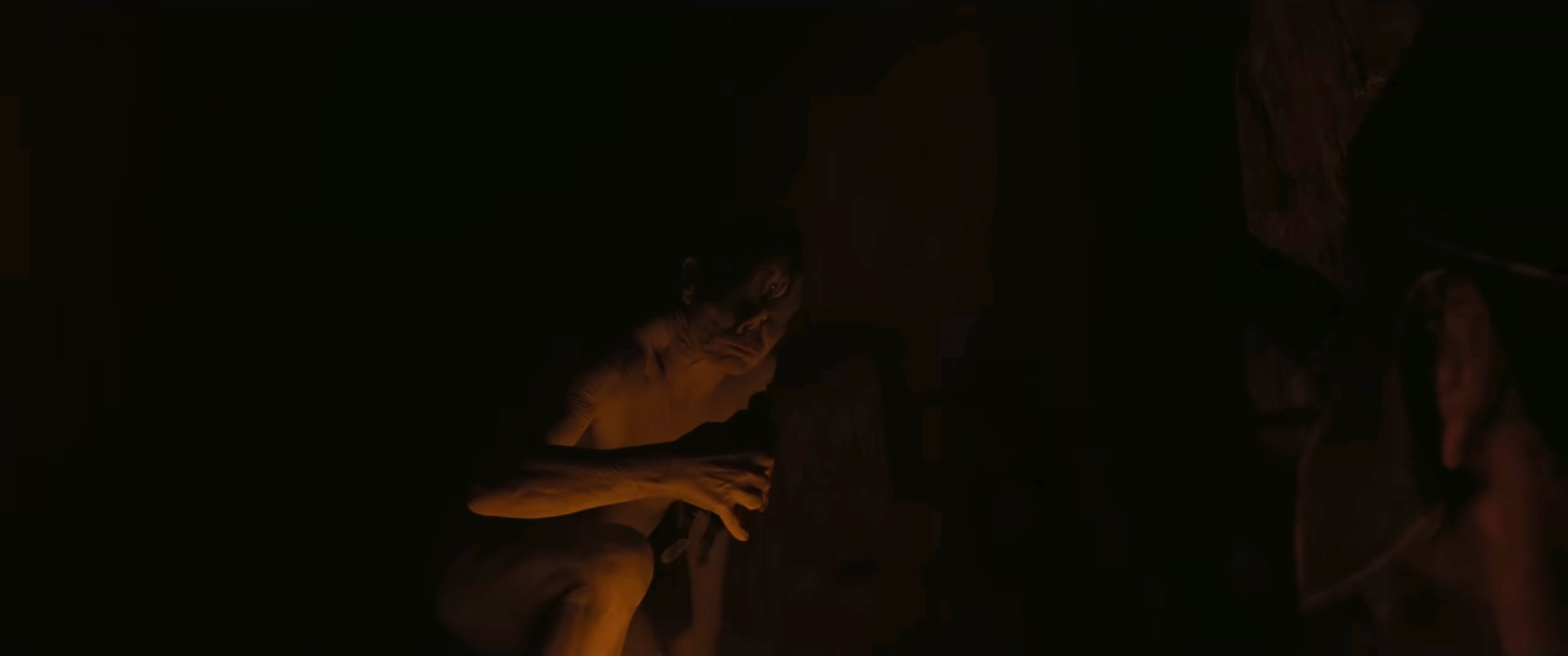
But the monsters aren’t the story. Look at what actually happens.
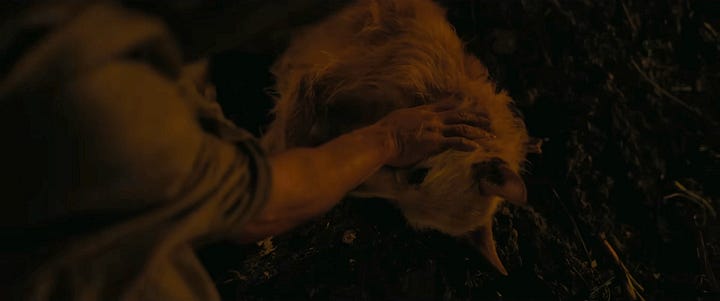
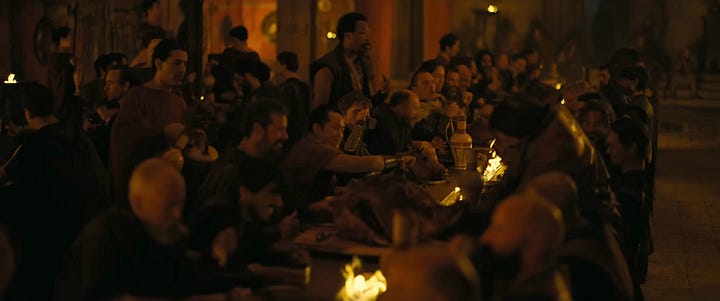
Ten years fighting a war he tried to get out of. Ten more lost at sea. Every man who sails out of Ithaca with him is dead, all of them. He comes ashore on his own island alone and in disguise. Argos, his dog, recognizes him and dies. An old servant knows him, from a scar. Almost nobody else does. His wife doesn’t. His son doesn’t. Men he’s never met are eating his food in his own hall and have been for years.
He has to fight to get home, and then he has to fight again to get in the door.

The poem knows something we sometimes forget.
Home isn’t a location.
Home is where you’re received.
Odysseus reaches the exact coordinates he spent twenty years rowing toward, yet isn’t received there, so he isn’t home. He’s a stranger standing in his own house.
And then Nolan does something Homer doesn’t. He doesn’t restore Odysseus to the throne. Telemachus is crowned king of Ithaca, and Odysseus sets out to sea again, west, in something close to penance, seeking a country the war never touched.
He gets home, and then he can’t stay.
The Greeks had a word for what Odysseus is doing for twenty years.
Nostos. The homecoming, the return.
It was practically a genre all its own. They understood that the getting-back is the harder part of the story.
Then, in 1688, a Swiss medical student named Johannes Hofer took that word and made a diagnosis out of it.
He was looking at Swiss soldiers serving in foreign armies, far from the Alps, who were coming apart in ways no one could explain. No wound, no infection. They stopped eating, ran fevers, wasted away, and some of them died. So Hofer named the disease after the only cause he could find. He took nostos, homecoming, and added algos, pain.2
Nostalgia.
You know the word. We use it for a warm fuzzy feeling now. Old photographs, a song from high school in the car. It didn’t start warm. It started as something that killed people, and the only reliable cure was to send the man home.
The ache to get home was once strong enough to kill you. We turned it into a mood.
Most of us have run this experiment ourselves, without ever going to sea.
We wanted something so badly that we organized our lives around. The house. The title. The car. The position. The city we were sure would be home. And when we got there, it was good. For a while. Then came a quiet thing underneath we couldn’t name.
Not disappointment exactly. Nothing we’d say out loud, because it would sound ungrateful to anyone who watched us work for it. Just a small, persistent: is this it?
That isn’t ingratitude. And here’s what I want to be careful about, because the church has a bad habit at this exact spot: the answer is not that we wanted too much.
A.J. Swoboda has a whole book on this, and one line in it reframed the question for me. “The way of Jesus isn’t a hospice for desire. It’s the hospital for desire where it can be healed, restored, and resurrected to its original design.”3 Not a place longing goes to die. A place it goes to get well.
Which means the problem was never that we wanted a home. It’s what we did with that wanting.
Swoboda, writing about Genesis 3, traces the sequence: they ate what they desired, then they looked like what they desired, then they hid among the things that looked like their desire.
Read that, then watch Circe again. She takes men who wanted the meal in front of them and gives them a shape to match their appetite. In the film, she treats the pig as the honest form, as though the human form had been the costume all along. That’s a sharper doctrine of disordered desire than most sermons manage, and it’s in a horror sequence.
C. S. Lewis worked the other side of it. If I find in myself a desire that no experience in this world can satisfy, he said, the likeliest explanation is that I was made for another world.4
Augustine said the shorter version fourteen centuries earlier: that our hearts are restless until they rest in God. Nothing I add here will improve on that. I only want to add what Scripture does, because Scripture gets more specific than restlessness.
Hebrews describes the people of faith as foreigners and resident aliens, living out their lives in a country that was never theirs. Then it says something easy to move past.
If they had been thinking of the country they left, they would have had the opportunity to return. Instead, they longed for a better country.5
The road back was open. That’s the point. These people are not homesick for the place they came from. They’re homesick for a country they’ve never seen.
And so are we.
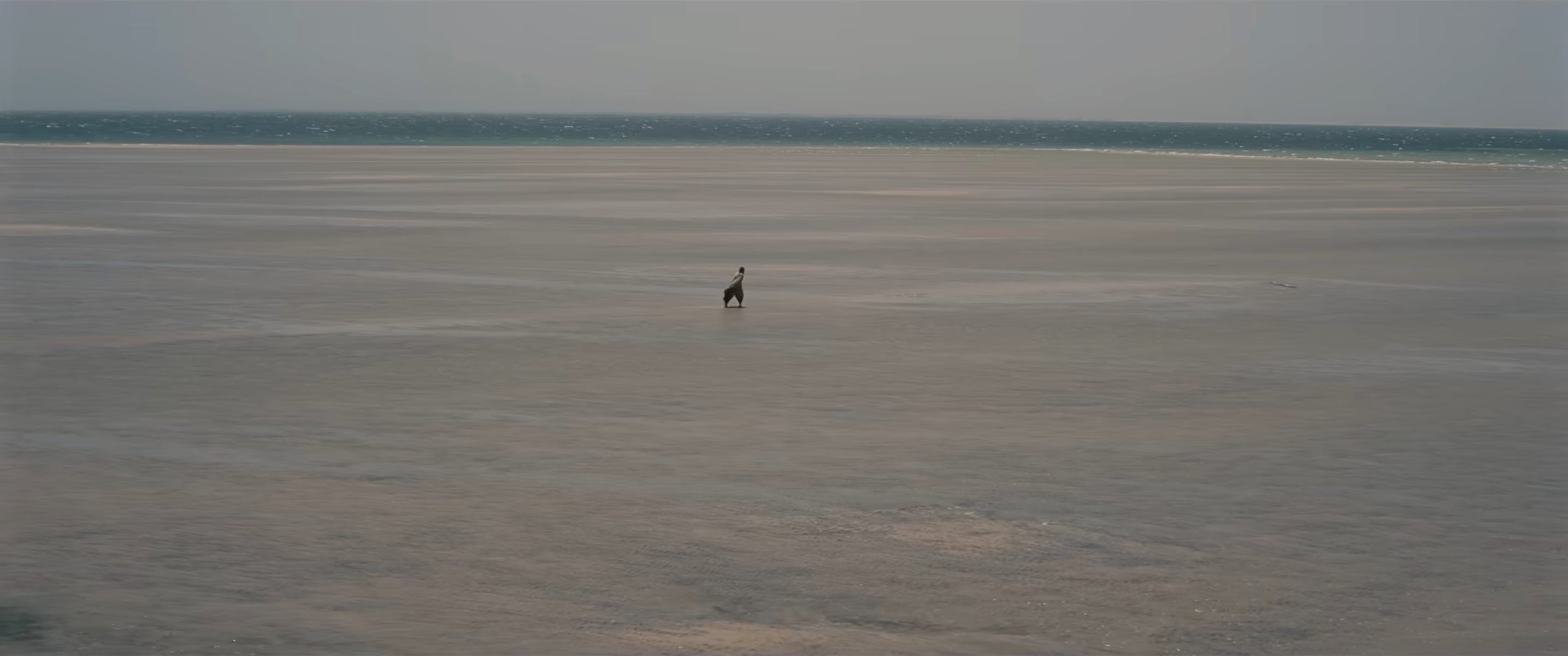
That’s the category Hofer’s diagnosis was missing. Nostalgia, as he defined it, has a past tense built in. The village is behind you, and the cure is back there. This homesickness has no village behind it. It runs in the other direction, toward a place we’ve never been, which is exactly why no place we’ve been can ease it.
And notice how the passage finishes. God is not ashamed to be called their God, because he has prepared a city for them. After a lifetime of being received nowhere, they are received.
The chapter answers homelessness with a welcome.
There’s a scene in the Gospel of Luke that sits right next to Ithaca, and once you see them together, it’s hard to unsee.
Two disciples are walking toward a village called Emmaus. They’re leaving Jerusalem. They’re grieving. They’re done. A stranger joins them, and they tell him about the prophet who got himself killed, and then they say one of the saddest lines in the Gospels.
We had hoped he was the one who was going to redeem Israel.
Had hoped. Past tense. They’re talking about their hope in the same tense you’d use for a house you used to live in.
We all have felt that. We had hoped this job was the one. We had hoped this treatment would work. We had hoped this was finally the season it turned around. Hope moved into the past tense while we’re still standing there.
And here’s the thing. They get to the village, and it’s getting dark, so they ask the stranger to stay. That’s the old law of hospitality Odysseus spends the whole poem violating and being denied.
Paul calls it philoxenia, love of the stranger, and urges the church to pursue it.6 Two heartbroken men practice it on a road at dusk without knowing what they’re doing.
Then, at the table, the guest takes the bread, blesses it, and breaks it, which is not what a guest does. That’s the host’s job. And their eyes are opened, and he’s gone.
Two homecomings. Two men, not recognized, running in opposite directions.
Odysseus is the master of the house who comes home a stranger and has to kill his way back into his own home.
Jesus is the Lord of the house who comes to his own people and isn’t received, so he goes to somebody else’s table and lets himself be welcomed in.
Both men are unrecognized at home. Only one of them is welcomed in and then serves a meal.
What the disciples on that road got wasn’t the thing they’d hoped for. They wanted Israel redeemed, and a Roman occupation ended, which is a real and decent hope but far too small.
Our hopes are sometimes like that. Far too small.
What they got instead was the greater thing under the hope, walking next to them for seven miles. The very Savior of the world. The God of the universe.
Some of us actually got there. We reached the Ithaca we spent years rowing toward, and we’re standing in it right now with a feeling we can’t say out loud, because from the outside it looks like everything we asked for.
I want to let you off the hook. That isn’t ingratitude (though it can be) or a defect. It’s just that we put a weight on those islands that no island is meant to carry or could carry.
And some of us can’t get back at all. The home we’re homesick for isn’t waiting in any form, because the people who made it home are gone, or the family scattered, or the version of us that lived there doesn’t exist anymore.
Years after losing our son Josiah, I know that some homes stop existing even though the address stays exactly where you leave it.
Here’s what I’d say to both. Stop trying to numb the ache, and stop handing it to something that can’t hold it. Those look like opposite mistakes, but they’re the same one, treating a compass like a wound.
Because the turn is this. When we stop demanding that our Ithaca be the homecoming, we’re finally free to love it as it is. The house gets to be a house. The marriage gets to be a marriage instead of a salvation project. The job gets to be good work instead of the verdict on whether we matter. Nothing has to bear infinite weight anymore, and everything gets lighter the moment it’s allowed to be finite.
That isn’t less love for the island. It’s the only arrangement in which the island can survive being loved.
We live in the meantime, in a kingdom that has come and is still coming. The welcome is real now, and we receive it in pieces: a table, a room full of people who know us, a Sunday that briefly feels like the thing itself. Those aren’t the country. They’re the glimpses. One day the glimpses will stop being glimpses.
I’ll be honest about where the film lands for me. It’s around fifth on my Nolan list, and it’s the emotional connection that costs it.7 Anne Hathaway is exceptional, as is John Leguizamo. The scale of filmmaking is astonishing. But the film moves so fast that I never quite believed Damon was aching for home, and this is a story about aching for home.

Nolan has made that scene before. In Interstellar, which is still his best, McConaughey watches twenty-three years of messages from the children he left, and you feel every one of those years land on him. Nothing in The Odyssey costs like that.
And yet.
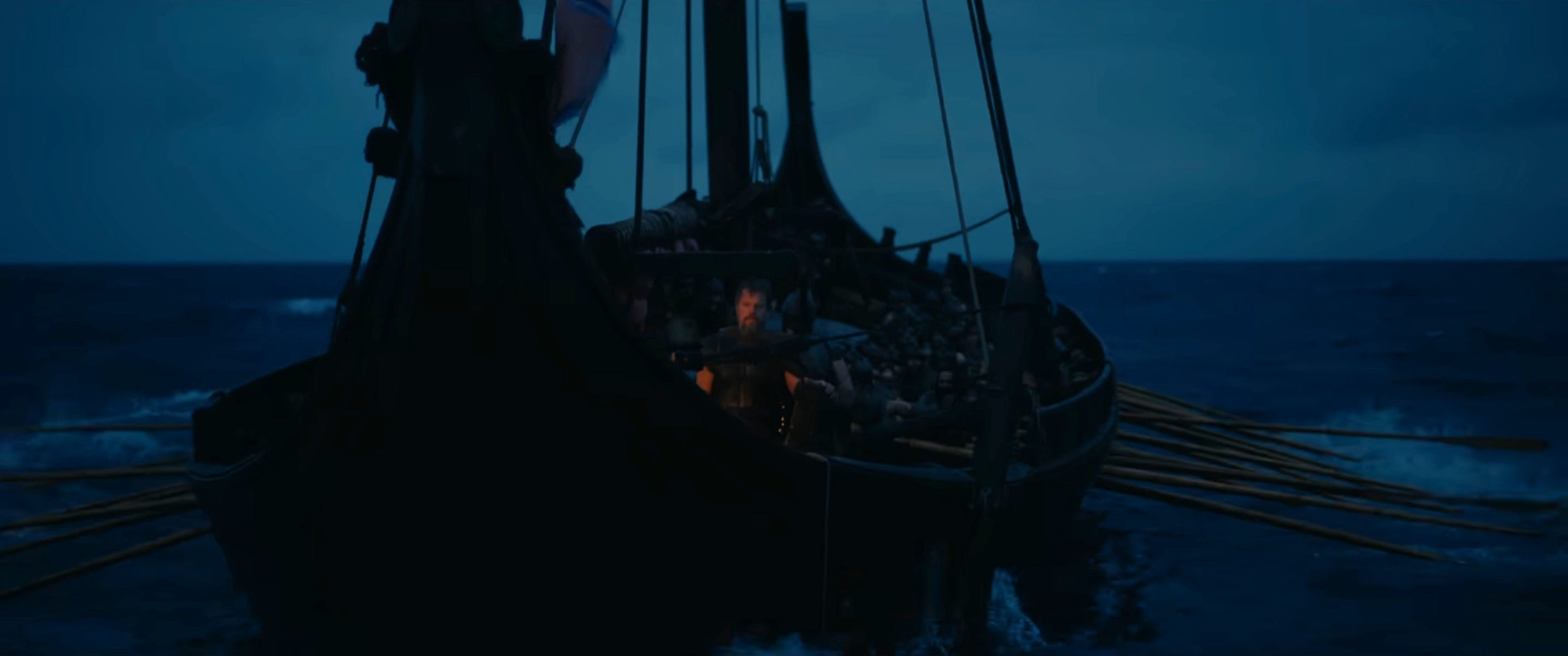
Here’s the real sign to read, and it isn’t in the story. It’s in how the film is made. Nolan shot ninety-one days across six countries. He put the cast on a real hundred-foot wooden ship and made them row it. On a movie that cost a quarter of a billion dollars, there was exactly one sound-stage set. He shot two million feet of film and finished it photochemically, no digital intermediate, prints cut and glued by hand, and it plays in true IMAX in about forty rooms on earth. Damon said it felt more like an expedition than a movie. Nolan said he wanted to capture how hard those journeys would have been.
He took the long way to make a film about the long way. There was no shortcut for him. That’s not in the script, which is exactly what makes it worth seeing. A movie about a man who can’t engineer his way home, made by a director who refused to engineer his way through it.
So go see it on the biggest screen you can. Watch the homecoming that fails. Watch the cleverest man alive get exactly what he asks for.
Then ask what your Ithaca is.
The ache you’re feeling isn’t proof you’re lost. It’s proof you’re almost home.
If you’ve seen The Odyssey, I’d love to know what you think. Drop a comment below.
Morton told Vanity Fair it was all in-camera: “Everything is real and in-camera. That’s movie magic.” Guy Lodge in Variety called it the film’s most indelible performance; Matt Zoller Seitz called her Circe “by far the scariest thing in the film.”
Johannes Hofer, Dissertatio medica de nostalgia, oder Heimwehe (Basel, 1688). Hofer was still a student when he wrote it, which is a decent reminder that the useful words often come from people who haven’t yet learned what they aren’t supposed to notice.
A. J. Swoboda, The Gift of Thorns: Jesus, the Flesh, and the War for Our Wants (Zondervan, 2024). The Genesis 3 sequence I paraphrase after it is his as well. His whole argument is that the Christian problem with desire has never been that we want, but that our wants are bent, and that the answer is healing rather than amputation.
C. S. Lewis, Mere Christianity (1952). The fuller version is in “The Weight of Glory,” where he calls it the inconsolable secret. Lewis has been standing quietly behind this series since we walked Addison’s Walk with him a couple of weeks ago.
Heb 11:13–16. Verse 15 is the hinge and it usually gets skipped in a reading: the road back was open and they didn’t take it. Whatever they were homesick for, it wasn’t behind them.
Rom 12:13. The word behind “practice hospitality” is philoxenia, love of the stranger, and Paul’s verb is closer to pursue or chase than practice. It’s the exact opposite of the word we built out of the same root, which is xenophobia. The Emmaus account is Luke 24:13–35; the sentence I keep coming back to is v. 21.
I keep my lists on Letterboxd, Nolan ranking included, if you want to argue with me about it. And I hope you will.
No posts
Comments
Nothing yet. Say the first thing.
Sign in to join the conversation.