
Hungry For is an ongoing conversation series exploring health, nourishment, beauty, and what we’re hungry for.

Dearest Reader,
As a holistic health practitioner who found my way to this work because of how holistic medicine transformed my own health so long ago, I feel a kindred connection with others on a similar path.
I also take special delight in finding practitioners who work in a whole other modality from my own, and who might use different frameworks and language, yet express an understanding of the body, mind, and heart that beautifully parallels and intersects with Chinese Medicine.
And I love when a healing professional speaks of how she weaves her own humanness and personal practices into her work, and the way she helps others.
Dr Vicki Connop, a clinical psychologist, yoga teacher, and spiritual seeker living in West Auckland, New Zealand, is one of those practitioners.
What’s more, she’s around my age and writes with great tenderness and much wisdom about what some yoga traditions describe as the “forest-dweller” years—something I learned about from Vicki herself when I turned 50. Stretching from age 50 to 75, this is a time to retreat into the forest and a simpler way of being, while at the same time opening to something bigger, through a deepening of both self-awareness and spiritual practice.
“Some days, I feel glimmers of her. A wiser, steadier version of myself beginning to emerge. She has a broader lens on some of the struggles I used to become so tangled with. She’s been through the fire. She’s seen enough pain to recognise the arc, the learning, the impermanence. She’s softer and stronger, humbler, and more outspoken. She’s less afraid. She’s learning, she’s growing. Watching and waiting. Finding her ground. On a quiet day, I can hear her whispering to me from the foothills of elderhood.”
You can find more of Vicki’s beautiful writing and wisdom in her newsletter, The Therapy Room. Although we haven’t met in person (yet!), I consider Vicki a dear, treasured connection and am so excited to share her responses with you.
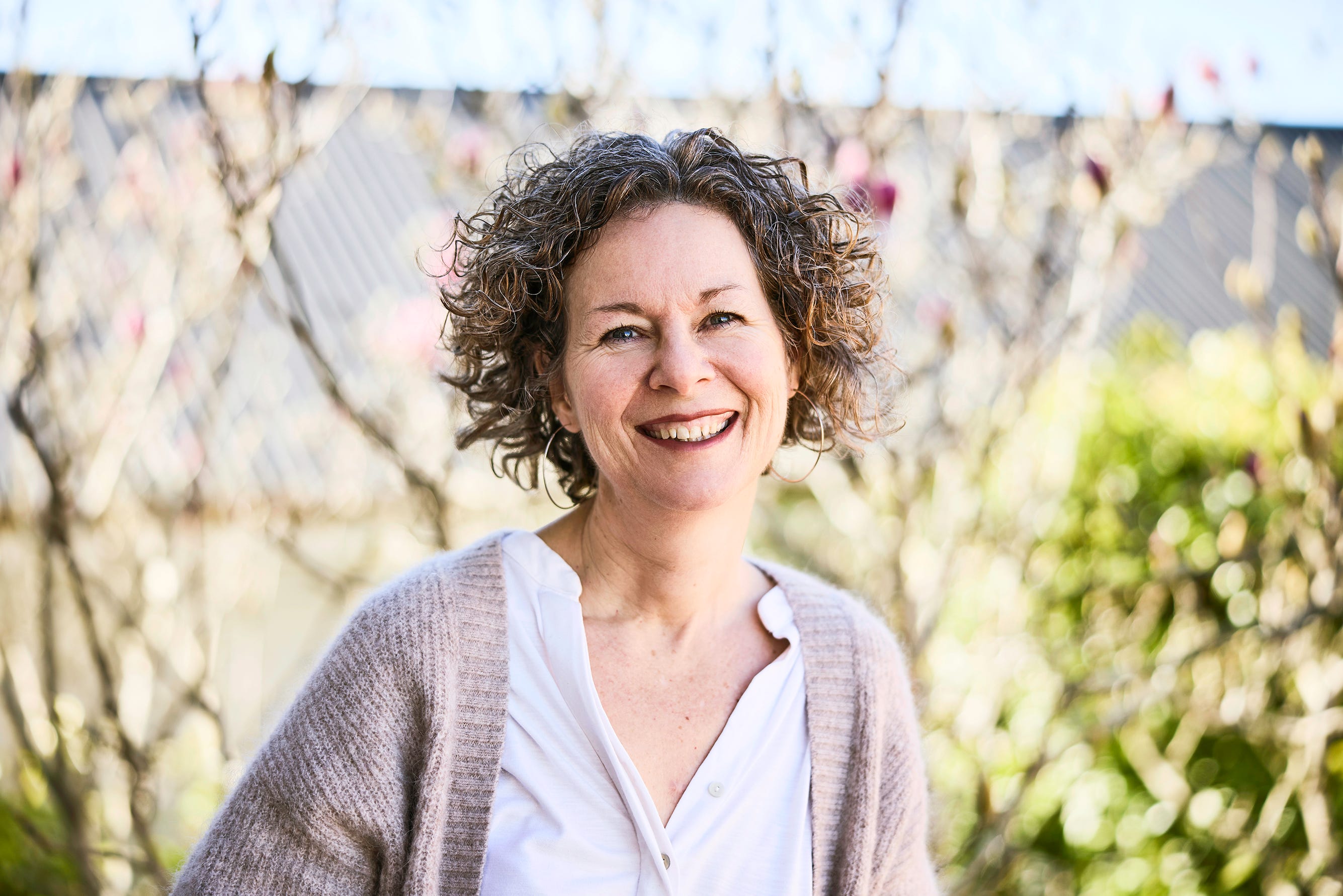

The essence of health, for me, is having access to grounded, spacious energy. I feel most well when I have a balance of good energy and good rest. I’m not talking about the buzzy, spikey kind of energy that comes from caffeine, sugar, and adrenaline. It’s the steadiness that comes from a settled and regulated nervous system—the times when I sleep deeply, and my mind feels clear and alert during the day.
The older I get, the more evident it seems to me that the biggest drain on my energy reserves is an over-activated nervous system, busy mind, and looping thought streams. This depletes my battery faster than any other kind of exertion, and it can take me down rabbit holes with my health if I don’t tend to it.
Those rabbit holes have included being diagnosed with an autoimmune disease in my mid-thirties, after finding my energy crashing in ways that left me unable to function in daily life, falling asleep at my desk, and slurring my speech. To my thirty-something self, this was a devastating blow, but my fifty-something self can recognise that it was also a powerful wake-up call, shining a light on what was out of balance in my life and what needed healing in my internal world.
The journey back towards health has included some major lifestyle adjustments (like changing my diet, and letting go of caffeine and alcohol), and it has also involved a deep dive into therapy to work with unresolved emotional wounds.
In recent years, I’ve begun to redefine how I think about health. I used to think that health was simply the absence of symptoms, but living with ongoing health challenges and patterns that keep repeating themselves has forced me to look at the question from another perspective. Someone wiser than me recently suggested that not everything is meant to heal, some things are here to be our teachers. That sentence stopped me in my tracks. It brought to my awareness how much I had been stuck in a ‘fixing’ mentality that meant I sometimes was in a subtle battle with my body and believing I am falling short if I’m not succeeding in eradicating symptoms. I’ve come to see that an obsession with self-improvement can be a subtle form of violence towards myself, continually reinforcing the message that I am not enough as I am. I’m practicing making space for my body to be imperfect, and my health to be continually in flux, especially as I transition through the menopause years.
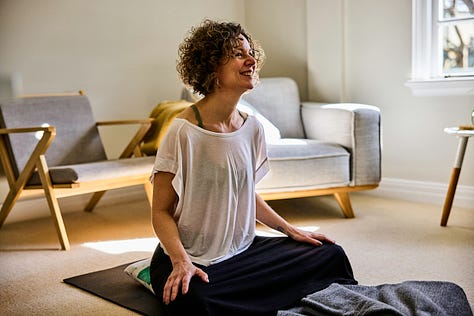
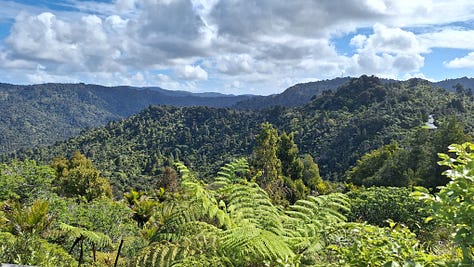
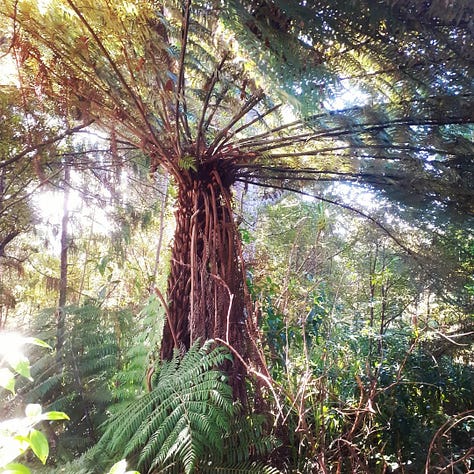
In this phase of midlife, a quiet, simple lifestyle nourishes me the most. And as much as some parts of me resist it, my body thrives on steady routines. This means peaceful evenings and early nights that set me up for restful sleep. It means balancing the time I spend on screens with time outdoors and in nature. It means morning yoga practices and lunchtime walks.
It’s Winter here in Auckland, so right now I am also nourishing myself with warm, hearty foods like steaming pots of dahl and slow-cooked beef. I’m enjoying the daily ritual of lighting a fire and spending evenings with a book, my husband, and my elderly kitty cat, curled up in front of the fireplace.
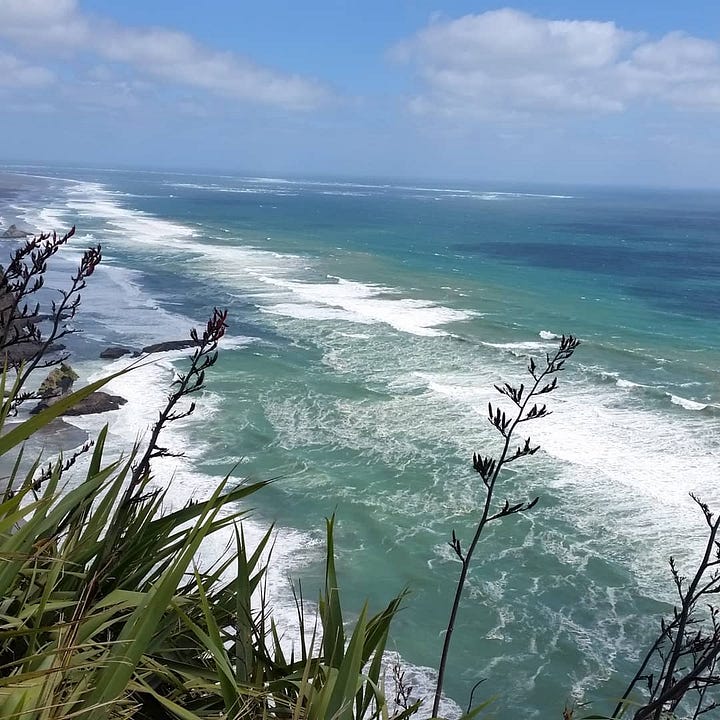
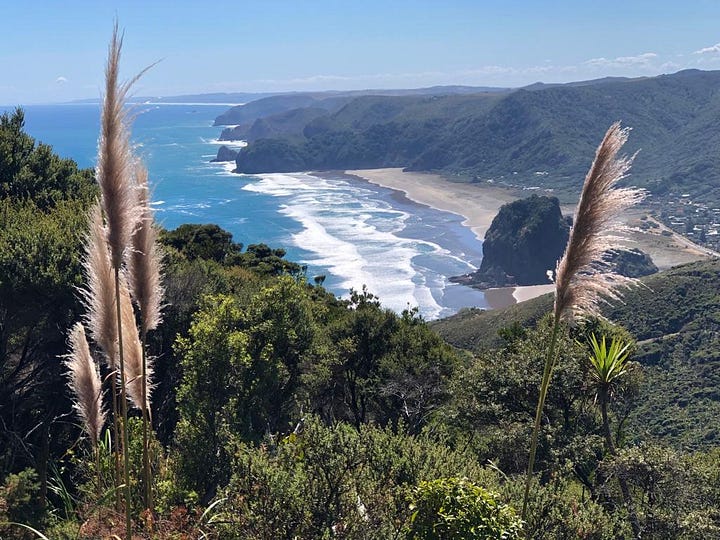
I’m hungry for deep soulful one-on-one connections. An abundance of solitude. Time away from screens. I crave the enlivening energy of Auckland’s wild, dramatic West Coast beaches, where looming cliffs meet dark sands and crashing waves. This feeds my soul like nothing else.
There is also a deep desire for reading and writing, and a strong pull to birth a book or two into the world. The shape and form of these ideas are still rough around the edges, but are gradually coming into clearer focus. I’m trusting that the process will unfold in its own timing.
My work as a psychologist continually reminds me that a beautiful life is not so much about how it looks on the outside, but about how it feels on the inside. We can have all the external hallmarks of ‘success’, but if we haven’t tended to our internal experience, they mean very little.
Living beautifully, for me, means taking responsibility for myself and my mental and physical wellbeing, doing the inner work to make sure I am trying to bring the healthiest version of myself to my relationships, my work, and the world around me. It means grappling with past wounds and hurts, grieving my losses, confronting my rough edges, and growing my emotional fluency. When the inner turbulence starts to settle, and my own needs are tended to, there’s an increased capacity to bring that energy to the world around me.
In a world that seems to be on fire, I think living beautifully needs to include contributing to the collective in some way, instead of simply being a drain on the planet’s resources. For me, that means keeping my consumption in check and working in ways that contribute to other people’s wellbeing. I see trauma at the heart of so many of our personal and global struggles, and working in the trauma healing field feels like the most meaningful work I do.
Living beautifully also means letting go of trying to wrestle life into the shape I think it is supposed to be, and allowing it to unfold the way it needs to. It means releasing the illusion of control and listening instead to the quiet whispers of intuition. My life doesn’t look anything like I imagined it would when I was younger, but I’m learning to trust where it takes me.
Following those threads of intuition has led me to living on the opposite side of the world from my British roots. Twenty years ago, I hopped on a plane from London to Auckland, thinking I was heading out on a year-long adventure. I didn’t expect to form such a deep attachment to the whenua (land), but I found myself growing roots in New Zealand soil and creating a home here. It has offered me a simpler way of living and a deeper connection to nature and spirituality that had evaded my younger city-girl self.
On the most day-to-day level, living beautifully currently means a simple home, with a large unruly garden, and an estuary from the Waitematā harbour flowing past the bottom of the garden. It means looking out on water every day, watching the ebb and flow of the tides, the sunset skies, and the phases of the moon. It means standing on my deck at night listening to the Ruru (owls) and trying to locate which tree they are calling from. It means remembering that I am an intrinsic part of a wider eco-system and that I am not separate from the natural world around me.
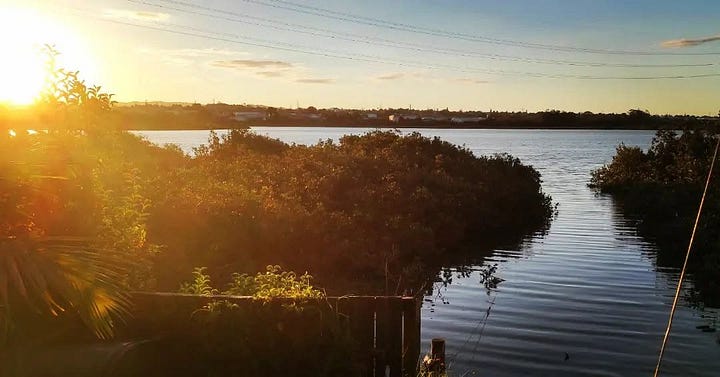
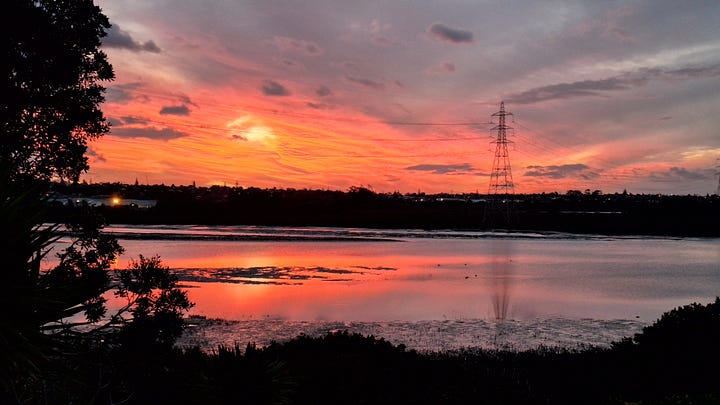
I’m grateful to live where I do, with easy access to mountains, ocean, and rainforest. It saves me on a regular basis, and catches me when I begin to spin. The challenge is to keep slowing down enough to be present for it and appreciate what I have. To not miss what’s right in front of me. There can be days when the sun is setting over the water, and I’m completely distracted by a screen and oblivious to the beauty that’s unfolding outside. It’s a constant practice to keep returning to what’s important.
Thanks so much for the invitation to respond to these questions, Dana. I loved pondering them over the last few days and following the different meandering threads that came up as I sat with them.

Vicki, thank you so much for sharing your beautiful, deeply intuitive life with us. I’m grateful for your way of being in the world, and for the chance to introduce your work to the PERFECT HUNGER community.
If this resonated, a heart ❤️ helps these letters find their way.
Thank you, with love,
Dana

Comments
Nothing yet. Say the first thing.
Sign in to join the conversation.