
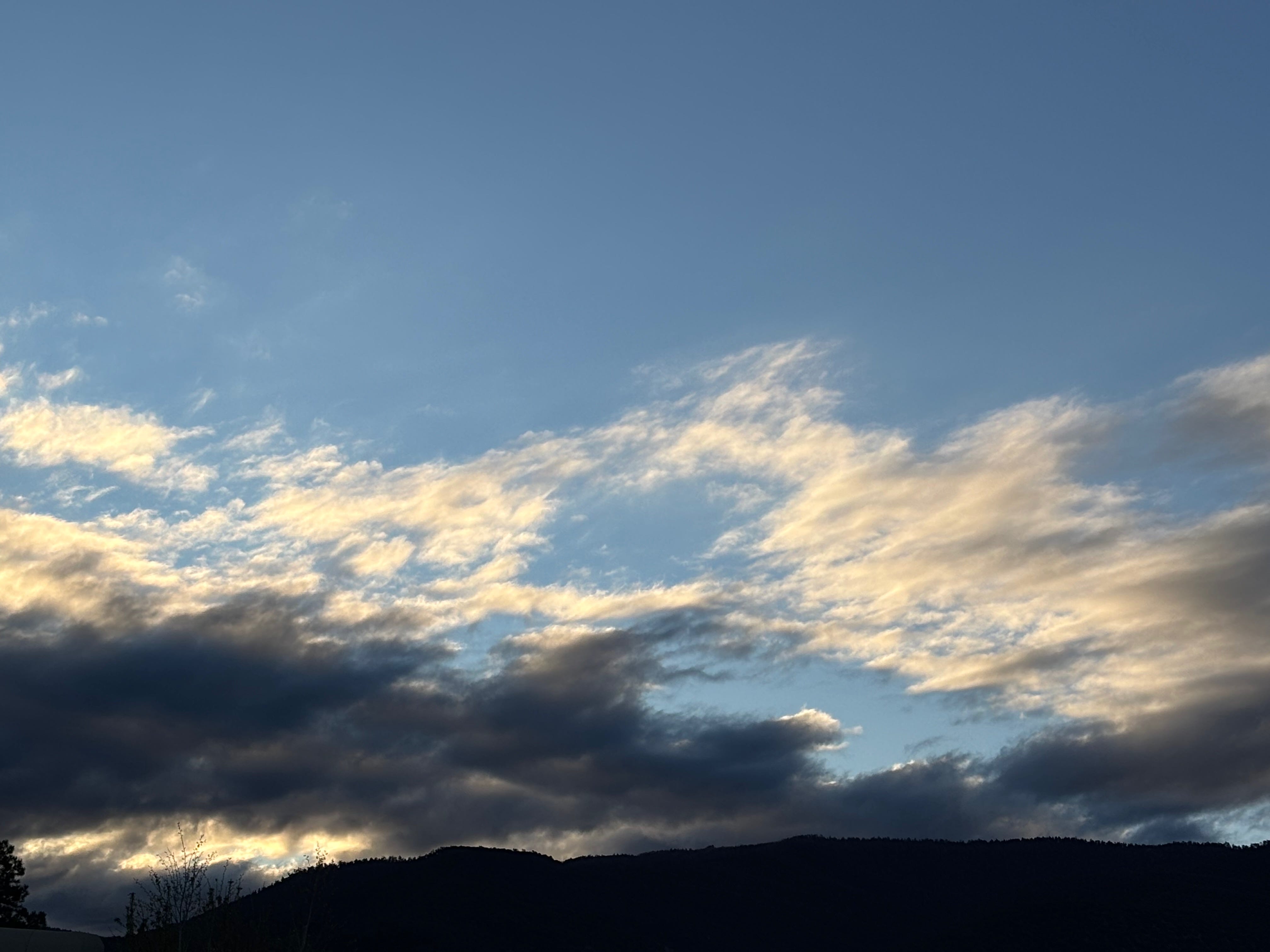
Living in the desert at 7000 feet altitude has its pluses and minuses. The Sangre de Cristo Mountains to the NE, sitting at the bottom of the Rockies, and the Picaris Ridge to the east surround the sage-covered mesa. Mesa that is cut up by a deep canyon where the Rio Grande winds its way. A dramatic landscape full of extremes. From daily big temperature swings to snowy and rainy monsoon seasons, from sticky mud to crusty dry soil. Sun 325 days a year is the big draw for me. At this latitude the sun is warm, but because of the altitude, the sun contrasts with cool winds.
April is the windy season, which means the winds often blow from the Southwest at 20-30 miles an hour. Anything not anchored to the ground and sturdy will rip and blow away. Anything in the windy path dries out. When the snowy season is here, I walk on the mesa. When the windy season is here, I go into the woods. In summer, the mountains offer cool, alpine hiking; wild flowers last into late August.
I don’t mind the extremes. Extremes are an adventure. Adventurous living makes me feel alive, as long as I can retreat into a comfortable home when I want to. They built the houses with the sun in mind, modeling them after the pueblo-style adobe dwellings. Radiant heat tile floors feel warm in winter, cool in summer. You can have a view of the tall peaks and protection from the SW winds with a shady porch, a walled courtyard that protects people and plants. Only drought-tolerant trees and bushes will survive. If the roots have access to water that runs in rivers coming from the snowy peaks and acequias - irrigation channels unique to New Mexico - trees can grow enormous, and bushes will flower. Farming on the mesa depends on irrigation water, which the asequia provides at certain times of the year. The acequias are maintained by people who have land next to the asequia. People open their sluices on a schedule set by the Domo, the chosen asequia master. This irrigation system is not exclusive to New Mexico. When I trekked around Ladakh in the Himalayas, farmers had a similar system of getting water to their plots of land.
With the increasing dryness of the land, farming (and gardening) is becoming more difficult. This year many counties in New Mexico have been declared drought zones. Farmers can apply for assistance to keep their farms going. Even the famous New Mexico chili farms need water!
I’ve been a lifelong gardener, so when I moved to this high desert, I developed vegetable beds and a flower garden. In the last 3 years, I’ve learned that gardening here is a challenge. Late frosts in May will kill your summer vegetable starts. Winds will keep your corn from growing tall. Intense sun will burn your cool-loving veggies. Newly planted fruit trees struggle to survive the nighttime dip into the low teens during winter. Only those that can adjust to an extreme climate will make it. I’ve had to adjust my gardening methods. A sunroom/greenhouse protects my spring starts. Covers over outside vegetable beds protect and shade the cool loving plants and extend the growing season. I’ve learned to be happy with smaller-sized squashes, slower-growing pea-vines. I’ve built garden beds with higher sides to protect the young plants. Now that I’ve solved some of the climate growing issues, I love the challenge, and each year I solve a problem and grow another crop. An adobe wall surrounds my flower garden. Inside it I built the soil from scratch, as the mesa dirt has few nutrients. A drip system guarantees that the flowers and fruit trees get enough water. Yearly composting with horse manure and leaves helps keep the soil rich, loamy, and dark. I love a dark, loamy soil; it tells me I have a healthy base for plants to grow. The riot of colorful flowers growing all summer is my reward for building soil. Year-round salad greens in the greenhouse and protected beds outside provide me with daily, healthy salads. Canned and dried tomatoes from the garden are a repeat delight when I open a jar and taste the sweet summer ripeness.
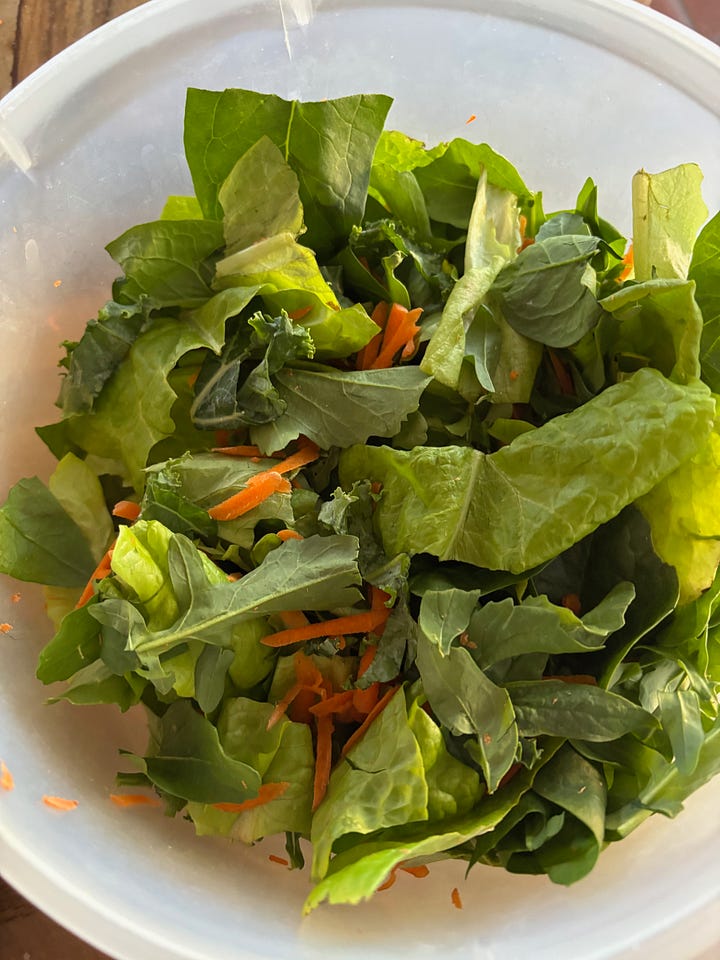
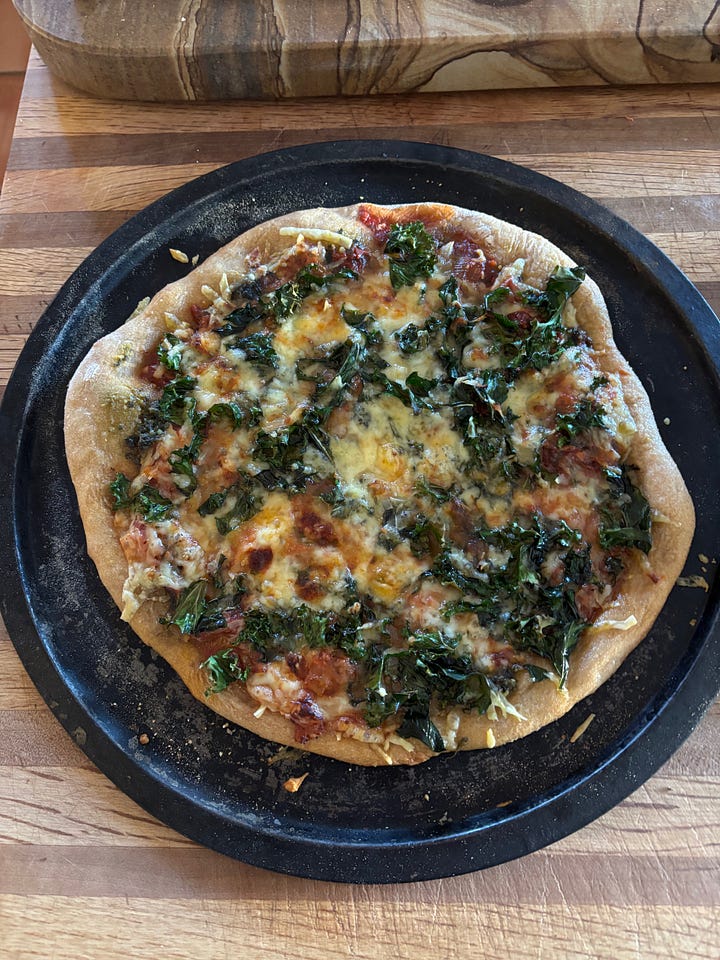
I think about poor people who cannot afford groceries with rising prices. I think about hardworking families who are short on time and cannot garden. We live in a world of too much and not enough. Extremes make life difficult. The extremes of desert gardening have made me tune into the land and the seasons. I feel connected and grateful when the harvest comes in, or when I see the first flowers peek out of the soil. As the season warms, I take my meals on my patio where I am surrounded by surprises and beauty from spring to fall. Butterflies and birds come to visit. Desert quail have their young under the sage bushes and scurry by my window.
The extremes of the desert have forced a rhythm in my life; it is a healthy rhythm of using my body to plant, weed, nurture and harvest with the seasons. Using frozen pesto on a pizza I am making reminds me to put basil seeds in the ground for the summer that is coming. Tasting the sweet tomato flavor in marinara sauce I made last fall, full of herbs, garlic and peppers from the garden make me walk out to the greenhouse and check on the young tomato plants reaching for the afternoon sunlight.
Life is cyclical, and the work of maintaining a home and garden keeps me connected with life in a deep and meaningful way. Walking and hiking the land and the mountains keep me connected to my place in the order of things. Like the ants working and traveling from their anthill, I too am a small being surviving and thriving in a harsh environment. Someone recently asked, “What are 3 things in your day that make you feel alive? “
Today it was the dramatic dawn, the taste of the marinara sauce on my tongue, and the strong wind blowing my hair around while my feet are again firmly planted on the ground. A good day in a place of extremes.
Comments
Nothing yet. Say the first thing.
Sign in to join the conversation.