
Astrology and tarot go together in such a way that it can feel like they were made for each other— or modeled off each other.
The connections we glean between the two are not mere coincidence. While tarot may be give or take 3,500 years younger than astrology, it was highly molded and influenced by it. Every tarot card has astrological connections. From planets and elements to decans and zodiac signs, astrology is subtly laced throughout the major, minor, and court cards.
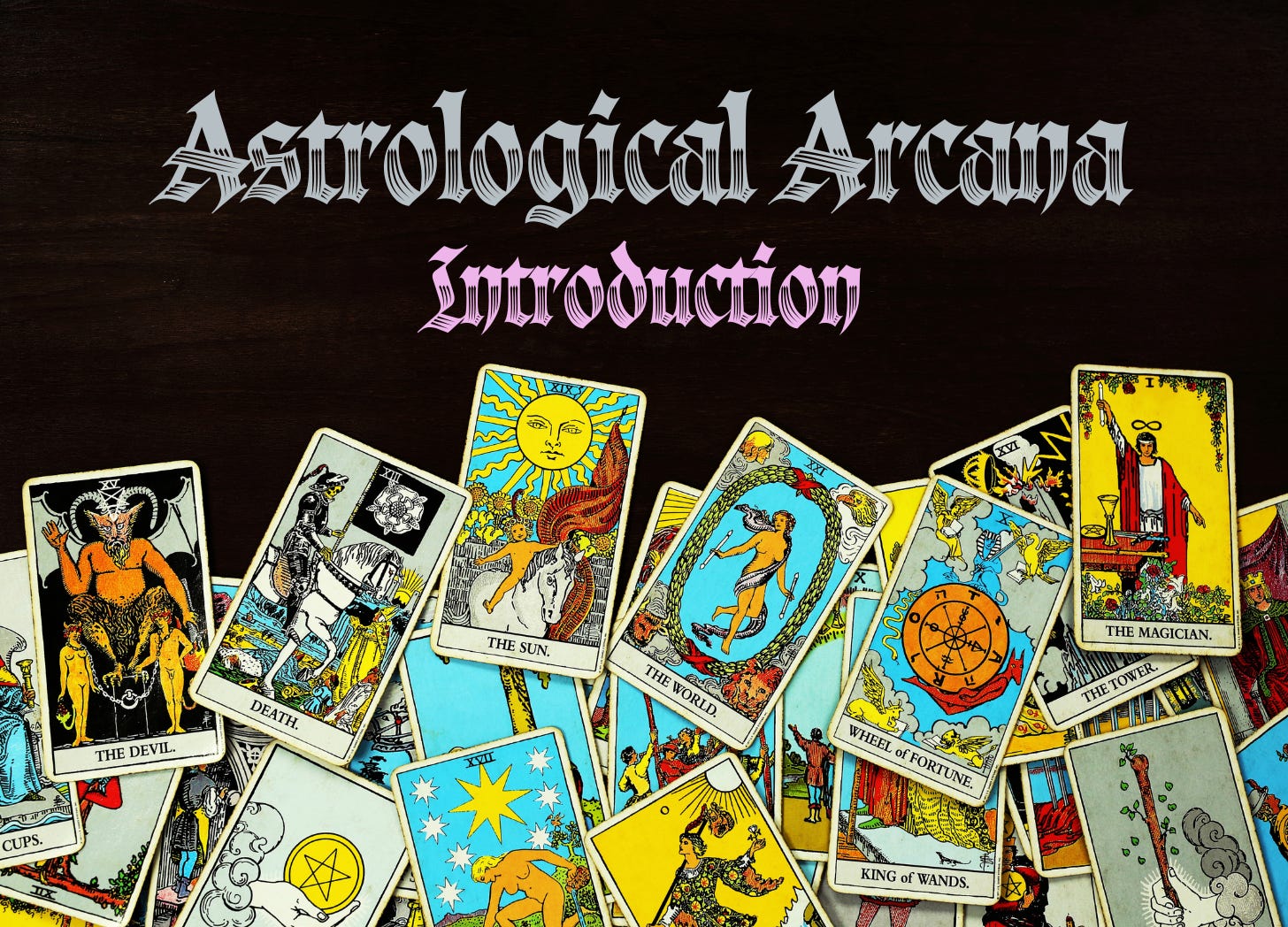
Knowing the astrological implications of tarot can help us understand both modalities in new and exciting ways. The occultists that brought these cards to life infused them with astrological magick and meaning. The cards can be used in a solitary manner, but I find they burst with greater significance when surrounded by the knowledge of their foundational creation.
This is a kickoff article to a series where I take a journey through the major arcana. It’s an exploration of astrological connection, but also symbolism and myth. Whether you use tarot or not, exploring the astrological connections within the cards can help strengthen your astrological framework. Knowing that ‘The Magician’ is Mercury’s card or that ‘The Moon’ is actually the card of Pisces, not Cancer, will reveal greater astrological insight through examining why these choices were made.
A traditional tarot deck is comprised of 78 cards— 22 major arcana and 56 minor arcana. The minor arcana can be further broken down into 40 pips and 16 court cards. The pips and courts have deep astrological significance, just as the majors do. If you’re familiar with astrological decans, then you may have seen tarot card associations with them. Those associations are via the pips.
Definition📖
Arcana- a deep secret or mystery
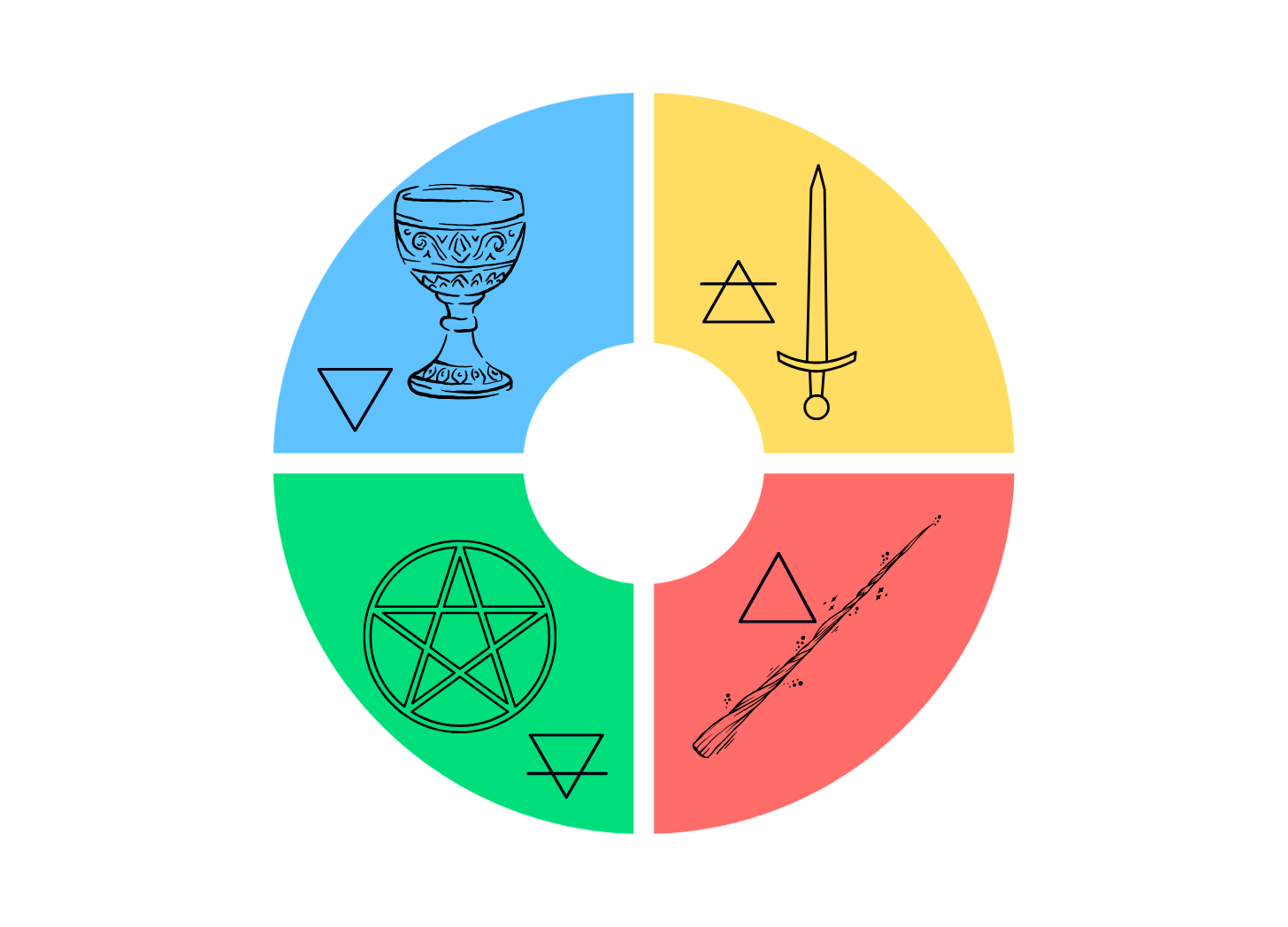
There are four suits within any given deck, which equate to the four elements— Wands/Fire, Pentacles/Earth, Cups/Water, and Swords/Air. The entirety of the minor arcana is rooted in these elemental foundations. Each element has 10 numerical pip cards, beginning with Ace (1) and ending with 10.
The elements also play an important role in the astrological significance of the court cards, as each tier of the court relates to an element. The court cards are often overlooked when it comes to their astrological meaning, but once you know that the Queen of Wands is the watery part of Fire, it’s hard to go back to viewing them under any other light.
While it may be easy to ascribe modern numerology to the elemental pips, it’s actually little bit deeper than that. The 10 pip cards we see for each element relate to the 10 sefirot nodes on the tree of life. The RWS and Thoth decks were heavily influenced by the practice of Kabbalah, especially the Thoth deck. I won’t be covering Kabbalistic magick here, but it’s important to note that the tarot we use today, and any deck modeled off of the RWS template, utilizes Kabbalah, magick, and astrology. Even if you don’t adhere to these traditions, it’s important to know that the cards were born from them.
There are two main tarot decks that I pull these astrological correlations from— the Rider-Waite-Smith (RWS) deck and the Thoth deck. Both have connections to the Hermetic Order of the Golden Dawn, as the creators of each deck were known members of the occult society. These are the only decks I personally use and I stick fairly fiercely to the original iterations— meaning no spin-offs or recreations inspired by the original art.
The reason I adhere so strictly to these two decks and the original artwork is because it’s purposeful.
There is nothing within the illustrations of the RWS or Thoth decks that is by accident or simply artistic expression. Every seemingly random bird, water source, or slanted tree is deliberate. The colors were painstakingly chosen to evoke subconscious feeling and stir a deeper connection to a place we don’t readily have access to, yet can’t seem to ignore.
If you’re wanting to follow along with these articles and use your deck to study, I do recommend the RWS or Thoth deck. Both follow the same astrological structure (minus a few changes in the Thoth deck— because Crowley) and both are gold standards in the world of tarot. I’ll be referencing the cards themselves and showcasing symbolism, so it might be helpful to have them on hand.
If you have a beloved deck that differs from these two, feel free to use it regardless. It might be an interesting exercise to see if the original symbolism and astrological significance shows up in unexpected ways. Plus, it’s your life— do whatever you want.
Each major arcana card will have their own article since they carry a lot of weight, the court cards will be grouped by suit, and I haven’t decided on the pips yet. I may group them as one large post, break them in half, or save them for when I write about the decans— we’ll cross the bridge when we get there.
This examination is not about understanding the significations of the cards themselves, but rather, their astrological correlations. Although, I have a suspicion that one will beget the other. If my time as an occultist has taught me anything, it’s that everything is connected.
We’ll begin where all good journeys begin— with a Fool’s ambition.
See you soon.
Comments
Nothing yet. Say the first thing.
Sign in to join the conversation.