
I pulled the trigger: submitted my cover sheet, logline, synopsis, personal statement, treatment, and three-minute trailer for my science fiction story SKYBOARD to the #FutureVisionXPRIZE competition.
A recent rules change gave me permission to post the unlisted link to my social media accounts prior to the formal announcements, so congratulations all you constant readers, you get a sneak peek!
I’ve been teaching and advising and mentoring and judging student work in various arts for decades. One of the evergreen bits of advice I dispense is also one I find challenging to follow:
When you present one of your works, don’t point out the flaws. Let the work speak for itself. Many of us have a tendency to babble uncomfortably, and to anticipate and try to soften the blows of criticism by getting there first. Don’t do that.
If someone remarks on some aspect of your work that was an accident, or an unsuccessful (to you) patch attempt, or anything less than deliberate perfection, simply smile and say, “Did you like that?”
Let them assume you meant it to be like that. Channel your inner cat, just after doing a backflip off something not-so-stable. Cultivate an attitude of quiet confidence in your work. Fake it ‘til you make it.
I’m not going to point out all the flaws in my short film. It’s far from perfect, but I made it solo on zero budget in a very short time. I stand by the original source material, the novella that I hope to turn into a feature film.
What is clear from the short film is something that is more-or-less clear in any similar work. If you’re creating with less than your full production team, the work is more of a sketch than a finished rendering. As an art form, filmmaking is like architecture in that a single work can require the input of a wide range of arts and crafts, a significant dedication of resources including time and money, and a delicate and often energetic dynamic balance between the lead creatives. Skyscraper or tentpole release, you’re budgeting hundreds of millions of dollars and coordinating a huge number of people with wildly varying skill sets and working processes over years of effort. Even putting up a garage/making a short film requires resources. If you don’t have those people, that money, and that time, the work will show it.
What you can hope is that your sketch will carry the vision, the ideas, the potential through to your audience. With luck, someone in that audience connects to the vision in your sketch, and can put you in contact with the resources you need to reify that particular dream.
As writers, we carry full responsibility for laying the foundation of the vision. Without that clearly communicated vision, a film is just an assemblage of eye candy. Whatever rewrites or doctoring happen later can only follow from our first words. Whatever medium is used to express the vision, with few exceptions, the first iteration is words on the page.
Science fiction as a genre often requires a more strenuous exertion of the imaginative faculties. Any story based in the actual past or present can rely on contemporary records for details of location, wardrobe, sets, props, makeup, lighting. Not necessarily so for Sci-Fi: you may have to imagine, then describe adequately, something or somewhere that has not yet existed in our shared reality. “The door dilated.”
That imaginative yet accurate description is even more important if your work is to be adapted for screens big, small, or handheld. You as writer have to put your inner vision on the page in words sufficient for the VFX supervisor to figure out how to create a convincing illusion of your imagined reality, and do it within the proposed budget. You need to have a large and flexible enough vocabulary to put a unique dream into the language of three dimensions of lumber and plaster and paint and lumens and pixels.
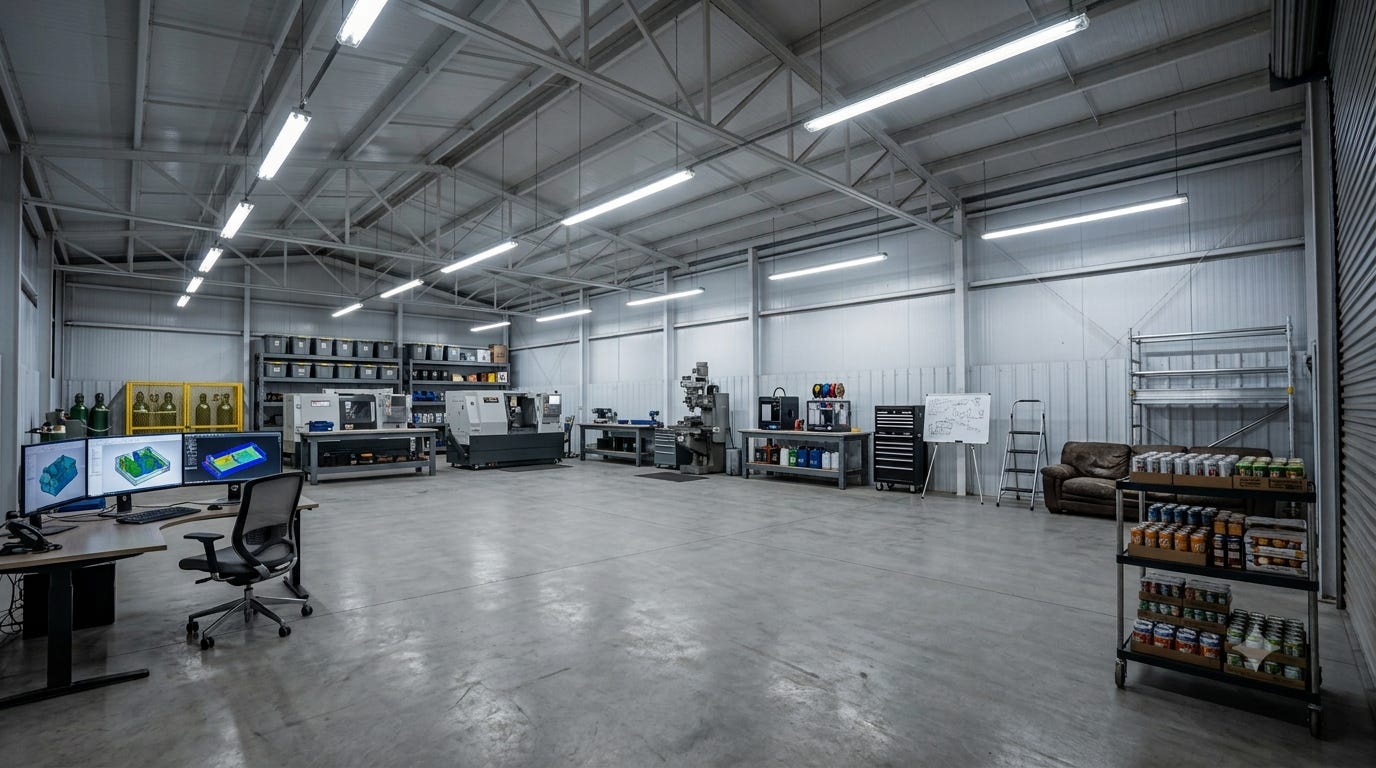
I prompted the above image for my film with two precise sentences describing camera lens and angle and position and lighting in cinematographer’s jargon, then adding the contents and layout of the mad scientist’s laboratory in science and engineering jargon. First try, no changes.
If your descriptive prose extends to the full sensorium, don’t assume you have to cut out anything in adapting for the screen. A lush description of humidity, or dust, or smells, will give a cinematographer or gaffer cues to build visual signals for those non-visual sensations.
Your words also have to attract and engage on-camera talent. Actors have their own language. You can write poetry for the dialogue, but your stage directions had better be simple, declarative, clear and unambiguous. Actors will take your dialogue tags as suggestions rather than holy writ, but please give them something better than the infamous, “KIRK reacts.”
One of the more interesting (in the ancient curse sense of that word) things I learned in the production of my short film is that human acting performance is lost in AI generated clips. This shouldn’t be surprising, as the same happens when you ask AI to write an intimate romantic scene with a basic prompt. It’s like an episode of The Goes Wrong Show, but with truly lame community theatre players instead of experienced comedians. I swear to you, my prompts were nothing like the performances generated. The horrors I edited out... I guess the AI was trained on overacting for the cheap seats.
In live-action filmmaking, you as writer can rely on experienced human actors to bring their own interpretations and depth of human experience to the role. If you the writer are trying to AI-generate an engaging human performance, you’re going to have to write much more specifically (and burn a lot more tokens) to get anything like a distributable output. I’m not saying it’s not possible—we’ve come a long way since Jar-Jar Binks—but it’s not easy, and right now it’s neither cheap nor fast. The hard-won skills of a director who can pull award-winning performances out of a cast are not being replaced anytime soon.
Competent writer, experienced director, professional actors, ingenious VFX supervisor. That’s my minimum team. For now.
No posts
Comments
Nothing yet. Say the first thing.
Sign in to join the conversation.