
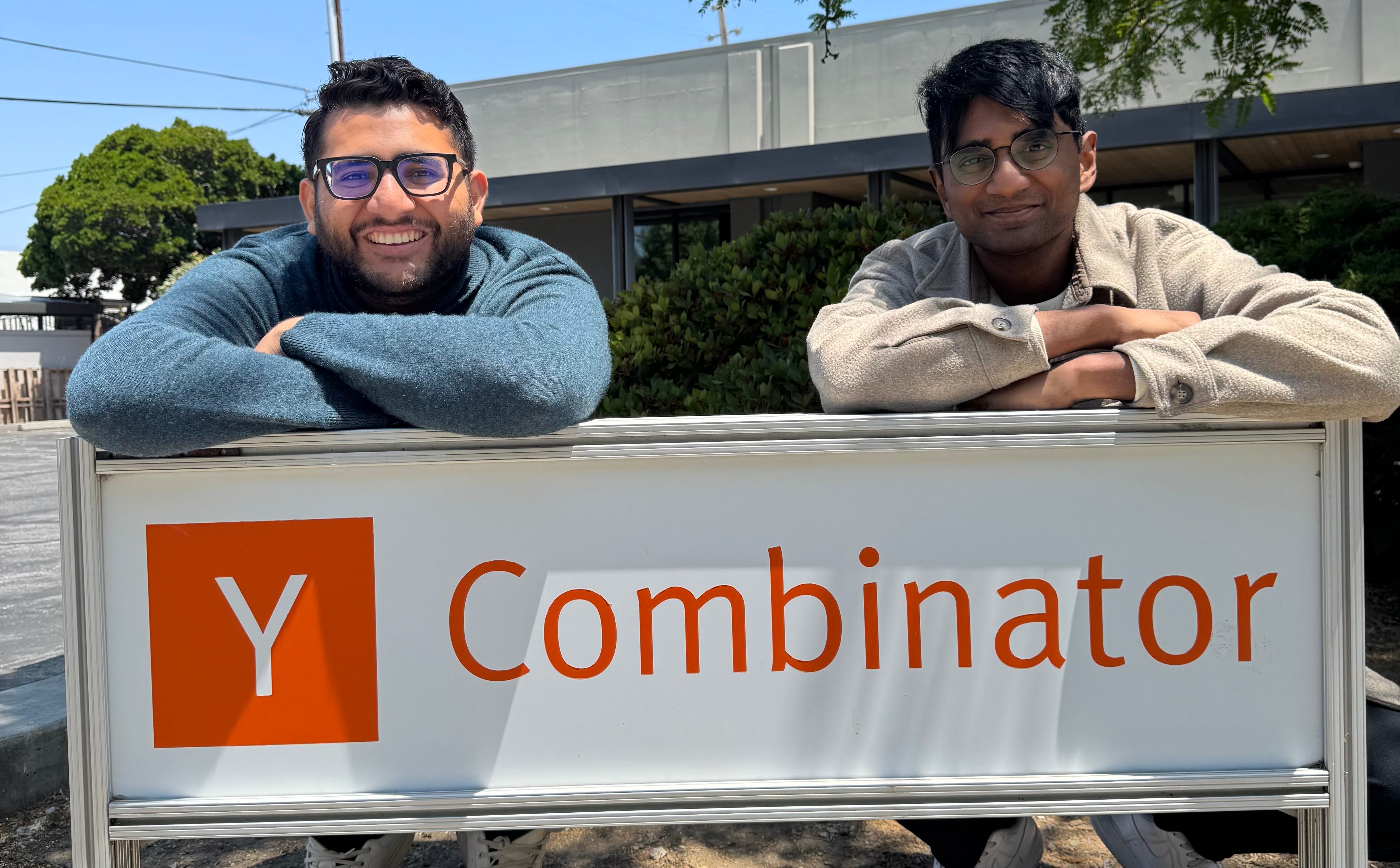
Written by Daivik Goel, CEO & Co-Founder of Shor (YC S25). Shor is international payroll made for founders. If you are a founder hiring contractors or employees internationally, let’s chat.
Everything in this guide is my personal opinion based on my own experience applying to and going through YC. These are my own ideas and observations, not influenced and independent of any partners and staff within YC today. The latest version of this guide will be here: Notion
Like many of you, I held a dream of getting into YC for a long time. As a kid growing up in Canada, Paul Graham’s essays connected me to the world of startups and fed my fascination with this wonderful, weird place called Silicon Valley. They gave me real conviction that building companies was exactly what I wanted to do with my life. I’m blessed to say I had the opportunity to do that.
That said, I spent a long time looking at YC the wrong way. I saw it as the ticket to living out that dream and eventually realized you can and should choose that path either way. Twisting your business to fit what investors want is a losing game. Learning to communicate what you’re actually doing well to them isn’t. Most of this guide is about the second one. If you have a dream, live it out regardless of whether some investor believes in you.
So why does this guide exist? Because every application cycle, people reach out asking for the same advice. Rather than rehashing it every time, I figured I’d spell it out here once.
One thing to set expectations. This is not a step-by-step guide for the YC application. There are plenty of those. This is what I’d actually tell a friend over coffee. What I learned across my experiences, what I think the partners are really looking for, and why the founders who try to game it usually don’t get in. With that said, I hope this is helpful.
Deciding to do a startup should be the easiest hard decision a founder ever makes. If getting into YC is the difference between you or your cofounder deciding to do one, just save yourselves years of pain and heartbreak and don’t. I know that sounds mean, but this shit is constant nails on a chalkboard, with an unexplainable drive to make things work veiling a slow dance into madness.
The $500K you get from YC won’t change that. I know it seems like it will, but trust me, you are far better off working at Big Tech, earning a great salary, and getting a great vest. You’ll earn far more than that guaranteed and likely have a far happier life.
But if despite all that you still want to do a startup, do one either way. YC isn’t going to magically teach you how. You’ll only learn by doing. Treat YC for what it is, an accelerator, not a trigger to start, the way most people do. If you are smart enough to get a big tech job and brave enough to do a startup, even if all this stuff goes sideways, I can almost guarantee you will have a great life even if you bootstrap your way through your savings (speaking from personal experience), and will learn a shit ton in the process.
Getting rejected from YC tells you almost nothing about whether your company will work. YC takes less than 1% of applicants. Plenty of billion dollar companies were rejected, applied again, or never applied at all. If you don’t get into YC, do not take this as a sign that your idea or company is not worth working on. Let customers, the market, and your own personal conviction decide that.
On that note, getting into YC also doesn’t tell you if your company will work. All it means is that you successfully convinced a partner there’s a 5% chance of you figuring it out. That math doesn’t magically change the moment you get in.
There is a cottage industry of YC application advice out there. This guide is part of it. Read it once, take what’s useful, and close the tabs. The single biggest pattern I see in first-time applicants is over-optimization, where founders end up writing answers that sound like a YC application instead of sounding like themselves.
I have applied 4 times to YC. The first three times were the most beautiful, optimized applications I could’ve made. And I never even got an interview. My last application was started an hour before the deadline and submitted with a minute to spare. And guess which one we got the interview for. I’ll get into why I think this was the case in the next part, but to this point, this isn’t necessarily a process you can or should game, and reading guides like this a bunch of times won’t necessarily change that.
Recommendations might not matter as much as you’d think either. In my 4 apps, 2 of them had recommendations from top founders in YC and I didn’t get a sniff of an interview. The last one we did last second, we had 0 and got in. I’m sure recommendations matter at least to surfacing your application to partners, but optimizing for this probably has diminishing returns.
Part of the reason you should continually apply is YC has a lot of partners that swap in and out of each batch, each with their own ideas and things they’re looking to invest in. Although I am sure they have some framework in the background to try standardizing, the reality is certain partners will index on things that others won’t. So a lot of this is about which partner looks at your application and decides to take a chance on you. That likely also comes down to how much the school and age of founders matters in the selection process. I know there has been a lot said on this subject but it’s not something you can really control, so I’m not sure why to even worry about it. Their selection criteria is up to them. I’ve seen founders of all ages and from all types of schools, so it’s definitely not a complete blocker either way.
The takeaway is simple. Stop trying to engineer the perfect application. Apply, be yourself, and roll the dice.
Most founders wait until they feel ready to apply. I get the instinct. You want one more month of traction, one more pilot signed, one more line of revenue on the chart so you can put it in the box and feel good about it. But ready never comes. The version of your application you’d submit today is genuinely better than the hypothetical one in your head three months from now, because this one actually exists.
The biggest thing to remember at the earliest stages is that a pre-seed or seed investor isn’t investing in $100K or $200K of ARR. They’re looking for multi-billion dollar outcomes. So you landing $5K or $10K of ARR isn’t helping you clear some hypothetical threshold you have to hit to get an interview. Your ARR is just there to help validate the broader narrative of where you think this company can go.
So just apply. The partners know you aren’t a polished company at the application stage. Apply this batch. If you don’t get in, apply the next one. Then the one after that. I got in on my fourth try. My cofounder Avi had applied 13 times before that, both on his own ideas and on ones we worked on together, and he’d never gotten an interview either. We got in together on our last-second, rushed, worst-quality application. Take from that what you will. Quite honestly, the application is also useful because it makes you reframe your potential business in the simplest terms to others. That’s actually quite valuable and is worth the couple hours of your life it costs you. Basically just upside with very little downside.
This is honestly more good general startup advice than YC advice but I cannot stress this enough. At this stage, partners are underwriting a team. They are not underwriting an idea, a product, or even traction. The question on every application they read is the same: do I believe these specific humans can go and build something massive? Everything else is a tiebreaker.
Your idea will probably change. Your traction is fragile. But the founders are the founders. That’s why the application puts so much weight on backgrounds, why the interview spends a disproportionate amount of time on your story and how you and your cofounder met, and why YC will sometimes take founders who don’t even have a clear idea yet.
YC doesn’t expect you to know a lot about your business necessarily, but they do expect you to know a lot about your cofounder and your dynamic. The longer you’ve known each other, usually the better, but it also comes down to having clear boundaries and responsibilities amongst one another. Most startups don’t die of homicide, it’s suicide, and by far the most common reason within YC is cofounder breakup. Your YC app ideally has some inklings of why you guys can work together and make it through. So when you’re talking about your cofounder relationship, it’s best if you talk about what you’ve worked on before, how you delegate responsibilities, and how you resolve conflict. Also, in YC’s eyes, two technical founders is better than one technical and one non-technical. Ideally both people contribute to building product.
But don’t pick a cofounder to optimize for YC. Pick a cofounder because you actually believe you guys can do it. YC will just amplify the stakes of whatever you are doing up a level. You need to have a baseline of competence and trust amongst you. Whatever holes in your working relationship will come out and rear their ugly head. It’s better to nip that from the onset itself.
And if you are solo, that’s fine. In the age of AI, it makes sense there will be more. But you have to show why you’re cracked and how you plan to plot over the holes that being a solo founder has. They will definitely ask, so have a good answer.
The YC app is not the time to break out the today-I-learned-in-business-school verbiage. How do you communicate in the simplest terms what you do, why your customers need it, and the validation you’re seeing for that today? You will start to learn that the YC partners are professional bullshit detectors, and the more you avoid the bullshit and get to the root of what you’re doing, the higher your chances of getting an interview. Adding unnecessary noise only hurts you.
Which is true for the other side too. The goal of this application isn’t to explain every minute detail of your product or your vision. It’s to get the partners curious enough that they want to learn more. That’s it. It’s a binary outcome and your goal with the app should be just to show them enough to get them across that line.
The same principle applies to the founder video. Don’t overproduce it. Don’t read off a teleprompter. Hit record on your phone and talk to the camera like you’re explaining your business to a friend. The partners aren’t grading the cinematography. They’re trying to see if you sound like a real person who knows their problem cold.
YC (and me) are big believers in staying in San Francisco post batch to continue working on your company. The density of founders, investors, and capital here is unmatched, and the flywheel only spins for you if you’re plugged into it. We can get into whether or not this should be the case, but I guarantee if you say you aren’t going to be in SF on the app, it reduces your chances right there. The partners want to know you’re going to be where the action is and if you are serious about your startup, it makes sense to be here. Exception being, of course, if you’re building a localized solution (Robinhood for India, etc.).
By far the best validation you can show is a customer (even just one) actually using your product. But after that baseline, I don’t actually think it’s the number of customers that matters. It’s not an ARR game as much as it comes down to their dependency on you.
If your customers are choosing your 2-week barely functioning prototype to run actual critical business functions, that is much better than a cookie cutter startup with a hot start. I think this point irks a lot of people because they think they have reached a threshold of revenue or customers, so they should surely get an interview. But that’s not necessarily what the partners index on.
That was the biggest difference between my other apps and the one we got in on. The last app was by far the worst one in terms of quality and polish, but we had a customer who had a real dependency on our 2-week prototype and basically refused to let us take it down despite all the bugs. That, coupled with the obsession we brought to the work, is what I think made all the difference.
Congrats, you got an interview. Welcome to the most stressful couple of days you probably have ever had.
The YC interview process is pretty well known at this point. You get about 2 business days of notice, you sit down with a few partners for 10 minutes, they walk you through your application, and you find out the same day whether you got in or not. That’s it. That’s the whole thing.
Whatever you do, don’t bullshit in the room. The partners can smell it from a mile away, and once they catch you, you’re cooked. Instead, accept your limitations. Try your hardest to understand your business fundamentally, the holes in it, the risks, the things that could kill you. They will poke at all of it. That’s their job.
But here’s the thing most founders miss. The partners aren’t betting on your limitations. They’re betting on the upside. They want to know if you can handle hard questions, not whether you have every answer. Acknowledging a real hole and showing you’ve thought about it is way better than fumbling some half-bullshit response trying to pretend it doesn’t exist.
This applies to your prep too, not just the room. Don’t spend your two days running mock interviews and trying to optimize your answers. Spend that time actually understanding your business better. The founders who try to memorize answers always sound like they’re memorizing answers.
I covered cofounders in Part 2 already. But the interview is where this dynamic specifically gets put under the microscope. It’s one of the topics partners will poke at hardest, and one of the easiest places to fumble. Be very clear on who does what and why you chose that division. Why are you CEO? Why is your cofounder CTO? Why did you split it that way instead of the other way?
If you can’t answer those in a sentence each, you have homework to do before the interview. Vague answers here are a huge red flag. The partners want to see that you’ve actually thought about this, that the division reflects real strengths rather than titles you grabbed off a startup template, and that there isn’t a fight waiting to happen the second things get hard.
This ties back to what I said earlier about what investors actually care about. Partners are looking for multi-billion dollar outcomes. So when they poke at something, don’t just defend it on its own terms. Pull the conversation back up to the bigger picture. How does this thing, if it plays out, get you to a billion dollar outcome? Help them see it. That’s what they actually care about.
Michael Seibel was notorious for throwing curveballs in interviews. Weird hypotheticals, random questions, things that had nothing to do with what was on your application. It might happen to you. There’s no preparing for the specific curveball, by definition. That’s where you have to trust your gut and your intuition, lean on the work you’ve already put into understanding your business, and just answer like a real person. There’s no script for this part.
Share enough to answer the question. Don’t keep going on and on. If they want more, they’ll dig deeper, and they will. The partners get way more information out of you in those 10 minutes than you’d think. The cleanest answers are short and specific. Let them pull the thread if they want it.
The partners are chill. This is supposed to be a conversation, not an interrogation. At the end of the day, these are former founders who are genuinely interested in what you’re doing. Treat it like that. Be present, be yourself, and remember they want to invest in good companies.
That said, this part is also partner-dependent. Some partners run a relaxed conversation. Others go harder and pressure-test you. Both are normal. If you draw the second kind, that’s part of the test, not a sign something is going wrong. They aren’t trying to trip you up. They’re trying to figure out how you’ll handle the next 10 years of being a founder.
Congrats, you got in. Or you didn’t. Either way, your goal is to close the process as soon as possible and get back to building your company. That’s what matters. If you didn’t get in, apply again, like Avi did 13 times. Or don’t, and keep building. Both are fine. The startup doesn’t care.
I will say one of my personal issues with the startup game in the last couple of years is that it’s starting to suffer from big tech syndrome.
“I got into YC, so now I am an elite startup founder. I raised a seed round so that must mean I am doing something right.”
It’s become a status game, basically using these logos and brands to help conflate your ego amongst your peers and veil real insecurities in your business or yourself. Eventually that will rear its ugly head. Unchecked egos kill startups. It’s not a matter of how, it’s a matter of when.
The best thing you can do for yourself and the success of your business is ignore the noise, keep things simple, and just make progress. I guarantee with or without YC, you will see a lot more progress than those unfocused founders who have “solved startups” by getting into YC. I think the great founders would’ve figured it out regardless.
Personally, I want to be known for my work. I don’t want to be known as the guy who got these investors. I want my investors to be known as the guys who invested in me. I aspire to build a company and a brand that’s far bigger than any of them. Reward their trust with large outsized returns and the honor of saying they funded a generational company.
Time will tell if that happens. There are no guarantees in life and especially not in the startup game. But I will be damned if I don’t try my hardest.
So if there’s anything to take away from all of this, it’s to stay humble, continue iterating on the process, and keep making progress. Look at YC as the accelerant it is, rather than a ticket to the lottery. Your investors are optimizing for billion dollar outcomes, and you should be too.
And I think the time you spend in the game makes more difference than anything else I see. Founders who stick in it through thick and thin tend to always figure something out at the end.
And that will make far more of a difference than whether you get into YC or not.
Check out this Podcast Episode!
You can also listen on Spotify, Apple Music, and Google Podcasts
In this episode of Building Blocks, we sit down with Emre Ertan, co-founder and co-CEO of Cenoa, a borderless super wallet revolutionizing how people in emerging markets access digital dollars.
Previously the CPO/CTO at Getir where he scaled the engineering team from 80 to 400 people, Emre shares his journey from a small town in Turkey to Silicon Valley, and how that experience shaped his vision for democratizing financial access globally.
He discusses Cenoa’s explosive growth in Nigeria (50K+ signups in first month), their innovative approach to simplifying blockchain technology for everyday users, and his perspectives on building compliant fintech products across 40+ markets.
Thanks for reading,
Daivik Goel
Comments
Nothing yet. Say the first thing.
Sign in to join the conversation.