
If you follow the news, you probably know that drones are changing the way nations & non-state actors wage war in the 21st century.
Combat drones have defined the Russo-Ukrainian War that began in 2023, with both sides relying heavily on drones in their fight over eastern Ukraine. (The Daily Concept has covered this previously.)
And drones have also played a major role in the ongoing war between the U.S. & Israel against Iran, with forces on both sides reportedly using swarms of unmanned autonomous vehicles (UAVs) to attack enemy military positions and civilian infrastructure.
Today’s newsletter is about a type of drone that you likely haven’t heard of: underwater drones, or uncrewed undersea vehicles (UUVs).
Remotely operated underwater vehicles (ROUVs), which are controlled by a human on land or on a boat, have existed for decades.
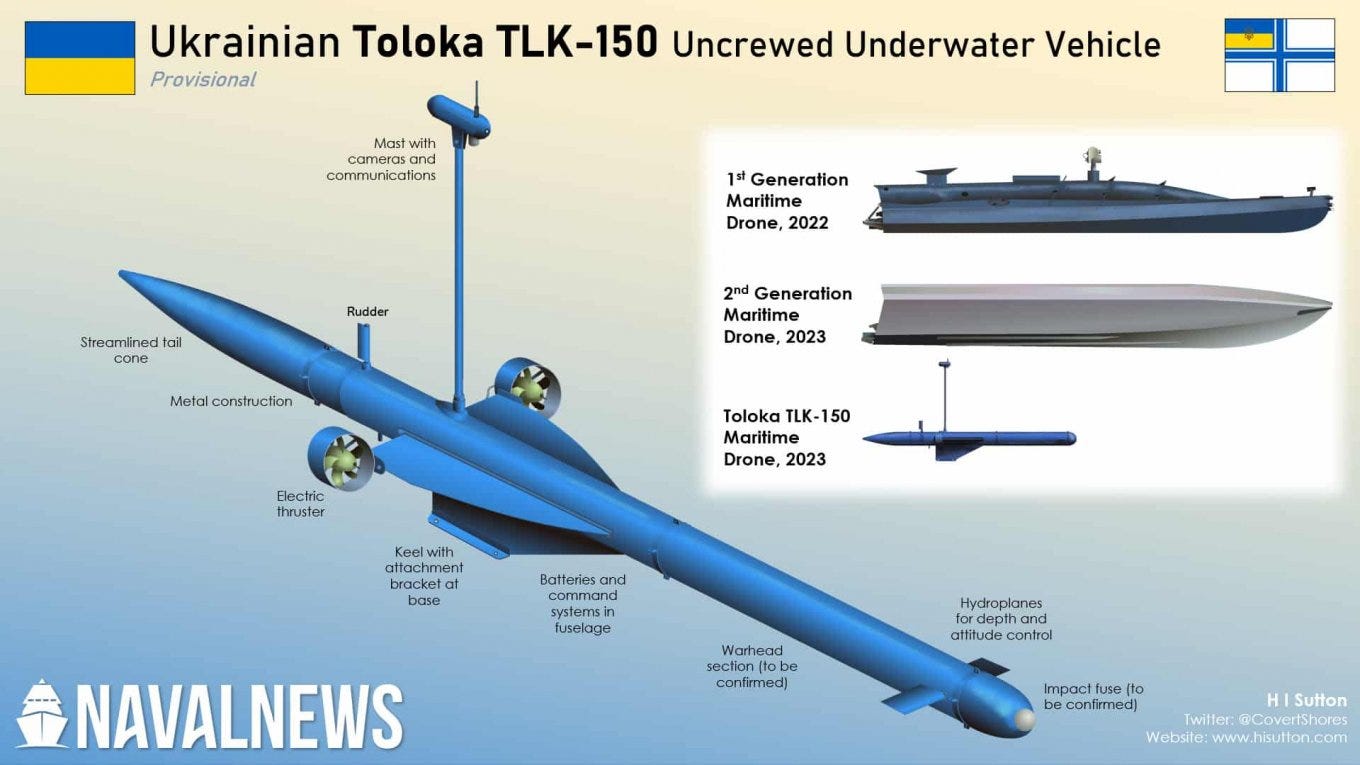
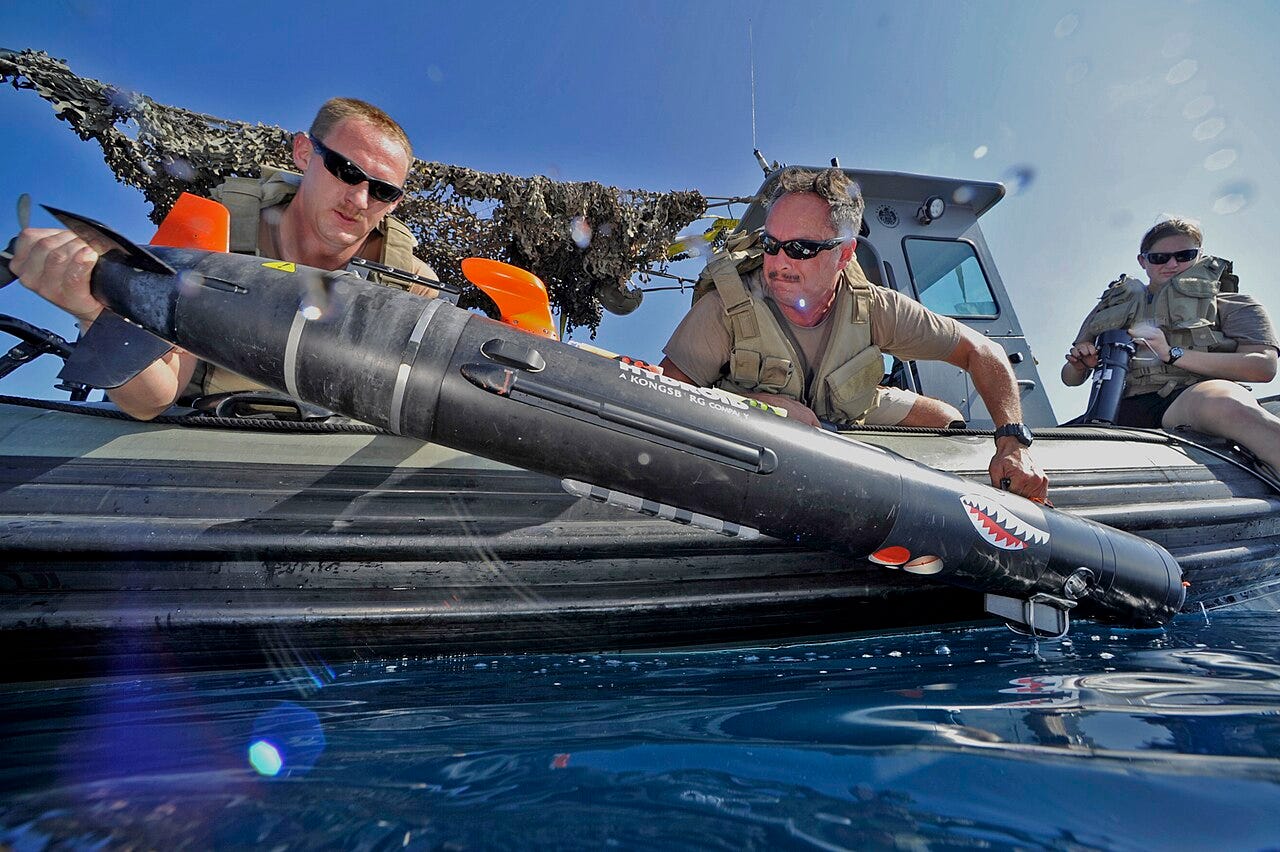
The more novel type of underwater drones are autonomous underwater vehicles (AUVs), which don’t require human operators to complete missions.
Scientists have used unmanned underwater drones for decades to:
study marine ecosystems,
track the effects of climate change on oceans, and to
conduct aquatic rescue missions in places too dangerous for humans
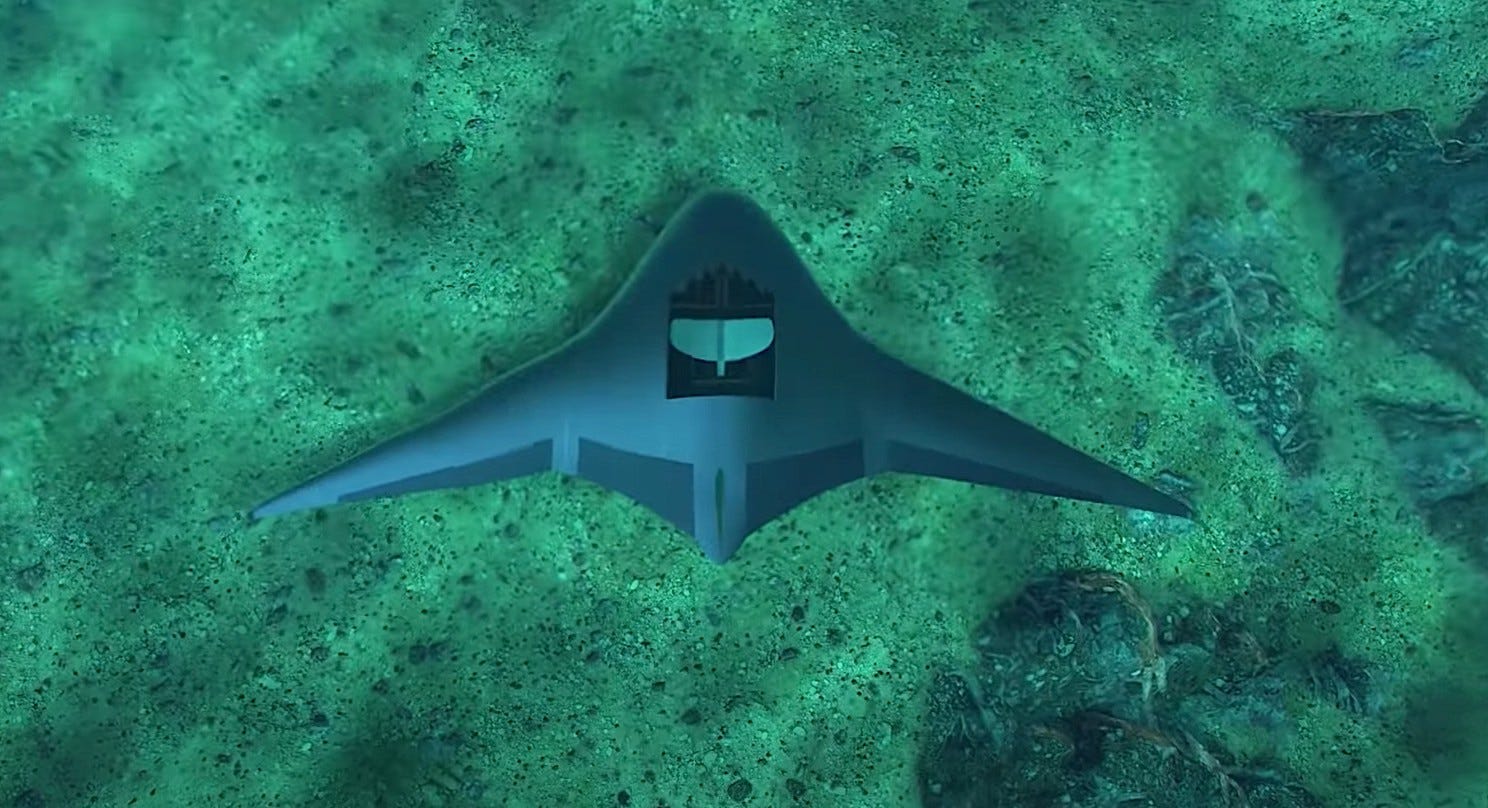
The use of AUVS for military purposes is still relatively new, but the world’s leading military powers are wasting no time in developing their arsenal of AUVs.
Earlier this week, a Ukrainian company unveiled its long-range Sea Trident underwater drone at a defense industry conference in Paris.
The ~22,000-lb Sea Trident has a maximum range of 2,000 miles and can carry a payload of up to 2,200 lb.
Ukraine’s military has already used aquatic drones like the Magura V5 to attack Russian vessels in the Black Sea.
And it’s not just Ukraine that is investing in this cutting-edge military technology.
AUKUS, the new military alliance between the U.S., the U.K., and Australia, established in 2021, announced last month that it would invest in the development of AUVs.
A German defense manufacturer said last year that two European governments agreed to buy underwater drones for military purposes.
China revealed its own uncrewed underwater vehicles at a 2025 military parade, and experts say China has been developing these and other vehicles in secret for years.
Underwater drones are important for several reasons.
They can be used to attack enemy ships or submarines, or to lay (or or disarm) naval mines.
But perhaps more importantly, they can be used to attack (or defend) the significant amount of critical infrastructure that is underwater:
gas pipelines (like the Nord Stream pipelines that were sabotaged in late 2022)
undersea fiber-optic cables that are responsible for 95% of global internet traffic
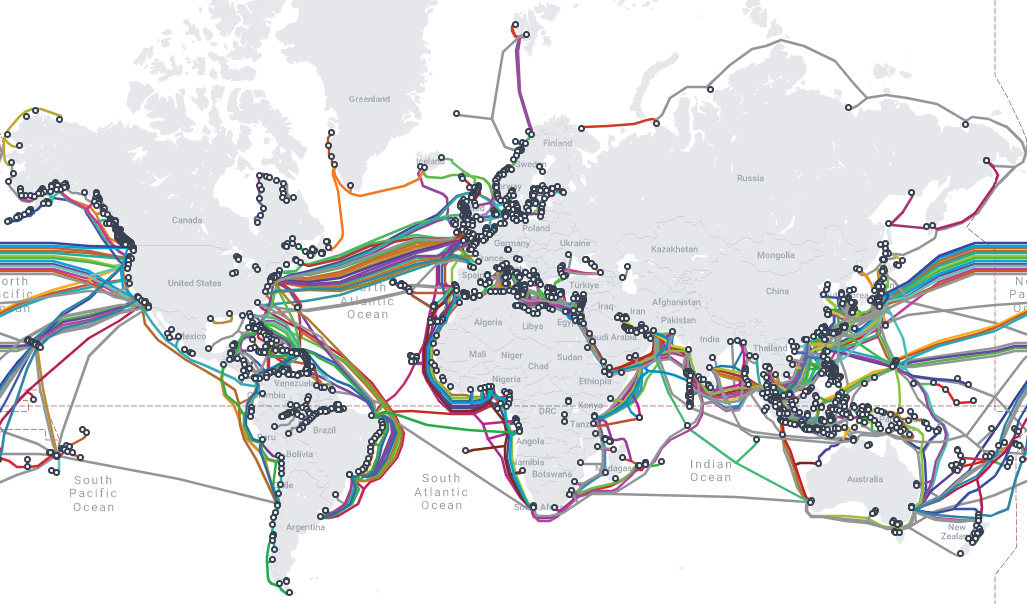
Last month, Iran threatened to attack undersea cables in the Strait of Hormuz in a move that could devastate the economy of Gulf states reliant on the cables for internet access.
This points to a broader reality: much of modern civilization depends on underwater infrastructure that is largely invisible to the public.
As the cost of underwater warfare falls, the ocean will become a more contested domain for the world’s military powers.
The emergence of autonomous underwater drones as a major military technology highlights two of the most important developments in 21st-century warfare:
The increasingly important role of technology (and the decreasing importance of human combatants) in modern conflict
The expansion of military conflict into previously uncharted territory, like space and the deep sea.

Comments
Nothing yet. Say the first thing.
Sign in to join the conversation.