
I am one of the jurors for the 5th Art, Architecture & Design Awards (ADA) in Pakistan.
Books:
Design Otherwise: Transforming Design Education in the Arab Region is available for purchase online, or order it at your favourite bookstore.
Designerly Ways of Knowing is available with a new cover (big up Pali!), and is now on its third print! Order here.
*Technically I wrote Part 1 as a book chapter for The Routledge Handbook of Sustainable Design, but this is the first for the newsletter which I’m exploring writing in series form, stay tuned.
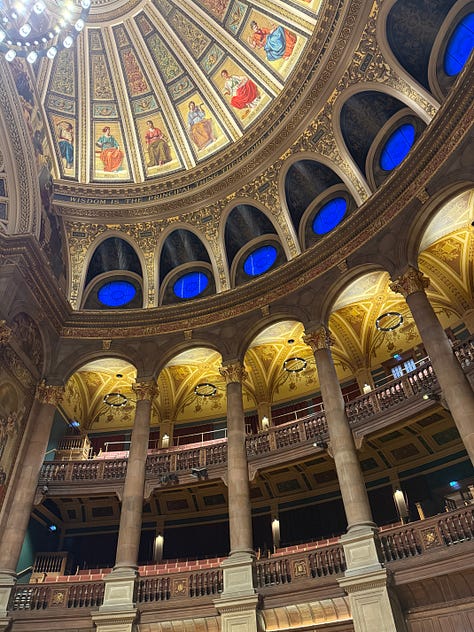
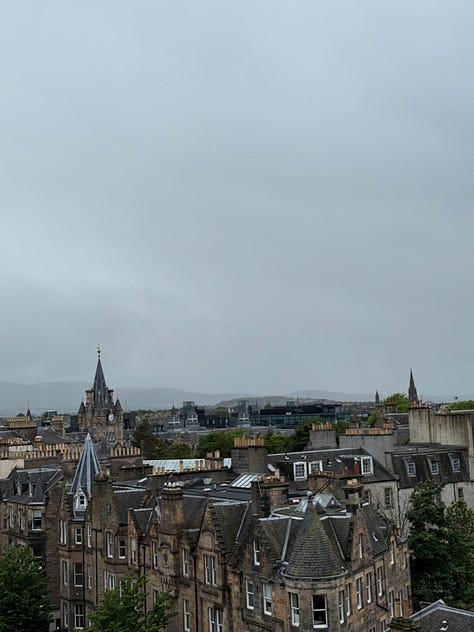
I am writing to you from cold/sunny/rainy/windy Edinburgh where I’m attending the Design Research Society conference. Maybe a post about the conference in the future but prior to Scotland, I was in Amsterdam and decided to take the Eurostar rather than fly.
I have written about my love for the Eurostar before but now I am admitting The Eurostar is no longer pleasant. New border control rules have meant train delays and arriving way ahead of the train time, which will likely cost the more “carbon friendly” form of travel some money. Gone are the days of wanting to travel by train.
The few announcements from Eurostar inform you that people are still in border control, and the new rules are why we are delayed. The finger print machine – which never works – is the reason for the delays.
The contradictions of sustainability: encouraging a cut in carbon emissions by offering more destinations on a high speed rail line built a few decades ago that only went to a couple of destinations and that should have been made available ages ago. Just when we think it’s going to be a great time for train travel and cutting back on air travel, the system has hurdles: the tickets are expensive (it is still more affordable to fly with budget airlines than travel by train), make the service worse so people resort back to airlines, and introduce new border control restrictions. Eurostar does offer bargain deals of course, but discounted tickets also mean a new type of consumer roams the train: the easyJet/RyanAir stag/hen do, Amsterdam tourist getting shitfaced on the train.
Suddenly, the quicker train journey is no longer quicker because the ticket halls built to accommodate the passengers cannot in fact accommodate the numbers (it’s always chaos at Paris Gare du Nord and London St Pancras), and in a society that favours profit over people, the businesses surrounding the station become more important than the waiting, because waiting is about cultivating new ways for you to spend more money.
St Pancras International has been developing over the last two decades. In the last decade alone, the businesses selling everything from food to fancy teas to books to clothes to toys have tripled, reducing the space to accommodate the increased numbers travelling on the Eurostar. What ensues in busy periods is queues snaking around the station, leading to overcrowding and what reminds me of Istanbul’s airport (chaotic). Instead of waiting areas or hold areas, these are now filled with businesses selling overpriced goods to maximise rent profits.
The experience had me regretting not taking a flight the whole way through. It is the enshittification of the Eurostar.
The train is delayed by 45 minutes, but no announcements are made so everyone crowds near the gates, ready to board. Eurostar sends text messages and emails too late with incorrect departure times, even through throughout the journey (24 hours before my train to Amsterdam until immediately after my arrival in London), Eurostar sent seven emails in a span of 24 hours. I wish I was exaggerating. Seven emails. My suspicion is they pulled a Holland & Barrett and hired AI as their communications department.
The men’s toilets were out of order in Amsterdam Centraal. People are huffing and puffing waiting to board. Once we board, the train hasn’t even left the station and the toilets are filthy. The seats have rubbish under them, meaning the train has not been cleaned, and no employees anywhere directing people. I noticed this on the journey to Amsterdam also. They depart so quickly one after the other and I spotted no cleaning staff on the trains.
People are already queuing up for the food cart because they can’t handle being away from food even briefly. Different smells fill the car: elaborate meals from home, noisy packaged junk foods crunching…I wish trains would bring back the food car as an in situ eating place rather than encouraging snacking back at one’s seat. I don’t want to hear chewing, loud chewing, fingers licking when I know hands haven’t been washed...
My experience this time around was different because I was travelling with my toddler. Toddlers love to walk up and down the train (so do adults it seems), but we dodged everything from bags in the aisle, to manspreading, to sprinters who don’t look and almost sent my kid flying to the other side.
On a train to Prague last Christmas, one of the carriages had a small children’s play area, which helped on the journey immensely. Why is there no children’s area as a standard on trains? The Eurostar journey is longer than expected, no longer high speed but frequently slowing down and stopping, so one resorts to YouTube to keep bored kids entertained. But the Eurostar Wi-Fi doesn’t work, 5g in Europe is almost worse than in the UK, and I wonder what’s the point of these devices if they don’t work most of the time.
I look around at a slightly too long train journey and everyone looks exhausted and impatient, even though the train is still moving, and we have not broken down. I’ve been reading Jason Burke’s The Revoluionists, where he discusses the conditions of hostages during airline highjackings in the 1970s. My mind drifts to comparison, but the chaos I experience today is not what would have been 50 years ago.
For one, people did not constantly have snacks or drinks or an inability to be without food for a few minutes. This means the toilets would have been in use much less. I assume people had more respect for public space and better hygiene habits (minus the smoking everywhere, which has been replaced by snacking on junk food and drinks), and produced much less rubbish. We did not have phones so we did not desperately look for chargers or aimlessly stare at them due to boredom but found other forms of entertainment, and there were no obnoxious phone conversations, nor anyone playing some video loudly without headphones, or typing away on a laptop.
There might have even been employees roaming around, and – I’d like to think – they cared about people. Eurostar’s managers rarely appear and if they do, they are walking up and down the train with a mission. Before it was standard practice to pack as many humans in a train and prioritise business and first class customers, seats were larger and more comfortable, people were smaller, and you could not hide behind big headphones to shut the world out. I want to assume people were more attentive to their surroundings and helpful to each other. Finally, infrastructures were newer and shinier then. Now they are deteriorating.
[Don’t] Watch: Beef Season 2. The first season had us hooked, the second had me wondering what this was for and why they made it.
Listen: I got rid of all music streaming platforms and went back to listening to NTS Radio.
Be well.
Danah (The Pessoptimist)
Comments
Nothing yet. Say the first thing.
Sign in to join the conversation.