In this weekly feature for Andelman Unleashed, we continue to explore how media of other nations view America and the rest of the world, bringing to bear 60 years of reporting from 90+ countries. We cover lots of ground—diving each week through 30+ newspapers & 100+ websites on every continent. You may not want to read it all, but it’s all here for you!
We can all learn from what others say about us, around the globe.
To accomplish this mission for you, I pay for a host of global media—newspapers, magazines, websites,qtelevision—so you all can become better informed about the world…A (lightly) paid, even Founder subscription would help if you are able…and allow you to participate to the fullest in our adventures.
Perhaps the fundamental question being posed in so many quarters is how long and how deeply the world will be held hostage to the whims of Donald Trump which in virtually every quarter is having this very impact.
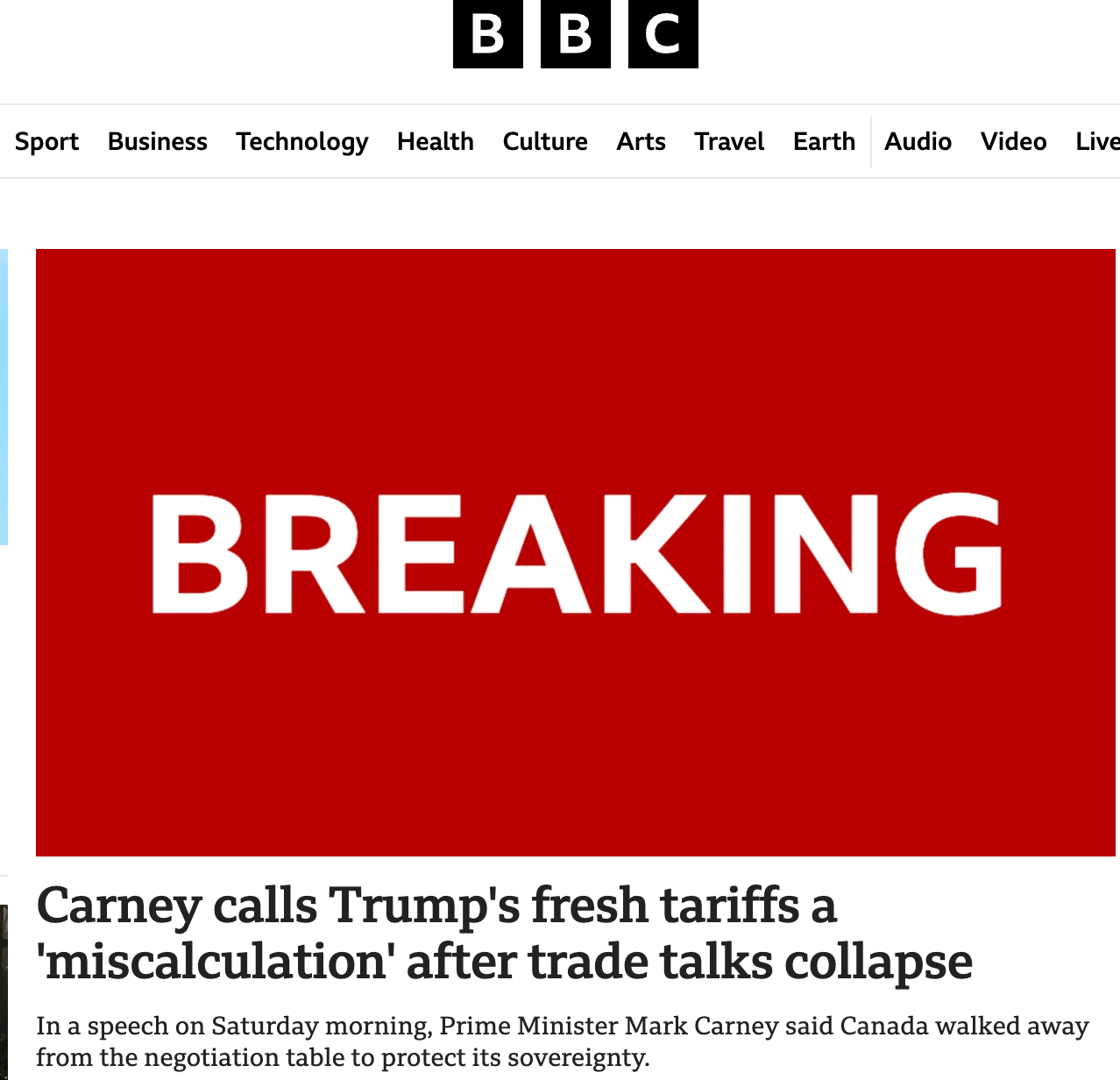
Forever it seems?….Canada has been America’s best friend, neighbor, and #2 trading partner (after Mexico—itself hardly much of a friend anymore). Now, at least $20 billion of its exports to the USA will face 50% tariffs. But as Patrick Leblond wrote for Toronto’s Globe and Mail :
It was better to continue agreeing to disagree with the Trump administration and suffer the consequences, which, according to opinion polls, Canadians are willing to do. They don’t want to give in to bullying.
If [Prime Minister Mark] Carney’s government had offered more concessions—guaranteed purchases of military equipment and systems, orunfettered access to Canada’s digital markets for U.S. Big Tech, including for government contracts (now excluded in the USMCA), which would make Canada more dependent on the U.S.—then Canadians would have seen such a deal as “elbows down” and caving to Mr. Trump’s coercion.
Even if such a deal provided economic relief, it would have been only temporary. Canadians know that if Mr. Trump’s coercive tactics had proven to work on Ottawa, he would have come back asking for more “flesh” in no time. In the end, deal or no deal, what matters is the long game. What mattersis that Canada’s economic and security dependence on the U.S. continues to decrease, thereby giving Canada even more leverage vis-a-vis the U.S. in future trade negotiations.
Free trade in North America may be dead, but Canada is now freer to pursue its own economic path.
Abroad, the sentiment is coming down very much on the side of Carney and Canada…
The United States and Canada have entered into uncharted territory. The longtime allies and economic partners, who have enjoyed free trade for decades, are now in an escalating trade war with no clear off ramp.
And for Prime Minister Mark Carney, the late night decision to suspend talks with President Donald Trump and to retaliate instead of agreeing to a deal that seemed in reach, will be a significant political test.
He is one of the first world leaders to walk away from the negotiating table with the White House—and the outcome will be closely watched.
Both sides have have blamed last-minute changes for torpedoing the tentative deal. Carney’s decision will also challenge the appetite among Canadians to accept some economic pain as Ottawa pushes for more US concessions.
After rejecting Trump’s high pressure tactics, and in choosing to hit back against the latest duties, Carney will need to convince Canadians that the economic pain is worth the cost of standing up to the Trump administration in search of a better agreement in the long run.
There is no doubt this will cause pain on both sides of the border, with business facing more pressure from US duties and Canadian counter-tariffs.
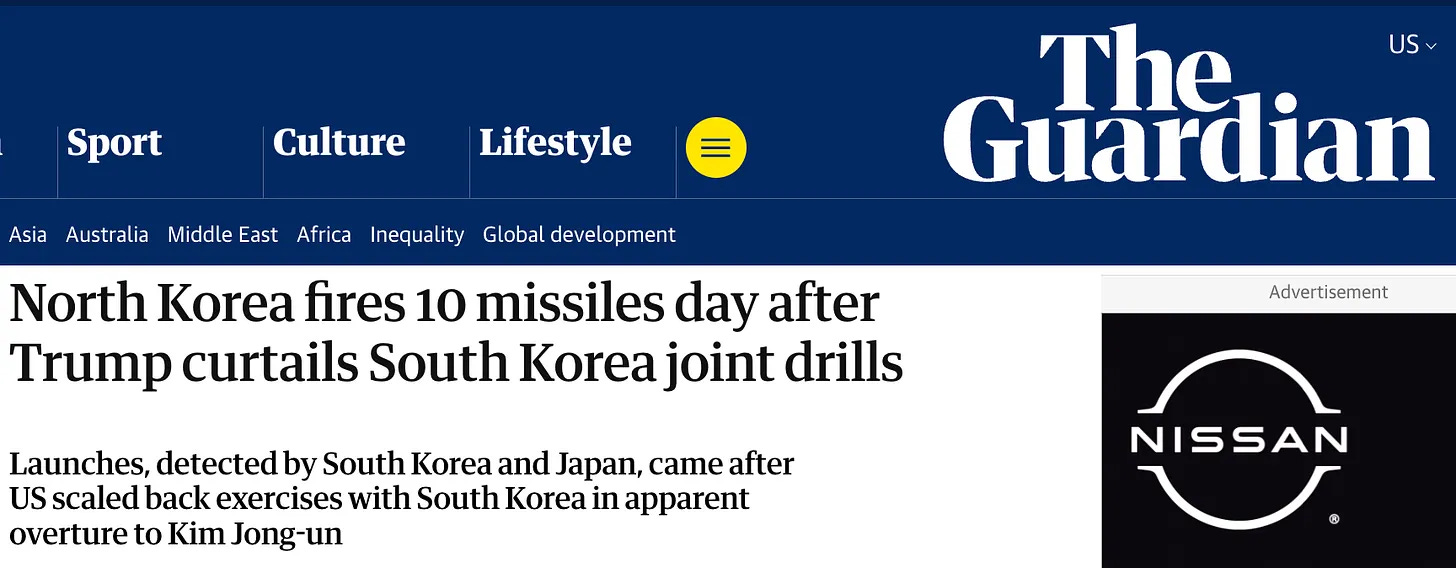
And then there are the enemies into friends? As London’s The Guardian reported…what kind of friend anyway, one might ask?
North Korea has launched about 10 short-range ballistic missiles towards the sea, South Korea’s military said, a day after Pyongyang shrugged off Donald Trump’s order to scale back US military drills with South Korea in an apparent attempt to resume diplomacy.
The joint chiefs of staff said the missiles were launched from the region of Pyongyang towards North Korea’s eastern waters. The military said South Korea had bolstered its surveillance and was closely coordinating information on the launches with the US and Japan.
Kim Yo-jong, the influential sister of the North Korean leader, dismissed Trump’s overture, saying it was not worthy of comment. “The provocative, aggressive nature of the drills won’t change even though their duration and size were reduced,” she said. “If the US calculates that it can propagate its recent measure as one of so-called good faith, they will not get the desired answer.”
However, Kim Yo-jong refrained from the typical North Korean reaction of fiery rhetoric, and said personal relations between her brother and Trump were “still excellent”. That could signal a desire by Pyongyang to wait for Trump to make bigger concessions before returning to talks.
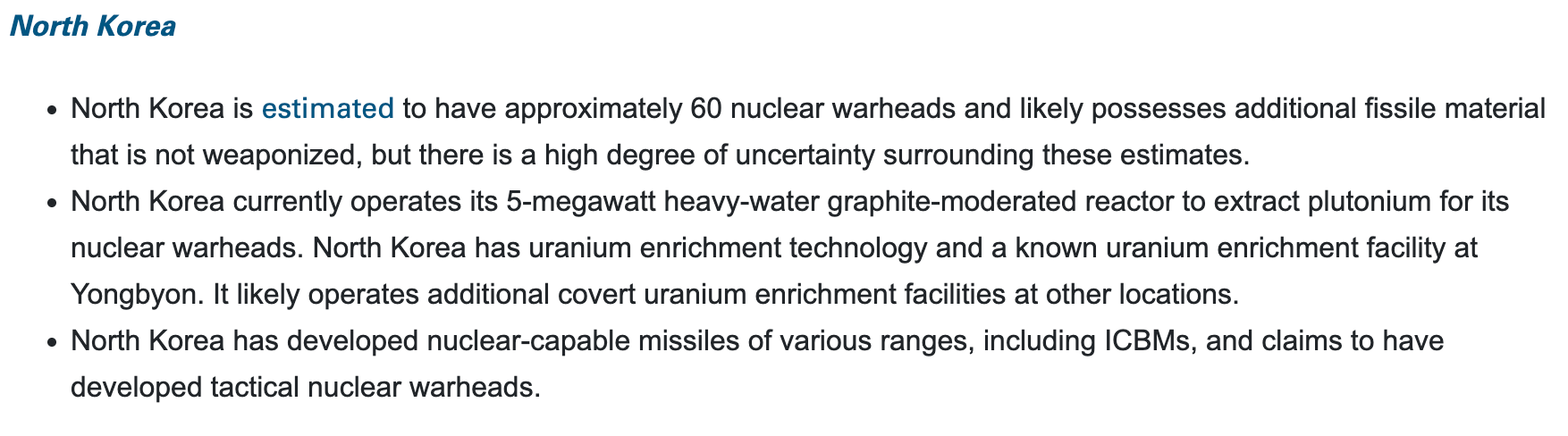
The authoritative Arms Control Association reports a substantial, fully-deployed nuclear arsenal controlled by the Kims:
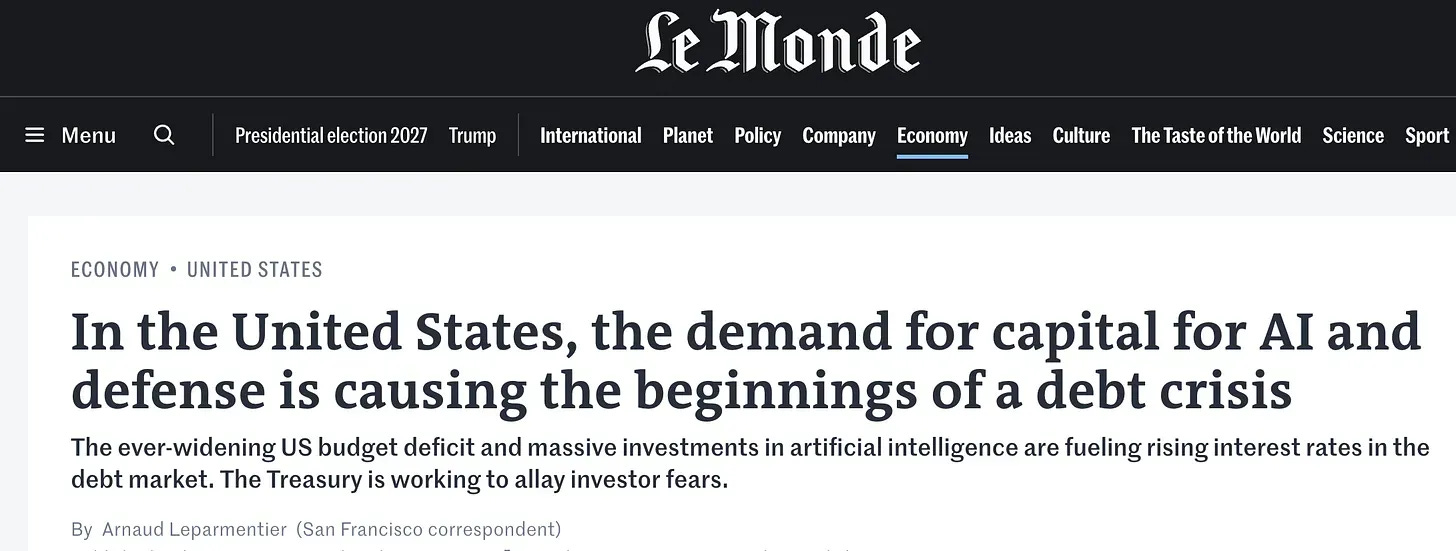
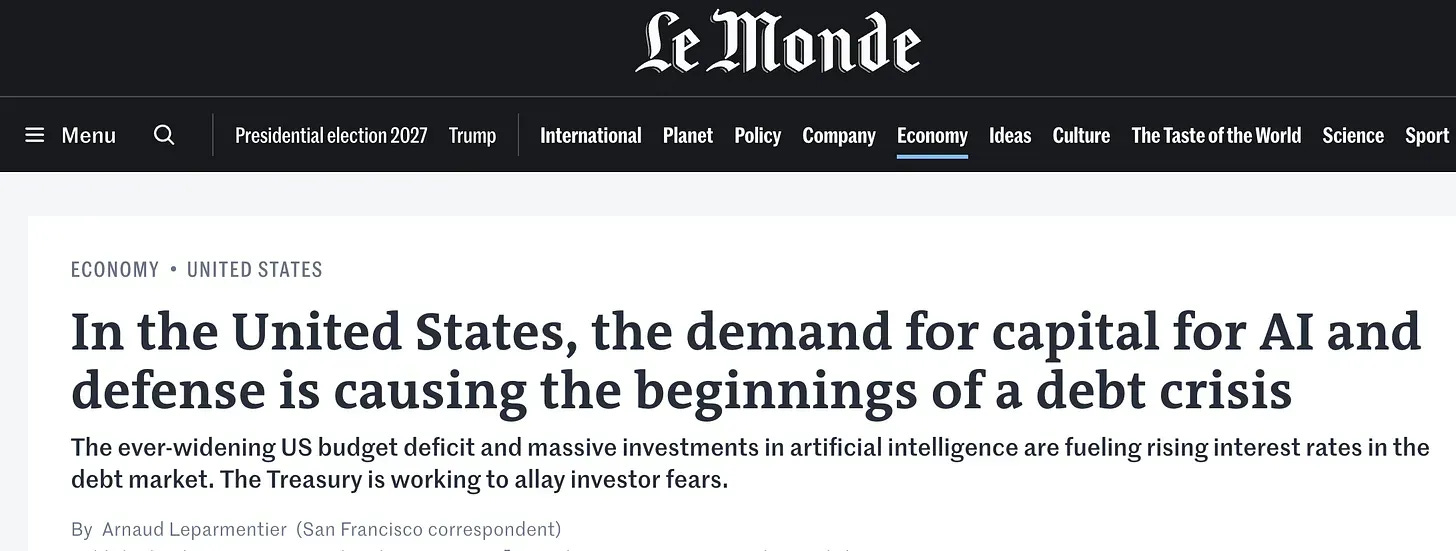
And finding them, as Arnaud Leparmentier of Le Monde discovered …
It’s not an intervention, but it certainly looks like one and proves that Scott Bessent, the US Treasury Secretary, is taking the matter seriously. The US debt market is caught in a financial storm, and very long-term interest rates have soared to levels unseen since the 2007 financial crisis….The measure is in fact cosmetic: the Treasury will simply borrow a little more in the short term to buy long-term debt, counting on better days to borrow on more distant maturities.
This financial crisis is triggering the beginnings of a political crisis….In reality, the outlook is bleak in an economy fueled by easy money. The United States is caught in a spiral of public and private debt….
Adding to this rate hike is the persistent concern about inflation. The Federal Reserve’s (Fed) policy of easy money, the ongoing Iranian conflict and high energy costs have helped keep price increases at 3.4% year-on-year….The crisis is still under control, which has so far prevented a stock market crash on Wall Street.
Even more worrying, the American crisis is fueling and being fueled by other debt crises. Japan, facing economic difficulties, is tempted to liquidate its American assets to cope with rising interest rates. On the other side of the Atlantic, a new crisis in the eurozone cannot be ruled out, as interest rates are rising, particularly in France, to levels not seen since the global financial crisis.ck market crash on Wall Street. The question remains, for how long?
Indeed, Le Figaro reported on its front page the immediate ripple effects…
Debt: France strangled by soaring interest rates
The cost of borrowing is rising everywhere in the world, but is particularly affecting France which will have to spend 64 billion (euros) this year to repay the interest on its debt.
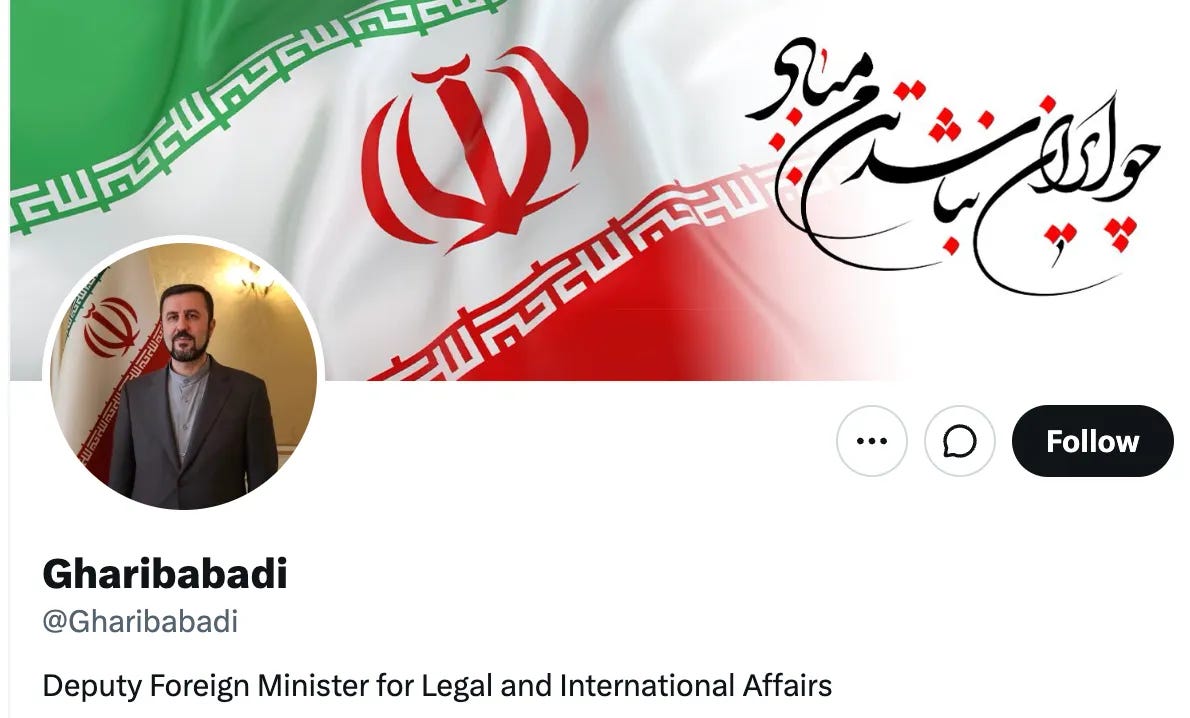
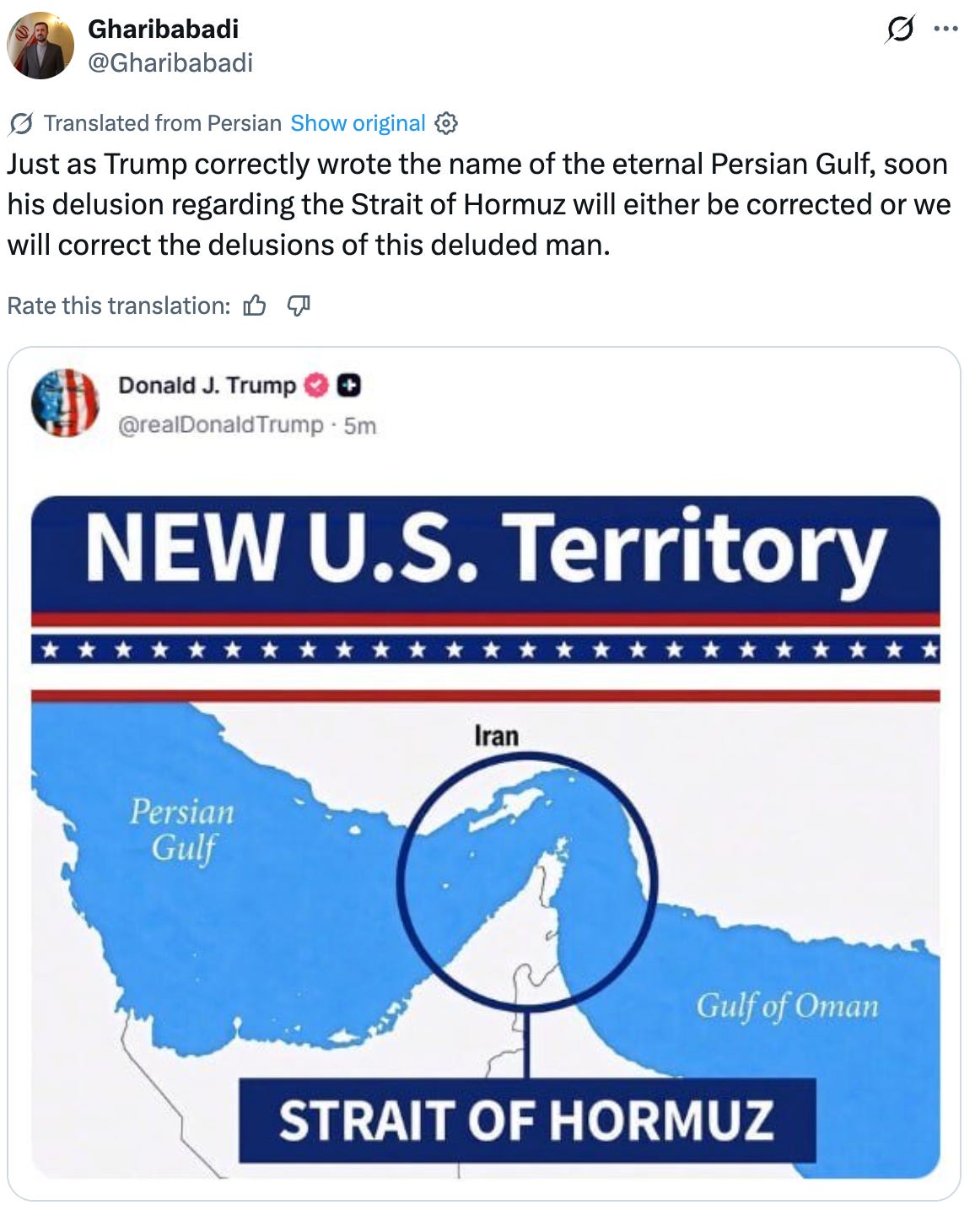
The leadership of Iran—which Trump (running short of ammo) now believes he can starve into submission—doesn’t think much of this idea as Kazem Gharibabadi, deputy foreign minister for Legal and International Affairs, observed on X:
And then indeed there’s Iran, as the Institute for the Study of War reported….
The failure of the US-Iran memorandum of understanding (MoU) appears to have further weakened the pro-concession, “realist” camp [over] Islamic Revolutionary Guards Corps Commander Major General Ahmad Vahidi and other anti-concession officials.
[And] there is no indication that economic pressure on the regime has changed the anti-concessions position of some top Iranian officials, even while a group of Iranian officials responsible for managing the economy (“realists”) are increasingly warning that worsening economic pressure could threaten regime stability. These officials also appear to openly advocate ending the war to reduce the economic cost to the regime. These include Iranian President Masoud Pezeshkian and Parliament Speaker Mohammad Bagher Ghalibaf, among others. A second group, which includes Vahidi, does not favor any concessions in negotiations and seeks full US surrender. This group is relatively stronger and more ideological.
Yet Trump is clearly believing that economic pressure is the real path toward victory in the war he launched against Iran …. indeed with the dwindlng American military arsenal, perhaps the only realistic path toward victory….with Gulf News suggesting another key to this equation….
The US president has announced what he calls the “MOST CRUSHING ECONOMIC OPERATION EVER TAKEN AGAINST ANY COUNTRY”, threatening not only Iran but countries, banks and businesses that help keep its economy alive.
But making the strategy truly effective would require Washington to go much further. It would have to disrupt the complex international network of banks, shipping companies, intermediaries and trading routes that Iran has built to survive decades of sanctions.
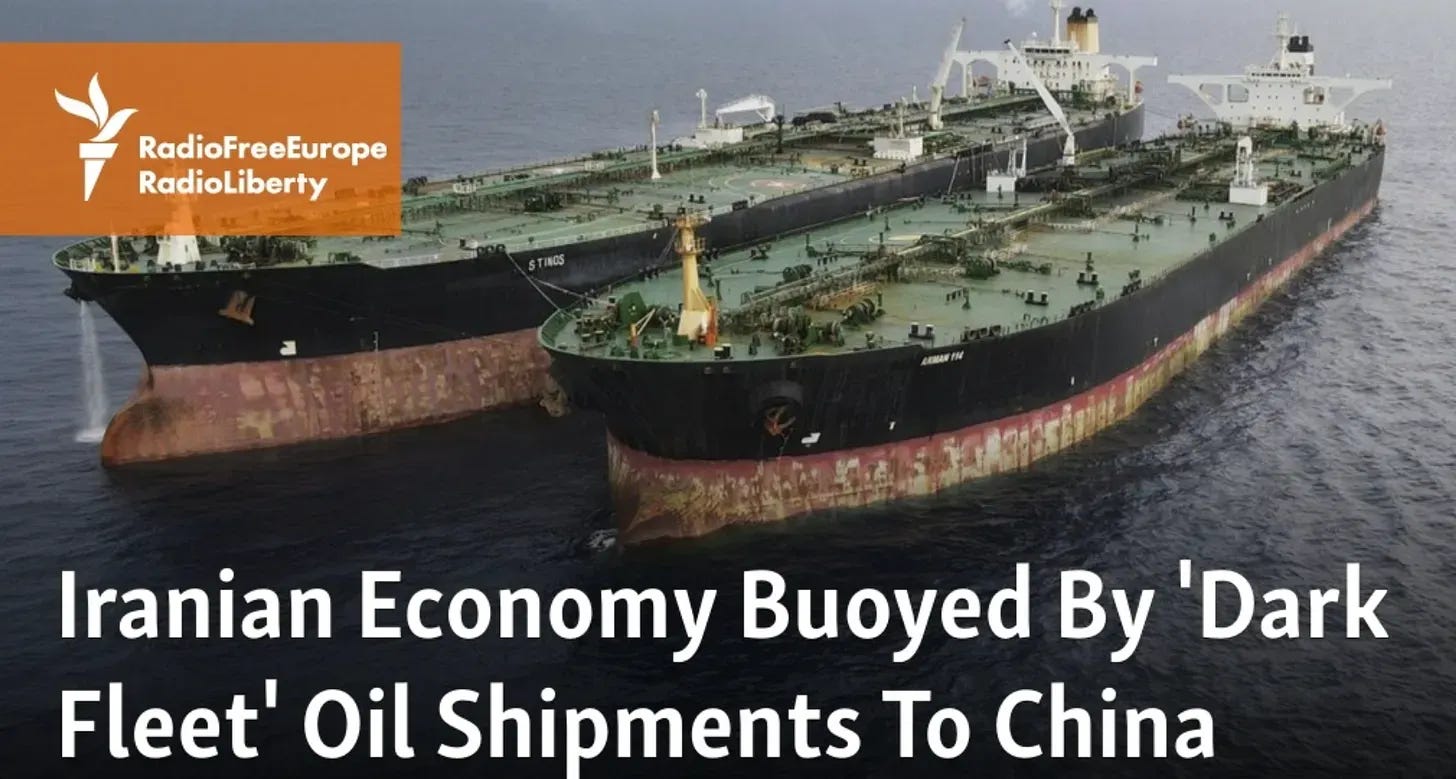
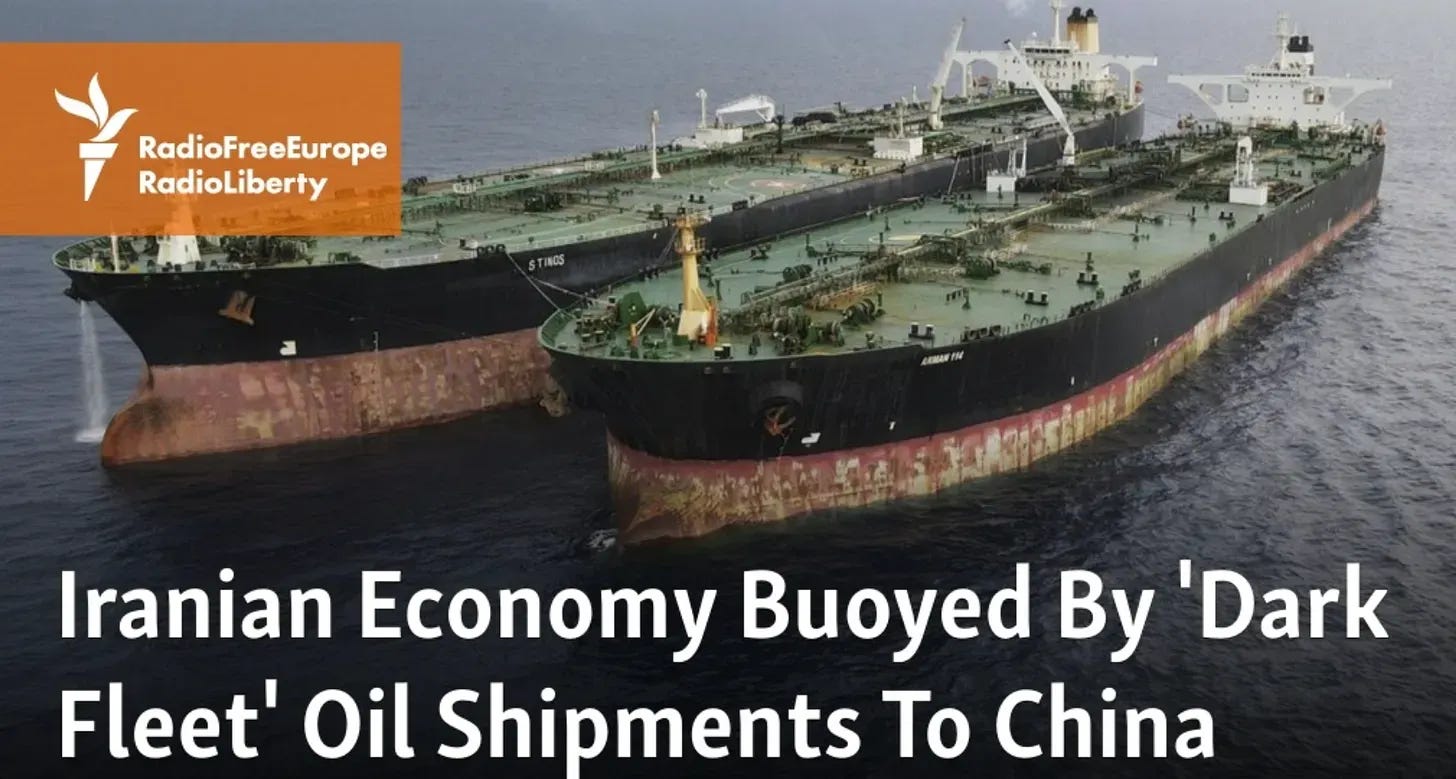
[and yes if you were wondering RFE'/RL does still exist despite all Trump’s efforts]
The biggest test could be China.
Beijing remains a major purchaser of Iranian oil, meaning Washington may ultimately have to threaten Chinese financial institutions involved in processing Iranian transactions. That would confront Trump with an awkward choice.
Chinese President Xi Jinping is due for a state visit to the United States in September. Taking punitive action against major Chinese banks shortly beforehand could create a new confrontation with Beijing. Without pressure on Iran’s biggest remaining economic lifelines, however, Trump’s promise of unprecedented isolation could prove difficult to enforce.
In other words, does Trump want to risk converting yet another ‘friend’ into an enemy? Gulf News continues its report:
But will Iran give in?
That is the central weakness in Trump’s calculation.
Iran has spent decades learning how to survive sanctions, economic isolation and domestic hardship. Despite the latest deterioration, there have so far been no widespread demonstrations capable of threatening the regime.
“For Iran, the leadership is prepared to absorb a lot more economic pain,” said Gregory Brew, a senior analyst at Eurasia Group, noting Tehran has endured years of sanctions and months of war without backing down.
Indeed, there are some who see little reason to cut a lot of slack to those who appear to be trapped in the middle—longtime foes of Iran who now find themselves scarcely- witting targets. Don’t shed many tears for these regimes, though their people (the real victims) may feel some pain, as suggested byUnleashed Conversation’s remarkable Celebrity Guest Sarah Leah Whitson, first executive director of DAWN [Democracy for the Arab World Now], founded by the late Jamal Khashoggi (assassinated on orders of Saudi Crown Prince MBS)….
The full, riveting hour of our conversation is viewable below the pay wall….
Much as it would appear that the Middle East is on the cusp of an expanding conflict with no clear horizon, other conflict zones are spreading with equal if less immediately visible unease. So, as German publications Bild and Die Zeit reported….
Germany is concerned about its vulnerability to the increasing number of drone incursions into its territory.
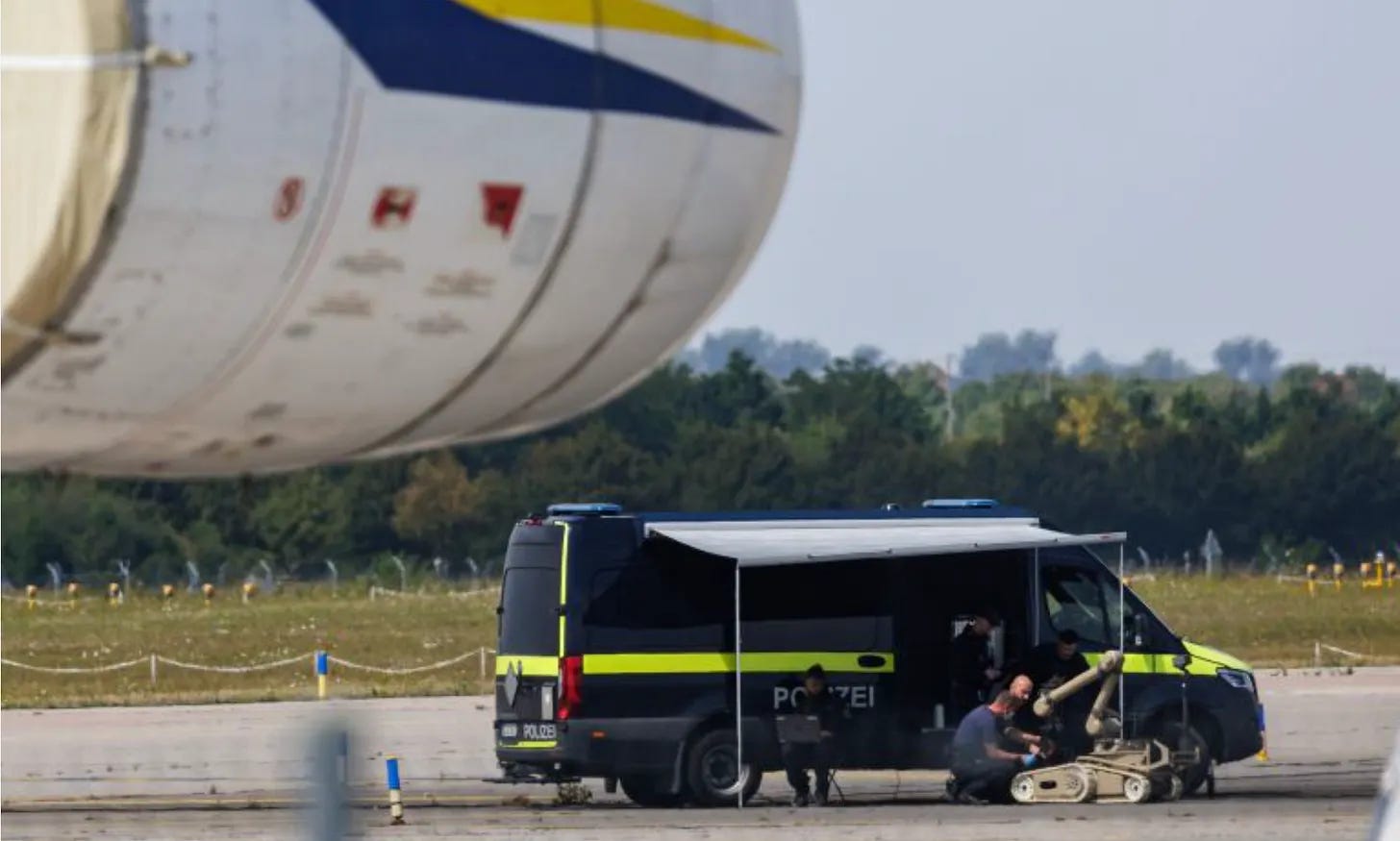
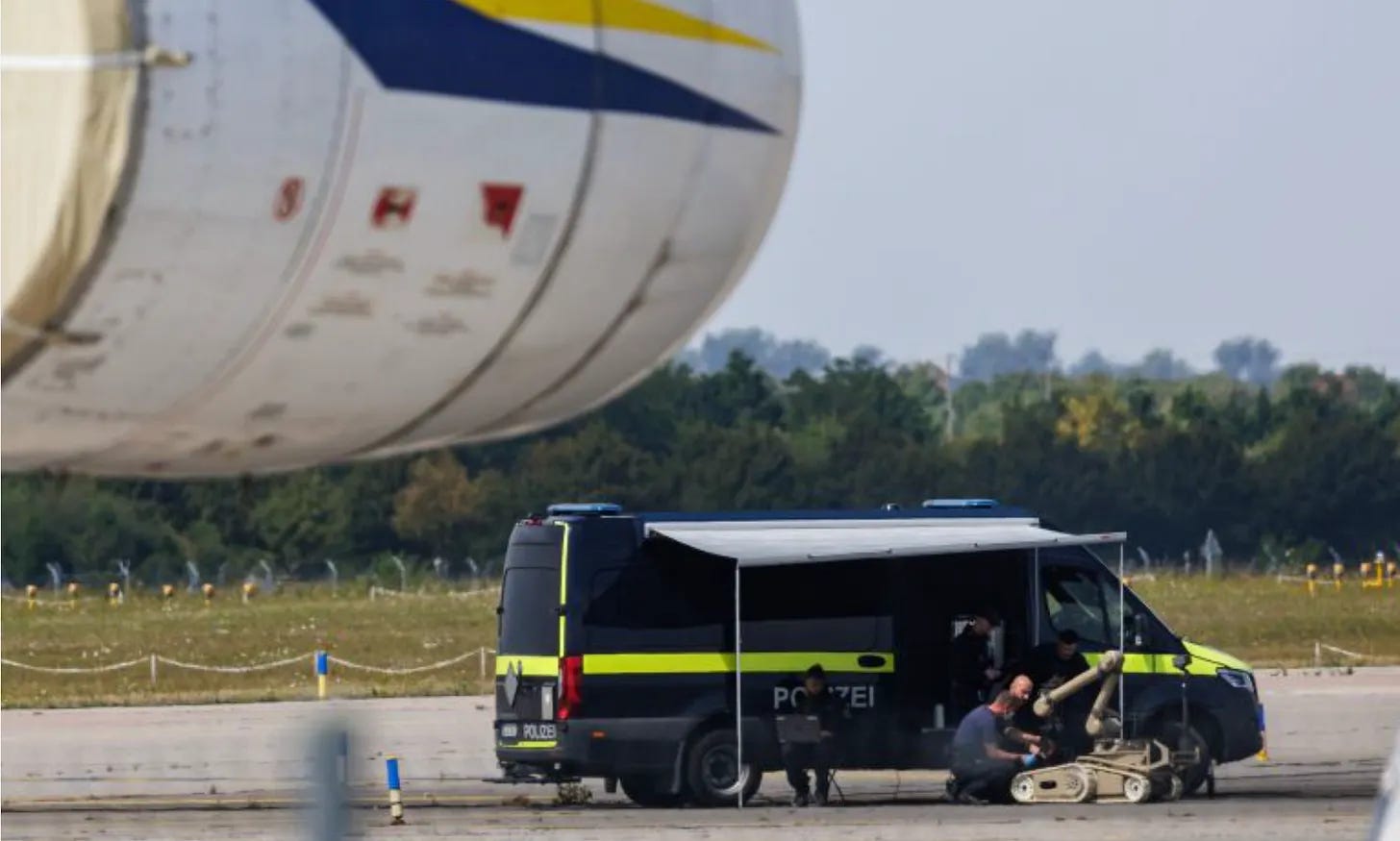
After the collision of a bomb-laden device and a Ukrainian plane on the ground in Leipzig, Russia is being singled out by many observers, but Chancellor Friedrich Merz remains, for the time being, reserved. Analysis of surveillance camera footage from Leipzig Airport confirms the drone, loaded with 800 grams of Semtex, a powerful military-grade explosive, did indeed strike a cargo plane parked on the runway, before crashing to the ground. The fuselage of the Ukrainian Antonov was damaged near its fuel tanks. The quadcopter also struck a wing of the aircraft, which shows signs of impact.
Germany has also noted a resurgence in drone overflights of its territory. Two drones conspicuously flew six times over the Mechernich military base in the west of the country. This base houses a highly critical infrastructure, unique in Europe: a 30,000-square-meter underground hangar where the Bundeswehr performs maintenance and repairs on the Patriot, the medium-range surface-to-air missile system that forms the cornerstone of Ukraine's air defenses.
Indeed, there’s this ongoing war with apparently no horizon, as the Institute for the Study of War observed:
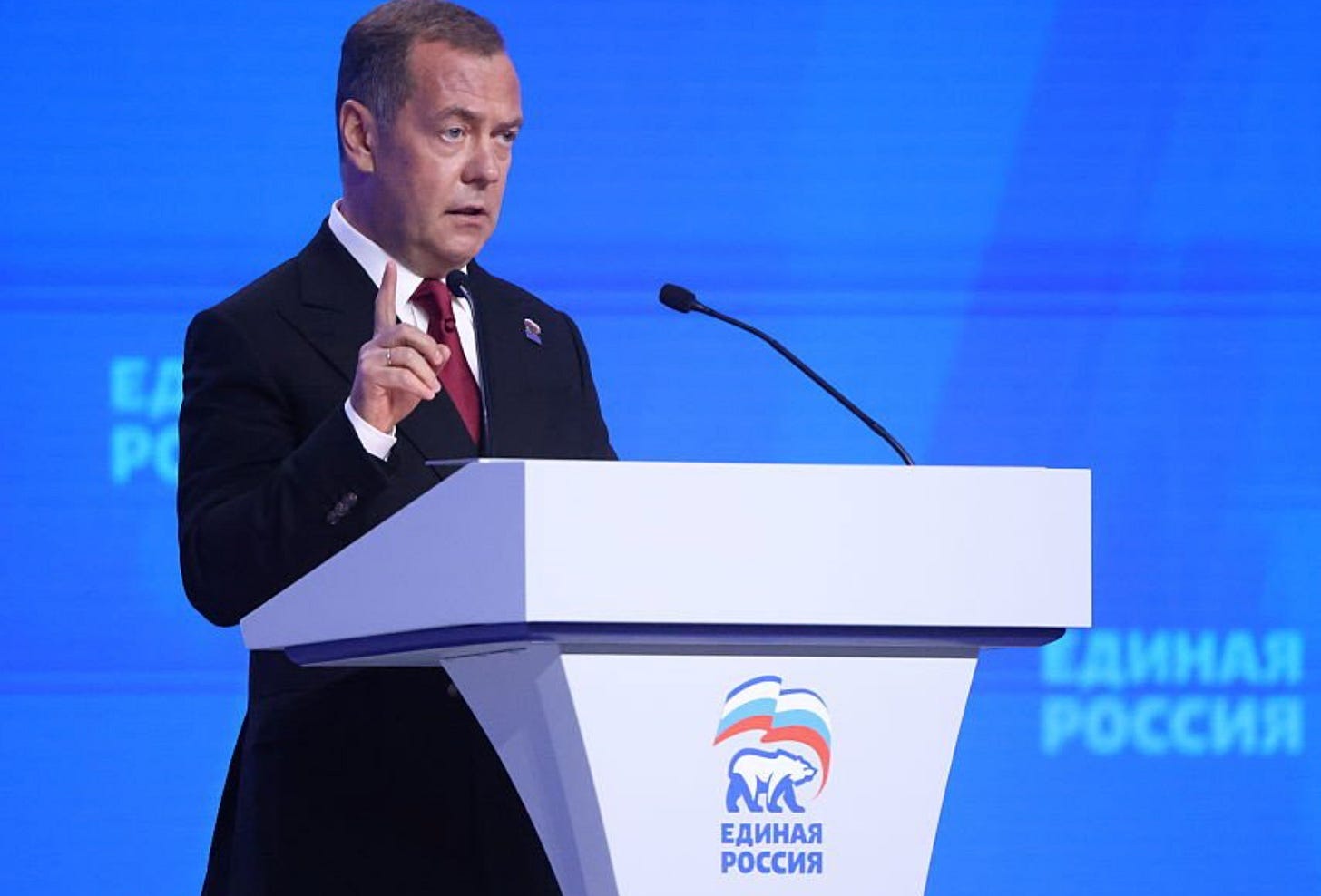
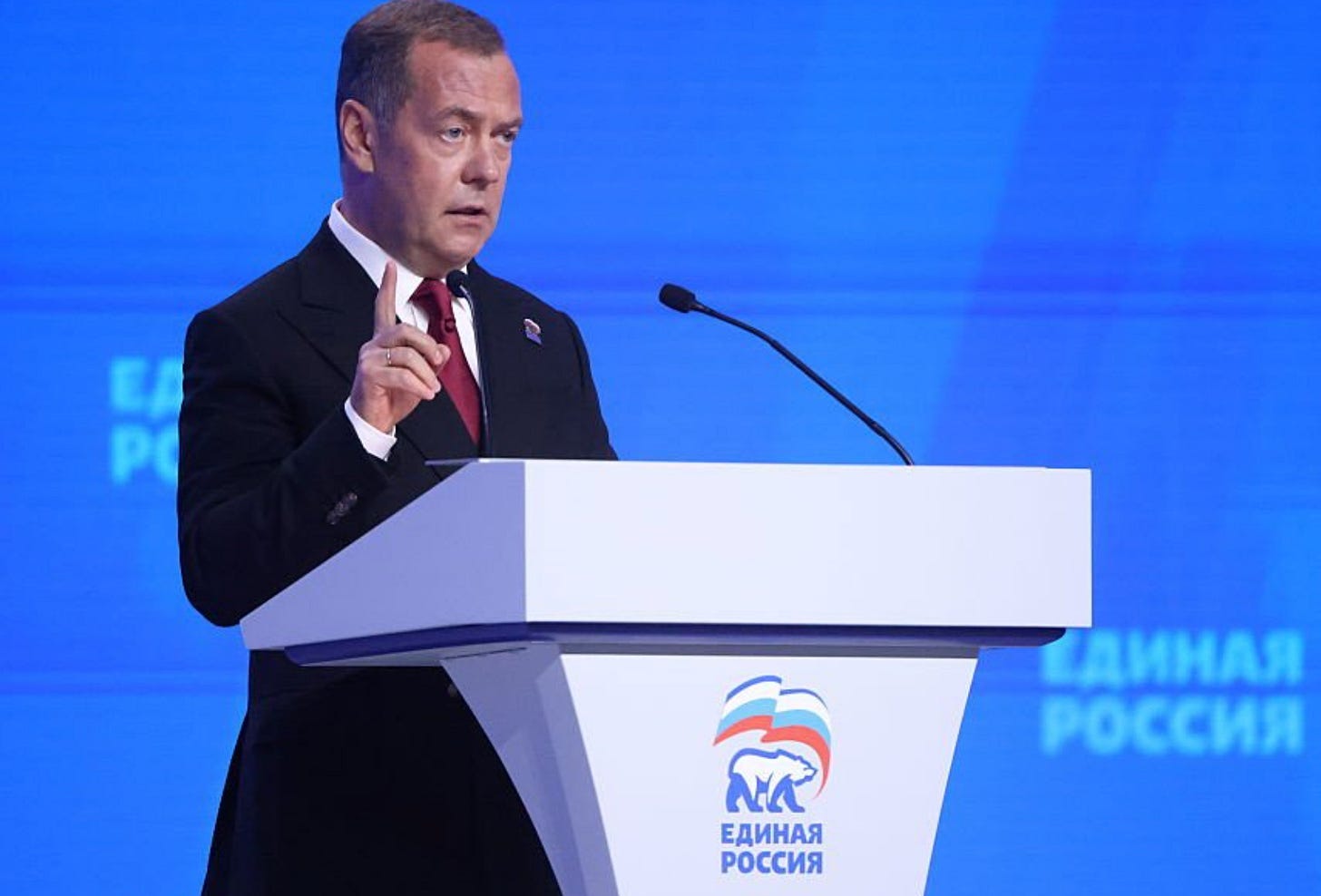
Kremlin officials continue reiterating Russia’s unwillingness to engage in any meaningful peace negotiations that fail to fulfill Russia’s demands for Ukraine’s complete capitulation, despite Ukraine’s repeated negotiation efforts. Russian Security Council Deputy Chairperson Dmitry Medvedev claimed during a meeting with the United Russia Party’s expert council that Russia will suspend or end the war in Ukraine “exclusively” on Russia’s terms, obliquely referencing Russia’s maximalist war aims of Ukraine’s complete capitulation.
The Kremlin appears to be doubling down on outright rejection of the concept of negotiations to unite the Russian public around a pro-war platform ahead of the September 18-20 State Duma elections.
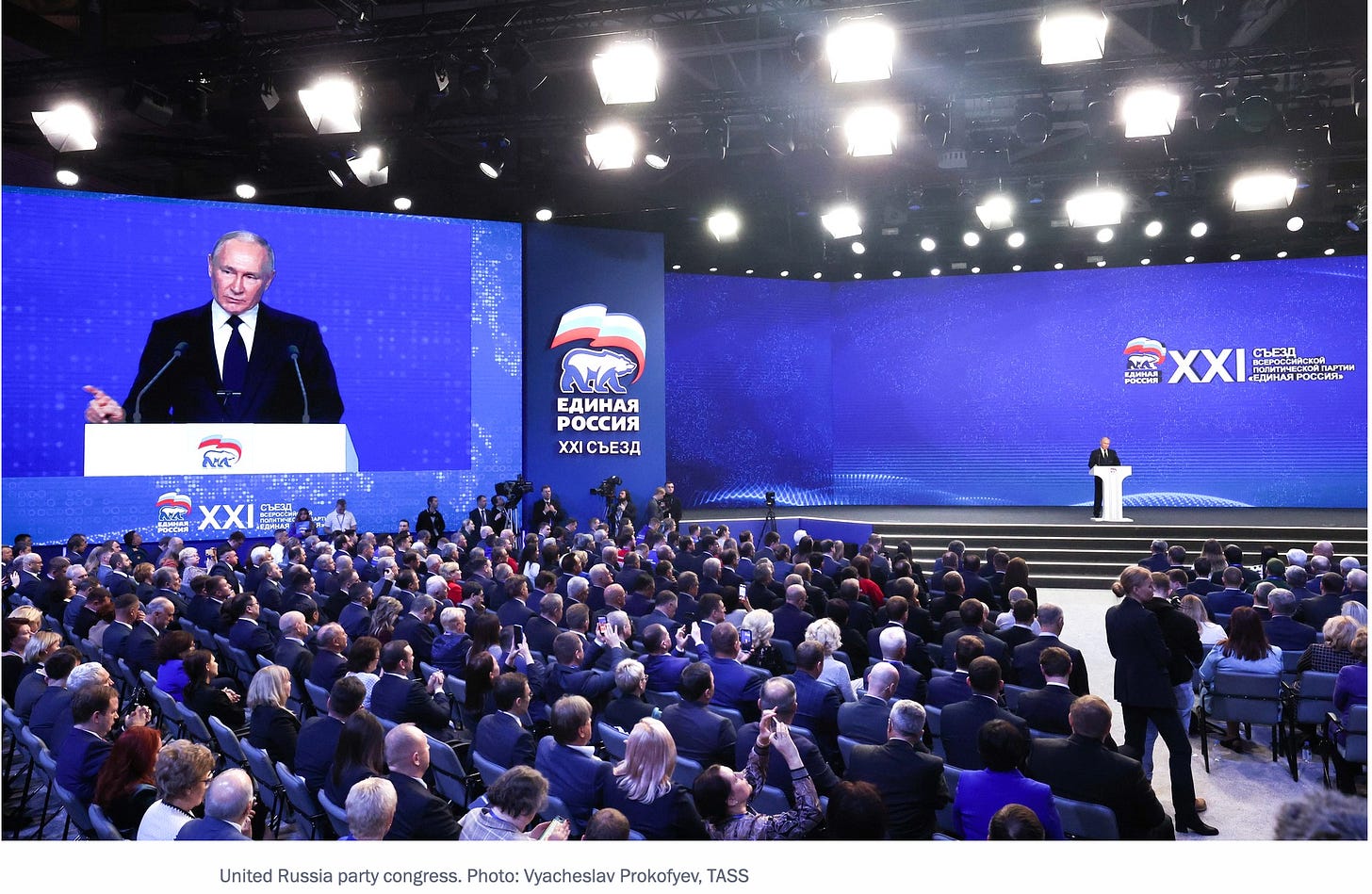
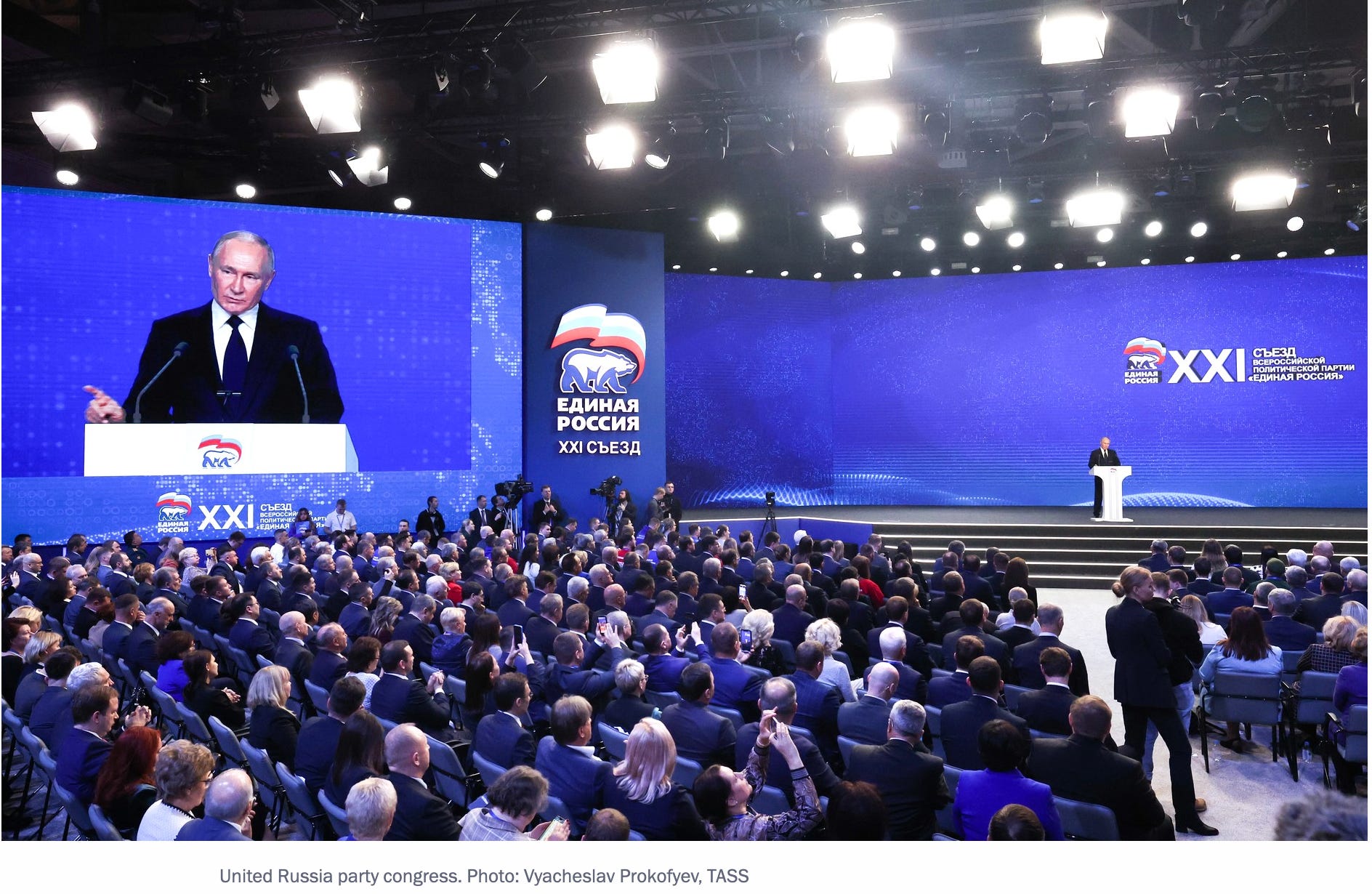
Putin used his own Saturday speech to the Party Congress to further establish United Russia as the war party, thus setting conditions to use the party’s inevitable victory in the upcoming State Duma elections as evidence the Russian people support a protracted war in Ukraine while further solidifying the party’s pro-war stance as a central part of Russia’s informal state ideology.
Putin stated the party has a duty to do “everything possible to achieve victory” in Ukraine. Putin is continuing efforts to make United Russia the only party that matters and charge it with executing his own ideological aims, moving it toward the position the Communist Party occupied in the Soviet Union. The elimination of the only nominally anti-war party, Yabloko, from the election was part of this effort.
The Kremlin’s routine rejection of all Ukrainian ceasefire and peace proposals signals Russia’s continued unwillingness to end the war in Ukraine on any terms that fall short of fulfilling Russia’s maximalist demands.
Russia rejected Turkish and Ukrainian proposals for a moratorium on strikes against maritime targets in the Black Sea, further underscoring the fact that Moscow is systematically refusing even the most limited diplomatic proposals from Ukraine and third-party states.
Or as ISW added, the Kremlin continues never letting facts get in the way of its story:
The Russian Ministry of Defense and Russian milbloggers continue exaggerating Russian advances in the Oleksandrivka and Hulyaipole directions as part of the systematic Russian cognitive warfare effort to propagate claims of expansive Russian gains for informational effects.
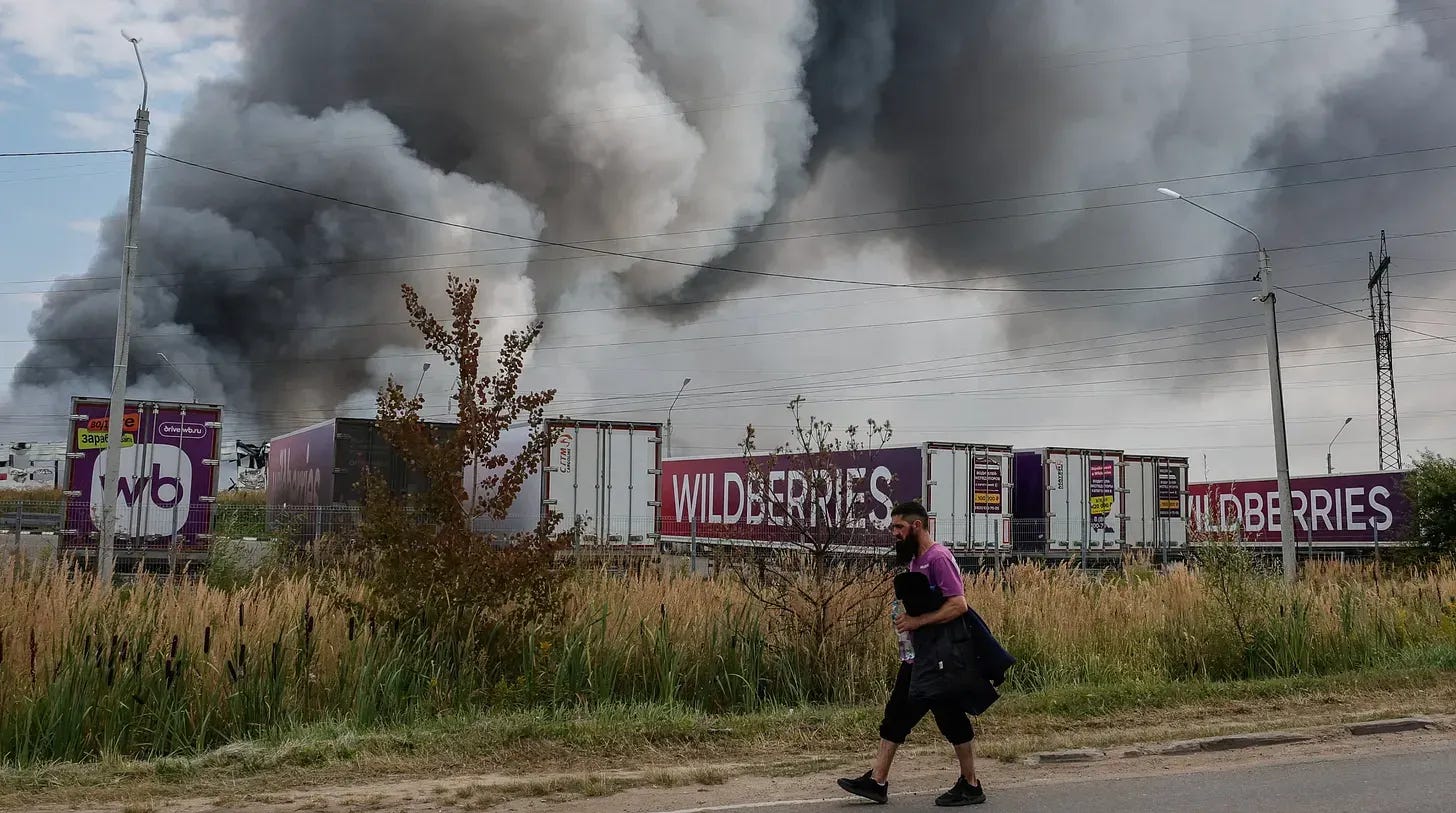
And remember Wildberries [aka Russia’s Amazon]?
Ukrainian forces have struck seven of Wildberries’ 10 largest logistics centers since July as part of the ongoing Ukrainian strike campaign aimed at degrading the Russian defense industrial base and dual-use logistics network. The Ukrainian Ministry of Defense reported Ukrainian forces struck another Wildberries warehouse, meaning Ukrainian forces have now struck and stopped operations at seven of Wildberries’ 10 largest logistics centers. The Ukrainian MoD reported that overnight strikes hit Wildberries’ largest logistics hub (with an area of [2.7 million square feet]) outside Moscow. The Wildberries Press Service confirmed Ukrainian strikes caused a fire at the facility and forced the company to reorganize its logistics chains. Moscow Governor Andrey Vorobyov also acknowledged the strike.
Wildberries warehouses are [also] supplying the Russian military, including with drone components and navigation equipment. Ukrainian strikes have destroyed at least 12.7 million square feet of Wildberries’ warehouse space. The impact of the Ukrainian strike campaign on the company is growing. ISW assesses Russia lacks a sufficient number of air defenses to protect all necessary infrastructure in its rear.
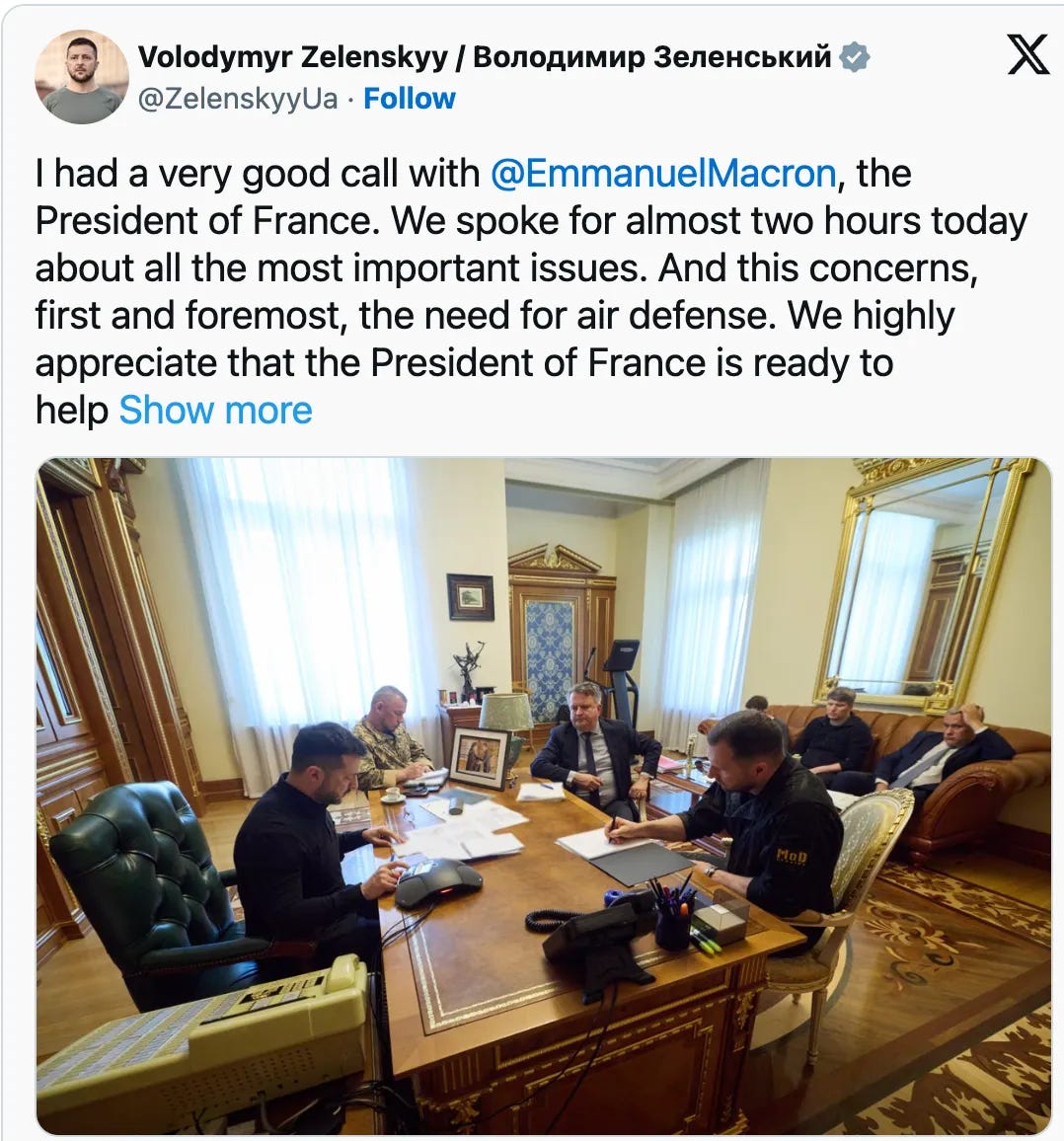
Could prove counter-productive for the Kremlin….as French president Emmanuel Macron learned of the latest murderous attack on civilians by Russian drones and announced his response on X … horror and emotion at the attack on Volodymyr Zelensky’s hometown of Kryvyi Rih:
And with this immediate effect:
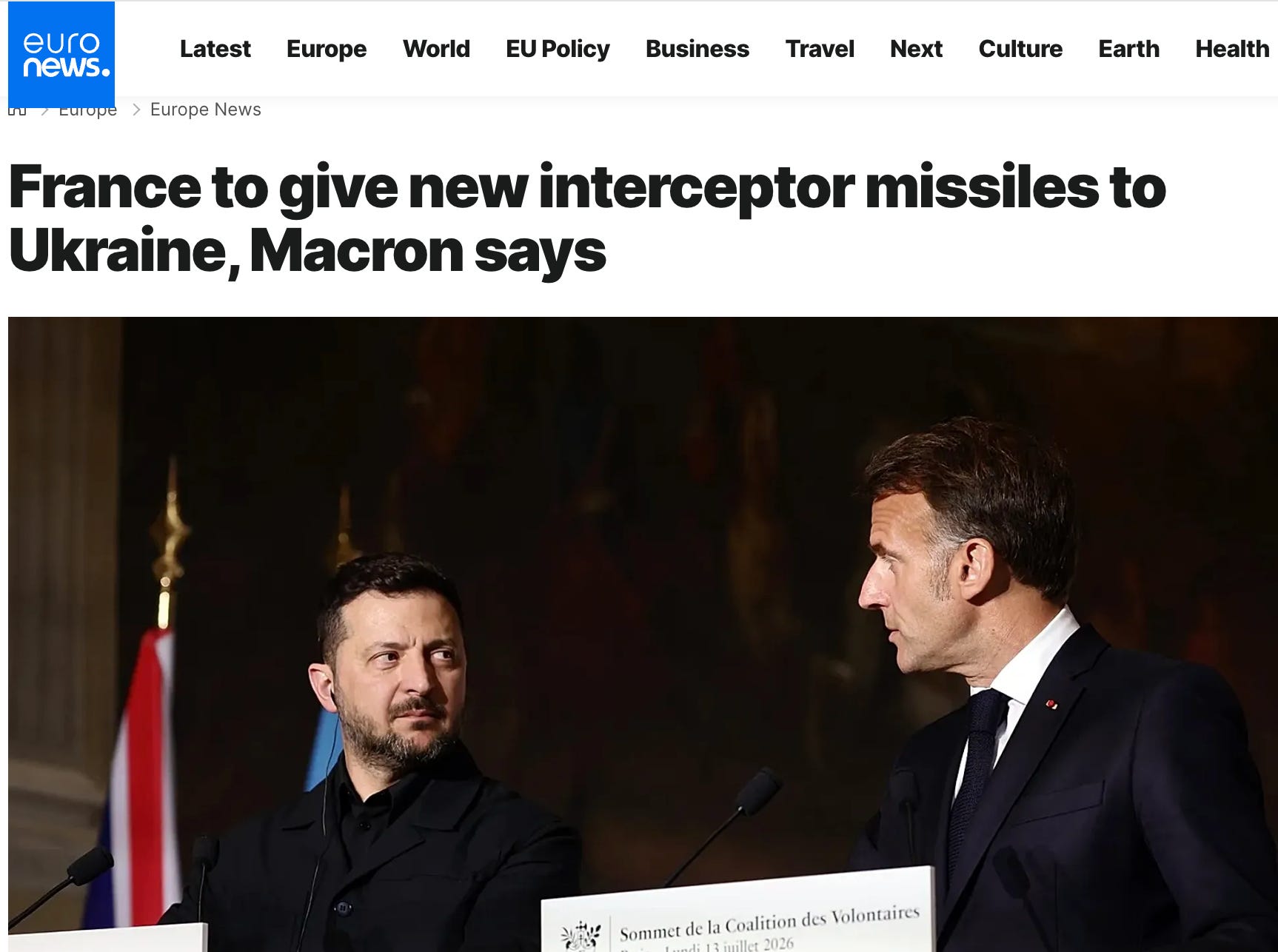
“It is crucial to provide Ukraine with all the necessary means to defend its airspace and thwart this aggression,” Macron announced. France will deliver new interceptor missiles to Kyiv following a major Russian attack on the shopping centre. The attack has prompted condemnation from leading figures across Europe, with Kaja Kallas, the EU's top diplomat, calling it "terror by design."
Zelenskyy said in a separate post that [he and Macron] had spoken at lengthm about Ukraine’s air defence needs, funding, and communications with Washington.
“We agreed to accelerate the delivery of the latest French equipment and missiles. Thank you for confirming your readiness to provide licenses for the production of missiles,” Zelenskyy wrote.
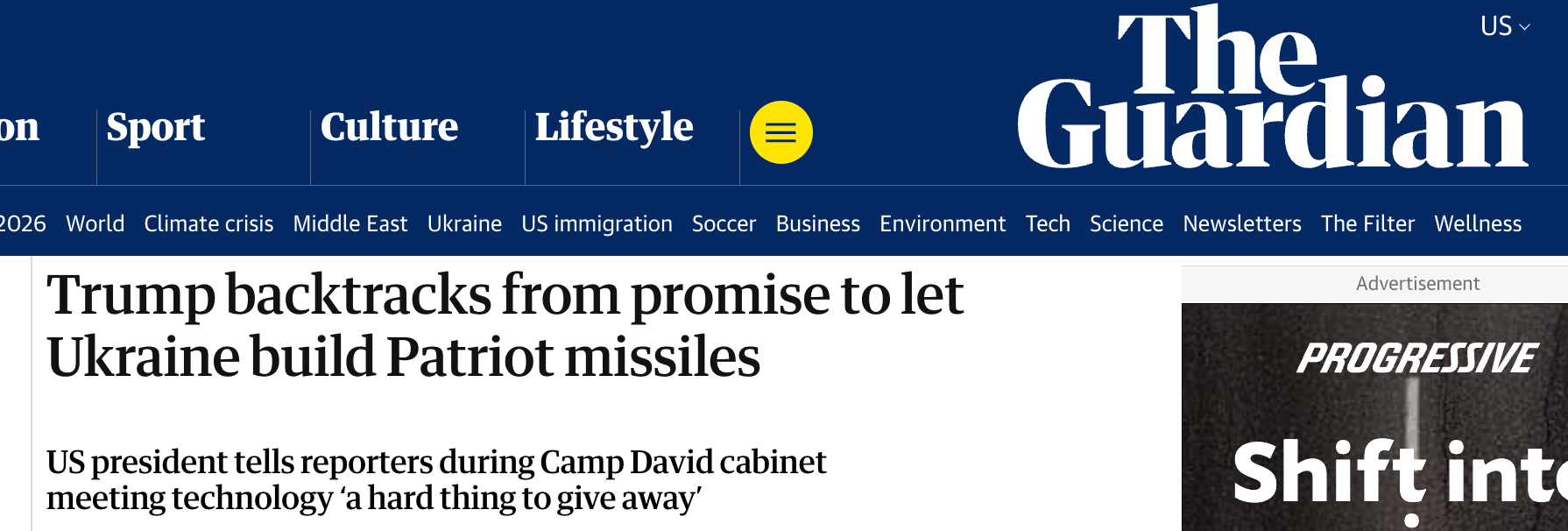
The manufacturing licenses, so critical to let Ukraine’s increasingly efficient defense industry spring to its nation’s rescue, are still being withheld by Donald Trump.
New threats, new challenges, their antecedents…Plus, an inscribed copy of my book, A Red Line in the Sand. Founding members get my last three books and lunch withn Andelman! Along with a weekly portfolio of cartoons…and Friday our weekly live conversation.…with a new Celebrity Guest to decode the universe, or America’s next challenge….And this Friday, we have…
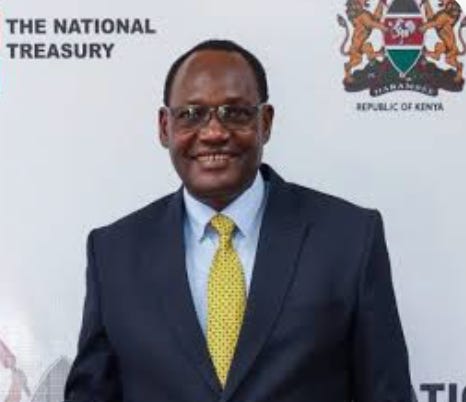
Investor and operator with over 30 years of experience across banking, investment, and operating businesses in East, Southern, and Central Africa. As Managing Director of Dillux SA, a diversified holding company, he oversaw group operations and investments and led a number of transactions, including the acquisition and turnaround of Finbank SA (Burundi) and Sorwatom SA (Rwanda), where he also served as Executive Chairman. Now based in Britain he’s developing new investment activities and partnerships into Africa. In Kenya, he was relationship manager to some of the largest Chinese state-owned corporations operating there, later advised on a Kenyan presidential visit to China, and established a joint venture with a Chinese company. He is uniquely placed to examine competiton of China, Russia and Trump (?!) for hearts, minds and footholds across Africa…OR how China manages to make itself more present & respectful than the United States?
As The Economist pointed out:
Interest rate decisions made by the Federal Reserve in Washington rippled through to the price of Zambian groceries and rents. When Zambia defaulted on its debt in 2020, the dollar’s strength at the time exacerbated the fallout.
The southern-African country is now trying to wean itself from the greenback. Zambia has become the first country on the continent to accept mining royalties and taxes in yuan. This eases capital flows between Zambia and China, the biggest buyer of Zambia’s abundant copper and its biggest creditor. It also reduces Zambian exposure to the dollar. What is more, the Bank of Zambia now requires domestic transactions to be paid in local currency, boosting demand for the kwacha. Offenders face fines, up to two years in prison or both.
Zambia is illustrative of Africa in general. The dollar still dominates, with 70% of the continent’s external public debt and many cross-border transactions still denominated in the currency. But countries are incrementally adopting alternatives to “king dollar”. African governments do not want merely to swap reliance on one foreign currency with dependence on another.
One beneficiary is the yuan. Egypt, Nigeria and South Africa, three of Africa’s biggest economies, have agreed on new currency swaps with China as the share of trade settled in yuan expands. Kenya has converted dollar-denominated loans into yuan, potentially saving up to $215m a year in interest costs, equivalent to nearly a fifth of its debt-service payments to China in 2025. Around two-thirds of the country’s outstanding debt to China is now denominated in yuan. Ethiopia and Mozambique are negotiating similar arrangements.
In what had thought to be a model in Africa, alas The Economist reported…
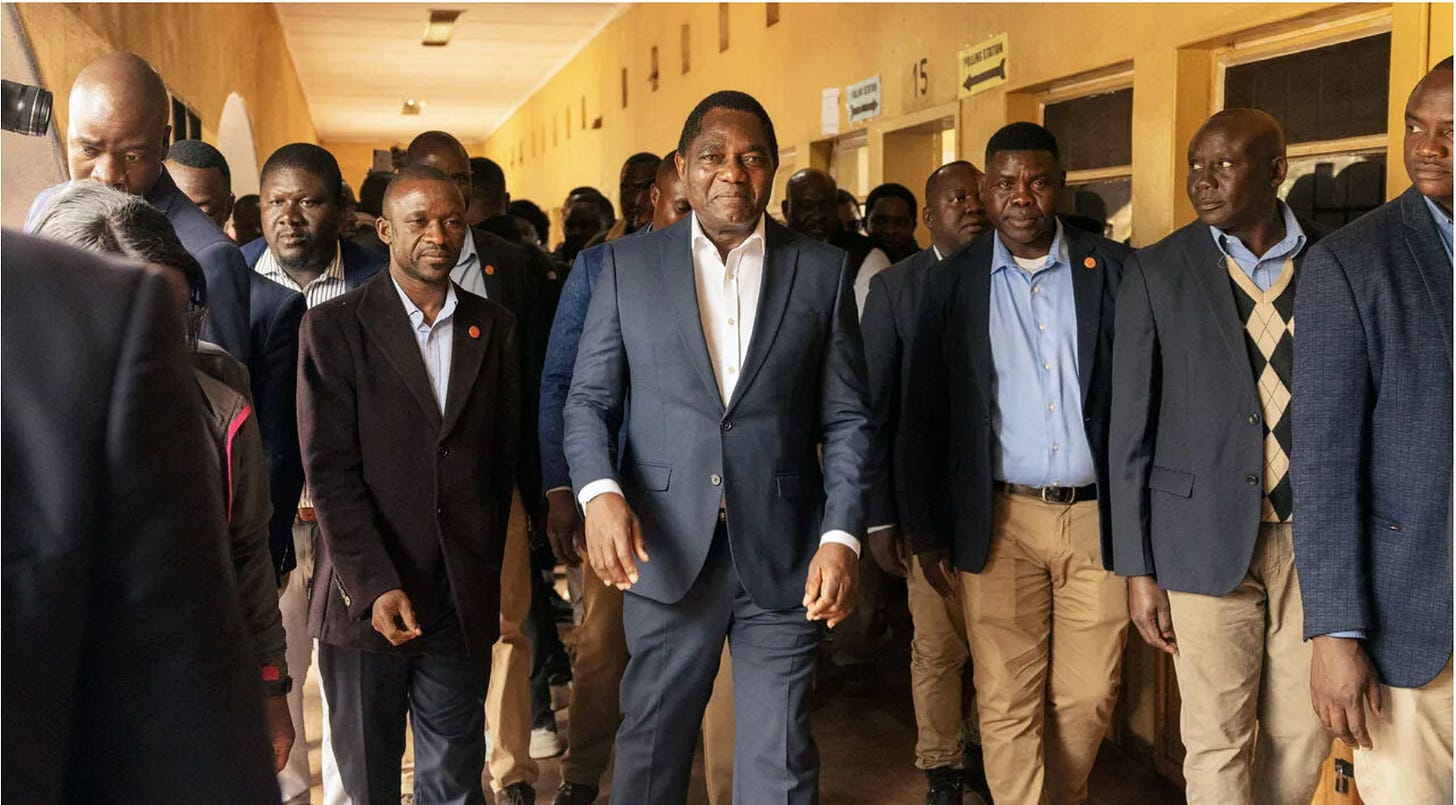
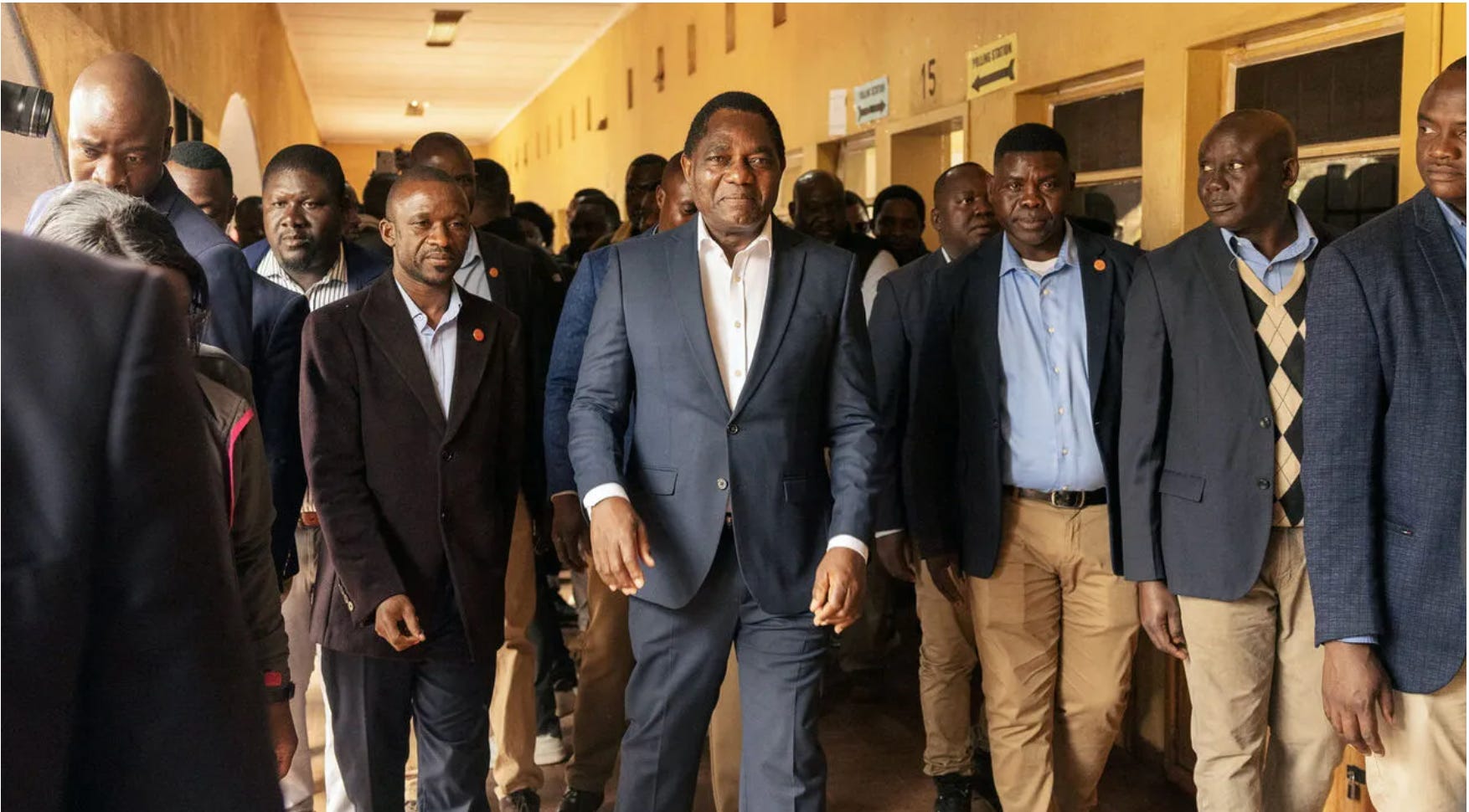
When Haikainde Hichilema was elected as Zambia’s president in 2021, he promised to reverse the democratic slide in the southern African country of 23m. During his long years in opposition, including a spell behind bars, he had preached liberal principles. In office, he initially cracked down on bullying party cadres. In a survey last year, more than 3/4 of Zambians thought he had done a good job of strengthening democracy.
But that reputation may not survive the events of Zambia’s recent election. Mr Hichilema, who was declared the winner on August 18th, almost certainly received the most votes. But evidence of inflated vote tallies presented by independent observers suggests he did not win 60%, as the electoral commission claims. The killing of a former cabinet minister by state security forces during a raid on the house of Brian Mundubile, the main opposition candidate, further tarnished the process. So did Mr Mundubile, who claimed victory without showing evidence.
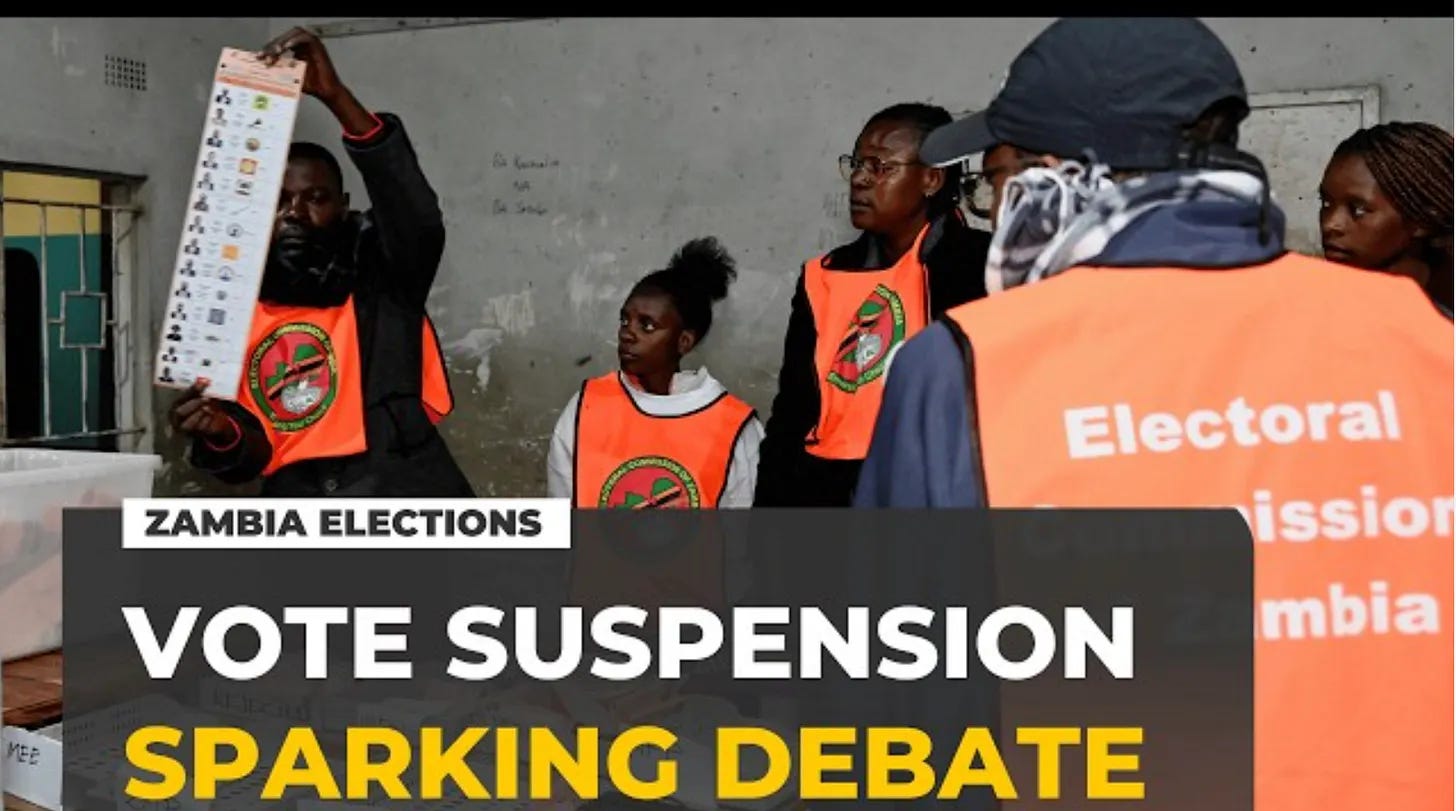
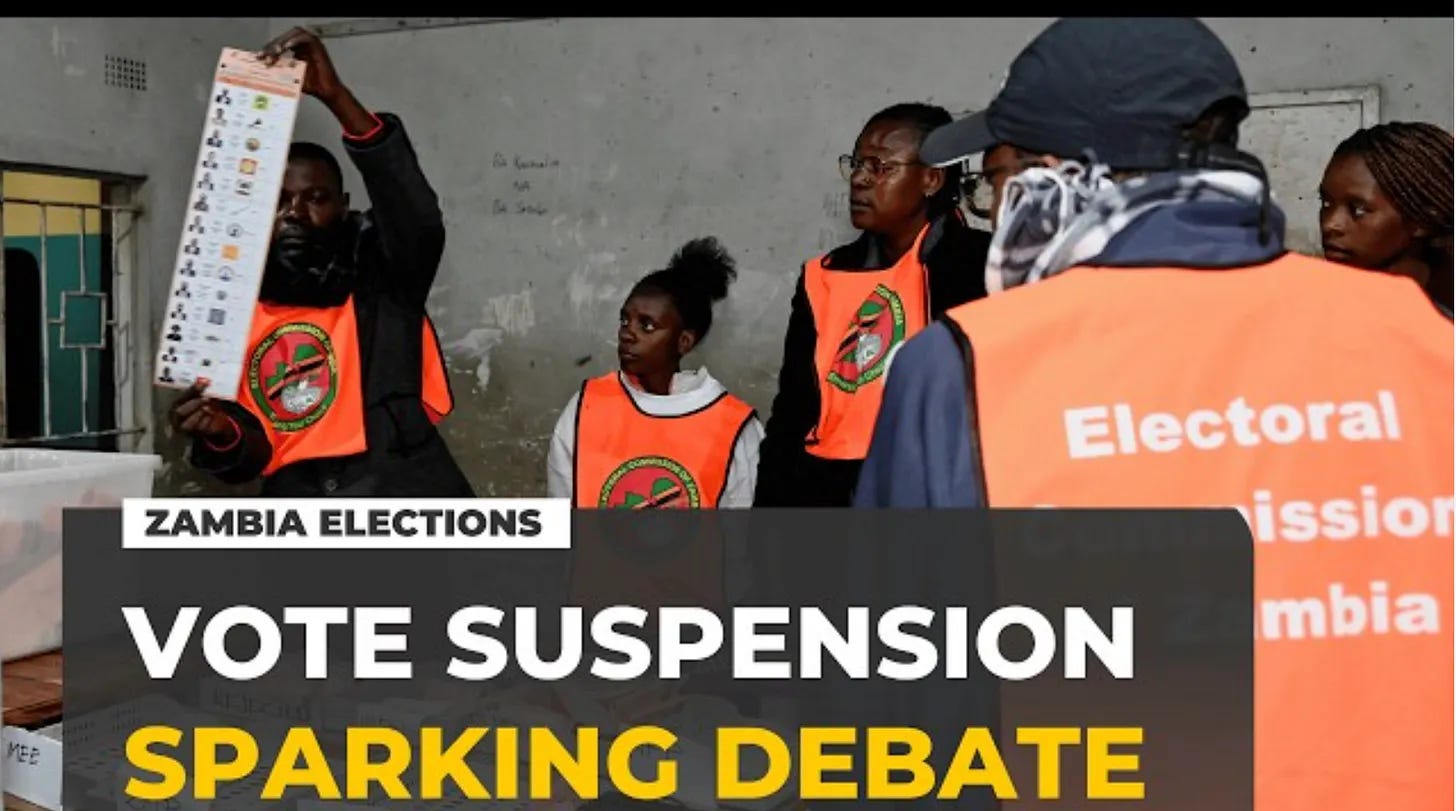
Voting itself went relatively smoothly. The crucial moment came the day after polling, when the electoral commission suspended the vote count, citing unspecified attacks on its staff. When tallying resumed, several hours later, the situation had “deteriorated significantly”, according to observers dispatched by the European Union. Instead of recording results as soon as they were announced, the returning officers seemed to wait for instructions from the commission’s headquarters. The armed forces maintained a heavy presence at the centres where votes were added up.
Zambian democracy might not be perfect, but it has generally been more robust than in most countries on the continent, with three peaceful transfers of power since multiparty democracy was restored in 1991. The country’s messy election is another sign democratic norms are eroding, in Africa as in other parts of the world.
For our highly valued, but lightly paid,members…America’s faltering universities: a view from abroad….And of course, the full hour of Unleashed Conversation with Sarah Leah Whitson… Plus our portfolio from the world’s greatest Cartoonists.
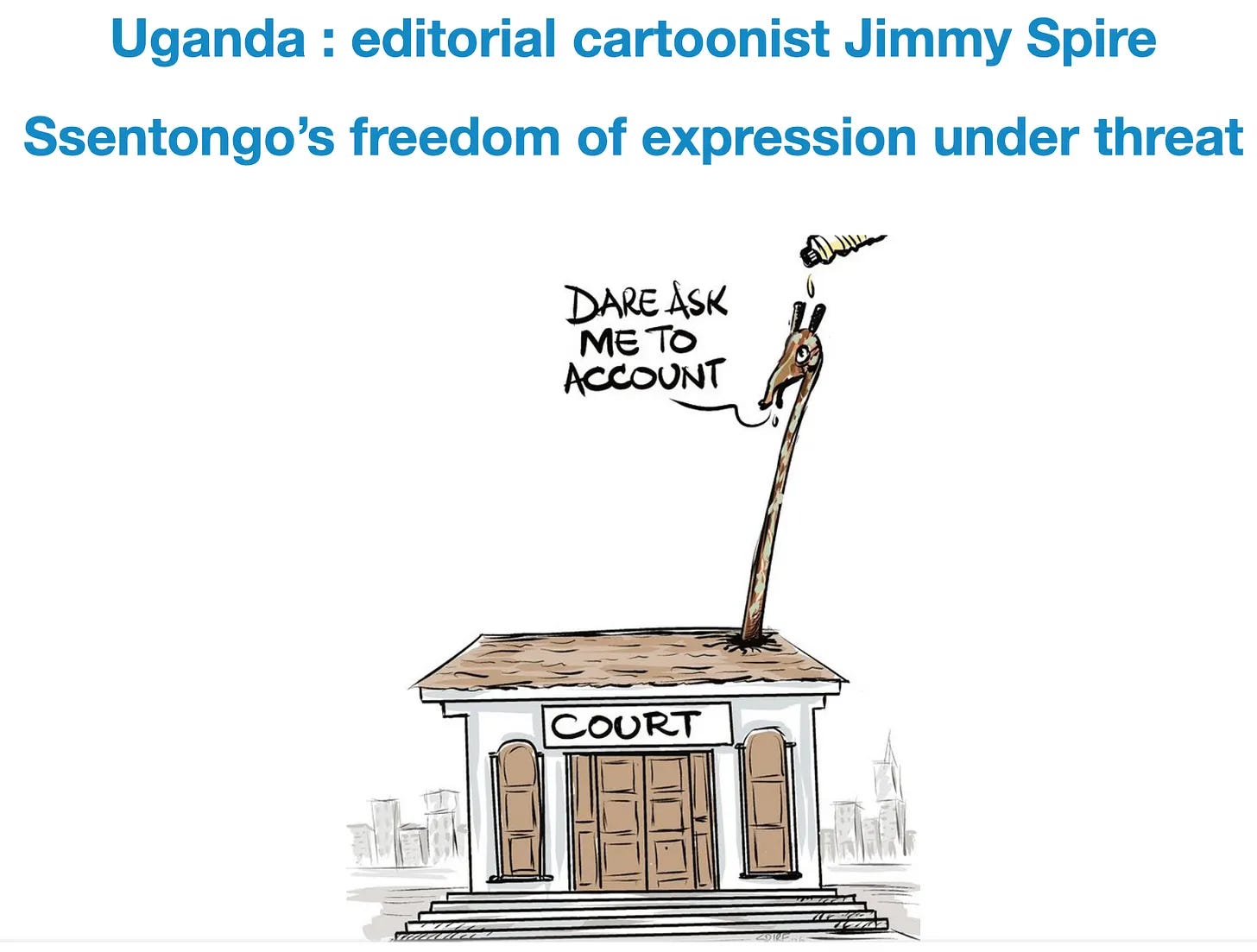
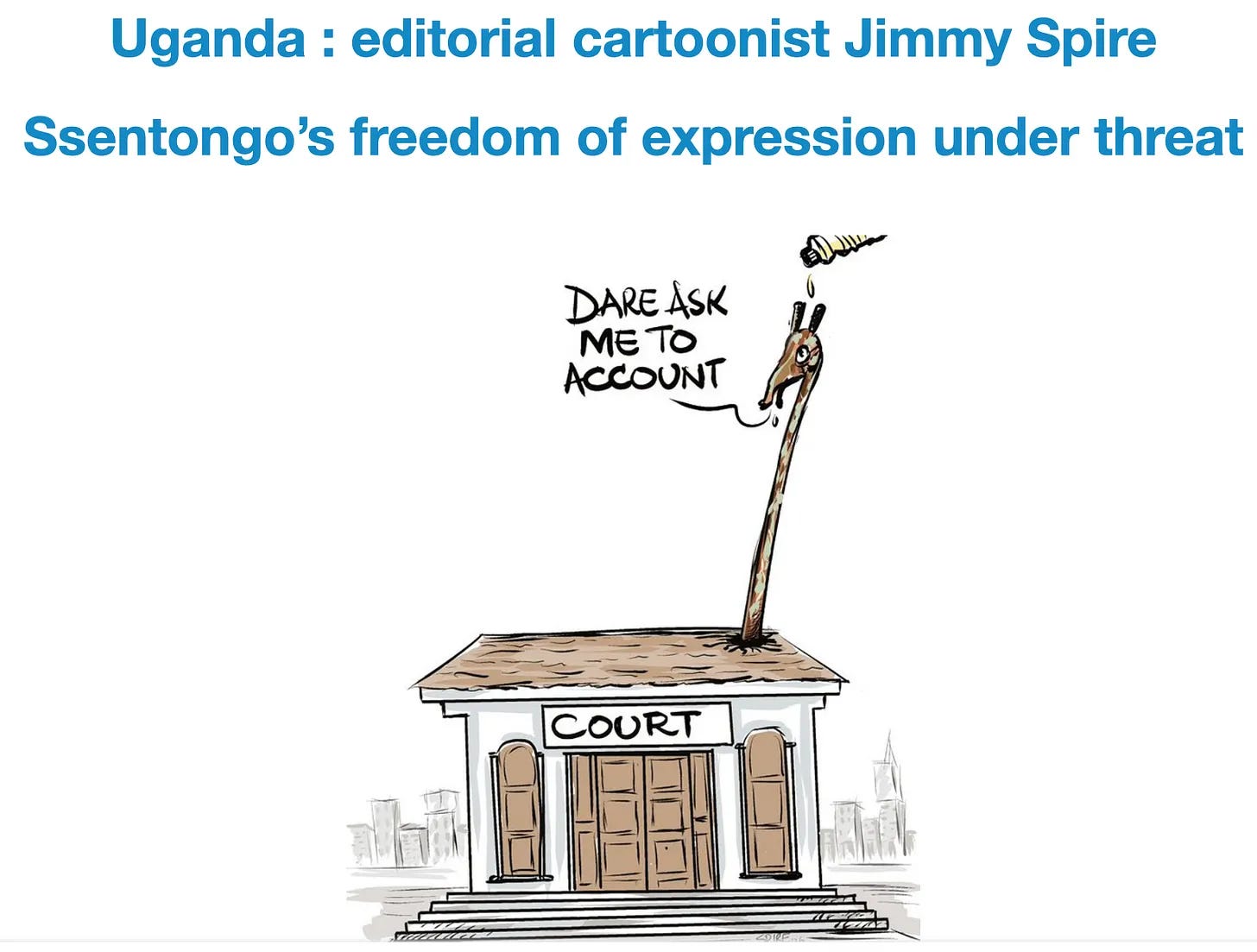
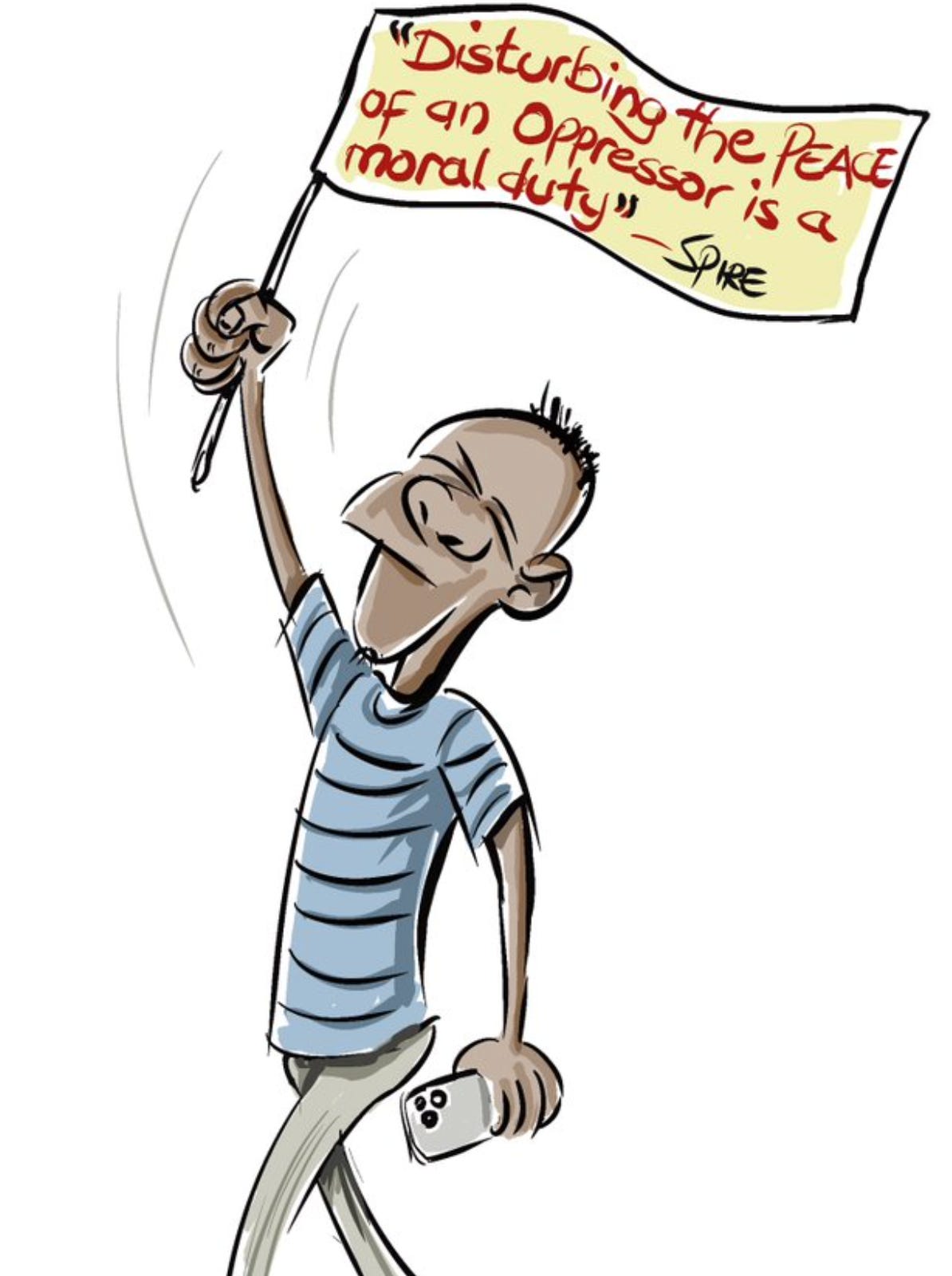
Cartooning for Peace, Cartoonists Rights and Freedom Cartoonist Foundationexpress their deep concern over the legal proceedings brought against Ugandan editorial cartoonist Jimmy Spire Ssentongo (alias Spire), known for his unwavering and outspoken advocacy for good governance and anti-corruption. This incident sheds a harsh light on the state of freedom of expression in Uganda, and will be closely monitored.
Recipient of the 2026 Koffi Annan Courage in Cartooning Award presented by the Geneva—based Freedom Cartoonists Foundation, Spire is being sued for defamation by Kampala International University (KIU)—a private university owned by a stalwart supporter of the ruling party.
Many internet users shared their experiences of KIU’s abusive practices with Spire so that he could highlight them on social media (exorbitant late fees, failure to pay social security dues for staff, tax fraud, silencing students, quality of education etc.). Spireduly raised these issues on his X account.
A High Court Registrar granted a long interim injunction prohibiting Spire from publishing any “unsubstantiated” information about the university. This injunction was issued even before he was informed of the defamation lawsuit filed against him. The university was also granted a temporary injunction, disregarding Spire’s objections over violation of his freedom of expression and right to put public institutions to scrutiny. Spire’s appeal against the injunction has not even been considered…




Comments
Nothing yet. Say the first thing.
Sign in to join the conversation.