In this weekly feature for Andelman Unleashed, we continue to explore how media of other nations view America and the rest of the world, bringing to bear 60 years of reporting from 90+ countries. We cover lots of ground—diving each week through 30+ newspapers & 100+ websites on every continent. You may not want to read it all, but it’s all here for you!
We can all learn from what others say about us, around the globe.
To accomplish this mission for you, I pay for a host of global media—newspapers, magazines, websites, television—so you all can become better informed about the world…A (lightly) paid, even Founder subscription would help if you are able…and allow you to participate to the fullest in our adventures.
Once upon a time there was peace (of sorts) in the Middle East. Then Donald and Bibi (or maybe just Bibi?) decided that wasn’t ‘good enough’. They had to push the envelope. Put a stake through the Obama Iran Deal (officially the Joint Comprehensive Plan of Action or JCPOA). As long as this had held, there’d been no shooting by the major players in the region—Iran, Saudi Arabia, Iraq, Jordan, the UAE, even the United States. But now, all that is a distant memory. Now we have a war…or (overnight) a peace?
But with this primary question remaining….where’s the exit ramp? Or as I asked Mauro Gilli, Professor of Military Strategy and Technology at Berlin’s Hertie School—the Celebrity Guest on Friday’s Unleashed Conversation for our paid subscribers—what does victory even look like when your adversary is Iran…..
As for the full, riveting, hour-long conversation, below the paywall, do subscribe!
The fact is that Trump, having uncorked this genie, has no real way of luring or crunching it back into its bottle. He’s certainly trying, but with quite literally a gun to his head. Or as the BBC reported:
Saudi Crown Prince Mohammed Bin Salman had a call with Trump, aimed at reducing regional tensions, the kingdom’s official SPA press agency reported. “His Royal Highness emphasised the necessity of prioritising dialogue to reduce tensions and the importance of exerting all possible efforts to achieve a truce that paves the way for diplomatic solutions.”
The US’s Gulf allies hold concerns that, while the American mainland is out of reach of Iranian missiles, countries like Bahrain, Jordan and the United Arab Emirates are not—with their critical infrastructure such as water desalination plans being prime targets.
And then? The BBC continued:
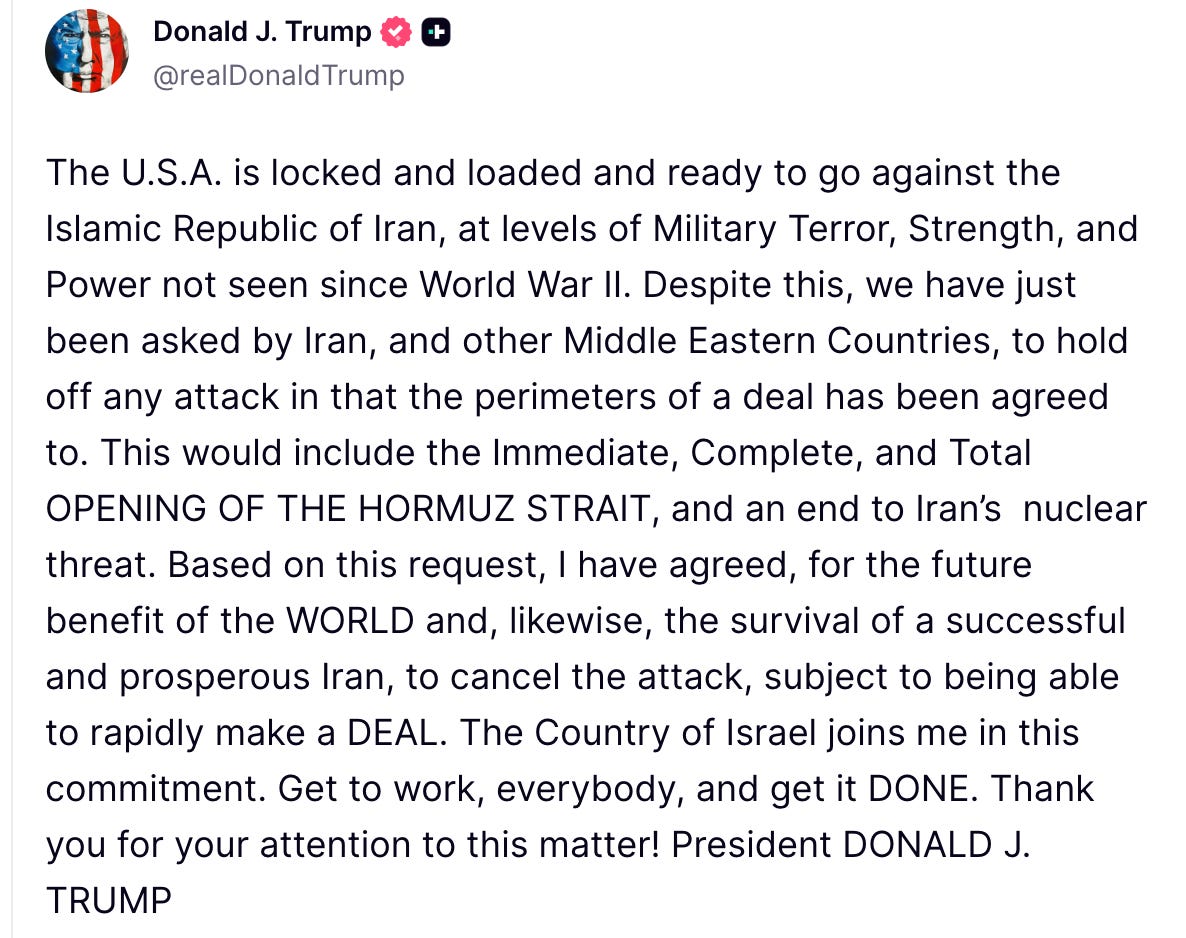
Donald Trump says he has cancelled strikes against Iran, provided a deal is struck “rapidly” with the country. In a post on Truth Social, the US president said he had been asked by Iran and other countries in the Middle East to “hold off” on any attack as the “perimeters” of a deal had been agreed. Trump’s comments came after reports the US and Israel may have been planning new, intense strikes on Iran. It is not the first time that Trump has issued apocalyptic warnings, only to subsequently insist that diplomacy was being given a chance.
The background comes, as usual, from the Institute for the Study of War:
Iran is threatening to target energy infrastructure in the Middle East, likely to try to deter the United States and Israel from following through on reported plans to strike Iranian energy infrastructure. A senior security official told Islamic Revolutionary Guards Corps (IRGC)-affiliated Tasnim News Agency Iran has prepared an attack plan that includes attacks on regional energy infrastructure in response to reports President Donald Trump has ordered new strikes on Iran.
When enemies and allies alike are the ones counseling sanity, it’s truly difficult to be all alone out there on the far limb of crazy. Still, the chances of any “rapid” deal seem problematic at best. After all, as Trump himself wrote on his Truth Social….
That’s hardly the shape any deal with an intractible Iran, certainly its powerful Revolutionary Guard Corps, has been willing to accept so far. As Le Monde observed:
An Iranian MP, spokesman for the national security committee, reported on Sunday that diplomatic talks were underway to revive the memorandum of understanding concluded in mid-June by Washington and Tehran, which had recently been undermined by the resumption of bombing.
“I can tell you that efforts are underway to revive the 14-point Islamabad agreement, particularly by the mediators,” Hassan Ghashghavi said in a televised interview, referring to Qatar and Pakistan. “They know that the main issue is the Strait of Hormuz, which is key to the situation right now, and there is an exchange of views” on this matter, he continued.
As historian Xavier Carpentier-Tanguy, director of the Geopolitical Observatory of Marine Worlds at the Jean Jaurès Foundation, explained chillingly for Le Monde’s readers ….
Control of the straits, particularly the Strait of Hormuz, suddenly makes this shift visible. The overwhelming military superiority of the United States is not enough to guarantee lasting control of traffic against the Iranian Revolutionary Guard, which possesses a strong capacity for surveillance, attack, and disruption in the strait. Donald Trump announced his intention to become the “guardian” of this passage and to impose a toll, before abandoning this proposal the very next day.
What Hormuz reveals is the direction that the reshaping of international trade has taken….Major powers are no longer competing solely for territory, but also for the infrastructure and corridors through which trade flows. This competition is crystallizing at certain points around the globe, where maritime, land, rail, and digital routes converge. Power consists of opening or closing passages, but also of slowing flows, securing them, increasing their cost, or hierarchizing access.
Our weekly Cartoon Portfolio from cartoonists around the world is showcased below for our paid subscribers….do upgrade!
At the moment at least, though, for Donald Trump, power is whatever he still chooses to wield. And still, he continues to waffle. One issue we explored in some depth with Mauro Gilli is what happens when the well runs dry. To guard against that eventuality, when we moved into our home in Candensis, Pennsylvania, we drilled our well down to a depth of 800 feet (244 meters). Even in driest times, it’s still keeping our home well-supplied. But not so in Ukraine. This week, with Trump now waffling (again) even on allowing Ukraine to build their own Patriot intercepters, President Volodymyr Zelensky said their well has now certainly run dry, with desperate and deadly consequences as Olga Rudenko, editor-in-chief of the Kyiv Independent, observed:
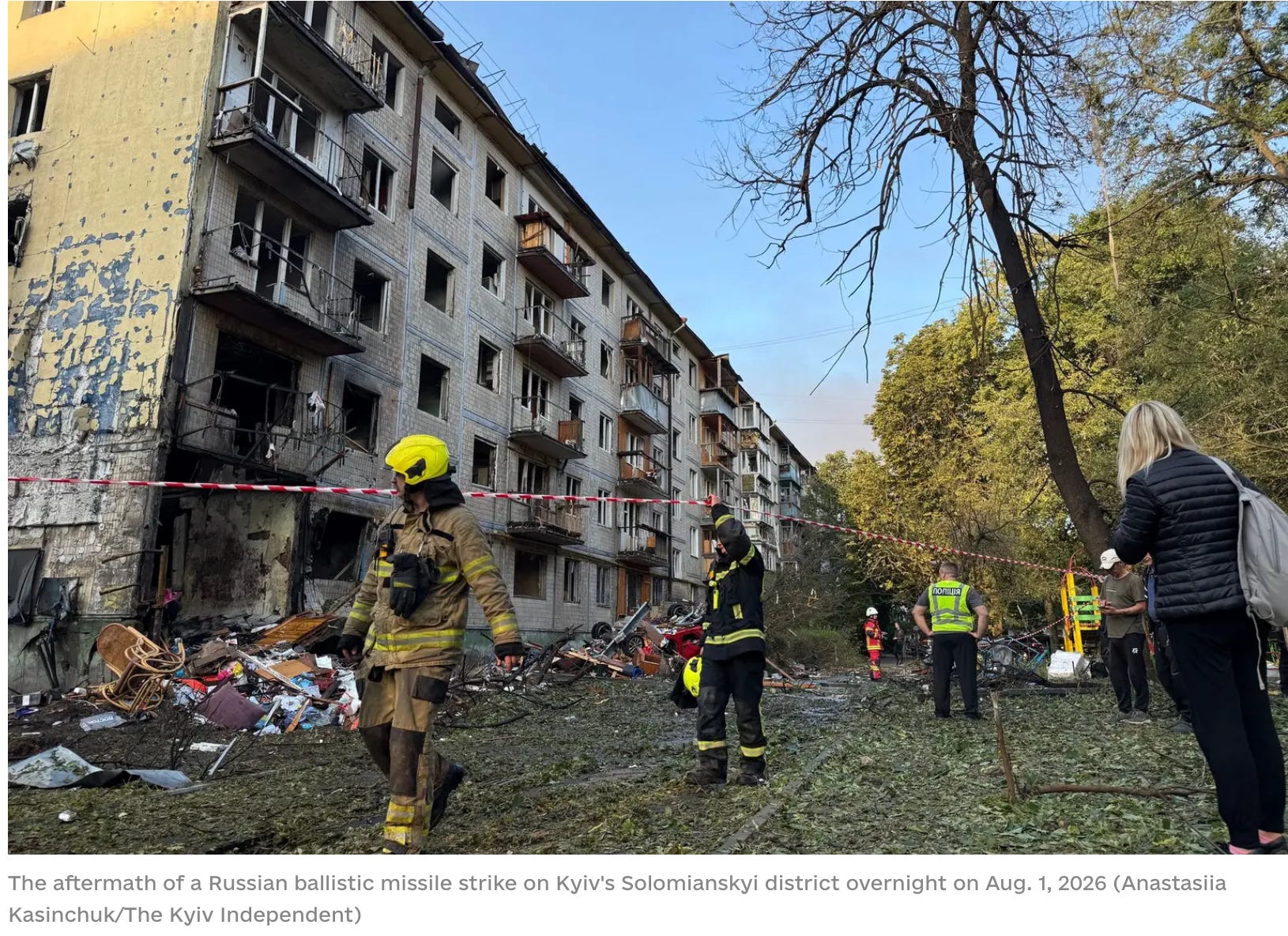
Russia barraged Kyiv with wave after wave of ballistic missiles. Nine people were killed overnight, and dozens were injured. Damage and destruction were reported in several districts of Kyiv. According to Ukraine’s Air Force, a total of 35 missiles—27 of them ballistic—and 185 drones were launched against Ukraine overnight, most of them targeting Kyiv.
Most of the drones were shot down, but out of the 35 missiles, only two were intercepted, the Air Force said. This is especially worrying: intercepting ballistic missiles has always been the most challenging task in these air attacks, but the interception rate has been getting worse. This summer, there have been attacks, like this one, where no ballistic missiles at all were intercepted.
“It’s simply because there are no missiles for the Patriots,” President Volodymyr Zelensky said in the aftermath of the attack.
The attack gave residents only a few minutes’ warning before impact, leaving many trapped beneath the rubble of their homes.
“We heard explosions almost immediately after the air raid alert went off. Then another one. And another,” 38-year-old Lidiia Synovska told the Kyiv Independent outside her damaged apartment in the capital’s Solomianskyi district. “How were we supposed to get to a shelter? We didn’t even have time to take cover.”
Russia’s use of ballistic missiles meant those living in the capital had little time to take cover from the second mass Russian attack in just 48 hours. Videos posted on social media appear to show some victims had been running toward shelters moments before they were struck.
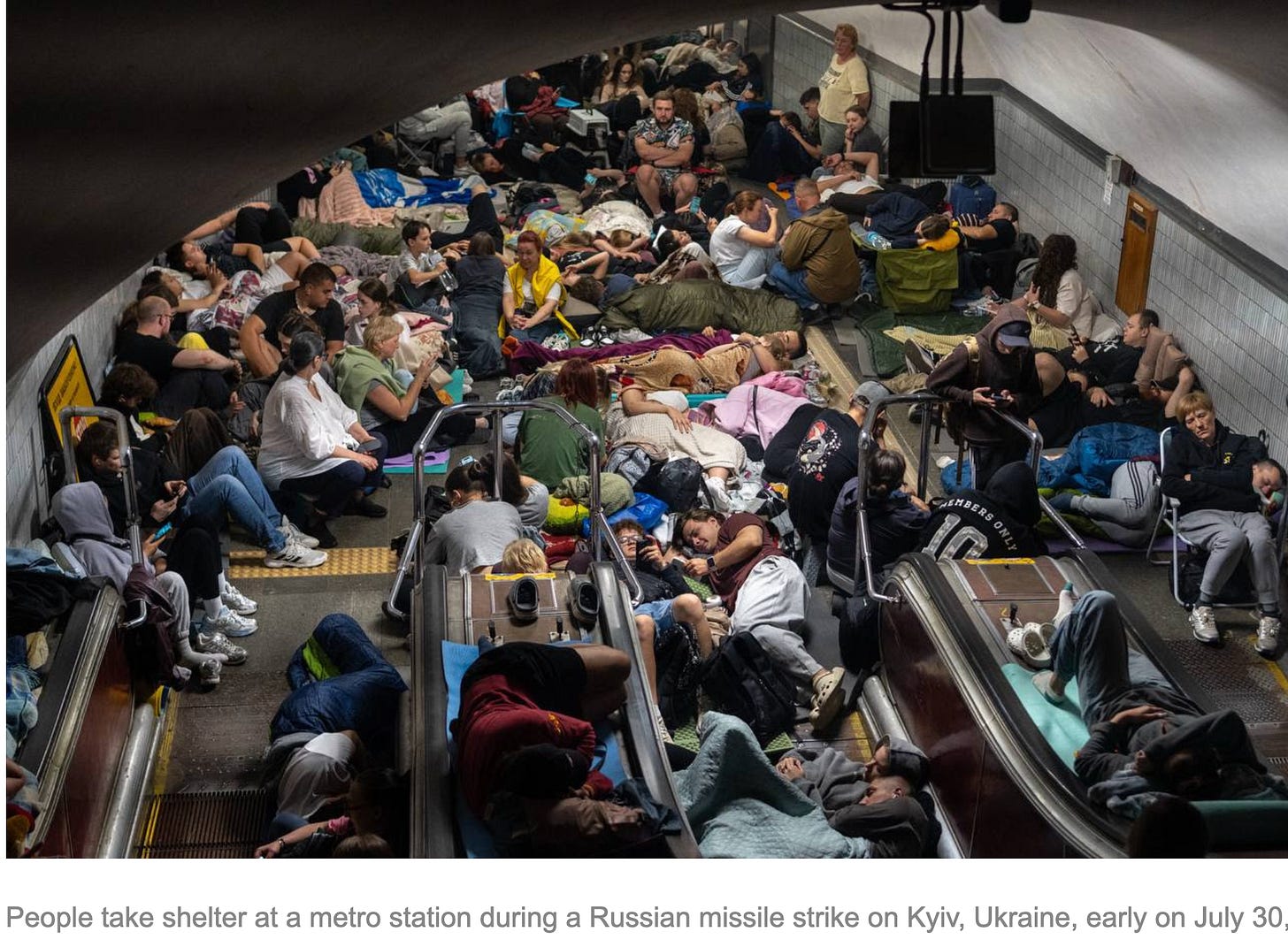
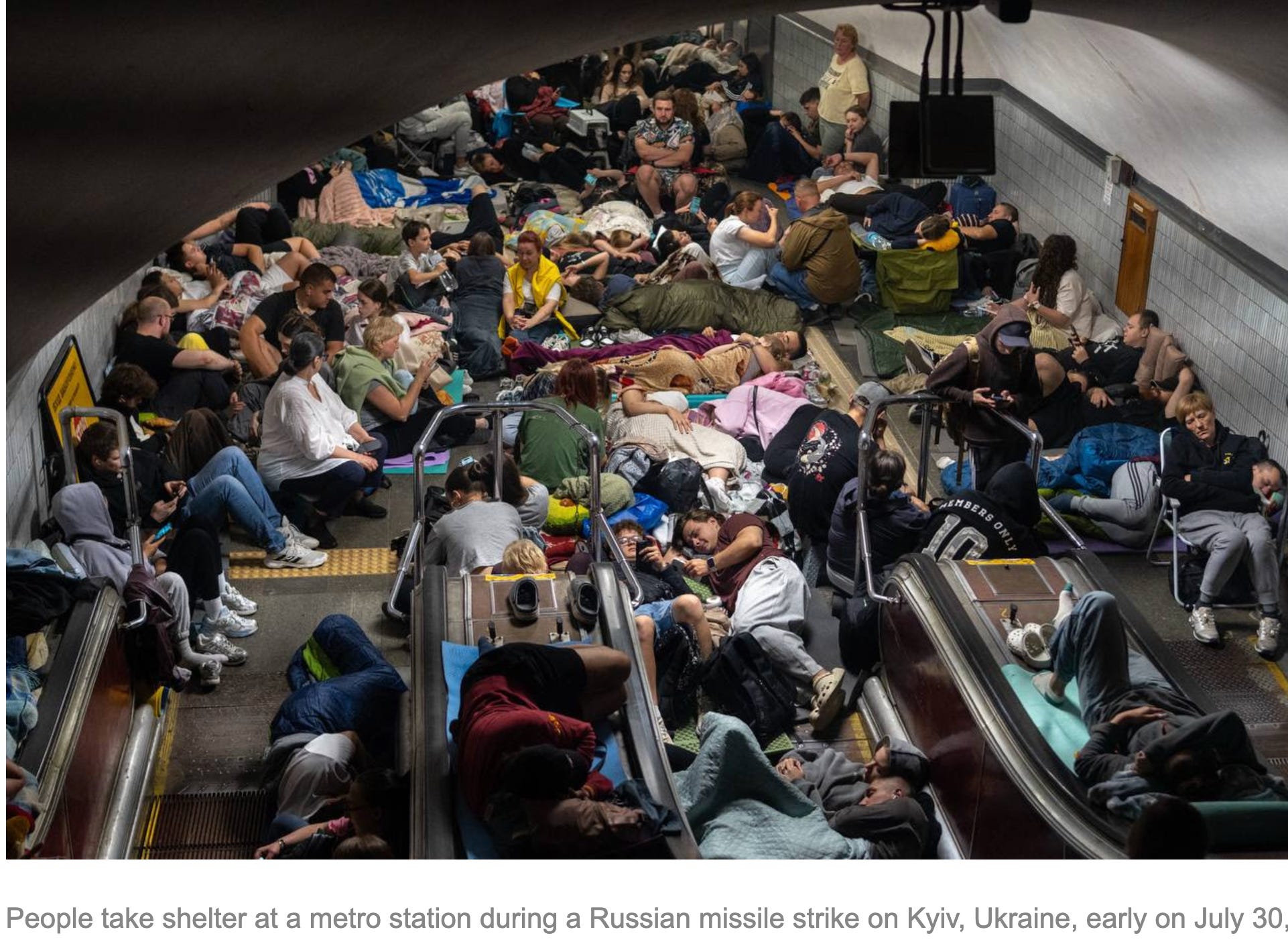
For the first time, some metro stations—the city’s safest shelters—got so overcrowded they stopped letting people in. Platforms of the metro stations fill up before the actual attacks start; people come and settle for the night whenever there is a report of an expected attack. They bring mattresses, foldable beds and sleeping bags. There’s even been a whole debate about the ethics of using camping tents, since they take a bit of extra space.
The escalating Russian attacks raise increasingly sharper questions for the local authorities: Why are there no shelters being built, five years into the full-scale war? Kyiv has a drastic lack of bomb shelters. There are many parts of the city the metro system does not reach, and anyway, the stations can’t fit everyone who seeks safety. Many use basements, but that is no solution either: In many apartment buildings, basements have been either neglected or repurposed to house shops and other businesses.
In short, Kyiv [also] has a bomb shelter crisis. With escalating attacks, it will only become more evident, and there is no sign that the city authorities are even trying to do anything about it.
And then Rudenko noted the human cost:
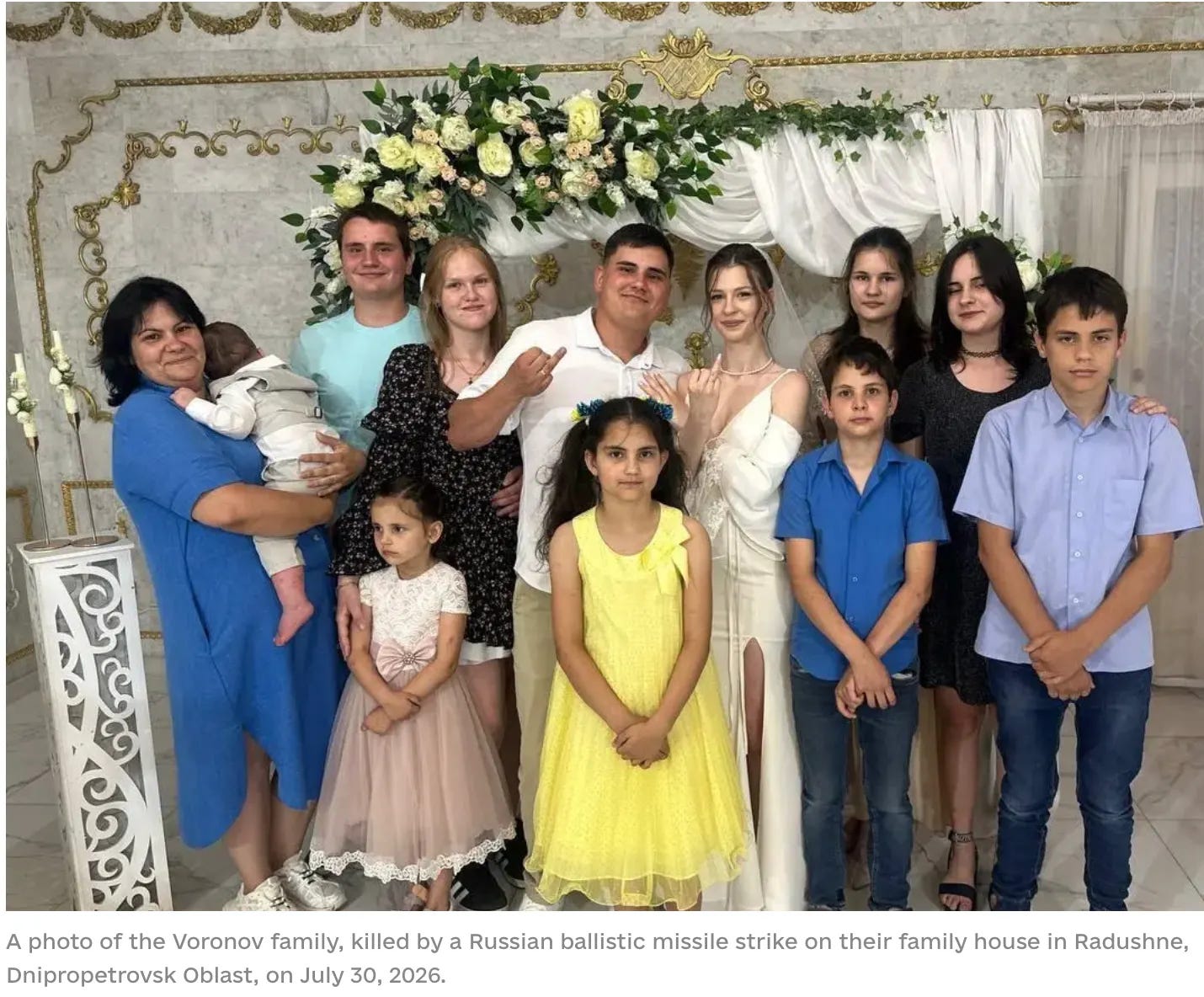
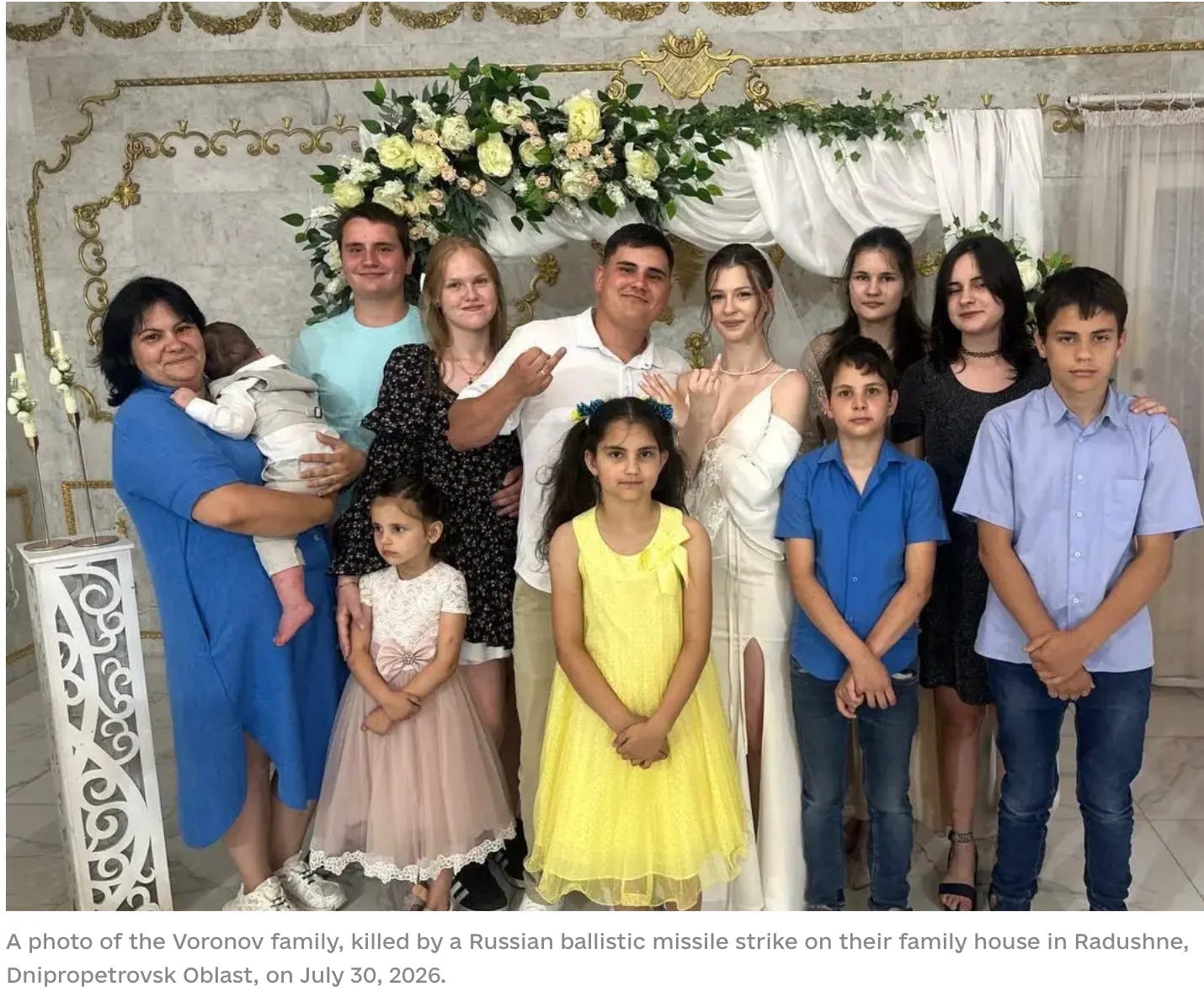
Even though we are used to reading news about civilian deaths, every now and then there is a story, a video or a photo that cuts through your acquired numbness. This week, for me, it was the story about a large family killed in the Russian strike on the village of Radushne in Dnipro Oblast on Thursday night.
An Iskander-M missile hit the home of the Voronov family, killing everyone who was there—the parents, several of their younger children (the family had nine kids), and their one grandson.
A heartbreaking screenshot from the village chat circulated online after the attack. In it, one of the family’s older children, who had moved out, was asking about the fate of his parents and siblings. “I’m their son. Has anyone survived?” he wrote. Someone replied: “I was there. There is nothing left of the house. I’m sorry…”
The Institute for the Study of War [ISW] was even more direct:
[The strike] featured a particularly large number of missiles and aimed to exploit Ukraine’s shortage of ballistic missile interceptors. The Ukrainian Air Force reported thatRussian forces launched 284 Shahed-type, Gerbera-type, and Italmas-type strike drones and a total of 74 missiles. Ukrainian forces downed one ballistic missile, 54 cruise missiles, and 265 drones; three anti-ship missiles, six ballistic missiles, two cruise missiles, and 17 drones struck 20 locations; and debris fell at 13 locations. Russian missile strikes targeted a wide swathe of Ukraine’s deep rear and resulted in high civilian casualties…Russian forces continue to increase the number of missiles while decreasing the number of drones in strike packages, likely to exploit Ukraine’s shortage of ballistic missile interceptors, as Ukraine’s drone interception rate remains high.
And then, as the BBC reported on the latest, but much of the world hopes is not, Trump’s final word:
Trump says the US has “not agreed” to allow Ukraine to produce Patriot interceptor missiles—three weeks after offering the country the right to make the weapons.
“We have not agreed to that. We’re talking about it. But it’s a hard thing to give away, that kind of technology,” Trump said at a cabinet meeting. “These weapons are incredible. We have to be very careful about letting somebody build them. I don’t think this would ever happen, but, you know, those people that you give that technology, they can someday turn on you.”
Still, Russia is still very much struggling on the ground, as ISW reported Sunday:
The Russian rate of advance in Ukraine remains low two and a half months into the Russian Spring-Summer 2026 offensive, which has failed to make any operationally significant gains….Continued Ukrainian counterattacks, intermediate range strike campaign, and drone dominance continue to constrain Russia’s rate of advance and ability to field mechanized vehicles. Russian forces have conducted a few mechanized assaults in isolated areas of the theater in July 2026, but these assaults did not result in meaningful gains. The Kremlin has been optimizing the Russian military for positional warfare rather than maneuver warfare for several years, but Ukrainian adaptations are significantly slowing Russian advances in 2026 compared with previous years. There is no indication Russian forces will be able to accelerate their advances dramatically or restore maneuver to the battlefield.
Is what Trump seems especially adept at. France wants to rotate its ambassador to Washington, sending a replacement for the distinguished Laurent Bili, who arrived in Washington two very long years ago. The new gent was a classmate of President Emmanuel Macron at the prestigious Ecole National d’Administration (ENA) and currently runs the foreign minister’s office. But Trump wants no part of this replacement. Le Monde’s Claire Gatinois picks up the sordid tale….
Aurélien Lechevallier had almost finished packing for his departure to Washington on September 20, where he was to take up the role of French ambassador. But according to multiple sources Le Monde spoke to, Lechevallier's appointment would, at best, be postponed and, at worst, blocked. For now, the Americans refused to grant him agrément, a formal approval required for an ambassador.
“The United States is very disappointed by the irresponsible and disrespectful remarks made by the French. We are responding appropriately to their comments,” a U.S. State Department official explained to Le Monde to justify this retaliatory measure against France.
A tweet from the French Permanent Mission to the United Nations in Geneva, expressing outrage at the United States’ vote against renewing the mandate of Volker Türk, the UN High Commissioner for Human Rights, sparked this outburst from the Trump administration. “The United States was once a beacon of human rights. That is no longer the case. Today, they find themselves alongside North Korea, Nicaragua, Mali, and Russia, isolated. And the world is no longer listening to them,” the French mission wrote on the social network…
On February 24, 2025, and again on April 16 of that year, the US vote at the UN had already joined those of Belarus, North Korea, Nicaragua, and Russia in opposing a resolution condemning Moscow’s war of aggression against Ukraine. But at the time, the outraged comments were made behind the scenes as diplomats tried to shift the US position in favor of Kyiv.
Refusing to approve an ambassador is a strong gesture. And a rare one. In 2015, the Vatican opposed the appointment of a French diplomat, Laurent Stefanini, head of protocol at the Élysée Palace, because of his homosexuality. In August 2023, the arrival of Mohamed Bouabdallah at the French embassy in Burkina Faso was also blocked by the government in Ouagadougou. But Paris had never before faced such a refusal from Washington.
But no problem….help is on the way, Le Monde believes….
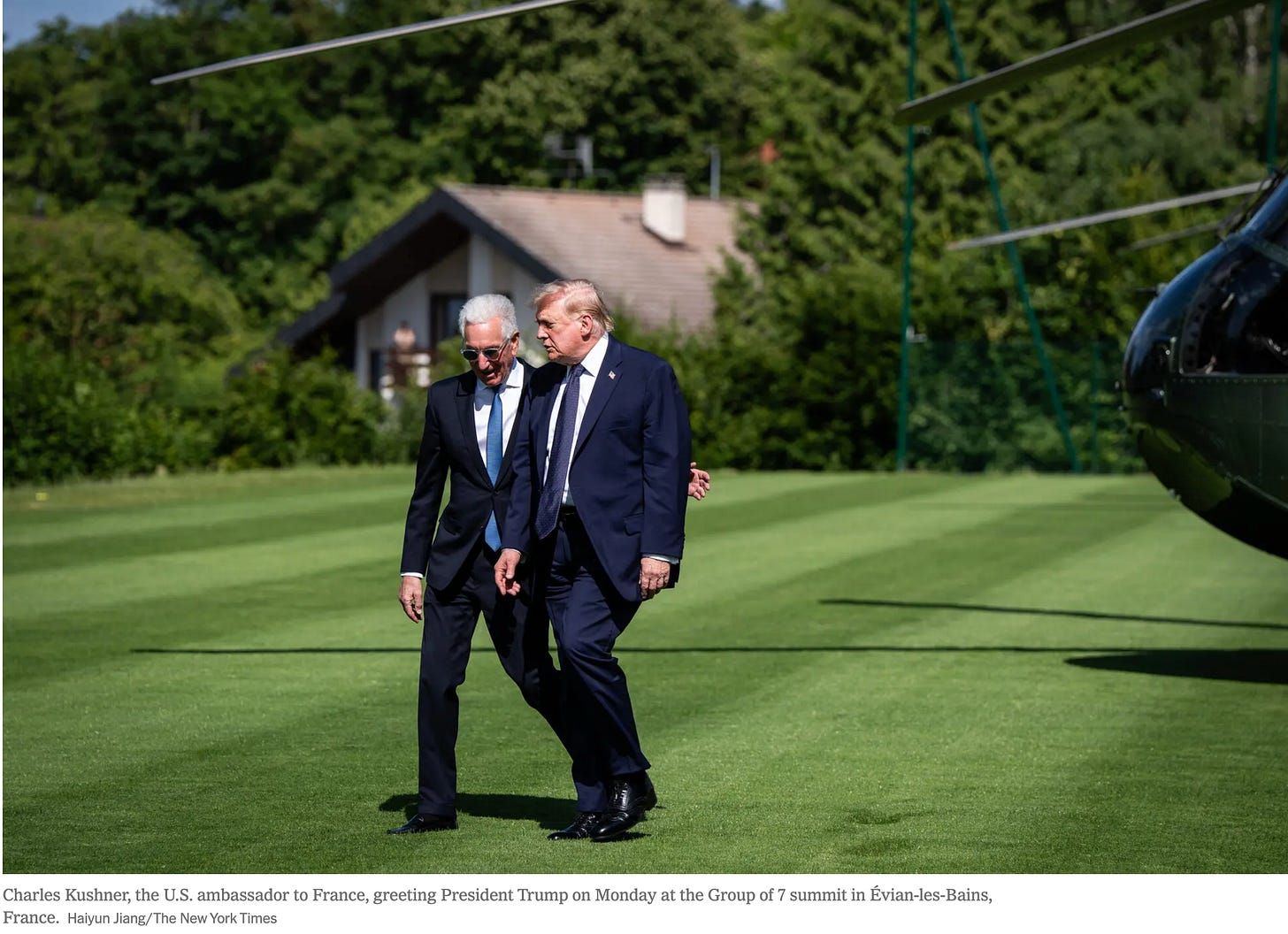
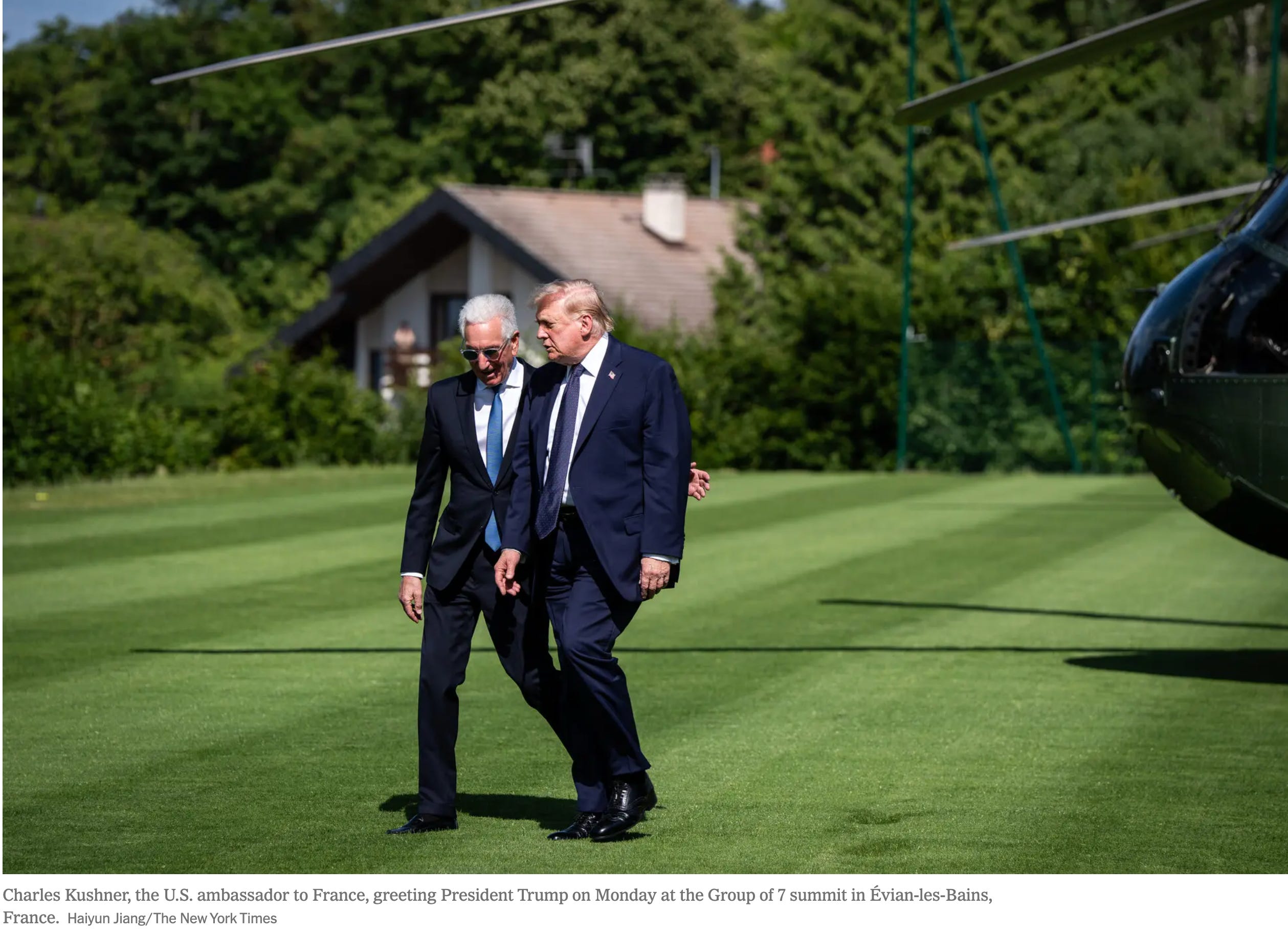
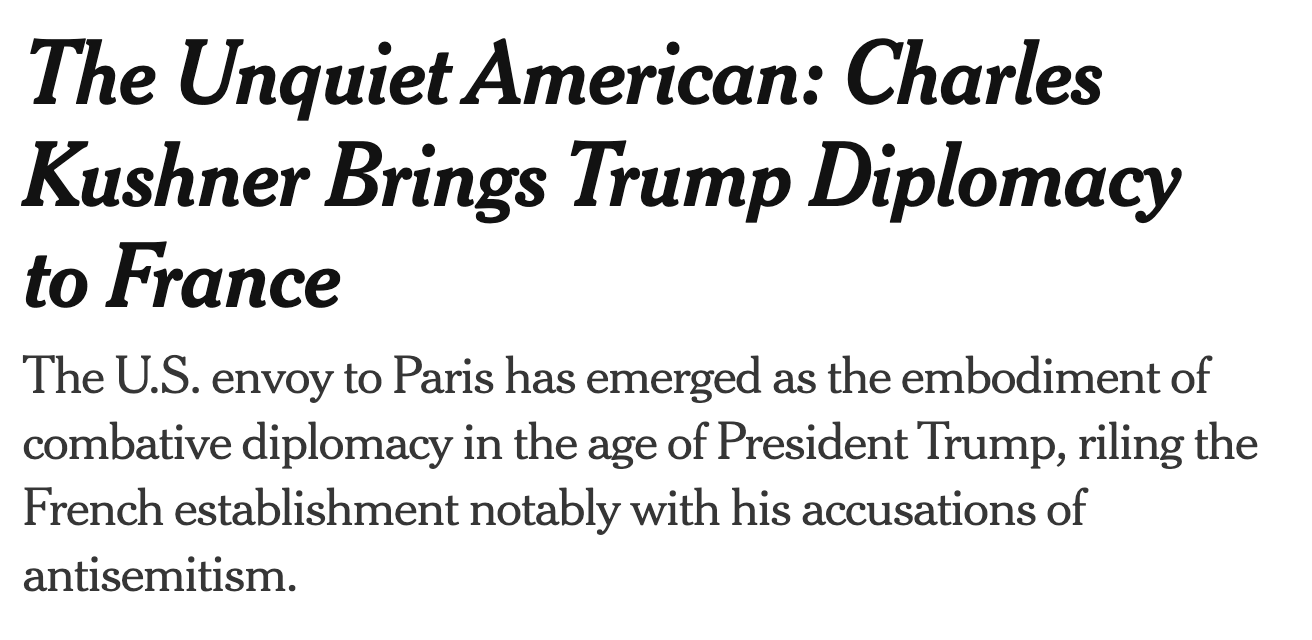
The influence of the US ambassador to Paris, Charles Kushner, father of a Donald Trump son-in-law and in direct contact with the US president, should help to defuse the situation.
But the affair, predicts a French diplomat familiar with Donald Trump’s moods, could drag on for months and require an apology from France.
Again, winning friends, Trumpstyle. After all, remember how close Kushner and the French foreign ministry have been… as The New York Times’s Mark Landler summarized in June….
Le Monde has done Unleashed’s job this week:"
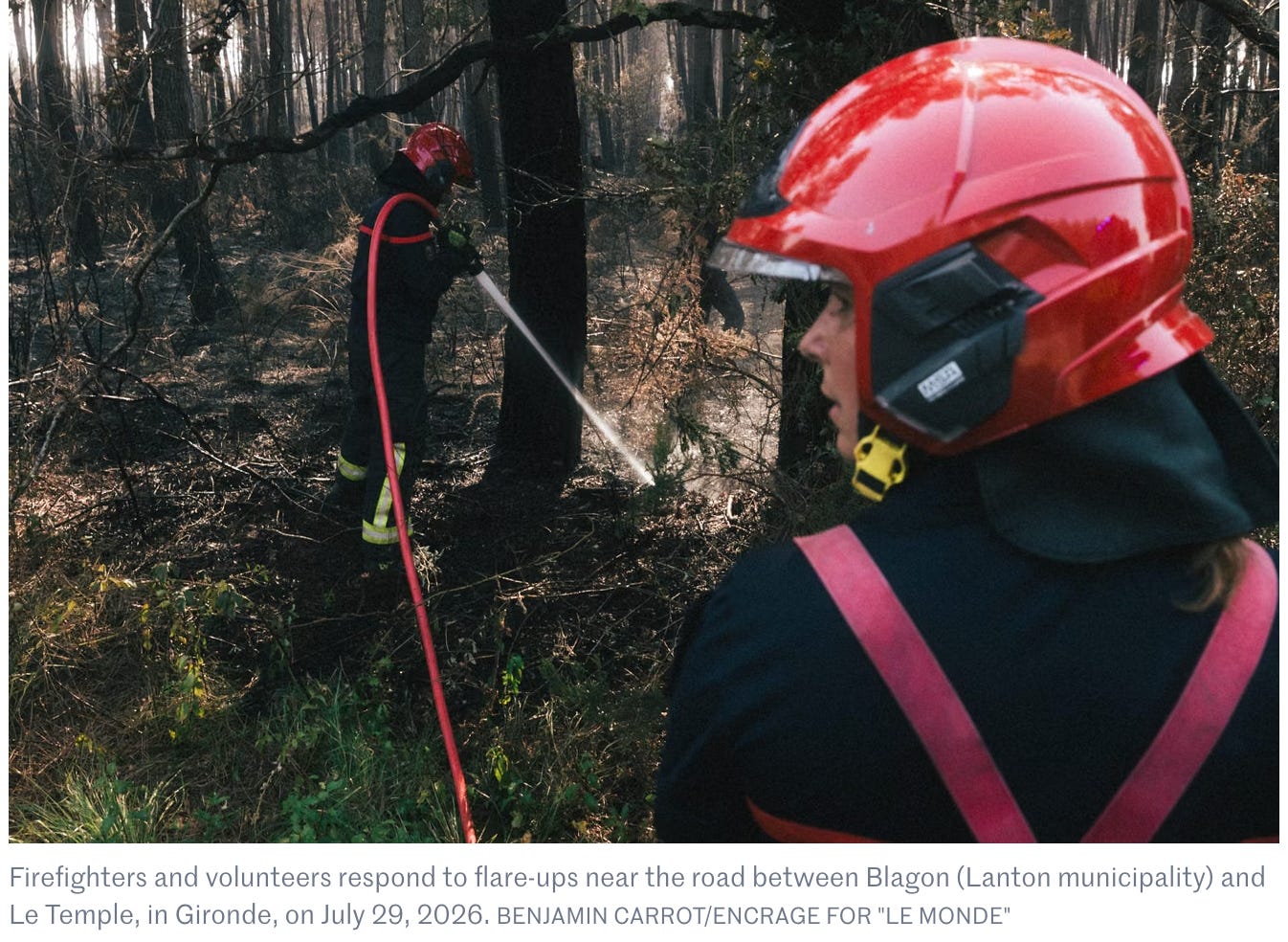
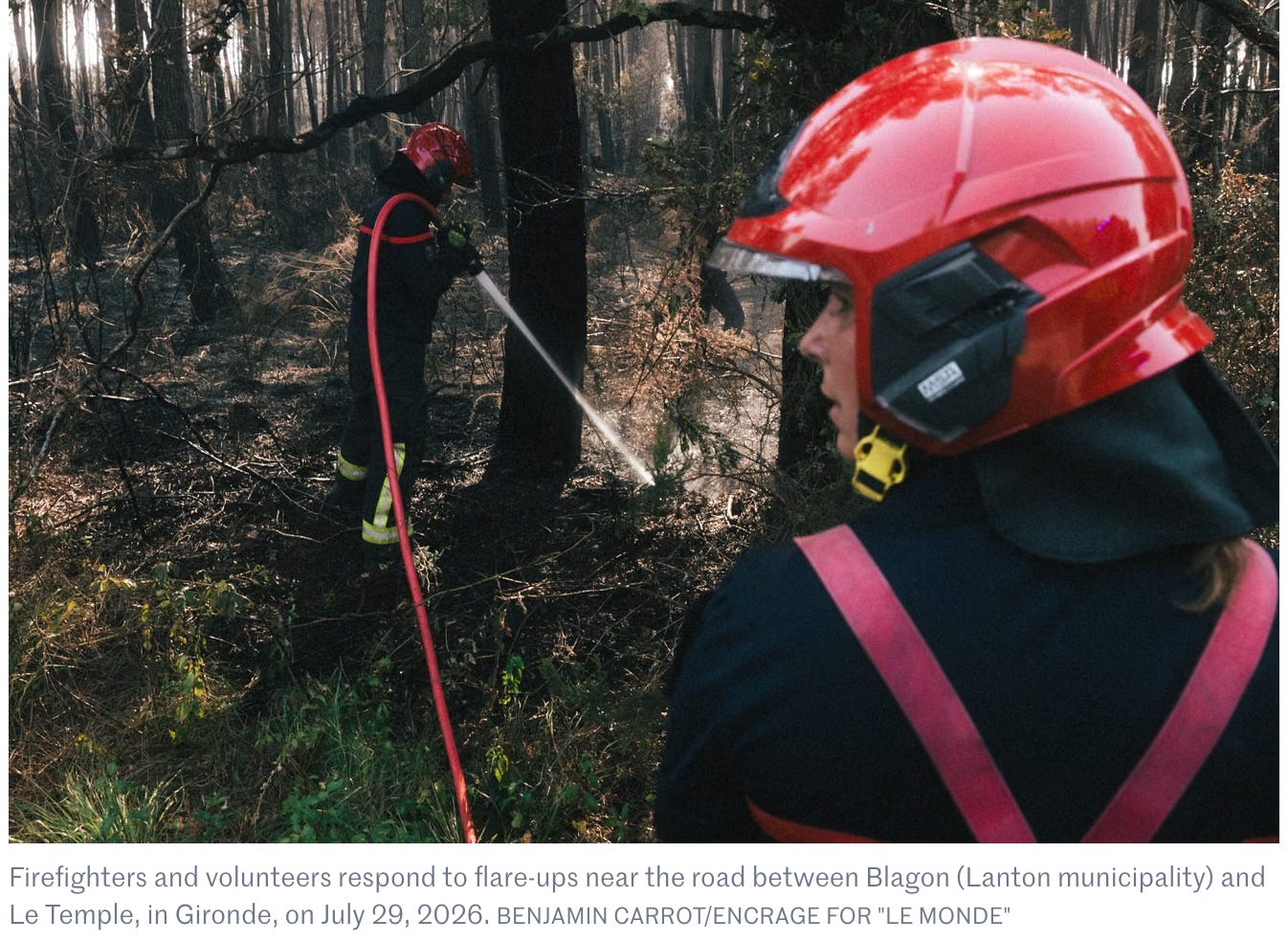
Apocalyptic," "gigantic," "disaster," "nightmare": in the European press, superlatives abound to describe the fires that have burned more than 42,000 hectares in the Gironde region since July 22. From Spain to Germany, via the United Kingdom, Switzerland, and Italy, foreign media are closely following the flames' advance. Images of thousands of hectares of forest devoured by Nadia, of firefighters mobilized, and of vacationers evacuated from campsites have made the front page of every newspaper.
“France is burning,” several media outlets wrote. In Germany, the Süddeutsche Zeitungcompared the fire to Godzilla, emphasizing its gigantic and uncontrollable nature. Like the famous movie monster, the fire devastated everything in its path and seemed to resist all human attempts to contain it. The newspaper stressed the contrast with the traditional image of southwestern France, associated with holidays and the art of living: “Family cars packed to the brim have given way to fire trucks from all over France, convoys of ambulances, and police cars.”
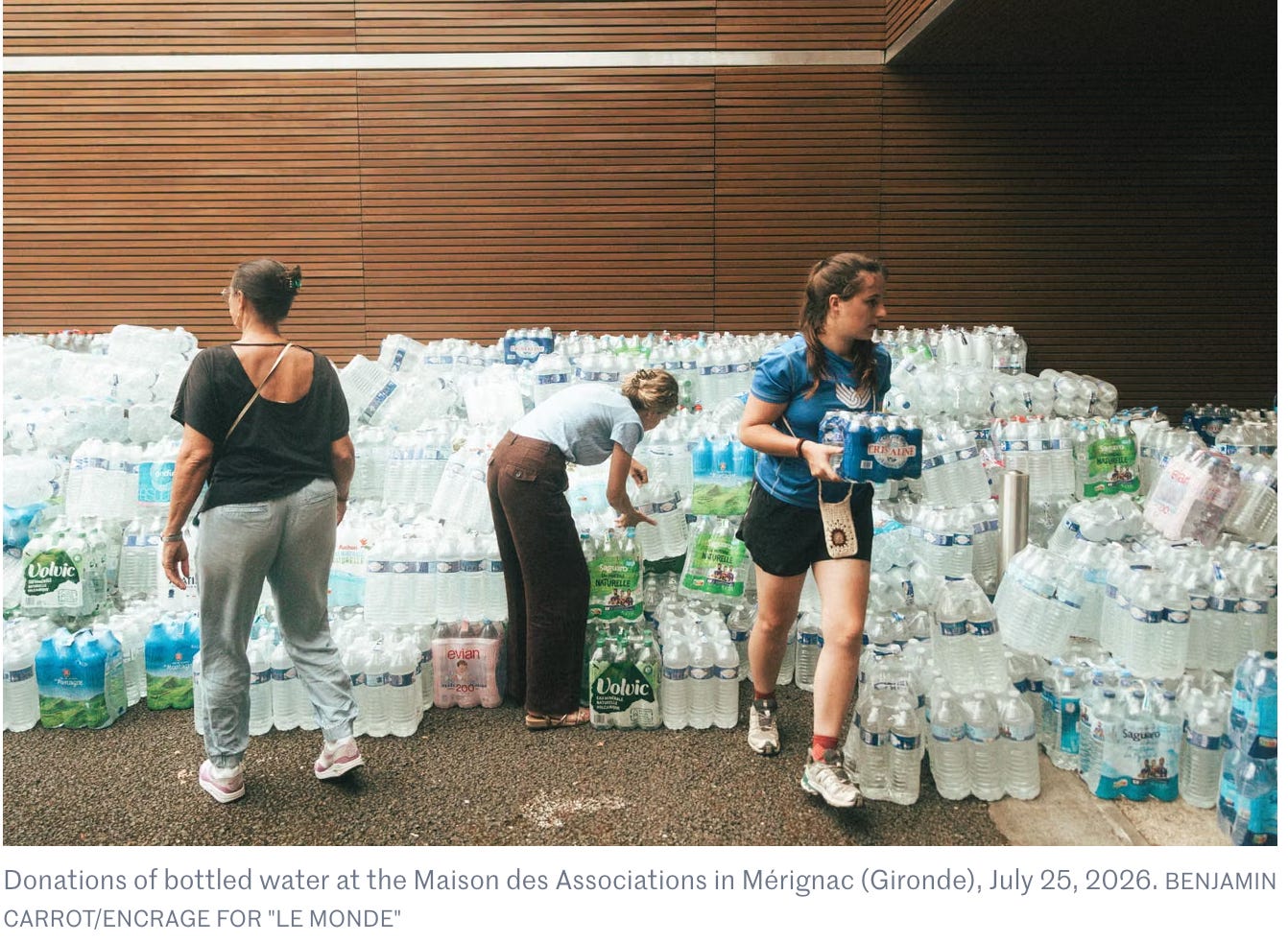
The number of evacuations is what most struck foreign newsrooms. Since the start of the fire in the Gironde region, more than 220,000 people have had to leave their homes or vacation spots. The Frankfurter Allgemeine Zeitungeven referred to it as “the largest exodus in France since the Second World War”—a phrase echoed by other news outlets. Several media outlets sent their journalists to the Bordeaux Exhibition Center, which had been transformed into an emergency shelter, to gather accounts from evacuees and report on the work of volunteers.
Foreign tourists feature prominently in this coverage. The British press is particularly interested in holidaymakers evacuated from their campsites. The GB News website even warns its readers that they may not be reimbursed if they cancel their trips to France or Spain. In Switzerland, the Tribune de Genève reports on the decision of a woman from Vaud to forgo her holiday in Biscarrosse and remain on the shores of Lake Geneva.
European media outlets are highlighting the fact that Spain, Portugal, Italy, and Greece are also affected. The Bordeaux heatwave is thus becoming a symptom of a crisis transcending national borders. “Summer is here, and Europe is burning,” writes the European media outlet Voxeurop. The British newspaper Daily Mirror also refers to the “hell of heatwaves” and a “chaotic summer” for the continent.
The English-language news site The Local shares this observation, also pointing to the inability of the French public debate to address the climate emergency. It calls French political leaders, with the exception of environmentalists and part of the left, “cowards.” The media outlet doubts that the 2026 wildfires will be enough to make climate change a priority in the 2027 [French presidential] campaign.
In Spain, also severely affected by the fires, a columnist for the daily newspaper El País calls for “politicizing the fires” and providing “a political response now.” For La Libre Belgique: “Climate change is no longer a curve or a deadline for 2050. (...) It has already entered our homes.”
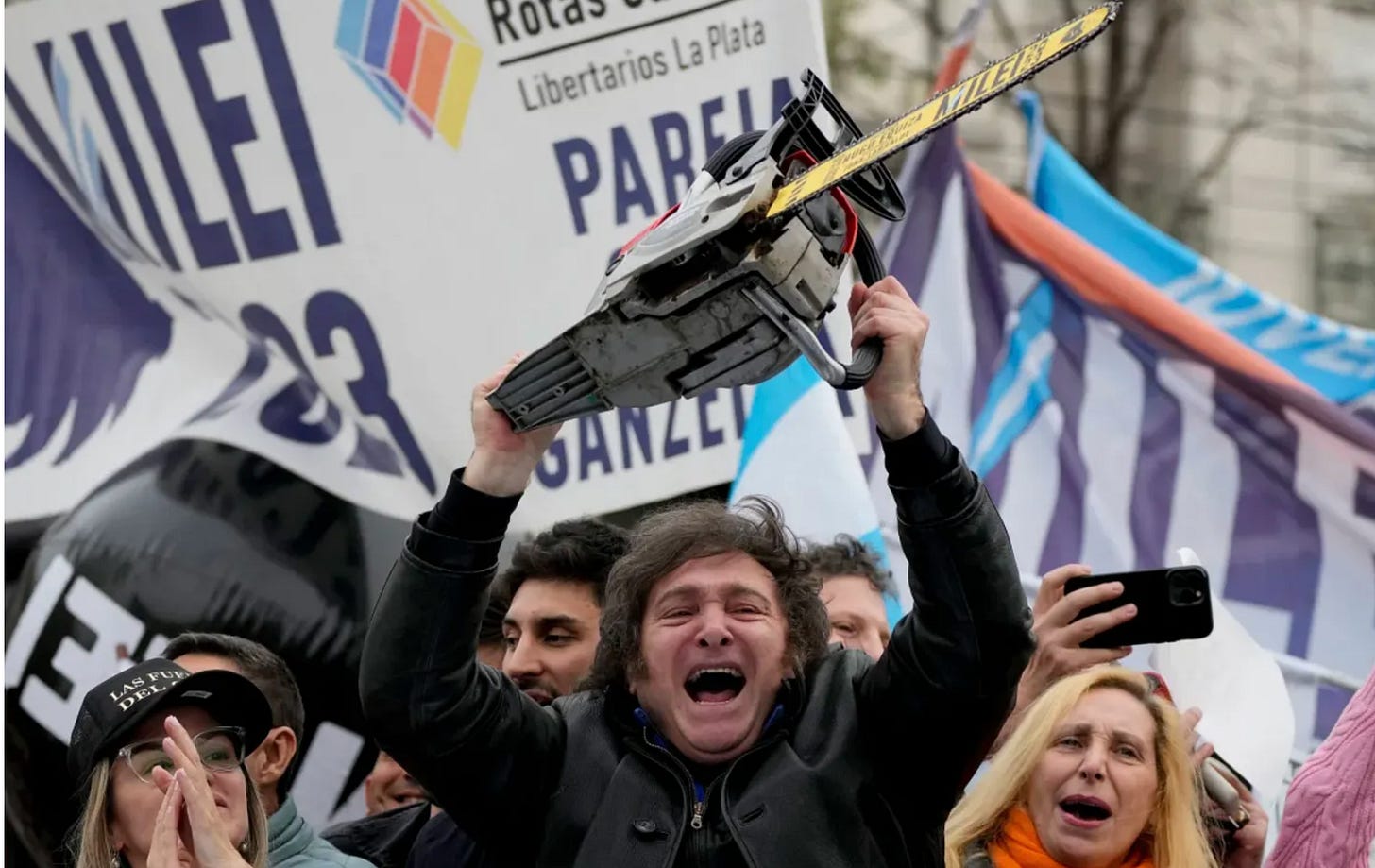
Another page ripped from the Trump playbook by Argentina’s Trump-light wannabee, Javier Millei, as El Pais warned ….
Argentine President Javier Milei has banned entry into the country and authorized the expulsion of foreigners who have offended Argentinians. The far-right leader implemented this measure with an emergency decree, while the echoes of what he considers an “anti-Argentine campaign” are still being heard. This campaign, he claims, was orchestrated during the World Cup by the governments of Brazil and Mexico, along with the Democratic Party of the United States. The presidential decree has been harshly criticized by legal experts, social leaders, and politicians. Many pointed out that if a similar law were in effect in other nations, Milei himself would be banned from entering numerous countries whose governments, citizens, or cultures he has denigrated and insulted.
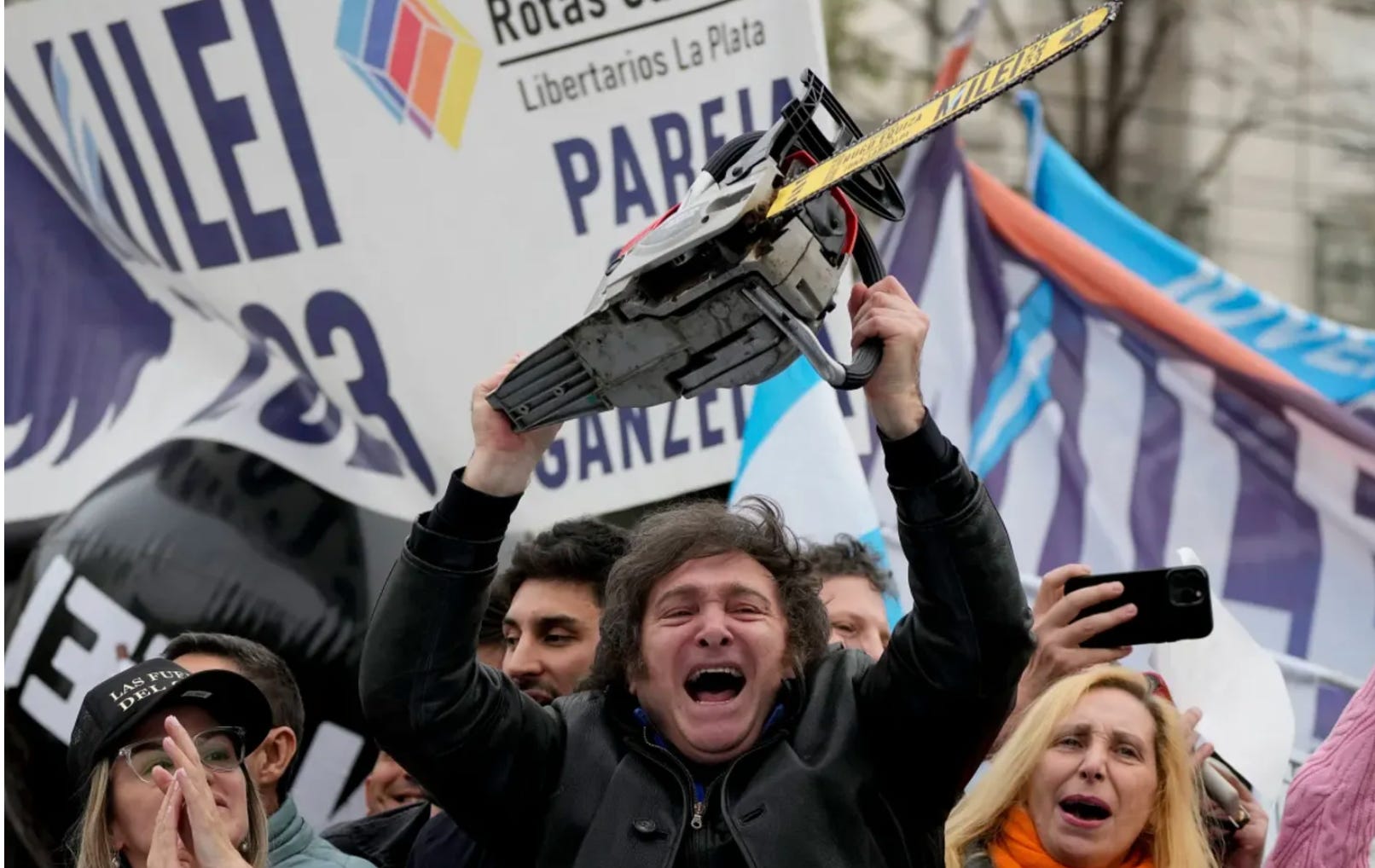
That’s a chainsaw Milei is brandishing
“Anyone who attacks the Argentine Republic is not welcome in our country,” was the phrase the government used to announce the decree modifying the immigration law and adding new grounds for denying entry to foreigners and canceling previously granted residency permits. This decision is part of an increasingly restrictive and regressive regime for immigrants being implemented by the far-right government, in line with policies designed by Donald Trump in the US.
Since taking office, as Unleashed reported on November 20, 2023,Milei has embraced the anti-immigration stance waved by other leaders of the global far right, with Trump at the forefront and has begun closing the doors to a country that, from its inception, was open to “all men of the world who wish to live on Argentine soil,” as its Constitution still states.
As Le Monde reported….
The former director of RT [Russia Today] France, a channel financed by the Kremlin and now a pro-Putin figure on CNews, has been ordered by the Interior Ministry to leave French territory for 'undermining the fundamental interests of the state.' French authorities also ordered the freezing for six months of her assets.
59,400: A not inconsiderable following
"I just got off the phone with my brothers, one on Telegram, the other on WhatsApp. The internet is working [in Russia]. There is no fuel shortage." These were the most recent updates that Xenia Fedorova shared about her home country on her X account, lamenting what she described as disinformation from French media—in this case,L'Express—about the consequences of Ukrainian strikes in Moscow and elsewhere. Was this an act of defiance? Two days later, the pro-Putin propagandist, a regular commentator on outlets owned by the Bolloré group, and who does not hold a press card, was declared persona non grata in France.
And the origins? Xenia herself, quoting a sympathizer on the Europe 1 radio network, owned by her far-right, pro-Putin billionaire backer:
“From the debut, what I can confirm is that there has been a genuine hatred by the current president [Macron] personally, towards Xenia Fedorova.”
And the Financial Times elaborated that Fedorova is….
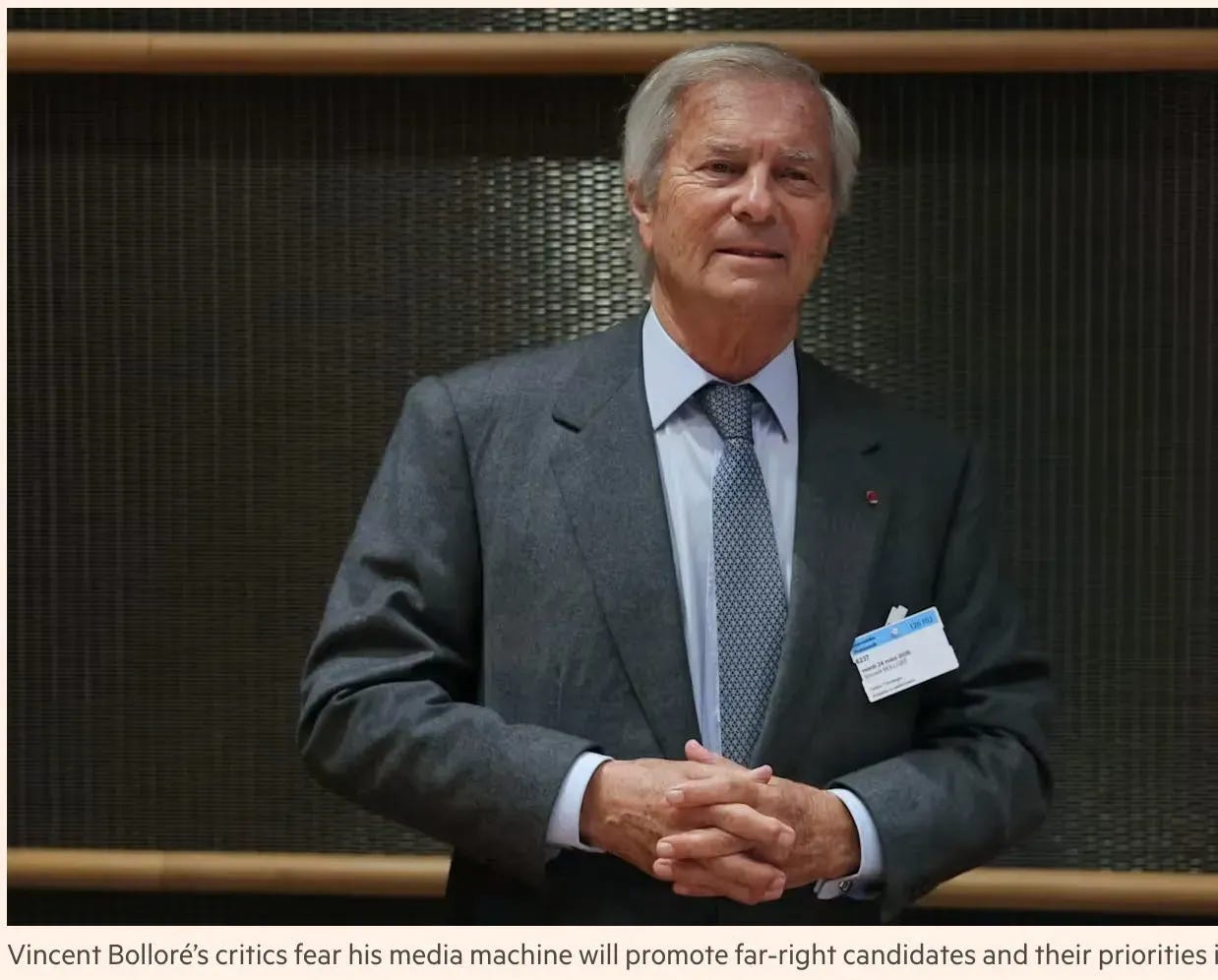
…known for espousing pro-Kremlin positions on media outlets owned by conservative billionaire Vincent Bolloré. Fedorova ran the state-backed Russia Today in France before it was shut down by the government shortly after Vladimir Putin’s full-scale invasion of Ukraine in 2022.
The billionaire holds sway over other media assets, including Hachette Books owned via Lagardère, pay-TV outlet Canal+, and Europe 1 radio. Bolloré has become a particularly influential supporter of Fedorova. His Fayard book imprint, which is part of Lagardère, published Fedorova’s autobiography titled “Banned” last year. His Journal du Dimanche newspaper features her weekly column, while her appearances on CNews have given her a much bigger platform than when Russia Today was still on the airwaves.
New threats, new challenges, their antecedents…Plus, an inscribed copy of my book, A Red Line in the Sand. Founding members get my last three books and lunch withn Andelman! Along with a weekly portfolio of cartoons…and Friday our weekly live conversation.…with a new Celebrity Guest to decode the universe, or America’s next challenge:
Nadia Hashimia, pediatrician turned novelist, draws on her Afghan culture to craft books for adults as well as young readers. Her novels span generations and continents. Both parents were born in Afghanistan and left in the 1970s, before the Soviet invasion. Today she’s especially interested in the plight of Afghanistan’s most vulnerable children and empowering the nation’s female leaders of tomorrow. She is a member of the US-Afghan Women’s Council and Afghan-American Foundation. Her mother is the granddaughter of a notable Afghan poet. In 2003, she made her first trip to Afghanistan with her parents who’d not returned to their homeland since leaving.
For our highly valued, but lightly paid,members…a very special feature on Israeli efforts to seize a raft of archaeological sites in Palestinian territory….Plus a link to a (free!) website that shows 5,843,965 artworks from every major (and many minor) exhibits around the globe….And of course, the full hour of Unleashed Conversation with Prof. Mauro Gilli … Plus our portfolio from the world’s greatest Cartoonists.














Comments
Nothing yet. Say the first thing.
Sign in to join the conversation.