
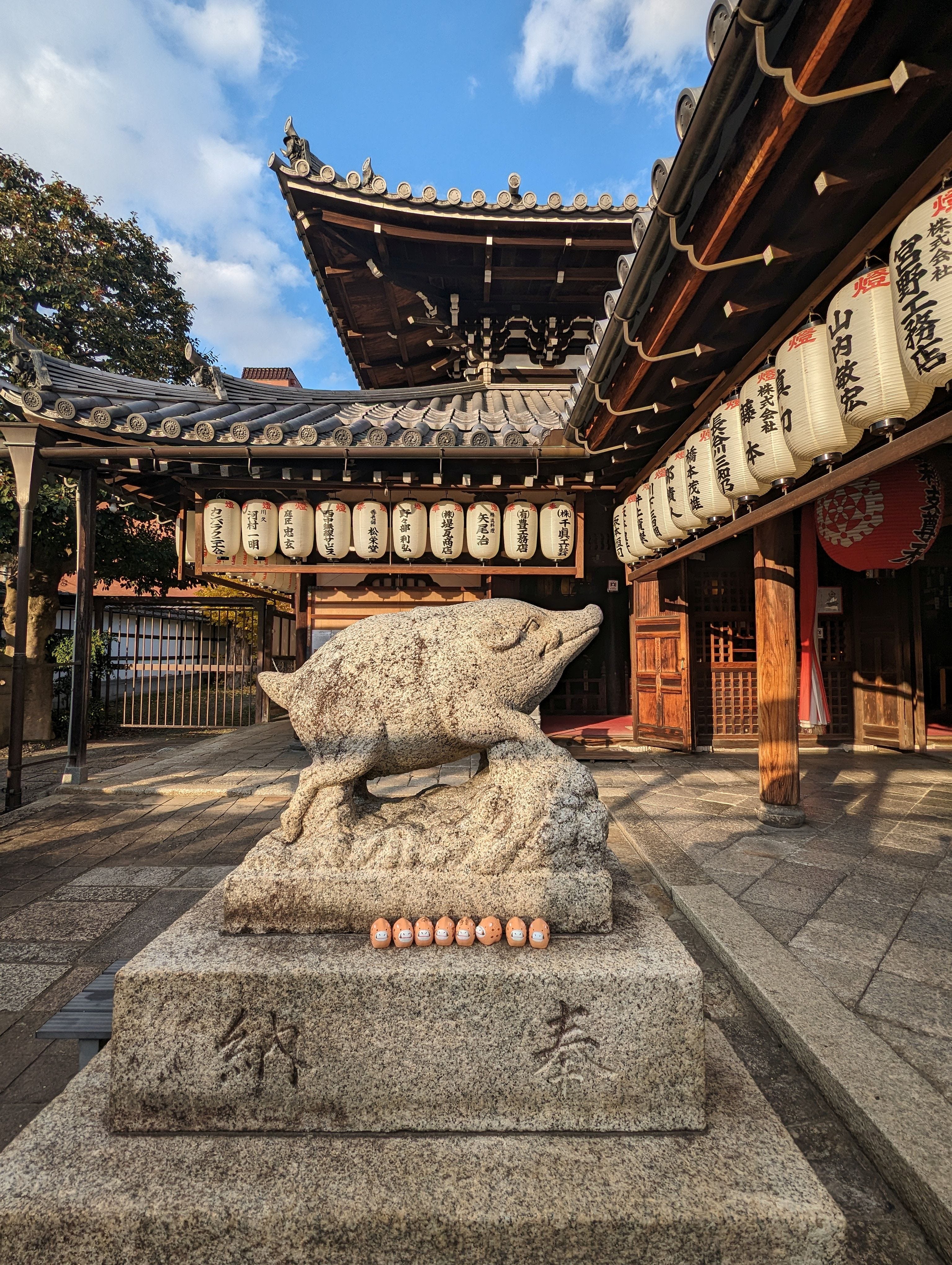
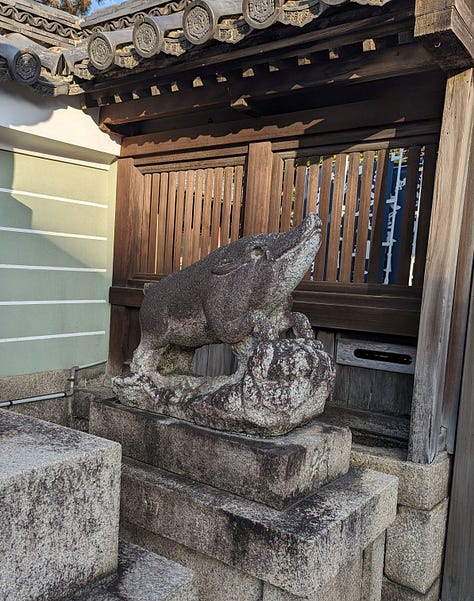
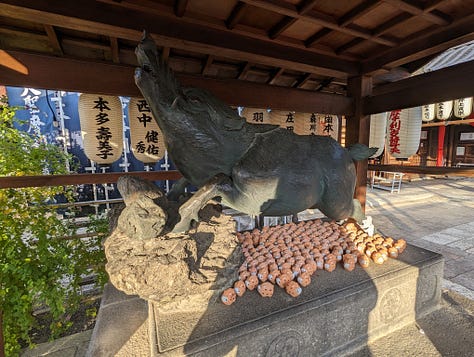
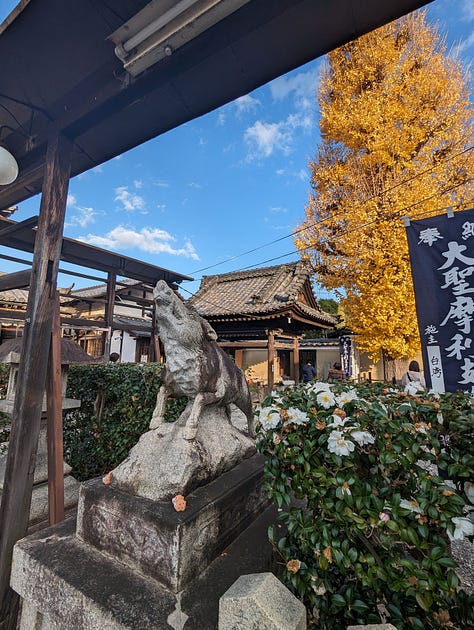
It is my experience that when travelling it is often the accidental discoveries that end up staying with you long after you have returned home and many other memories have faded. During a visit to Kyoto several years ago I was exploring the Gion district with my family and enjoying a relaxed afternoon wandering around the local streets. I was fortunate to accidentally happen upon a small temple called Zenkyo-an, a sub-temple of the larger Kenninji Zen Temple. One of the first things I noticed was that rather than the traditional komainu (lion-dog) statues that usually guard the entrance to temples, there were statues of wild boars throughout the small grounds instead. I discovered that this was a temple dedicated to the Buddhist deity Marishiten, in this case in her goddess form. I also learnt that she was the deva who protected those born in the year of the boar, which meant I had also discovered the protector deity I didn’t know I had.
About Marishiten
Marishiten is a lesser-known Buddhist deity who was introduced to Japan from India via China in the 9th century by esoteric Buddhist sects. In Chinese Buddhism she is known as Marici and she is also worshipped in Taoism as Doumu. Both Marici and the Doumu are connected to the stars of the Big Dipper constellation and they are often depicted in a chariot drawn by seven boars, or riding upon a boar. Marishiten can take the form of both a god or goddess. In Japan she is depicted with three heads and six arms holding weapons, and also sometimes as a beautiful goddess sitting upon a lotus flower.
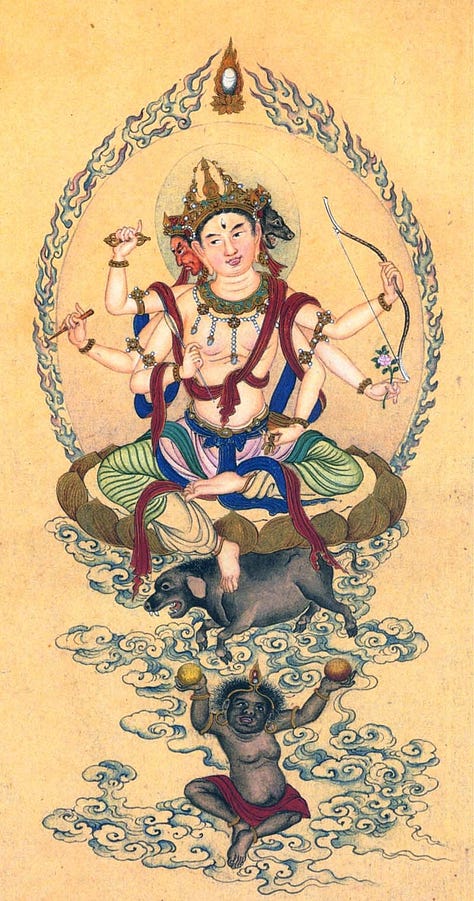
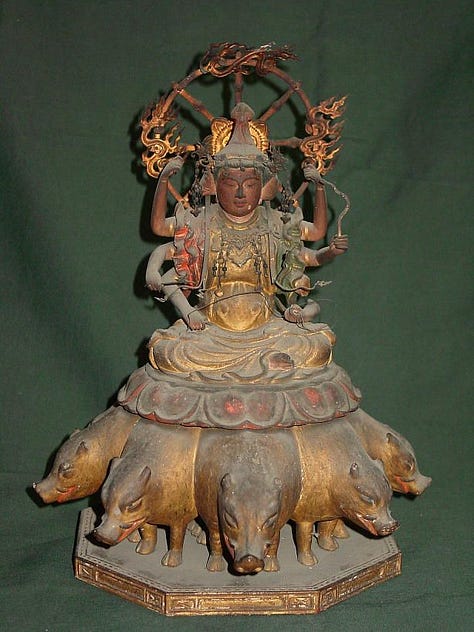
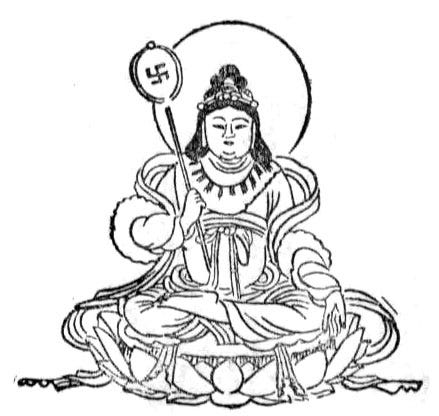
Believed to be the personification of sunlight and identified with the bright light of the rising sun, these associations led to her connection with the power of invisibility, good fortune and victory. An information board at Zenkyo-an temple explains that the idea of sunlight being formless and unable to be captured or harmed meant that faith in her spread among shoguns, samurais and ninjas. She was revered as a patron of the warrior class and more generally a protector from physical harm or danger. According to Mark Schumacher’s site, the first shogun of the Kamakura era, Minamoto Yoritomo, was said to have had an idol of Marishiten that he carried to protect him in battle. The first shogun of the Edo period, Tokugawa Ieyasu, also allegedly carried a Marishiten charm at all times. The grave of the 47 ronin at Sengaku-ji Temple in Tokyo is guarded by an effigy of Marishiten. Along with being a patron deity of the warrior class, she was also popular with entertainers.
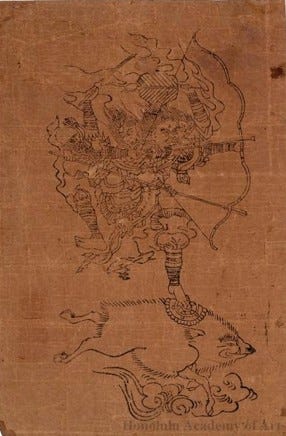
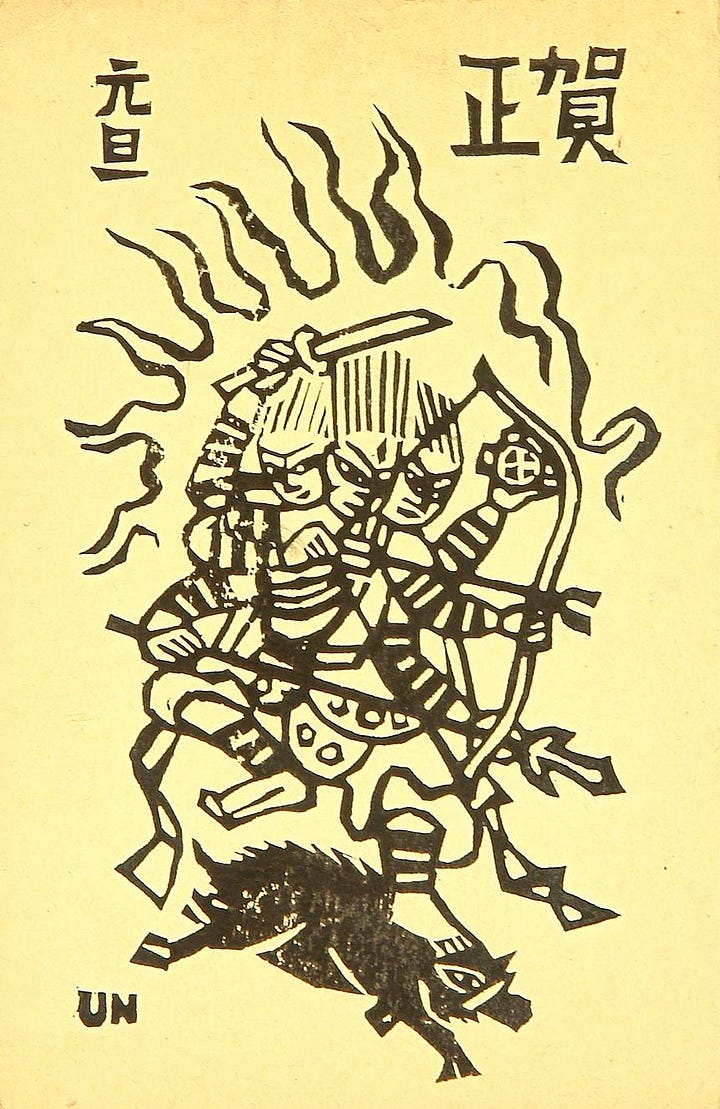
During the Edo period when the cult of Marishiten peaked she was believed to help protect worshippers from danger, evil, theft, natural disaster, disease, spirit possession and other misfortunes. She was also revered as a goddess of good fortune and wish fulfillment alongside Daikokuten and Benzaiten, the three deities being known collectively as Santen. Gamblers also saw her as a patron due to her powers of invisibility and illusion connected with the blinding light of the sun. The end of the feudal system and samurai class meant that worship of Marishiten declined and as Benzaiten’s popularity increased, she was all but forgotten. Despite this, she is still worshipped today in isolated locations and is said to be popular among martial art practitioners, sports people, and those seeking help to overcome challenges on the path to success.
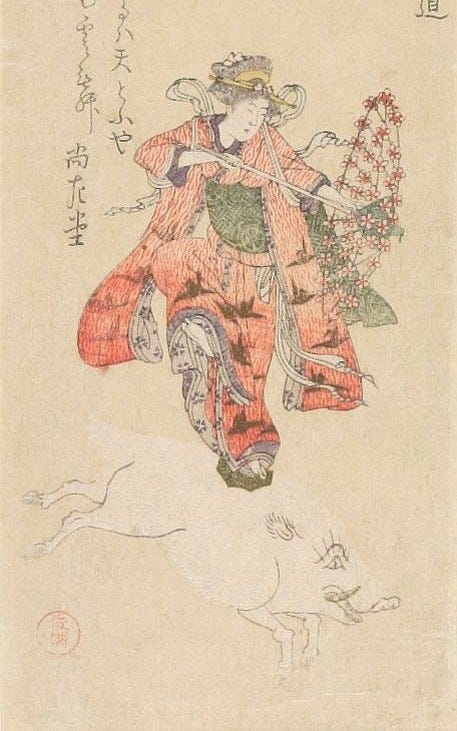
Marishiten’s connection with boars means that in modern times she is believed to be the guardian deity for anyone born in the year of the boar. The Chinese zodiac was imported into Japan in the 7th century and the sign of the pig was instead represented by the wild boar (猪, inoshishi). Apparently, people born in the year of the boar are strong and brave as well as being honest, loving and humble, qualities that can also be seen in Marishiten.
Wild Boars in Japanese Culture
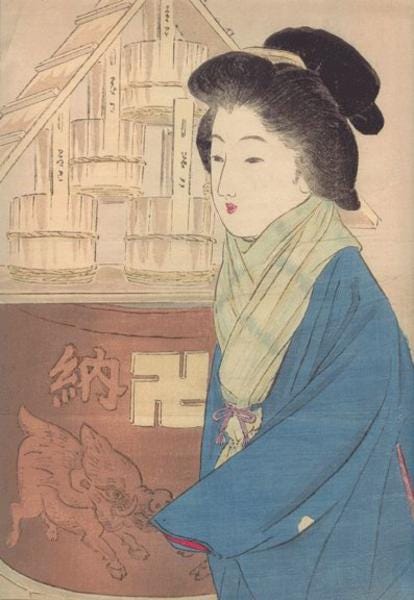
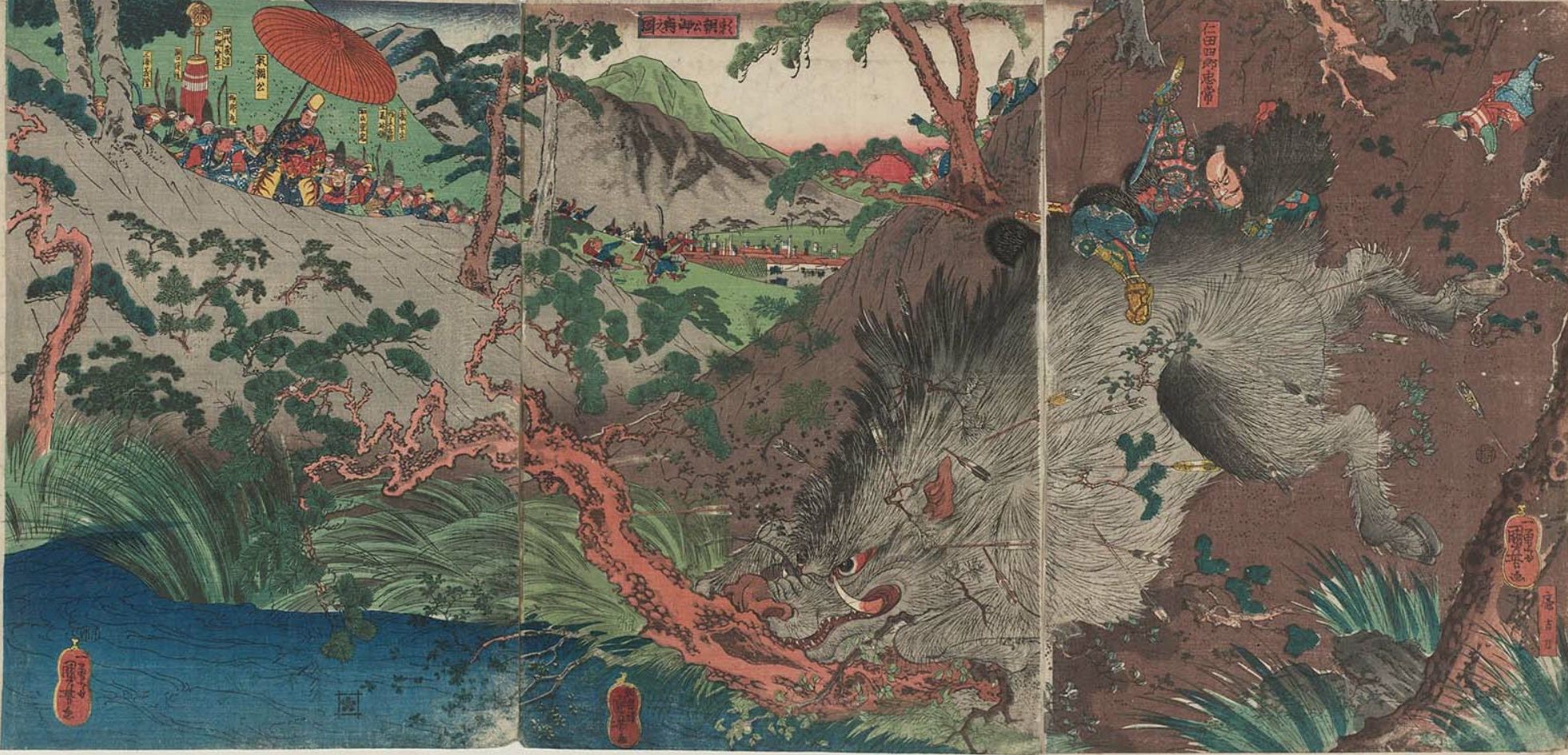
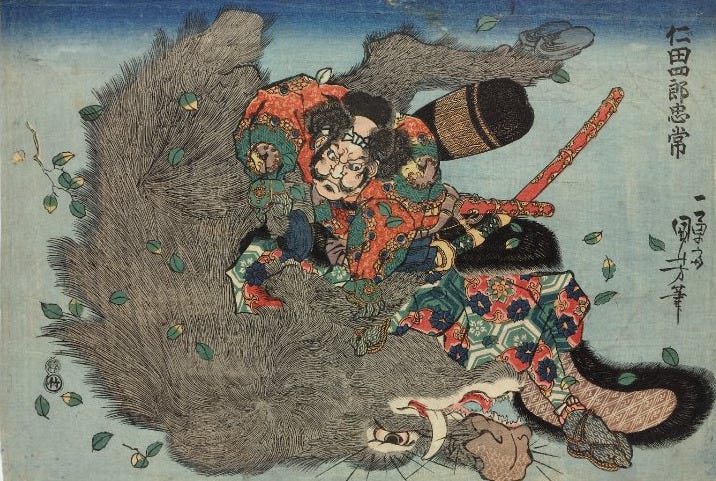
In Japanese culture the wild boar is an important symbol of ferocity, determination, and recklessness, and is often linked to samurai virtue. There are many stories and artworks that depict a samurai in battle with an enormous wild boar and the idea of challenging these ferocious beasts was a source of great admiration. In some cases, boars were also seen as divine messengers or protectors. They were also linked to fertility and prosperity and in the Meiji era there was an illustration of the boar on the 10 yen note. There was also a folk belief that you could become rich if you kept a tuft of boar hair in your wallet.
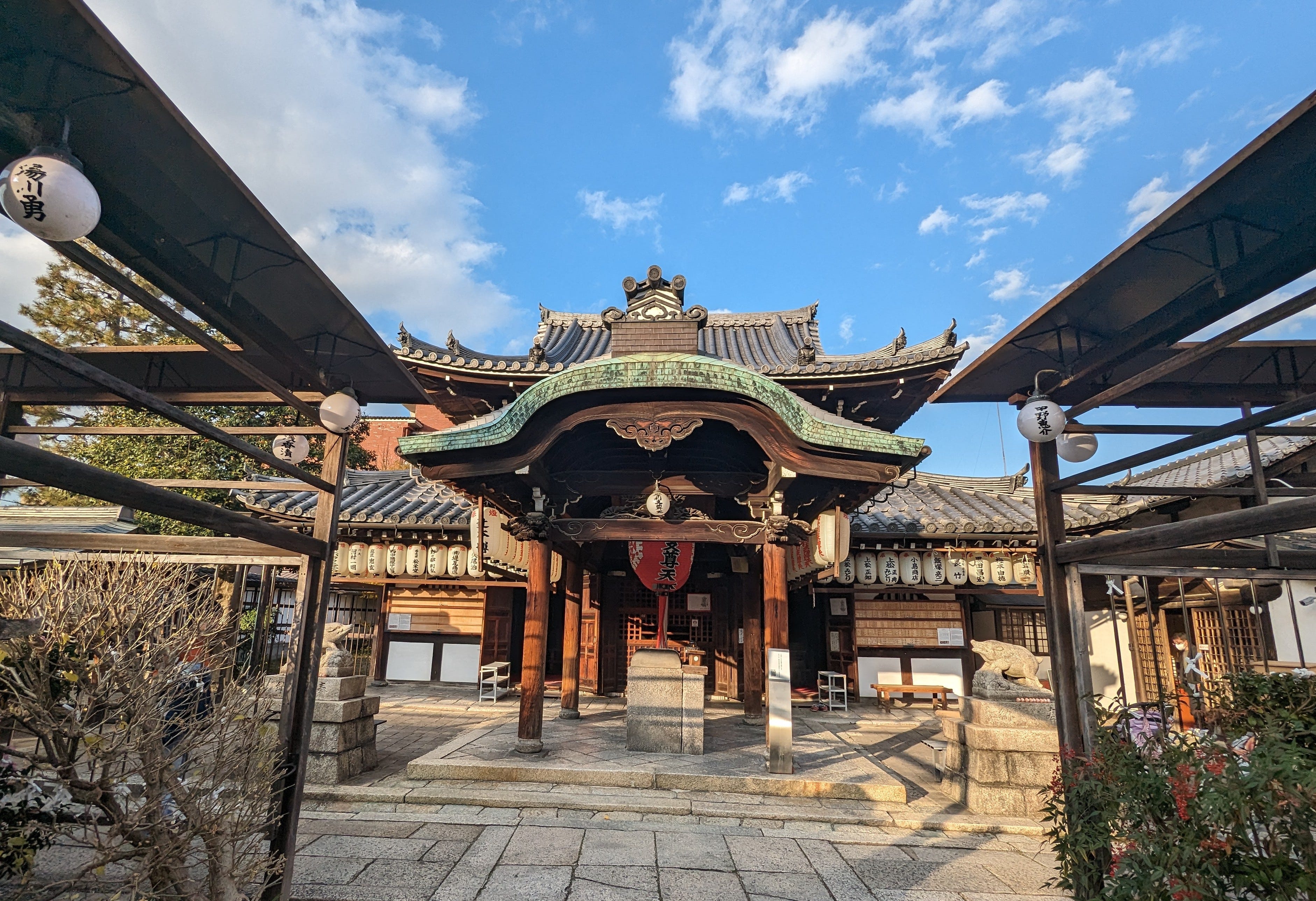
Zenkyo-an Temple
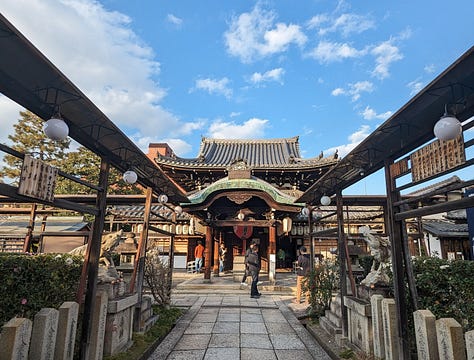
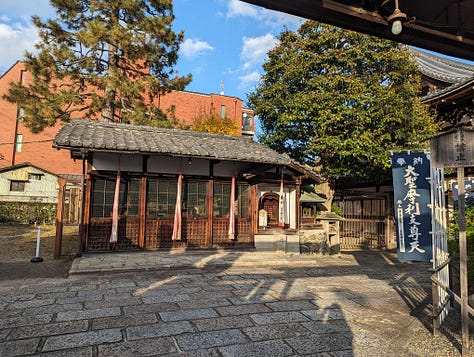
As mentioned earlier, Zenkyo-an Temple is a sub-temple of the larger Kenninji Temple, the oldest Zen Temple in Kyoto. Located in the Gion district it was established in 1202 and was originally a mix of Tendai, Shingon and Zen Buddhism before converting to only Rinzai Zen . The smaller Zenkyo-an Temple dedicated to Marishiten was established by the monk Seisetsu in 1327. Here are some photos I took when visiting the temple.
Here are a collection of boars I discovered during my visit to the temple.
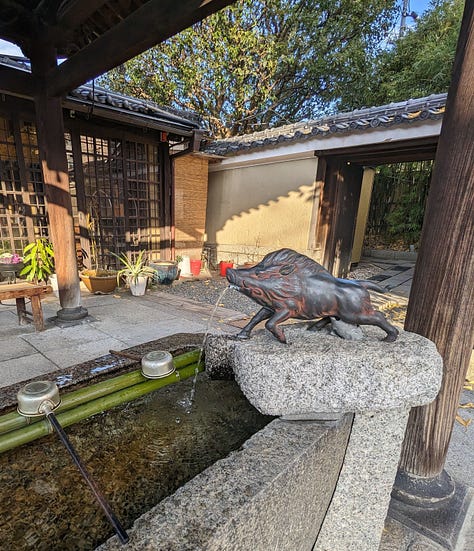
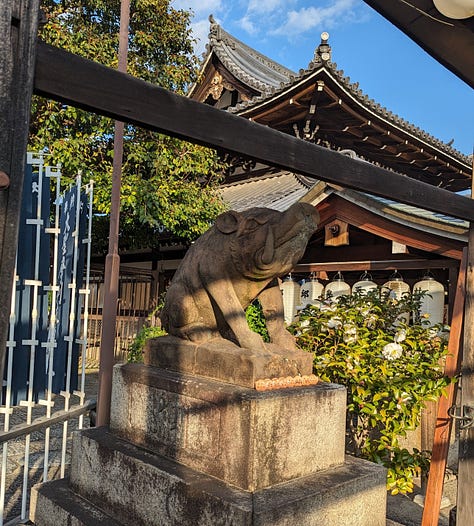
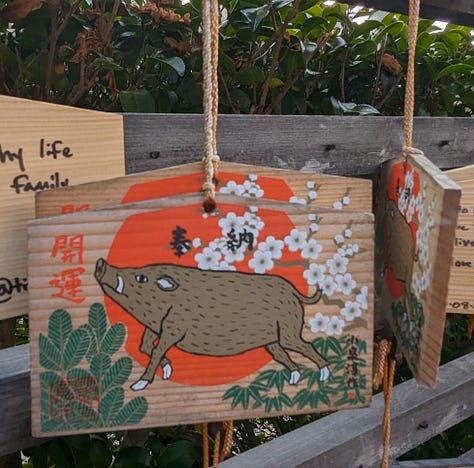
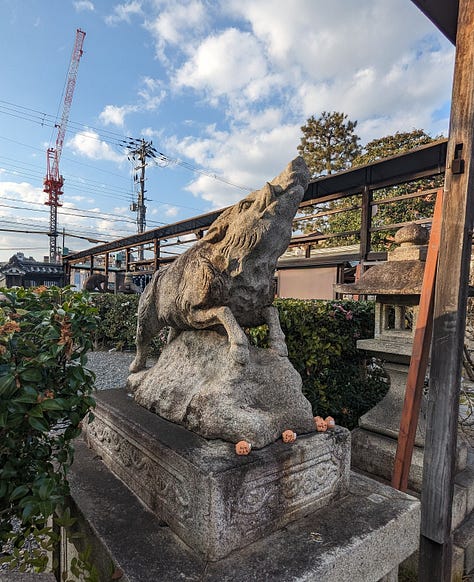
While researching this article I also discovered that there is a live stream of the temple on YouTube (below). The video gives a sense of the atmosphere of the place but if you are in Kyoto and have the time, it’s definitely worth visiting. While the temple is small, there is plenty to see if you also include the grounds of Kenninji nearby and the Ebisu Shrine across the road.
If you are in Kyoto and would like to visit Zenkyo-an Temple it is an easy 15 minute walk south-west from Yasaka Jinja, or a 15 minute walk west from Kiyomizu-dera. Despite (or maybe because) it is not on the usual tourist trail, it is also worth visiting the larger Kenninji Temple nearby as well.
Boars in Japanese Art
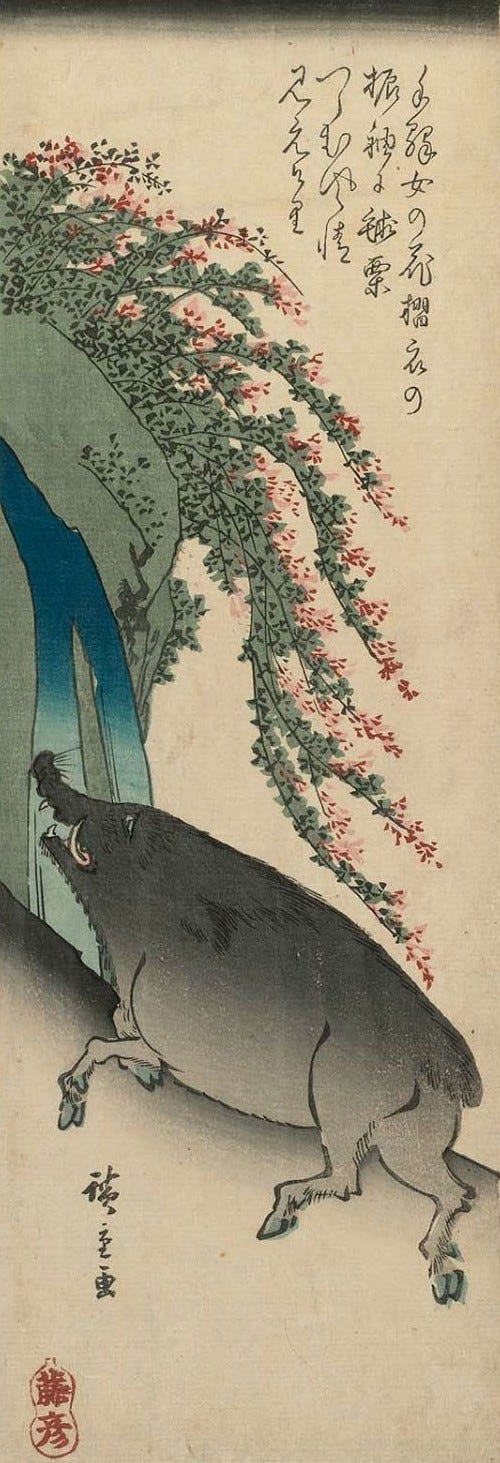
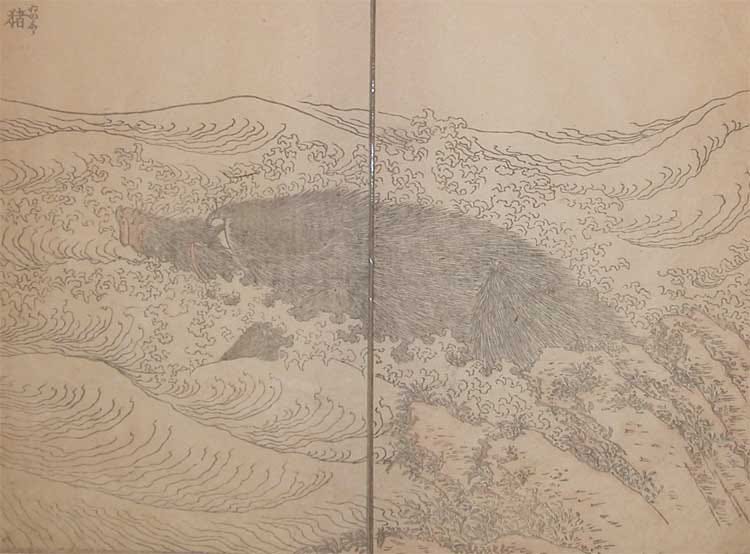
Boars were often depicted in Japanese woodblock prints. They could be symbols of good fortune, bravery, or the zodiac year of the boar. The print below by Utagawa Kuniyoshi is one of my favourites.
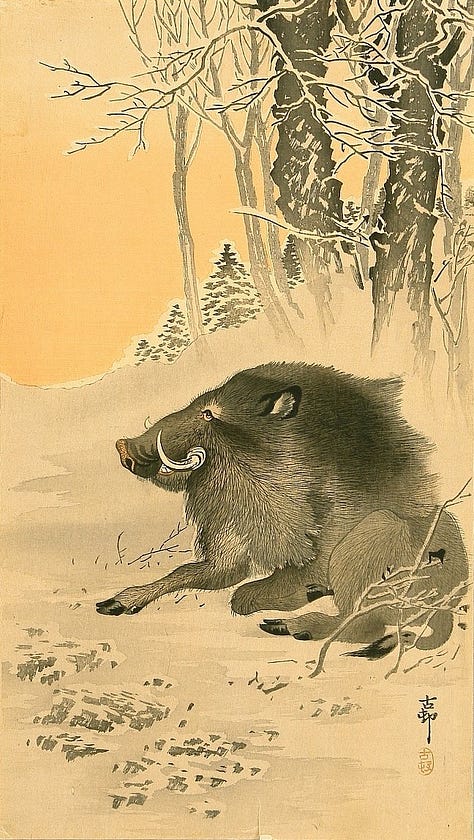
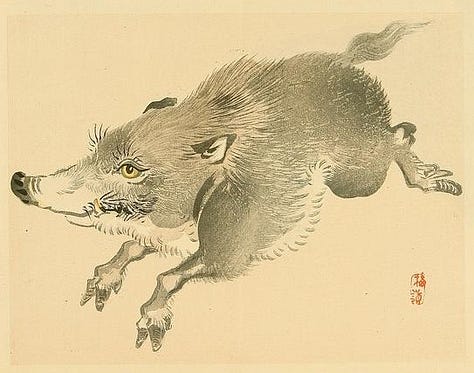
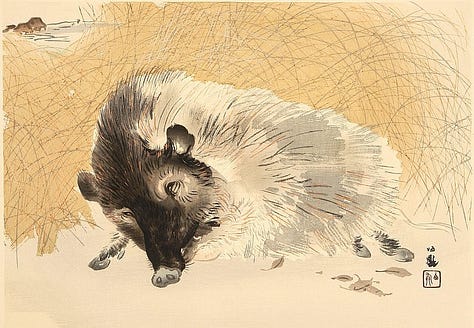
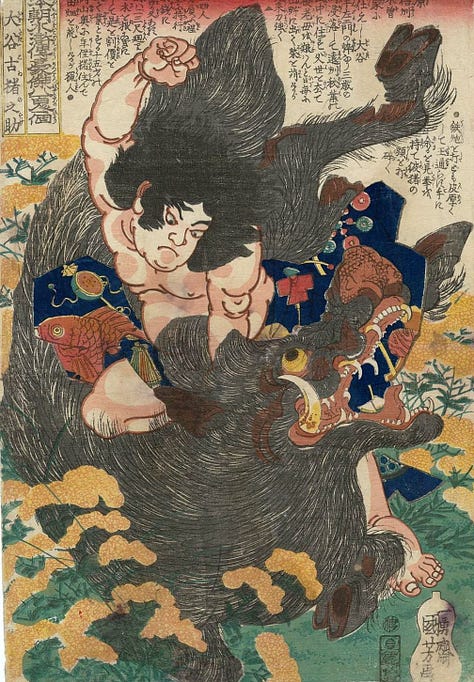
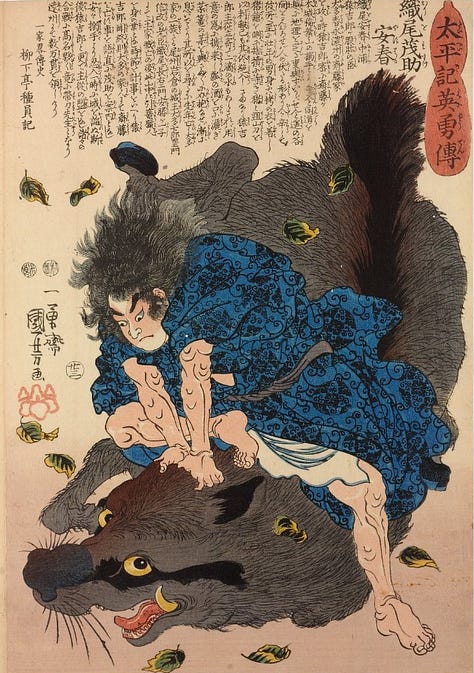
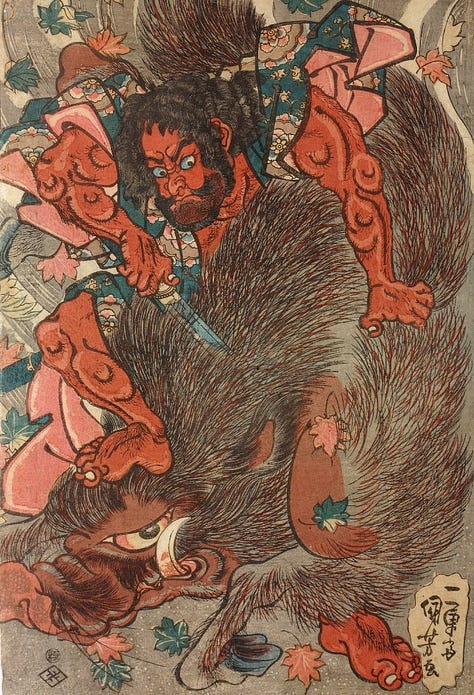
As mentioned earlier, it was quite common in Japanese art to portray heroes killing wild boars as a sign of their bravery and strength. I have included some examples below.
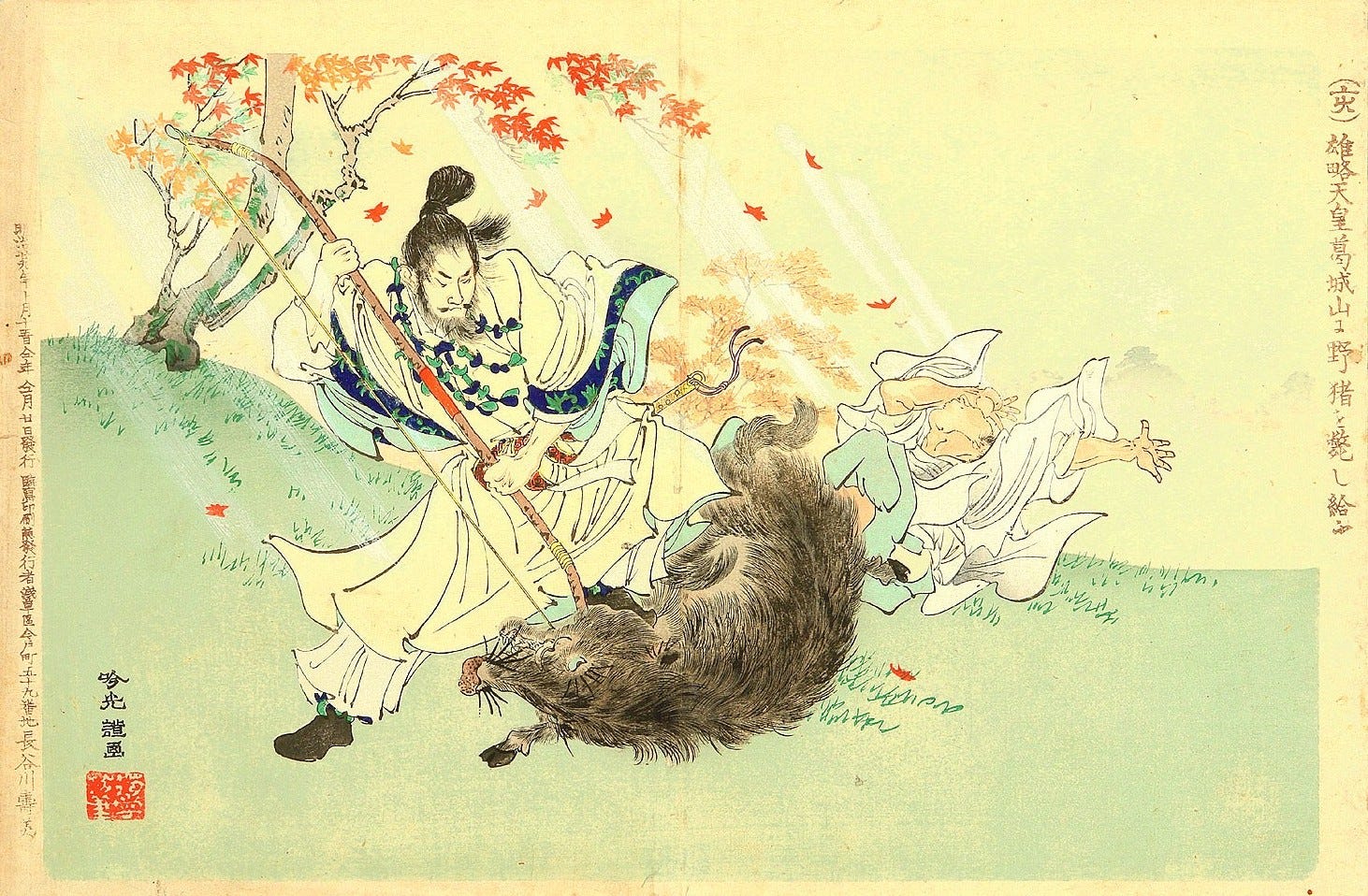
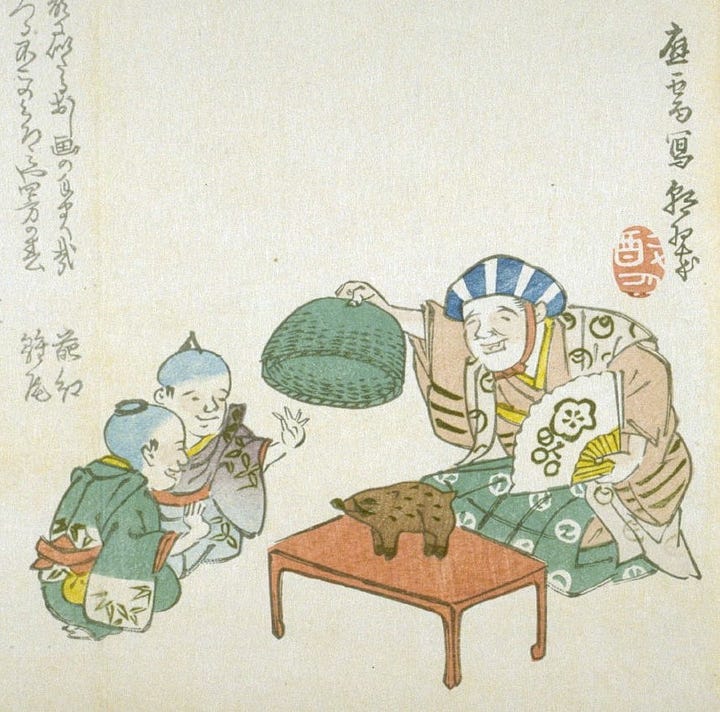
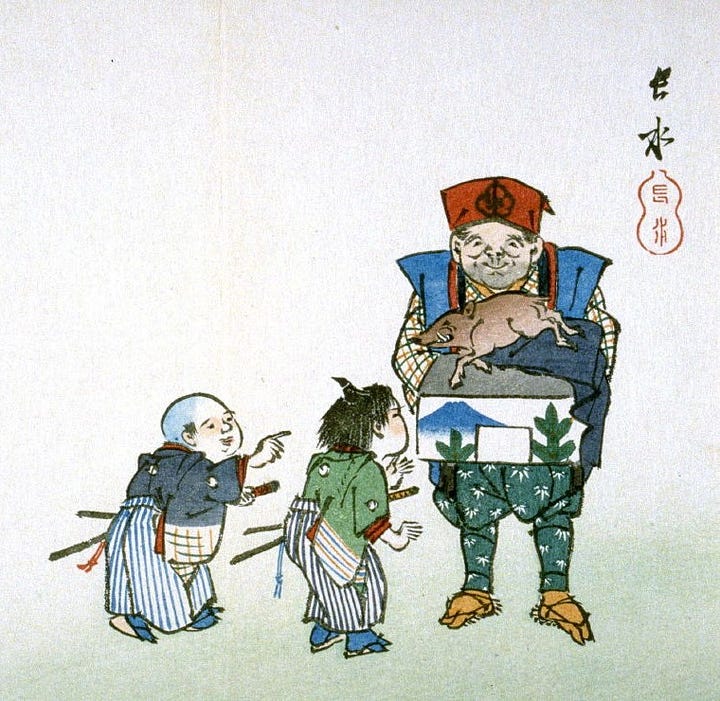
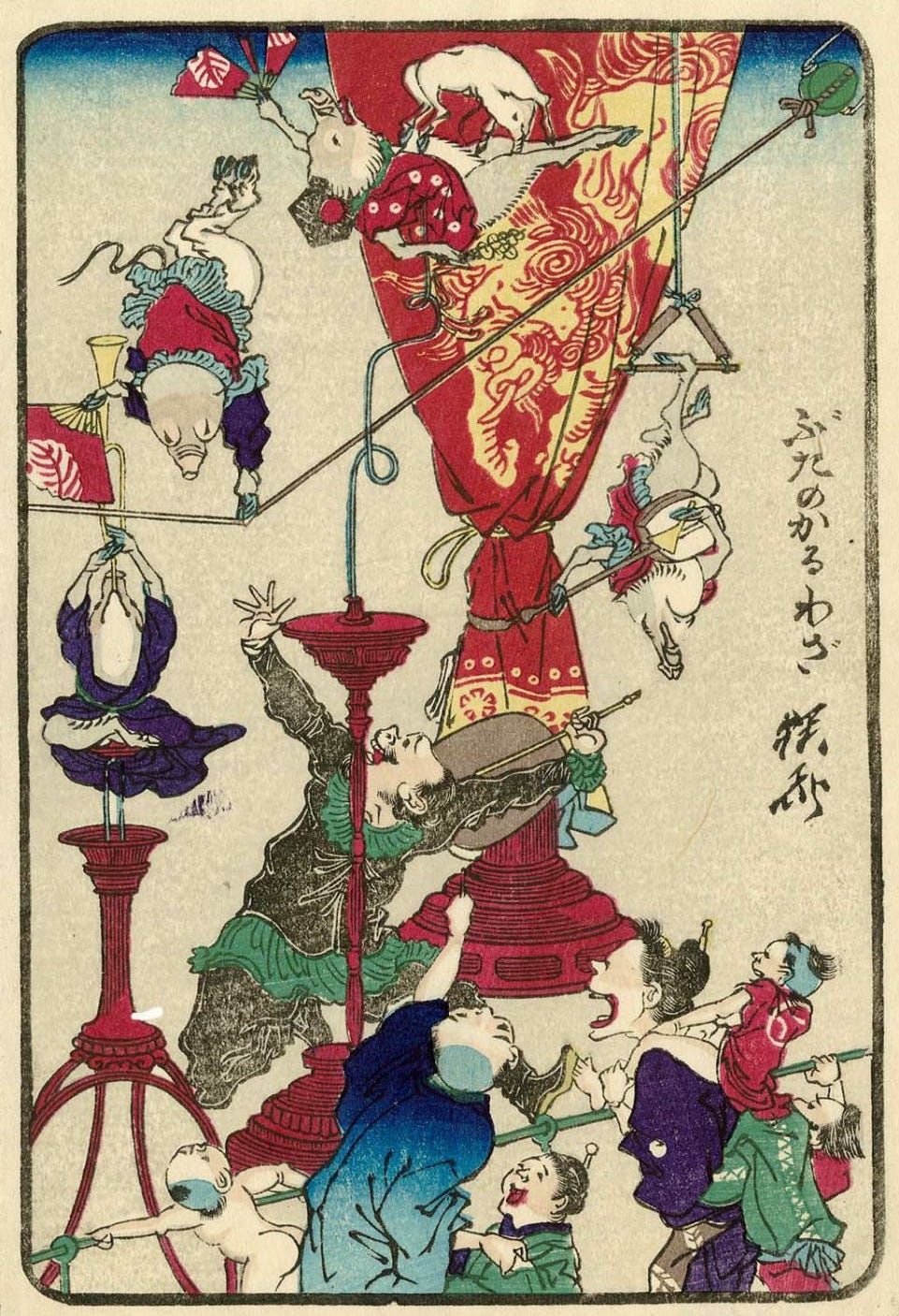
Not all art featuring boars is bloody and violent. The two prints below show children who are enjoying watching a performer with a toy boar puppet.
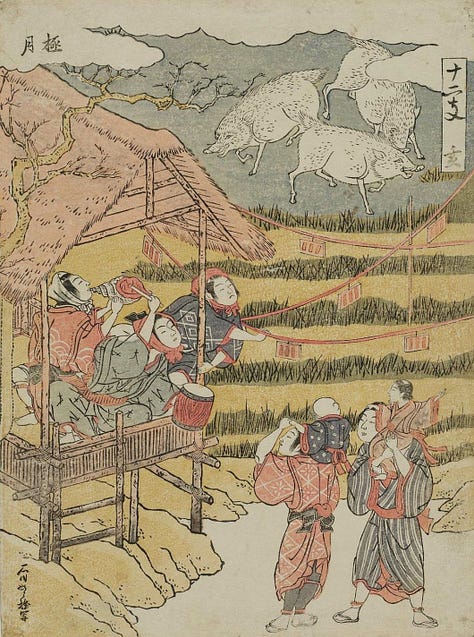
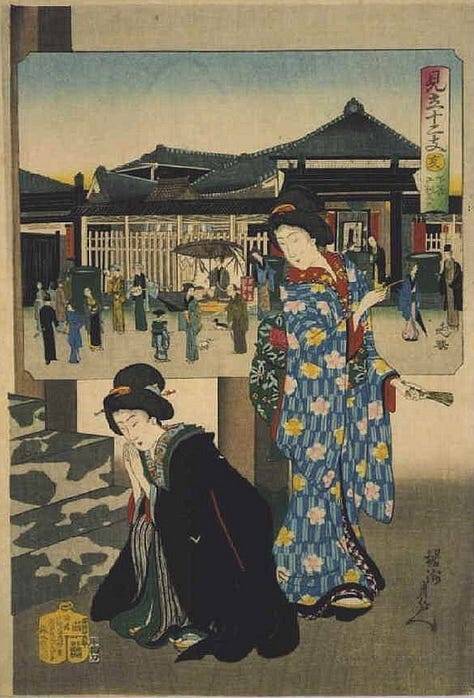
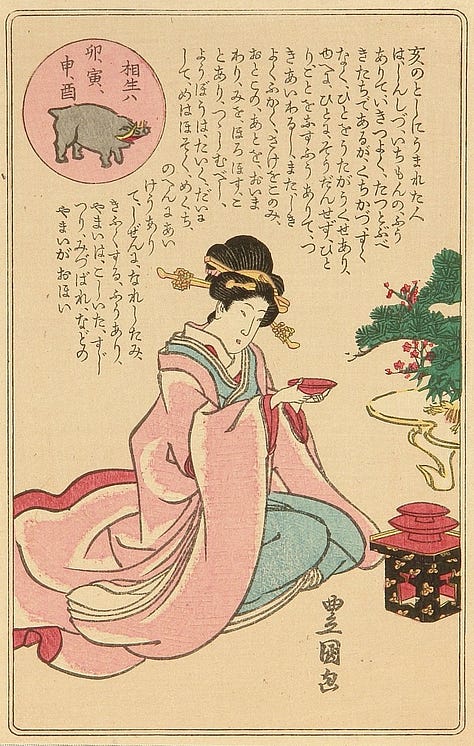
The next three prints are related to the zodiac year of the boar. The first one shows three boars above a new year scene. The second image is one of a zodiac parody series in which the year of the boar has been portrayed as women visiting a temple of Marishiten. The final print is a new year card design.
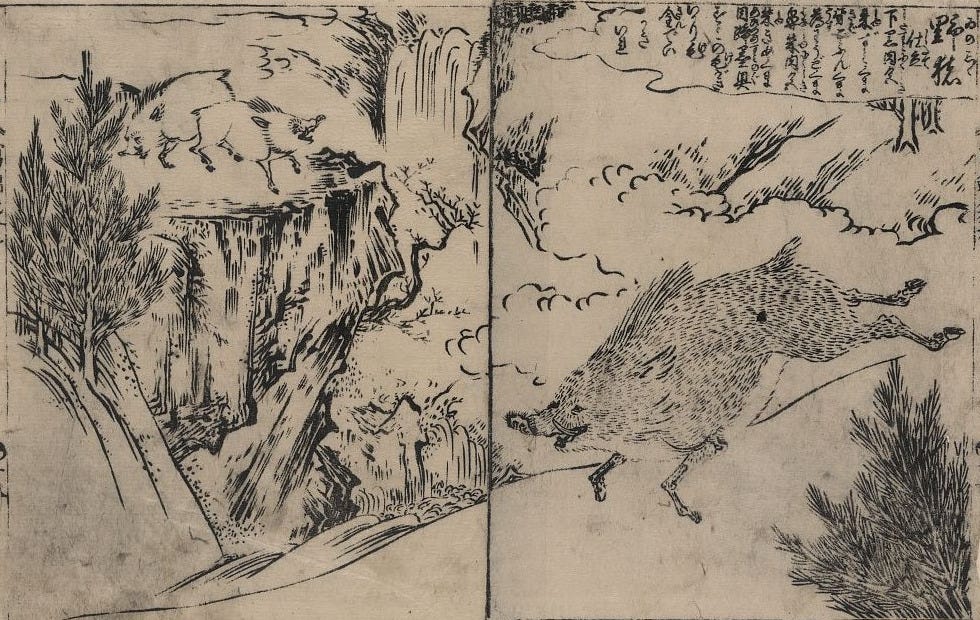
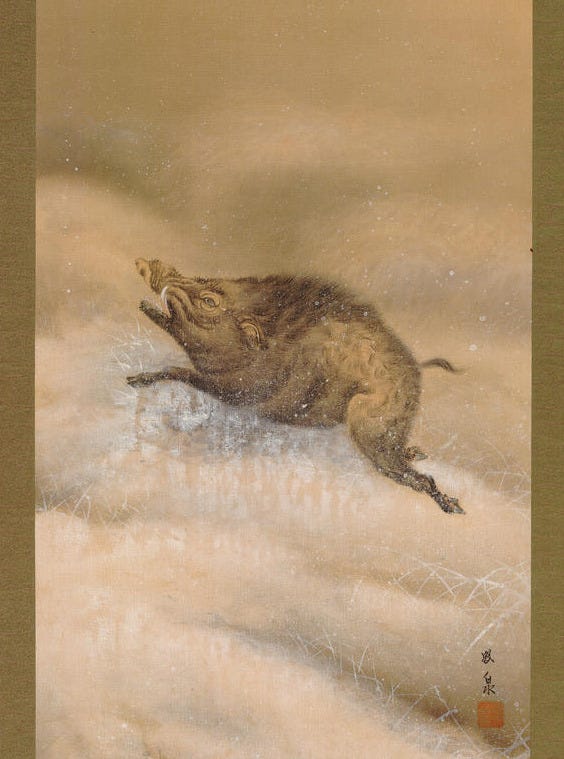
Below is a detail from a hanging scroll painting depicting a wild boar.
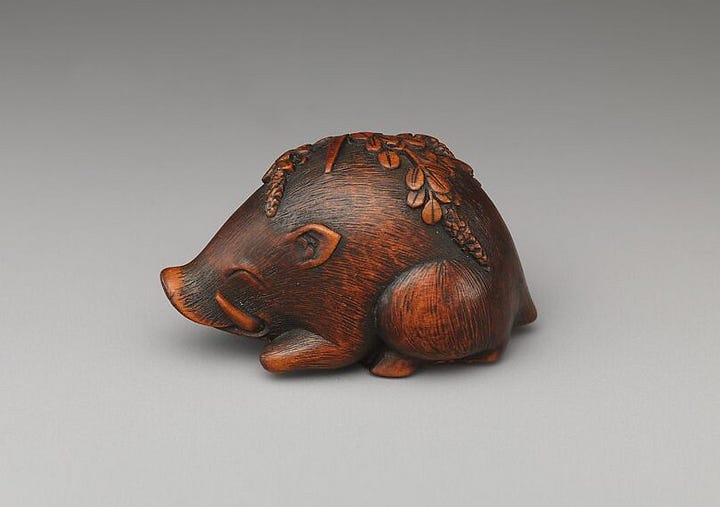
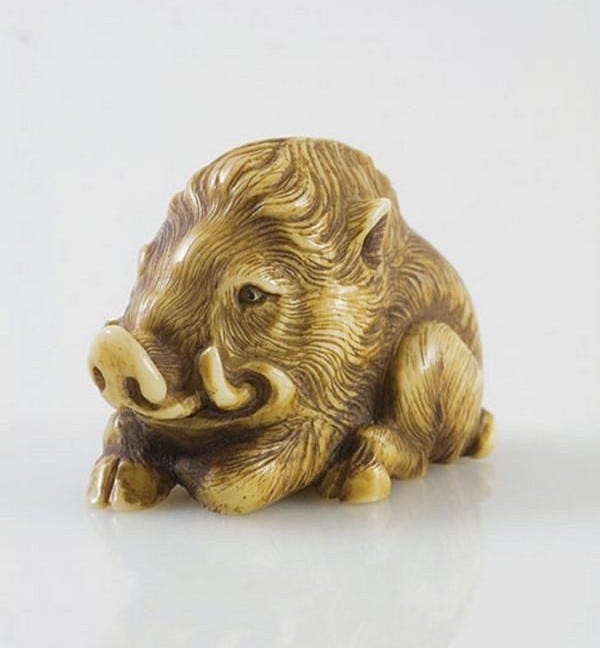
Wild boars were also a popular subject for carved netsuke. As mentioned in one of my previous posts, netsuke are miniature sculptures originally used as toggles to secure pouches or small containers. They were carved from materials including ivory and hardwood with intricate designs often chosen for their symbolism.
Thank you so much for reading, I hope you have enjoyed discovering the goddess Marishiten as much as I did. This newsletter is completely free but if you would like to support my work, donations will be very gratefully received via Ko-fi.
No posts
Comments
Nothing yet. Say the first thing.
Sign in to join the conversation.