
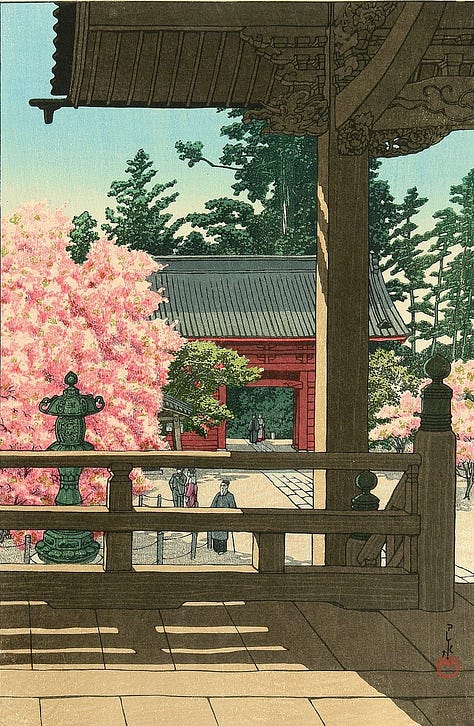
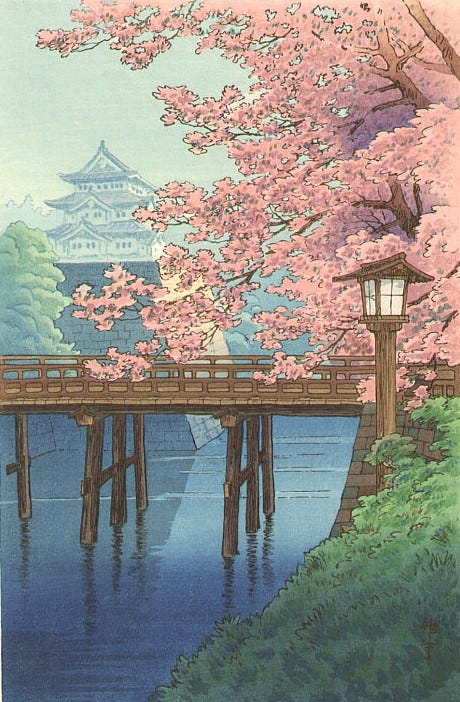
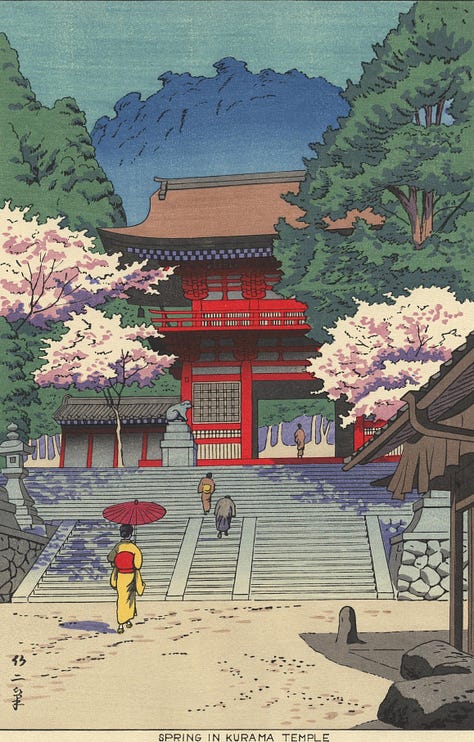
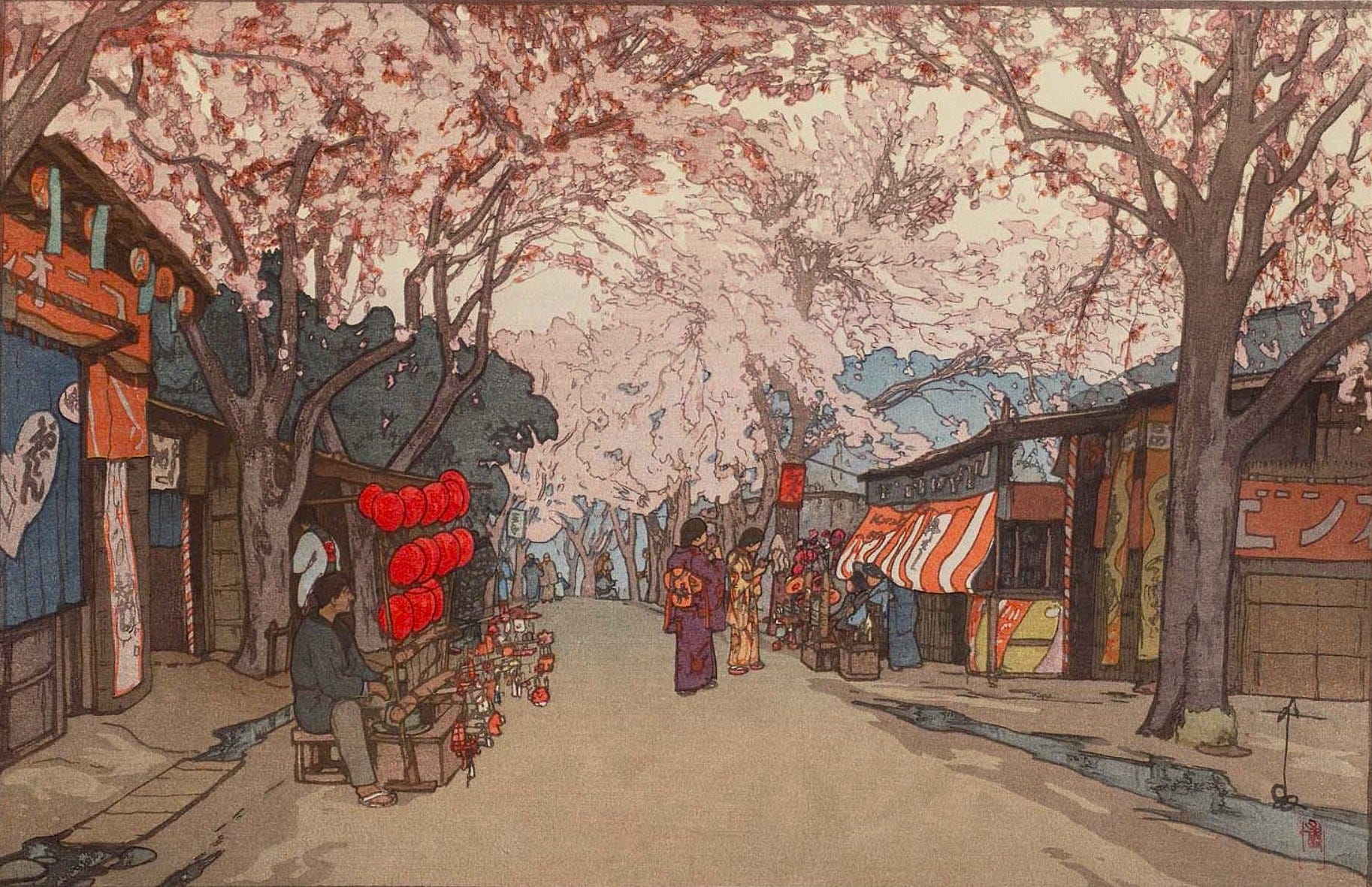
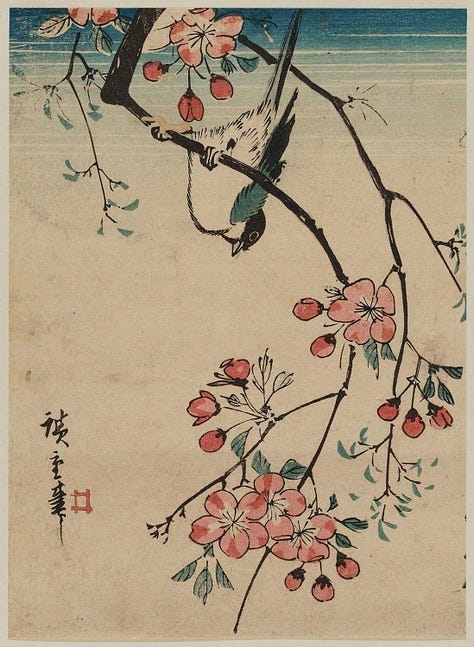
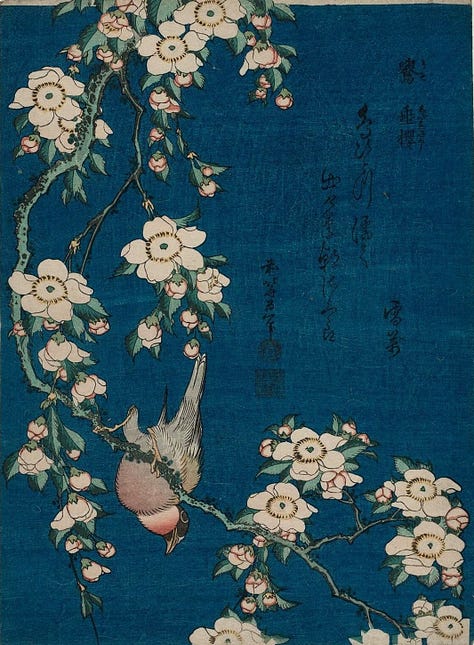
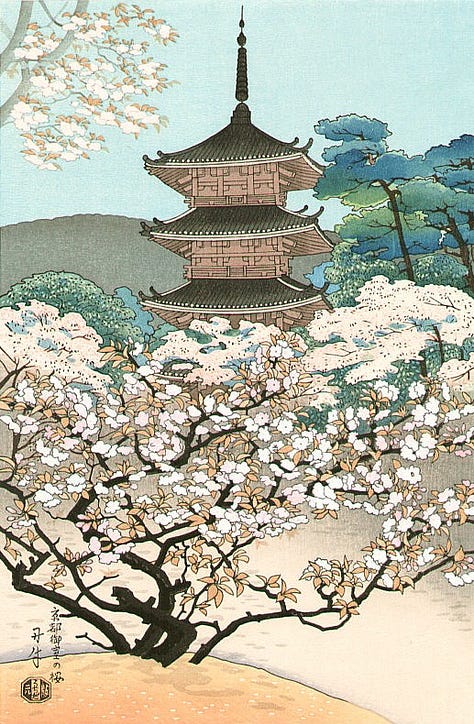
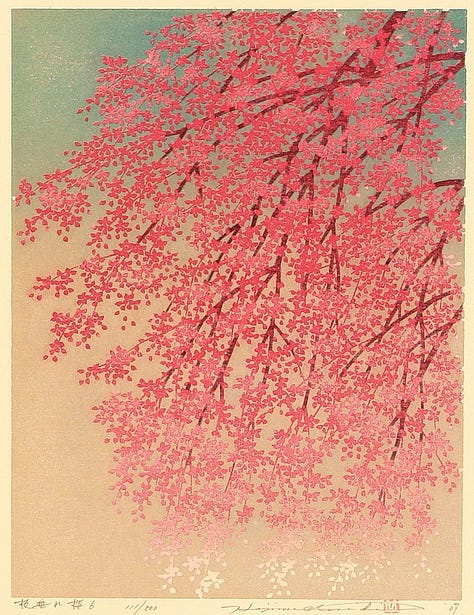
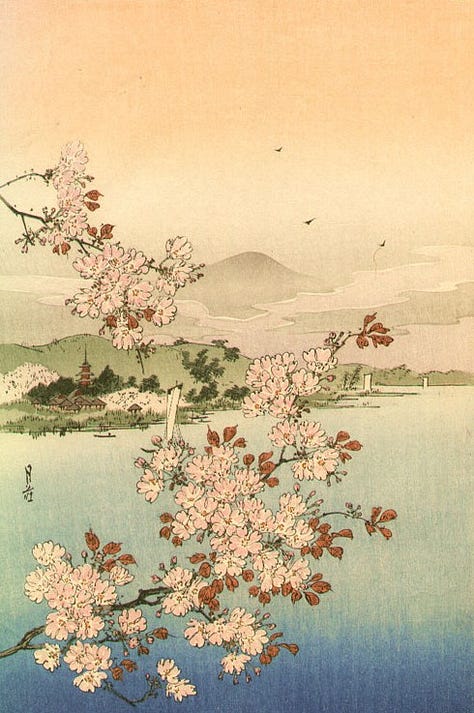
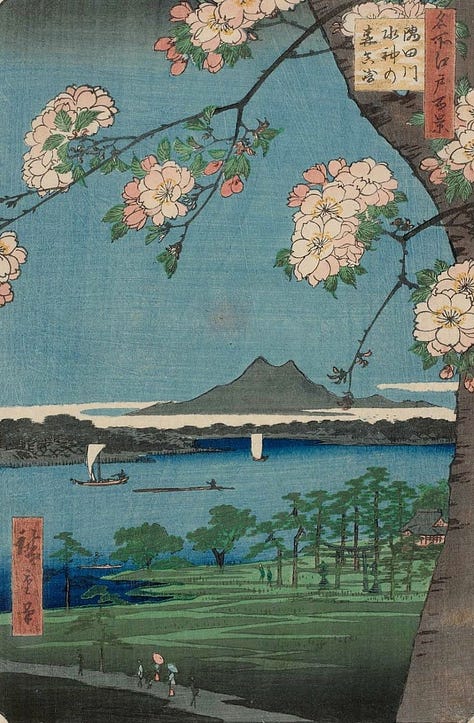
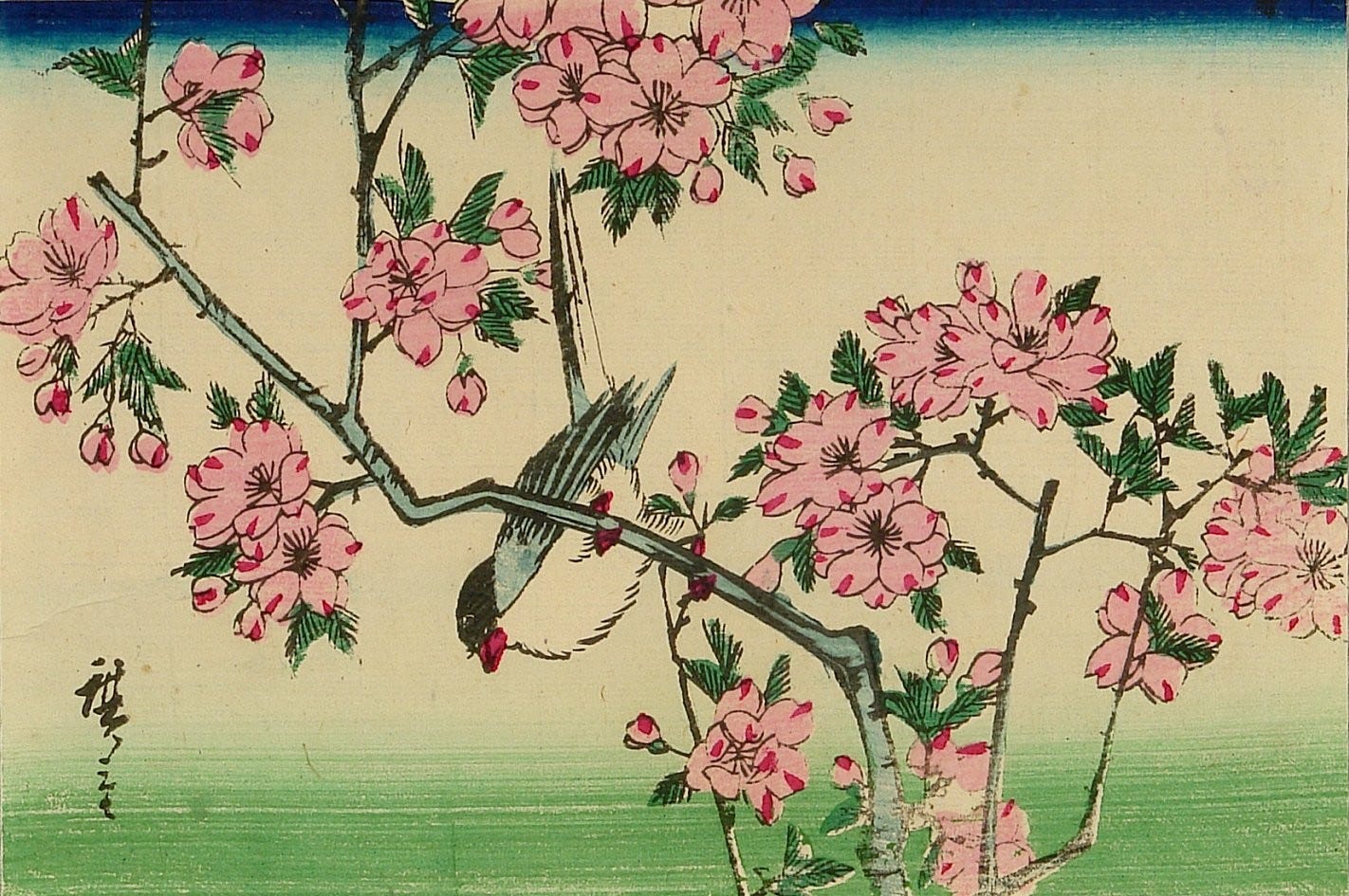
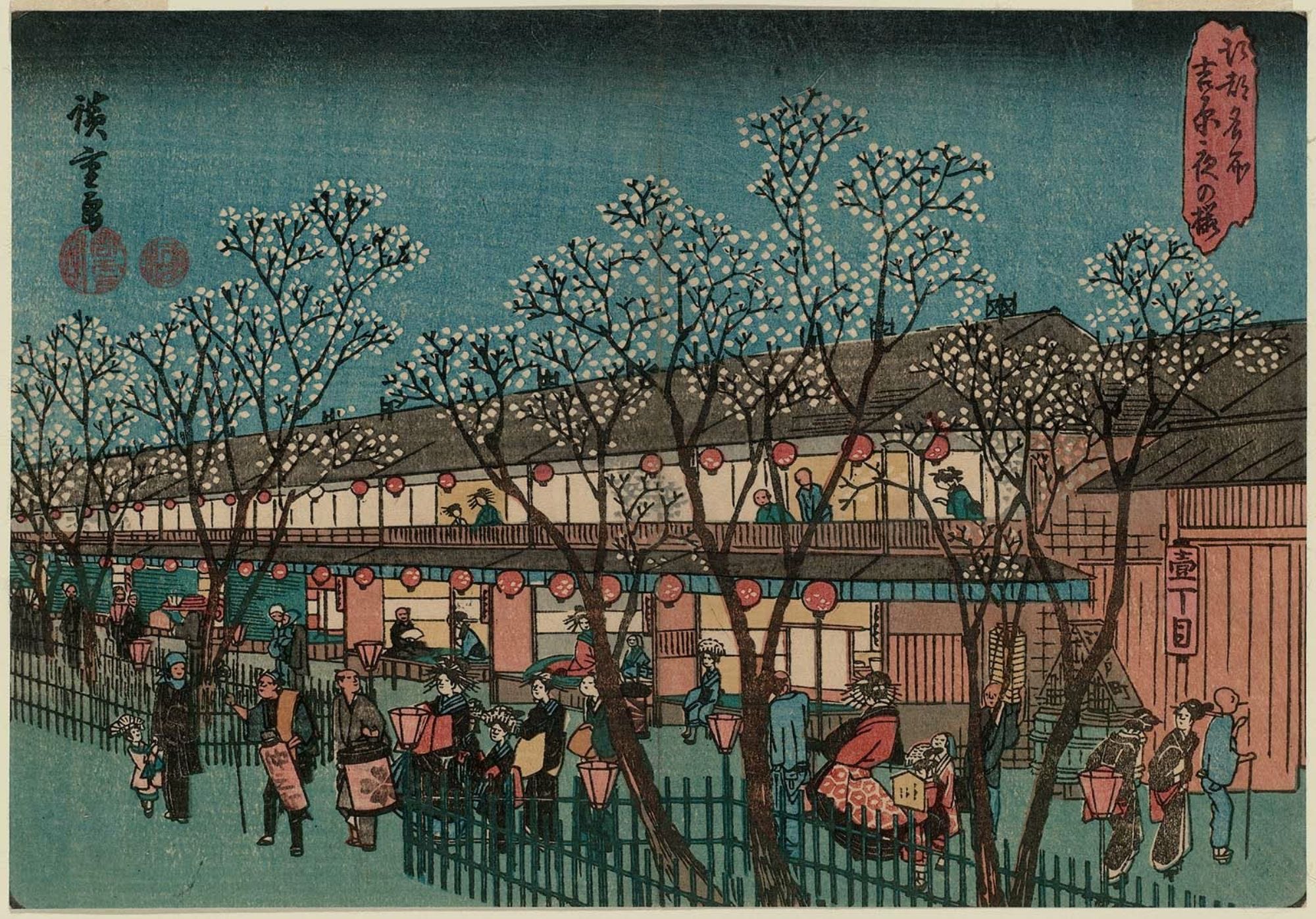
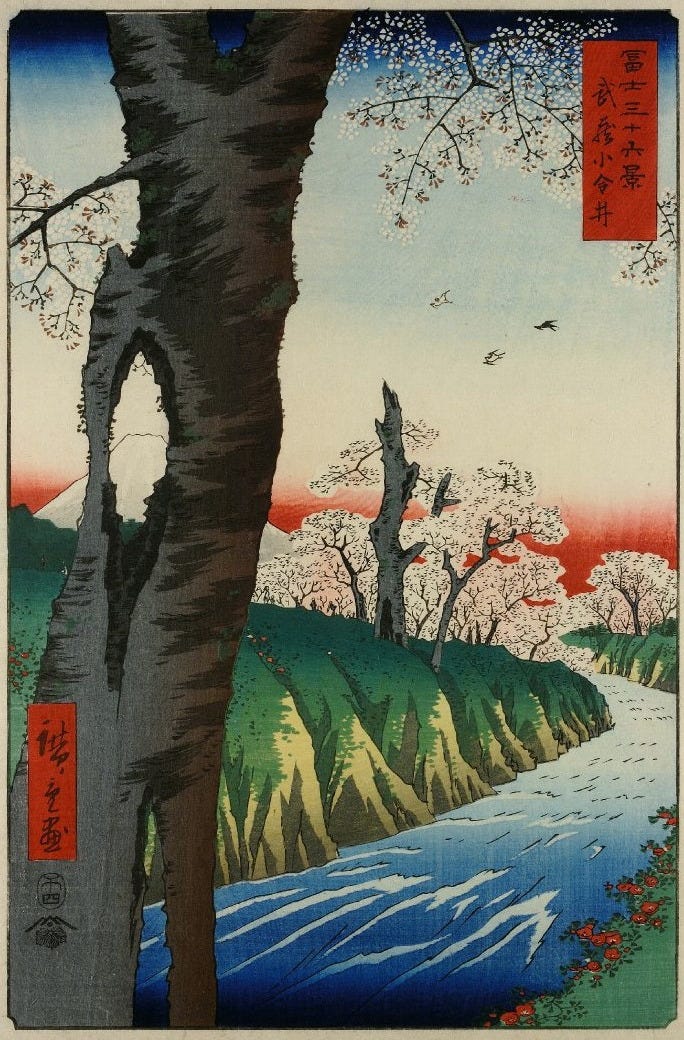
In Japan, cherry blossoms are known as sakura and they bloom at the beginning of spring each year. These flowers are an important part of Japanese culture and each year people gather for hanami, which means flower viewing, to enjoy these beautiful but short-lived flowers. Symbolically they represent new beginnings, but their fleeting beauty is also a reminder of the shortness of life and the importance of appreciating each moment. The sakura are currently in bloom in Japan and for those of you (like me) who are not there to enjoy them, I thought I’d put together a virtual hanami gallery of woodblock prints featuring cherry blossoms. I have also included some information about a kami (deity) associated with sakura, and a couple of haiku. I hope you enjoy it.
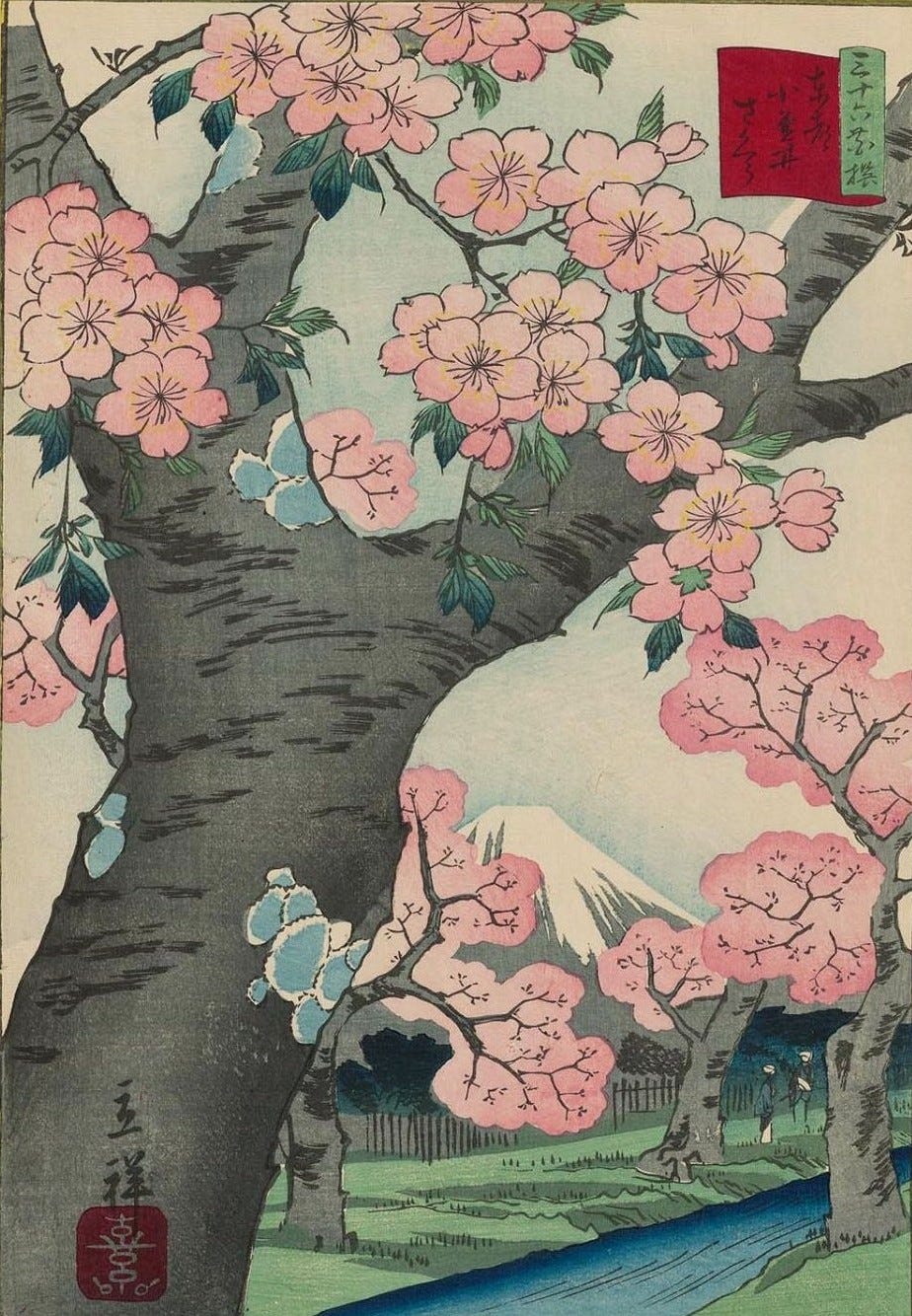
Hanami
Traditionally the blooming of sakura was associated with the cycle of rice cultivation and was a reminder that it was time to begin spring planting. At this time of year people believed that the rice kami descended from the mountains and took up residence in the sakura blooms. Even though today most Japanese are not involved with farming, the significance of this flower appearing has not faded.
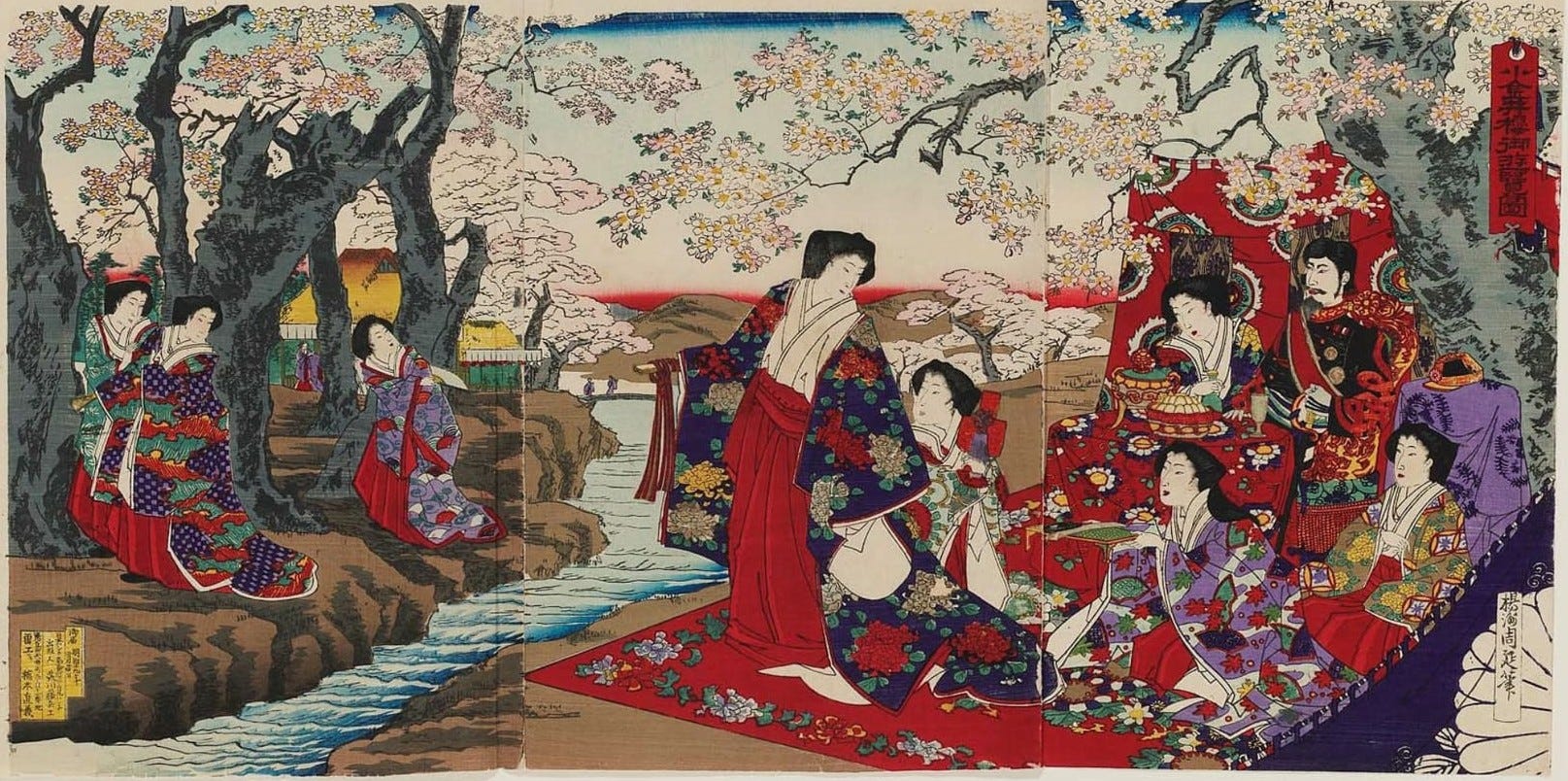
For over one thousand years people have been gathering together in Japan for hanami, a time to enjoy these beautiful flowers, often in the company of friends and family. Over this time sakura have inspired artists and poets and I will share some of their work in this post. In modern times cherry blossoms continue to represent renewal and new beginnings as they herald the arrival of spring. Let’s take a wander through some woodblock print sakura together. 🌸
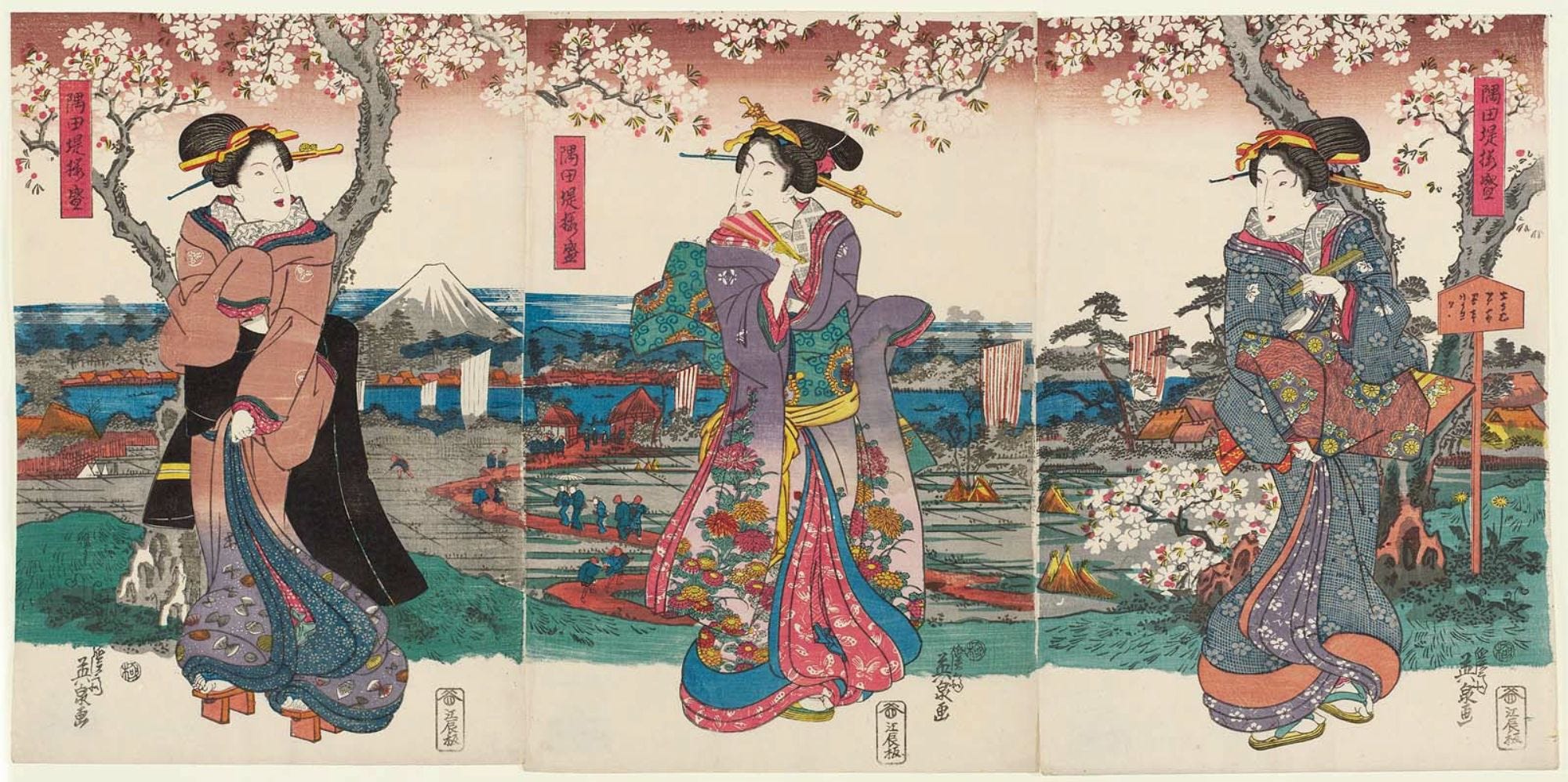
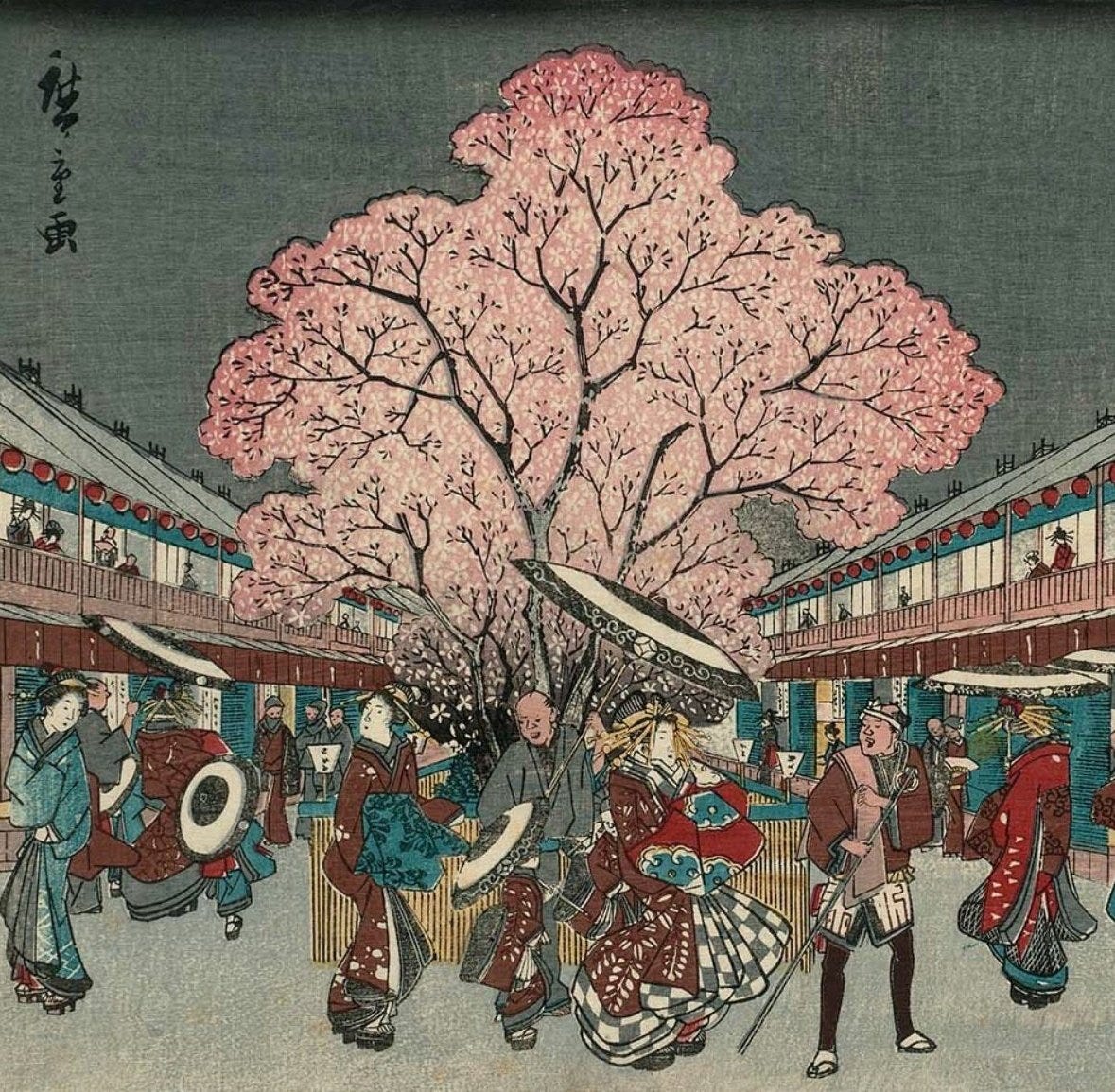
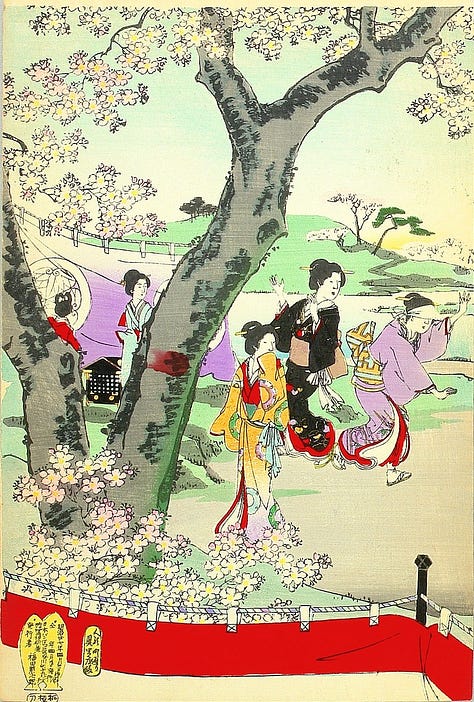
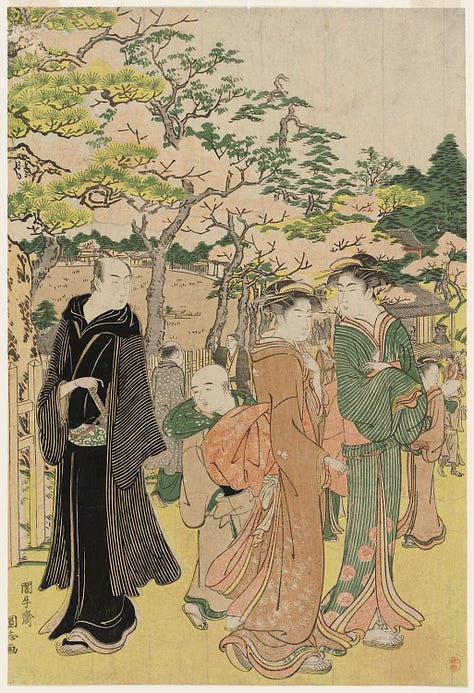
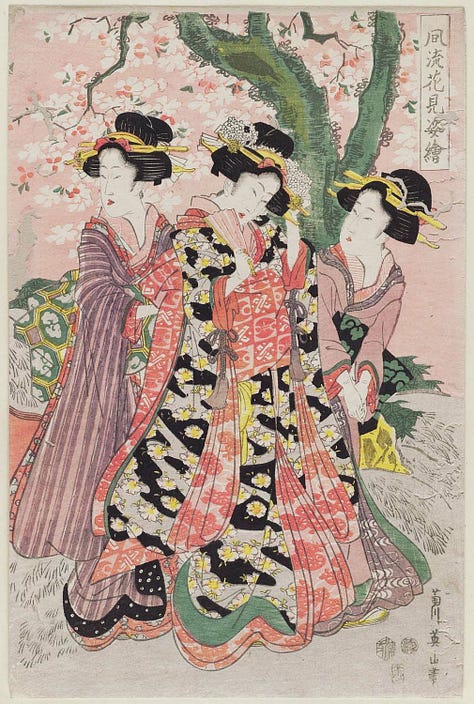
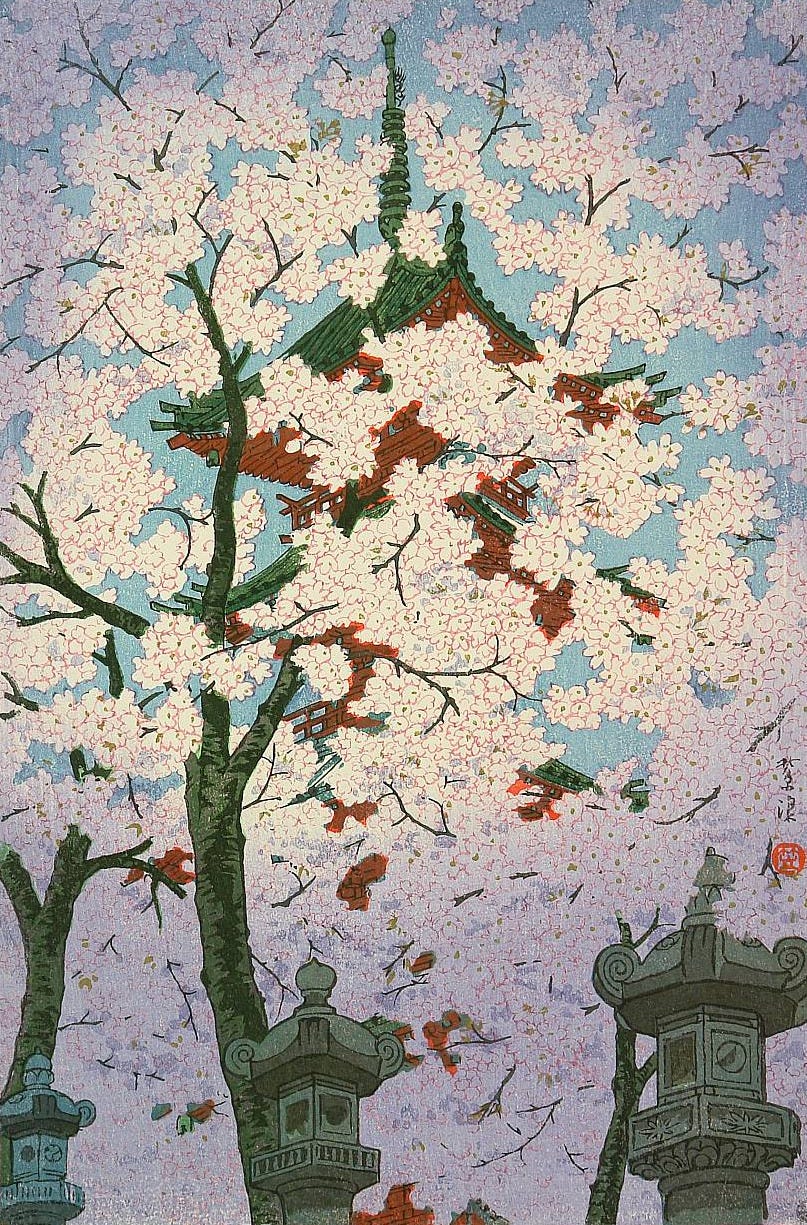
Konohanasakuya-hime
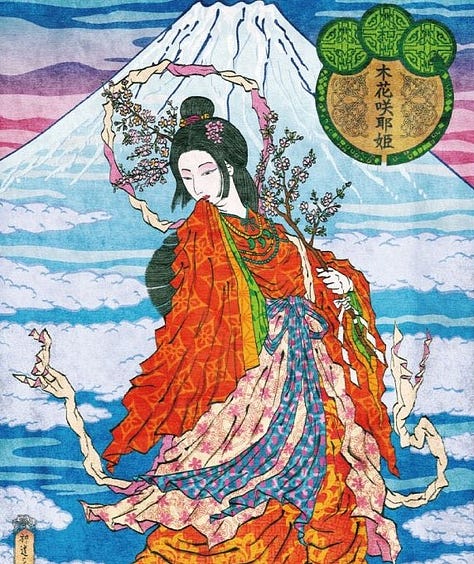
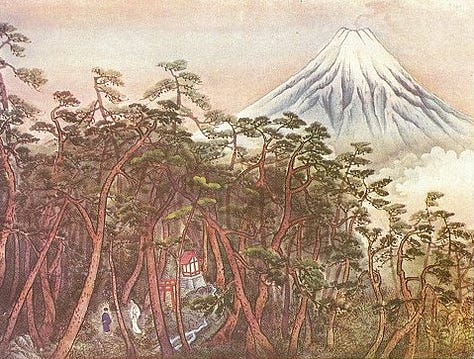
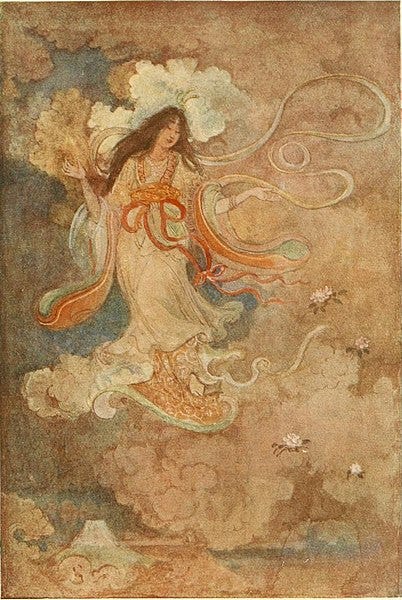
In Japanese mythology, Konohanasakuya-hime is the goddess of Mount Fuji, volcanoes, and sakura flowers. She was married to Ninigi, grandson of the sun goddess Amaterasu. Her father had first offered his older daughter Iwanagi-hime, which means rock or stone princess, but Ninigi was besotted with the more beautiful blossom princess Konohanasakuya-hime. Because he chose her, human lives were said to be fleeting like sakura blossoms rather than long-lasting like stones.
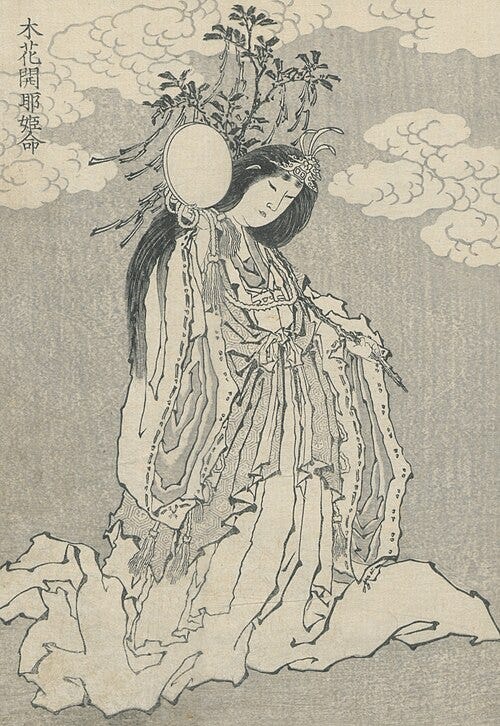
There are many shrines to Konohanasakuya-hime on Mount Fuji where people traditionally worshipped in the hope that she would prevent the volcano from erupting. There is one tale about a smallpox outbreak in a village nearby. A young boy named Yosoji went to a fortune teller to ask how he could cure his mother from smallpox. He was told to get water from a stream near Mount Fuji but when he went to look he wasn’t sure how to find it. A young woman in white appeared and led him to a stream where he was able to get water to take back to the village. He returned the next day to get more water. The same woman appeared and gave him specific instructions about how much water he needed to gather and when he should return. In the end, his mother was healed along with many of the other villagers. Yosoji returned to thank the young woman but discovered the stream had dried up and she was nowhere to be found. He prayed that she would appear to him, which she did, and he only realised as she vanished into a cloud that she was the goddess of Mount Fuji who had provided the healing water that saved his mother.
Sakura Haiku
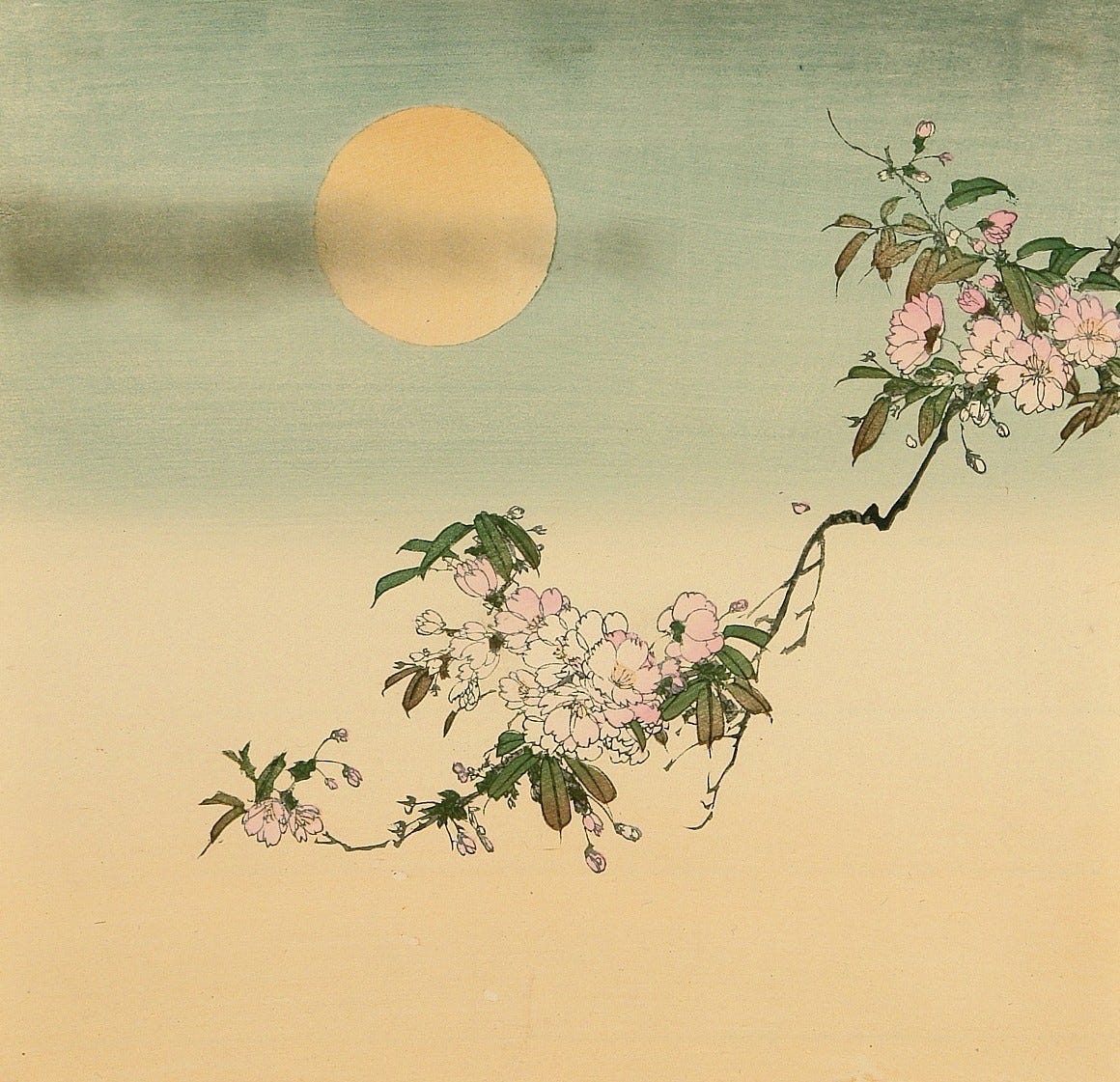
The overwhelming beauty yet fleeting nature of cherry blossoms means that they are associated with both excitement about what lies ahead as well as melancholy and nostalgia for the past. The famous haiku poet Basho has two poems that capture these different sentiments.
A Spring breeze is blowing
I’m bursting with laughter
— wishing for flowers
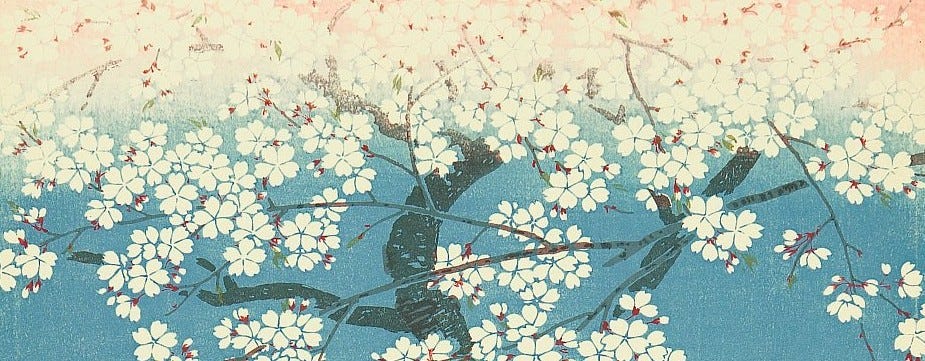
How many, many things
They call to mind
These cherry-blossoms!
Where I live there are unfortunately no cherry blossoms so I especially enjoy seeing the images online and the art inspired by these beautiful flowers. But I do have my own hanami of sorts. In late September and October each year, which is spring where I live, the jacaranda trees in my city burst into bloom. These magical purple flowers coincide with both university exams and the lead-up to the final exam period for final-year high school students. So like sakura, they bring with them a feeling of joy, but also nostalgia for the past. Like all beautiful things in nature, they also inspire artists who attempt to capture a little of their magic.
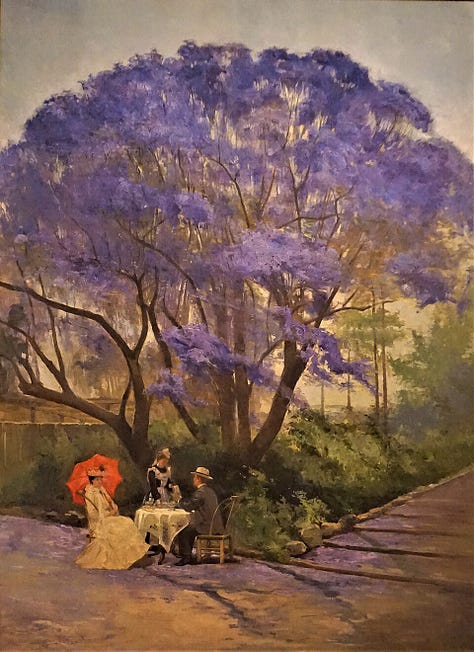
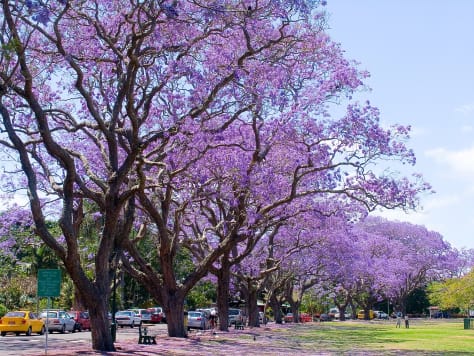
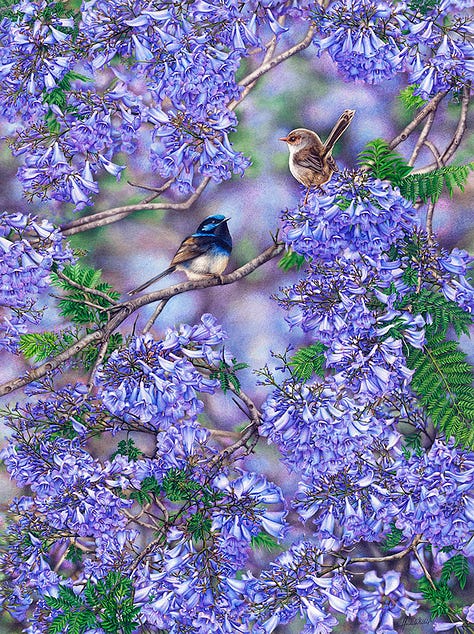
It seems that regardless of where in the world you live, flowers can inspire a similar sentiment and be a reminder of both time passing and the importance of enjoying the beauty around us. If you live in Japan, do you enjoy hanami? And if you live somewhere else, do you celebrate your own version of this magical festival in your part of the world? If so, I’d love to hear about it. This newsletter is completely free but if you would like to support my work, donations will be most gratefully received via Ko-fi. 🌸
One of my favourite newsletters on Substack is Grooving With Kami by Touyou. She has written a wonderful article with more information about the historic and spiritual significance of Sakura in Japan which I highly recommend reading.
No posts
Comments
Nothing yet. Say the first thing.
Sign in to join the conversation.