
Cuba on Record is a book about Panart Records, the first Havana record label. I have been researching this untold story over the years, and have revealed parts of it in my previous work, including the Grammy-nominated liner notes for The Complete Cuban Jam Sessions box set. My writing about Panart has rewarded me with relationships with some of Cuba’s greatest musicians and music historians, brought me accolades for my own work, and also, importantly, the support of the family of Ramón Sabat, who founded the label in 1943 in Havana, and abruptly lost it all when the Cuban government took over the Panart studio, factory and catalogue in 1961. It is crucial for me to tell the full story of the label and the life of the man who created it; and document the decades of production (before and after 1961) in the most important recording studio in the history of Cuba. The book goes back to the 1930s and will follow Panart’s far-reaching legacy to today.
For the last year, I have been publishing the chapters as a serial on Substack. Here you will find the chapters I have published so far, for paid subscribers. I am so grateful for your support!
Cuba on Record: The Book
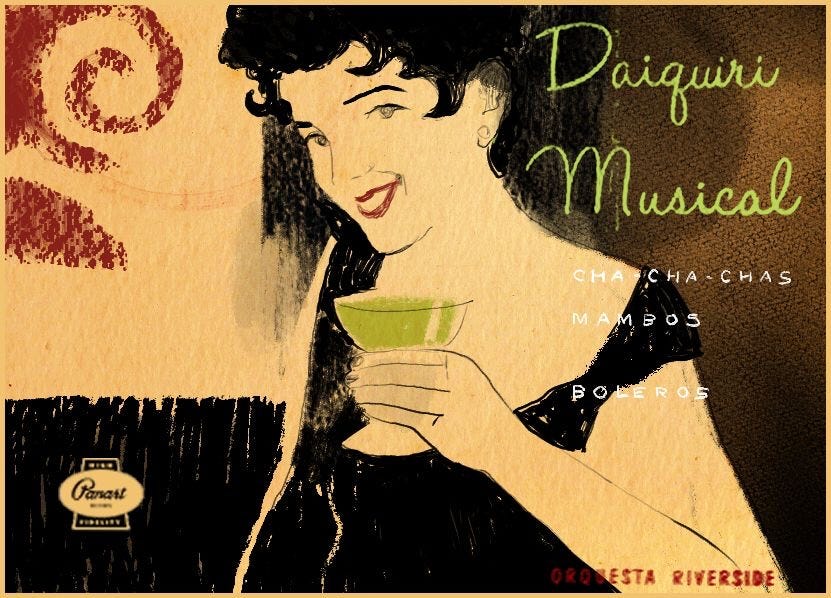
Chapter One: Daiquiri Musical
·
February 10, 2025
A billboard over Times Square urging New Yorkers to "Go Latin from Manhattan" prompted passersby in the workday mass below to hold on to their hats as they craned their necks expectantly to the sky: Cubana Airlines had just announced that its inaugural non-stop service from New York to Havana would take off on May 13, 1956.
Cuba on Record: The Book
Chapter Two: One, Two, Three Kick
·
February 4, 2025
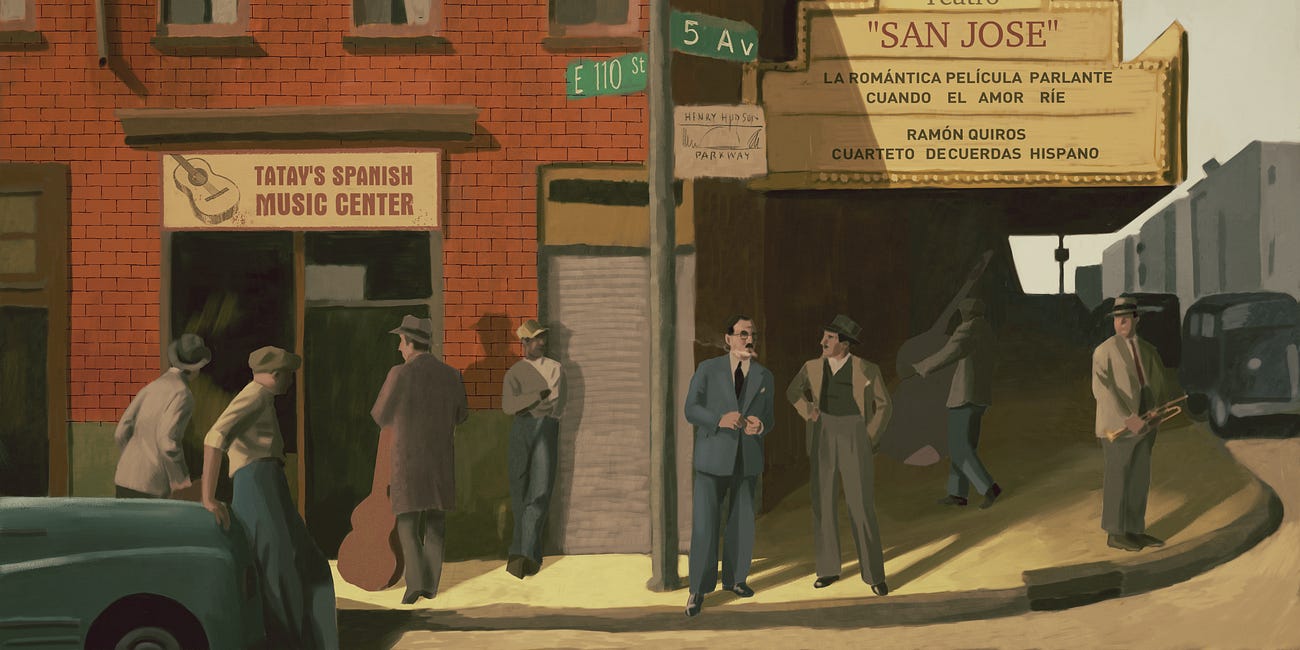
The latest installment of my book Cuba on Record takes place in Harlem in the 1930s. Down on his luck in the Depression, things look up when the future Panart Records owner Ramón Sabat gets a job at a Spanish theater in Harlem, then takes over the floor show at a low-rent Cuban fantasy called the Cubanacan club. Latin music percolates in New York as the Caribbean population explodes. Sabat works with Cuban and Puerto Rican musicians and meets a cast of characters that include Xavier Cugat, Bill “Bojangles” Robinson, Rita Hayworth and members of the New York underworld; he even gets his Hollywood break.
Cuba on Record: The Book
Chapter Three: Cuban Rhythms
·
January 31, 2025
In the latest chapter of my book Cuba on Record, about the first and forgotten Cuban record label, future Panart Records founder Ramón Sabat finally becomes a card-carrying audio engineer, recording for one of the most innovative independent labels in New York. A trip to Havana in 1941 to record a set of 78s lays the path for his destiny. Featuring Eliseo Grenet, Lead Belly, Leonard Bernstein, Jorge Negrete, Chano Pozo…
Cuba on Record: The Book
Chapter Four: Tiempo de Verano/ Summertime
·
September 8, 2025

Acknowledging the cinematic cliché with a husky laugh, Julia Sabat would later say that she and her husband Ramón met cute. The Barnard graduate and the Cuban recording engineer were introduced at a Manhattan cocktail party where they were the only ones in the room who spoke Spanish, a secret code that swept them conspiratorially into a corner for the rest of the night. The discovery that Julia had family ties to Ramón’s homeland, Julia remembered, “was enough common ground to launch a whirlwind.”
Cuba on Record: The Book
Chapter Five: You Reap What You Sow/El Que Siembra Su Maíz
·
September 1, 2025

In this latest chapter of my book Cuba on Record, about the first and forgotten Cuban record label Panart, Ramón Sabat gets to work building a studio and record factory in Havana during WWII. It’s a time of shortages, scrap drives and Victory Discs for soldiers, Latin music as a diplomatic tool, Havana’s infamous “house of the demented,” and, of course, the start of Cuba’s first-ever record company. Machito, Conjunto Casino, Frank Sinatra, Nono Morales and Spike Jones are some of the artists who appear in this installment of
Cuba on Record: The Book
Chapter Six: Romper el Coco/Crack Open the Coconut
·
August 5, 2025
“What else can poor people do but sing, and keep singing?” reasoned Olga Guillot, looking back at her childhood from the firmament of stardom as one of the greatest Latin American vocalists of all time. The future Queen of Bolero and her sister Ana Luisa didn’t play with dolls. In the family’s rented room in a colonial-style tenement building set around a communal patio, they sang to amuse themselves. Even as toddlers, they were the tiny back-up singers for their mother, who worked as a seamstress to precariously support her two daughters on her own. They always sang while she sewed. Their aunt was also featured in the household chorus. The girls joined her in singing Spanish romantic arias from the zarzuelas, lyric operas then popular in Cuba, as they went about their daily chores. The show business aspirations once nurtured by Guillot’s mother and aunt had been thwarted by their father, Guillot’s grandfather, a Sephardic immigrant from Catalunya who worked as a tailor. He forbid his daughters to sing for a living. “I don’t want prostitutes in my house,” he declared. And that was final.
Comments
Nothing yet. Say the first thing.
Sign in to join the conversation.