
My recommended beach reads this summer are not escapist novels. But they are about situations from which for many of their protagonists there is no escape; about despair but also individual determination and perseverence, and the power of people when they come together. These stories of yesterday and today take place in and outside Castro’s Cuba, in Nazi Germany, in the years of military dictatorship in Argentina and the long years of its impact on generations, and in the United States now.
These are books published in 2025 and this year that I’ve read over the past few months. They have all received deserved acclaim, one winning the Pulitzer Prize, another nominated for that award, among others.
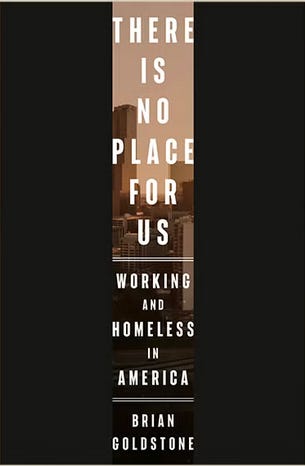
I probably would have bought There is No Place For Us for the evocative title alone. Sadly, it’s not only a clever refiguration of the name of a West Side Story song, it’s a description of the dire situation of too many living in today’s America.
Brian Goldstone’s book is about a pattern of displacement that has replaced the “American Dream” of upward mobility.
“My book explores a startling phenomenon, the dramatic rise of the working homeless in cities across America,” Goldstone himself explains. “There’s something counterintuitive, even scandalous about the idea that these two words, ‘working’ and ‘homeless,’ could go together…Yet my book shows that in many ways, because of a toxic mix of skyrocketing rent, low wages and a lack of tenant rights, this is becoming the new face of homelessness in the U.S.”
Those faces are often those of single mothers with children, as Goldstone shows through the stories of five families of various configurations in Atlanta who struggle to maintain a place to live despite working often multiple jobs. Goldstone’s journalistic research and literary gifts immerse the reader in their lives, lives in which one missed payment, dishonest landlord or bureaucratic snafu can send them searching again for a place to sleep. They end up in their cars (when they can keep up the payments), staying with already strained relatives, or worse, in a bait-and-switch labyrinth of extended-stay hotels. Amidst this daily drama, they attempt to maintain a steady environment for their children, make it to work on time, and put food on the table. Their fears of it all falling apart could feel familiar to you, even if you have a steady place to live. It does to me.
This book is enlightening, and infuriating. I at times found it difficult to read as the people it chronicles experienced hope followed by disappointment again and again. But Goldstone’s vivid portraits of his characters are such that when I finished the book, I wasn’t ready for it to end. I’m hoping he’ll write a second book that continues to tell their stories.
There is No Place to Us won the 2026 Pulitzer Prize for General Non-Fiction. Read an excerpt from the book and watch a video introduction from Goldstone on the Penguin Random house website.
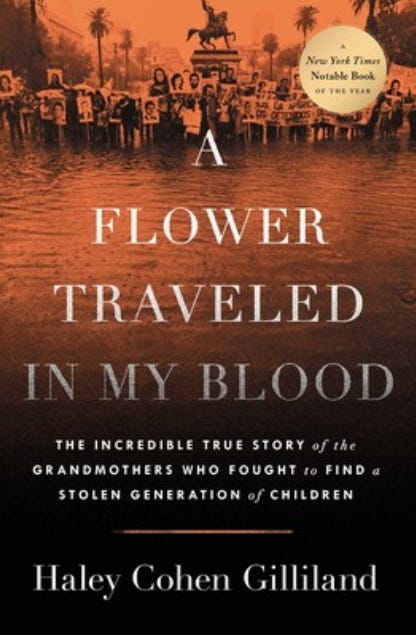
In the early hours of March 24, 1976, the streets of Buenos Aires rumble with tanks as soldiers seize the presidential palace and topple Argentina’s leader. The country is now under the control of a military junta, with army chief Jorge Rafael Videla at the helm. With quiet support from the United States and tacit approval from much of Argentina’s people, who are tired of constant bombings and gunfights, the junta swiftly launches the National Reorganization Process or El Proceso—a bland name masking their ruthless campaign to crush the political left and instill the country with “Western, Christian” values. The junta holds power until 1983 and decimates a generation. One of the military’s most diabolical acts is kidnapping hundreds of pregnant women. After giving birth in captivity, the women are “disappeared,” and their babies secretly given to other families—many of them headed by police or military officers. For mothers of pregnant daughters and daughters-in-law, the source of their grief is twofold—the disappearances of their children, and the theft of their grandchildren. A group of fierce grandmothers forms the Abuelas de Plaza de Mayo, dedicated to finding the stolen infants and seeking justice from a nation that betrayed them. At a time when speaking out could mean death, the Abuelas confront military officers and launch protests to reach international diplomats and journalists. They become detectives, adopting disguises to observe suspected grandchildren, and even work alongside a renowned American scientist to pioneer groundbreaking genetic tests.
That is the publisher’s synopsis of Haley Cohen Gilliland’s A Flower Traveled in My Blood. The story of Argentina’s Dirty War, the tens of thousands who were kidnapped and killed, and the babies of murdered young mothers born in captivity who were given for adoption through military connections was first told to international audiences in the 1985 movie La Historia Oficial. But the story of course did not end then. In her book Gilliland, a former Buenos Aires correspondent for The Economist, covers those years of terror, the mothers’ and grandmothers’ subsequent decades of struggle and the coming of age of those disappeared babies. As suggested by its subtitle, “The Incredible True Story of the Grandmothers Who Fought to Find a Stolen Generation of Children” the book is intended to attract a general readership unfamiliar with Argentine history, as well of those who want to know more.
When I was sent to Buenos Aires as an Inter American Press Association scholar in 1986, I did some reporting for The Associated Press; I had worked for the agency in New York (my first job as a journalist). I think my very first assignment was to interview Hebe de Bonafini, the president of Las Madres, The Mothers of the Plaza de Mayo. After her 26-year-old son was abducted, she became one of the first women to take to the streets.
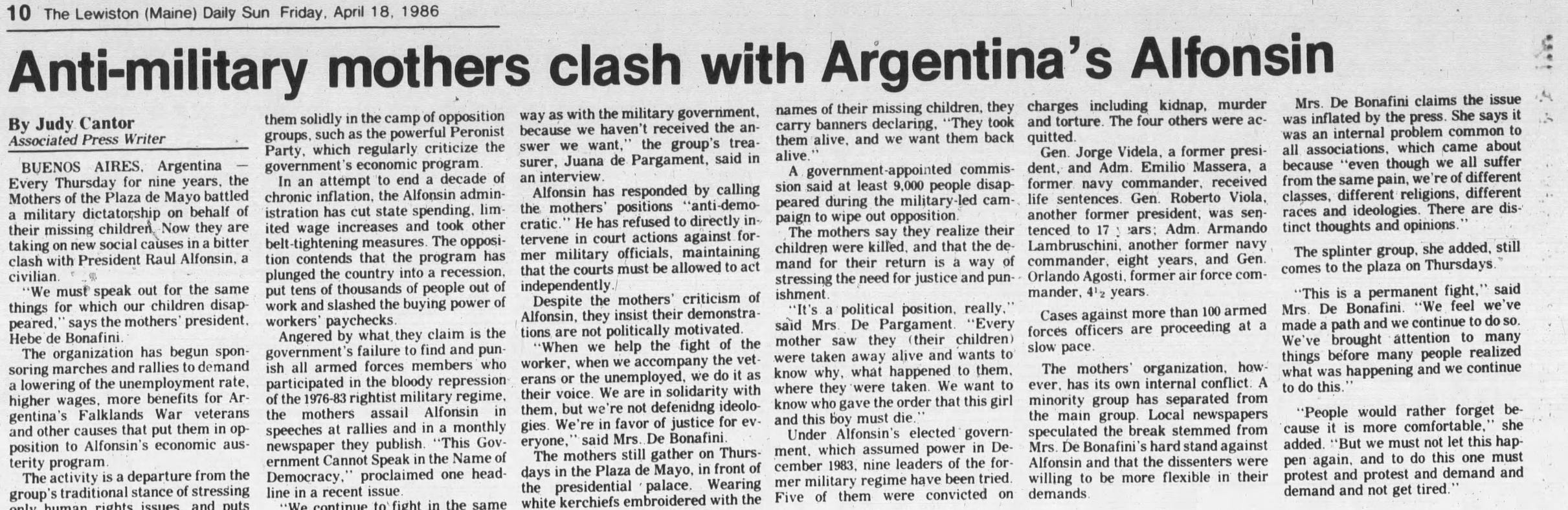
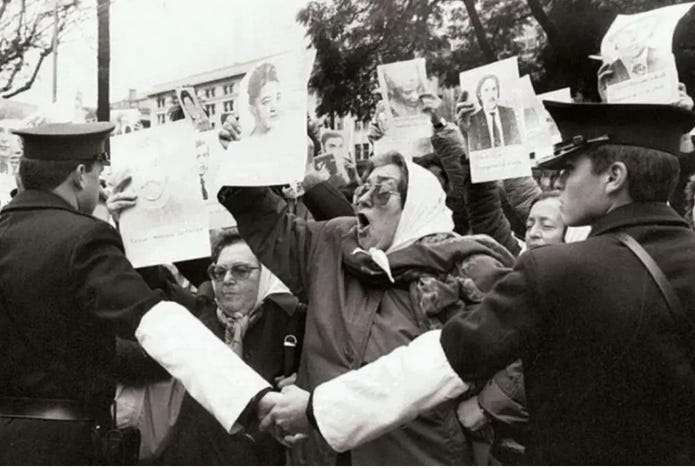
For the next three years, I experienced the aftermath of Argentina’s violent regime and its fledgling democracy first-hand. To begin my education I had gotten myself a copy of Nunca Más, The Report of the Argentine National Commission on the Disappeared, an imposing tome that provided lists of names of the disappeared and graphic descriptions of their fates, when known. But the artists and musicians who I met would be my conduits as I attempted to understand the trauma of Argentine society and the many things that went unsaid (though of course I could never fully understand what they had experienced.)
All of these years later, I am grateful for Gilliland’s exhaustively researched book, particularly the personal stories of the Mothers and Grandmothers. She reveals the identities and the stories of women usually seen as anonymous demonstrators; the ones who have still not been deterred from their vigil in Buenos Aires’ main square and the search for the bodies of their children and for their now adult grandchildren. Gilliland writes vividly and unflinchingly about this historic episode of government terrorism. She also explains in detail the evolution of DNA testing and, in all its complexity, the difference it has meant for the womens’ quest for justice.
In this interview on NPR’s All Things Considered, Haley Cohen Gilliland talks about the book.
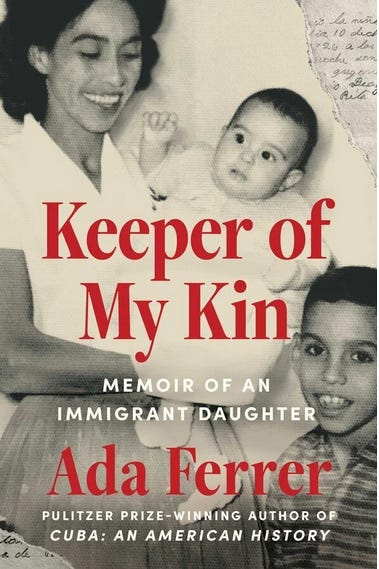
Ada Ferrer’s engrossing Cuba: An American History is a must read for anyone interested in Cuban History and Cuban-American relations.
Ferrer’s latest book is about her own family’s exile from the island and its repercussions. She lays bare the difficult twists and turns that defined their lives after her mother took her as a baby to join their father in New York, but left her 9-year-old son behind.
As Ferrer comments in the video below, both her family’s story and the lives of others have been more complicated than a single decision to stay or go, or a simple case of cutting ties and “starting over.”
Here is Ada Ferrer reading from Keeper of My Kin.
I’ve just finished The Director by Daniel Kehlmann, a disquieting novel about an acclaimed film director who leaves Germany for Hollywood before World War II breaks out. He risks returning to his homeland to see his ailing mother, mistakenly believing that as renowned artist he will be allowed to move unfettered under Nazi rule. Instead, until after the war he will not be permitted to leave Germany, will be closely watched and enlisted to make bad movies, extravaganzas that are in accord with Nazi ideals, while at the same time being told by officials that he can have complete creative freedom. The book is based on the true story of the Austrian filmmaker Georg Wilhelm Pabst, who was known for working with Greta Garbo, Louise Brooks and Nazi propagandist Leni Riefenstahl. Kehlmann brilliantly plays the story as tragicomedy, imagining a claustrophobic narrative that brings the curtain down on Pabst’s career.
Read an extract from The Director, which as shortlisted for The International Booker Prize HERE.

Books for Cuban/Latin Music Fans, Musicians and Students of History and Style
·
December 19, 2025
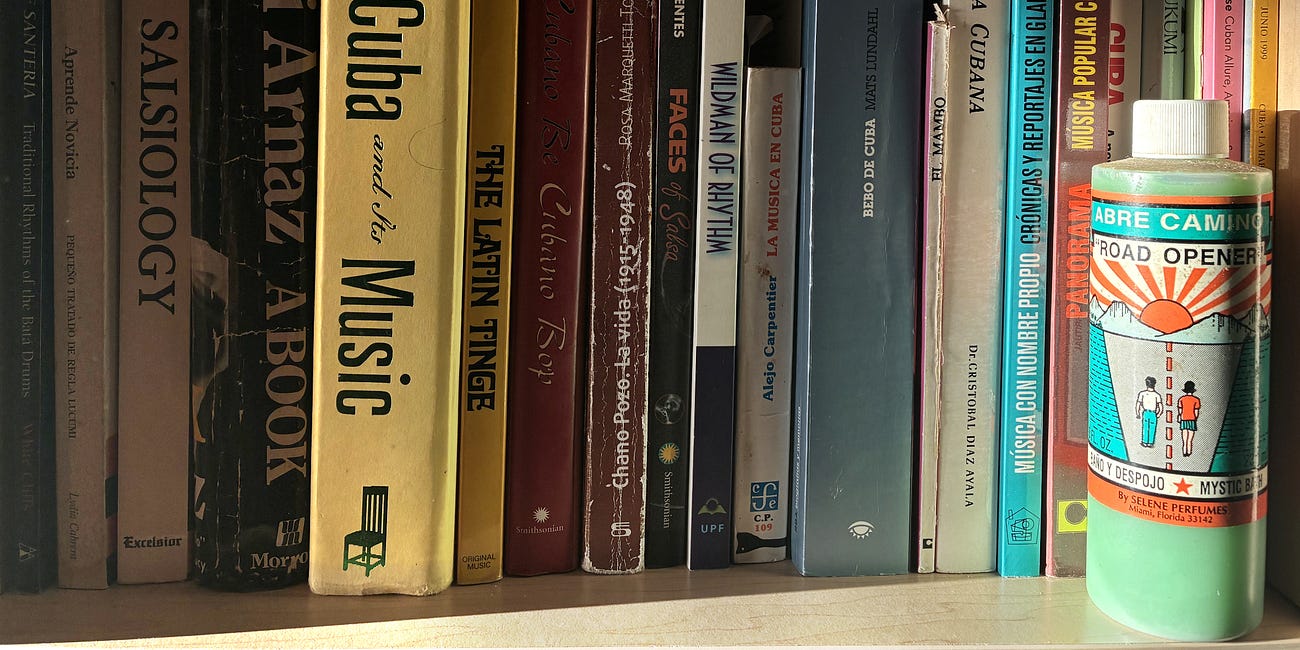
This not a 2025 round up. These books are not “new.” But if they are new to you, I highly recommend them if you are interested in Cuban, Latin and jazz music, or intrigued by the history of the Americas or Latinos in the United States. Or popular culture, style, cultural politics…. And yes, I think any one of them would make for a great gift.
Film
Cinema Dictadura: Latin American Film and Soundtracks at the Oscars
·
Mar 8
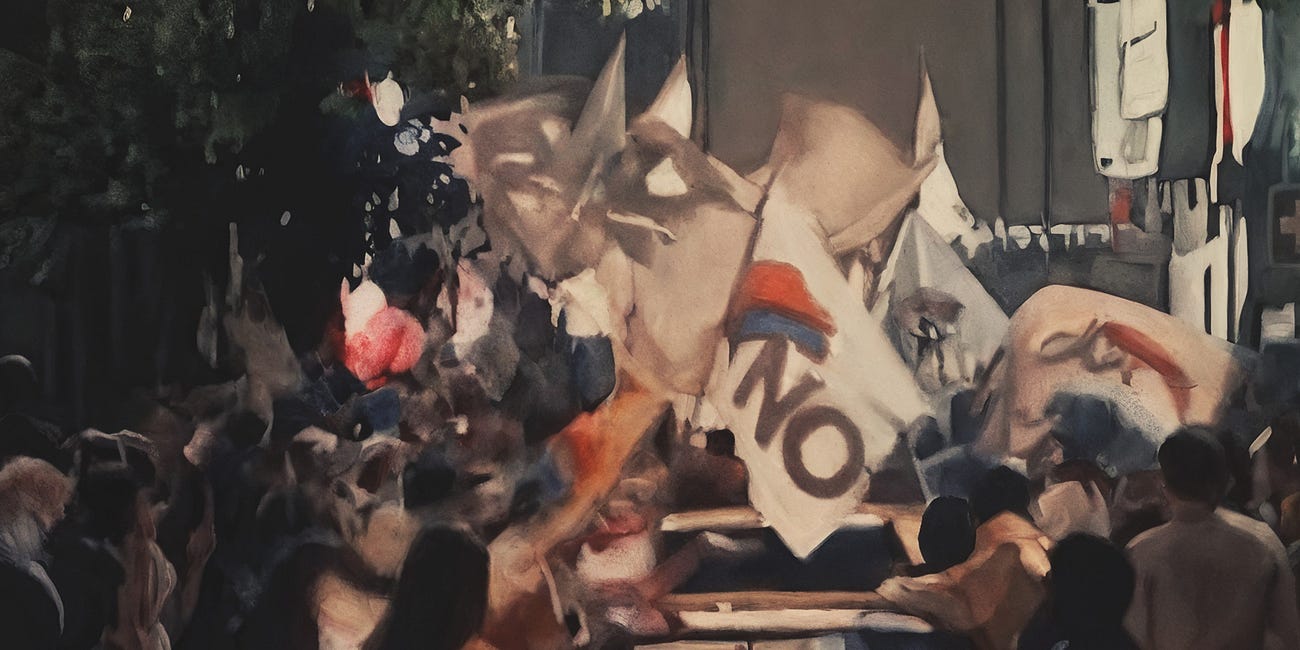
Brazil’s The Secret Agent did not win Best International Feature, or less surprisingly, because it is a Latin American film, Best Actor, Best Picture or Best Cinematography at the Oscars, although I would have liked to see it break those barriers. Still, I hope that its four nominations will m…
Comments
Nothing yet. Say the first thing.
Sign in to join the conversation.