
Wang Binbin
The concept of “unwritten rules,” introduced by Wu Si, has become extraordinarily popular. It helps people understand history and the countless strange events, large and small, that have taken place within it. But had the concept applied only to the past, it would never have gained such currency in the present. Wu Si distilled it from Chinese history. Yet within only a few years, it was already being used constantly by people from every walk of life. This shows that the concept speaks even more directly to contemporary reality.
The phrase was soon turned into a verb. Someone wants to subject someone else to the “unwritten rules”; someone has been “unwritten-ruled”; someone, in order to achieve a goal, allows themselves to be “unwritten-ruled.” Expressions of this kind appear every day on the internet and in newspapers and magazines.
In China, the unwritten rules often exert more power than the written ones. Even during the highly unusual period of the Cultural Revolution, did they ever really disappear?
The Cultural Revolution called itself “unprecedented in history.” In many respects, it was. It encouraged children to draw a line between themselves and their parents, and even incited them to assault their own fathers and mothers. Husbands and wives were urged to inform on each other and to compile reports on private remarks made in bed. Poverty was treated as a mark of honor. Calloused hands became a qualification for university admission, while handing in a blank examination paper could turn someone into a hero. Such phenomena were indeed without precedent.
Yet even in an age that claimed to be breaking completely with everything inherited from the past, many traditional practices survived with remarkable tenacity. Some continued under new names and altered appearances. Others persisted without changing either their names or their faces.
The unwritten rules continued to play an important role in social life during the Cultural Revolution, often in forms inherited directly from the past. Even this statement may understate their importance. The Cultural Revolution’s claim to be “unprecedented” should be understood in two ways.
On the one hand, many things happened that had never happened before. In that sense, the period was certainly unprecedented. On the other hand, many traditional practices emerged and flourished with an intensity never before seen. That too was unprecedented. During the Cultural Revolution, the unwritten rules were often more deeply entrenched than at any earlier time.
Sometimes these two forms of the “unprecedented” appeared in the same institution. University admission is one example. During the Cultural Revolution, the national college entrance examination was abolished. Universities recruited students directly from among workers, peasants, and soldiers. There were no academic examinations, and in some cases no meaningful educational requirements at all.
Perhaps the only firm requirement was that applicants be politically “red” and come from an acceptable class background. The children of landlords, rich peasants, counterrevolutionaries, “bad elements,” and rightists—as well as those themselves classified as class enemies—were not eligible to enter university. Never before had Chinese universities admitted students in this fashion. It was unprecedented.
Universities remained enormously attractive to young people during the Cultural Revolution. Whether one was a worker, a peasant, or a soldier, spending several years at a university as a “worker-peasant-soldier student” could lead to cadre status, a salary, and access to the state grain-supply system. Who would not want such an opportunity?
But there were very many politically reliable workers, peasants, and soldiers. Which of them would become the lucky few? At that point, the unwritten rules began to operate with unprecedented force.
Universities during the Cultural Revolution had no real authority to select students. They had only the power to receive those chosen for them. According to the formal rule—the rule written in documents and publicly proclaimed—workers, peasants, and soldiers were supposed to recommend candidates.
I lived in the countryside during the Cultural Revolution, so I do not know the precise situation among workers and soldiers. But in rural areas, the phrase “recommended by the poor and lower-middle peasants” was entirely empty.
University places were allocated to rural people’s communes. A particular commune might, for example, be allowed to send two students to university in a given year. Who those two people would be was decided by the commune’s highest official, the Party secretary. There was often not even a pretense of collective recommendation. Recommendation by all the poor and lower-middle peasants became recommendation by one man.
Whom did the secretary recommend? That depended on who was closest to him and whose gifts or bribes were of the highest quality. In determining who could attend university, the unwritten rules operated with unprecedented force. University admission during the Cultural Revolution therefore embodied both meanings of the phrase “unprecedented in history.”
The term “unwritten rules” now seems to have both a broad and a narrow meaning. The broad meaning needs no explanation. In its narrower sense, it often refers specifically to a young woman exchanging sexual access for something controlled by a powerful man. When people say that a certain “beauty” was subjected to the “unwritten rules” by a leader, everyone understands what is meant.
This narrow form of the unwritten rules was also widespread during the Cultural Revolution. Among the “worker-peasant-soldier students” admitted to university, those classified as peasants were often selected from the ranks of the “educated youth” living in the countryside.
These rural educated youth came from two groups: those who had returned to their home villages after schooling, and those who had been sent down from the cities. They could also, of course, be divided by sex.
A male educated youth who wanted to attend university often had to use money or gifts to clear the way. A female educated youth sometimes had to offer her body. Nor was university admission the only issue. Sent-down youth who wanted to be transferred back to the city, obtain permission to visit home, or simply avoid harassment and abuse had to pay a price. Men offered goods. Women sometimes had to offer themselves. No one knows how many female educated youth were sexually exploited by local officials during the Cultural Revolution. Many memoirs and works of fiction have described such experiences.
Today, the internet and tabloid press frequently discuss the unwritten rules of the film and entertainment industries. The most familiar example is the actress who must sleep with a director in order to obtain a role. Such things also occurred during the Cultural Revolution, perhaps to an even greater degree.
Dai Jiafang’s The Trials and Turmoil of the Model Operas, published by Knowledge Press in 1995, reveals something of Liu Qingtang’s conduct in this area.
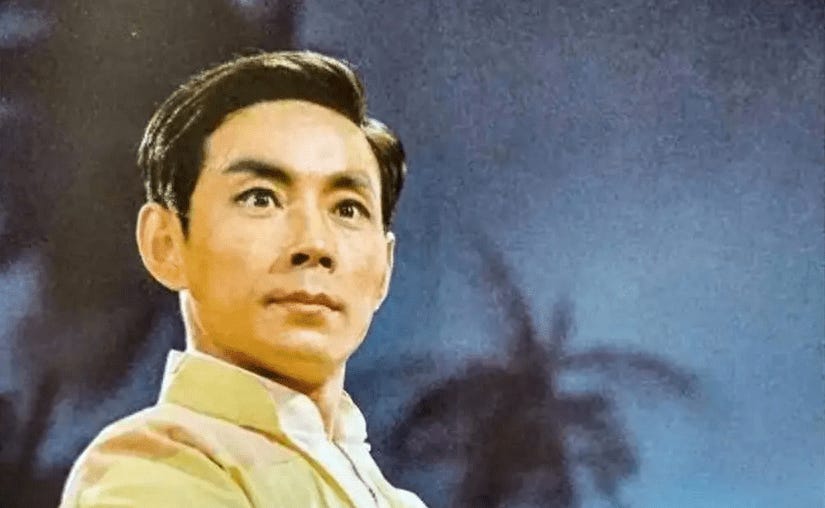
Liu Qingtang played the Party representative Hong Changqing in the model ballet The Red Detachment of Women. He was a favorite of Jiang Qing and rose from the status of a performer to a position of considerable political power. He served as a delegate to the Ninth National Congress of the Chinese Communist Party and as a member of its presidium. At the Tenth Party Congress, he became a member of the Central Committee. He first entered the State Council Cultural Group and later became a vice minister of culture. Armed with high office and great influence, Liu committed every kind of wrongdoing.
Dai Jiafang describes Liu’s sexual exploitation of actresses in the following terms:“Once he gained power during the Cultural Revolution, his habitual promiscuity became shameless and completely unrestrained. A young woman more than twenty years his junior was kept by him for a long period. Any actress who wanted a leading role or a featured dance position, who hoped to secure household registration or employment for her husband, or who merely wished to avoid denunciation under conditions of terror might become his plaything if she needed something from him.
“Later, Liu Qingtang simply established his office beside the women’s bathhouse. In addition to a desk and filing cabinets, it contained a large bed, supposedly for resting while working late. He often waited by the door and watched for actresses returning from the bath. On various pretexts, he would invite them inside for a ‘talk,’ then use a mixture of enticement and coercion to force them into bed. Many actresses, whether vulnerable or simply terrified by his power, had no choice but to endure his abuse.”
Liu Qingtang’s immediate superiors, Jiang Qing and Zhang Chunqiao, were not unaware of this behavior. They knew about it but treated it as an insignificant personal failing, a “minor matter” that caused no damage at all to the career or standing of this sexual predator.
The opposite of an unwritten rule is a written rule: the formal regulations printed in documents, posted on walls, and constantly repeated in public. Written rules and formal procedures can at least place some restraint on hidden practices. During the Cultural Revolution, however, formal rules were widely weakened or simply abandoned. The power of the unwritten rules therefore became “unprecedented in history.”
The history of the twentieth century will record in its darkest pages two great human tragedies: fascist brutality and the catastrophe of the Cultural Revolution. Those who personally endured these calamities have tried to forget them, yet have found themselves unable to do so. The author of this book seeks to reveal the truth of that unprecedented disaster through an honest record of the inner experiences of ordinary Chinese people during the Cultural Revolution.
Source: Aisixiang
No posts
Comments
Nothing yet. Say the first thing.
Sign in to join the conversation.