
Hello!
In the last weeknote, I learned that you don’t have to say yes to everything, but should say yes to things that chime with your values and passions. This time around I went looking for evidence - what did saying yes actually get me, over the years, at exactly this point in the calendar? Some of what I found surprised me.
Glasgow marking adventures

I spent the weekend finishing off the Qualifications Scotland paper marking. It was an exhausting five days, and although I enjoyed some aspects of my accommodation - Native near George Square, with genuinely excellent kitchen facilities - the nine hour shifts meant I was mostly using the room to sleep and not getting the best out of it.
Not many of the marking team ended up in the same hotel this time, after being scattered due to safety concerns near St Enoch Centre. It was ironic, and rather less safe, that most of us still had to walk through that same area to reach the marking venue. I love Glasgow, but I didn’t feel as safe there as I have on previous visits. This, along with the greater distances some of the team had to travel, meant our evening get-togethers - an essential part of recovering from the constant rounds of marking - were far more subdued. A few years ago, marking at the Carnegie Centre in Dunfermline, we stayed across the car park from the venue, ate well, and bumped into friends from other subjects in the corridors. It’s a small thing, logistically, but it changes the whole texture of the week.
I might have been out of school for three days, and I’m certainly picking up invaluable insight into preparing students for assessment, but the work itself is difficult and high-pressure. You’re applying, as consistently as you can, standard judgements against wildly varied student responses, deciding an individual’s grade and by extension their next branch of study or career. You don’t know if they need an A to get into their chosen course, or if they picked the subject as a filler. Add in the occasional, quite blatant case of AI assistance in a project, and you start to wonder how many students have a teacher meticulous enough to catch it.
Family time
To unwind from a workload that ramped up the moment the new timetable began, my partner and I have been working our way through Buffy the Vampire Slayer for the first time in about twenty years. My son prefers the lighter touch of Brooklyn 99, and having sat through Season One of Buffy again, I understand why - I’d forgotten how much teenage angst fits into a single episode. We caught ourselves pulling faces at each other during the more overwrought moments. We get enough of that at our day jobs.

My partner and I also took a few days to head back down to Glasgow, this time to see Take That’s The Circus tour. We’d originally planned to see this together in 2009, but our son arrived that same week in June instead. It felt like something closing, nearly seventeen years later - celebrating a gig we’d postponed for the best possible reason. The atmosphere was brilliant, and despite my nerves about a packed Hampden crowd, it was a great night. We left singing “Yes Sir, I Can Boogie” along with everyone else, off to find somewhere to watch Scotland v Haiti at 2am.
Work and professional development
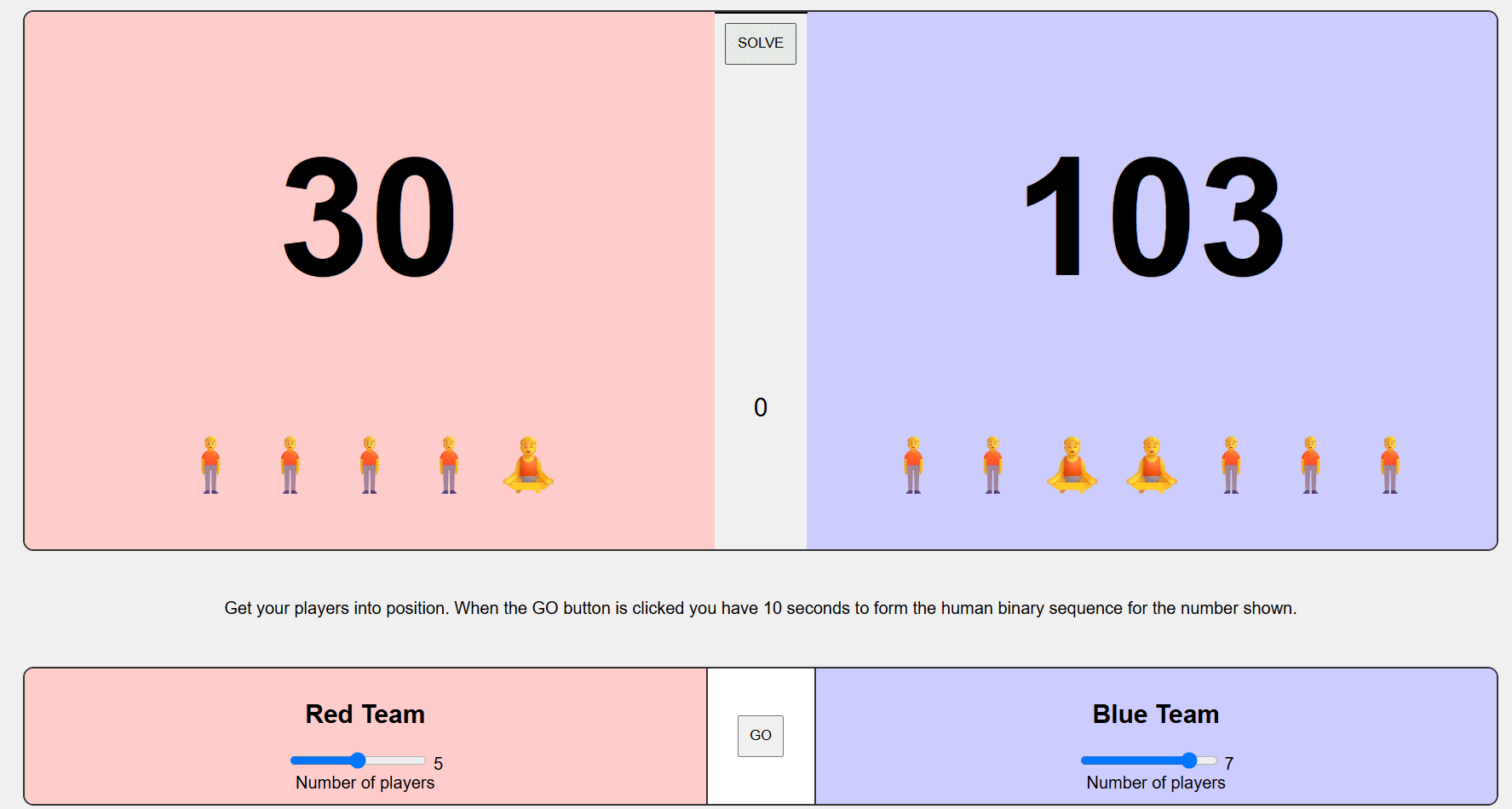
My P7 induction lesson has stayed the same for three years now: a team-building game of human binary calculators, built on a simple website: red versus blue; random numbers; a ten-second counter; a reveal button. This year, the first group of P7 students who did it back in 2024 are starting S3, and I got to find out who still remembered it. Quite a few recalled the lesson fondly. A student asked me if I’d “vibe-coded” the site. I didn’t! It was a passion project, built by hand, at a point when AI code generation barely existed. However, I’ve made a note to see if an LLM could help me improve it for next year, which feels like its own small joke.
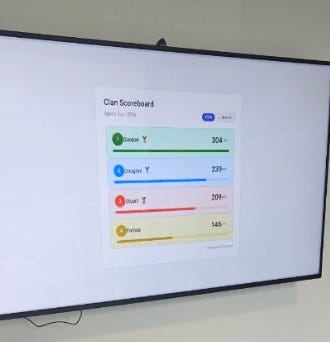
Something my colleague Dave and I did genuinely vibe-code was the school sports day app. Long-time readers might remember me spending time with last year’s Advanced Higher students, trying to extract requirements and scope out what the school actually needed to replace a thirteen-year-old spreadsheet. We started building in early May, added features based on PE department feedback, and this week it was used in anger for the first time. There is nothing like a live sports day for a test run! I’m happy to say it worked perfectly, and I even managed to build an extra scoreboard to display back at school for the classes who couldn’t be there.
The last few weeks have helped me crystallise something I’ve known for a while but never quite said out loud: since the end of the last century, in every role I’ve had, problem-solving has been the part I’ve enjoyed most. In teaching it’s “how do I bring this student with me?” or “how do I make this moment stick?”. As a leader it multiplies to include “which courses need more uptake?”, “how do we improve attainment as a team?” or “how do I support someone who’s struggling to meet what their role needs?”. Of everything on that list, the ones I’ve always enjoyed most involve creativity.
How 2026 compares
I was interested to see if there were signs from my previous weeknotes. I went back through the last two years, written at almost exactly this point in the calendar, and found something I didn’t expect. In 2024 I was scoping out pain points at an Esports arena “to avoid this in future developments.” In 2025 I was helping Advanced Higher students gather requirements against a monster spreadsheet with a seven-page setup guide. I was also building a teacher pipeline through a network I’d started calling CSEN. This year the Esports hub hosted its first camp and got me a conference invitation. The spreadsheet became the app that just worked on sports day. The pipeline work is the reason I got to stand in front of nineteen prospective Computing teachers at Aberdeen University back in the spring.
Almost everything I said yes to, at this exact point in previous years, became something real. Which felt - for about a day - like a nice tidy lesson: trust your instincts, keep saying yes to what chimes with your values, and it’ll work out.
Then I looked harder at something on the list that didn’t follow that pattern.
CSEN - the network I’ve been running, more or less alone, for a couple of years now - is essentially dead. While others might lurk, I’m the only one who posts to it. Yet in May I ran an event that would once have worn the CSEN name, and it was genuinely excellent. It took me a little while to realise that the difference wasn’t effort. It was that this time Dave Weston from Edpuzzle brought real content, and the University of Aberdeen sent two students who wanted to share their experience. Neither groups did me a favour, they both wanted something the event could give them, and it just happened to line up with what I wanted to build.
That’s the actual lesson, I think, and it’s a bit less flattering than “everything I touch turns out fine”. The things I can build alone, whether that’s a website, an app, a classroom or a club tend to work because they only need an audience, and I’m good at reaching one. A network, by definition, needs other people to bring something of their own, not just show up. No amount of my own effort was ever going to manufacture that. It only worked when other people already had their own reason to be in the room.
So the value of a yes, it turns out, isn’t just “does this matter to me?”, it’s also “does this need only my effort, or does it need someone else’s initiative too?”. If it’s the latter, my job isn’t to try harder. It’s to go looking, first, for people who already want what I’m offering - and to help them realise their own ambitions.
Take care and have a great week xx
You are welcome to subscribe to my weeknotes for free, or just dip into them every now and then. Becoming a paid subscriber allows me to fund my Computing Science education website (www.csteach.uk) and pay the love forward to other creators. If you want to support me but not commit to a subscription, there is the option of buying me a coffee.
I’ve turned off AI processing on my posts because automated processing of my personal data does not adhere to the UK Data Protection Act (Part 1, Section 3).
Comments
Nothing yet. Say the first thing.
Sign in to join the conversation.