
This last weekend I wrote the last words of a first draft of my eighth novel. I can write them much faster than in the past because, well, I think I know what I’m doing now. My first novel, Feast of Sorrow, took me over five years. This most recent one, while I started it over Thanksgiving, I wrote mostly in the last five or so months. It’s a bit of a swerve from my previous novels—contemporary, set in 1981 Rome, more literary, or perhaps a psychological thriller.
My first two novels are historical food fiction (then I wrote two more historical food fiction novels that are not yet published). Then I went the contemporary mythology route for my next three books. And then this oddball book.
The thread? They’re all set in Italy. They’re all loaded with some history. They are all stories I was itching to explore and share.
But publishing has been getting weirder and harder in the last few years.
Some of that is because our world and how we find and consume books is becoming weirder and harder. It’s more about BookTok than Barnes & Noble. Bookstagrammers have a disproportionate share of influence pushing a small amount of specific books. And AI has made it so that anyone can publish a book (albeit more likely a shitty, boring one).
A recent NYT article highlighted this problem.
It’s nearly impossible to gauge how much A.I. writing is getting published, but there’s evidence that the technology has led to a surge of books. Last year, more than 3.5 million books were self-published, up from 2.5 million in 2024, according to Bowker, which collects book industry data. Traditional publishers released more than 642,000 books last year.
And then there is the other big problem. People don’t read the same as they used to, if they are reading at all. The Atlantic explores this in a VERY longform article (gift link here) that’s been a big topic of discussion in the last week or so. Rose Horowitch’s essay argues that America has become “postliterate.” In other words, we’re a country where most people can still read but are losing the attention and ability to retain and sit with information. Fewer than half of American adults read a book of any kind in 2022, according to the National Endowment for the Arts, and a twenty-year study of the American Time Use Survey found daily pleasure reading fell from 28 percent of Americans in 2004 to 16 percent in 2023. People are reading more on their smartphones every day, but they’re not reading books.
It used to be that if you were a good author and you could pump out a number of books in a timely manner, that publishing houses would reward you and help nurture your career and build an audience base. But now, as we have turned more toward social media and short-form content, the publishing industry shifted with it. They stopped trying to grow the audience base and instead just started farming the readers that remain.
Consider the last decade of industry innovation: sprayed edges, foil special editions, deluxe reissues, subscription boxes, BookTok and Bookstagram as the discovery engine. BookTok and Bookstagram seem like they could be trying to grow the wider book audience until you start to realize who those book influencers are. They’re people who already read 50+ books a year. They’re being rewarded to talk about books (and publishers push only a small subset of their books to the top reviewers and influencers). It doesn’t necessarily nurture new readers, and it doesn’t help interest people who only read once in a while. Instead, it extracts more revenue from a heavy reader.
The U.S. is a capitalist country. I get it. Selling the 16 percent another book by the most popular authors is cheaper than convincing the other 84 percent to buy an occasional one. Unfortunately, it’s a strategy with an expiration date, because heavy readers age and the pipeline behind them is thinning.
And that’s a problem not just for an author like me who wants people to buy my books, but also because it’s hurting us as a whole.
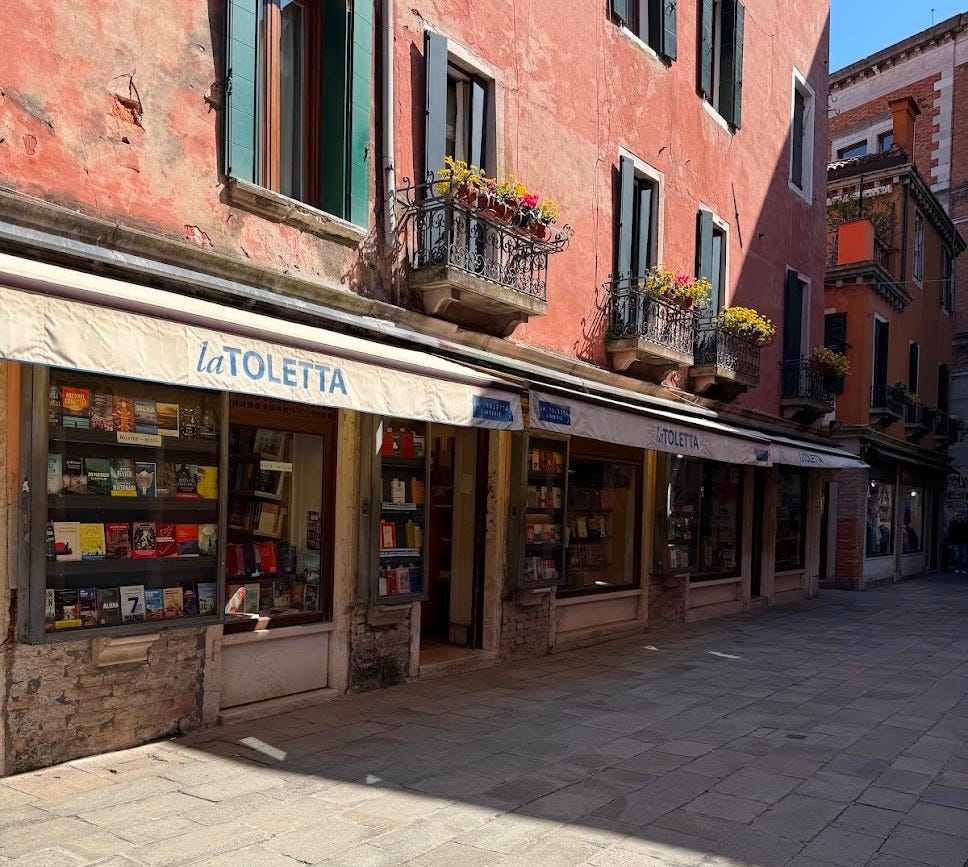
If you want to know what a society looks like generations after book reading stops being a mass habit, visit Italy. How many Italians read is genuinely hard to pin down: ISTAT puts annual readers at 39 percent of the population, Eurostat tracks frequent readers at 35 percent, and the publishers’ association counts overall engagement at 73 percent depending on who is asked, and how the question is worded, which tells you how slippery “reading” is as a category. However, what all the surveys agree on is the direction that Italian literacy is headed. The Associazione Italiana Editori found average weekly reading time fell from 3 hours 32 minutes in 2022 to 2 hours 47 minutes in 2024, with 30 percent of readers picking up a book only a few times a month, or a few times a year.
It would be comforting to conclude that Italy proves the doomsayers wrong. See, it has low readership, and yet it still has the food, the art, and the density of culture wherever you look, right? I have built a career on that history and culture. But it’s a lot more complicated than that.
Italy is split along the line that divides everything else in the country: ISTAT confirms that books are read far more in the north (think Bologna, Milan, Genova) than in the Mezzogiorno, the southern third of the country from about Naples down, plus Sicily and Sardinia. The publishers’ data highlights this gap: the South has 30 percent fewer bookstores per capita than the national average, and the South and islands together absorb less than 20 percent of the books sold in Italy. The Mezzogiorno is also the part of Italy losing its young people, to Milan, to Berlin, to London, at rates that alarm demographers. Italy has a serious emigration problem.
What does low readership actually cost a country? The OECD measured the impact. In the 2023 Survey of Adult Skills, Italian adults averaged 245 points in literacy against an OECD average of 260, and 35 percent of them scored at or below Level 1, against an OECD average of 26 percent. Level 1 means you can understand and absorb a short, simple text but struggle with anything longer or layered. This is Horowitch’s “postliterate” made measurable: a population that can read and mostly doesn’t, in numbers large enough to directly impact an economy.
Skills like these decide where employers put good jobs. Knowledge work clusters where literacy is high, so the graduates of Palermo and Bari follow the jobs to London, Milan and Berlin, and the ones who leave are disproportionately the readers. The region loses the people who would have helped boost the interest in literacy in their neighborhoods. Fewer readers means fewer bookstores; fewer skilled workers means fewer employers; and you get my point. It just keeps spiraling. Reading is not the whole engine of that spiral, but it is a working part. The Mezzogiorno is not postliterate because Italians cannot love books. Rather, it’s postliterate because the mechanism for easily accessing and reading those books is no longer there.
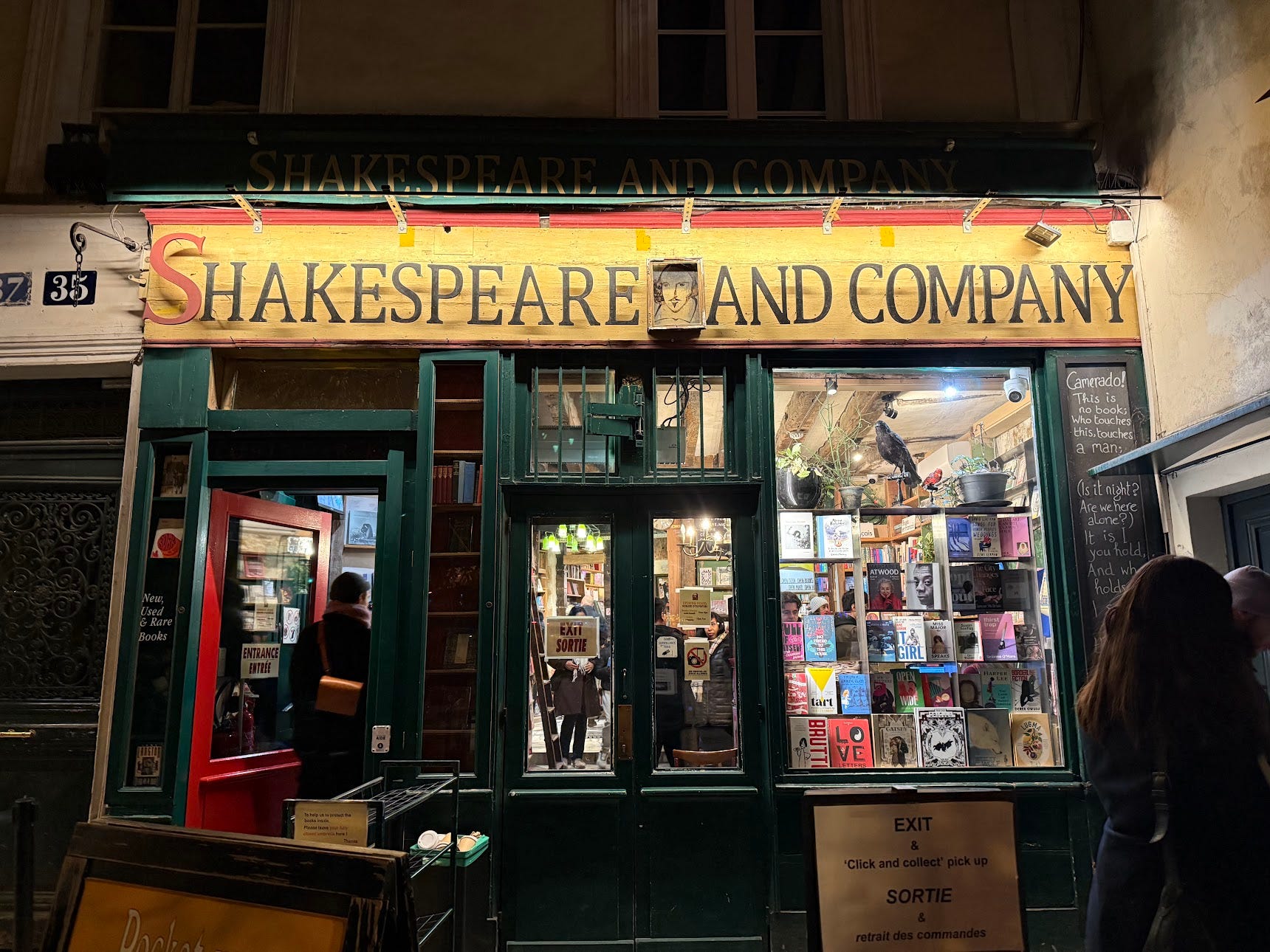
Let’s look at France. Anyone who has walked along the streets of Paris knows there are bookstores in every neighborhood. You might think this has something to do with French style and character, but the truth really comes down to policy. The Lang Law (Loi Lang) has fixed book prices since 1981, so online retailers can’t undercut independent bookstores. Additionally, the state funds authors, bookstores, and festivals outright through the Centre national du livre. It works, at least a little. The CNL’s 2025 barometer, conducted by Ipsos, found 63 percent of the French read at least five books in the past year, numbers Italy and America can only envy.
But our technology is worldwide, and smartphones and social media have made an impact on us globally. France looks better than Italy and the U.S., but it’s falling too. The same survey found the share of regular readers dropped five points in two years, daily reading among readers hit its lowest level in the barometer’s ten-year history, and the French now spend more than 23 hours a week on screens against under four hours reading. The strongest pro-book policy in the Western world only bought France a little bit of time. The Loi Lang can protect a bookstore from Amazon but unfortunately, it cannot protect an evening from a phone or a bunch of YouTube Shorts.
Every reader I know came into being because someone handed them a book at the right moment and that person encouraged their love of reading. France has tried to encourage that gesture while Italy has barely tried. And America, sprayed edges and all, is becoming something completely different: a country that still manufactures high volumes of books but has stopped manufacturing high volumes of readers.
And that’s really what needs to happen—we need to create readers. We need to excite kids with books at a much earlier age and nurture that all throughout their schooling. We need to make reading cool again. And it can be cool. I mean, look at what Nancy Drew (and The Hardy Boys!) and Harry Potter did for reading. But we need to find a way to do that across the board, not just in pockets of places that have better educated people.
Now for the real test: did you actually make it to the end of this long depressing post? If so, I am encouraged, because I have just finished a book I’m really proud of, a story that began with Nathaniel Hawthorne and ends in 1981 Rome, and I can’t wait until it makes its way into the world for you all to read it.
If you want to figure out how to read more books than you currently do, let me suggest to you, Non-Slop Fun.
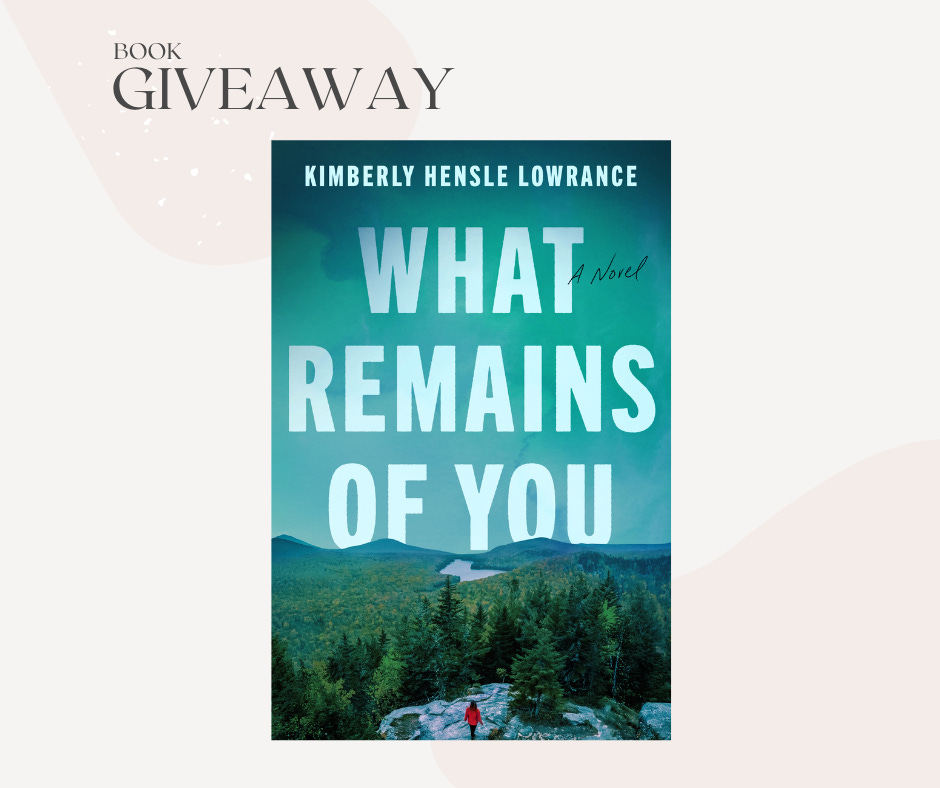
I chatted with Kimberly last week about this wonderful new novel. More details here!
To sign up for the giveaway, you can fill out this form. Your name will be thrown into the hat for a shot at a paperback copy. This giveaway closes at midnight ET on Wednesday, 07/29/26. Winners will be notified within 48 hours of the giveaway closing and announced in a future newsletter/post.
Important to Note: You must be 18+ and a United States resident (pesky international laws make it tricky to do giveaways worldwide). If you are someone who loves to read the rules, you can find the obligatory info here.
I love these little linguistic rabbit holes I go on as I’m learning Italian.
An important song for today’s world. covered by my friend, Vanessa Peters, originally by Hello Saferide.
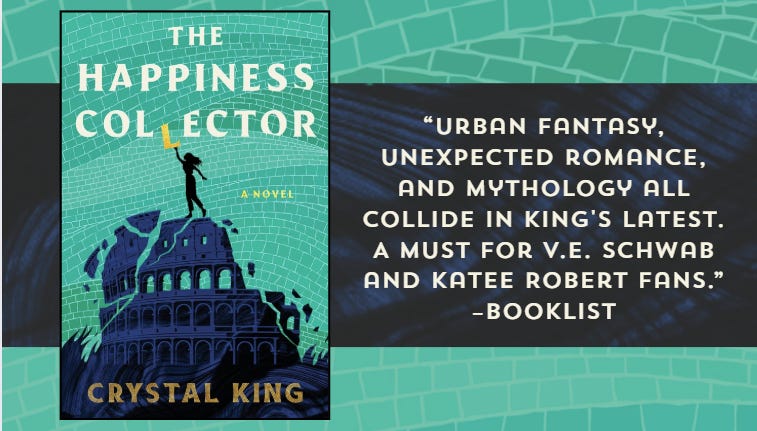
If you love food and love Italy, and haven’t read IN THE GARDEN OF MONSTERS, THE CHEF’S SECRET, or FEAST OF SORROW, click the links to learn where to buy your copy! And now you can order my latest, THE HAPPINESS COLLECTOR!
Follow me here: Website | Instagram | Facebook | Threads | Bluesky | TikTok
Comments
Nothing yet. Say the first thing.
Sign in to join the conversation.