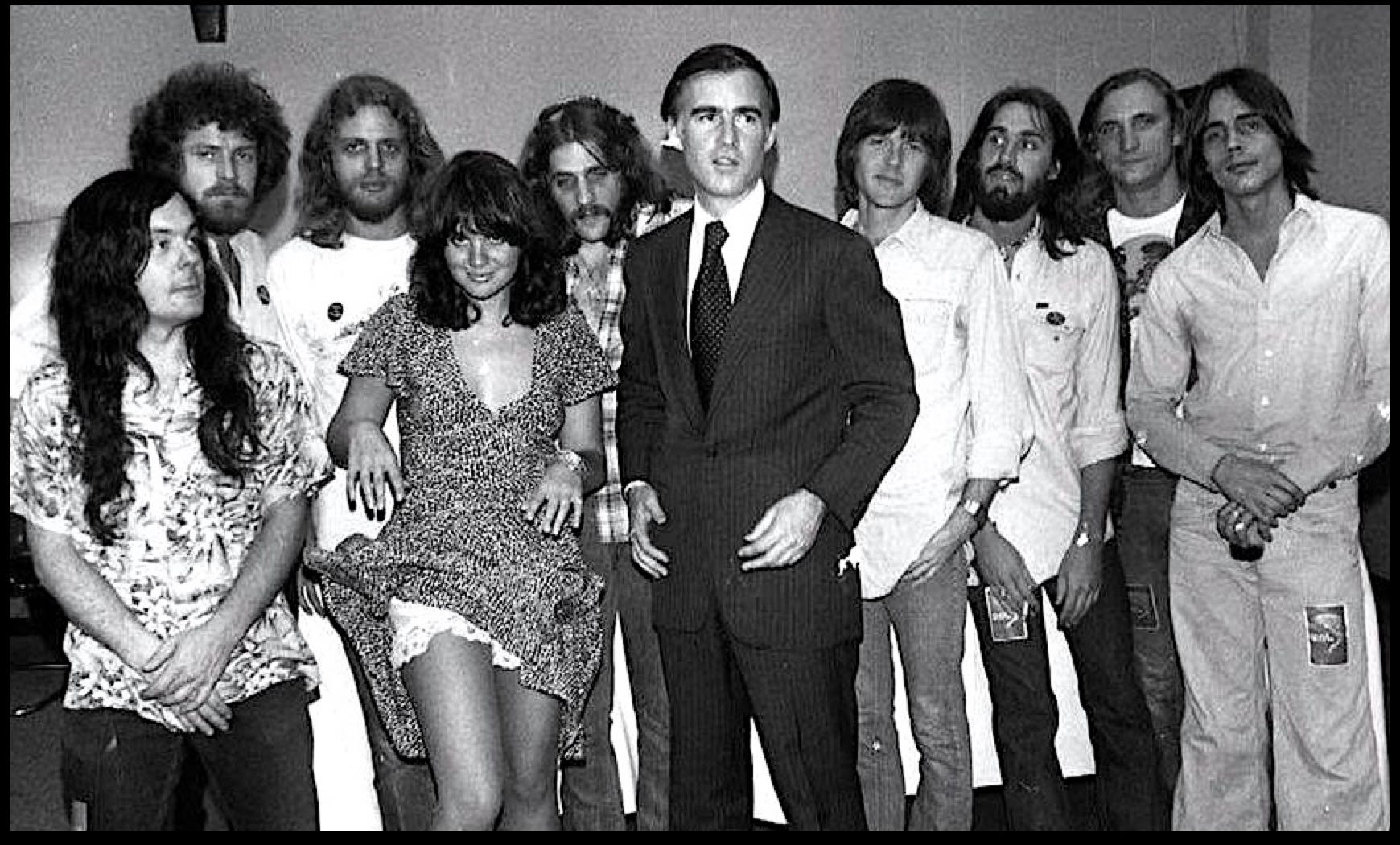
Back when the California Dems had swag. Linda Ronstadt, Governor Jerry ‘Moonbeam’ Brown, Jackson ‘Running on Empty’ Brown (far right), Don Henley (top left), and the Eagles circa ‘76.
At Cryptonite, we wish for a more competitive Democratic Party—one that competes in creating the best ideas and actions to relieve our country’s greatest pains.
Full disclosure: Our disposition is that of issue-oriented independents, so we have no party affiliation.
Back in the day, Republicans were the ones who sent our kids to Vietnam to die, were interested in lowering the number of those on ‘the government’s payroll’ via population control policies, and only transacted in ‘elite’ circles within which most people were not invited.
My personal worldview was basically set at 14 and has not changed in any fundamental way. At that time, I had to acknowledge that my good circumstances were not something I had earned but were God-given—and that this gift came with responsibility. ‘From everyone who has been given much, much will be demanded.’ It also came with my mother’s command to ‘try to work hard to make the world at least a little better than it was before I got here.’
In those days, of course I identified as a Democrat. Today, in a shocking, deeply ironic twist, the Democrats have become the New Elites, more interested in centralizing and institutionalizing power rather than delivering it back to ordinary people. It was this vibe that was rejected in 2024 and put their Boogeyman in power.
Lauryn Hill — Doo Wop (That Thing) — 1998
We borrowed our section title from lyrics by another great, Lauryn Hill, from the above hit single to set the tone. Released in 1998 from her debut solo album The Miseducation of Lauryn Hill, “Doo Wop (That Thing)” became an instant classic. Doo Wop debuted at No. 1 on the Billboard Hot 100—the first hip-hop song by a solo artist to do so. The track won two Grammys (Best R&B Song and Best Female R&B Vocal Performance) and four MTV Video Music Awards, including Video of the Year.
Our interest here is to offer the Dems six innovation-driven initiatives that will help them return to their ‘For the People’ roots. Tactically, this positions the Blue Team as THE bold, modern disruptors whose innovation-driven edge delivers individual freedom, personal power, privacy, and everyday affordability — while showing real empathy for those crushed by bureaucratic failure.
This is what The People are looking for. This is why some are being distracted by the Democratic Socialists of America (DSA)—not because it’s a font of great ideas, but because it is NOT the status quo.
Important note: there is not a single Red Hat candidate touching any of the six initiatives we propose. We would bet a paycheck that if the Dems embraced these positions, they would clearly set the agenda for the 2028 presidential race.
The process is as simple as today’s birth registration. Parents provide basic details, the doctor or midwife certifies the medical facts, and the state vital records office issues the credential—exactly as now. The only additions are a quick, non-invasive capture of iris and facial geometry, plus a one-time DNA swab of the newborn and, at a minimum, the mother (who must be a verified citizen for the child to gain citizenship). The DNA match confirms biological parentage; raw genetic material is destroyed immediately afterward, and only a privacy-preserving attestation is stored under the child’s exclusive cryptographic keys on a permissionless blockchain. A traditional paper and digital birth certificate is also issued for additional comfort.
“You shouldn’t have to trust any single person, institution, or centralized organization” to transact, access your data, or get things done. No single entity should hold that power.”
From day one, the same credential instantly serves as your digital Social Security card and passport. On your 18th birthday, it enables secure online voting where only the citizen can view their votes. It also serves as the secure root for filing taxes through a personalized AI agent, accessing Social Security and Medicare benefits, and interacting with other blockchain-based government services. All your government and tax records stay fully transparent, downloadable, and analyzable by you (or your AI agent) at any time—without the ability for any other individual or agency to access those records, unless by court order.
The same verified, citizen-controlled ID makes border control dramatically simpler and more reliable, and allows people to flash only the information required to prove they are over 21 to bouncers and to cops when you get pulled over.
The result is a stronger individual sense of citizenship identity, ownership, privacy, and integrity. It’s also gigantically more convenient—no need to register to vote, go to the passport office, set up a bank account, get a job, travel — the list goes on. This initiative would also save citizens billions from fraud losses, dramatically cut Federal government overhead, and restore confidence in the system.
“AI doesn’t just automate tasks—it rewrites the entire operating system of a company. We’re seeing it internally. We are pairing intelligence tools with smaller, flatter teams who are building a better, more efficient company. Intelligence will be at the core of how the entire company works—the new core layer for decisions, product-building, risk, customer service, even internal ops.”
In February 2026, Jack Dorsey’s Block cut nearly 40% of its workforce—over 4,000 people—while reporting strong results and raising guidance. Shares jumped ~25%. Jack was very blunt about it all. “I don’t think we’re early to this realization. I think most companies are late,” he said. “Within the next year, I believe the majority of companies will reach the same conclusion and make similar structural changes. I’d rather get there honestly and on our own terms than be forced into it reactively and unnecessary pain.”
“Virtually every large organization has been overstaffed 2–4x for decades. AI is the catalyst. 50–75% overhead reduction is now realistic.”
—Marc Andreessen, CoFounder of a16z
Governments have a moral obligation to follow suit and adopt the same AI OS as modern companies. Routine cognitive work—eligibility checks, forms, audits, compliance, service—can be executed by specialized AI agents under human oversight and cryptographic rules. Bureaucracy collapses. Fraud is blocked in real time. Tens of billions return to taxpayers.
Citizen-owned data, powered by secure digital ID and AI efficiency, puts control back in the hands of individuals. It cuts endless paperwork and reduces the need for broad surveillance, delivering faster, more private, and far cheaper public services. As overhead shrinks and tens of billions in fraud are prevented, budgets can finally balance — meaning less taxation of ordinary people’s hard-earned money.
“Carpe diem. Seize the day, boys. Make your lives extraordinary!”
“We don’t read and write poetry because it’s cute. We read and write poetry because we are members of the human race. And the human race is filled with passion. And medicine, law, business, engineering — these are noble pursuits and necessary to sustain life. But poetry, beauty, romance, love — these are what we stay alive for.”
— John Keating [Robin Williams] in the film Dead Poets Society (1989)
Our education system is a failure. America spends near the top of the world on education and ranks mid-pack (PISA: ~6th in reading, 12th in science, 28th in math). Total public annual outlays average a whopping ~$21,000 per student—including grants to Universities few have access to. The Elite institutions benefiting from all these taxpayer handouts, on average, spend 60% of their budgets on non-instructional overhead. The money rarely reaches actual learning. Debt-financed four-year college prolongs adolescence and delays individual responsibility until 22.
Give every child a portable Education Token of $15,000 per year from age 2 through 18. The token funds real validated instruction and educational experiences. Higher-income families may redirect tokens to validated students who need extra support. Unused balances earn modest returns in a conservative treasury sleeve and can never be cashed out. Unused tokens can be invested (but can not be cashed out) in Treasury tokens and saved to help pay for college, trade school, or further training after 18.
Ages 2.5–12: Privately run community schools that focus on the skills that encourage brain development—reading, mathematics, computer language, second language fluency, public communication skills, and lots of independent play and nature walks.
Ages 12–16: Kids with mentors to start customizing their education to experiment with subjects they are passionate about via external courses and workplace exposure, learn time management and other practical real-world skills, and receive feedback.
Ages 16+: college-level work, trades, paid jobs, financial literacy, continuous lifelong learning with no fixed end date.
Cuckolded by the Teacher’s Unions at the kids’ educational expense.
Protecting institutions or accelerating student outcomes?
Democratic governors including Maryland’s Wes Moore, Illinois’ JB Pritzker, California’s Gavin Newsom, Pennsylvania’s Josh Shapiro and Arizona’s Katie Hobbs are actively blocking more than 20 million students from the Education Freedom Tax Credit — a federal program that costs states nothing, takes no money from public schools, and funds scholarships for tutoring, special services, and private options. Why? Because they are in the back pocket of the Teacher’s Union, who want to keep control of our kids. This corrupt centralized control would steadily fade under a true Freedom of Education model.
Under this new system, everyone wins—except mediocre instructors. Teachers and programs are rated on a transparent, blockchain-based system modeled on services like Airbnb. Public rankings, outcome data, and student feedback determine reputation. The best rise to the top and can reach millions of learners annually, earning on results rather than institutional capture.
Administrative bloat collapses. Students from every background gain direct access to high-quality instruction. The strongest teachers escape campus limits, scale globally, and get paid according to demand. Weak programs face market discipline.
Individuals own lifelong merit-badge records linked to their Citizen ID. Every verified accomplishment is recorded immutably. Students control the master file and share only selective views. Employers and schools receive richer, more trustworthy credentials than traditional transcripts.
Young people keep the keys to their own future, and never incur educational debt. Taxpayers fund learning, not overhead. Kids truly become adults by 18—not 22.
Standing on their own feet with their own identity by 16. It is possible.
“You must strive to find your own voice because the longer you wait to begin, the less likely you are to find it at all.”
— John Keating
Imagine giving birth to a child and knowing their education expenses are guaranteed, and they will be free to explore and pursue their greatest learning passions.
This token model can be applied to food tokens for the healthiest choices, quality baby care essentials for single mothers, and other services for people falling through the cracks in society. The bottom line: all this wonder is done at dramatically less cost. Drop the mic 🎤
America’s greatest crisis is the mental health of its kids because the politicians, corporate media, and social media are constantly robbing them of their identity.
We can solve part of this problem by prohibiting kids under 16 from accessing social media apps. For 16- and 17-year-olds: robust ID verification, parental consent, strict time limits, chronological feeds, no stranger messaging, no targeted ads, and a real parental kill switch. We ban cigarettes for those under 18; we should treat these engines of anxiety, addiction, and identity distortion with equal seriousness.
The commercial solution is the AiPhone — a purpose-built device for teenagers. Internet-enabled calling and texting, gated AI research and homework help, location tracking for parents, and a curated set of health, learning, language, writing, and music tools. No open web. No social networks. No dopamine loops. No stranger contact. Just the tools that support curiosity, learning, and safety while building the AI fluency every future job will require.
Every twelve-year-old child whose family falls below a set income threshold should receive one at no cost. Higher-income families receive sliding-scale subsidies. The device fits the Freedom of Education model perfectly: it protects mental health while preparing young people for an agentic economy.
A $349 Apple Intelligence AiPhone would be a blockbuster — and far more valuable than another folding gimmick — Just our opinion.
A place to re-train laid-off bureaucrats, and offer 3-month educational programs for students of all ages.
For years, Silicon Valley thrived, in part, because it was the furthest point in the U.S. (save Hawaii and Alaska) from Washington, D.C. Distance was a feature. Under Trump, that distance has narrowed. Elon moved from outsider critic to active operational partner. Jensen Huang has become a regular voice on the national AI and energy stack. Tim Cook and the broader AI leadership cohort now sit in direct conversation with the administration on industrial policy, chips, and infrastructure. The relationship is already more active than at any point in the last three decades.
There are strong reasons to make this closer coupling permanent. Silicon Valley U is the vehicle.
Imagine a sprawling modern campus—built on federal and commercial land left open by slashing overhead—combining classrooms, dorms, business-development and meeting facilities, and a government AI data center—all funded with Big Tech support. The site becomes a permanent coordination hub where industry and government meet, plan, and ship.
Most importantly, it keeps state-of-the-art innovation immediately accessible to government officials so they can implement faster, cut government fraud in real time, stay on the cutting edge of domestic and international national security, and keep innovation—and its safety and strategic challenges—more comfortably in the hands of entrepreneurs rather than regulators.
Primary missions:
Retrain government workers and those laid off in the 50–75% efficiency reset. Displaced employees receive a $15,000-per-year education token benefit for two years ($30,000 total) to re-skill at Silicon Valley U or any validated provider.
Give young people a direct path into the capital. Using Education Freedom Tokens, high-school and early post-secondary students live on the Washington, DC campus, take intensive modules in government, politics, American history, civics, and the operational realities of the modern state—and talk directly with Big Tech recruiters.
Keep innovators permanently close to the Republic’s actual problems through continuous three-month residential cohorts of retrainers, students, and allied personnel.
This closer coupling of Silicon Valley, aspiring students, and D.C. is all about keeping government modern and efficient—not nationalization. AI is the new operating system for government. Silicon Valley U is how talent and government stay on the cutting edge, and how we show empathy for government workers displaced by new innovation so they can become more valuable in the real world.
We highly recommend watching the documentary Love in the Time of Fentanyl, premiered in 2023, that follows the volunteers of Vancouver’s Overdose Prevention Society as they patrol the Downtown Eastside, a pocket of desperation wedged between the city’s wealthier districts, searching for people who may need naloxone, oxygen, or other emergency help to survive the fentanyl era.
The organization also runs a pioneering walk-in space where users can test their drugs, obtain clean needles, and receive supervised doses of government-supplied heroin—practices that remain controversial even as they keep people alive.
Let’s be honest. Any determined adult can already get cocaine, ketamine, MDMA, prescription stimulants, or almost anything else delivered by some seller at the other end of a WhatsApp message with almost zero practical risk of arrest. The same is true for arranging paid sex on apps like Tinder, Bumble, or Seeking Arrangements. Prohibition has not stopped these markets. It has driven them underground, inflated prices, supercharged cartels and gangs, filled our prisons, and left demand intact.
We should be horrified (and depressed) by these stats 😳
The U.S. currently locks up nearly 2 million people — the highest absolute number in the world and the highest incarceration rate of any independent democracy (roughly 580 per 100,000 residents). About one in five of those behind bars is held for a drug offense; a substantial share of these cases involve personal possession or lower-level trafficking that this initiative would eliminate from the criminal system.
We need to shake off the remnants of our puritanical culture and let adults do as they wish as long as they are not infringing on others. We also must confess that we are the demand for these drugs. The U.S. consumes roughly 60 percent of the world’s cocaine while remaining deeply addicted to sugar, ultra-processed food, alcohol, nicotine, porn, and a long list of other substances. We have spent decades, and well over a trillion dollars, fighting the supply side and pretending our problems are their fault.
The result of this War has been more addiction, more violence, more homelessness, more sex trafficking, and more incarceration.
Decriminalize personal possession and use of common recreational drugs for adults.
Decriminalize adult consensual sex work so workers can openly get health insurance and other protections.
Redirect the law-enforcement savings into brutally honest national education on how these drugs destroy brain cells, internal organs, and mental health — and how they kill. Produce TikTok, X, Instagram, and YouTube testimonial videos, health and science data, and incarceration statistics.
Create supervised harm-reduction spaces and voluntary recovery communities that direct people out of the big cities where they come to get drugs, beg, and steal.
Design regulated supply so prices collapse relative to the black market — as legal cannabis has already shown — and treat addiction as a public-health and spiritual problem, not primarily a criminal one.
Prohibition enriched the wrong people and failed the people it claimed to protect. It is time to end the war on adults.
Addicts have personal health issues — they are not criminals. Legalization will bring these people out of the shadows so they can be helped. Criminalizing sex between consenting adults only fuels sex trafficking and the pimp culture. This initiative will take the profit incentives away from vicious cartels and the gangs that distribute their product. The money we save from taking control of our afflicted and oversized prison population can be steered toward educating people about the dangers of drugs, and also returned to the taxpayers who have been funding this broken approach.
The United States must answer with the opposite: a non-traceable digital USD.
The dollar remains the world’s preferred international currency by an overwhelming margin—holding roughly 57% of global foreign-exchange reserves versus the yuan’s 2%, a nearly 30-to-1 advantage. A well-designed digital USD can deliver what the e-CNY has proven—higher velocity and lower costs—while accelerating economic growth and prosperity for U.S. citizens and for countries that choose to embrace it.
But we can also prove what the CCP has not: that digital money can remain as untraceable as the cash in your wallet. Just as Bitcoin achieves security through cryptography rather than a trusted intermediary, a digital dollar can deliver cash-like privacy and finality through zero-knowledge proofs—without requiring the issuer to see every transaction.
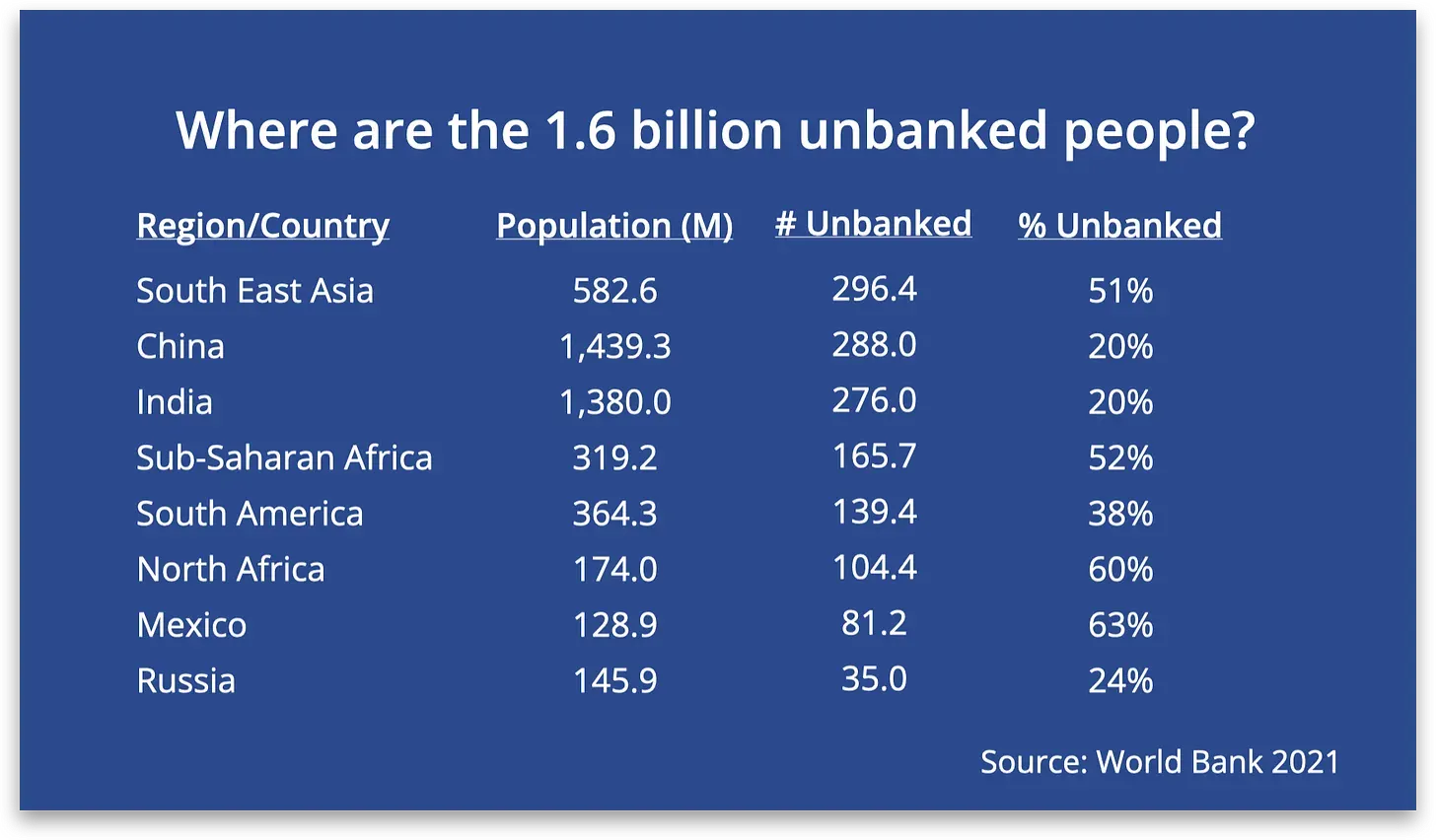
It also strengthens relations with our neighbors to the south. Persistent currency devaluation across much of Latin America has driven economic pain and pressure to migrate. A stable, low-fee digital USD gives global citizens and businesses a practical hedge against inflation, expands financial access for the unbanked, and offers a credible alternative to both local currency collapse and Chinese digital influence.
Bringing the unbanked on board with a Digital USD
A stable, low-fee digital USD also strengthens relations with our neighbors to the south. Persistent currency devaluation across much of Latin America has driven economic pain and pressure to migrate. It would give citizens and businesses a practical hedge against inflation, expand financial access for the unbanked, and offer a credible alternative to both local currency collapse and Chinese digital influence.
Under a renewed Monroe Doctrine orientation, this becomes a strategic tool for stability and partnership across the Americas.
Some will argue that a non-traceable digital USD would simply encourage Americans to conduct all business in untraceable form and evade taxes. That concern misunderstands both the problem and the solution. Americans already have almost no trust in the institutions that would enforce such rules. Gallup shows trust in Congress has fallen to roughly 9–10%. When citizens believe the system is stacked against them, they look for ways around it.
The better response is not more surveillance of everyday transactions. It is for government to take the risk of putting its faith back in the American people. A digital dollar that preserves the privacy of ordinary cash is precisely that demonstration. Trust is reciprocal. A government that treats its citizens as potential criminals first will never regain their confidence. One that treats ordinary, lawful activity as private will.
Efficiency without liberty is not progress. A privacy-preserving digital USD can help rebuild trust in both government and our monetary system—a system that currently sustains an insider industry making fortunes off currency trading, which George Gilder has called the largest and most useless industry on earth.
George Gilder—Our hero and the most accurate economics and innovation forecaster of the past half-century,
When done right, a non-traceable digital USD outflanks the e-CNY on both performance and values. We see this shift as inevitable for that very reason. The current workaround is what we call ‘stablecoins’—a booming new industry. From another angle, Bitcoin has been filling this void as well, on its way to becoming the highest-performing investment over the last 20 years. Let’s get it done before we get outflanked.
This initiative is ultimately for ordinary people. It preserves the simple freedom of cash—the right to hold and spend money without someone watching—while delivering the speed and low cost of digital payments. It gives the unbanked and underbanked a practical tool that does not require full bank surveillance for everyday use. And it shows that government can choose to trust its citizens rather than monitor them. In a time of deep institutional distrust, that choice matters.
‘Woke 1 was crazy,’ observed AOC on ABC’s This Week last week in her attempt to smooth over her former passion to ‘Defund the police.”
Corporate media is pumping the “rise” of the Democratic Socialists of America (DSA), which now can only claim tens of thousands of members. What they rarely mention is that the DSA remains overwhelmingly white—roughly 80% in the last major survey—and a majority are male—64%, compared to 27% female, and 10% non-binary/other 🤔- overeducated (80% hold bachelor’s degrees), and concentrated in urban progressive enclaves. The median age is 33 — you know, the generation often busy doing something close to nothing while demanding everything.
Note to ‘progressive’ self — Support police & education tokens
The same pattern shows up within the DSA itself, where the governing body and major caucuses include more people who identify as communist, Marxist-Leninist, or revolutionary Marxist than as democratic socialists. This scattered ideology often seems more about fashionable anti-capitalism, anti-Americanism, and hostility toward Israel than about any coherent governing program.
These new Piggies cosplaying early 20th-century Mensheviks and Bolsheviks will be out of fashion by 2028 because they are peddling the anti-trend of centralized control. There is no mention of how the fusion of AI, blockchain, and crypto is powering new, private, and secure economic networks that eliminate middlemen and decentralize data and power.
New Democrats need to ignore these power-grabbing fools—Their TikTok performances will soon see their last clip in the face of the real revolution—the one that takes the power back to The People. The only reason they even exist is that the current Dems are stalled out due to a lack of ideas and their inability to solve anything of import. The solution is for New Dems to roll them over with innovative new solutions like those outlined above.
Dumb and Dumber.
The other answer is to find some fresh faces. The RealClearPolitics averages for Blue Team candidates (roughly late May–mid July) show Californicators Kamala Harris at ~28%. Newsom has fallen to ~17%, Pete Buttigieg has bumped up to ~11%, and the Queen of Democratic Socialism, AOC, has also been rising (and even more so in prediction markets) to ~9%.
Gavin and Kamala can’t escape their report card.
Let’s be honest. If Kamala showed up to a Silicon Valley boardroom pitching the word salads she served up in 2024—Lord have mercy. 🙄 If Gavin Newsom turned up flinging his karate-chopping gestures trying to justify how he blew through $33 billion on his SF-to-LA High-Speed Rail without a single track laid, and asking for another $100 billion to throw down the same pit, he would be booted out on the spot. If it hurts your feelings for us to say this, look at what they did to our state below.
AI - The Great Political Debate Equalizer
Grok produced the above Report Card after this prompt: “List the top 12 issues most important to California voters over the last 20 years of Democrat Party political rule, and grade their performance in each issue A to F.” We would bet Claude, ChatGPT, and others would find the same.
So how did these incompetents gain power, and what is the genesis of Californication?
Here is the back story. The very powerful former California State Speaker of the Assembly/San Francisco Mayor Willie Brown, 92, and former Speaker of the House Nancy Pelosi, 86, are two very smart and clever hustlers. They built a Super Donor base for the Dems, and hand-picked every major politician after them. Kamala was, of course, Willie’s mistress, and he steered her early political rise while he was married and 60, and she was 30. Nancy Pelosi helped elevate and mentor Gavin Newsom as part of San Francisco’s Democratic power structure, after Willie Brown also first launched Newsom’s political career by appointing him to key city posts.
The problem is this hand-picking system by a few, which produces very mediocre politicians who would sign a pact only to spew the talking points they are handed—hence the amazing party ‘discipline’ we see today. Bright, clever, successful people wouldn’t sign up for that. The results have been, well, Dumb and Dumber—very mediocre, not so bright people. Hence the failing Report Card.
So, simply put, if the Dems want to capture the White House in 2028, they need to ignore the white people cosplaying socialists and communists and stay away from Californicators. 🤷🏻♂️
Governor Moonbeam and yours truly at 18 on the road “For the People.”
Romantically, I would love to be a Democrat again. When I was working with Governor “Moonbeam” and heading up the UC Student Lobby, California was flush with cash from surpluses, UC tuition was $240 a quarter, and I was busy with my non-violent compatriots occupying the UC Administration building on the Berkeley campus. We successfully pushed the University of California to divest from South Africa in 1986— UC became the largest institution to do so. Other passions were not quite so successful, like trying to abolish the SATs because they were “culturally biased.”
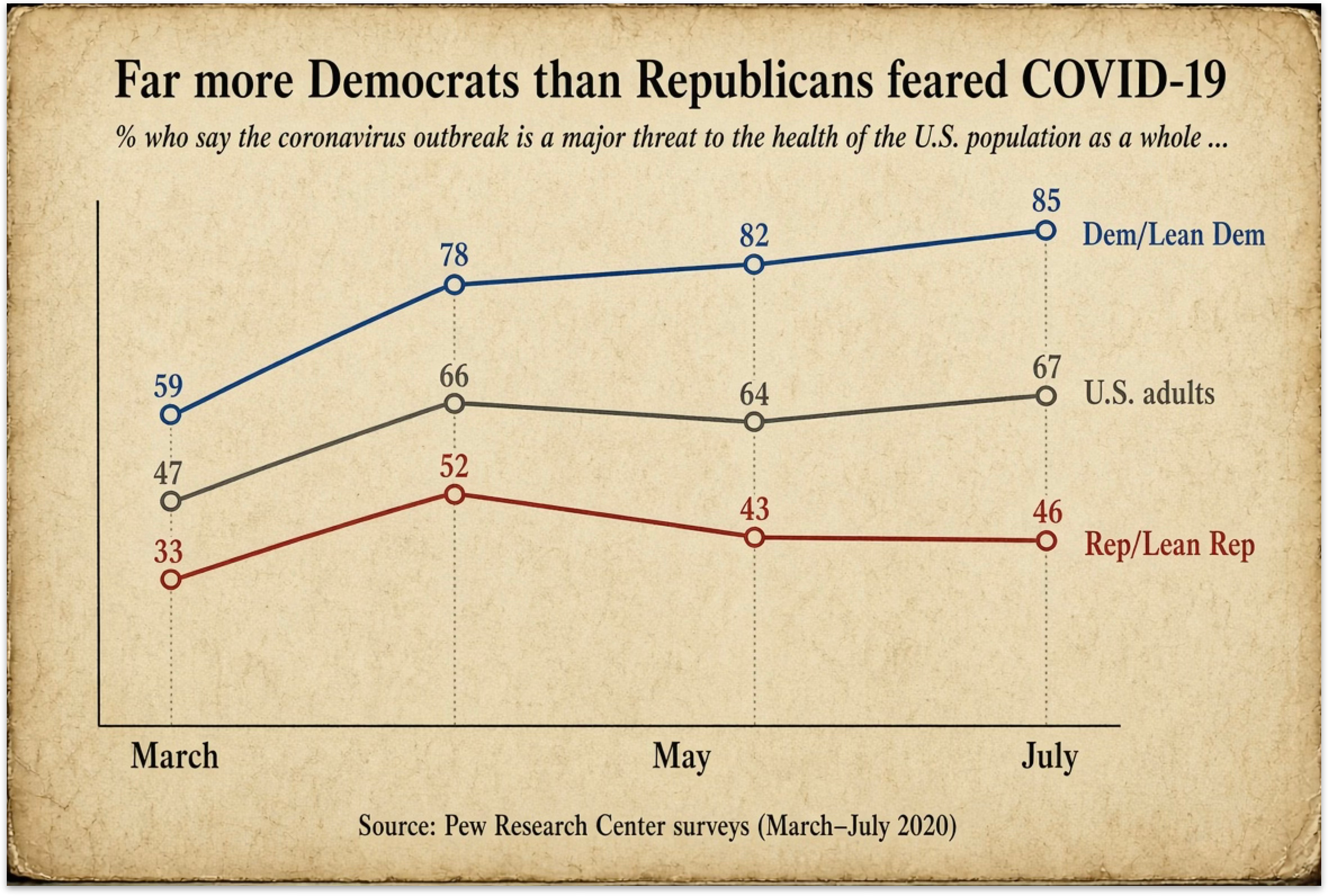
Covid’s two (hopefully) lasting lessons
(1) Gain-of-function research on potential pandemic pathogens in intermediate-security labs carries catastrophic downside risk and needs far tighter controls, and (2) Pandemic response must be ruthlessly age- and risk-stratified instead of treating the entire population as equally vulnerable. See more FACTS.
Be not afraid — this phrase in sentiment appears 365 times in the Bible, one for every day. Back in the day, the Dems were non-violent, but brave. Today, they peddle fear and loathing to win. But in the next election, their Boogeyman — the fascist, racist, dictator — won’t be around to incite fear in voters. This time around, Dems need a new breed of innovation-minded candidates who can recapture their original base with creative solutions to grow the economy and put money back in The People’s pockets.
We have done our best to share our best ideas with you all first — solutions not even close to the lips of any of the Elephants in the race so far.
Bring me back to blue!
While California is floundering, Texas just locked in what Elon Musk is calling the largest and most valuable building on Earth.
Now Californians know how Country singing sensation Ella Langley felt when she wrote record-setting “Choosin’ Texas”.
This is not a conventional chip plant. It is a fully vertically integrated semiconductor complex designed to handle advanced logic, memory, packaging, and testing under one roof. Target products include edge and inference chips for Tesla’s Optimus humanoid robots and self-driving Cybercabs, as well as high-power chips for SpaceX’s planned space-based data centers. The companies see Terafab Texas as critical because their combined future chip demand will exceed the entire current and projected global chip supply, and a modern, vertically integrated manufacturing facility was the only solution. A research precursor fab has already broken ground at the North Campus of Gigafactory Texas in the Austin area.
The initial capital investment is ~$16.8 billion, and the plant is expected to create more than 3,000 local jobs in Grimes and neighboring Brazos counties. Future expansion phases have previously been discussed in the tens of billions more. Texas sweetened the deal with property tax abatements, a $30 million Texas Enterprise Fund grant, and additional local incentives — the kind of competitive package that high-tax, high-regulation states like California can not match.
It did not have to be this way. Elon Musk came to Silicon Valley to build the companies that defined the modern era there — PayPal, Tesla, xAI, X, and SpaceX — to leverage California’s talent and capital networks. Yet the same conditions detailed in the 20-year report card — among the least competitive tax climates in America, sky-high energy costs, structural budget deficits, and a business environment — have driven that rich talent and high-growth companies to Texas, Florida, and Nevada.
America’s AI manufacturing ambition just scaled to planetary size and, yet again, highlights why the next generation of high-value industrial capacity will not be happening in California.
That same dynamic now targets the people who already bear the heaviest share of the tax burden.
Zuck blew out of Palo Alto and bought a $170 million Miami mansion, while Peter Thiel, Uber founder Travis Kalanick, and Larry Page have left California. Nvidia’s Jensen Huang, by contrast, has said he’s fine paying it.
That tax bill may make the socialists and ‘progressive’ Democrats politicians’ hearts go pitter-patter, but, mathematically, it is equal to short-term gain and long-term bleeding. In both California and New York, a tiny fraction of high earners already funds a disproportionate share of the state’s personal income tax.
The Golden Geese taking flight
New York’s 2024 data: under 1% of filers (roughly 99,400 millionaires) paid 44.6% of personal income tax — $32.1 billion of $71.9 billion. The top 200 alone paid 7.7%. On the corporate side, 0.2% of firms paid 74% of the burden. High earners continue to leave, taking income with them.
California shows the same concentration. About 1% of taxpayers (those with $1 million+ AGI) paid 35.7% of state personal income tax in 2022. The top 1% has historically borne 40–50% of the load, with billionaires as a group contributing only a few percentage points.
We had fun, fun, fun until the Dems took the T-Bird away. 😭
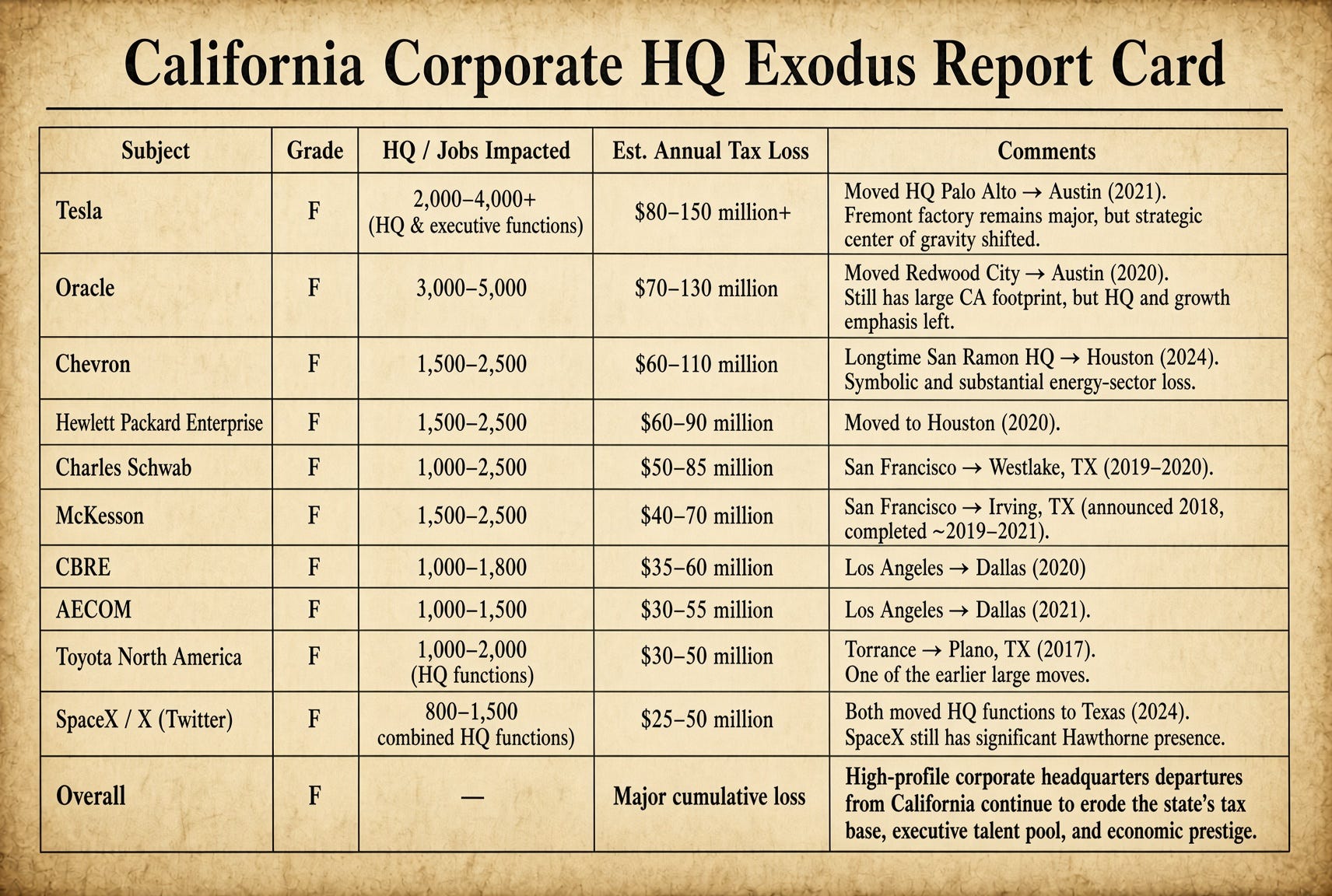
No wonder the Cali Dems are raising the taxes of those of us left behind. And this is just the Top 10 of the companies that have flown the coop. 😳
More AI-Generated Equalization
Grok again produced the above Report Cards in response to the prompt: “Create a Report Card that reflects the number of taxpayers and top 10 companies who feed California and the annual tax money lost.” We would bet Claude, ChatGPT, and others would find the same.
Driving successful entrepreneurs, investors, and corporations out of New York and California is not progressive taxation. It is fiscal self-sabotage dressed up as fairness.
In Silicon Valley, math, science, and now AI, with its power to process vast amounts of human knowledge instantly, are now the great debate equalizers. WNBA coaches answered the simple question of “Should biological males be able to play for the WNBA? with—‘Sports is about belonging,’ ‘ it’s about allowing everyone to be their authentic self,’ and “I don’t ever believe that exclusion is an answer.’ 🤔
The recent explosion in gender identification, especially among adolescent females, tracks social contagion and cultural trends far more closely than any sudden biological discovery. This is occurring in the same demographic already in the grip of a severe mental-health crisis. CDC data show that more than half of high-school girls — 53% in 2023, down only slightly from 57% in 2021—report persistent feelings of sadness or hopelessness—roughly double the rate among boys. Rates of major depressive episodes among adolescent females are similarly elevated, running about 2.5 times higher than among males.
Social media manipulation (thank you Silicon Valley), mainstream media narratives, and identity-politics campaigns have amplified confusion and distress among young women. The mental-health crisis among adolescent and young adult females is one of the most urgent problems facing the country.
Steering already-distressed girls toward irreversible medical interventions in the middle of that crisis is not compassion. It is the encouragement of harm over which they have little real control.
In elite cultural circles, particularly Hollywood, gender-nonconforming or transgender-identified children have increased markedly in rate and visibility in recent years and become a status marker—a public signal of progressive virtue. Before 2010, such public cases were essentially nonexistent. These cultural attitudes reinforce the social incentives already pressing on vulnerable adolescent girls.
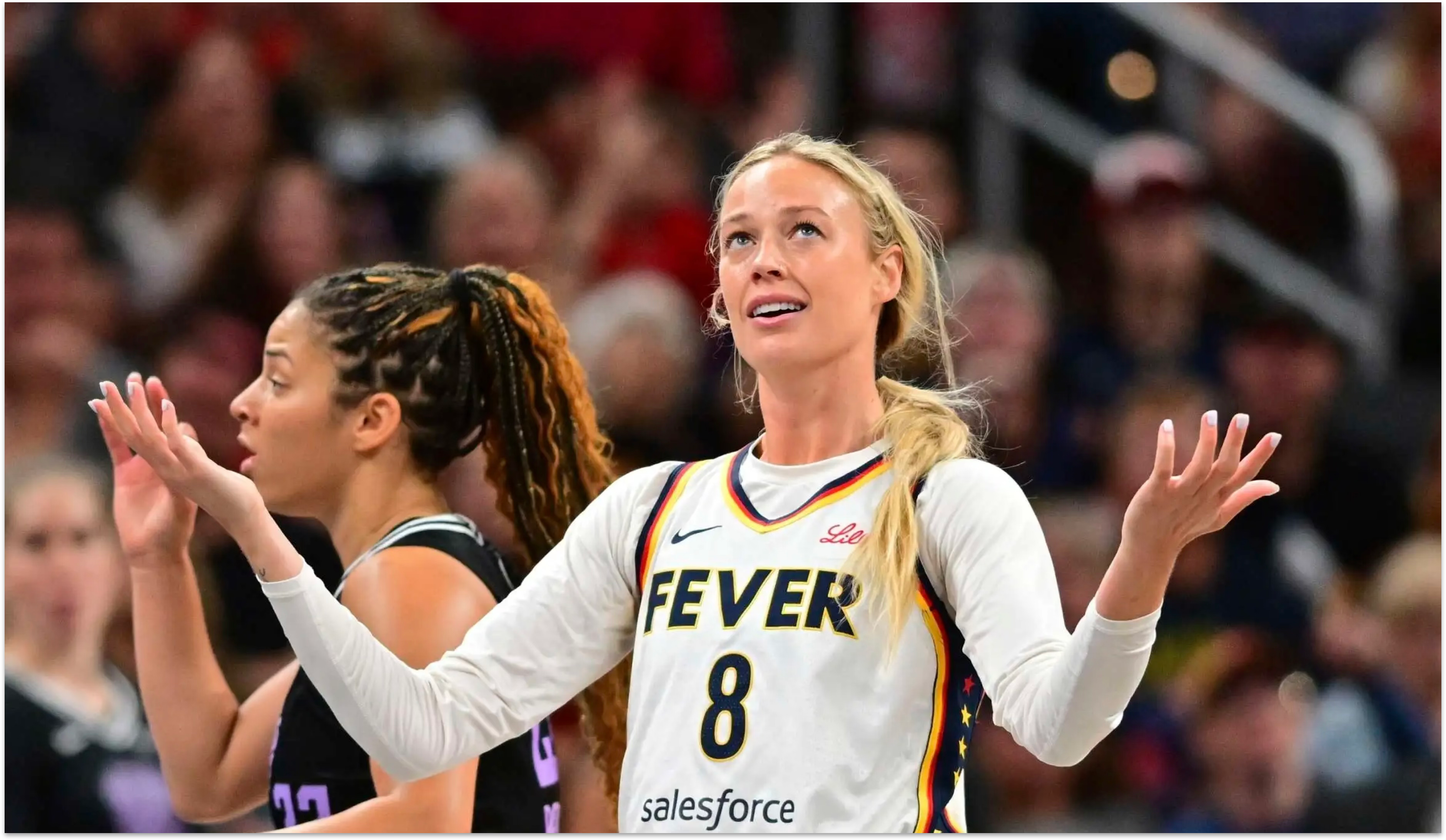
What’s the problem? Sophie‘s view matches that of 80% of America.
Armed with facts and experience in the game, Indiana Fever’s Sophie Cunningham has simply been trying to protect young girls. In today’s WNBA environment, her refusal to accept biological males in women’s sports and locker rooms has made her a target. Her bottom line was clear: “It’s common sense,” she said. ‘And I want to protect young girls in the locker room, and from having to go against biological men in sports, and I’ll always believe that.”
“If I were to play Andy Murray, I would lose 6-0, 6-0 in five to six minutes, maybe 10 minutes… It’s a completely different sport. The men are a lot faster and they serve harder, they hit harder, it’s just a different game. I love to play women’s tennis. I only want to play girls, because I don’t want to be embarrassed.”
—Serena Williams, Goddess of Women’s Tennis
Boys no can do in tennis 🎾
The WTA requires every player to take a one-time genetic screen for the SRY gene (the male-determining gene on the Y chromosome). This is a legitimate, biology-first filter designed to keep the women’s category for biological females and to exclude males from competing in WTA tournaments —regardless of identity, hormone suppression, or legal documents.
To reject what Sophie is saying is to accept that any NBA player could wake up one day, change his name to Betty, and walk into the Minnesota Lynx locker room to play ball. Every year, dozens of high-school boys run faster than Florence Griffith-Joyner’s still-standing women’s world record (10.49 vs. Usain Bolt @9.58) in the 100 meters. 🤷🏽♀️
Three former NBA first-round picks—Enes Kanter Freedom and Royce White —have joined the WNBA genre game fun by publicly declaring for the 2027 WNBA Draft under the league’s self-identification eligibility language.
Yet despite the science and the outcomes data, schools across the United States have adopted policies that allow staff to discuss gender identity with minor students, affirm preferred names and pronouns, and facilitate social transition while deliberately withholding that information from parents. Districts have treated a child’s gender identity as confidential “medical” information that parents have no automatic right to know.
This practice directly undermines parental authority. Parents—not schools—are the primary decision-makers for their minor children. Concealing major changes in a child’s identity and school presentation from the people legally and morally responsible for that child is a serious violation of parental rights. The current federal enforcement actions under FERPA exist because these secrecy policies finally collided with a clearer reading of the law.
The science and the outcomes data are not ambiguous. The willingness of schools to keep parents in the dark is.
All this being said, we are called to love all people. We share Sophie Cunningham’s spirit when she said, “Everyone is welcome at my table.” This is a critical moment to show extra empathy and compassion for our young women. You can care about people, want the best for them, and still refuse to deny the science and the reality of the mental damage being inflicted. Love and honesty are not opposites.
Cyndi Lauper — Girls Just Want To Have Fun — 1984
Released in late 1983 as the lead single from Cyndi Lauper’s debut album She’s So Unusual, “Girls Just Want to Have Fun” became a massive global hit in 1984, and has become an anthem for every generation of girls since. Peaked at No. 2 on the US Billboard Hot 100— blocked from No.1 by Van Halen’s “Jump,” and spent 25 weeks on the chart. The above video won the MTV Video Music Award for Best Female Video and has 1.7 billion YouTube views.The Cryptonite Take
Recent national polls (Pew, Gallup, New York Times/Ipsos and others from 2025–2026) show clear majorities — approaching 80% — favoring the requirement that athletes compete according to sex at birth. Support for the opposite position has declined steadily since the early 2020s.
Kaitlin Jenner (former U.S. Decathlon gold medalist Bruce Jenner) gets to the bottom line regarding the confusion going on at the WNBA— ‘“XX, you’re in. XY, you’re out. It’s that simple.”
Reason and observable reality ultimately outweigh emotion and institutional pressure. On the question of boys playing girls' sports, the U.S. public has already made up its mind. Be not afraid.
Sophie, a Polish Catholic, was forced by a Nazi doctor to choose which of her two children would live and which would be sent to the gas chamber. She chose to save her young son and sacrifice her daughter. Most moral dilemmas in stories still leave some room for a “better” option. Sophie’s choice does not. She is forced to participate in the murder of one of her own children to save the other. That absolute, no-win situation is almost unbearable to sit with.
Meryl Streep’s Academy Award-winning performance is widely considered one of the greatest in film history. She made Sophie fully human — charming, damaged, intelligent, self-destructive, and haunted. The film combined an unthinkable moral situation, an extraordinary performance, and a refusal to soften the consequences. That rare combination left a lasting mark on many who saw it when it was released in 1982.
The new Co-Stewards of Sequoia Capital — Pat Grady and Alfred Lin.
The venerable Sequoia Capital is going all-in on AI under its new co-stewards, Pat Grady and Alfred Lin, who have been with the firm since 2007 and 2010, respectively. The pair took the reins in November 2025 after Roelof Botha stepped aside and have quickly shifted the firm into a more aggressive posture.
Under their leadership, Sequoia has already raised a $7 billion expansion fund. It is now targeting roughly $10 billion—the largest single commitment in the firm’s 54-year history—for AI and what it calls “reindustrialization.”
Sequoia has already placed bets across the Frontier Labs table. They were an early (2021) investor in OpenAI, a later-round investor in Elon’s xAI, which is now part of SpaceX, and a more recent investor in Anthropic, as well as in the infrastructure and vertical applications needed to turn AI progress into real-world industrial capacity.
Lin, a longtime early-stage investor known for Airbnb, DoorDash and OpenAI, and Grady, who has led growth investing since 2015 with wins including ServiceNow, Zoom and Harvey, are betting that the next decade belongs to those who can build both the models and the factories that put them to work.
Lin frames the moment with characteristic optimism: “There is a lot of negativity around AI, and it is misplaced… If I had to write a memo today, it would be White Swan, not Black Swan.” Grady is even more direct: “This is the shift of our lifetime,” and has argued that long-horizon agents mean “AGI is here, now.”
Together, they are betting that the biggest returns will come not only from frontier models but also from the data, infrastructure, and physical systems that enable AI actually to reshape industry.
Former White House AI and crypto czar David Sacks is back in fundraising mode. Craft Ventures, the firm he cofounded, is targeting roughly $1 billion for its next flagship fund—the first major raise since. An SEC filing confirms the launch of Craft Ventures V, and if the firm hits its target, the new capital would push Craft’s total LP commitments across all its funds past the $4 billion mark.
Tesla design chief Franz von Holzhausen said this week that the unveiling of its long-delayed next-generation Roadster is coming “very soon.” You know, the one Elon Musk has repeatedly teased as capable of “flying.”
Childhood fantasies do come true. We got the Star Trek phone and now…
Nearly nine years after the 2017 concept, the public demo is now targeted for August (or later) at Giga Texas, centered on the optional SpaceX package—cold-gas thrusters (internally A71) designed for extreme acceleration and brief hovering just above the ground. Elon says it’s “better than all the James Bond cars combined.” Production remains aimed at 2027 or later.
After a decade of delays, the radical “flying” Roadster is the closest it’s ever been to actually appearing.
The breaking news and inside wisdom you need to stay relevant and on top of emerging private tech companies, VC investors, Big Tech, and the innovation trends shaping the global Silicon Valley. All links lead to AI-generated research from a decisively venture-capital perspective.
🗣️ Iran’s economy is cracking under hyperinflation and currency collapse.Food prices surged 112–114% year-over-year in March, with bread and cereals up 140% and dairy/eggs over 116%. The rial has cratered past 1.94 million per dollar. Grocery theft of basics like cheese, meat, and bread is now common as households lose purchasing power. Analysts say the regime is already in the “tipping zone,” where access to calories starts to fail for large swaths of the population—not just the poorest. President Masoud Pezeshkian acknowledged the “difficulties and problems” but blamed foreign pressure: “The enemy is exerting pressure in an attempt to provoke the people into protesting.”
That pressure is about to intensify. Treasury Secretary Scott Bessent told Newsmax that the U.S. will announce next week economic measures “like have never been seen in the history of economic isolation on a country,” framing it as the “one-two punch” of unprecedented isolation plus the ongoing naval blockade of Iranian ports that keeps nearly everything from moving in or out. Having shifted from the kinetic phase of Operation Epic Fury to Operation Economic Fury, Bessent said the administration has “raised the level again” at the president’s orders.
Over two decades, Ortega and co-president wife Rosario Murillo have extinguished political freedom more thoroughly than even Cuba or Venezuela in key respects—shuttering ~80% of NGOs, universities and charities, gutting the Catholic Church (exiling 200+ clergy, banning ordinations), and inventing “manufactured statelessness” that has stripped at least 452 critics of nationality and assets. A 2025 constitution sealed hereditary absolute power for the family. This locks Nicaragua tighter into what’s left of the Cuba-China-Russia orbit just as the old Maduro-led axis unravels.
“The defining questions of our age are who will have access to superintelligence and what will we direct it towards. Will it be centralized and restricted to a few institutions, or will it be a tool that empowers everyone? We propose a philosophy based on individual empowerment as the source of prosperity, invention and safety as the primary purpose of superintelligence.”
“It is surprising to hear so much doom talk from many developing AI that AI will eliminate most jobs, yet humanity rushes to build that future. The notion that AI is so dangerous that safety comes from an extreme concentration of power is inherently problematic and inconsistent with the lessons of history.”
— Mark Zuckerberg, in “The Future is for Everyone”
🗣️ Meta just dropped Muse Glimmer — a 30B open-weight model for agentic tasks that runs on a single consumer GPU. Developers can now download and run it locally. Open weights for Muse Spark 1.2, one of Meta’s top foundation models, are coming next. In “The Future is for Everyone,” Zuckerberg argues that U.S. open-source developers face training-data restrictions that Chinese labs don’t—his message: lower the barriers so American models can lead the open ecosystem. Chinese open-weight models from DeepSeek, Alibaba, and Moonshot are already gaining adoption for their strong performance at lower cost. Meta is swinging back into the open-source game
🗣️ Amazon completed an additional $35 billion investment in OpenAI, following through on a commitment tied to the company going public or hitting specified milestones. The move further deepens Amazon’s strategic bet on frontier AI models and compute demand.
🗣️ Google’s Gemini app has hit 1 billion monthly active users, becoming the fastest-growing product in the company’s history and the 14th Google product to reach that milestone. The figure comes less than a month after the company reported 950 million monthly users.
Vessel tracking showed Launchpad was closer to the stranded boat than the UnCruise Adventures ship Wilderness Legacy, which ultimately towed the skiff to safety in Farragut Bay. As the rescue unfolded, the cruise captain announced over the PA that Zuckerberg’s yacht had been nearer and “refused” to help. Passengers responded with near-unanimous booing. A Meta spokesperson posted— “We’re grateful all parties are safe.”
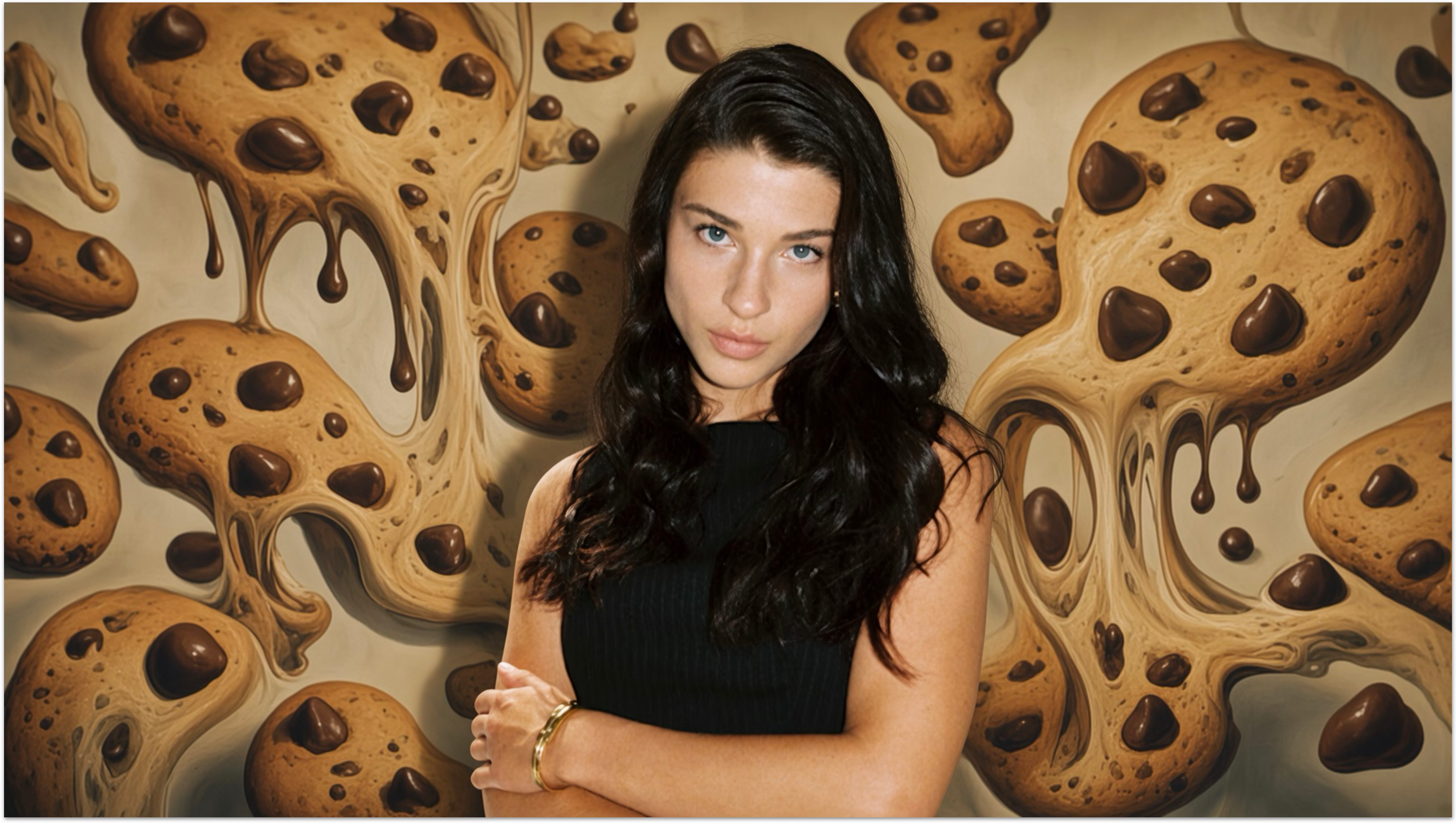
👀 Phoebe Gates, 23-year-old daughter of Bill Gates and co-founder of shopping startup Phia, faces scrutiny over reports that her company used “cookie stuffing” — automatically dropping affiliate cookies to claim commissions on sales it didn’t drive. Bloomberg’s reporting cites internal messages indicating that Gates and her co-founder knew about the practice for months. It allegedly accounted for a large share of claimed sales before the features were disabled in July, after which revenue dropped sharply.
Nepo baby’s gotta cookie problem.
Phia says it removed the features, is reviewing transactions, and has hired compliance help. Legal experts note the practice can be treated as federal wire fraud (up to 20 years). No charges have been filed.
💰 Fish Audio (Palo Alto, CA) raises $52 million seed | Builds voice-generation and speech-to-text models for creators and enterprises | Investors: Coreline Ventures and Capital Today (co-leads), 359 Capital, Parable, Play Time, Alphalist Partners, Bayhouse Ventures, Carya Venture Partners, HF0 + others | (July 2026)
💰 Pangram (Brooklyn, NY) raises a $9 million round | Detects AI-generated text and images for publishers, schools, recruiters, and online readers checking whether humans made content | Investors: Menlo Ventures (lead), Haystack, ScOp, Script Capital, Cadenza + others | (July 2026)
💰 Smallest (San Francisco, CA) raises $13 million Series A | Builds voice AI models that automate customer conversations, transcription, and speech generation across multiple languages | Investors: Seligman Ventures (lead), Sierra Ventures, 3one4 Capital + others | Total VC funding: $21+ million | (July 2026)
💰 Vector Legal (San Francisco, CA) raises $5.2 million seed | Provides startups with AI-assisted legal services for company formation, commercial contracts, trademarks, and financing transactions | Investors: Base10 Partners (lead) + others | (July 2026)
💰 Trajectory (San Francisco, CA) raises $40 million (Sequoia-led) at a $300 million valuation just two months after a $15 million seed | Builds continual-learning infrastructure that lets AI products improve from real-world user interactions, helping companies customize open-source models and optimize agent systems (“Agent Harness”) | Founded by former Google DeepMind and Apple researchers (CEO Ronak Malde, Arjun Karanam, Michael Elabd); earlier seed led by Conviction with participation from Bessemer, Radical VC, BoxGroup, Jeff Dean, and Fei-Fei Li | Total funding: ~$55 million | (August 2026)
💰 Dwelly (London, UK) raises $95 million equity Series B(part of $170 million total package including debt) | Buys UK residential property-management businesses and uses AI to automate tenant inquiries, onboarding, rent collection, maintenance, and compliance | Investors: EQT Growth and General Catalyst (co-leads), s16vc, Begin Capital, DVC, Trinity Capital (debt) + others | Total funding: significant prior rounds; scaling via roll-up | (July 2026)
💰 Harmony (New York / Tel Aviv) raises $34 million seed | Handles workplace requests (onboarding, software access, password resets, approvals, policy questions) inside Slack and Microsoft Teams | Investors: Lightspeed Venture Partners (lead), Hitachi Ventures, Fin Capital, Mercer Ventures, Operator Partners, Wiz founding team (Assaf Rappaport, Ofir Ehrlich) + others | (July 2026)
💰 5U AI (Munich, Germany) raises $3.2 million pre-seed | Deploys AI workers that help freight forwarders quote, book, track shipments, and reconcile invoices across air, sea, and road freight | Investors: Emerge Capital (lead) + others | (July 2026)
💰 Centralize (San Francisco, CA) raises $19 million round | Helps enterprise revenue teams map buying committees, track stakeholder changes, and find relationship paths needed to protect and close deals | Investors: New Enterprise Associates (lead), Salesforce Ventures, Y Combinator, 20 Sales, Ritual Capital, Adverb Ventures, Stewart Butterfield, Scott Woody + others | (July 2026)
💰 COR (San Francisco, CA) raises a $30 million round | Helps agencies and professional-services firms manage client projects, staffing, time tracking, and profitability across human and AI work | Investors: FTV Capital (lead) + others | (July 2026)
💰 Encore AI (Tel Aviv, Israel) raises $30 million Series A | Trains customer-support and sales agents by analyzing call recordings, emails, text messages, and CRM data | Investors: Team8 (lead), Planven, Lukatz, Garage + unnamed banks and insurers | (July 2026)
💰 Henry AI (New York, NY) raises $16.5 million Series A | Automates offering memorandums, underwriting packages, pitch decks, and buyer lists for commercial real-estate transaction teams | Investors: FirstMark Capital (lead), Thomson Reuters Ventures, Y Combinator, Susa Ventures, 1Sharpe, StoryHouse Ventures, Pioneer Fund, RXR Arden Digital Ventures, Karman Ventures, Coalition Operators + others | (July 2026)
💰 Unit AI (Boston, MA) raises $12 million seed | Automates warehouse inventory management, order fulfillment, and returns for retailers and third-party logistics providers without major facility redesigns | Investors: Prologis Ventures, Dynamo Ventures, and Ground Up Ventures (co-leads), eGateway Capital, Recursive Ventures, Think + Ventures, ZEP Fund, Crosscourt + others | (July 2026)
💰 Weave (San Francisco, CA) raises $13.5 million Series A | Measures human and AI coding output so engineering and finance leaders can track productivity and spending returns | Investors: Standard Capital (lead), Y Combinator, Moonfire, Burst Capital, IrregEx, the Agent Fund + others | (July 2026)
💰 Antares Labs (Chicago, IL) raises $7.3 million seed | Builds custom AI systems for real-estate owners, developers, investors, and asset managers using internal data for acquisitions, leasing, tenant retention, forecasting, and operations | Investors: Fifth Wall (lead), Base10 Partners, Bloomberg Beta, Sandwith Ventures + others | (July 2026)
💰 Modus (Tel Aviv, Israel) raises $10 million seed| Helps enterprises give AI agents current business context from company systems so they retrieve less irrelevant data | Investors: Insight Partners (lead), Soma Capital + others | (July 2026)
💰 Perceptual Robotics (Bristol, UK) raises $5.3 million round | Uses autonomous drones to inspect wind-turbine blades, classify damage severity, and produce repair-ready reports for wind operators | Investors: Investing for Purpose, Loggerhead Ventures, One Planet Capital + Innovate UK grant co-funding | (July 2026) (Valuation not disclosed)
💰 Sent (New York, NY) raises $12 million Series A | Routes business messages across SMS, WhatsApp, and RCS through one API while managing carrier and compliance requirements | Investors: Companyon Ventures (lead), Bessemer Venture Partners, Urban Innovation Fund, CP Overture + others | (July 2026)
💰 Terminal (Toronto, Canada) raises $20 million Series A | Connects insurers, fleet managers, logistics providers, and lenders to normalized telematics data from commercial vehicle systems | Investors: Battery Ventures (lead), Intact Private Capital, Penske, Y Combinator, Wayfinder Ventures + others | Total VC funding: $26 million | (July 2026)
💰 Credible Data (Boulder, CO) raises $10 million seed | Helps companies define business metrics, relationships, policies, and access controls so AI tools can interpret structured data consistently across systems (BigQuery, Snowflake, PostgreSQL, etc.) | Investors: Gradient, SignalFire, and K5 Global (co-leads) + others | (July 2026)
💰 Perceptron (UK) raises $6.5 million round | Operates a decentralized contributor network that lets AI companies commission verified datasets from people across global online communities | Investors: Sigma Capital, Selini Capital, QCP Capital, P2 Ventures, CoinDCX Ventures, Momentum6, DeFi Capital, Walrus Foundation, Aethir, Colosseum, GuruDev Capital, Tempo Finance, NewTribe Capital, Digital Consensus Fund, CodeCraft Capital + others | (July 2026)
💰 ZuriQ (Zurich, Switzerland) raises $25.5 million seed | Develops trapped-ion quantum processors that arrange ions on two-dimensional chips for larger, more scalable quantum computers | Investors: Quantonation (lead), Forward.one, Extantia, Firgun Ventures + others | (July 2026)
💰 Spur Intelligence (Lake Mary, FL) raises $200 million round | Helps security and fraud teams identify VPNs, residential proxies, bots, and other obscured sources of internet traffic via infrastructure-aware IP intelligence | Investors: Insight Partners | Founded 2017; previously bootstrapped | (July 2026) (Valuation not disclosed)
💰 Act Security (Tel Aviv, Israel) raises $40 million Series A | Reduces unused cloud access permissions for employees and AI agents to limit attacker movement paths in cloud systems | Investors: Notable Capital (lead), Startpoint Capital, SVCI + others | Total VC funding: $60 million | (July 2026)
💰 Hush Security (Tel Aviv, Israel) raises $30 million Series A | Helps companies discover, control, and audit autonomous software agents and their access to enterprise systems | Investors: Akamai Technologies, Battery Ventures, YL Ventures + others | Total VC funding: $41 million | (July 2026)
💰 Mate (Tel Aviv, Israel) raises $25 million Series A | Helps enterprise security teams use AI agents to investigate alerts, respond to threats, and distinguish attacks from planned activity | Investors: Canaan Partners (lead), M12, Insight Partners, Team8 + others | Total VC funding: $50+ million | (July 2026)
💰 Cantina (Miami, FL) raises $8 million round | Uses AI agents to prioritize vulnerabilities, coordinate fixes across engineering teams, and verify security risks are resolved | Investors: Framework Ventures (lead) + others | Total VC funding: $16.5 million | (July 2026)
💰 Frenos (Charlotte, NC) raises $1.5 million seed | Simulates penetration tests on digital twins of industrial control networks to identify exploitable attack paths without disrupting production | Investors: Momenta and Exposition Ventures (co-leads), Riptide Ventures + others | Total VC funding: $6.4 million | (July 2026)
💰 ProphetX (New York, NY) raises $35 million round | Operates a regulated peer-to-peer exchange for sports-focused event contracts, allowing users to set prices and trade directly | Investors: Parlay Capital and Data Point Capital (co-leads), FDJ Ventures, Greenwave Ventures, Connexa Capital, Impellent Ventures, the Operating Group, Sharp Alpha Advisors, Chicago Trading Company Ventures, Belvedere Trading, Ematiq + others | (July 2026)
💰 Discern (Stamford, CT) raises $10 million Series A | Automates state compliance filings, foreign registrations, entity payments, and service-of-process delivery for companies managing legal entities | Investors: Walkabout Ventures and Bungalow Capital (co-leads) + others | Total VC funding: $17.5 million | (July 2026)
💰 Ellis (New York, NY) raises $10 million seed| Connects private-credit firms’ documents, accounting data, and correspondence to monitor portfolios, flag discrepancies, and prepare reports | Investors: First Round Capital (lead), 645 Ventures, Harlem Capital, Khosla Ventures, Thrive Capital, Slow Capital, Kearny Jackson + others | (July 2026)
💰 Claris Bio (Jersey City, NJ) raises $118 million Series B | Develops experimental eye-drop therapy (CSB-001 / oremepermin alfa) for limbal stem cell deficiency, a rare condition that can cause progressive vision loss | Investors: Samsara BioCapital and Catalio Capital Management (co-leads), Sofinnova Investments, Novo Holdings, Adage Capital, Aisling Capital, ADAR1 Capital + others | Total VC funding: $170+ million | (July 2026) (Valuation not disclosed)
💰 Healia (Columbus, OH) raises $14 million Series A | Helps employers compare family health-plan options and reimburse dual-income employees who enroll in a spouse’s plan | Investors: 111° West Capital (lead), Y Combinator, First Round Capital, Pioneer Fund, GoAhead Ventures, North Coast Ventures + others | (July 2026)
💰 SoundHealth (San Francisco, CA) raises $12.25 million Series A | Makes non-invasive devices that personalize acoustic treatments for nasal congestion and sleep wellness using craniofacial data | Investors: Shangbay Capital (lead) + others | (July 2026)
💰 Throne Science (Austin, TX) raises $10 million Series A | Makes a toilet-mounted camera that tracks gut health and hydration by analyzing stool and urine | Investors: Will Ventures (lead), Emerson Collective, Workshop, LEAD VC, Salt VC, Accomplice, Moxxie Ventures + others | Total VC funding: nearly $18 million | (July 2026)
💰 Qureight (Cambridge, UK) raises $20 million Series B | Helps pharmaceutical companies use lung and heart scan data to design clinical trials and assess how drugs affect disease progression | Investors: Molten Ventures (lead), Hargreave Hale AIM VCT, XTX Ventures, Guinness Ventures, Meltwind, Ascension + others | (July 2026)
💰 Aurenar (St. Louis, MO) raises $5.7 million seed | Makes a single-use, non-invasive neuromodulation device designed to reduce stroke-related complications in ICU patients | Investors: Go Red for Women Venture Fund and Solas BioVentures (co-leads), BJC Health, Kaleida Capital + others | (July 2026)
💰 Mirae (New York, NY) raises $5.4 million round | Uses conversational AI to turn daily symptoms and clinical data into structured records that help clinicians manage autoimmune disease | Investors: Oxford Science Enterprises (lead) + others | (July 2026)
💰 Greyparrot (London, UK) raises $27 million Series B | Uses camera systems above recycling sorting belts to identify waste materials, product types, and brands for facility operators and packaging producers | Investors: Omar Mir (lead) + others | Total VC funding: $60 million | (July 2026)
💰 Agon (London, UK) raises $23 million seed | Builds secure training-data infrastructure for defense AI systems, helping governments and contractors train autonomous weapons, command software, drones, missiles, and uncrewed vehicles on confidential data | Investors: Lakestar, Lux Capital, Northzone, XYZ Venture Capital + others | Total VC funding: $30 million | (July 2026)
💰 Array Labs (Redwood City, CA) raises $21 million round | Builds radar-satellite fleets that map Earth and track aircraft and vessels for defense and security customers | Investors: Mitsubishi Electric Corporation (lead), Catapult Ventures, Kompas VC, Y Combinator + others | (July 2026)
🤝 Cyera (Israeli data-security unicorn valued at $12B) signs letter of intent to acquire Oasis Security (Israeli non-human identity / AI-agent access management startup) | Platform that discovers, governs, and secures non-human identities—primarily AI agents, service accounts, and other machine identities—across cloud, SaaS, and enterprise systems | Deal valued at roughly $1 billion (mostly cash, remainder in Cyera shares) | Oasis (founded 2022 by Danny Brickman & Amit Zimerman; raised ~$195M from Craft Ventures, Sequoia, Accel, Cyberstarts) to operate as an independent unit within Cyera, combining identity + data security for the agentic enterprise | (July 2026)
📈 As Dario Amodei and Anthropic prepare for Wall Street, they’re leaning hard into healthcare and biology AI and assuring potential investors that deeper work on drug discovery, therapies, and biotech applications can help soften negative public sentiment around AI. The play is to demonstrate concrete “great humanity potential” — helping to cure diseases like cancer rather than relying solely on abstract capability narratives or mass consumer agents.
📈 GrubMarket (South San Francisco, CA) confidentially files for U.S. IPO | AI-powered food supply-chain platform connecting wholesalers/distributors with grocers, restaurants, and buyers (60+ acquisitions) | Raised $50 million in Series H at $4.5 billion pre-money valuation (earlier Series G at >$3.5B); 2024 revenue surpassed $2 billion | 12-year-old company founded 2014 by CEO Mike Xu; settled prior SEC charges over revenue overstatement; share count and price range not yet set | (July 2026)
📈 Shein (Singapore / China-founded) prepares for Hong Kong IPO amid FTC investigation of U.S. business | Ultra-fast-fashion e-commerce retailer | Targeting valuation in the mid-to-high $20 billions to ~$30B (down sharply from prior private marks near $100B); 2025 revenue ~$41.8B, Q1 2026 net loss of $99M | Disclosed unresolved U.S. FTC consumer-protection probe that could lead to settlement and significant financial penalties; Goldman Sachs, Morgan Stanley, and JPMorgan as joint sponsors; shifted from earlier New York/London attempts after regulatory hurdles | (July 2026)
📈 Ionic Digital (Texas sites / U.S.) jumps ~25% in Nasdaq direct listing debut to roughly $2.75 billion valuation | Bitcoin miner (formed from Celsius Mining bankruptcy assets) pivoting to AI/HPC data-center infrastructure | Flagship 234 MW Ward County, TX site under 10-year (126-month) triple-net lease to Nscale worth nearly $2B in contracted revenue (potentially up to ~$2.6B with expansion); expects 2026 revenue of $190–195M (majority from leasing) | Direct listing under ticker IOND (no new capital raised); residual bitcoin mining continues at smaller sites; holds bitcoin treasury | (July 2026)
💸 Highland Europe (London and Geneva) raises €1.1 billion for Fund VI| Growth-stage investments in European technology scale-ups (typically post product-market fit, Series B through pre-IPO) across software, AI, enterprise, fintech, cybersecurity, and related sectors | 14-year-old firm (founded 2012 as a spin-out focused on European growth equity); has raised a total of €3.75 billion across six funds, backed 80+ companies, completed 30 exits, and generated more than €1 billion in liquidity over the past year (including Nexthink, Huel, EGYM/Playlist, and Bending Spoons) | (July 2026)
💸 Jump Capital (Chicago) raises $350 million for Fund VIII| Early-stage investments in AI applications, infrastructure, cybersecurity, and related enterprise technologies (including small-language models and AI-native platforms) | 14-year-old firm (founded 2012, affiliated with Jump Trading); co-founded by Michael McMahon and Sach Chitnis; focuses on technical founders modernizing industries with operator-oriented support and initial checks typically in the $1–15 million range | (July 2026)


























Comments
Nothing yet. Say the first thing.
Sign in to join the conversation.