
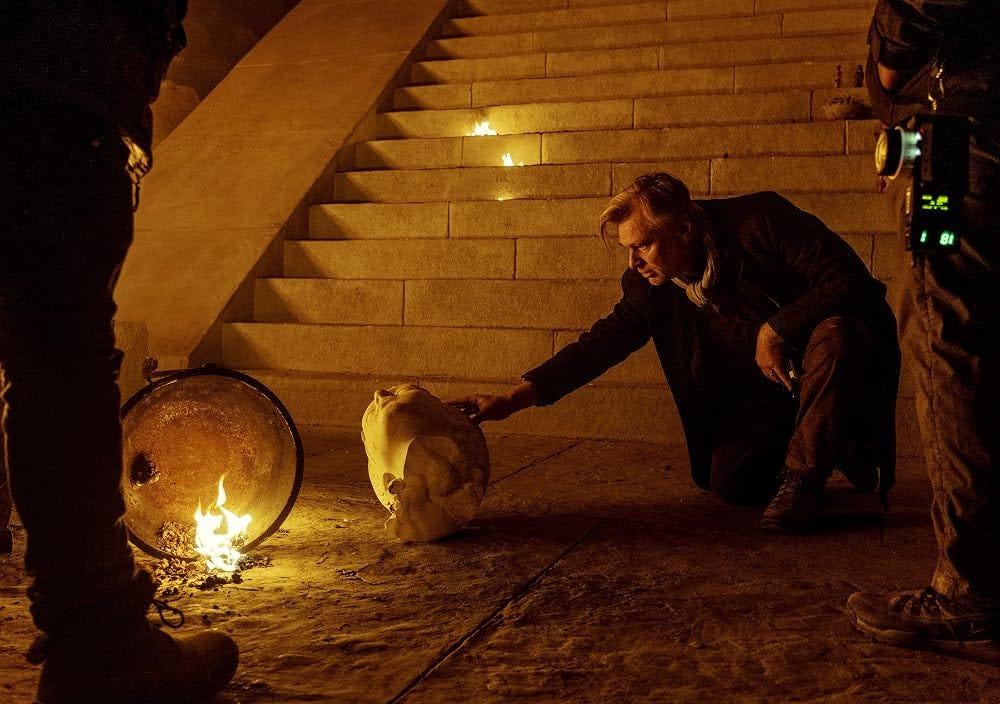
We’re barely half way through 2026 and horror has already dominated the box office. Curry Barker’s Obsession. Kane Parson’s Backrooms. A year seemingly defined by breakout filmmakers with a distinct vision for horror. Yet the film that has left me feeling the most thrilled and unsettled wasn’t marketed as horror at all. It was Christopher Nolan’s The Odyssey.
Homer’s epic poem is one of humanity’s oldest surviving stories. It recounts Odysseus’ journey home to Ithaca after the Greek victory at Troy. Along the way he encounters mythical monsters, vengeful gods, and nefarious characters. Each chapter tests his hubris until his crew are dead or lost at sea, leaving him alone to confront what he has spent a decade avoiding. Home. His wife and son. Will they still welcome him back when they see what war has shaped him into?
Christopher Nolan has expressed an interest in horror, calling it one of the defining film genres. While The Odyssey isn’t a horror film in the traditional sense, it repeatedly borrows the genre’s visual language. Through practical creature effects, body horror, claustrophobic staging and psychological terror, Nolan reframes Homer’s epic, revealing just how frightening Odysseus’ journey home has always been.
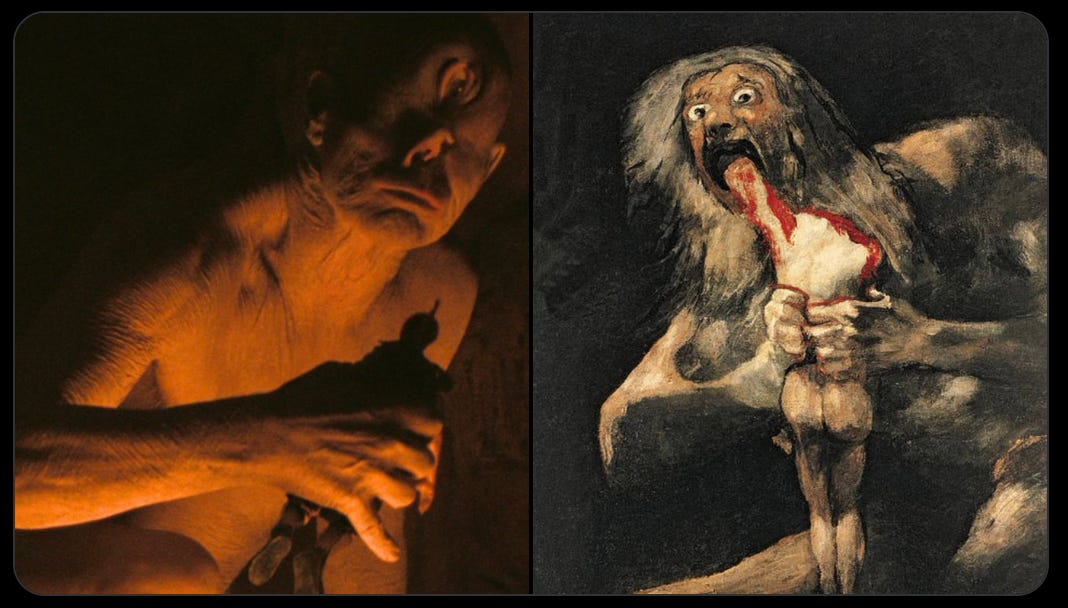
Our first encounter with horror comes inside the Cyclops’ cavern, where the creature is realised through a combination of puppetry and Bill Irwin’s performance. The image of the creature is immediately unnerving: a grotesque figure inspired by Goya’s ‘Saturn Devouring His Son’ (pictured above) and Guillermo del Toro’s philosophy of preserving the humanity of monsters. Yet despite his appetite for Odysseus’ crew, the Cyclops isn’t the real monster here. It’s the entitlement of Odysseus and his men; the arrogance of wandering into someone else’s home and looting whatever they find, that seals their fate.
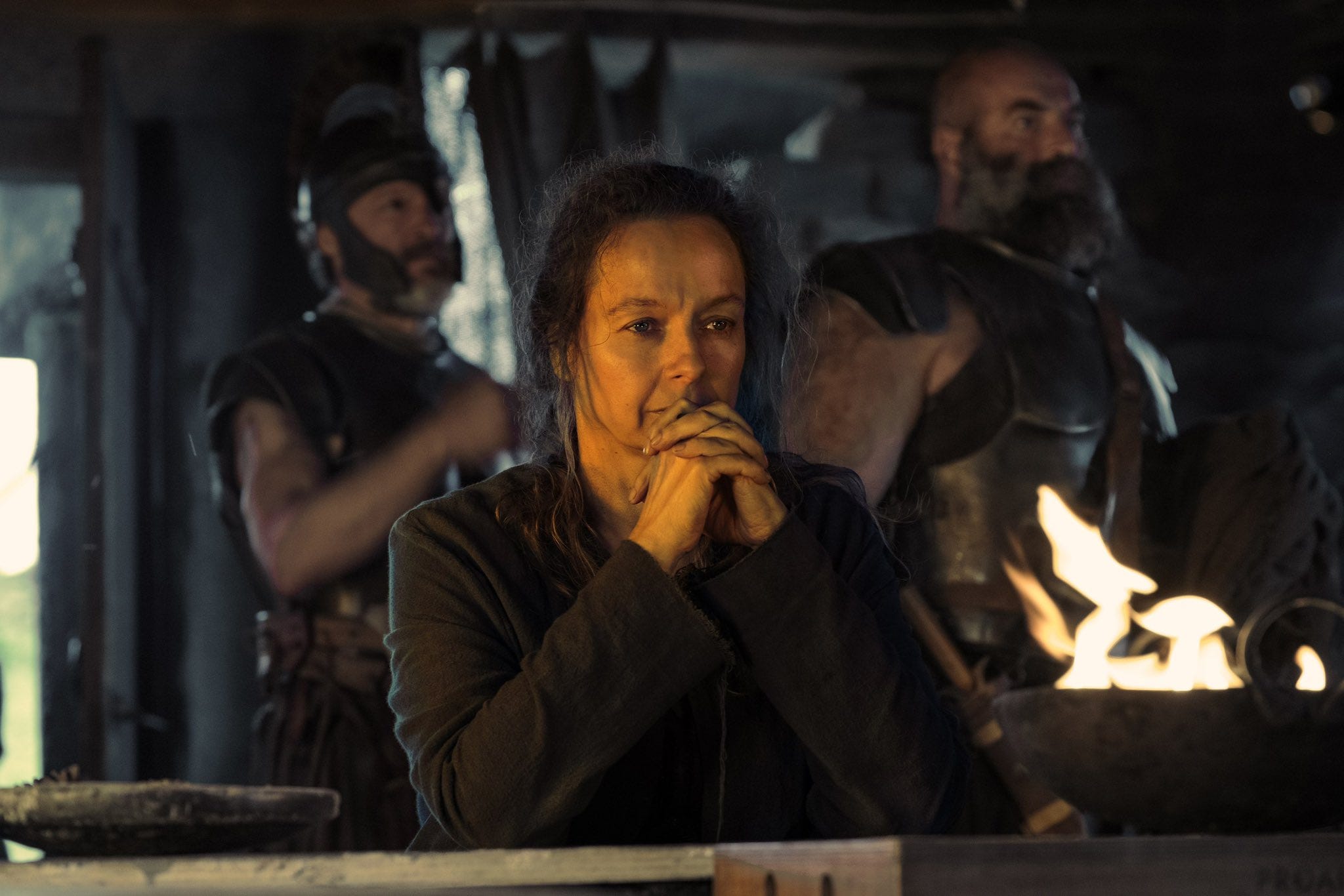
Circe’s chapter marks Nolan’s unexpected dive into body horror. The transformation of Odysseus’ crew into swine isn’t played for fantasy spectacle, but for visceral discomfort. As the men greedily devour the food that Circe has prepared for them, their behaviour becomes increasingly vulgar and gluttonous. Distracted and under her spell, their bones begin to crack, their skin stretches, their limbs and jaws contort. Rather than cutting away, Nolan forces us to watch as the men become the physical embodiment of the entitlement that defines them throughout their journey.
It’s one of the clearest examples of Nolan embracing practical effects and the physicality of their transformation is tangible. It feels reminiscent of the famous werewolf transformation sequence in Neil Jordan’s A Company of Wolves (1984). Circe removes them of their bodily autonomy and transforms them into the animals that she believe them, and perhaps all men, to be. Pigs.
The detour into Hades introduces a more gothic form of horror. The shades of fallen soldiers rise from the grave to confront Odysseus, forcing him to face the ghosts of men lost along his journey and on the battlefield. Momentarily haunted by their presence, Odysseus and crew are driven from the underworld, a few more of his crew falling by the wayside and lost along the way. Unlike the monsters that threaten Odysseus physically, the shades represent the consequences of what he has already lost.
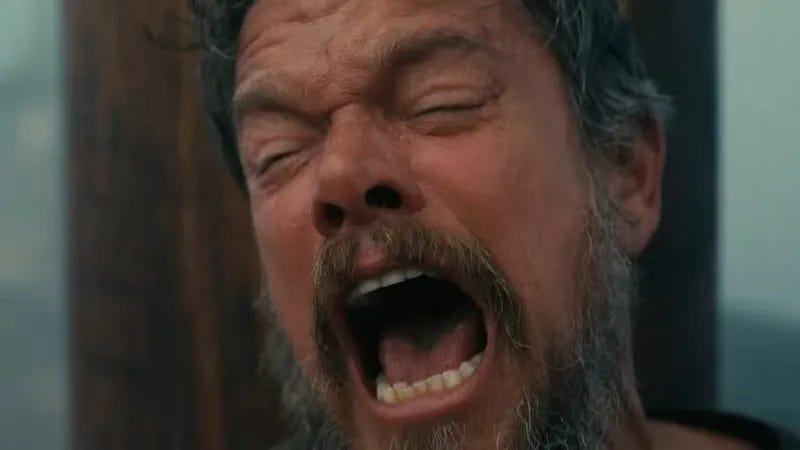
The Sirens sequence marks Nolan’s strongest embrace of psychological horror. Rather than inviting the audience to experience their seductive song, he denies us access to it altogether. The sound design in this scene is particularly inventive. Instead of hearing the Sirens song, like the crew, the audience’s ears are also plugged with wax. Like Eurylochus (Himesh Patel), we watch in horror as Odysseus writhes and screams in agony. The horror isn’t in the song itself, but in witnessing its effect.
When Odysseus later describes the song, it isn’t as a melody but as an unbearable itch:
“It’s all the things you want it to be.
Then all the things you wish you never wished for.
It was the delicious itch you go to scratch...
And find it under the skin, but can’t reach it.
So the delicious itch becomes unbearable.
Told you what you most want is what you most can’t have.
And what you most can’t have is what you already had.
And lost.”
Like so much of The Odyssey, the Sirens don’t simply threaten Odysseus’ life. They prey upon the fear and guilt that already lives inside him.
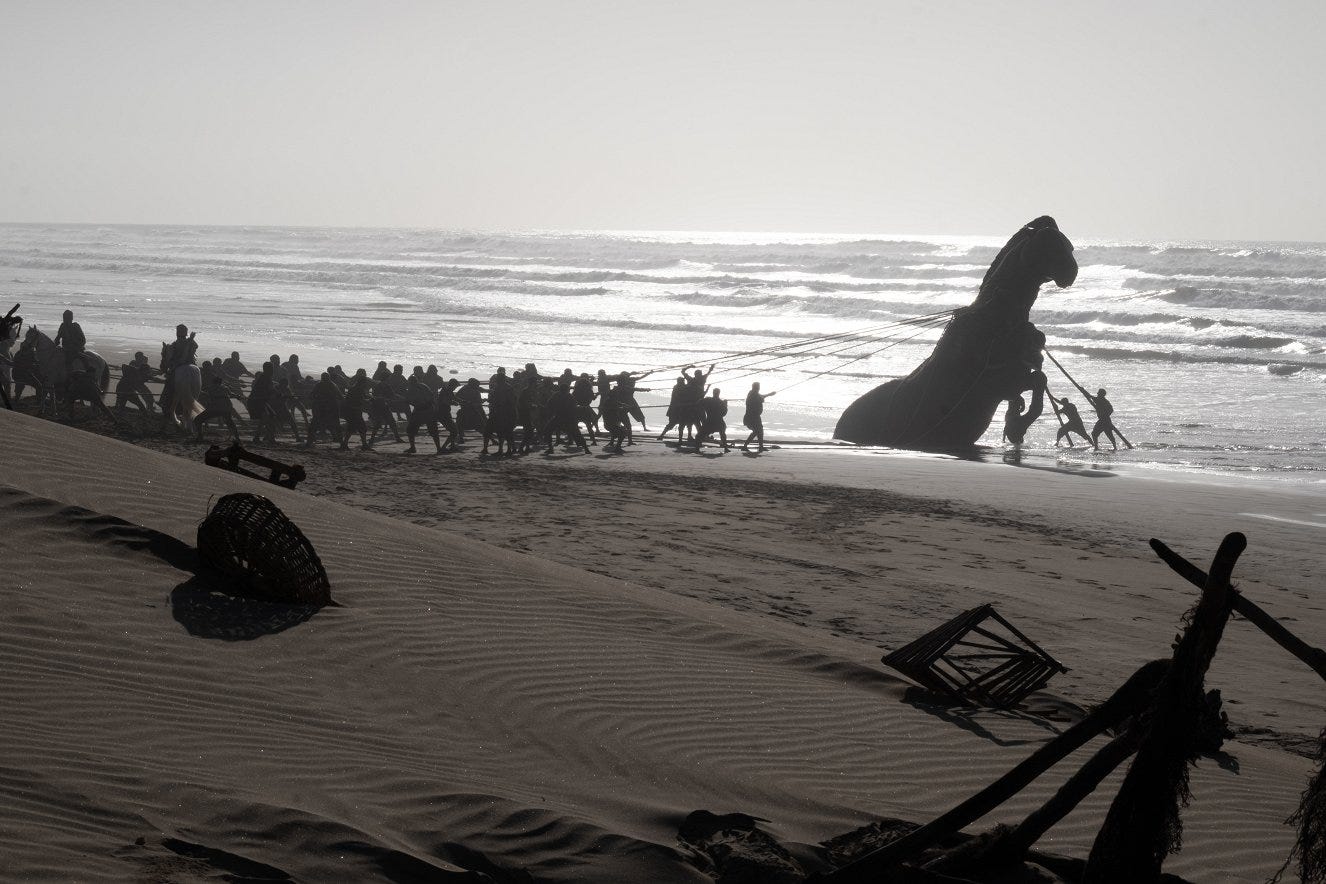
Nolan saves his most recognisable horror imagery for the battlefield. The Trojan Horse is staged less like a feat of military ingenuity from the wily Odysseus, and instead it plays like an exercise in survival horror. Cramped inside its wooden shell, Odysseus and his men endure days without light, food or certainty that the plan will succeed. A few men even drown in the sea water that seeps into the horse whilst it’s lodged in the shore, as they wait to see if the Trojan’s will take the bait. Nolan lingers on the claustrophobia of the space, transforming one of history’s most iconic battle manoeuvres into something suffocating.
It’s a sensibility that Nolan has returned to throughout his career. Whether in Dunkirk or Oppenheimer, war is never heroic for long. It’s chaotic, disorientating and deeply dehumanising. The Odyssey shares the same sensibility, treating the fall of Troy not as a moment of glory, but as the beginning of a haunting that follows Odysseus home.
For all it’s mythological monster and spectacle, the horror at the heart of The Odyssey is an ordinary one. Going home.
Perhaps that’s why The Odyssey feels like Christopher Nolan’s closest brush with horror. Not because there are monsters, but because every monster reflects a fear that already exists within its hero. The Cyclops exposes entitlement. Circe strips away humanity. The Sirens prey on guilt and longing. War dehumanises. And the idea of home forces Odysseus to reflect on the damage he has done to both himself and society by his own actions.
Nolan reveals that The Odyssey has always been a horror story.
You can read my review of Christopher Nolan’s ‘The Odyssey’ over on Letterboxd.
No posts
Comments
Nothing yet. Say the first thing.
Sign in to join the conversation.