
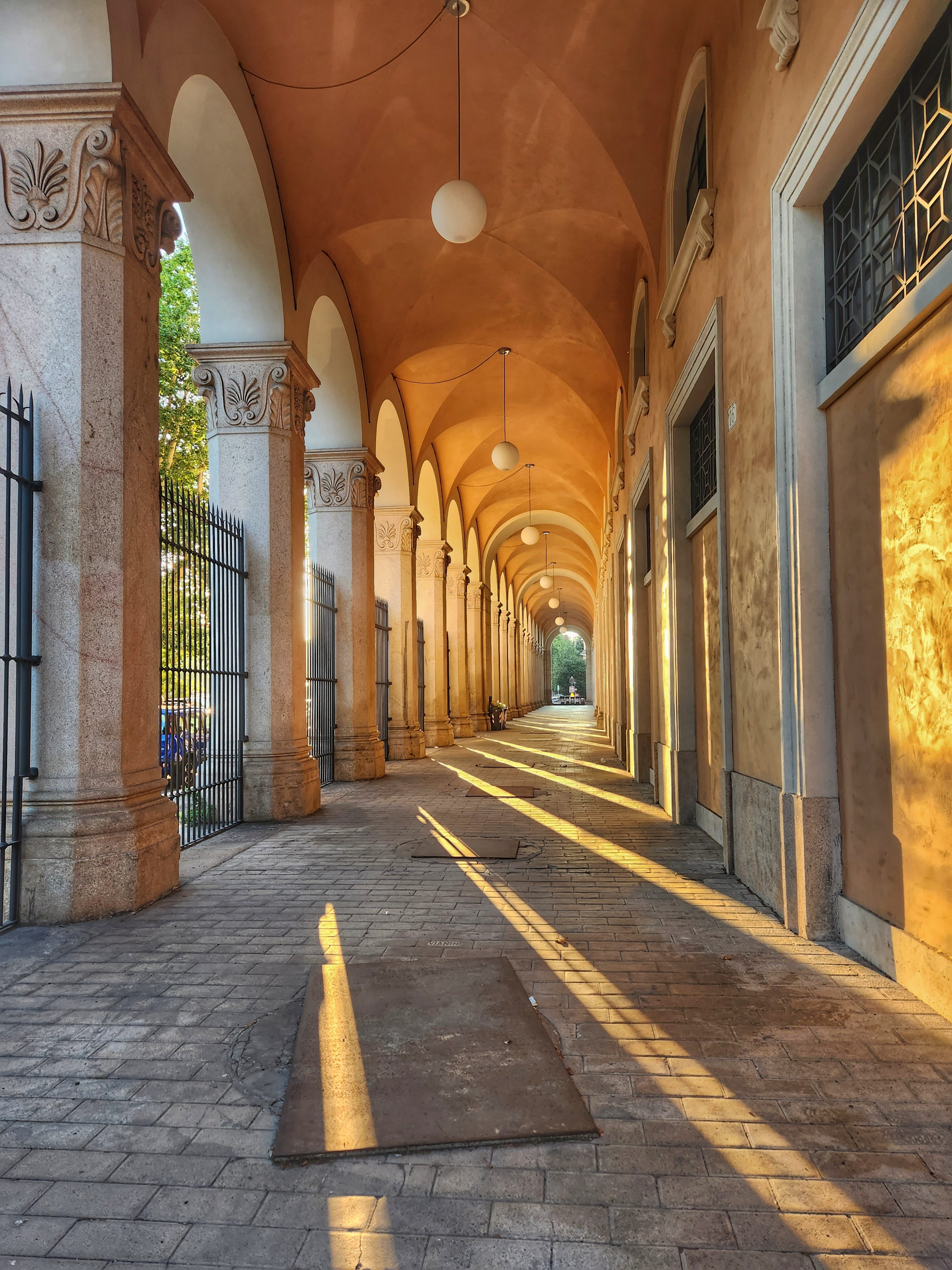
Agnes Callard once bit the hindquarters of the New Yorker’s readership by arguing that tourism is at best a pleasant diversion from the monotony of our banal lives, rather than a conduit for communion with the particular values of the places we visit. Not only does she offer Socrates and Kant as paragons—men who famously never left their home cities—she favorably quotes the very grumpy Fernando Pessoa, who mocks the traveller by saying
Travel is for those who cannot feel. . . . Only extreme poverty of the imagination justifies having to move around to feel.
Callard’s essay attempts to diagnose why tourists are so deluded. As a philosopher, the first thing she must do is define what it is to be a tourist—to be in the class of people her wrath is targeting. She quotes a definition from an anthropology of tourism:
A tourist is a temporarily leisured person who voluntarily visits a place away from home for the purpose of experiencing a change.
To be a tourist, then, is to travel with a particular aim—the aim to experience a change. But this project, argues Callard, is both dehumanizing and self-undermining. The tourist ends up being a mere spectator of the otherness of the place whilst simultaneously suspending their own perspective. This leads to alienation, both from the place one is visiting and from one’s own actions while traveling. Just think of the distance between the bus of tourists and the locals, or the distance between the tourist who would never visit their local art museum and themself as they enter the 60th room of the day at the Uffizi or Louvre.
The first sight the world gets of Jep Gambardella is in the middle of his 65th birthday party. The party is on the roof of a modern Roman building, filled with pretty young bodies and with Jep's often pathetic old friends. The party aims for glamour and Italian cool. It partly hits the mark, but falters because Jep’s social life is fractured. There are those who are there to be close to someone who plays a certain role—as he puts it later, the king of Roman nightlife; there are also those who are there because they know Jep. These people are not glamorous and mostly not cool.
Jep’s portrayal in the scene mirrors this fracturing. At first he is clearly the king. He laps up the attention of the pretty young bodies, smiling broadly, enjoying the center of attention. But, then, in the middle of a group performance of La Colita—a dance where everyone goes in circles—things abruptly turn. The party and its music slows, he leaves the dancing line, breaks the fourth wall, and delivers his first dialogue and the first of several monologues.
To this question, as kids, my friends all gave the same answer…“pussy”.
Whereas I answered, “the smell of old people’s houses”.
The question was: “What do you like most, really, in life?”
I was destined for sensibility. I was destined to become a writer. I was destined to become Jep Gambardella.
Jep is the protagonist in Paolo Sorrentino's La Grande Bellezza. He is the author of one novel—The Human Apparatus—generally taken to be a masterpiece. In the four decades between publication of the novel and his 65th birthday, Jep has aggressively pursued pleasure in Rome. As he says at the end of the film’s first act, since coming to Rome he has been in the “whirlpool of the high life,” eventually fulfilling his ambition to become its king, to have the power to “make parties fail.”
To earn some sort of living, he is a journalist, writing about contemporary Roman culture for a newspaper. This is, at worst, a small attempt at professional legitimacy and, at best, an extension of his hedonism, another way to have power over the whirlpool. He does not take himself or his career seriously, much to the chagrin of his intimates. But he does do a good job, attracting wide admiration and interest. In the first scene depicting journalistic activity, he takes a pompous conceptual artist named Talia Concept to task, eventually making her break down into tears, admitting she doesn’t know what her precious ‘vibrations’ are.
The Jep we find at the beginning of the film is static. He has fulfilled his main ambitions but has found them wanting. The second act begins with news that plunges Jep into an existential crisis. He is visited by the husband of his first love, Elisa, who has brought news of her death. What’s more, he tells Jep that he found her diary and that, in it, she reveals that Jep was the only man she ever loved.
This sends Jep spinning. He turns to his best, and one of his only real, friends, the ironically name Romano. Romano is Jep’s oldest friend but also the least successful. He rents a room in a student flat and is a hanger-on to a wannabe actress-writer-director-model. After going through his ideas for his theatre piece in-progress, Romano transitions to one of his favorite topics—Jep’s sex life. He asks him about a woman he slept with in act one, pointing out that she was a real beauty. Jep replies, ‘At my age a beauty is not enough. I might take writing up again.’ This confession surprises and excites Romano, who asks if something has happened. Jep emphatically says, “Something always happens in Rome. Nothing has happened.”
The crisis seeps into other parts of his life. During one of his frequent patio parties for his friends, one friend in particular raises his cackles. It is clear that the old Jep would let it go, but in his current state he is pushed to confrontation. The resulting evisceration also sends its victim into an existential crisis. The conclusion speaks to all at the party.
You're 53, with a life in tatters, just like the rest of us. Instead of acting superior and treating us with contempt, you should look at us with affection. We're all on the brink of despair, all we can do is look each other in the face, keep each other company, joke a little. Don't you agree?
Jep is a 21st century flâneur. La Grande Bellezza is strung together by his observational walks through Rome. The flâneur is a dandy who strolls through a city—usually their home city—with the motives of an artist-detective, casting a distanced, disinterested eye towards the city and its constituents in an attempt to interpret it as an aesthetic object. For Baudelaire—the foremost theorist of the flâneur in the 19th century—what was crucial was a desire to know ‘the multitude’ that is only possible in a modern city. He wrote that ‘for the perfect flâneur, for the passionate spectator, it is an immense joy to set up house in the heart of the multitude, amid the ebb and flow of movement, in the midst of the fugitive and the infinite.’ Crucially, the flâneur merely spectates; the goal is to be invisible, to see but not to be seen.
While the flâneur is often portrayed as lazy, carefree, and frivolous, it was central to Baudelaire’s vision of the flâneur that he is responding to the alienation of modern city life. Walter Benjamin—the 20th century’s foremost theorist of the flâneur—saw Baudelaire’s main innovation in his attempt to turn the modern city into the subject of poetry, and to do this required the attitude of the flâneur. Benjamin described Baudelaire’s flâneur by saying that
the allegorist’s gaze which falls upon the city is rather the gaze of an alienated man. It is the gaze of the flâneur, whose way of living still bestowed a conciliatory gleam over the growing destitution of man in the great city. The flâneur…stood at the margin.
The modern city collects individuals from all over and throws them together with the ultimate goal of driving an economy. Both the means and the end tend to alienate. The economic raison d’etre of the modern city turns its inhabitants into competitors, pushing them away from each other. The means of doing this—bringing a mass of people together from all over—alienates by creating ‘the multitude’, a mass of people too large for meaningful connection. The flâneur is alienated from these conditions of alienation, and rebels against them, both by making a vocation of aimless strolling and by examining the multitude as an aesthetic object.
Jep’s 21st century Rome is different from Baudelaire’s 19th century Paris. The multitude in Jep’s Rome are not on the streets. Jep’s strolls are dotted with few people, mostly dog walkers, nuns, priests, and foreigners. Because of this, he is very often visible. Most of the people he encounters look at him with suspicion. The few instances he observes people unnoticed involve at best small groups; they also always seemingly involve joy on Jep’s part.
It is on one of these strolls that Jep encounters an acquaintance from his distant past. Edigio is the onetime owner, now mere manager, of a strip club that Jep frequented in his youth to afterparty. They catch up in the club. Edigio has a 42 year old daughter, a career adult dancer. This earns Edigio’s worry and desire for her to stop dancing and get married. She won’t because she says she needs the money. Jep asks why she needs the money, forcing Edigio to confess he doesn’t know.
Her name is Ramona. Jep scoffs when he hears the name. Edigio reacts with mock anger ‘You artists are all the same! I tell you I have a daughter and you complain about her name! What’s wrong with “Ramona”?’ Jep replies: ‘Nothing. It’s a name that implies ambitions…’
Edigio implores Jep to try to play matchmaker for Ramona. He vehemently rejects this request; yet, Ramona comes over and Edigio bolts. Jep is visibly nervous about a human encounter for the first time in the film. She tells him that if he ‘wants a girl’ he should get a ‘Pole’. He replies, ‘Are you kidding? Who wants a girl? Not me.’
He tells her about her father’s request to find her a husband.
R: He’s obsessed. I’m not looking for a husband.
J: Well, you should be. A family is a beautiful thing.
R: I know. But I’m not cut out for beautiful things.
[long pause]
R: What’s wrong?
J: I feel old.
R: You’re no spring chicken.
To start act three, Jep goes out with a final destination in mind: Ramona’s house. They start a friendship that blossoms into love. Jep’s flaneurian distance from the world starts to fade. He starts to directly engage with the world again.
In one of the most visually thrilling sequences of the film, the pair go on a nocturnal excursion through Rome’s artworld. This starts with a party hosted by an exclusive dealer of contemporary art. The climax of the evening is the creation of a gigantic abstract painting by a small child, a child that is abusively forced to perform by her parents with the dealer looking on. She cries as she slings the paint onto the canvas. Despite initial appearances, the finished product is stunning.
Jep encounters a friend at the party; this friend bears a suitcase of keys to some of Rome’s oldest palazzos. Jep convinces him to take him and Romana around to some of them deep into the night. They end up at the Palazzo Barberini, where both are moved by Raphael’s La Fornarina. Who exactly the painting depicts is of some dispute, a dispute that both Jep and Ramona can relate to. One theory, from which the painting gets its name, is that it depicts Raphael’s true love—a love who refused to marry him. She was a baker or a daughter of a baker (hence La Fornarina—the baker); a rival theory is that it instead depicts a courtesan in the belle donne genre—a depiction of ideal female beauty. Ramona gasps when she looks at it. Jep, across the room, smiles.
Jep’s reentry into the multitude has these ups but also has its dangers. Midway through act three the mentally ill son of one of Jep’s aristocratic friends commits suicide. This friend often fretted to Jep about the health of her son, and Jep would deflect with jokes and hollow comfort. He is characteristically cold when he finds out, taking Ramona shopping for a funeral dress. As she tries on dresses for him, he delivers a shrewd speech about how to appropriately make a splash at a funeral, the thesis of which is that ‘you must always remember that at a funeral, you are appearing on stage.’ He ends by saying that the fundamental rule is that one must never cry, for it is immoral to upstage the grief of the family.
They attend the funeral and Jep behaves exactly as he said he would, dramatically approaching the mother after everyone sits down to deliver his prewritten condolences. But, as he turns to go back to his seat, the sun hits him just so and he starts to cry. When the priest calls for the friends of the deceased to come forward to carry the coffin at the end of the service and no one comes, Jep and his friends step up; Jep weeps as he carries the coffin out of the church.
Ramona and her love has pulled him back into the world, connecting him again to its value, making him vulnerable to the fragility of goodness.
We find out why Ramona needed the money— ‘to cure myself.’ She tells him this one morning after a night of ‘loving one another’ without ‘making love.’ Jep tells her, immediately before her revelation, that he had ‘forgotten what loving someone is about.’ She asks for five more minutes in bed after he announces breakfast. He lays down next to her and asks if she can see the sea on the ceiling, an imaginative exercise of some import to him. As the sounds of the sea come in, she says that she can. Ramona dies.
Jep became vulnerable to the fragility of Ramona’s goodness and it shattered. This leaves him shattered. News of Elisa’s death made him reconsider the significance of his life; Ramona’s death severs him from a newfound significance. The scene immediately following her death somehow, with only one line of dialogue and only banal actions, captures the feeling of being adrift from the world often inflicted by grief. In it, Jep passes and stares into the eyes of his younger self. At the end of the scene, an old woman mysteriously asks him, ‘Who will take care of you now?’
Things can always get worse. Romano is able to put on his one man show. We hear the final monologue, a lament for those with unmet expectations.
What's wrong with feeling nostalgic? It's the only distraction left for those who have no faith left in the future.
Jep misses the opening night in order to stroll. He comes upon some ancient ruins with a giraffe in the middle. He stands, amazed. Yet another acquaintance, Arturo, calls out to him. Arturo is a magician, and the giraffe is part of his latest show. Arturo will make the giraffe disappear.
J: You can make this giraffe disappear?
A: Of course I can make the giraffe vanish!
J: Then make me vanish too.
A: Jep, do you think that if I could really make people vanish, I’d still be here at my age playing these circus games? It’s just a trick. It’s just a trick!
Romano then finds Jep and the giraffe. Jep congratulates him on the show, tells him that he will go tomorrow. Romano informs him that there will be no show tomorrow. Romano is leaving Rome after 40 years. ‘Rome has really disappointed me.’
Romano walks away. Jep turns, the giraffe is gone. ‘It’s just a trick!’
Jep returns to Elisa’s widow (also called Arturo), asking to read her diary. Arturo tells him that he destroyed it before introducing Jep to his new girlfriend. Jep is cynically buoyed by the sight of them, asking what they are going to do that evening. After relaying their banal plans, they ask Jep what he’s doing. In that moment the alienated Jep returns.
I’ll have many drinks, but not so many as to become unruly. And then, when you’ll be getting up, I’ll be going to bed. What lovely people you are!
The final raucous party of the movie commences. Jep has many drinks as predicted, trying to fall back into his old hedonism. But he’s not the same as before and his friends can tell. He is drinking to forget. By the end of the scene, he is being forced to drink coffee by his loving housekeeper. He attempts to justify himself, thereby revealing his existential anxiety.
People have been asking me for years why I haven't written another novel. But look at these people, this wildlife. This is my life and it's nothing. Flaubert wanted to write about nothing and failed. Why should I be able to do it?
La Grande Bellezza is a sort of homage to Fellini’s La Dolce Vita. The similarities are legion. There are several scenes that share a setting. The ruins housing the giraffe are the same as the ruins in La Dolce Vita’s famous party scene (the baths of Caracalla); indeed, the whole set is similar, with both scenes featuring large stanchions holding giant flood lights. The aqueduct that features in the first scene of La Dolce Vita is the site of Talia Concept’s poor performance art (the Claudian aqueduct). And, most striking in its sheer extension, Jep and Ramona’s nocturnal jaunt through the palazzos of Rome looks very similar to a group jaunt in La Dolce Vita, down to the dramatic cape Ramona wears, somewhat out of character.
The films also share fundamental structural and thematic elements. Both Jep and Marcello—La Dolce Vita’s protagonist—are journalists; both of them spend larges amount of time pursuing women; both of them are cynical observers of Rome and their social milieu; and both of them are alienated. Similarly, both films explore alienation in Italy during times of capitalist expansion or decadence.
La Dolce Vita is dominated by scenes of post-war suburban construction into the countryside around Rome. These neighborhoods of apartment blocks are unfinished, with bumpy dirt roads and dusty fields surrounding them. Jep’s Rome, on the other hand, is a city of ancient beauty and modern decadence. Whereas the patio in La Dolce Vita looks out over the Rationalist ‘Mushroom’ tower, Jep’s balcony looks over the colosseum. This contrast holds not just in setting, but also in the social lives of Jep and Marcello. Both of them associate with aristocrats, but Marcello’s are young and the aristocracy seems to still hold cultural sway. Jep’s aristocrats are representatives of a bygone and dead aristocracy, some even willing to hire themselves out as party tokens.
The similarities notwithstanding, ‘homage’ isn’t quite the right word. La Dolce Vita has a deep seated postwar nihilism to it. It is aggressively bleak. Marcello’s existential crisis is different from Jep’s. Marcello is having a midlife crisis, and he has ambitions for being more than a reporter for ‘semi-facist rags’. To that end he befriends the intellectual Steiner, seeing in him the promise of a more meaningful life. But then, for seemingly no reason, Steiner murders his two young children and then kills himself. This destroys something in Marcello, and in the final scene of the movie he leads a break-in to a mansion by the beach, gets drunk, and then assaults a woman who came to Rome to make it big. La Dolce Vita ends suggesting that Marcello’s life and his Rome really are meaningless, and that the best he can do is take comfort in the crude pleasures that his social standing affords him.
Jep’s attempt to return to his old ways fails. The final act starts at a wedding. In attendance is a Cardinal said to be next in line for Pope. The Cardinal informs his audience that a great nun—Sister Maria—is coming to Rome for some honorific. Jep is mostly interested to ask the Cardinal for existential advice. He loses his nerve.
Jep’s editor (a character deserving of her own essay) informs him later that Sister Maria loved The Human Apparatus, and that she has agreed to come to a dinner at Jep’s apartment. His editor inquires into his change in outlook ‘You've changed. You're always thinking.’ He replies ‘Everything around me is dying. All before my eyes and I...’ She finishes for him, ‘And you're suffering and don't understand.’
Sister Maria is surrounded by equal parts mystery and farce. Her handler is both enamored with her but also seems to be a grifter. Consistent with Sorrentino’s general (and masterful) approach to religion, it is easy to see a scam, but Sister Maria also carries herself with magnetic magic. All are intrigued.
Our Cardinal is one of the guests. His favorite topic of conversation is his cooking, and he looks worried whenever something more important comes up. He is deeply jealous of Sister Maria’s piety. Jep fumbles towards asking him something once again but falters. The Cardinal encourages him to ask. Jep refuses, adding, ‘I’d be very disappointed to discover you have no answers.’ The Cardinal’s affability turns to rage.
Sister Maria wanders off mid-party, prompting a search. Jep finds her, with a great fright, asleep on his bedroom floor. When he wakes at dawn, she is on his patio, surrounded by a flock of migrating flamingoes. She tells him that she knows all of their Christian names before asking him why he never wrote another novel.
I was looking for the great beauty but didn’t find it.
Jep’s party is not the first scene. The first scene occurs on the top of the Janiculum hill, and its subject is a group of Japanese tourists. They mingle around the Acqua Paola Fountain, listening to a tour guide. Singing within the fountain’s structure is the Torino Vocalemsemble. They are singing David Lang’s ‘I Lie’ (Lang is a frequent Sorrentino collaborator). ‘I Lie’ turns a Yiddish poem into a choral folk song. The original poem is about a lover waiting for her beloved.
I lay myself down in bed
And put out the flame;
He will come to me today,
The one who is dear to me.Trains run twice a day;
One comes in the evening.
I hear the bell ring – ding ding dong
Yes, he is already near.The night has a great many hours:
Each drearier than the last.
One only is a cheerful one:
When my beloved comes.I hear someone come, someone knocks on the door,
Someone calls me by name.
I run downstairs barefoot—
Yes! He has come!
One tourist gets bored by the guide and wanders over to the edge of the piazza. The splendors of Rome’s skyline wash over him. He smiles as he takes pictures. He then drops dead.
Even this scene is not the beginning of the film. The film’s epigraph comes from Louis-Ferdinand Céline’s novel Journey to the End of the Night.
Travel is useful, it exercises the imagination. All the rest is disappointment and fatigue. Our journey is entirely imaginary. That is its strength. It goes from life to death. People, animals, cities, things, are all imagined. It’s a novel, just a fictitious narrative … You just have to close your eyes. It’s on the other side of life.
Céline seems to be taking the opposite view of Callard’s hero Pessoa. Travel, for Céline, is an exercise in imagination, preparatory work for the writing of our lives. Pessoa claims that only those with an inferior imagination need to travel, whereas Céline recommends travel in order to fuel our imagination.
The flaneûr is situated between the two visions. His motivation is similar to Céline’s traveler even though the flaneûr’s paradigmatic subject is their own city. The flaneûr aestheticizes their city, its multitude, and their alienation. Their distanced encounters with the city fuel the imagination, providing the raw data for poetry. Céline’s traveler does something similar to locales foreign.
It is not surprising, then, to hear Jep say at the first of many parties on his patio that ‘the best people in Rome are tourists.’ This is partly said to put down the Romans; he does not say that tourists are good. But his critique of Romans is that they are alienated from the beauty of their own city, that they do not see it aright. Tourists, on the other hand, are there just for the beauty. Even the most disciplined and overscheduled visitor to the Janiculum hill can die from the mere sight of it.
The disagreement between Callard and Céline—and by extension Sorrentino—is illusory. Despite the title—‘The Case Against Travel’—Callard fails to distinguish her tourist from Céline’s flaneurian traveller. Her tourist is (almost) by definition just visiting the places that are ‘to be seen’ without really seeing them. This is not the way to travel. But it is no way to be at home, either.
The final two scenes are weaved together. The first involves Maria's climb up the Scala Sancta—the holy stairs. They lead to the private chapel of the early popes. Legend has it that they are the very steps leading to Pontius Pilate's praetorium, steps that Jesus climbed going to his trial. One is only allowed to climb them on one's knees. Maria's feeble body struggles to get her to the top.
Meanwhile, Jep travels to the south coast, where he spent his time with Elisa. As Maria looks up, weeping, at Cesare Nebbia's 16th century fresco of the crucifixion, a young Jep looks up at Elisa undressing on the stairs to a lighthouse. She turns and walks up the stairs, away from Jep. Young Jep is now replaced by current Jep. He closes his eyes to deliver his last monologue.
It always ends like this, with death. Before then, however, there was life, hidden beneath the blah, blah, blah, blah, blah. It is all sedimented beneath the chitter chatter and the noise: silence and sentiment, emotion and fear. The haggard, inconstant flashes of beauty, and then the wretched squalor and miserable humanity. All buried under the cover of the embarrassment of being in the world. Blah, blah, blah, blah. Elsewhere there is the elsewhere. I don't deal with the elsewhere. Therefore, let this novel begin. After all, it's just a trick. Yes, it's just a trick.
Jep’s eyes open with joy, whereas Maria seems overwhelmed by Nebbia. She slowly keels over, perhaps dying.
Jep discovers his great beauty. It is not merely Elisa. It is his life. Elisa and Ramona are core parts of it, but what he realizes is that a life, looked at properly, is a work of art capable of beauty. His second novel—his novel about nothing—is his life; his great beauty is his life.
This involves a trick. Aestheticizing his life allows for a type of immortality, just as Arturo's magic is capable of making the giraffe vanish. But in the same way that Arturo wouldn't be playing circus games if he could actually make people vanish, Jep wouldn't be making art if he was materially immortal. But sometimes magic—art—is the best that we can do.
(the greatest credits of all time)
Comments
Nothing yet. Say the first thing.
Sign in to join the conversation.