
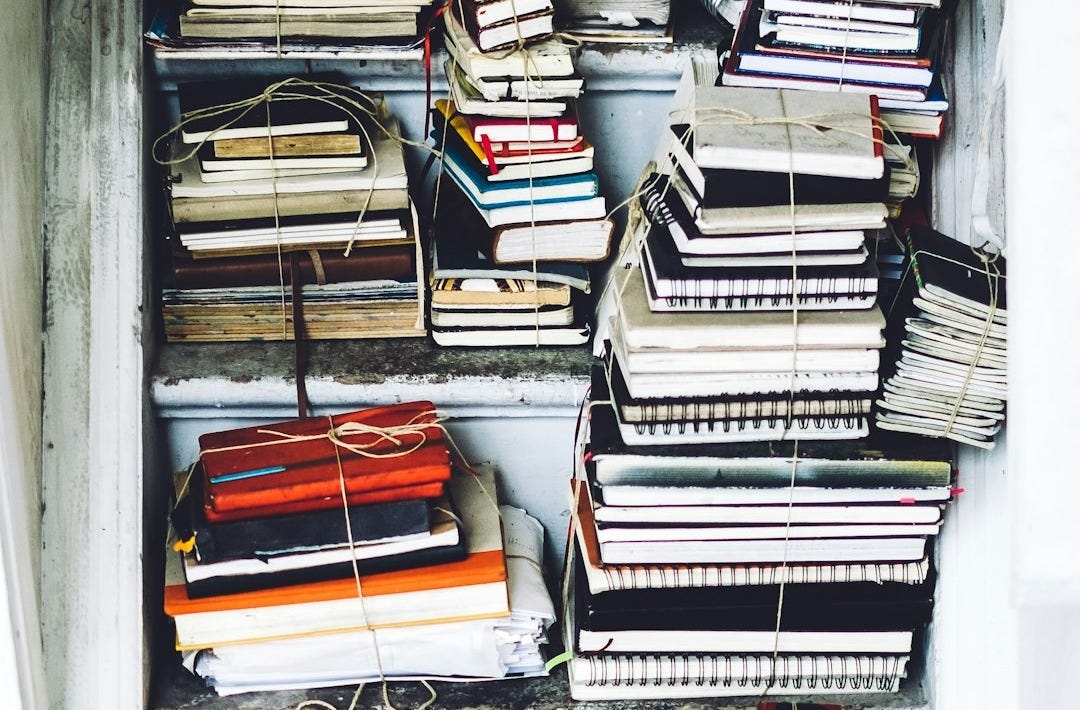
That neverending shelf full of blank sketchbooks that is not enough to refrain from getting a new one the next time you go to an art store. That giant pile of forgotten and never be used sketchbooks… Hopefully after reading this post that will never happen to you again (for the most part).
Today I will talk about what to think before buying a new sketchbook, if you have to.
If you read my last post about picking art materials you know where I’m going.
Do you need another sketchbook? Take a look at what you already have and same as I said last month, “need” doesn’t only apply to if you don’t have any sheet of paper so you must buy a new sketchbook. If you already have one but haven’t touch it in a long time because the format is not working for you, the paper texture wasn’t what you were looking for, anything that keeps you away from creating that will change with a new different one. Get a new one. Or you may want another sketchbook to compliment the one you are already using. For example, I hardly ever only use one at a time as I use mix media, I tend to have different formats and different paper weights.
There are many shades of paper: bright white, natural white, off-white, cream, ivory…
So, you must think what you want it for and what you will be using. For example, I’ve seen that many artists use cream sketchbooks because they like that warm undertone that gives an old look.
If you prefer a neutral base so the colors are true and they are brighter, pick a bright white one. If bright white is too stark for you, I would recommend natural white that is slightly warmer but still neutral.
This is quite easy as you usually will be able to compare them in the store.
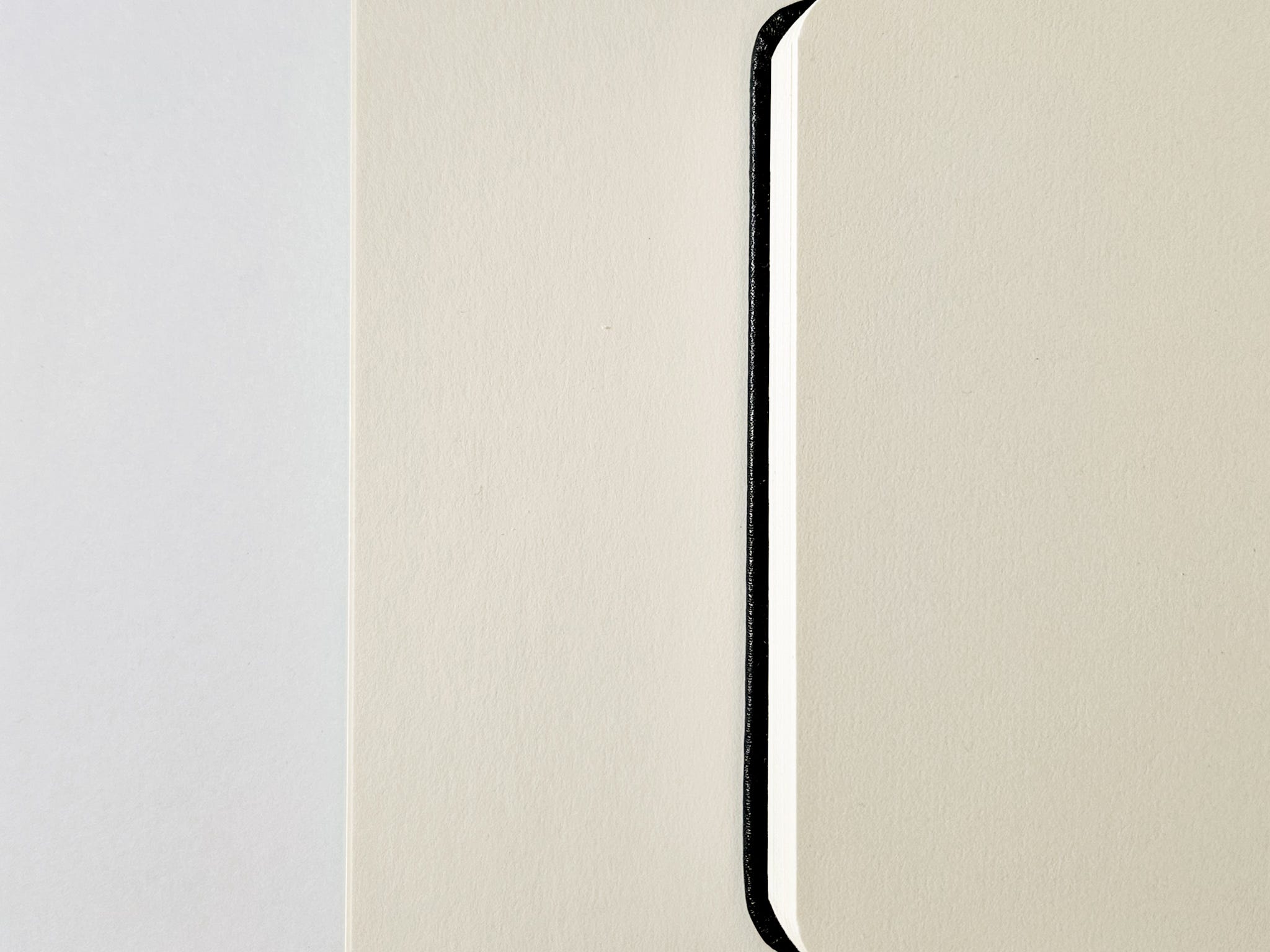
Now there are also some special ones in grey, tan and black. I find these interesting for soft and oil pastels and opaque paint.
Thanks for reading Drawing Notes! This post is public so feel free to share it.
There are plenty of sizes and formats to pick. It can help thinking about if you are planning to draw a specific subject like landscapes, maybe you’d like to try a horizontal one.
You want to make more gestural strokes? Pick a big one so you can move your hand freely.
You need something to carry with you everywhere? Maybe an A5 or A6 would be the best.
As I said before, many people use more than one at a time so it may be interesting to have a bigger one and a smaller one so you can explore the possibilities and experience them.
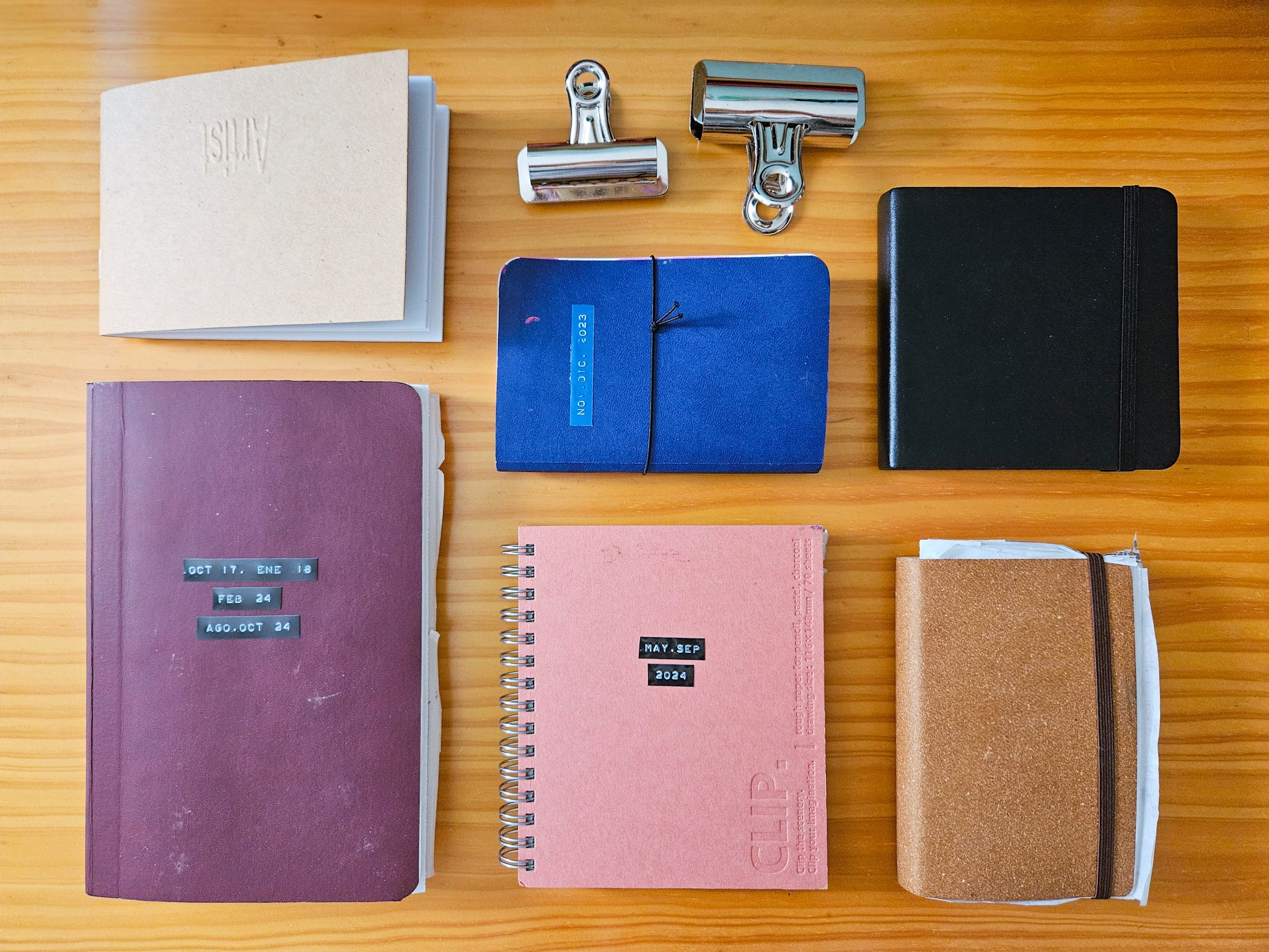
You must consider if you want spiral-bound, tape-bound, sewn, stapled… Hard cover or soft cover?
Usually, sewn sketchbooks lay flat then you can draw in a double page comfortably. This makes it multipurpose.
Hard cover can be useful if you are drawing on the go as it gives you more support, but it also will make it heavier.

Thanks for reading Drawing Notes! This post is public so feel free to share it.
Here you must consider what media you will be using for the most part.
If you will be using dry media like pencil, charcoal… thin paper should be enough.
If you want to use wet media, you will need higher weight. Using a not enough thick paper with wet media can end up buckling the paper (some people like this as it has a more “used” look) and even tearing it.
About grain we can choose between hot press (smooth) and cold press (textured). I would say that if you want to make fine details like with ink, colored pencils. Cold press is more for wet media, heavy washes, etc.
Look at what artists that you like are using and watch videos to see which materials they use on it and how the paper holds it.
It may be interesting to have a bigger one and a smaller one so you can explore the possibilities and experience them.
Which are the optimal conditions to store your sketchbooks?
Away from the sun, humidity and temperature change. So, the ideal would be on a wooden shelf or in a closet (if you want to also avoid dust) that it’s ventilated or you open often.

As said, we always have some sketchbooks that we don’t use, and it’s wasted paper as we don’t use it but! Here are a few tips I recommend for using them:
Revisit them after some time, your preferences might have changed, and it may be what you are looking for now! It happened to me.
Use it for studies: experiment with materials, how they mix and lay over each other. Color swatching, color schemes… Check out: Parul Arora.
Make an abstract book: I find joyful flipping through colors pages, just blobs of colors, textures, marks… so why don’t make one yourself? It’s also great practice to just paint and have fun when you don’t know what to paint. Check out: Orla Stevens, Sonia Brittain.
Make a collage book: cut shapes of different papers (it doesn’t need to be fancy paper) and glue them on your pages, you can also add washi tape! You can make your own custom papers too with paint or other materials. Check out: Atelier Bingo, Neasden Control Centre.
Journal: you can use it as a journal, a place to write whatever you like, stick ephemera, make lists… Check out: Martina Calvi.
If you are trying to start sketchbooking and don’t know where to start and this sounded overwhelming, I would recommend starting with an A5 portrait mix media sketchbook in natural white or off white.
I recommend always swatching the materials on the sketchbook so you know how they will perform and look and it’s a great way to deal with the first page.
This was a long one! Way longer than I expected so thank you for reading it. I hope this was helpful and your blank sketchbooks start to be filled.
No posts
Comments
Nothing yet. Say the first thing.
Sign in to join the conversation.