
I recently read a click bait type article on the HuffPost titled, “6 Things People Do Differently in Finland, The Happiest Country in the World”. Number 3 on the list was, “They Have a Lot of Access to Nature.”
In reading this article, I took less interest in “nature’s important role in the lives and happiness of many people in Finland” than I did in the main reason nature is so accessible to the Finns.
The country has rules known as Everyman’s Right, which allows folks in Finland to respectfully use nearly every forest, lake and seaside area for free. This means activities like camping, berry picking, mushroom picking, swimming, hiking, horseback riding and skiing are all free in these public spaces.
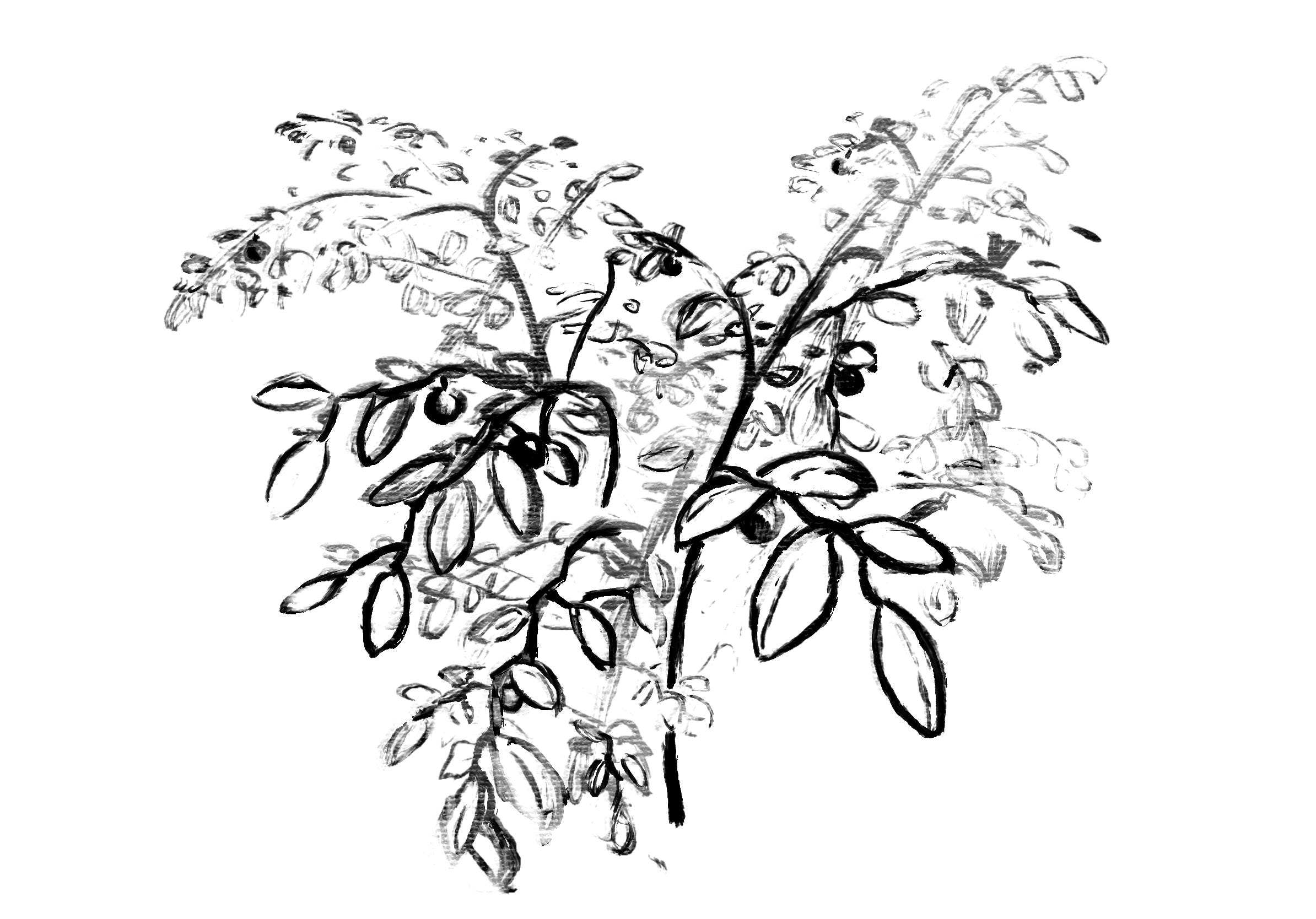
I once experienced Everyman’s Right. During a visit to Finland I was walking on a rural road with a Finnish friend. We stopped to browse on some bilberries. My friend took me into the forest looking for good bilberry bushes to gather from. I noticed that as we got close to a house, he kept a respectable distance from it. There was no fence to demarcate the owner’s property. As a Finn, he just had a sense of undefined boundary. Up to that boundary, he felt totally free to be tromping through the homeowner’s property.
Upon inquiry he explained the principle of Everyman’s Right. I thought, how cool is this! I like to roam in forests and on beaches. But my experience as an American is one of encountering no trespassing signs and barbed wire fences. In America, private property is clearly demarcated and is for the exclusive use of the owner.
The natural world contains much that is of value. Not just berries, mushrooms and outdoor activity but also opportunities for stress reduction.
And these are things that the Finns prioritize over exclusionary property rights.
The principle of Everyman’s Right is similar to the system of land use that was prevalent in North America for millennia. Here’s an AI summary of most indigenous people’s attitude toward property:
Native Americans viewed land as a communal resource and a living entity rather than a commodity to be bought, sold, or privately owned. They believed people belonged to the earth and held a spiritual responsibility to act as stewards, sharing the land to sustain the entire community. They had highly defined, complex property systems, often tied to usufructary rights.
“Usufructuary right” is an uncommon term. For those unfamiliar with it, a usufructary right is a right to use and benefit from a resource without owning it.
In Finland, the Everyman’s Right is a form of usufructary right. All Finns can use and benefit from the tangible (berries) and intangible (stress reduction) uses of the forest.
In Oregon, where I live, all people have a usufructary right to make use of ocean beaches. (Some shellfish harvesting rules must be observed.) This right doesn’t exist in Washington, where I grew up. Save for parks, Washington beaches are for the exclusive use of the property owners.
In the typical Native American land arrangement (naturally, there were variations) tribes managed their lands such that families or clans were given usufructary rights to areas of land for harvesting purposes.
So, in Oregon’s Willamette Valley, where I live, a Kalapuya family would have recognized use rights to harvest a certain camas field (camas bulbs being a staple food crop). This camas field was their resource to steward and use. But this use right did not extend to other uses — it didn’t, say, prevent others accessing that land for hunting.
If one family’s camas harvesting area became more than was needed for the size of their family, or if it became inadequate, the tribe might decide to alter the area of concerned usufruct.
In this way, the land and its resources were collectively stewarded to see that all were able to meet their needs for food, materials, medicines, etc.
Compare this with our contemporary private property system. Ted Turner personally owned some two million acres of land.
And it’s not just land that is privately owned without limit. Blackstone owns around 350,000 housing units.
From what has the concept of assigning exclusive property ownership to individuals been derived? Has this right to private ownership of land and resources been assigned by Nature?
No. In fact, private ownership contradicts the way Nature works. In the natural world, no entities have exclusive claim to the land and its bounty. All make use, according to their needs. Nothing is horded. Nutrients and energy flow efficiently through a complex web of life.
The notion of private ownership is even more problematic from a spiritual vantage. Prabhat Ranjan Sarkar has given the following spiritually grounded conception of ownership:
This universe is created in the imagination of the Supreme Entity, so the ownership of this universe does not belong to any particular individual; everything is the patrimony of us all. Every living being can utilize their rightful share of this property. This whole animate world is a large joint family in which nature has not assigned any property to any particular individual.
In this view — which Sarkar calls “cosmic inheritance” — individual ownership cannot be accepted as absolute. Everyone has the right to make use of the wealth of the universe to meet their needs, but none can claim ultimate ownership.
As we have seen, this was the approach taken by most of North America’s indigenous peoples.
The spirit of this approach lives on in the concept of a “commons”. A commons is a resource, space, or cultural asset that is owned and shared by an entire community. Public spaces, like a village green or a city park, are examples. There are also intellectual assets that function as a commons, such as open-source software.
A characteristic of a commons is that it is managed by a community, rather than by the (so-called) free market. Or by a private owner.
In this lies an important practical consideration. Cosmic inheritance is a philosophically compelling ideal, but how to operationalize it? How can such a system of land use function?
Ultimately, under cosmic inheritance, we would need a system for treating all property as a sort of commons and then making practical arrangements for designating its best use for the welfare of the society as a whole.
This is where a system of assigning and recognizing usufructary rights is required. In Finland, the treatment of the forest as a commons is maintained through a shared awareness of what is and isn’t appropriate. Finns can roam the forests, they can gather berries and mushrooms, but they can’t encroach on people’s private living spaces, they can’t harvest the timber, and they can’t deplete the forest resources.
However well a shared awareness may work in Finland, it is insufficient for most instances for managing a commons. In most cases, a more formalized system would be needed.
Communities will need collective bodies with the authority to designate usufructary rights, and then oversee those rights.
Take people’s homes. Families could acquire a home, and it becomes theirs to live in. But if they no longer make use of that house, then the concerned collective body — say a housing cooperative that manages the concerned housing complex — would make that house available to another family.
Unless there was a real purpose, people could not have multiple homes that sit unused most of the time. And there would be no Blackstones gobbling up properties for private and corporate profit.
Underlying this approach is the principle of “maximum utilization”. Under maximum utilization, the bountiful resources provided by nature or created by human labor are to be optimally utilized to meet human needs and to maintain a fertile earth.
The resources available to humanity are vast. At present, their waste is also vast. Private ownership is far from an efficient system for maintaining collective welfare. Cosmic inheritance, operationalized through a system of usufructary rights, and guided by the principle of maximum utilization is a far superior system. Far superior.
Such a system would not only open the forests to people to freely roam and gather, it would unlock vast stores of wealth, now hoarded and squandered in private ownership, and put this wealth to use so that humanity as a whole can thrive.
How big a difference would this make? Let your imagination roam.
No posts
Comments
Nothing yet. Say the first thing.
Sign in to join the conversation.