
There is a strange thing that happens to cultural value once enough time has passed.
What was once overlooked becomes historically significant. The artist whose work struggled to find institutional recognition becomes the subject of the retrospective. Family photographs that spent decades sitting in someone’s attic become indispensable archival material. Objects that belonged to ordinary Black families become evidence through which scholars reconstruct entire periods of American life. Eventually, somebody places those objects behind glass, writes several paragraphs explaining their significance, and the rest of us encounter them as history.
We are remarkably good at recognizing value retrospectively.
The more interesting question is whether we can learn to recognize—and preserve—it while we are still living through it.
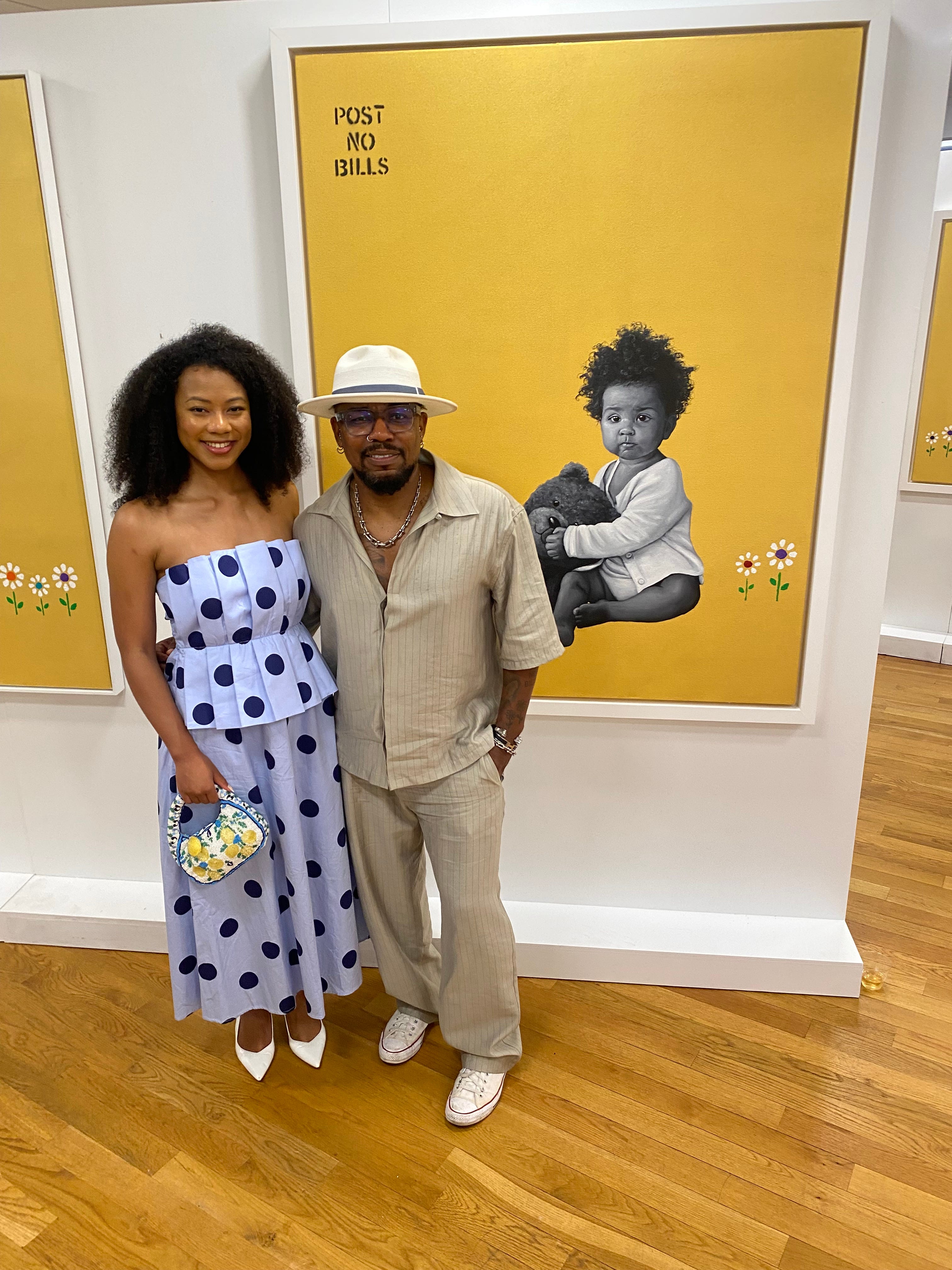
I have been thinking about that question since sitting down with gallerist Jessica Ann Peavy during Give Us Our Flowers, an exhibition of new work by Guy Stanley Philoche presented by the Harlem-based Jessica Ann Peavy Gallery in collaboration with the Mariposa Museum in Oak Bluffs, Martha’s Vineyard. The exhibition remains on view through August 21, and its premise initially appears wonderfully simple: give people their flowers while they are still here to receive them.
The longer I sat with it, however, the more I began to think about what happens after recognition.
What does it mean to decide that something matters enough not merely to admire it, but to preserve it?
And for Black Americans in particular, who have contributed an almost incalculable amount to the cultural history of this country while historically controlling far less of the infrastructure surrounding that production, I think that question inevitably leads us toward ownership.
It leads us toward collecting.
Philoche’s Give Us Our Flowers grew from grief. After losing a close friend, the artist began thinking about the familiar ritual that follows death: the stories, tributes, photographs, declarations of love and literal flowers that suddenly arrive once the person they honor can no longer receive them.
The work asks us to reconsider that sequence. What if recognition happened in the present tense?
There is an emotional argument embedded in that idea, but there is an economic and historical one as well. Recognition is one of the earliest mechanisms through which we assign value. In the art world, that value can eventually move through an entire ecosystem of galleries, collectors, curators, museums, scholars, auction houses, archives and estates. What begins as an artist making something in a studio can, with the right infrastructure surrounding it, become an object that survives its creator by centuries.
That survival is not inevitable.
Someone has to care for it.
This is where the collector becomes much more interesting to me.
We tend to imagine collecting through the most spectacular end of the art market: evening auctions, eight-figure Basquiats, blue-chip galleries and people whose names eventually appear above museum wings. It makes for excellent headlines, but it has also helped produce the misconception that becoming an art collector requires becoming extraordinarily wealthy first.
It doesn’t.
Collecting begins much earlier than that, often with one work and one decision: I want to live with this.
Over time, however, those decisions can become something much larger. A collection records what its owner considered beautiful, consequential, provocative or worthy of preservation during a particular moment in history. Passed down through a family, it can also become part of an inheritance—not simply because the objects may possess financial value, but because they carry information about who we were, what we valued and which stories we thought deserved to survive us.
For Black collectors, I believe that function carries particular weight.
Share Creativity Meets Capital
Black America does not have a cultural-production problem. If anything, American history demonstrates the opposite.
We have repeatedly created forms of cultural value that became extraordinarily valuable once they entered systems controlled by someone else. Music offers perhaps the most obvious examples, but the pattern appears across fashion, entertainment, intellectual property and even neighborhoods. Cultural production can be abundant while ownership of the infrastructure surrounding that culture remains concentrated elsewhere.
Art should make us think carefully about repeating that pattern.
During my conversation with Peavy, we kept returning to the question of participation. At one point, she compared the way people are educated—or more accurately, not educated—about art collecting to the way many Americans grow up without being taught about the stock market.
Her point was not that the two markets operate identically. They don’t. Her point was about access.
There are financial systems people learn to regard as normal because they grow up around people who understand them. There are other systems that remain mysterious because nobody ever tells them they are allowed to participate. For generations, collecting has carried precisely that aura: galleries are intimidating, prices can be opaque, terminology is unfamiliar, and the entire enterprise can feel constructed for someone wealthier, older or more connected than you are.
Peavy put it more plainly during our conversation: collecting has often been positioned as though “that’s not for you.“
That sentence stayed with me because exclusion does not always require a locked door. Sometimes it only requires convincing enough people that there is no reason for them to try the handle.
The encouraging part is that this is already beginning to change.
Peavy has spent roughly two decades observing the art world, first as an artist and now as a gallerist, and she told me that the growth in Black collectors during that period has been dramatic. When she was participating in artist residencies earlier in her career, she remembers the late collector and arts patron Peggy Cooper Cafritz as one of the rare Black collectors consistently appearing in those spaces. Today, she sees considerably more Black people entering the market and, in her words, beginning to “understand the assignment.“
That shift is occurring alongside another important economic development.
Peavy observed that we are reaching a period in which a broader cohort of Black Americans has accumulated enough wealth to leave substantial assets to the next generation—not simply a small number of exceptionally wealthy families, but more families capable of passing down homes, trusts, art and other meaningful stores of value.
That raises a question I think deserves considerably more attention in conversations about Black wealth:
What exactly are we trying to leave?
We rightly talk about homes, businesses, investment accounts, insurance policies and trusts when discussing intergenerational wealth. We should. These are essential components of financial infrastructure.
But wealth has never been exclusively financial.
Families also inherit photographs, letters, furniture, recipes, books, jewelry, quilts, records and art. Some of the most consequential archives of Black history exist today because ordinary people decided that seemingly ordinary things were worth keeping.
An art collection can function within that same tradition while also participating in a formal marketplace.
This is Creativity Meets Capital, so we are not going to perform the peculiar dance in which everyone discusses the art market while pretending money is somehow gauche.
Art can be an asset.
Works can appreciate. Artists’ markets can strengthen as their careers develop. Institutional exhibitions, museum acquisitions, scholarship, critical recognition, scarcity, provenance and sustained collector demand can contribute to long-term market value. For collectors with sufficient assets and sophistication, art can form part of a broader alternative-asset portfolio.
That does not mean buying art is equivalent to buying an index fund, nor should every acquisition be justified by a projected financial return.
Art is illiquid. Markets can be opaque. Transaction costs can be substantial. An artist’s market can rise, stagnate or decline, and nobody can promise that a work purchased today will appreciate tomorrow.
But I think our obsession with asking whether art is a “good investment” sometimes causes us to miss the more interesting question.
What kind of return are we measuring?
There can be financial return, certainly. There can also be cultural return, intellectual return and intergenerational return. A work can appreciate financially while spending thirty years on the wall of your home, shaping your children’s visual vocabulary, prompting conversations at dinner, documenting an artist’s perspective on the era in which your family lived and eventually becoming something your children inherit.
Few assets operate simultaneously across all of those dimensions.
The sophisticated collector understands that these values can coexist.
I want to emphasize this because the mythology surrounding collecting has probably kept more people outside the art market than the actual economics have.
Your first acquisition does not need to come from Sotheby’s.
Collectors build collections through works on paper, photographs, prints, editions and original works by emerging and established artists at many different price points. Some buy several works a year. Others buy one meaningful work every few years. A collection does not become legitimate when its insurance value crosses some arbitrary threshold.
It becomes a collection because someone has developed a point of view.
That point of view is ultimately what makes collecting culturally interesting.
Imagine buying one meaningful work by a Black artist every two or three years. Twenty years from now, you may have a relatively modest collection by art-market standards, but your home contains a visual record of the artists, ideas and stories you believed mattered during your lifetime. Your children do not encounter Black art exclusively during a museum visit because they grew up eating breakfast beneath it.
More importantly, those works remained in someone’s care.
This is stewardship at the household level.
You do not have to own enough art to establish a private museum to participate in preservation. You simply have to begin understanding yourself as someone who is entitled to enter the ecosystem.
This was the part of my conversation with Peavy where my own business brain inevitably entered the room.
I kept thinking about distribution.
We have extraordinary Black artists. We have galleries doing serious work. We have curators, museums, historians, advisers and a growing collector base. The challenge is making the connections between those groups sufficiently strong that participating in this ecosystem becomes ordinary.
Because great creative work without effective distribution has a structural problem.
I told Peavy that I think the next question for Black art is not simply how we produce more of it, but how we make substantially more people within our own communities aware of its significance and comfortable participating in its economy. Art education should not end with children learning that art exists. Adults need education about collecting, galleries, museums, preservation and the market as well. Even for someone who cannot or does not want to purchase a work, participation can mean visiting exhibitions, learning about artists, joining museum communities, reading criticism and simply becoming culturally literate enough to understand the ecosystem.
The goal is not to convince every Black person to become an art collector.
The goal is to reach a point where Black collecting no longer requires an explanation.
Where entering a gallery feels no more unusual than entering a bookstore.
Where asking the price of a painting isn’t embarrassing.
Where someone who receives their first substantial bonus considers buying a work alongside the other assets they are acquiring.
Where parents teach children about the paintings hanging in their homes.
Where collecting, patronage and preservation become recognizable components of what building wealth can look like.
That is distribution.
Not simply distributing an object, but distributing the knowledge required for a culture to participate in the market surrounding its own creative production.
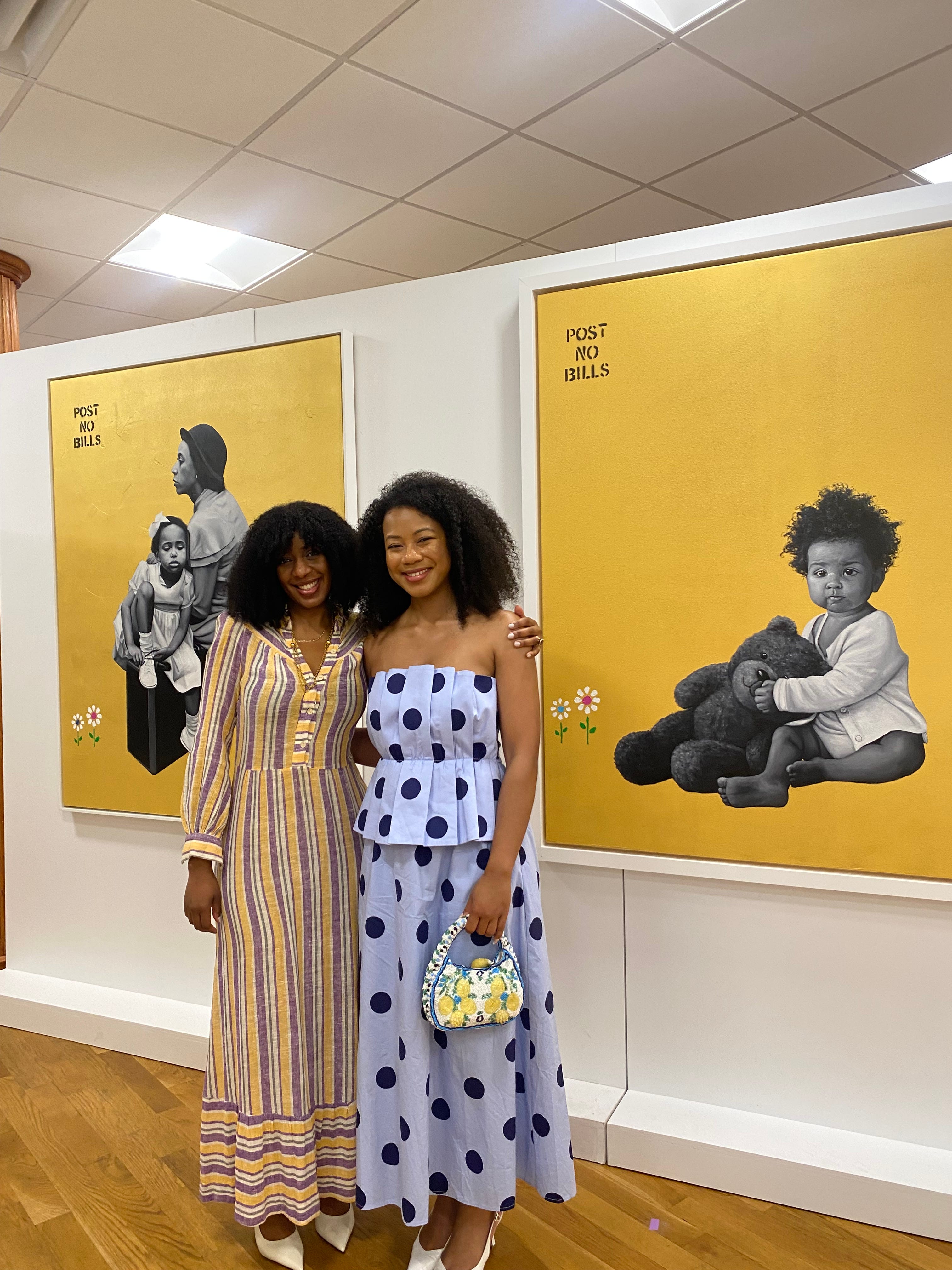
This brings me back to Jessica Ann Peavy Gallery.
Peavy’s gallery is based in Harlem, which matters to this story because galleries occupy an intermediary position within cultural infrastructure. They do not simply sell art. At their best, galleries help artists build careers, cultivate collectors, create institutional relationships, establish context around work and develop markets that can sustain an artist beyond a single exhibition.
What particularly interested me during our conversation was that Peavy is thinking about stewardship not only for her artists, but for the institution she is building herself.
Her decision to put her own name on the gallery carries a family history.
At her grandmother’s funeral several years ago, a relative told a story about Peavy’s grandfather sponsoring his go-kart racing in the late 1960s. Her grandfather owned a real-estate appraisal company, and emblazoned on the side of the kart were the words Peavy Realty.
She remembers hearing that name and thinking differently about her own.
Peavy comes from what she described as a lineage of Black entrepreneurs who “figured it out“—people who built businesses and created ways to work independently. Seeing the family name attached to a business that had existed generations earlier forced her to consider what attaching that same name to her gallery might mean.
It also led her toward a question every founder building something intended to matter beyond themselves eventually has to confront:
Can this survive me?
Peavy is already thinking about succession. She has two daughters and does not know whether either will want to become a gallerist. She thinks about whether galleries can be transferred across generations, whether an institution built around the vision and relationships of one person can retain its identity once that person leaves, and what must be constructed now if Jessica Ann Peavy Gallery is going to exist after Jessica Ann Peavy has retired.
Now that is legacy.
Not merely putting your name on something.
Building something capable of carrying the name when you are no longer in the room.
Share Creativity Meets Capital
Which is perhaps why Give Us Our Flowers feels so appropriate as the exhibition around which to have this conversation.
Philoche asks us to recognize people while they are here.
Peavy is building infrastructure intended to help artists receive that recognition while simultaneously thinking about what survives after all of us are gone.
Collectors occupy the space between those two ideas.
When we collect the work of living artists, we are doing something in the present tense that can have consequences far into the future. We are supporting an artist’s practice economically, certainly, but we are also making an argument about value. We are saying that this work deserves space in our homes, a place within our assets and, potentially, a position within what our families inherit.
For Black collectors, that is an opportunity I want us to take increasingly seriously.
Our history should not only survive because somebody else eventually recognizes that it was worth saving.
We can recognize it ourselves.
We can document it ourselves.
We can collect it ourselves.
We can build institutions around it ourselves.
And we can create systems capable of carrying those stories forward long after the people who created them are gone.
Not every collector will build a museum. Not every work will become extraordinarily valuable. Not every object we preserve will eventually be declared historically significant.
That’s beside the point.
Legacy is partly the practice of deciding what matters before history agrees with you.
So, if you are on Martha’s Vineyard before August 21, go see Guy Stanley Philoche’s Give Us Our Flowers at the Mariposa Museum in Oak Bluffs. Look at the work without worrying about whether you know enough about art to have an opinion. If something captures you, ask about it. Ask about Guy. Ask about collecting. Ask what is available. Let curiosity be enough to get you through the door.
And if you are back in New York, the conversation continues in Harlem. Visit Jessica Ann Peavy Gallery, where you can encounter more of the gallery’s program and Philoche’s work, and subscribe to the gallery’s newsletter to follow its upcoming exhibitions, artists and events.
Because perhaps “give us our flowers” should mean more than recognition.
Perhaps it should also mean taking responsibility for what happens to those flowers afterward.
See Give Us Our Flowers
Guy Stanley Philoche
Presented by Jessica Ann Peavy Gallery in collaboration with the Mariposa Museum
On view through August 21, 2026
Mariposa Museum, Oak Bluffs, Martha’s Vineyard
Creativity Meets Capital examines the systems through which culture becomes value—and the ownership, infrastructure and stewardship required to ensure that value survives.
Comments
Nothing yet. Say the first thing.
Sign in to join the conversation.