
We spend a remarkable amount of time learning what to do with money.
Open the Roth IRA.
Negotiate your salary.
Build multiple income streams.
Invest consistently.
Diversify your portfolio.
All of that matters.
But very little of it addresses a more fundamental question:
Why do we make the financial decisions we make in the first place?
Two people can earn the same salary, have access to the same opportunities, and receive the same financial advice—yet build completely different financial lives.
The difference is often not information.
It’s behavior.
It’s belief.
It’s psychology.
That realization is exactly why I’m excited to open registration for the second installment of The Legacy Study.
The Legacy Study is Creativity Meets Capital’s quarterly moderated discussion series exploring wealth, ownership, and long-term legacy through foundational books.
It isn’t a webinar.
It isn’t a lecture.
And it isn’t a traditional book club.
It’s a room where founders, creatives, investors, professionals, and lifelong learners come together to wrestle with ideas that shape how we understand money, power, and stewardship.
Every study is built around a single text—not to summarize it, but to examine how its ideas intersect with our own lives, our work, and the futures we’re trying to build.
The goal is to leave thinking differently.
Our inaugural Legacy Study centered on The Color of Money by Professor Mehrsa Baradaran.
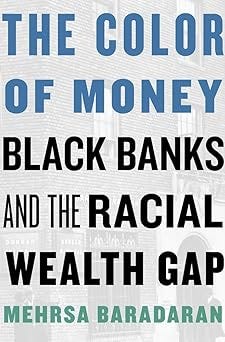
Together, we explored the history of American banking, structural barriers to capital, and the policies that continue to shape wealth today. We were also fortunate to be joined by Professor Baradaran herself, whose generosity and insight elevated an already thoughtful discussion.
What stayed with me most, however, wasn’t just the conversation.
It was the room.
People arrived prepared.
They asked generous questions.
They challenged ideas respectfully.
They listened carefully.
They built on one another’s thinking.
That evening reminded me that there is still a deep appetite for rigorous, thoughtful conversations about wealth—conversations that make room for history, economics, psychology, and lived experience.
That is exactly the kind of community I hope to continue building through Creativity Meets Capital.
This quarter, we’re shifting our attention from systems to ourselves.
We’ll be reading:
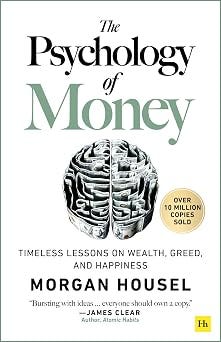
Instead of asking how financial systems shape opportunity, we’ll ask another equally important question:
How do our beliefs about money shape the financial lives we ultimately create?
Together, we’ll explore:
• Why behavior often matters more than intelligence when building wealth
• The stories we inherit about money
• Risk, patience, and long-term thinking
• How emotion quietly influences nearly every financial decision we make
“This session of The Legacy Study was so insightful and inspiring. I have been a financial services professional for almost 15 years and this session strongly aligned with my observations and experiences I’ve seen in my business.”
“One of the most intellectually stimulating conversations I’ve had all year.”
“It was so insightful to hear in real time what the author’s perspective was and her passion for solving this huge problem of the widening wealth gap.”
The Psychology of Money by Morgan Housel
Tuesday, September 22, 2026
7:00–8:30 PM ET
Virtual
Investment: $35
As part of our Founding Year, registration remains $35 per study.
Participation is intentionally limited to preserve the quality of discussion and create a space where every voice has room to contribute.
Whether this is your first Legacy Study or you’re returning after our inaugural gathering, I’d love to welcome you into the room.
I’ll see you on September 22.
Warmly,
Nina Orm
Founder, Creativity Meets Capital
The Legacy Study is Creativity Meets Capital’s quarterly moderated discussion series exploring wealth, ownership, and stewardship through foundational books in economics, finance, history, and public policy.
Each gathering is designed to cultivate thoughtful dialogue, lifelong learning, and a deeper understanding of the ideas that shape generational wealth.
“Read deeply. Think critically. Build intentionally.”
Comments
Nothing yet. Say the first thing.
Sign in to join the conversation.